MOTOSHARE 🚗🏍️
Rent Bikes & Cars Directly from Owners
Motoshare connects vehicle owners with people who need bikes and cars on rent. Owners earn from idle vehicles, and renters get flexible ride options.
Visit Motoshare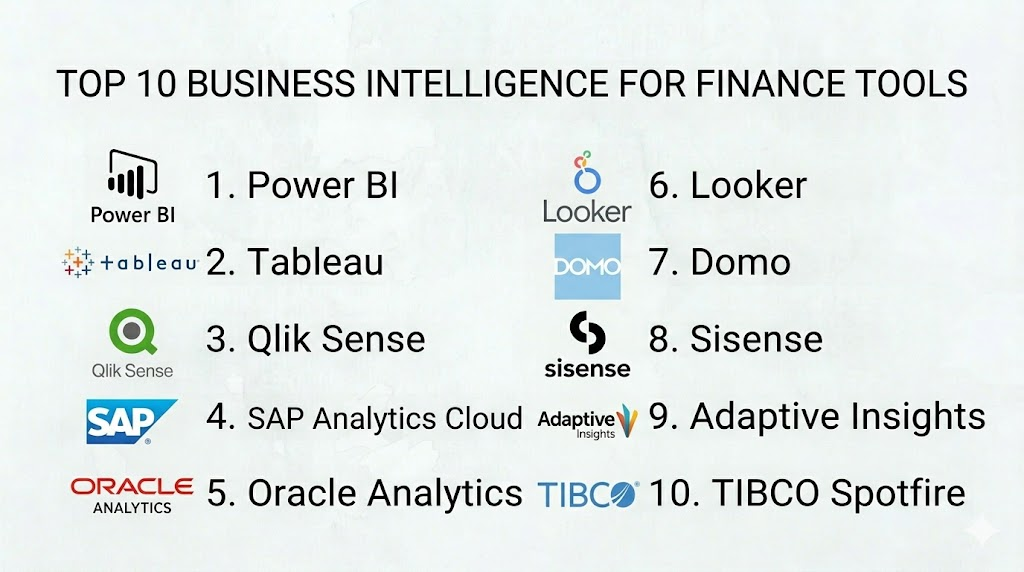
Introduction
Business Intelligence (BI) for Finance refers to platforms that enable organizations to collect, analyze, and visualize financial data to support better decision-making. These tools help finance teams monitor performance, forecast trends, detect anomalies, and generate reports for management and stakeholders. By integrating multiple data sources, finance BI platforms provide a holistic view of revenue, expenses, cash flow, and operational KPIs, allowing teams to make data-driven strategic decisions.
In today’s dynamic financial environment, companies must respond quickly to market changes, regulatory requirements, and investor expectations. Modern finance BI tools leverage AI and advanced analytics for predictive modeling, scenario planning, and real-time dashboards. Cloud-based platforms, automation, and robust integrations make it easier for finance teams to access actionable insights and ensure compliance.
Real-world use cases include:
- CFOs monitoring corporate financial health and KPIs in real-time.
- Accounting teams automating monthly and quarterly reporting.
- Treasury departments analyzing cash flow and liquidity risks.
- Finance analysts performing scenario modeling and forecasting.
- Investment teams evaluating performance and risk metrics across portfolios.
Evaluation criteria buyers should consider:
- Data connectivity and integration capabilities
- Real-time dashboards and reporting flexibility
- Predictive analytics and scenario modeling features
- Ease of use and user interface
- Security, audit trails, and compliance capabilities
- Scalability for large datasets and complex organizations
- Cloud, hybrid, or on-prem deployment options
- Support and training resources
- Cost and subscription flexibility
Best for: CFOs, finance teams, treasury departments, investment analysts, and mid-market to enterprise organizations seeking data-driven financial insights.
Not ideal for: Small businesses with minimal financial complexity or teams that only require basic spreadsheet-based reporting.
Key Trends in Business Intelligence for Finance
- Adoption of AI-driven forecasting and anomaly detection for financial data.
- Cloud-based dashboards with real-time collaboration and mobile access.
- Integration with ERP, CRM, and accounting systems for holistic data views.
- Self-service analytics empowering finance teams without IT dependency.
- Predictive analytics for cash flow, budgeting, and scenario planning.
- Regulatory compliance support including audit trails and secure access controls.
- Data visualization improvements with customizable charts and KPIs.
- Automation in report generation and KPI monitoring.
- Subscription-based SaaS pricing with tiered enterprise offerings.
- Embedded machine learning for smarter decision-making.
How We Selected These Tools (Methodology)
- Market adoption and brand presence in the finance BI segment.
- Feature completeness including dashboards, predictive analytics, and reporting.
- Performance and reliability signals from platform architecture and uptime.
- Security posture including encryption, role-based access, and compliance certifications.
- Integration ecosystem with ERP, accounting, and CRM platforms.
- Scalability to handle large volumes of financial and transactional data.
- User experience, onboarding simplicity, and documentation quality.
- Innovation in AI, automation, and predictive finance analytics.
- Pricing flexibility and value for mid-market and enterprise organizations.
- Support infrastructure and community engagement for finance-specific use cases.
Top 10 Business Intelligence for Finance Tools
#1 — Microsoft Power BI
Short description : Power BI is a versatile finance BI platform that transforms financial data into interactive dashboards and visualizations. It is widely used by finance teams in mid-market and enterprise organizations to monitor KPIs, perform forecasting, and create management-ready reports.
Key Features
- Interactive dashboards and reports
- AI-driven analytics and predictive modeling
- Integration with Excel, ERP, and CRM systems
- Customizable KPIs and metrics
- Real-time data streaming and alerts
- Power Query for data transformation
Pros
- Strong integration with Microsoft ecosystem
- Scalable for large enterprises
- Extensive visualization capabilities
Cons
- Learning curve for advanced features
- Requires Power BI Pro for collaboration features
Platforms / Deployment
- Web / Windows / iOS / Android
- Cloud / On-prem via Power BI Report Server
Security & Compliance
- SSO/SAML, MFA, encryption
- SOC 2, ISO 27001, GDPR
Integrations & Ecosystem
Power BI integrates deeply with Microsoft and other financial platforms.
- Excel, Dynamics 365, SAP
- SQL Server, Azure Data Lake
- ERP/CRM systems
- API connectivity for custom applications
Support & Community
- Extensive documentation and tutorials
- Microsoft support plans
- Active user forums and community groups
#2 — Tableau
Short description : Tableau enables finance teams to explore data through visual analytics and dashboards. It is known for its drag-and-drop interface, extensive chart options, and ability to connect to multiple data sources for real-time insights.
Key Features
- Drag-and-drop analytics
- Interactive dashboards and financial visualizations
- Real-time data connections and blending
- Predictive modeling with integrated AI
- Collaboration via Tableau Server or Tableau Online
Pros
- Highly intuitive and flexible visualizations
- Supports multiple data sources simultaneously
- Strong community and learning resources
Cons
- Premium pricing for enterprise deployment
- Requires training for advanced analytics
Platforms / Deployment
- Web / Windows / Mac / iOS / Android
- Cloud / On-prem / Hybrid
Security & Compliance
- SSO/SAML, encryption
- GDPR compliance
- Not publicly stated for SOC 2/ISO 27001
Integrations & Ecosystem
- ERP and accounting software
- Salesforce, SAP, Oracle
- SQL, Snowflake, and cloud data warehouses
Support & Community
- Knowledge base and learning portal
- Paid support plans
- Active community forums
#3 — Qlik Sense
Short description : Qlik Sense offers associative data modeling and interactive dashboards for finance teams. It enables dynamic financial analysis and scenario planning by linking disparate datasets in real-time.
Key Features
- Associative data modeling
- Real-time dashboards and alerts
- AI-assisted insights and suggestions
- Data connectors for ERP, CRM, and databases
- Self-service analytics
Pros
- Strong data integration and modeling capabilities
- Dynamic visualizations for decision-making
- AI-driven insights
Cons
- Steeper learning curve for new users
- Cost can be high for small teams
Platforms / Deployment
- Web / Windows / iOS / Android
- Cloud / On-prem / Hybrid
Security & Compliance
- Encryption, RBAC, SSO
- Not publicly stated for certifications
Integrations & Ecosystem
- SQL and NoSQL databases
- ERP/CRM platforms
- REST API and custom connectors
Support & Community
- Documentation and training
- Email and chat support
- Active user community
#4 — SAP Analytics Cloud
Short description : SAP Analytics Cloud delivers finance-specific BI, planning, and predictive analytics in a single platform. It is optimized for large enterprises and integrates seamlessly with SAP ERP and other financial systems.
Key Features
- Integrated planning and financial analytics
- Predictive and what-if scenario modeling
- Real-time dashboards and KPI monitoring
- Collaboration and reporting tools
- AI-driven insights
Pros
- Unified analytics and planning
- Enterprise-grade scalability
- Deep integration with SAP ecosystem
Cons
- Complexity for small organizations
- Higher implementation cost
Platforms / Deployment
- Web / Cloud
- Cloud
Security & Compliance
- SSO, MFA, encryption
- ISO 27001, GDPR
Integrations & Ecosystem
- SAP ERP and CRM
- Third-party financial systems
- Cloud and on-prem data warehouses
Support & Community
- SAP Support portal
- Training programs
- Community forums and resources
#5 — Oracle Analytics Cloud
Short description : Oracle Analytics Cloud enables finance teams to analyze, visualize, and forecast financial data with AI-powered insights. It supports enterprise-scale datasets and integrates with Oracle Cloud ERP and other business systems.
Key Features
- AI-assisted analytics and forecasting
- Interactive dashboards and reports
- Real-time financial data monitoring
- Integration with Oracle ERP and HCM
- Scenario planning and KPI tracking
Pros
- Enterprise-grade analytics
- AI-enhanced insights
- Scalable for large organizations
Cons
- Complexity for small teams
- Higher subscription cost
Platforms / Deployment
- Web / Cloud
- Cloud
Security & Compliance
- Encryption, RBAC, SSO
- SOC 2, ISO 27001, GDPR
Integrations & Ecosystem
- Oracle ERP, HCM
- Databases and cloud data warehouses
- APIs and connectors
Support & Community
- Oracle support plans
- Knowledge base
- User forums
#6 — Looker (Google Cloud)
Short description : Looker delivers cloud-native BI for finance teams, combining interactive dashboards, embedded analytics, and data modeling capabilities with Google Cloud integration.
Key Features
- Cloud-based dashboards and reports
- Embedded analytics for applications
- Data modeling with LookML
- Real-time financial analytics
- Collaboration and sharing tools
Pros
- Strong cloud-native solution
- Embeddable analytics
- Integrates well with Google Cloud services
Cons
- Steeper learning curve for LookML
- May require technical support for setup
Platforms / Deployment
- Web / Cloud
- Cloud
Security & Compliance
- SSO/SAML, encryption
- Not publicly stated for certifications
Integrations & Ecosystem
- Google Cloud services
- SQL databases and warehouses
- ERP and CRM connectors
Support & Community
- Online documentation
- Support plans
- Active community
#7 — Domo
Short description : Domo is a cloud-based finance BI platform with real-time dashboards, financial data connectors, and AI-assisted insights for enterprise finance teams.
Key Features
- Real-time data visualization
- AI and predictive analytics
- Financial KPIs and dashboards
- Integration with ERP, CRM, and databases
- Collaboration tools
Pros
- Real-time monitoring and insights
- Large-scale data integration
- AI-driven analytics
Cons
- Premium pricing
- Customization may require technical expertise
Platforms / Deployment
- Web / Cloud / iOS / Android
- Cloud
Security & Compliance
- Encryption, SSO
- Not publicly stated
Integrations & Ecosystem
- ERP and CRM
- SQL and cloud data warehouses
- API and connectors
Support & Community
- Documentation and training
- Support plans
- Online forums
#8 — Sisense
Short description : Sisense provides finance BI with embedded analytics, AI-powered insights, and highly customizable dashboards suitable for large-scale financial data.
Key Features
- Embedded analytics
- AI and predictive analytics
- Dashboard customization
- Multiple data source connectivity
- Collaboration tools
Pros
- Flexible visualization options
- Supports complex datasets
- AI-enhanced insights
Cons
- Requires technical expertise
- Premium pricing
Platforms / Deployment
- Web / Cloud / Windows
- Cloud / Hybrid
Security & Compliance
- Encryption, SSO
- Not publicly stated
Integrations & Ecosystem
- ERP, CRM, cloud databases
- API connectivity
- BI ecosystem integrations
Support & Community
- Online documentation
- Paid support
- Active community forums
#9 — Adaptive Insights (Workday)
Short description : Adaptive Insights provides cloud-based financial planning and analytics, combining BI dashboards, scenario modeling, and collaborative budgeting for mid-market to enterprise organizations.
Key Features
- Budgeting and forecasting
- KPI dashboards
- Scenario planning
- Integration with Workday and ERP systems
- Collaboration features
Pros
- Robust planning capabilities
- Enterprise-grade dashboards
- Collaboration across teams
Cons
- Primarily focused on Workday ecosystem
- Costly for small teams
Platforms / Deployment
- Web / Cloud
- Cloud
Security & Compliance
- SSO/SAML, encryption
- SOC 2, GDPR
Integrations & Ecosystem
- Workday ERP
- Cloud databases and connectors
- APIs for custom integrations
Support & Community
- Online support
- Training resources
- Community forums
#10 — TIBCO Spotfire
Short description : Spotfire delivers finance BI with advanced analytics, predictive modeling, and interactive dashboards suitable for finance teams in large organizations.
Key Features
- Predictive analytics and modeling
- Interactive dashboards
- Data visualization and KPIs
- Multiple data source integration
- Collaboration tools
Pros
- Advanced analytics capabilities
- Strong visualization and dashboards
- Supports large datasets
Cons
- Requires technical expertise
- Premium pricing
Platforms / Deployment
- Web / Windows / Cloud
- Cloud / Hybrid
Security & Compliance
- Encryption, SSO
- Not publicly stated
Integrations & Ecosystem
- ERP, CRM, cloud databases
- API and connectors
- Analytics ecosystem
Support & Community
- Documentation
- Paid support
- Community resources
Comparison Table (Top 10)
| Tool Name | Best For | Platform(s) Supported | Deployment | Standout Feature | Public Rating |
|---|---|---|---|---|---|
| Power BI | SMBs & Enterprise | Web / Windows / iOS / Android | Cloud / On-prem | Interactive dashboards | N/A |
| Tableau | Enterprise & Finance Analysts | Web / Windows / Mac / iOS | Cloud / On-prem | Visual analytics & dashboards | N/A |
| Qlik Sense | Data-driven finance teams | Web / Windows / iOS / Android | Cloud / Hybrid | Associative data modeling | N/A |
| SAP Analytics Cloud | Large enterprise finance teams | Web | Cloud | Unified analytics & planning | N/A |
| Oracle Analytics | Enterprise finance teams | Web | Cloud | AI-assisted insights | N/A |
| Looker | Cloud-native finance analytics | Web | Cloud | Embedded analytics | N/A |
| Domo | Enterprise BI & finance teams | Web / iOS / Android | Cloud | Real-time dashboards | N/A |
| Sisense | Large-scale finance BI | Web / Cloud / Windows | Cloud / Hybrid | Embedded analytics | N/A |
| Adaptive Insights | Mid-market to enterprise | Web | Cloud | Scenario modeling & budgeting | N/A |
| TIBCO Spotfire | Advanced analytics teams | Web / Windows / Cloud | Cloud / Hybrid | Predictive analytics | N/A |
Evaluation & Scoring of Business Intelligence for Finance
| Tool Name | Core (25%) | Ease (15%) | Integrations (15%) | Security (10%) | Performance (10%) | Support (10%) | Value (15%) | Weighted Total (0–10) |
|---|---|---|---|---|---|---|---|---|
| Power BI | 9 | 8 | 9 | 8 | 9 | 8 | 8 | 8.7 |
| Tableau | 9 | 8 | 8 | 7 | 8 | 7 | 7 | 8.0 |
| Qlik Sense | 8 | 7 | 8 | 7 | 8 | 7 | 7 | 7.6 |
| SAP Analytics Cloud | 9 | 7 | 9 | 8 | 9 | 7 | 7 | 8.3 |
| Oracle Analytics | 9 | 7 | 9 | 8 | 9 | 7 | 7 | 8.3 |
| Looker | 8 | 7 | 8 | 7 | 8 | 7 | 7 | 7.7 |
| Domo | 8 | 7 | 8 | 7 | 8 | 7 | 7 | 7.7 |
| Sisense | 8 | 7 | 8 | 7 | 8 | 7 | 7 | 7.7 |
| Adaptive Insights | 9 | 7 | 8 | 8 | 8 | 7 | 7 | 8.0 |
| TIBCO Spotfire | 8 | 7 | 8 | 7 | 8 | 7 | 7 | 7.7 |
Interpretation: Weighted totals indicate overall suitability for finance BI. Higher totals reflect broader feature coverage, usability, integration, and analytics capabilities. Organizations should prioritize tools that align with their data size, collaboration needs, and integration requirements.
Which Business Intelligence for Finance Tool Is Right for You?
Solo / Freelancer
- Looker or Qlik Sense for cloud-native analytics with lightweight setup.
- Focus on simple dashboards and intuitive visualizations.
SMB
- Power BI, Tableau, or Domo for collaboration and real-time reporting.
- Choose platforms that integrate with accounting and ERP systems.
Mid-Market
- Adaptive Insights, SAP Analytics Cloud for scenario planning and forecasting.
- Emphasize KPI tracking, dashboards, and multi-user access.
Enterprise
- Oracle Analytics, Power BI, SAP Analytics Cloud for enterprise-scale data.
- Focus on security, scalability, and advanced analytics features.
Budget vs Premium
- Entry-level: Qlik Sense, Looker
- Mid-tier: Power BI, Tableau
- Premium: SAP Analytics Cloud, Oracle Analytics, TIBCO Spotfire
Feature Depth vs Ease of Use
- Deep analytics: Oracle Analytics, SAP Analytics Cloud, TIBCO Spotfire
- Ease of use: Power BI, Tableau, Looker
Integrations & Scalability
- Best integrations: Power BI, SAP Analytics Cloud, Oracle Analytics
- Verify API availability and ERP/CRM connectors for seamless workflows
Security & Compliance Needs
- Enterprise buyers should confirm SSO, MFA, encryption, and compliance features.
- Many vendors list certifications as “Not publicly stated,” so verification is essential.
Frequently Asked Questions (FAQs)
1. What pricing models are used by finance BI tools?
Most offer SaaS subscriptions with monthly or annual billing. Pricing tiers often depend on features, data volume, or number of users. Free trials are common.
2. How long does onboarding take?
Onboarding can vary from a few hours for smaller teams to several weeks for enterprise deployments. Guided templates and training resources shorten learning curves.
3. Can these tools handle large-scale financial datasets?
Yes, platforms like SAP Analytics Cloud, Oracle Analytics, and Power BI are designed for enterprise-scale data with complex financial modeling capabilities.
4. Are dashboards customizable?
Yes, most finance BI platforms allow full customization of KPIs, visualizations, and layout to suit team needs.
5. Can multiple users collaborate simultaneously?
Yes, cloud-based platforms support multi-user collaboration, shared dashboards, commenting, and version control.
6. Do these platforms offer predictive analytics?
Most modern finance BI tools provide predictive analytics, scenario modeling, and AI-assisted insights for forecasting and anomaly detection.
7. How secure is financial data in these tools?
Security varies; features may include encryption, SSO, MFA, and role-based access. Verify vendor certifications for compliance requirements.
8. How easy is it to integrate with ERP or accounting systems?
Platforms generally provide connectors for ERP, accounting software, and cloud databases, enabling seamless data integration for reporting and dashboards.
9. Can these tools generate management or investor-ready reports?
Yes, nearly all finance BI platforms allow exporting visual dashboards and reports in PDF, Excel, or interactive formats suitable for presentations.
10. Are there alternatives to dedicated finance BI platforms?
Yes, spreadsheet-based reporting or general BI tools can be used, but they often lack specialized financial modeling, scenario planning, and predictive analytics.
Conclusion
Business Intelligence for Finance provides organizations with the tools to analyze, visualize, and act upon financial data. The right platform depends on business size, complexity, and analytics requirements. Startups and SMBs may prioritize ease of use and prebuilt dashboards, while mid-market and enterprise organizations benefit from predictive analytics, scenario modeling, and deep ERP/CRM integration. Security, compliance, and support are critical for larger deployments, while small teams may value cost-effectiveness and simplicity.

Very useful article for beginners and professionals alike.
Really enjoyed how clearly everything was explained here.
Loved the clarity and flow of this article. It’s both informative and reader-friendly.