MOTOSHARE 🚗🏍️
Rent Bikes & Cars Directly from Owners
Motoshare connects vehicle owners with people who need bikes and cars on rent. Owners earn from idle vehicles, and renters get flexible ride options.
Visit Motoshare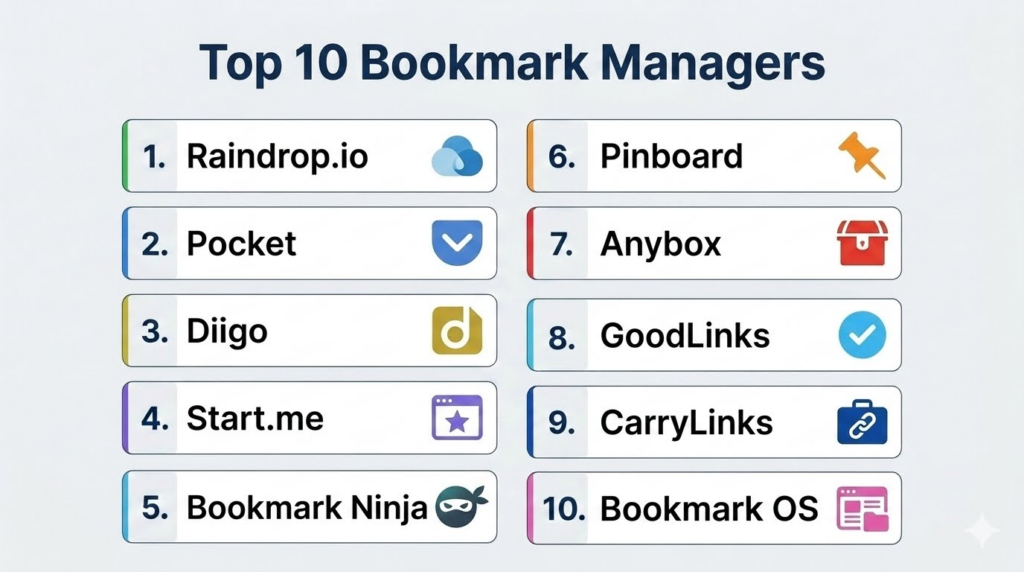
Introduction
Bookmark Managers help users save, organize, search, sync, and manage web links, articles, tools, videos, PDFs, research resources, and online content in a structured way. Traditional browser bookmarks often become cluttered and difficult to search over time, while modern bookmark managers provide tagging, collections, visual dashboards, offline reading, advanced search, collaboration, and synchronization across multiple devices.Bookmark management has become increasingly important because professionals, students, creators, researchers, and teams now work across many browsers, apps, cloud tools, and online platforms daily. Without a proper system, valuable information gets buried inside tabs, folders, screenshots, or scattered browser bookmarks. Modern bookmark managers help users build organized knowledge systems, research hubs, reading workflows, and productivity libraries that are easier to search and reuse later.
Real-world use cases include:
- Organizing research materials and references
- Saving tutorials, tools, and learning resources
- Building personal knowledge libraries
- Managing read-it-later articles and videos
- Sharing resources with teams and clients
Buyers evaluating Bookmark Managers should consider:
- Tagging and folder organization
- Cross-device synchronization
- Browser extension quality
- Search and filtering performance
- Visual organization capabilities
- Offline access support
- Collaboration and sharing tools
- Import and export flexibility
- Privacy and data ownership
- Integration with productivity and PKM tools
Best for: Researchers, developers, students, marketers, writers, designers, consultants, agencies, productivity enthusiasts, and teams managing large amounts of online resources.
Not ideal for: Users who only save a few casual browser bookmarks or organizations needing full enterprise document management rather than bookmark organization.
Key Trends in Bookmark Managers
- AI-assisted tagging and categorization are reducing manual bookmark organization work.
- Visual bookmark dashboards are replacing traditional text-only bookmark folders.
- Read-it-later systems and bookmark managers are increasingly merging together.
- Privacy-focused and local-first bookmark systems are becoming more popular.
- Knowledge management workflows are integrating deeply with bookmark systems.
- Cross-browser synchronization is now considered a standard requirement.
- Offline reading and archived snapshots are becoming more common.
- Teams are using bookmark managers for collaborative research and resource sharing.
- Minimal interfaces and distraction-free reading modes are growing in popularity.
- Browser extensions are becoming central to bookmark capture workflows.
How We Selected These Tools
The tools in this list were selected based on organization quality, synchronization reliability, search performance, platform support, integrations, and overall usefulness across personal and professional workflows.
Selection criteria included:
- Bookmark organization and tagging capabilities
- Cross-browser and cross-device synchronization
- Search and retrieval quality
- Visual and collection-based organization
- Read-it-later and archive support
- Privacy and export flexibility
- Collaboration and team features
- Open-source or local-first support
- Reliability and performance
- Adoption among productivity and research users
Top 10 Bookmark Managers
1- Raindrop.io
Short description:
Raindrop.io is one of the most popular bookmark managers for users who want visually organized collections, advanced tagging, full-text search, and reliable cross-platform synchronization. It supports bookmarks, articles, PDFs, images, and videos inside a clean modern interface. Raindrop.io is especially useful for designers, marketers, developers, researchers, and productivity users managing large resource collections. Its balance between simplicity and advanced functionality makes it one of the strongest overall bookmark management platforms available.
Key Features
- Visual bookmark collections
- Tags and nested folders
- Full-text search
- Web clipping support
- Duplicate and broken link detection
- Shared collections
- Cross-browser synchronization
Pros
- Excellent visual organization
- Strong cross-platform support
- Good balance between ease of use and advanced functionality
Cons
- Some advanced features require premium plans
- Large collections require organization discipline
- Offline workflows vary depending on setup
Platforms / Deployment
- Web
- Windows
- macOS
- Linux
- iOS
- Android
- Browser extensions
- Cloud
Security & Compliance
- Encryption
- Account-based controls
- Shared collection permissions
- Detailed enterprise compliance is Not publicly stated
Integrations & Ecosystem
Raindrop.io integrates well with productivity and knowledge workflows.
- Chrome
- Firefox
- Safari
- Edge
- Productivity workflows
- Automation support
Support & Community
Raindrop.io has broad adoption among productivity users and receives active feature updates and community feedback.
2- Pocket
Short description:
Pocket is a lightweight bookmark and read-it-later platform designed for users who want to save articles, videos, and web pages for later reading. It focuses heavily on clean reading experiences, offline access, and mobile synchronization. Pocket is especially useful for readers, writers, researchers, and professionals who constantly discover useful content during the day but want a distraction-free reading workflow later.
Key Features
- Read-it-later workflows
- Offline reading
- Clean reading mode
- Tagging system
- Browser extensions
- Mobile synchronization
- Text-to-speech support
Pros
- Extremely simple workflow
- Excellent reading experience
- Strong mobile usability
Cons
- Limited advanced organization
- Team collaboration is minimal
- Less suitable for massive research databases
Platforms / Deployment
- Web
- iOS
- Android
- Browser extensions
- Cloud
Security & Compliance
- Account-based controls
- Privacy settings
- Detailed compliance is Not publicly stated
Integrations & Ecosystem
Pocket supports lightweight reading and productivity workflows.
- Browser extensions
- Mobile sharing
- Reading workflows
- Tag organization
- Offline access
Support & Community
Pocket has strong consumer adoption and is widely recognized for read-it-later workflows.
3- Diigo
Short description:
Diigo combines bookmark management with web annotation, highlighting, note-taking, and collaborative research workflows. It is especially useful for students, educators, researchers, and professionals who want to save and annotate web content directly. Diigo works well for building organized research libraries and collaborative resource collections.
Key Features
- Bookmark management
- Web highlighting
- PDF annotation
- Sticky notes
- Tagging and collections
- Group collaboration
- Screenshot archiving
Pros
- Strong research and annotation capabilities
- Good educational workflows
- Useful collaboration tools
Cons
- Interface feels older than modern competitors
- Mobile experience is less polished
- Setup may feel complex for beginners
Platforms / Deployment
- Web
- iOS
- Android
- Browser extensions
- Cloud
Security & Compliance
- Account-based permissions
- Group collaboration controls
- Privacy settings
- Detailed compliance is Not publicly stated
Integrations & Ecosystem
Diigo supports annotation-heavy workflows and educational use cases.
- PDF workflows
- Browser annotation
- Research collections
- Group sharing
- Tag systems
Support & Community
Diigo maintains strong adoption among researchers, educators, and academic users.
4- start.me
Short description:
start.me is a customizable dashboard and bookmark management platform that combines bookmarks, widgets, RSS feeds, notes, and productivity tools into one centralized workspace. It is especially useful for professionals, teams, and productivity-focused users who want bookmarks integrated with daily workflows and dashboards.
Key Features
- Bookmark dashboards
- RSS feed support
- Widgets and notes
- Team collaboration
- Search and filtering
- Productivity integrations
- Import/export support
Pros
- Flexible dashboard experience
- Strong productivity workflows
- Good team organization features
Cons
- Interface can become cluttered
- More complex than lightweight bookmark tools
- Requires setup time for best results
Platforms / Deployment
- Web
- Browser-based workflows
- Cloud
Security & Compliance
- Team permissions
- Account-based controls
- Encryption
- Detailed compliance is Not publicly stated
Integrations & Ecosystem
start.me supports dashboard-style productivity environments.
- RSS feeds
- Widgets
- Notes
- Team sharing
- Productivity workflows
Support & Community
start.me offers onboarding resources and strong support for productivity-focused teams.
5- Bookmark Ninja
Short description:
Bookmark Ninja is designed for users managing very large bookmark collections who need fast search, nested folders, tagging systems, and efficient keyboard-driven workflows. It focuses heavily on organization speed and scalability. Bookmark Ninja is especially useful for power users, developers, researchers, and heavy productivity users managing thousands of links.
Key Features
- Nested folders
- Tagging system
- Fast search
- Keyboard shortcuts
- Dead link detection
- Import/export support
- Large collection management
Pros
- Excellent for huge bookmark libraries
- Fast organization workflows
- Strong search capabilities
Cons
- Interface prioritizes function over design
- Less beginner-friendly
- Limited visual browsing experience
Platforms / Deployment
- Web
- Browser-based workflows
- Cloud
Security & Compliance
- Account-based controls
- Privacy settings
- Detailed compliance is Not publicly stated
Integrations & Ecosystem
Bookmark Ninja focuses on efficient bookmark organization workflows.
- Browser imports
- Tag systems
- Bookmark exports
- Folder structures
Support & Community
Bookmark Ninja has strong adoption among heavy productivity and bookmark-management users.
6- Pinboard
Short description:
Pinboard is a minimalist bookmark manager focused on simplicity, reliability, privacy, and long-term archiving. It is especially useful for technical users, developers, writers, and researchers who prefer lightweight interfaces and fast workflows. Pinboard prioritizes durability and speed over modern visual design trends.
Key Features
- Lightweight bookmarking
- Tag-based organization
- Link archiving
- Search functionality
- Bookmarklets
- Read-it-later support
- API access
Pros
- Extremely lightweight and reliable
- Good privacy-focused workflow
- Strong long-term archive focus
Cons
- Interface feels outdated
- Limited visual organization
- Not ideal for casual users
Platforms / Deployment
- Web
- Browser bookmarklets
- Cloud
Security & Compliance
- Account-based controls
- Privacy-focused positioning
- Detailed compliance is Not publicly stated
Integrations & Ecosystem
Pinboard supports minimalist and technical workflows.
- APIs
- Bookmarklets
- Archiving workflows
- Tag systems
Support & Community
Pinboard has a loyal community among developers and minimalist productivity users.
7- Anybox
Short description:
Anybox is a bookmark and content-saving platform designed specifically for Apple ecosystem users. It combines bookmarks, links, notes, read-it-later workflows, and smart collections inside a modern local-first interface. Anybox is especially useful for macOS and iOS users who prioritize speed, privacy, and native Apple workflows.
Key Features
- Native Apple experience
- Smart collections
- Tagging and filtering
- Offline support
- Read-it-later workflows
- Keyboard shortcuts
- Local-first architecture
Pros
- Excellent Apple-native experience
- Strong privacy-focused workflow
- Fast and responsive interface
Cons
- Apple-only ecosystem
- Limited collaboration features
- Smaller ecosystem than major competitors
Platforms / Deployment
- macOS
- iOS
- Apple ecosystem
- Local-first / Sync-supported
Security & Compliance
- Local-first workflows
- Device-based controls
- Apple synchronization support
- Detailed compliance is Not publicly stated
Integrations & Ecosystem
Anybox integrates naturally with Apple productivity workflows.
- Safari
- Apple ecosystem
- Smart collections
- Offline reading
- Tag systems
Support & Community
Anybox is gaining popularity among Apple-focused productivity users and PKM enthusiasts.
8- GoodLinks
Short description:
GoodLinks is a lightweight bookmark and read-it-later app designed for offline reading and distraction-free content management. It focuses heavily on fast synchronization, clean interfaces, and reliable article saving for Apple users. GoodLinks works especially well for readers and researchers who prefer minimal and focused workflows.
Key Features
- Offline article saving
- Bookmark organization
- Reader mode
- Fast synchronization
- Tagging system
- Apple-native experience
- Lightweight interface
Pros
- Excellent offline reading
- Fast and clean workflow
- Strong Apple ecosystem integration
Cons
- Limited outside Apple ecosystem
- Less suited for team collaboration
- Fewer advanced automation features
Platforms / Deployment
- macOS
- iOS
- Apple ecosystem
- Local / Sync-supported
Security & Compliance
- Local storage workflows
- Device-based controls
- Privacy-focused positioning
- Detailed compliance is Not publicly stated
Integrations & Ecosystem
GoodLinks supports clean reading and bookmark workflows.
- Safari integration
- Reader mode
- Offline reading
- Apple workflows
Support & Community
GoodLinks has a growing reputation among Apple users seeking lightweight bookmark systems.
9- CarryLinks
Short description:
CarryLinks is a cloud-based bookmark manager focused on synchronization, organization, and simple cross-device workflows. It provides folders, tagging, sharing, and bookmark search inside a straightforward interface. CarryLinks is especially useful for users who want practical bookmark organization without overly complex productivity systems.
Key Features
- Bookmark synchronization
- Folder organization
- Tagging support
- Bookmark sharing
- Search functionality
- Import/export support
- Dark mode support
Pros
- Easy synchronization workflows
- Simple interface
- Good basic organization capabilities
Cons
- Smaller ecosystem than major competitors
- Limited advanced automation
- Fewer integrations
Platforms / Deployment
- Web
- Browser-based workflows
- Cloud
Security & Compliance
- Account-based controls
- Encryption
- Privacy settings
- Detailed compliance is Not publicly stated
Integrations & Ecosystem
CarryLinks focuses on practical bookmark organization.
- Browser imports
- Search workflows
- Folder systems
- Bookmark exports
Support & Community
CarryLinks offers straightforward onboarding and simple bookmark management workflows.
10- Bookmark OS
Short description:
Bookmark OS is a visual bookmark management platform designed around a desktop-style interface with drag-and-drop organization. It allows users to organize links, apps, notes, and resources visually inside workspace-style layouts. Bookmark OS is especially useful for users who prefer highly visual and interactive bookmark systems over traditional folder-based approaches.
Key Features
- Desktop-style bookmark interface
- Drag-and-drop organization
- Visual collections
- Search and filtering
- Cross-device access
- App-style layouts
- Bookmark imports
Pros
- Unique visual workflow
- Strong drag-and-drop organization
- Good for creative and visual users
Cons
- Interface can feel unusual initially
- Less minimalist than traditional bookmark tools
- Some workflows may feel complex
Platforms / Deployment
- Web
- Windows
- macOS
- Browser-based workflows
- Cloud
Security & Compliance
- Account-based controls
- Privacy settings
- Detailed compliance is Not publicly stated
Integrations & Ecosystem
Bookmark OS supports visual productivity and organization workflows.
- Browser imports
- Visual workspaces
- Search systems
- Drag-and-drop organization
Support & Community
Bookmark OS appeals strongly to creative users and visual productivity enthusiasts.
Comparison Table
| Tool Name | Best For | Platform Supported | Deployment | Standout Feature | Public Rating |
|---|---|---|---|---|---|
| Raindrop.io | Visual bookmark organization | Web, Windows, macOS, Linux, iOS, Android | Cloud | Visual collections and tagging | N/A |
| Read-it-later workflows | Web, iOS, Android | Cloud | Clean reading experience | N/A | |
| Diigo | Research and annotation workflows | Web, iOS, Android | Cloud | Web highlighting and notes | N/A |
| start.me | Productivity dashboards | Web | Cloud | Bookmark dashboards and widgets | N/A |
| Bookmark Ninja | Large bookmark libraries | Web | Cloud | Fast organization workflows | N/A |
| Pinboard | Minimalist bookmarking | Web | Cloud | Lightweight archiving | N/A |
| Anybox | Apple-native workflows | macOS, iOS | Local-first / Sync-supported | Native Apple integration | N/A |
| GoodLinks | Offline reading | macOS, iOS | Local / Sync-supported | Fast article saving | N/A |
| CarryLinks | Cross-device bookmark syncing | Web | Cloud | Simple synchronization | N/A |
| Bookmark OS | Visual workspace organization | Web, Windows, macOS | Cloud | Desktop-style interface | N/A |
Evaluation & Scoring of Bookmark Managers
| Tool Name | Core 25% | Ease 15% | Integrations 15% | Security 10% | Performance 10% | Support 10% | Value 15% | Weighted Total |
|---|---|---|---|---|---|---|---|---|
| Raindrop.io | 9 | 9 | 9 | 8 | 8 | 9 | 8 | 8.6 |
| 8 | 9 | 7 | 7 | 8 | 8 | 9 | 8.0 | |
| Diigo | 8 | 7 | 8 | 7 | 7 | 8 | 8 | 7.7 |
| start.me | 8 | 8 | 8 | 7 | 8 | 8 | 8 | 7.9 |
| Bookmark Ninja | 8 | 7 | 7 | 7 | 8 | 7 | 8 | 7.5 |
| Pinboard | 7 | 7 | 6 | 8 | 9 | 7 | 9 | 7.5 |
| Anybox | 8 | 9 | 7 | 8 | 9 | 7 | 8 | 8.0 |
| GoodLinks | 7 | 9 | 6 | 8 | 9 | 7 | 8 | 7.7 |
| CarryLinks | 7 | 8 | 6 | 7 | 8 | 7 | 8 | 7.4 |
| Bookmark OS | 8 | 8 | 7 | 7 | 8 | 7 | 8 | 7.7 |
These scores are comparative and should be interpreted according to workflow preferences. Raindrop.io offers one of the strongest overall balances between usability and advanced features, while Pocket and GoodLinks are better for reading-focused workflows. Diigo excels in annotation-heavy research environments, and Anybox performs particularly well for Apple ecosystem users.
Which Bookmark Manager Is Right for You?
Solo / Freelancer
Solo users and freelancers usually benefit most from lightweight and easy-to-maintain systems. Pocket works well for reading-focused workflows, while Raindrop.io offers stronger organization and visual collections. Apple users may prefer Anybox or GoodLinks because of their native performance and local-first workflows. Simplicity and fast search are often more important than enterprise collaboration features.
SMB
Small businesses and agencies often need shared collections, collaborative research, and organized resource hubs. Raindrop.io and start.me are strong options because they support team organization and shared workflows effectively. SMBs should focus on systems that remain easy to maintain as collections grow over time.
Mid-Market
Mid-market teams may require stronger integrations, shared dashboards, and structured research workflows. start.me supports productivity dashboards, while Diigo helps teams annotate and organize research collaboratively. Search quality and tagging consistency become increasingly important as bookmark libraries expand.
Enterprise
Enterprise organizations should prioritize governance, synchronization reliability, collaboration permissions, and export flexibility. Privacy-sensitive organizations may prefer local-first or self-hosted workflows. Enterprises should review sharing permissions, account management, and organizational structures carefully before large-scale adoption.
Budget vs Premium
Free plans are often sufficient for lightweight bookmarking and reading workflows. Premium plans become valuable when users need advanced search, AI tagging, offline reading, collaboration, or archive functionality. Teams should avoid paying for advanced features they are unlikely to use consistently.
Feature Depth vs Ease of Use
Pocket and GoodLinks are easier for reading-focused users, while Raindrop.io balances usability with advanced organization. Diigo and start.me provide deeper functionality but require more setup and management. Minimalist users may prefer Pinboard, while visual thinkers may prefer Bookmark OS.
Integrations & Scalability
Users should evaluate browser support, productivity integrations, export flexibility, automation tools, and synchronization reliability. Raindrop.io and start.me provide broader ecosystems, while Apple-focused tools prioritize native workflows. Scalability depends heavily on search performance and organizational discipline.
Security & Compliance Needs
Bookmark managers may store sensitive research links, internal resources, client information, and private workflows. Users should evaluate synchronization methods, privacy settings, account security, export controls, and collaboration permissions carefully. Local-first and privacy-focused tools may offer stronger data ownership for sensitive workflows.
Frequently Asked Questions
1. What are Bookmark Managers?
Bookmark Managers are tools that help users save, organize, search, and manage online links and resources more effectively than standard browser bookmarks. They often include advanced features such as tagging, collections, visual dashboards, synchronization, and offline reading. Modern bookmark managers also support collaboration and integrations with productivity systems. Their main purpose is to improve information organization and retrieval.
2. Why are browser bookmarks often difficult to manage?
Traditional browser bookmarks become cluttered over time because they rely heavily on simple folders and limited search functionality. As users save hundreds or thousands of links, retrieval becomes increasingly difficult. Bookmark managers solve this problem through tags, visual organization, advanced filtering, synchronization, and structured collections. They are designed for long-term information management rather than occasional saving.
3. Which Bookmark Manager is best overall?
Raindrop.io is widely considered one of the strongest overall bookmark managers because it balances visual organization, tagging, synchronization, search, and usability effectively. However, the best platform depends on workflow needs. Pocket is stronger for reading workflows, Diigo for annotations, and Anybox for Apple-native productivity environments.
4. Which Bookmark Manager is best for students and researchers?
Diigo, Raindrop.io, and Pocket are especially useful for students and researchers. Diigo supports highlighting and annotation workflows, while Raindrop.io excels at organizing large collections visually. Pocket is ideal for reading-heavy workflows and article saving. Students should prioritize search quality, tagging, and export flexibility.
5. Are bookmark managers useful for teams?
Yes, many bookmark managers support collaborative collections, shared folders, dashboards, and team-based research workflows. start.me and Raindrop.io are especially useful for shared productivity environments. Teams benefit most when they establish consistent organizational systems and tagging structures early.
6. What are common mistakes users make with bookmark managers?
A common mistake is saving too many links without organizing or reviewing them regularly. Another mistake is relying only on folders instead of using tags and search effectively. Users also sometimes build overly complicated systems that become difficult to maintain. The best bookmark workflows remain simple, searchable, and regularly cleaned up.
7. Are local-first bookmark managers better for privacy?
Local-first bookmark managers can provide stronger privacy and data ownership because information is stored primarily on user devices rather than centralized cloud servers. Apple-focused platforms like Anybox and GoodLinks appeal to privacy-conscious users for this reason. However, cloud-based tools often provide stronger synchronization and collaboration features.
8. Can bookmark managers replace note-taking apps?
Bookmark managers can complement note-taking systems but usually should not fully replace them. Bookmark managers specialize in saving and organizing external resources, while note-taking apps focus on creating and structuring original content. Many users combine bookmark managers with personal knowledge management tools for stronger workflows.
9. Which Bookmark Managers work best across browsers?
Raindrop.io is one of the strongest cross-browser bookmark managers because it supports Chrome, Firefox, Safari, Edge, and multiple operating systems effectively. Browser extension quality is extremely important for cross-browser workflows. Users working across many devices should prioritize synchronization reliability and export flexibility.
10. How should users choose the right Bookmark Manager?
Users should first identify whether they prioritize reading workflows, visual organization, collaboration, privacy, annotations, or cross-platform synchronization. Raindrop.io is excellent for balanced workflows, Pocket for reading, Diigo for research, Anybox for Apple users, and Pinboard for minimalists. The best bookmark manager is the one users can maintain consistently without creating unnecessary complexity.
Conclusion
Bookmark Managers have evolved into powerful productivity and knowledge organization systems that help users manage the growing complexity of online information. The best platform depends on workflow style, ecosystem preference, organizational habits, and privacy requirements. Raindrop.io remains one of the strongest overall choices because of its balance between visual organization and advanced features, while Pocket excels for read-it-later workflows and Diigo supports annotation-heavy research environments. start.me provides dashboard-style productivity management, Pinboard appeals to minimalist users, and Anybox or GoodLinks offer polished Apple-native experiences. Teams and professionals should evaluate synchronization quality, tagging systems, collaboration tools, export flexibility, and long-term maintainability before committing to a platform. Users should shortlist a few tools, test them with real bookmark collections, compare search and organization workflows, and choose the bookmark manager that helps them retrieve and reuse information efficiently over time.
