MOTOSHARE 🚗🏍️
Rent Bikes & Cars Directly from Owners
Motoshare connects vehicle owners with people who need bikes and cars on rent. Owners earn from idle vehicles, and renters get flexible ride options.
Visit Motoshare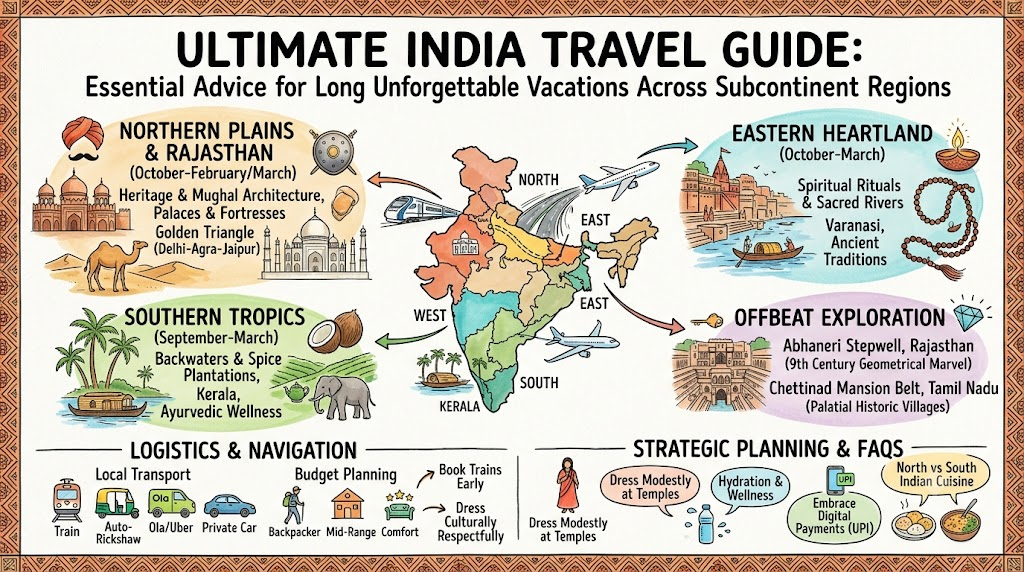
Introduction
Most travelers dream of fleeing sanitized, predictable tourist bubble destinations in search of real soul-stirring discovery. India offers an intense contrast to homogenized vacation spots, pulling you straight into a sensory tapestry of ancient ritual, architectural genius, and raw human warmth.
Traveling across India is not merely a vacation; it is an immersive rite of passage. Here, millennial-old spiritual practices flourish alongside bustling modern metropolises, inviting you to connect deeply with living traditions rather than just observe them.
Why India is a must-visit city
India stands as one of the most culturally dense and historically rich subcontinents on the planet. From the snow-capped Himalayan ridges in the north to the serene tropical backwaters of the south, it forms an unparalleled canvas of geographical diversity.
Navigating the country has evolved dramatically, thanks to a world-class railway network (Vande Bharat express trains), expansive modern expressways, and extensive domestic air connectivity servicing budget and luxury travelers alike. Whether you are an independent backpacker relying on local sleeper trains or a luxury seeker booking heritage palace stays, India caters seamlessly to every archetype.
The core travel circuit spans the iconic Golden Triangle (Delhi-Agra-Jaipur) in the north, the spiritual heartland of Varanasi along the Ganges, the serene backwaters of Kerala, and the sun-soaked coastlines of Goa.
| Region | Primary Highlight | Connectivity Hub | Best Season |
| Northern Plains | Heritage & Mughal Architecture | Indira Gandhi Int’l Airport (DEL) | October to March |
| Rajasthan Desert | Palaces & Fortresses | Jaipur International Airport (JAI) | November to February |
| Eastern Heartland | Spiritual Rituals & Sacred Rivers | Lal Bahadur Shastri Airport (VNS) | October to March |
| Southern Tropics | Backwaters & Spice Plantations | Cochin International Airport (COK) | September to March |
Best Places or Experiences
Taj Mahal at Golden Hour.
Sacred Ganga Aarti in Varanasi.
Palace of Winds in Jaipur.
Kerala Backwaters Houseboat Cruise.
Taj Mahal, Agra
The Taj Mahal stands as an unprecedented pinnacle of Indo-Islamic Mughal architecture, commissioned by Emperor Shah Jahan in 1631 in memory of his beloved wife Mumtaz Mahal. Constructed entirely of translucent white Makrana marble inlaid with semi-precious stones including lapis lazuli and jasper, the monument shifts in hue from soft pink at sunrise to brilliant white under midday sun.
Beyond its legendary romance, the site represents master-level engineering featuring perfect bilateral symmetry, octagonal chambers, and intricate geometric gardens framed by the Yamuna River. Walking through the imposing red sandstone gateway reveals a breathtaking sight that leaves visitors mesmerized by its sheer scale and craftsmanship.
- Location: Agra District, Uttar Pradesh (Approx. 210 km south of New Delhi)
- Why it is worth visiting: UNESCO World Heritage site and one of the New Seven Wonders of the World exhibiting flawless marble inlay work.
- Best things to do: View the monument from Mehtab Bagh across the Yamuna at sunset, photograph the reflection pool at dawn, and explore the intricate marble inlay carvings up close inside the main mausoleum.
- Best time to visit: Sunrise (sunrise entry opens 30 minutes before dawn) to avoid massive crowds and capture optimal soft lighting.
- Ideal for whom: Architecture enthusiasts, couples, historians, and first-time travelers to Asia.
- Travel tip: The main complex is closed to visitors every Friday; plan your Agra itinerary strictly around this schedule.
Ghats of Varanasi
Varanasi, or Kashi, is one of the world’s oldest continually inhabited cities, acting as the spiritual beating heart of Hinduism along the banks of the sacred Ganges River. The riverfront features 84 distinct stone ghats (steps leading to water) where daily life, sacred rituals, and ancient cremation traditions unfold side-by-side in uninterrupted continuity.
Witnessing the city wake up at dawn during a silent wooden boat ride offers an unfiltered glimpse into Indian spirituality, where devotion, philosophy, and daily bathing rituals merge into an extraordinary visual spectacle.
- Location: Varanasi District, Eastern Uttar Pradesh (Approx. 320 km east of Lucknow)
- Why it is worth visiting: Unmatched spiritual immersion offering raw insights into Hindu rituals, ancient philosophy, and life-and-death cultural traditions.
- Best things to do: Take a dawn boat ride from Assi Ghat to Manikarnika Ghat, attend the evening Ganga Aarti ceremony at Dashashwamedh Ghat, and explore the maze-like ancient alleys behind the riverfront.
- Best time to visit: Early morning (5:00 AM – 7:00 AM) for tranquil river cruises and dusk (6:00 PM) for the ritual fire ceremonies.
- Ideal for whom: Cultural seekers, solo travelers, photographers, and spiritual explorers.
- Travel tip: Dress modestly covering shoulders and knees out of respect for active worship spaces, and avoid taking photos of cremations at Manikarnika Ghat.
Amer Fort and Hawa Mahal, Jaipur
Jaipur, the capital of Rajasthan, is an architectural masterpiece painted in distinct terracotta pink shades. Built by Maharaja Sawai Jai Singh II, the city features defensive hill forts like Amer Fort alongside iconic urban facades like Hawa Mahal (Palace of Winds), which was constructed with 953 honeycombed windows allowing royal women to observe street pageants unseen.
Amer Fort dominates the rugged Aravalli hills with its massive ramparts, opulent court halls like the Sheesh Mahal (Mirror Palace), and sweeping vistas over Maota Lake. The fusion of Rajput and Mughal design elements makes exploring these stone corridors feel like stepping directly into a royal chronicle.
- Location: Jaipur District, Rajasthan (Amer Fort is 11 km north of Jaipur city center)
- Why it is worth visiting: Exceptional preservation of Royal Rajputana architecture, hilltop fortifications, and vibrant pink sandstone bazaars.
- Best things to do: Marvel at thousands of convex mirrors in the Sheesh Mahal, capture the facade of Hawa Mahal from a rooftop cafe across the street, and watch the evening sound and light show at Amer Fort.
- Best time to visit: November through February when desert temperatures drop to a comfortable range (15°C to 25°C).
- Ideal for whom: History lovers, family travelers, wedding shoppers, and design fans.
- Travel tip: Purchase a combined composite ticket at your first monument to save up to 40% on entry fees across Jaipur’s major palaces.
Alleppey Backwaters, Kerala
The backwaters of Alleppey (Alappuzha) form a serene network of brackish lagoons, canals, and lakes running parallel to the Arabian Sea coast in Kerala. Traditionally used as rice barges (Kettuvallams), handcrafted wooden vessels have been converted into eco-friendly floating houseboats that glide past coconut groves, emerald paddy fields, and quiet village settlements.
Sailing through these calm waterways reveals a completely different pace of life, where local villagers travel by wooden canoes and birdlife thrives along palm-fringed banks. It offers an incredible natural antidote to the chaotic energy of India’s northern urban hubs.
- Location: Alappuzha District, Kerala (Approx. 53 km south of Kochi)
- Why it is worth visiting: A unique aquatic ecosystem and peaceful cultural landscape offering luxury houseboat stays and authentic South Indian coastal cuisine.
- Best things to do: Take an overnight private houseboat cruise through Vembanad Lake, rent a traditional canoe for narrow canal tours, and feast on fresh Karimeen (pearl spot fish) cooked in banana leaves.
- Best time to visit: October to March for cool breezes and low humidity; monsoon (July–August) for lush greenery.
- Ideal for whom: Honeymooners, nature lovers, slow-travel enthusiasts, and culinary explorers.
- Travel tip: Rent smaller rowboats or kayaks if you want to access tiny rural villages that large houseboats cannot reach.
Offbeat Exploration: Hidden Gems Tourists Miss
Abhaneri Stepwell (Chand Baori), Rajasthan
Hidden away in a quiet village between Agra and Jaipur lies Chand Baori, one of the deepest and largest stepwells in the world. Built in the 9th century to harvest rainwater in the arid desert, this geometrical marvel features 3,500 narrow steps carved into 13 precisely symmetrical tiers descending 100 feet into the earth.
Insider Tip: Most day trips skip Abhaneri, but stopping here during a road transfer between Jaipur and Agra offers an otherworldly visual experience without large tourist crowds.
Chettinad Mansion Heritage Belt, Tamil Nadu
Tucked away in southern Tamil Nadu, the Chettinad region features over 70 historic villages filled with palatial 19th-century mansions built by the wealthy merchant community of the Nattukottai Chettiars. These grand homes display imported Italian marble, Belgian glass, rare Burmese teakwood, and traditional hand-made Athangudi tiles.
Exploring these quiet, living heritage streets allows you to witness incredible architecture while experiencing world-famous, aromatic Chettinad culinary feasts served on banana leaves.
Detailed Practical Guidance for Travelers
| Destination | Standard Entry Fee | General Timings | Best Local Food Options Nearby | Recommended Nearby Attractions |
| Taj Mahal | ₹1,100 (Foreigners) / ₹50 (Indians) | Sunrise to Sunset (Closed Fridays) | Bedai & Jalebi at Deviram; Mughlai curries | Agra Fort, Mehtab Bagh, Itmad-ud-Daulah |
| Varanasi Ghats | Free (Boats ₹300-₹800/hr) | 24 Hours Open (Aarti: 6:30 PM) | Kachori Sabzi at Ram Bhandar; Blue Lassi | Sarnath Ancient Ruins, Kashi Vishwanath |
| Amer Fort | ₹550 (Foreigners) / ₹100 (Indians) | 8:00 AM – 5:30 PM, 6:30 PM – 9:15 PM | Pyaaz Kachori at Rawat; Dal Baati Churma | Jaigarh Fort, Nahargarh Fort, Stepwell |
| Alleppey Backwaters | Free (Houseboats ₹6,000-₹15,000/night) | Daytime cruising (6:00 AM – 6:00 PM) | Karimeen Pollichathu; Kerala Fish Curry | Marari Beach, Pathiramanal Island |
Logistics & On-Ground Navigation
Local Transport Options
- Indian Railways: Book AC 2-Tier or AC 3-Tier train tickets well in advance using the official IRCTC platform for comfortable long-distance travel.
- Auto-Rickshaws & E-Rickshaws: Excellent for short, inner-city transfers. Always agree on a fare before getting in, or ask the driver to use the meter.
- App-Based Cab Services: Uber and Ola operate reliably across major Indian cities, offering transparent upfront pricing and safe rides.
- Private Car Rentals: Hiring a dedicated car with a driver for multi-day regional road circuits (such as exploring Rajasthan) provides maximum flexibility.
Budget Planning
- Backpacker / Budget Tier: ₹1,500 – ₹3,000 per day ($18 – $36 USD). Covers hostel dorm beds, street food meals, public transport, and state entry tickets.
- Mid-Range / Comfort Tier: ₹5,000 – ₹12,000 per day ($60 – $145 USD). Includes boutique heritage hotels, private cabs, AC train travel, and sit-down dining.
Safety and Inclusivity Tips
- For Families: Stick to bottled drinking water, pack basic stomach medications, and schedule afternoon downtime during summer days to keep kids comfortable.
- For Couples: Public displays of affection (PDA) remain culturally conservative in smaller towns; keep gestures modest outside resort areas.
- General Safety Advice: Save localized emergency contacts, register for a local e-SIM upon landing at the airport, and keep digital copies of your passport and visa.
Strategic Travel Planning Guardrails
Travel Planning Tips for India
- Book Train Tickets Early: Train berths open 60 to 120 days ahead; popular routes fill up quickly during local festive seasons.
- Embrace Digital Payments (UPI): Download payment apps or carry small cash notes (₹10, ₹20, ₹100) since street vendors often lack change for large bills.
- Dress Culturally Respectfully: Pack light, breathable cotton clothes that cover shoulders and knees, especially when visiting temples, mosques, or rural hubs.
- Pacing Over Distance: Do not try to cover the entire country in two weeks; focus deeply on one or two regional circuits to avoid travel exhaustion.
- Hydration & Wellness: Stick exclusively to sealed bottled water or verified filtered sources, and avoid ice cubes at unverified street stalls.
Common Mistakes to Avoid
- Overpacking Itineraries: Trying to visit Delhi, Agra, Jaipur, Varanasi, and Kerala within 7 days leaves you exhausted inside transit terminals.
- Ignoring Sub-Regional Climates: Assuming India is warm year-round is a mistake; northern cities can get surprisingly cold in December and January.
- Trusting Unsolicited “Guides”: Polite strangers at train stations claiming your hotel is “closed” or “burned down” are usually pushing commission schemes.
- Skipping Local Street Foods: Avoid missing clean, highly reviewed local food stalls out of fear; fresh, hot-cooked street food is often safer than stagnant hotel buffets.
- Overpaying for Souvenirs: Always bargain politely at traditional street bazaars where initial asking prices for tourists are often marked up.
Suggested Itinerary Blueprints
1. 3-Day Quick Dash (Golden Triangle Express)
Targeted at travelers short on time who want to witness India’s grand Mughal and Rajput architectural landmarks rapidly.
- Day 1: Arrive in Delhi, explore Humayun’s Tomb, and take an evening train or private drive to Agra.
- Day 2: Marvel at the Taj Mahal at sunrise, explore Agra Fort, and drive to Jaipur via the Abhaneri Stepwell.
- Day 3: Tour Jaipur’s Hawa Mahal and Amer Fort before returning to Delhi for an international departure flight.
2. 7-Day Deep-Dive (Heritage & Spiritual Heartland Loop)
A balanced week-long journey combining imperial history with deep spiritual immersion.
- Day 1–2 (Delhi): Explore Old Delhi’s Chandni Chowk bazaars, Qutub Minar, and street food corridors.
- Day 3–4 (Agra & Jaipur): Visit the Taj Mahal, transfer to Jaipur, and discover royal palaces and textile markets.
- Day 5–7 (Varanasi): Fly from Jaipur to Varanasi. Spend two full days experiencing morning boat rides, evening Ganga Aarti, and the ancient ruins of Sarnath.
3. Complete Weekend Travel Plan (Southern Backwater Retreat)
A relaxing three-day coastal escape designed to refresh your mind and senses.
- Friday: Arrive at Kochi Airport, explore historic Fort Kochi’s Chinese fishing nets, and stay at a seaside heritage hotel.
- Saturday: Drive to Alleppey (1.5 hours), board a private luxury houseboat, and cruise through peaceful backwater lagoons.
- Sunday: Enjoy a traditional South Indian breakfast on the water, disembark in the afternoon, and transfer back to Kochi for return travel.
Common Tourist Mistakes to Avoid
Geographic Blunders
Attempting to combine geographically distant zones—like the Himalayan peaks of Himachal Pradesh with the tropical beaches of Goa—in a single week leads to spending most of your holiday inside airport terminals.
Commercial Traps
Spending precious holiday hours inside modern, air-conditioned shopping malls rather than exploring centuries-old street bazaars deprives you of authentic cultural interactions and local craftsmanship.
Neglecting Alternative Zones
Focusing only on famous monuments means missing out on quiet art precincts like Fort Kochi in Kerala or Hauz Khas Village in Delhi, where modern art galleries and independent cafes thrive.
Transport Overpayment
Accepting flat rates from unmetered taxis outside airport exits often results in paying three times the fair price. Always use official pre-paid taxi booths or ride-sharing apps like Uber and Ola.
Luxury Dining Bias
Dining strictly inside five-star international hotel restaurants deprives you of India’s true culinary soul. Local eateries serving fresh dosas, regional thalis, and hot parathas offer unmatched flavor and authenticity.
Frequently Asked Questions
1. Is traveling across India safe for first-time international visitors?
Yes, India is generally safe and welcoming for international travelers. Maintaining standard urban awareness, using reliable app-based transport, avoiding isolated areas late at night, and dressing modestly helps ensure a smooth trip.
2. What is the absolute best time of year to visit India?
The ideal travel window for most of India is between October and March. During these winter months, temperatures remain pleasant, skies are clear, and humidity drops significantly across both northern plains and southern coastal states.
3. Do I need a visa prior to arriving in India?
Most foreign nationals require a valid passport and an Indian visa. Many nationalities qualify for an online e-Visa, which should be applied for through official government portals at least 7 to 14 days before your planned departure.
4. How can I avoid stomach bugs or travel sickness during my trip?
Drink bottled or filtered water, avoid unpasteurized dairy, skip raw salads washed in tap water, and eat fresh, hot food from busy stalls with high customer turnaround. Carrying hand sanitizer and basic probiotic medications is also recommended.
5. How far in advance should I book long-distance train tickets?
Train bookings open up to 60 to 120 days in advance. Popular AC classes on major routes sell out quickly, so it is best to reserve your berths as early as your itinerary is confirmed.
6. Is English widely spoken across different regions of India?
Yes, English is widely spoken and understood in major cities, hotels, transport hubs, restaurants, and popular tourist destinations, making daily navigation straightforward for English-speaking travelers.
7. Should I carry cash or rely primarily on credit cards?
While luxury hotels, modern shops, and sit-down restaurants accept international credit cards, carrying local cash in small denominations is essential for tipping, auto-rickshaws, and buying from local market stalls.
8. What should I wear when visiting religious sites and temples?
Dress conservatively by keeping your shoulders, chest, and knees covered. Be prepared to remove your shoes before entering temple premises, and consider wearing easy slip-on shoes or carrying socks for hot stone courtyards.
9. How do I get a local SIM card upon arrival?
You can purchase a physical local SIM card or set up an e-SIM at international arrival hubs like Delhi or Mumbai airports. You will need your passport, visa copy, and a passport-sized photograph for verification.
10. What is the difference between North Indian and South Indian cuisine?
North Indian food leans heavily on wheat breads (roti, naan), creamy rich gravies, and aromatic spice blends. South Indian cuisine relies more on rice, coconut bases, lentils, and crispy fermented crepes like dosas and idlis.
11. Is hiring a private driver expensive for regional road trips?
Hiring a private car with a dedicated driver is surprisingly affordable in India, especially for groups or families. It offers great convenience for custom road trips across regions like Rajasthan or Kerala.
12. Can I use my home country’s mobile payment apps in India?
International mobile payment apps generally do not work on India’s local UPI network unless connected to an Indian bank account. Foreign travelers should carry cash or use international credit cards alongside tourist-specific digital wallet solutions.
Conclusion
Choosing to journey through India is an invitation to step away from the ordinary and embrace a travel experience that engages all your senses. Long after you return home, it is the lingering aromas of freshly ground spices, the warm smiles of local hosts, the serene hum of river rituals, and the timeless grandeur of sandstone palaces that remain vividly etched in your memory.

Foreign travelers frequently encounter severe digital transaction barriers when local merchant QR codes reject non-domestic bank accounts. Carrying physical cash buffers alongside offline transit navigation packs remains crucial across remote regional travel corridors.