MOTOSHARE 🚗🏍️
Rent Bikes & Cars Directly from Owners
Motoshare connects vehicle owners with people who need bikes and cars on rent. Owners earn from idle vehicles, and renters get flexible ride options.
Visit Motoshare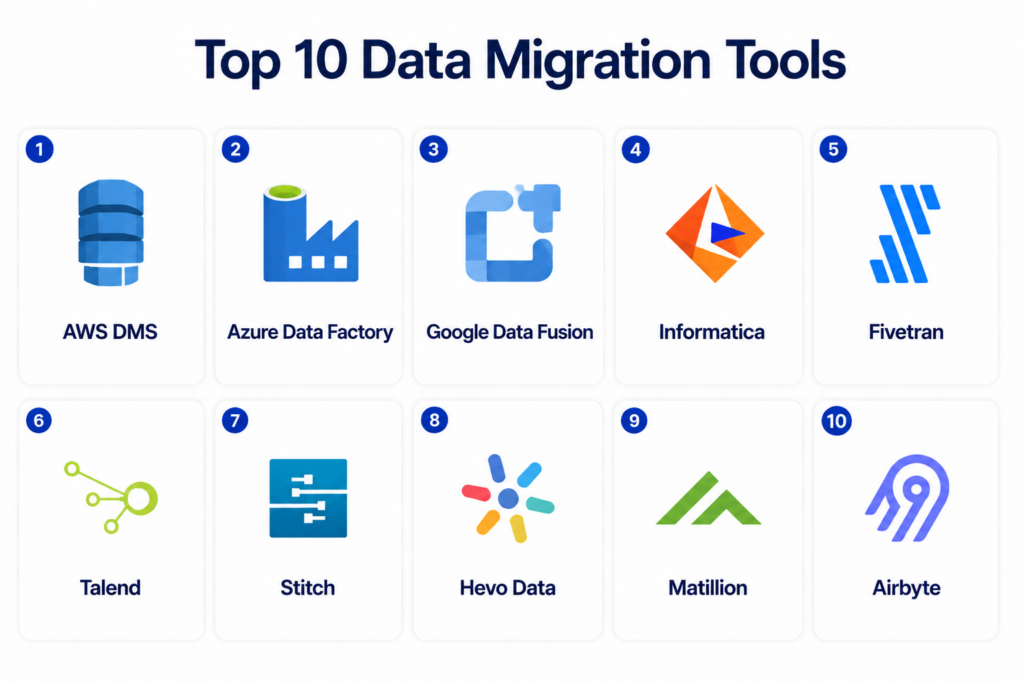
Introduction
Data migration tools are software platforms designed to move, transform, and synchronize data between systems, databases, applications, or cloud environments. These tools ensure that data is transferred accurately, securely, and efficiently when organizations upgrade systems, move to the cloud, consolidate databases, or modernize legacy infrastructure.In today’s data-driven world, organizations handle massive volumes of structured and unstructured data across SaaS apps, on-prem systems, and multi-cloud environments. Manual migration is risky and error-prone, so modern tools now automate extraction, transformation, validation, and loading processes while minimizing downtime and ensuring data integrity. These platforms also increasingly include AI-based mapping, real-time replication, and schema conversion capabilities.
Real-world use cases:
- Migrating on-prem databases to cloud platforms
- Consolidating multiple SaaS data sources into a data warehouse
- Upgrading legacy ERP/CRM systems
- Synchronizing data between applications in real time
- Moving analytics workloads to modern data platforms
What buyers should evaluate:
- Source and destination system compatibility
- Real-time vs batch migration capabilities
- Data transformation and mapping features
- Downtime minimization and CDC support
- Security, encryption, and compliance readiness
- Scalability for large datasets
- Monitoring and error handling tools
- Cloud vs on-prem deployment flexibility
- Ease of use and automation level
- Cost and licensing model
Best for: Enterprise data teams, cloud architects, DevOps engineers, analytics teams, and organizations modernizing legacy systems.
Not ideal for: Small-scale manual data transfers or non-technical users with one-time simple file moves.
Key Trends in Data Migration Tools
- Growth of cloud-native migration platforms
- Increased adoption of real-time CDC (Change Data Capture) pipelines
- AI-assisted schema mapping and transformation
- Rise of ELT over traditional ETL architectures
- Strong focus on zero-downtime migration strategies
- Expansion of multi-cloud and hybrid migration support
- Built-in data governance and compliance enforcement
- Self-service no-code migration tools for business users
- Automation-first migration workflows replacing manual scripting
- Integration with modern data stacks like Snowflake, Databricks, and BigQuery
How We Selected These Tools (Methodology)
- Enterprise adoption and industry usage
- Support for structured and unstructured data migration
- Performance in large-scale migrations
- Cloud and hybrid compatibility
- Automation and CDC capabilities
- Security and compliance features
- Integration ecosystem strength
- Ease of deployment and usability
- Scalability for enterprise workloads
- Vendor reliability and ecosystem maturity
Top 10 Data Migration Tools
#1 — AWS Database Migration Service (DMS)
Short description:
AWS DMS is a fully managed migration service that enables secure and scalable migration of databases into AWS with minimal downtime using continuous replication and change data capture.
Key Features
- Continuous data replication (CDC)
- Heterogeneous database migration support
- Minimal downtime migration
- Schema and data migration support
- Real-time data streaming
- Integration with AWS ecosystem
Pros
- Highly scalable and reliable
- Low downtime migrations
- Strong AWS integration
Cons
- AWS ecosystem dependency
- Requires tuning for complex workloads
Platforms / Deployment
- Cloud (AWS managed service)
Security & Compliance
- IAM-based access control
- Encryption in transit and at rest
- AWS compliance frameworks
Integrations & Ecosystem
- Amazon RDS, S3, Redshift
- CloudWatch monitoring
- AWS Glue and analytics tools
- DevOps pipelines
Support & Community
- AWS enterprise support
- Extensive documentation
#2 — Microsoft Azure Data Factory
Short description:
Azure Data Factory is a cloud-based data integration and migration service that enables creation of scalable data pipelines for ETL and ELT workloads across hybrid environments.
Key Features
- Data pipeline orchestration
- ETL and ELT support
- Hybrid data integration
- Built-in connectors
- Data transformation workflows
- Scheduling and monitoring
Pros
- Strong enterprise data integration
- Deep Azure ecosystem support
- Flexible pipeline design
Cons
- Azure dependency
- Complex for beginners
Platforms / Deployment
- Cloud (Azure)
Security & Compliance
- Azure Active Directory integration
- Encryption in transit and at rest
- Enterprise governance controls
Integrations & Ecosystem
- Azure Synapse Analytics
- Power BI
- Azure SQL Database
- Third-party SaaS systems
Support & Community
- Microsoft enterprise support
- Strong documentation ecosystem
#3 — Google Cloud Data Fusion
Short description:
Google Cloud Data Fusion is a fully managed data integration service that allows visual building of data pipelines for migration and transformation.
Key Features
- Visual pipeline builder
- Prebuilt connectors
- Real-time and batch processing
- Data transformation tools
- Cloud-native execution
- Metadata management
Pros
- Easy visual interface
- Strong GCP integration
- Good for hybrid pipelines
Cons
- Limited outside GCP ecosystem
- Advanced features require learning
Platforms / Deployment
- Cloud (Google Cloud Platform)
Security & Compliance
- IAM-based security
- Encryption via GCP services
- Network security controls
Integrations & Ecosystem
- BigQuery
- Cloud Storage
- Pub/Sub
- GCP analytics stack
Support & Community
- Google Cloud support
- Developer community resources
#4 — Informatica Intelligent Data Management Cloud
Short description:
Informatica is a leading enterprise-grade data integration platform offering advanced data migration, governance, and transformation capabilities for large-scale environments.
Key Features
- AI-powered data mapping
- Metadata management
- Data quality controls
- Multi-cloud support
- Real-time and batch integration
- Data governance tools
Pros
- Strong enterprise capabilities
- High scalability
- Advanced governance features
Cons
- High cost
- Complex implementation
Platforms / Deployment
- Cloud / Hybrid
Security & Compliance
- Role-based access control
- Data encryption
- Compliance-ready governance
Integrations & Ecosystem
- Cloud platforms (AWS, Azure, GCP)
- ERP and CRM systems
- Data warehouses
- BI tools
Support & Community
- Enterprise support
- Strong global user base
#5 — Fivetran
Short description:
Fivetran is an automated data migration platform focused on zero-maintenance pipelines that continuously sync data from sources to destinations.
Key Features
- Fully automated data pipelines
- Change Data Capture support
- Prebuilt connectors library
- Schema drift handling
- ELT-based architecture
- Cloud warehouse integration
Pros
- Very easy to use
- Low maintenance
- Fast setup
Cons
- Expensive at scale
- Limited transformation flexibility
Platforms / Deployment
- Cloud-based SaaS
Security & Compliance
- Encryption in transit and at rest
- SOC2 compliance (vendor-reported)
- Access controls
Integrations & Ecosystem
- Snowflake
- BigQuery
- Redshift
- SaaS applications
Support & Community
- Enterprise support tiers
- Strong documentation
#6 — Talend Data Integration
Short description:
Talend is a powerful open-source and enterprise data integration platform supporting ETL, ELT, and real-time data migration workflows.
Key Features
- ETL and ELT pipelines
- Data quality tools
- Cloud and on-prem support
- API integration
- Data governance
- Workflow automation
Pros
- Flexible deployment options
- Strong integration capabilities
- Open-source foundation
Cons
- Complex UI
- Performance tuning required
Platforms / Deployment
- Cloud / On-prem / Hybrid
Security & Compliance
- Encryption support
- Role-based access control
- Governance features
Integrations & Ecosystem
- Databases and warehouses
- SaaS platforms
- API services
- Big data ecosystems
Support & Community
- Enterprise support
- Active open-source community
#7 — Stitch Data Loader
Short description:
Stitch is a lightweight cloud ETL tool designed for simple and fast data migration for small to mid-sized teams.
Key Features
- Simple ETL pipelines
- Prebuilt connectors
- Cloud-based architecture
- Automatic data loading
- Scheduling support
- Basic transformation support
Pros
- Easy to use
- Fast implementation
- Affordable for small teams
Cons
- Limited enterprise features
- Basic transformation capabilities
Platforms / Deployment
- Cloud
Security & Compliance
- Standard encryption
- Access controls
Integrations & Ecosystem
- SaaS applications
- Data warehouses
- BI tools
Support & Community
- Basic support options
- Documentation available
#8 — Hevo Data
Short description:
Hevo Data is a no-code data pipeline platform that enables real-time data migration and integration across multiple sources.
Key Features
- Real-time data pipelines
- No-code interface
- 150+ connectors
- Automated schema handling
- Data transformation layer
- Monitoring dashboard
Pros
- Easy no-code setup
- Real-time processing
- Good usability
Cons
- Limited deep customization
- Pricing increases with scale
Platforms / Deployment
- Cloud
Security & Compliance
- Encryption in transit and at rest
- Access control policies
Integrations & Ecosystem
- Cloud data warehouses
- SaaS applications
- Analytics tools
Support & Community
- Chat and email support
- Documentation
#9 — Matillion
Short description:
Matillion is a cloud-native ETL and data migration platform designed for modern data warehouses like Snowflake and BigQuery.
Key Features
- Cloud-native ETL workflows
- Visual pipeline design
- Data transformation tools
- ELT architecture
- API integration
- Scheduling automation
Pros
- Strong cloud warehouse focus
- Scalable architecture
- Good performance
Cons
- Cloud-only focus
- Learning curve for beginners
Platforms / Deployment
- Cloud
Security & Compliance
- Encryption and IAM controls
- Enterprise security policies
Integrations & Ecosystem
- Snowflake
- BigQuery
- Redshift
- Cloud ecosystems
Support & Community
- Enterprise support
- Strong documentation
#10 — Airbyte
Short description:
Airbyte is an open-source data integration platform that enables flexible and customizable data migration pipelines for modern data stacks.
Key Features
- Open-source connectors framework
- ELT-based architecture
- Custom connector development
- Cloud and self-hosted options
- Incremental data sync
- Modular pipeline design
Pros
- Highly flexible
- Open-source extensibility
- Strong developer control
Cons
- Requires technical expertise
- Maintenance overhead for self-hosted setups
Platforms / Deployment
- Cloud / Self-hosted / Hybrid
Security & Compliance
- Encryption support
- Role-based access (enterprise features)
Integrations & Ecosystem
- Data warehouses
- APIs and databases
- Modern data stacks
- Cloud platforms
Support & Community
- Strong open-source community
- Enterprise support available
Comparison Table (Top 10)
| Tool Name | Best For | Platforms Supported | Deployment | Standout Feature | Public Rating |
|---|---|---|---|---|---|
| AWS DMS | Cloud DB migration | AWS | Cloud | Continuous replication | N/A |
| Azure Data Factory | Enterprise pipelines | Azure | Cloud | Pipeline orchestration | N/A |
| Google Data Fusion | Visual ETL | GCP | Cloud | Visual pipeline builder | N/A |
| Informatica | Enterprise governance | Multi-cloud | Cloud/Hybrid | AI-driven mapping | N/A |
| Fivetran | Automated pipelines | Multi-cloud | Cloud | Zero-maintenance sync | N/A |
| Talend | Flexible ETL | Multi-cloud | Hybrid | Data governance suite | N/A |
| Stitch | SMB migration | Cloud | Cloud | Simple ETL pipelines | N/A |
| Hevo Data | Real-time sync | Multi-cloud | Cloud | No-code pipelines | N/A |
| Matillion | Cloud warehouses | Cloud | Cloud | ELT optimization | N/A |
| Airbyte | Developer teams | Multi-cloud | Hybrid | Open-source connectors | N/A |
Evaluation & Scoring of Data Migration Tools
| Tool Name | Core (25%) | Ease (15%) | Integrations (15%) | Security (10%) | Performance (10%) | Support (10%) | Value (15%) | Weighted Total |
|---|---|---|---|---|---|---|---|---|
| AWS DMS | 10 | 9 | 10 | 9 | 9 | 9 | 9 | 9.4 |
| Azure Data Factory | 9 | 9 | 10 | 9 | 9 | 9 | 9 | 9.2 |
| Google Data Fusion | 9 | 8 | 9 | 9 | 9 | 8 | 9 | 8.9 |
| Informatica | 10 | 7 | 10 | 10 | 9 | 9 | 8 | 9.0 |
| Fivetran | 9 | 10 | 10 | 9 | 9 | 9 | 8 | 9.2 |
| Talend | 9 | 8 | 9 | 9 | 8 | 9 | 9 | 8.8 |
| Stitch | 8 | 9 | 8 | 8 | 8 | 8 | 9 | 8.3 |
| Hevo Data | 8 | 9 | 9 | 9 | 9 | 8 | 9 | 8.7 |
| Matillion | 9 | 8 | 9 | 9 | 9 | 8 | 8 | 8.8 |
| Airbyte | 9 | 7 | 9 | 9 | 9 | 8 | 10 | 8.8 |
Which Data Migration Tool Is Right for You?
Enterprise Cloud Migration Teams
- AWS DMS
- Azure Data Factory
- Informatica
Modern Data Stack Teams
- Fivetran
- Airbyte
- Matillion
SMB & Simple Migration Needs
- Stitch
- Hevo Data
Hybrid & Custom Engineering Teams
- Talend
- Airbyte
Frequently Asked Questions (FAQs)
1. What is a data migration tool?
It is software that moves data between systems, databases, or cloud platforms safely and efficiently.
2. Why are data migration tools important?
They reduce errors, automate workflows, and minimize downtime during system transitions.
3. What is the difference between ETL and data migration?
ETL is continuous data processing, while migration is usually a one-time or phased transfer.
4. What is CDC in migration tools?
Change Data Capture tracks and syncs only changed data in real time.
5. Are these tools cloud-based?
Most modern tools are cloud-native, but some support hybrid and on-prem deployments.
6. What industries use data migration tools?
Finance, healthcare, retail, SaaS, telecom, and enterprise IT.
7. Are data migration tools secure?
Yes, they use encryption, IAM, and compliance frameworks for security.
8. Can migration tools handle real-time data?
Yes, many tools support streaming and real-time replication.
9. What is the biggest challenge in migration?
Data quality issues and system compatibility problems.
10. What is the future of data migration tools?
AI-driven automation, real-time pipelines, and fully self-healing data systems.
Conclusion
Data migration tools are essential for moving, transforming, and modernizing enterprise data across systems and cloud environments. Platforms like AWS DMS, Azure Data Factory, and Informatica dominate enterprise use cases, while tools like Fivetran, Hevo, and Airbyte power modern data stacks.The right choice depends on your scale, architecture, and modernization goals. Most organizations combine multiple tools to handle migration, transformation, and real-time synchronization efficiently across hybrid environments.
