MOTOSHARE 🚗🏍️
Rent Bikes & Cars Directly from Owners
Motoshare connects vehicle owners with people who need bikes and cars on rent. Owners earn from idle vehicles, and renters get flexible ride options.
Visit Motoshare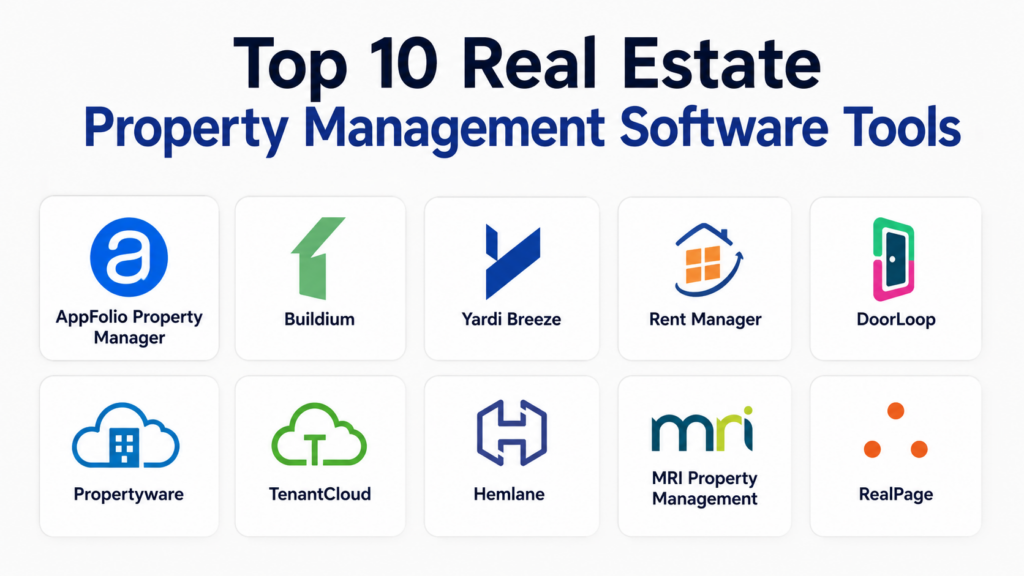
Introduction
Real Estate Property Management Software helps landlords, property managers, real estate companies, and housing operators manage rental properties from one central platform. These tools simplify tenant communication, rent collection, lease tracking, maintenance requests, accounting, inspections, document storage, and owner reporting.Instead of managing properties through spreadsheets, paper files, emails, and manual payment tracking, property management platforms help teams automate daily operations and improve visibility across residential, commercial, student housing, and mixed-use portfolios.
Common real-world use cases include:
- Residential rental management
- Commercial property operations
- Lease and tenant management
- Online rent collection
- Maintenance request tracking
- Owner and investor reporting
Buyers should evaluate:
- Lease and tenant management
- Online rent payment support
- Maintenance workflow automation
- Accounting and reporting tools
- Owner and tenant portals
- Mobile app usability
- Integration ecosystem
- Security controls
- Scalability across property types
- Ease of onboarding
Best for: landlords, property managers, real estate agencies, residential portfolio owners, commercial property operators, multifamily managers, and companies managing multiple rental units.
Not ideal for: individuals managing one very small property with simple manual records, or businesses needing only basic accounting without tenant or lease management.
Key Trends in Real Estate Property Management Software
- Online rent collection is becoming a standard expectation for tenants and landlords.
- Tenant portals are improving communication, payment visibility, and maintenance tracking.
- AI-assisted workflows are helping teams prioritize maintenance and automate responses.
- Mobile-first property management is becoming more important for field teams and tenants.
- Integrated accounting is replacing disconnected bookkeeping tools.
- Digital lease management and e-signature workflows are reducing paperwork.
- Owner portals are improving investor reporting and portfolio transparency.
- Smart building and IoT integrations are expanding in larger property portfolios.
- Cloud-based systems are replacing older desktop-based property tools.
- Compliance, data privacy, and secure payment processing are becoming stronger buyer priorities.
How We Selected These Tools
The tools below were selected based on practical property management use cases, market recognition, feature depth, usability, and suitability for different property sizes.
Selection factors included:
- Property management feature completeness
- Rent collection and accounting capabilities
- Lease and tenant workflow support
- Maintenance request management
- Owner and tenant portal quality
- Mobile usability
- Reporting and analytics
- Integration ecosystem
- Security and access control signals
- Suitability for small landlords, SMB firms, and enterprise portfolios
Top 10 Real Estate Property Management Software Tools
#1 — AppFolio Property Manager
Short description:
AppFolio Property Manager is a widely used cloud-based platform for residential, commercial, community association, and mixed property portfolios. It helps property managers handle leasing, rent collection, accounting, maintenance, tenant communication, reporting, and owner visibility from one system. The platform is especially suitable for growing property management companies that need automation, scalability, and strong operational workflows.
Key Features
- Online rent collection
- Lease management
- Tenant and owner portals
- Maintenance request tracking
- Property accounting
- Reporting dashboards
- Mobile property management tools
Pros
- Strong all-in-one property management functionality
- Good fit for growing portfolios
- Useful automation for rent and maintenance workflows
Cons
- May be costly for very small landlords
- Advanced setup can require onboarding
- Some features may be more than small teams need
Platforms / Deployment
- Web / iOS / Android
- Cloud
Security & Compliance
- Encryption
- MFA
- RBAC
- Secure payment processing
- Compliance details vary by plan
Integrations & Ecosystem
AppFolio supports property operations, accounting, screening, payment, and leasing workflows through a connected ecosystem.
- Payment processing
- Tenant screening
- Listing syndication
- Accounting workflows
- Maintenance tools
- APIs where available
Support & Community
Strong onboarding resources, documentation, training materials, and support options for professional property management teams.
#2 — Buildium
Short description:
Buildium is a property management platform designed for residential property managers, landlords, community associations, and small to mid-sized real estate portfolios. It provides lease tracking, rent collection, tenant communication, accounting, maintenance, and reporting tools. Buildium is popular because it balances usability with a strong set of core property management capabilities.
Key Features
- Lease and tenant management
- Online rent payments
- Maintenance request workflows
- Property accounting
- Owner and resident portals
- Document storage
- Reporting tools
Pros
- Good usability for SMB property managers
- Strong accounting and tenant workflows
- Suitable for residential portfolios
Cons
- Enterprise customization may be limited
- Some advanced features may require higher plans
- Commercial property depth may vary
Platforms / Deployment
- Web / iOS / Android
- Cloud
Security & Compliance
- Encryption
- MFA
- RBAC
- Secure payment processing
Integrations & Ecosystem
Buildium connects property operations with payments, leasing, communication, and accounting-related workflows.
- Online payments
- Tenant screening
- Insurance workflows
- Accounting tools
- Listing platforms
- APIs where available
Support & Community
Buildium provides documentation, customer support, training content, and onboarding resources for property management teams.
#3 — Yardi Breeze
Short description:
Yardi Breeze is a cloud-based property management solution built for residential, commercial, affordable housing, self-storage, and association management needs. It offers rent collection, accounting, leasing, maintenance, reporting, and tenant communication features. Yardi Breeze is suitable for property managers who want a simplified version of a larger real estate software ecosystem.
Key Features
- Property accounting
- Online payments
- Lease management
- Maintenance tracking
- Tenant portals
- Vacancy and leasing tools
- Reporting dashboards
Pros
- Strong real estate software ecosystem
- Useful for multiple property types
- Cloud-based and accessible
Cons
- Some workflows may require training
- Advanced enterprise depth may require other Yardi products
- Customization may vary by plan
Platforms / Deployment
- Web
- Cloud
Security & Compliance
- Encryption
- RBAC
- Secure payment workflows
- Compliance details vary by product and plan
Integrations & Ecosystem
Yardi Breeze benefits from the broader Yardi ecosystem for real estate operations, payments, leasing, and reporting.
- Payment systems
- Tenant portals
- Leasing workflows
- Accounting tools
- Yardi ecosystem products
Support & Community
Yardi offers product training, support resources, documentation, and a large real estate technology customer base.
#4 — Rent Manager
Short description:
Rent Manager is a flexible property management platform used by residential, commercial, manufactured housing, self-storage, and association management companies. It includes accounting, leasing, maintenance, reporting, communication, and tenant portal capabilities. The platform is known for customization and broad property type coverage, making it useful for businesses with diverse portfolio needs.
Key Features
- Full property accounting
- Lease management
- Online payments
- Maintenance tracking
- Tenant and owner portals
- Custom reporting
- Communication tools
Pros
- Highly flexible platform
- Supports multiple property types
- Strong accounting capabilities
Cons
- Customization may require setup time
- Interface can feel complex for beginners
- Best suited for teams with defined workflows
Platforms / Deployment
- Web / Windows / iOS / Android
- Cloud / Hybrid
Security & Compliance
- Encryption
- RBAC
- MFA support may vary by setup
- Secure payment processing
Integrations & Ecosystem
Rent Manager supports a broad ecosystem for accounting, payments, communications, inspections, and operational workflows.
- Payment processors
- Accounting systems
- Inspection tools
- Communication platforms
- APIs
- Maintenance systems
Support & Community
Rent Manager provides training, documentation, implementation assistance, and support resources for professional property managers.
#5 — DoorLoop
Short description:
DoorLoop is a modern property management platform designed for landlords, property managers, and real estate teams managing residential, commercial, student housing, and mixed-use portfolios. It offers rent collection, lease tracking, accounting, maintenance, tenant portals, owner portals, and reporting. DoorLoop is especially attractive for users who want a clean interface and quick onboarding.
Key Features
- Online rent collection
- Lease management
- Property accounting
- Maintenance requests
- Tenant and owner portals
- Document management
- Reporting dashboards
Pros
- Clean and modern interface
- Good fit for small and mid-sized portfolios
- Broad property type support
Cons
- Enterprise depth may be limited for very large portfolios
- Some integrations may vary by plan
- Advanced customization may be limited
Platforms / Deployment
- Web / iOS / Android
- Cloud
Security & Compliance
- Encryption
- MFA
- RBAC
- Secure payment processing
Integrations & Ecosystem
DoorLoop supports payment, accounting, leasing, and communication workflows for property teams.
- QuickBooks
- Online payments
- Tenant screening
- Listing workflows
- APIs where available
Support & Community
DoorLoop provides onboarding, support resources, training materials, and customer assistance for property management teams.
#6 — Propertyware
Short description:
Propertyware is a property management platform focused mainly on single-family rental property management. It helps managers handle leasing, accounting, maintenance, payments, inspections, tenant communication, and owner reporting. The platform is particularly useful for companies managing scattered single-family portfolios and needing operational visibility across multiple owners and properties.
Key Features
- Single-family rental management
- Online rent payments
- Lease tracking
- Maintenance workflows
- Owner portals
- Tenant communication
- Accounting and reporting
Pros
- Strong single-family rental focus
- Good owner reporting capabilities
- Useful for property management companies
Cons
- Less ideal for multifamily-heavy teams
- Interface may require training
- Some workflows may feel complex
Platforms / Deployment
- Web / iOS / Android
- Cloud
Security & Compliance
- Encryption
- RBAC
- Secure payment processing
- Compliance details vary
Integrations & Ecosystem
Propertyware supports rental operations through payments, inspections, accounting, maintenance, and owner reporting workflows.
- Payment systems
- Screening tools
- Inspection workflows
- Accounting systems
- Owner portals
Support & Community
Support resources, documentation, and onboarding are available for professional single-family property management teams.
#7 — TenantCloud
Short description:
TenantCloud is a property management platform designed for landlords, small property managers, and rental owners. It provides tenant management, online payments, lease tracking, maintenance requests, listings, screening, and basic accounting. TenantCloud is well suited for smaller portfolios that need affordable digital tools without the complexity of enterprise property management software.
Key Features
- Tenant management
- Online rent collection
- Lease tracking
- Maintenance requests
- Rental listings
- Tenant screening
- Basic accounting reports
Pros
- Good for small landlords
- Affordable entry point
- Simple tenant communication tools
Cons
- Less suitable for enterprise portfolios
- Advanced accounting depth is limited
- Custom workflows may be basic
Platforms / Deployment
- Web / iOS / Android
- Cloud
Security & Compliance
- Encryption
- Secure payment workflows
- MFA and RBAC availability may vary by plan
Integrations & Ecosystem
TenantCloud connects rental management workflows with payments, listings, screening, and communication tools.
- Payment processing
- Listing syndication
- Screening services
- Accounting exports
- Tenant portals
Support & Community
Support and documentation are available, with stronger suitability for small landlords and independent property owners.
#8 — Hemlane
Short description:
Hemlane is a property management platform built for landlords and rental owners who want to automate rental operations while keeping control of their properties. It supports rent collection, lease management, maintenance coordination, tenant screening, listings, and communication workflows. Hemlane is especially useful for small landlords who want software plus service-assisted property management options.
Key Features
- Online rent collection
- Lease tracking
- Tenant screening
- Maintenance coordination
- Listing syndication
- Communication tools
- Owner dashboards
Pros
- Good for independent landlords
- Helpful maintenance coordination options
- Simple rental workflow automation
Cons
- Not ideal for large enterprise portfolios
- Fewer advanced accounting controls
- Customization may be limited
Platforms / Deployment
- Web
- Cloud
Security & Compliance
- Encryption
- Secure payment workflows
- Compliance details vary
Integrations & Ecosystem
Hemlane supports rental operations through leasing, screening, payment, maintenance, and landlord communication workflows.
- Payment systems
- Listing platforms
- Tenant screening
- Maintenance coordination
- Communication tools
Support & Community
Hemlane provides customer support and guidance focused on landlords and rental property owners.
#9 — MRI Property Management
Short description:
MRI Property Management is an enterprise real estate software platform used by commercial, residential, corporate real estate, and investment management organizations. It provides property accounting, lease administration, reporting, maintenance, compliance workflows, and portfolio management capabilities. MRI is best suited for larger real estate organizations needing configurable workflows and enterprise operational control.
Key Features
- Lease administration
- Property accounting
- Portfolio reporting
- Maintenance management
- Compliance workflows
- Commercial property tools
- Enterprise analytics
Pros
- Strong enterprise capabilities
- Suitable for complex portfolios
- Flexible real estate workflows
Cons
- Complex implementation
- Higher total cost of ownership
- Not ideal for small landlords
Platforms / Deployment
- Web
- Cloud / Hybrid
Security & Compliance
- Encryption
- RBAC
- SSO/SAML
- Audit logs
- Compliance details vary by implementation
Integrations & Ecosystem
MRI supports enterprise real estate operations through a wide ecosystem of accounting, reporting, leasing, investment, and operational integrations.
- ERP systems
- Accounting workflows
- BI tools
- Lease systems
- APIs
- Portfolio management tools
Support & Community
MRI offers enterprise support, implementation services, customer training, and a mature real estate software ecosystem.
#10 — RealPage
Short description:
RealPage is an enterprise property management and real estate operations platform used across multifamily, affordable housing, senior living, commercial, and institutional property portfolios. It supports leasing, accounting, resident management, payments, marketing, analytics, and operational optimization. RealPage is best suited for large property organizations that need enterprise-grade workflows and portfolio-level visibility.
Key Features
- Multifamily property management
- Leasing and resident workflows
- Property accounting
- Payments and billing
- Maintenance operations
- Portfolio analytics
- Marketing and leasing tools
Pros
- Strong enterprise property management depth
- Broad product ecosystem
- Suitable for large portfolios
Cons
- Complex implementation
- Better suited for mature organizations
- Pricing and setup may be high for smaller teams
Platforms / Deployment
- Web
- Cloud
Security & Compliance
- Encryption
- RBAC
- SSO/SAML support
- Audit logs
- Compliance details vary by product
Integrations & Ecosystem
RealPage supports a broad ecosystem for property operations, leasing, payments, analytics, and resident services.
- Payment systems
- Leasing tools
- Resident portals
- Accounting workflows
- Analytics platforms
- APIs where available
Support & Community
RealPage provides enterprise support, implementation services, training, and customer success resources for large property organizations.
Comparison Table
| Tool Name | Best For | Platform Supported | Deployment | Standout Feature | Public Rating |
|---|---|---|---|---|---|
| AppFolio Property Manager | Growing property management firms | Web, iOS, Android | Cloud | All-in-one property operations | N/A |
| Buildium | SMB residential property managers | Web, iOS, Android | Cloud | Lease, rent, and accounting workflows | N/A |
| Yardi Breeze | Multi-property real estate teams | Web | Cloud | Yardi ecosystem access | N/A |
| Rent Manager | Flexible multi-property operations | Web, Windows, iOS, Android | Cloud / Hybrid | Customizable property workflows | N/A |
| DoorLoop | Small and mid-sized portfolios | Web, iOS, Android | Cloud | Modern interface and fast onboarding | N/A |
| Propertyware | Single-family rental managers | Web, iOS, Android | Cloud | Single-family portfolio workflows | N/A |
| TenantCloud | Small landlords | Web, iOS, Android | Cloud | Affordable rental management | N/A |
| Hemlane | Independent landlords | Web | Cloud | Service-assisted rental operations | N/A |
| MRI Property Management | Enterprise real estate portfolios | Web | Cloud / Hybrid | Configurable enterprise workflows | N/A |
| RealPage | Large multifamily portfolios | Web | Cloud | Enterprise resident and leasing ecosystem | N/A |
Evaluation & Scoring of Real Estate Property Management Software
| Tool Name | Core 25% | Ease 15% | Integrations 15% | Security 10% | Performance 10% | Support 10% | Value 15% | Weighted Total |
|---|---|---|---|---|---|---|---|---|
| AppFolio Property Manager | 9.3 | 8.5 | 8.8 | 8.8 | 9.0 | 8.7 | 8.0 | 8.75 |
| Buildium | 8.7 | 8.8 | 8.1 | 8.2 | 8.5 | 8.5 | 8.6 | 8.51 |
| Yardi Breeze | 8.8 | 8.0 | 8.5 | 8.5 | 8.7 | 8.4 | 8.1 | 8.43 |
| Rent Manager | 9.0 | 7.8 | 8.7 | 8.4 | 8.7 | 8.4 | 8.0 | 8.44 |
| DoorLoop | 8.4 | 9.0 | 7.8 | 8.1 | 8.4 | 8.5 | 8.7 | 8.43 |
| Propertyware | 8.5 | 7.9 | 8.0 | 8.0 | 8.3 | 8.2 | 8.1 | 8.19 |
| TenantCloud | 7.8 | 8.8 | 7.2 | 7.6 | 8.0 | 7.8 | 9.0 | 8.03 |
| Hemlane | 7.7 | 8.6 | 7.0 | 7.5 | 7.9 | 8.0 | 8.7 | 7.97 |
| MRI Property Management | 9.2 | 7.0 | 9.0 | 9.0 | 9.0 | 8.6 | 7.2 | 8.49 |
| RealPage | 9.3 | 7.1 | 8.9 | 8.9 | 9.0 | 8.6 | 7.1 | 8.48 |
These scores are comparative and should be used as a practical buying guide, not as fixed vendor rankings. Enterprise tools usually perform better in scalability, integrations, and portfolio control, while SMB-focused platforms often score higher in ease of use and value. The best choice depends on portfolio size, property type, accounting needs, tenant communication requirements, and long-term growth plans.
Which Real Estate Property Management Software Is Right for You?
Solo / Freelancer
Independent landlords managing a small number of units should prioritize simplicity, rent collection, tenant communication, and maintenance tracking. TenantCloud, Hemlane, and DoorLoop are practical options because they offer accessible workflows without heavy enterprise complexity.
SMB
Small and mid-sized property management companies should look for tools that combine accounting, tenant portals, online payments, maintenance tracking, and reporting. Buildium, DoorLoop, and AppFolio are strong choices for growing rental operations.
Mid-Market
Mid-market firms managing multiple property types or larger rental portfolios need stronger reporting, automation, and integrations. AppFolio, Rent Manager, Propertyware, and Yardi Breeze are good options depending on portfolio structure.
Enterprise
Enterprise real estate organizations need scalable systems with lease administration, accounting, reporting, compliance workflows, portfolio analytics, and integration flexibility. MRI Property Management, RealPage, Rent Manager, and Yardi ecosystem products are better suited for this level.
Budget vs Premium
Budget-focused landlords should choose lightweight platforms that cover rent collection, leases, and maintenance. Premium tools are better when teams need advanced accounting, owner reporting, custom workflows, integrations, and multi-property scalability.
Feature Depth vs Ease of Use
Simple tools are faster to adopt and easier for small teams. Enterprise platforms provide deeper controls but often require more onboarding, training, and process planning.
Integrations & Scalability
If your business uses accounting software, payment processors, CRM tools, leasing systems, or BI platforms, integration quality becomes a major decision factor. Larger portfolios should prioritize API access and ecosystem maturity.
Security & Compliance Needs
Property teams handle sensitive tenant, payment, lease, and owner information. Buyers should evaluate encryption, MFA, role-based access, audit logs, secure payment processing, and user permission controls before selecting a platform.
Frequently Asked Questions
1. What is Real Estate Property Management Software?
Real Estate Property Management Software is a digital platform that helps landlords and property managers manage rental operations. It usually includes lease tracking, tenant communication, rent collection, maintenance requests, accounting, document storage, and reporting. The goal is to reduce manual work and centralize property data. These tools are useful for residential, commercial, multifamily, and mixed-use portfolios.
2. Who should use property management software?
Property management software is useful for landlords, property managers, real estate companies, housing operators, and investors managing rental units. Small landlords can use it to simplify rent collection and maintenance. Larger firms use it for accounting, reporting, compliance, leasing, and portfolio visibility. The value increases as the number of units, tenants, owners, and workflows grows.
3. How much does property management software cost?
Pricing varies depending on the number of units, users, features, and vendor model. Some tools offer plans for small landlords, while enterprise systems use custom pricing based on portfolio size and implementation needs. Additional costs may include payment processing, tenant screening, onboarding, integrations, or premium support. Buyers should compare total value, not just the monthly subscription cost.
4. What features are most important in property management software?
The most important features include online rent collection, lease management, tenant portals, maintenance tracking, accounting, reporting, and document storage. Larger teams may also need owner portals, inspections, workflow automation, and integrations. Commercial portfolios may require lease administration and advanced reporting. The best feature set depends on portfolio type and operational complexity.
5. Can small landlords use property management software?
Yes, small landlords can benefit from property management software, especially when managing rent payments, leases, maintenance requests, and tenant communication. Lightweight platforms can reduce manual recordkeeping and improve professionalism. Small landlords should avoid overly complex enterprise tools unless they plan to scale quickly. A simple, affordable platform is usually the best starting point.
6. Is online rent collection safe?
Online rent collection can be safe when handled through platforms with secure payment processing, encryption, authentication controls, and proper user permissions. Buyers should review each vendor’s payment security practices before using the platform. Secure online payments also reduce manual cash or check handling. Tenants often prefer digital payment options because they are faster and easier to track.
7. Why are tenant portals important?
Tenant portals allow renters to pay rent, submit maintenance requests, access documents, and communicate with property managers in one place. This reduces phone calls, emails, and manual follow-ups. Portals also create better visibility into tenant requests and payment history. For property managers, they improve operational efficiency and tenant satisfaction.
8. What are common mistakes when choosing property management software?
A common mistake is choosing software based only on price instead of operational fit. Some buyers overlook accounting depth, mobile usability, tenant experience, or integration requirements. Others select enterprise platforms that are too complex for their current needs. It is important to test workflows such as rent collection, maintenance requests, lease tracking, and reporting before committing.
9. Can property management software handle commercial properties?
Yes, some platforms support commercial properties, but not every tool is equally strong in this area. Commercial property management often requires lease administration, CAM tracking, complex billing, reporting, and tenant-specific agreements. Tools like MRI Property Management, Yardi Breeze, Rent Manager, and RealPage are more suitable for complex commercial or mixed portfolios. Buyers should verify commercial-specific workflows before selection.
10. When should a company upgrade from spreadsheets to property management software?
A company should upgrade when spreadsheets become difficult to maintain, rent tracking becomes inconsistent, maintenance requests are missed, or tenant communication becomes scattered. Growing portfolios need better automation, reporting, and centralized records. Software becomes especially valuable when multiple tenants, units, owners, and staff members are involved. Upgrading early helps prevent operational confusion as the portfolio grows.
Conclusion
Real Estate Property Management Software helps property teams manage leases, tenants, rent payments, maintenance, accounting, documents, communication, and reporting in one organized system. The right tool can reduce manual work, improve tenant satisfaction, strengthen financial visibility, and make portfolio operations more scalable. However, the best platform depends on property type, portfolio size, budget, accounting needs, tenant communication requirements, and long-term growth plans. Small landlords may prefer TenantCloud, Hemlane, or DoorLoop for simplicity, while growing property managers may choose Buildium, AppFolio, Rent Manager, or Yardi Breeze. Enterprise real estate organizations may need MRI Property Management or RealPage for deeper portfolio control and complex workflows.
