MOTOSHARE 🚗🏍️
Rent Bikes & Cars Directly from Owners
Motoshare connects vehicle owners with people who need bikes and cars on rent. Owners earn from idle vehicles, and renters get flexible ride options.
Visit Motoshare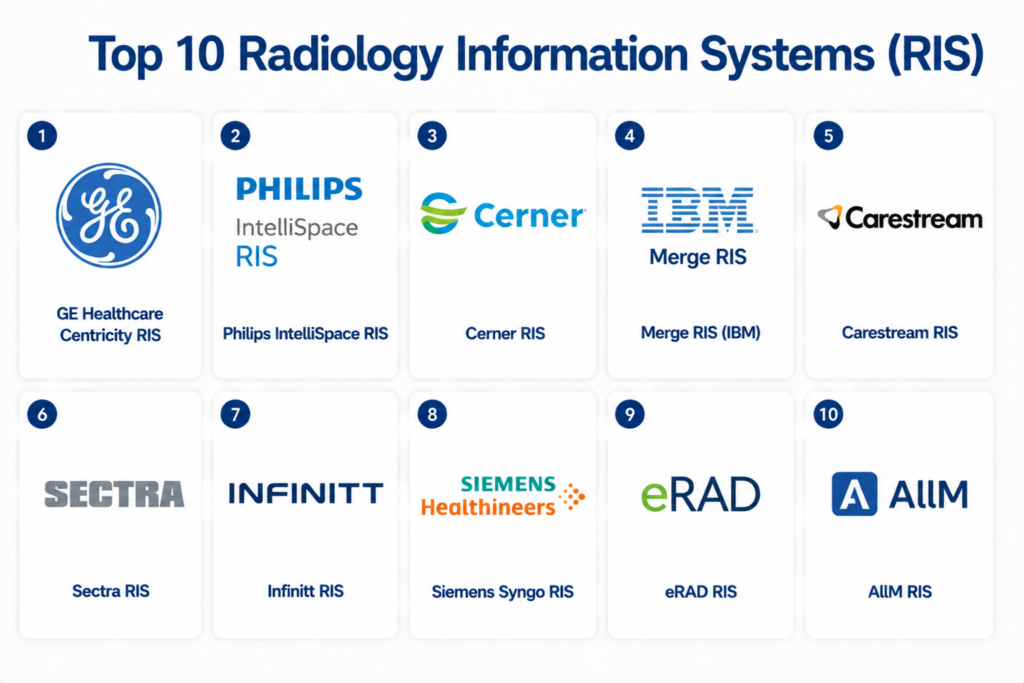
Introduction
Radiology Information Systems (RIS) are specialized healthcare software solutions that manage imaging operations, patient data, scheduling, reporting, results delivery, billing, and interoperability across radiology departments and imaging centers. RIS sits at the heart of radiology workflows, orchestrating patient registration, modality scheduling, exam tracking, imaging reports, and integration with Picture Archiving and Communication Systems (PACS) and Electronic Health Records (EHR). The goal of RIS is to streamline operations, reduce administrative burden, improve report turnaround times, enhance communication between clinicians and radiologists, and maintain data integrity throughout the imaging lifecycle.
In the evolving landscape of diagnostic imaging and value‑based care, radiology teams demand RIS platforms that support interoperability standards, flexible reporting templates, analytics, quality controls, and efficient billing workflows. Advances in AI, voice‑recognition, structured reporting, and cloud delivery are reshaping expectations for modern RIS.
Real‑world use cases include:
- Managing modality scheduling and patient throughput across multi‑site imaging centers.
- Tracking exam lifecycle from order entry to report finalization.
- Integrating imaging findings into EHR workflows for clinician access.
- Automating radiology billing and claims workflows with coding support.
- Producing structured radiology reports and decision support for diagnostic quality.
Evaluation Criteria for Buyers:
- Scheduling and workflow orchestration
- Structured reporting and templates
- Integration with PACS and EHR (FHIR, HL7, DICOM)
- Billing and charge capture
- Analytics and operational dashboards
- Security, compliance, and auditability
- Scalability for multi‑site practices
- Support for modality interfaces and cross‑facility workflows
- Ease of training and clinician adoption
- Deployment flexibility (cloud vs on‑premise)
Best for: Hospitals, integrated health systems, outpatient imaging centers, radiology groups, and diagnostic networks seeking to optimize imaging operations and reporting.
Not ideal for: Very small practices with minimal imaging volume that may rely on simpler scheduling or EHR modules without dedicated RIS needs.
Key Trends in Radiology Information Systems (RIS)
- Cloud‑native RIS deployments offering flexible access, rapid updates, and reduced on‑premise infrastructure.
- AI‑assisted reporting and workflow suggestions to reduce repetitive tasks and improve report quality.
- Structured reporting and standardized templates to enhance clarity and data reuse.
- Interoperability with EHR, PACS, and imaging devices using FHIR, HL7, and DICOM standards.
- Voice recognition and speech‑to‑text to speed radiologist reporting.
- Quality assurance and performance analytics to drive operational improvements.
- Mobile and remote reporting capabilities for off‑site radiologist productivity.
- Automated charge capture and coding integration for accurate reimbursement workflows.
- Security enhancements including multi‑factor authentication (MFA) and role‑based access.
- Patient engagement features including exam reminders and result notifications.
How We Selected These Tools (Methodology)
- Evaluated adoption across radiology departments and imaging centers.
- Assessed core RIS capabilities: scheduling, reporting, billing, and modality management.
- Reviewed integration depth with PACS, EHR, and imaging modalities.
- Considered automation features including structured reporting and workflow optimization.
- Verified security, audit logs, and compliance readiness (HIPAA, encryption).
- Analyzed analytics, dashboards, and performance reporting features.
- Considered scalability across multi‑facility deployments.
- Examined training, documentation, and vendor support resources.
- Balanced offerings across large enterprise systems and smaller imaging center solutions.
Top 10 Radiology Information Systems (RIS)
#1 — GE Healthcare Centricity RIS
Short description: Centricity RIS is a comprehensive radiology information system designed for large hospitals and imaging centers, offering deep integration with GE PACS, scheduling, billing, and structured reporting.
Key Features
- Enterprise scheduling and exam tracking
- Structured reporting with templates
- Billing and charge posting
- PACS integration and workflow orchestration
- Analytics and operational dashboards
- Modality and device interfacing
Pros
- Strong enterprise scalability
- Deep integration with GE imaging ecosystem
- Robust reporting and analytics
Cons
- Implementation complexity for smaller centers
- User interface can feel dated
- Total cost of ownership is high
Platforms / Deployment
- Web / Windows
- Cloud / On‑premise / Hybrid
Security & Compliance
- HIPAA compliant
- Encryption at rest and in transit
- Role‑based access and audit logs
Integrations & Ecosystem
Centricity RIS tightly integrates with PACS, EHRs, and device modalities:
- GE PACS and modality interfaces
- EHR (via HL7/FHIR)
- Billing and financial systems
- Analytics and quality modules
Support & Community
- Dedicated enterprise support
- Training programs and documentation
#2 — Philips IntelliSpace RIS
Short description: Philips IntelliSpace RIS is a robust radiology information system focusing on scalable workflows, operational efficiency, and integration with IntelliSpace PACS for complete imaging lifecycle support.
Key Features
- Centralized scheduling and resource planning
- Structured reporting and templates
- 360° patient imaging timeline
- Billing and charge capture
- Analytics and KPI dashboards
- Integration with imaging devices
Pros
- Strong integration with Philips imaging ecosystem
- Modern analytics and KPI tracking
- Supports large enterprise workflows
Cons
- Configuration may require vendor assistance
- Pricing is toward premium tier
- Tailoring workflows for smaller sites can be heavy
Platforms / Deployment
- Web / Windows
- Cloud / Hybrid
Security & Compliance
- HIPAA aligned
- Encryption and RBAC
- Audit trails
Integrations & Ecosystem
- Philips PACS and modalities
- EHR and scheduling systems
- Billing and financial workflows
Support & Community
- Vendor support with training
- Documentation and knowledge resources
#3 — Cerner RIS
Short description: Cerner RIS is part of Cerner’s broader healthcare information portfolio, offering radiology workflow management, scheduling, reporting, and billing tightly integrated with Cerner Millennium EHR.
Key Features
- Scheduling and patient tracking
- Structured reporting
- Order entry and result distribution
- Billing and coding support
- Integration with EHR clinical workflows
- Analytics and operational views
Pros
- Seamless EHR integration
- Strong clinician data flow
- Broad interoperability support
Cons
- Workflow complexity for standalone centers
- UI may lag modern expectations
Platforms / Deployment
- Web / Windows
- Cloud / On‑premise / Hybrid
Security & Compliance
- HIPAA compliant
- Encryption, access control, logging
Integrations & Ecosystem
- Cerner Millennium EHR
- PACS and modality systems
- Billing and financial modules
Support & Community
- Enterprise support services
- User community and resources
#4 — Merge RIS (IBM Watson Health)
Short description: Merge RIS (now under IBM Watson Health) is a radiology information system that emphasizes structured reporting, workflow efficiency, and integration with Merge/PACS solutions across multi‑site networks.
Key Features
- Cross‑site scheduling
- Structured report templates
- Billing interfaces
- Workflow management
- Analytics and performance reporting
Pros
- Strong PACS integration
- Cross‑facility coordination abilities
- Good reporting flexibility
Cons
- Recent transitions in ownership create uncertainty
- Mid‑tier interface expectations
Platforms / Deployment
- Web / Windows
- Cloud / Hybrid
Security & Compliance
- HIPAA aligned
- Encryption and auditing
Integrations & Ecosystem
- Merge/PACS ecosystem
- EHR connectors
- Billing systems
Support & Community
- Vendor support
- Documentation available
#5 — Carestream RIS
Short description: Carestream RIS offers radiology workflow and patient data management with strong modality, PACS, and reporting integration. It is suited for imaging centers and hospitals seeking comprehensive imaging operations support.
Key Features
- Exam scheduling and tracking
- Structured reporting
- Billing interfaces
- PACS synchronization
- Operational dashboards
Pros
- Strong modality coordination
- Flexible deployment
- Scales across medium to large practices
Cons
- Interface may require time to master
- Limited predefined analytics templates
Platforms / Deployment
- Web / Windows
- Cloud / On‑premise / Hybrid
Security & Compliance
- HIPAA compliant
- Encryption and RBAC
Integrations & Ecosystem
- Carestream PACS
- EHR systems
- Financial and billing systems
Support & Community
- Support services
- Training resources
#6 — Merge RIS / Sectra RIS
Short description: Sectra RIS focuses on operational efficiency, structured reporting, and cross‑department coordination. Its design emphasizes usability and integration with imaging partners.
Key Features
- Exam lifecycle tracking
- Scheduling and calendar views
- Reporting templates
- Billing integration
- Analytics dashboards
Pros
- Clean user workflows
- Strong integration with Sectra PACS
- Good multi‑site support
Cons
- Specialized training needed
- Enterprise pricing
Platforms / Deployment
- Web / Windows
- Cloud / On‑premise / Hybrid
Security & Compliance
- HIPAA compliance
- Encryption and logging
Integrations & Ecosystem
- Sectra PACS
- EHR and financial systems
- Modality interfaces
Support & Community
- Vendor support teams
- Documentation
#7 — Infinitt RIS
Short description: INFINITT RIS is part of INFINITT’s imaging ecosystem, offering comprehensive radiology workflow management with strong PACS and advanced reporting features for multi‑facility imaging networks.
Key Features
- Centralized scheduling
- Structured reporting
- Billing and coding tools
- PACS integration
- Analytics dashboards
Pros
- Robust cross‑facility support
- Strong PACS integration
- Flexible deployment options
Cons
- Interface can be complex for small centers
- Customization can require vendor engagement
Platforms / Deployment
- Web / Windows
- Cloud / On‑premise / Hybrid
Security & Compliance
- HIPAA compliant
- Encryption at rest/in transit
Integrations & Ecosystem
- INFINITT PACS
- EHR connectors
- Billing workflows
Support & Community
- Vendor support
- Training programs
#8 — Siemens Syngo RIS
Short description: Syngo RIS by Siemens Healthineers is a radiology information system designed to integrate with Siemens imaging modalities, offering scheduling, reporting, billing, and enterprise workflow support.
Key Features
- Scheduling and exam tracking
- Structured reporting
- Charge capture and billing
- Modality and device integration
- Operational dashboards
Pros
- Tight Siemens modality integration
- Comprehensive workflow support
- Enterprise scalability
Cons
- Best performance when paired with Siemens imaging systems
- Training needed to fully use advanced features
Platforms / Deployment
- Web / Windows
- Cloud / Hybrid
Security & Compliance
- HIPAA compliance
- Encryption and access control
Integrations & Ecosystem
- Siemens imaging ecosystem
- EHR and financial systems
Support & Community
- Vendor support teams
- Documentation
#9 — eRAD RIS
Short description: eRAD RIS offers a flexible radiology information system with customizable reporting, scheduling, billing, and PACS integration, suitable for imaging centers and hospitals seeking adaptable workflows.
Key Features
- Scheduling and patient tracking
- Reporting and templates
- Billing integration
- PACS interoperability
- Analytics and dashboards
Pros
- Adaptable workflows
- Strong PACS support
- Composable reporting tools
Cons
- Interface maturity varies
- Some advanced modules require add‑ons
Platforms / Deployment
- Web / Windows
- Cloud / On‑premise / Hybrid
Security & Compliance
- HIPAA aligned
- Encryption and RBAC
Integrations & Ecosystem
- PACS partners
- EHR and billing systems
Support & Community
- Vendor support
- Documentation
#10 — AllM RIS
Short description: AllM RIS offers a cloud‑centered radiology workflow platform with emphasis on mobile access, structured reporting, and interoperability for modern imaging operations.
Key Features
- Scheduling and workflow tracking
- Structured report templates
- Billing and charge workflows
- Mobile access
- Analytics dashboards
Pros
- Cloud‑native and scalable
- Strong mobile support
- Good for multi‑site centers
Cons
- Smaller install base
- Feature set still maturing
Platforms / Deployment
- Web / Mobile
- Cloud
Security & Compliance
- HIPAA‑aligned security
- Encryption and secure access controls
Integrations & Ecosystem
- EHR interfaces
- PACS partners
- Billing systems
Support & Community
- Support resources
- Online documentation
Comparison Table (Top 10)
| Tool Name | Best For | Platform(s) Supported | Deployment | Standout Feature | Public Rating |
|---|---|---|---|---|---|
| GE Healthcare Centricity RIS | Large hospitals & imaging centers | Web, Windows | Cloud / On‑premise / Hybrid | Enterprise workflow | N/A |
| Philips IntelliSpace RIS | Multi‑site imaging | Web, Windows | Cloud / Hybrid | KPI dashboards | N/A |
| Cerner RIS | EHR‑centric radiology | Web, Windows | Cloud / On‑premise / Hybrid | EHR integration | N/A |
| Merge RIS (IBM) | PACS integrated networks | Web, Windows | Cloud / Hybrid | Cross‑facility workflows | N/A |
| Carestream RIS | Hospitals & imaging centers | Web, Windows | Cloud / On‑premise / Hybrid | Modality coordination | N/A |
| Sectra RIS | Multi‑facility networks | Web, Windows | Cloud / On‑premise / Hybrid | PACS synergy | N/A |
| Infinitt RIS | Large imaging networks | Web, Windows | Cloud / On‑premise / Hybrid | Cross‑facility scale | N/A |
| Siemens Syngo RIS | Siemens ecosystem | Web, Windows | Cloud / Hybrid | Modality integration | N/A |
| eRAD RIS | Flexible imaging centers | Web, Windows | Cloud / On‑premise / Hybrid | Custom workflows | N/A |
| AllM RIS | Modern cloud centers | Web, Mobile | Cloud | Cloud & mobile focus | N/A |
Evaluation & Scoring of Radiology Information Systems
| Tool Name | Core (25%) | Ease (15%) | Integrations (15%) | Security (10%) | Performance (10%) | Support (10%) | Value (15%) | Weighted Total |
|---|---|---|---|---|---|---|---|---|
| GE Healthcare Centricity RIS | 9 | 7 | 9 | 9 | 9 | 8 | 7 | 8.5 |
| Philips IntelliSpace RIS | 9 | 7 | 8 | 9 | 8 | 8 | 7 | 8.3 |
| Cerner RIS | 8 | 7 | 9 | 9 | 8 | 8 | 7 | 8.2 |
| Merge RIS (IBM) | 8 | 7 | 8 | 9 | 8 | 7 | 7 | 8.0 |
| Carestream RIS | 8 | 7 | 8 | 9 | 8 | 7 | 8 | 8.0 |
| Sectra RIS | 8 | 8 | 8 | 9 | 8 | 8 | 7 | 8.1 |
| Infinitt RIS | 8 | 7 | 8 | 9 | 8 | 7 | 7 | 7.9 |
| Siemens Syngo RIS | 8 | 7 | 8 | 9 | 8 | 7 | 7 | 7.9 |
| eRAD RIS | 7 | 7 | 7 | 9 | 7 | 7 | 8 | 7.7 |
| AllM RIS | 7 | 8 | 7 | 9 | 7 | 7 | 8 | 7.8 |
Interpretation: Weighted totals reflect comparative readiness across essential radiology features, usability, integration strength with PACS/EHR, security posture, performance, vendor support, and value.
Which Radiology Information System (RIS) Is Right for You?
Solo / Freelance Radiology Practice
Smaller imaging centers with limited scale should consider eRAD RIS or AllM RIS, which offer flexible workflows, cloud delivery, and core radiology scheduling/reporting without enterprise overhead.
SMB Imaging Centers
Mid‑sized clinics and imaging networks benefit from Carestream RIS or Sectra RIS, which balance modality coordination, reporting flexibility, and analytics.
Mid‑Market Hospital Radiology
Institutions with integrated clinical systems should prioritize Cerner RIS or Philips IntelliSpace RIS for deep interoperability with EHR workflows and strong operational dashboards.
Enterprise Health Systems
Large hospitals and multi‑facility networks are best supported by GE Healthcare Centricity RIS or Philips IntelliSpace RIS, delivering broad scalability, analytics, modality integration, and workflow optimization.
Budget vs Premium
Budget‑conscious buyers should evaluate AllM RIS or eRAD RIS for cloud‑centric ease and core capabilities. Premium options like Centricity RIS offer advanced enterprise workflows at higher investment levels.
Feature Depth vs Ease of Use
Platforms like Sectra RIS and Carestream RIS blend operational depth with clinician usability. Enterprise systems deliver broad features but require training and structured deployment planning.
Integrations & Scalability
Organizations with robust IT infrastructures and existing PACS/EHR ecosystems should choose RIS platforms such as GE Centricity RIS or Cerner RIS to maximize workflow integration and scalability.
Security & Compliance Needs
All RIS platforms reviewed align with HIPAA and encryption norms, but large health systems should evaluate audit trails, role‑based access, and compliance reporting in procurement.
Frequently Asked Questions (FAQs)
1. What’s the difference between RIS and PACS?
RIS manages radiology operations, scheduling, reporting, and billing workflows. PACS stores, retrieves, and displays diagnostic images. Together, RIS and PACS form the foundation of modern imaging operations.
2. Do RIS platforms integrate with EHR systems?
Yes. Leading RIS platforms integrate with EHRs using industry standards (FHIR, HL7) to ensure radiology reports and results flow directly into the patient’s medical record.
3. What reporting features should I expect?
Modern RIS platforms support structured templates, voice recognition, customizable layouts, auto‑text, and decision support for consistent, high‑quality radiology reports.
4. Are cloud‑based RIS platforms secure?
Cloud RIS solutions use encryption at rest/in transit, role‑based access control (RBAC), and audit logs to secure patient data. Confirm vendor compliance with HIPAA and internal IT policies.
5. How long does RIS implementation take?
Implementation varies with scale and complexity. Small cloud RIS deployments can go live in weeks, while enterprise systems with EHR/PACS integration and custom templates may require months.
6. Can RIS handle billing and charge capture?
Yes. Most RIS platforms support charge posting, integration with practice management/billing systems, and workflows that ensure accurate billing from imaging exams.
7. What analytics are common in RIS?
RIS analytics often include modality utilization, report turnaround times, exam volumes, scheduling efficiency, and operational KPIs to support continuous improvement.
8. How do RIS platforms support multi‑site imaging?
Cross‑site scheduling, centralized reporting templates, shared databases, and networked PACS interfaces enable coordinated workflows across imaging centers and hospitals.
9. Are mobile or remote reporting features available?
Many modern RIS platforms offer mobile access or remote reporting capabilities, enabling radiologists to view schedules, dictations, and results securely from outside the hospital.
10. What should I consider when choosing a RIS?
Evaluate integration with your PACS and EHR, scheduling and reporting needs, analytics requirements, security compliance, deployment preferences (cloud vs on‑premise), and vendor support capabilities.
Conclusion
Radiology Information Systems (RIS) are mission‑critical platforms for managing imaging workflows, reporting, and operational efficiency in radiology departments and imaging centers. From flexible cloud‑centric RIS to enterprise‑grade solutions tightly integrated with EHR and PACS ecosystems, choosing the right system is a strategic decision that impacts clinical workflows, report quality, billing accuracy, and patient experience. Organizations should prioritize interoperability, structured reporting, analytics, and security during selection. By piloting shortlisted solutions with real clinical cases and validating integration with existing IT infrastructure, radiology teams can ensure successful adoption, measurable operational improvements, and a platform that supports future growth and innovation.
