MOTOSHARE 🚗🏍️
Rent Bikes & Cars Directly from Owners
Motoshare connects vehicle owners with people who need bikes and cars on rent. Owners earn from idle vehicles, and renters get flexible ride options.
Visit Motoshare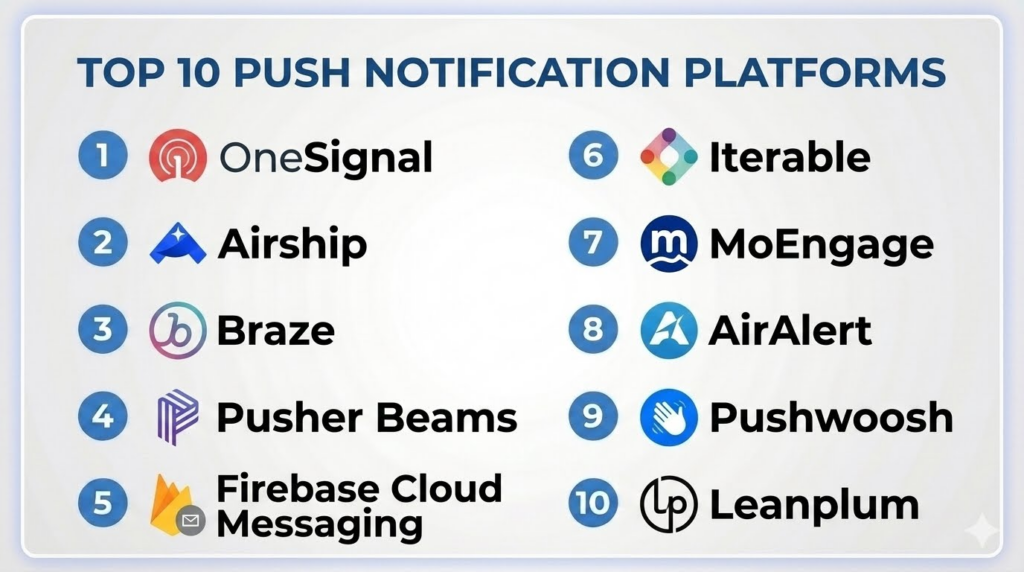
Introduction
Push notification platforms enable businesses and developers to send real-time messages to users on mobile devices, web browsers, and applications. These platforms facilitate engagement, retention, and conversion by delivering personalized alerts, updates, and promotions directly to end-users’ screens.In , push notifications are more critical than ever due to the growing adoption of mobile-first strategies, AI-driven personalization, and omnichannel marketing approaches. Platforms that provide advanced segmentation, automation, and analytics are increasingly valuable to marketers and developers alike.
Real-world use cases include:
- Engaging mobile app users with real-time updates, offers, and reminders.
- Re-engaging inactive customers with personalized messages or promotions.
- Sending transactional notifications such as order confirmations or shipping alerts.
- Delivering news and content updates via web push for media and SaaS platforms.
- Triggering in-app events based on user behavior or location.
Evaluation criteria for buyers:
- Multi-platform support (iOS, Android, web)
- Personalization and segmentation capabilities
- Automation and workflow integration
- Analytics and reporting features
- Reliability and message delivery speed
- API and SDK availability for developers
- Security and compliance (encryption, GDPR, SOC 2)
- Pricing flexibility and scalability
- User interface and ease of use
- Customer support and documentation
Best for: Mobile app developers, marketers, SaaS companies, e-commerce businesses, and enterprises seeking user engagement and retention.
Not ideal for: Businesses without mobile or web applications, or companies relying solely on email and social channels for communication.
Key Trends in Push Notification Platforms
- AI-driven personalization and content recommendation within messages.
- Cross-channel messaging integration with email, SMS, and in-app notifications.
- Increased adoption of automation for lifecycle campaigns and event triggers.
- Focus on privacy-first design with GDPR, CCPA, and data compliance features.
- Rich media notifications including images, videos, and interactive buttons.
- Real-time analytics dashboards for engagement, delivery, and A/B testing.
- Cloud-native platforms offering global scalability and low-latency delivery.
- API-first design for seamless integration with mobile apps and web services.
- Growth of behavioral and contextual targeting based on user actions.
- Predictive messaging using machine learning for optimal delivery timing.
How We Selected These Tools (Methodology)
- Evaluated market adoption and mindshare in push notification technology.
- Reviewed feature completeness including segmentation, automation, and analytics.
- Assessed reliability, delivery speed, and uptime signals.
- Considered security posture including encryption, authentication, and compliance.
- Examined ecosystem integrations with mobile SDKs, web APIs, and marketing platforms.
- Measured scalability for enterprise, SMB, and developer use cases.
- Reviewed pricing transparency and subscription models.
- Evaluated ease of use, onboarding, and platform intuitiveness.
- Verified global reach and multi-platform capabilities.
- Assessed customer support quality, documentation, and community engagement.
Top 10 Push Notification Platforms Tools
#1 — OneSignal
Short description: OneSignal is a widely adopted platform for web and mobile push notifications, designed for developers and marketers seeking robust engagement tools with easy-to-use automation.
Key Features
- Multi-platform support: iOS, Android, web push.
- Segmentation and audience targeting.
- Automation and event-triggered notifications.
- Real-time analytics and delivery reporting.
- API and SDK support for developers.
Pros
- Easy setup and onboarding.
- Rich analytics and segmentation capabilities.
Cons
- Advanced automation features require higher-tier plans.
- Some large-scale enterprise features are limited.
Platforms / Deployment
- Web / iOS / Android / Cloud
Security & Compliance
- SOC 2, GDPR, encryption
Integrations & Ecosystem
Integrates with mobile apps, web platforms, and marketing tools.
- Firebase, AWS, and Azure integration
- Zapier for workflow automation
- API for custom integrations
- WordPress and Shopify plugins
Support & Community
- Documentation and tutorials
- Email support, forums, and active community
#2 — Airship
Short description: Airship offers enterprise-grade push notifications with advanced segmentation, automation, and analytics, tailored for high-volume mobile and web campaigns.
Key Features
- Cross-channel messaging: push, SMS, email.
- Advanced automation workflows.
- Behavioral and contextual targeting.
- A/B testing and campaign optimization.
- Analytics dashboards with engagement metrics.
Pros
- Enterprise-focused features.
- Strong automation and targeting capabilities.
Cons
- Pricing is premium for smaller teams.
- Initial setup can be complex.
Platforms / Deployment
- Web / iOS / Android / Cloud
Security & Compliance
- SOC 2, GDPR, encryption
Integrations & Ecosystem
Integrates with marketing, CRM, and analytics platforms.
- Salesforce, HubSpot
- Segment and Braze integration
- Mobile SDKs for iOS and Android
- REST API for custom workflows
Support & Community
- Dedicated account support for enterprises
- Documentation and professional services
#3 — Braze
Short description: Braze is a customer engagement platform with robust push notification capabilities, supporting lifecycle campaigns and personalized messaging at scale.
Key Features
- Push, in-app, email, and web notifications.
- AI-driven personalization and predictive engagement.
- Workflow automation and triggered campaigns.
- Rich analytics and cohort reporting.
- Multi-platform SDKs and APIs.
Pros
- Advanced personalization capabilities.
- Cross-channel messaging integration.
Cons
- Higher learning curve for new users.
- Premium pricing for full feature access.
Platforms / Deployment
- Web / iOS / Android / Cloud
Security & Compliance
- SOC 2, GDPR, HIPAA (Varies / N/A)
Integrations & Ecosystem
- Salesforce, Segment, Adobe Experience Cloud
- API integration for mobile apps
- Analytics and A/B testing tools
Support & Community
- Enterprise support tiers
- Documentation, webinars, and developer community
#4 — Pusher Beams
Short description: Pusher Beams provides developer-first push notifications for mobile and web apps, focusing on real-time event delivery and easy SDK integration.
Key Features
- Native SDKs for iOS and Android.
- Real-time push notifications with low latency.
- Audience segmentation and targeted notifications.
- API-first approach for developers.
- Scalable infrastructure for global delivery.
Pros
- Simple and fast integration for developers.
- Real-time push support.
Cons
- Fewer marketing automation features.
- Analytics are basic compared to enterprise tools.
Platforms / Deployment
- Web / iOS / Android / Cloud
Security & Compliance
- GDPR, encryption, Not publicly stated
Integrations & Ecosystem
- Mobile SDKs
- REST API for automation
- Webhooks for event integration
Support & Community
- Developer documentation
- Community forums and Slack support
#5 — Firebase Cloud Messaging (FCM)
Short description: Firebase Cloud Messaging by Google enables free push notifications for Android, iOS, and web apps, supporting large-scale app messaging and development workflows.
Key Features
- Cross-platform push notifications.
- Integration with Google Analytics for engagement tracking.
- Targeted notifications based on topics or segments.
- Free usage with high scalability.
- API and SDK support for developers.
Pros
- Free and scalable.
- Deep integration with Firebase ecosystem.
Cons
- Limited marketing automation features.
- UI and analytics are basic compared to dedicated platforms.
Platforms / Deployment
- Web / iOS / Android / Cloud
Security & Compliance
- Google Cloud security standards, Not publicly stated
Integrations & Ecosystem
- Firebase SDKs for mobile apps
- Analytics integration
- REST API for automation
Support & Community
- Google developer support
- Documentation and community forums
#6 — Iterable
Short description: Iterable is a growth marketing platform with push notification capabilities, enabling personalized messaging and lifecycle engagement across channels.
Key Features
- Push, email, SMS, and in-app notifications.
- Advanced segmentation and AI-based personalization.
- Automation workflows and triggered campaigns.
- Analytics dashboards for engagement metrics.
- Multi-platform SDKs and APIs.
Pros
- Cross-channel engagement.
- Strong automation and personalization tools.
Cons
- Premium pricing.
- Some advanced features require setup expertise.
Platforms / Deployment
- Web / iOS / Android / Cloud
Security & Compliance
- SOC 2, GDPR, encryption
Integrations & Ecosystem
- Salesforce, Segment, Shopify
- Mobile SDKs
- REST API for custom workflows
Support & Community
- Enterprise support tiers
- Documentation and webinars
#7 — MoEngage
Short description: MoEngage provides AI-powered push notification and engagement tools for enterprises and SMBs, focusing on personalized messaging and customer retention.
Key Features
- Push, in-app, email, and web notifications.
- AI-driven behavioral targeting.
- Automation workflows and event triggers.
- Analytics dashboards for engagement and retention.
- Multi-platform SDKs and APIs.
Pros
- AI-driven personalization.
- Cross-channel engagement.
Cons
- Advanced analytics require premium plan.
- Learning curve for new users.
Platforms / Deployment
- Web / iOS / Android / Cloud
Security & Compliance
- GDPR, SOC 2, encryption
Integrations & Ecosystem
- CRM and marketing platforms
- REST API and SDK integration
- Analytics and automation tools
Support & Community
- Documentation and webinars
- Dedicated support tiers
#8 — AirAlert
Short description: AirAlert is a simple push notification platform designed for SMBs and developers seeking lightweight messaging solutions for web and mobile apps.
Key Features
- Multi-platform push notifications.
- Event-triggered notifications.
- API and SDK support.
- Basic analytics for delivery and engagement.
- Simple dashboard for managing campaigns.
Pros
- Lightweight and easy to implement.
- Cost-effective for small teams.
Cons
- Limited advanced automation features.
- Analytics and reporting are basic.
Platforms / Deployment
- Web / iOS / Android / Cloud
Security & Compliance
- Not publicly stated
Integrations & Ecosystem
- REST API
- Mobile SDK integration
- Webhooks for events
Support & Community
- Email support
- Documentation resources
#9 — Pushwoosh
Short description: Pushwoosh offers push notification and in-app messaging tools with multi-platform support, personalization, and analytics for marketers and developers.
Key Features
- Push, in-app, SMS notifications.
- Segmentation and personalization.
- Automation workflows and event triggers.
- Analytics and A/B testing.
- Multi-platform SDKs and APIs.
Pros
- Multi-channel engagement.
- Strong developer support and SDKs.
Cons
- Pricing can be high for large volumes.
- UI may require training for non-technical users.
Platforms / Deployment
- Web / iOS / Android / Cloud
Security & Compliance
- GDPR, Not publicly stated
Integrations & Ecosystem
- API integration
- CRM and marketing platform connectors
- Mobile SDKs
Support & Community
- Documentation and email support
- Community forums
#10 — Leanplum
Short description: Leanplum provides mobile marketing automation with push notifications, in-app messaging, and A/B testing for customer engagement and retention.
Key Features
- Push, in-app, and email notifications.
- Automation workflows and event triggers.
- Personalization and segmentation.
- Analytics dashboards for engagement, retention, and conversions.
- SDKs and APIs for mobile platforms.
Pros
- AI-driven personalization and optimization.
- Cross-channel engagement.
Cons
- Higher learning curve.
- Premium pricing for advanced features.
Platforms / Deployment
- Web / iOS / Android / Cloud
Security & Compliance
- SOC 2, GDPR, encryption
Integrations & Ecosystem
- CRM and marketing platforms
- SDKs and APIs for mobile apps
- Analytics integration
Support & Community
- Documentation, tutorials, and dedicated support
Comparison Table (Top 10)
| Tool Name | Best For | Platform(s) Supported | Deployment | Standout Feature | Public Rating |
|---|---|---|---|---|---|
| OneSignal | SMBs, Developers | Web/iOS/Android | Cloud | Multi-platform automation | N/A |
| Airship | Enterprises | Web/iOS/Android | Cloud | Advanced workflows | N/A |
| Braze | Enterprises, Marketers | Web/iOS/Android | Cloud | AI personalization | N/A |
| Pusher Beams | Developers | Web/iOS/Android | Cloud | Real-time push | N/A |
| Firebase Cloud Messaging | Developers | Web/iOS/Android | Cloud | Free & scalable | N/A |
| Iterable | Marketers, SMBs | Web/iOS/Android | Cloud | Cross-channel engagement | N/A |
| MoEngage | Enterprises | Web/iOS/Android | Cloud | AI-driven targeting | N/A |
| AirAlert | SMBs, Developers | Web/iOS/Android | Cloud | Lightweight & simple | N/A |
| Pushwoosh | Marketers, Developers | Web/iOS/Android | Cloud | Multi-channel messaging | N/A |
| Leanplum | Enterprises | Web/iOS/Android | Cloud | Mobile optimization & A/B testing | N/A |
Evaluation & Scoring of Push Notification Platforms
| Tool Name | Core (25%) | Ease (15%) | Integrations (15%) | Security (10%) | Performance (10%) | Support (10%) | Value (15%) | Weighted Total (0–10) |
|---|---|---|---|---|---|---|---|---|
| OneSignal | 9 | 9 | 8 | 8 | 9 | 8 | 9 | 8.7 |
| Airship | 9 | 8 | 9 | 9 | 9 | 8 | 8 | 8.6 |
| Braze | 9 | 7 | 9 | 9 | 8 | 8 | 7 | 8.2 |
| Pusher Beams | 8 | 9 | 7 | 8 | 8 | 7 | 8 | 7.9 |
| Firebase Cloud Messaging | 8 | 8 | 7 | 8 | 8 | 7 | 10 | 8.1 |
| Iterable | 9 | 8 | 8 | 8 | 8 | 8 | 8 | 8.2 |
| MoEngage | 9 | 7 | 8 | 9 | 8 | 8 | 8 | 8.1 |
| AirAlert | 7 | 9 | 6 | 7 | 7 | 6 | 8 | 7.4 |
| Pushwoosh | 8 | 7 | 8 | 8 | 8 | 7 | 8 | 7.9 |
| Leanplum | 9 | 7 | 8 | 9 | 8 | 8 | 8 | 8.1 |
Interpretation: Weighted scores provide a comparative view of platform capabilities, ease of use, integrations, security, and value. Higher scores indicate more robust and versatile solutions. Buyers should prioritize criteria based on their scale, campaign complexity, and cross-channel needs.
Which Push Notification Platforms Tool Is Right for You?
Solo / Freelancer
OneSignal, Pusher Beams, and Firebase Cloud Messaging are ideal for individual developers seeking free or lightweight push capabilities.
SMB
OneSignal, AirAlert, and Iterable provide affordable, easy-to-use platforms with automation and basic analytics.
Mid-Market
MoEngage, Pushwoosh, and Airship offer advanced segmentation, multi-channel workflows, and scalable delivery.
Enterprise
Braze, Leanplum, and Airship provide AI-driven personalization, analytics, automation, and enterprise-grade compliance.
Budget vs Premium
Firebase Cloud Messaging, OneSignal, and AirAlert are budget-friendly. Braze, Airship, and Leanplum are premium with enterprise features.
Feature Depth vs Ease of Use
Braze and Airship offer advanced capabilities but require onboarding. OneSignal and Pusher Beams are simpler and easier for small teams.
Integrations & Scalability
Enterprise platforms support APIs, SDKs, cloud integration, and multi-platform scalability. Lightweight platforms are better for developers with smaller audiences.
Security & Compliance Needs
Airship, Braze, and Leanplum provide SOC 2 and GDPR compliance. Budget platforms rely on basic encryption and platform security.
Frequently Asked Questions (FAQs)
1. How much do push notification platforms cost?
Pricing varies based on message volume, features, and platforms supported. Free tiers are available for small apps; premium tiers scale with features and message delivery volume.
2. Can I send notifications to both mobile and web users?
Yes, most platforms support iOS, Android, and web push notifications with multi-platform targeting and delivery options.
3. How do I automate notification campaigns?
Platforms provide workflow builders, event-triggered campaigns, and API-based automation for sending messages based on user behavior or triggers.
4. What personalization options are available?
Segmentation by demographics, behavior, location, and AI-driven recommendations allows targeted, personalized messages.
5. How do I measure engagement?
Platforms provide analytics dashboards for open rates, click-throughs, conversions, retention, and A/B testing results.
6. Are push notifications secure?
Most platforms use encryption, secure APIs, and compliance standards like SOC 2 and GDPR. User data privacy depends on platform settings and configuration.
7. How scalable are these platforms?
Enterprise platforms like Braze and Airship support millions of users globally. Developer-focused platforms scale efficiently for SMBs and growing apps.
8. Can I integrate with my existing marketing tools?
Yes, most platforms provide APIs, SDKs, and connectors to CRM, analytics, email, and marketing automation tools.
9. How do I handle inactive users?
Platforms support segmentation, re-engagement campaigns, and automated triggers to encourage activity from dormant users.
10. What alternatives exist to push notifications?
Email campaigns, SMS messaging, in-app messaging, and social media alerts can complement or replace push notifications depending on user preferences.
Conclusion
Push notification platforms are essential tools for engaging users, driving retention, and supporting cross-channel marketing strategies. Selection depends on company size, messaging volume, platform requirements, and feature needs. Lightweight platforms like OneSignal, Firebase Cloud Messaging, and Pusher Beams suit freelancers and SMBs, while Braze, Airship, and Leanplum serve enterprises with advanced AI-driven personalization and automation. Buyers should shortlist potential platforms, pilot campaigns to test delivery and engagement, and validate integrations, automation, and compliance before scaling their push notification strategy.
