MOTOSHARE 🚗🏍️
Rent Bikes & Cars Directly from Owners
Motoshare connects vehicle owners with people who need bikes and cars on rent. Owners earn from idle vehicles, and renters get flexible ride options.
Visit Motoshare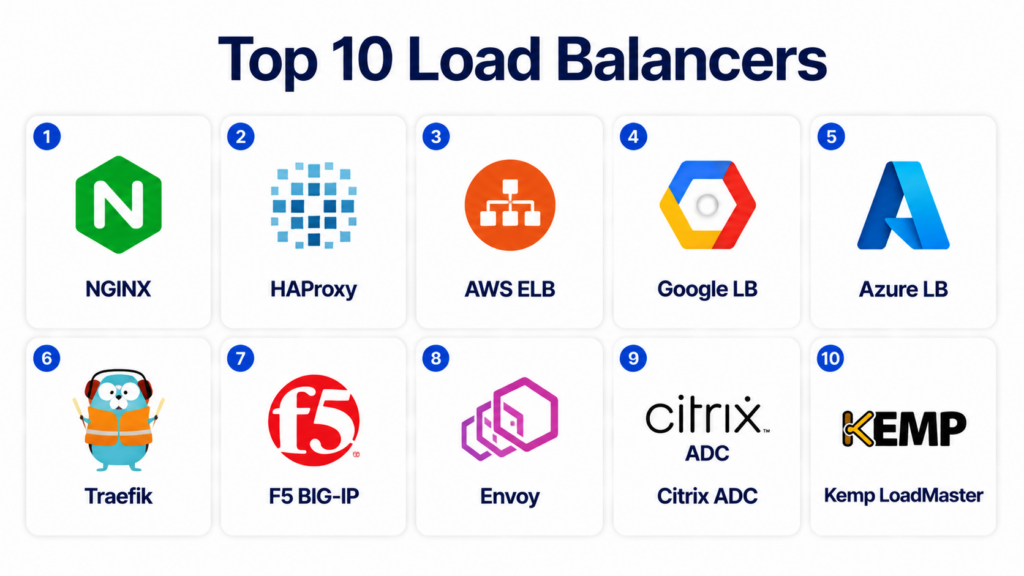
Introduction
Load balancers are systems that distribute incoming network traffic across multiple servers to ensure high availability, reliability, and optimal performance. They act as a “traffic controller” for applications, making sure no single server becomes overloaded while improving response time and system resilience.In modern cloud-native and distributed architectures, load balancers are critical because applications are no longer hosted on a single server. Instead, they run across microservices, containers, and multi-region cloud infrastructure. Without load balancing, systems face downtime, bottlenecks, and poor user experience.Today’s load balancers are not just traffic distributors—they also handle SSL termination, security filtering, health checks, autoscaling integration, and intelligent routing based on application logic.
Real-world use cases:
- Distributing web traffic across multiple application servers
- Ensuring high availability in cloud environments
- Supporting microservices and containerized workloads
- Enabling global traffic routing across regions
- Protecting systems with failover and health checks
- Scaling APIs and SaaS platforms
What buyers should evaluate:
- Layer support (L4 vs L7)
- Cloud, on-prem, or hybrid deployment
- Performance under high traffic
- Auto-scaling and health checks
- Security features (WAF, SSL termination)
- Integration with Kubernetes and CI/CD
- Multi-region/global routing capability
- Ease of configuration and management
- Observability and monitoring support
- Cost and licensing model
Best for: DevOps teams, cloud engineers, enterprise IT, and organizations running scalable web or API-based applications.
Not ideal for: Simple static websites or single-server applications.
Key Trends in Load Balancers
- Shift from hardware appliances to cloud-native load balancers
- Strong adoption of Layer 7 (application-aware) routing
- Integration with Kubernetes ingress controllers
- AI-driven traffic optimization and anomaly detection
- Multi-region and global load balancing as default requirement
- Built-in security features like WAF and DDoS protection
- Serverless and managed load balancing services growth
- Increased use of service mesh (Envoy-based architectures)
- Automation through Infrastructure as Code (IaC)
- Hybrid cloud load balancing for enterprise workloads
- Real-time observability and traffic analytics dashboards
How We Selected These Tools (Methodology)
- Industry adoption across cloud and enterprise systems
- Performance and scalability under production workloads
- Support for L4 and L7 load balancing
- Integration with modern cloud platforms and Kubernetes
- Security and compliance readiness
- Observability and monitoring capabilities
- Ease of deployment and configuration
- Reliability and fault tolerance features
- Ecosystem maturity and vendor stability
- Support for hybrid and multi-cloud environments
Top 10 Load Balancers
#1 — NGINX
Short description:
NGINX is a high-performance open-source load balancer and reverse proxy widely used for web applications, APIs, and microservices. It supports both L4 and L7 load balancing and is known for its speed, stability, and simplicity in production environments.
Key Features
- Layer 4 and Layer 7 load balancing
- Reverse proxy capabilities
- SSL termination
- HTTP caching and compression
- Health checks for backend servers
- Configurable routing rules
Pros
- Extremely fast and lightweight
- Easy to configure
- Widely adopted in production systems
Cons
- Advanced features require tuning
- Enterprise features are paid
Platforms / Deployment
- Linux / Windows / macOS
- On-prem / Cloud / Hybrid
Security & Compliance
- SSL/TLS termination support
- Basic access control features
- Integration with external WAF tools
Integrations & Ecosystem
- Kubernetes ingress controllers
- Docker environments
- CI/CD pipelines
- Cloud platforms
Support & Community
- Large open-source community
- Enterprise support available
#2 — HAProxy
Short description:
HAProxy is a high-performance open-source load balancer designed for TCP and HTTP traffic with advanced routing, health checks, and ultra-low latency performance for enterprise-grade systems.
Key Features
- L4 and L7 load balancing
- Advanced health checks
- Session persistence (sticky sessions)
- High concurrency support
- ACL-based routing rules
- SSL termination
Pros
- Extremely high performance
- Stable under heavy traffic
- Fine-grained traffic control
Cons
- Steeper learning curve
- Configuration complexity
Platforms / Deployment
- Linux / Unix systems
- On-prem / Cloud
Security & Compliance
- SSL/TLS support
- Role-based configuration control
- Integration with security tools
Integrations & Ecosystem
- Kubernetes
- Docker
- Cloud platforms
- Monitoring systems
Support & Community
- Strong enterprise adoption
- Active open-source community
#3 — AWS Elastic Load Balancer (ELB)
Short description:
AWS ELB is a fully managed cloud load balancing service that automatically distributes traffic across AWS resources with built-in scaling, health checks, and high availability.
Key Features
- Application, Network, and Gateway load balancing
- Auto scaling integration
- Health monitoring
- Multi-AZ deployment
- SSL termination
- Traffic routing policies
Pros
- Fully managed service
- Deep AWS integration
- Highly scalable
Cons
- AWS ecosystem lock-in
- Less control compared to self-hosted tools
Platforms / Deployment
- Cloud (AWS)
Security & Compliance
- IAM-based access control
- SSL/TLS encryption
- AWS security compliance standards
Integrations & Ecosystem
- EC2, ECS, Lambda
- CloudWatch monitoring
- AWS Auto Scaling
- API Gateway
Support & Community
- AWS enterprise support
- Extensive documentation
#4 — Google Cloud Load Balancing
Short description:
Google Cloud Load Balancing is a globally distributed, fully managed load balancing solution that routes traffic across regions with high availability and performance optimization.
Key Features
- Global load balancing
- L4 and L7 support
- Auto scaling integration
- HTTP/2 and gRPC support
- Health checks
- Traffic routing policies
Pros
- Global performance optimization
- Strong Kubernetes integration
- High reliability
Cons
- GCP ecosystem dependency
- Complex pricing model
Platforms / Deployment
- Cloud (Google Cloud Platform)
Security & Compliance
- Cloud Armor integration
- SSL/TLS support
- IAM-based security
Integrations & Ecosystem
- Google Kubernetes Engine
- Cloud Run
- BigQuery
- Monitoring tools
Support & Community
- Google Cloud support
- Developer documentation
#5 — Microsoft Azure Load Balancer
Short description:
Azure Load Balancer provides scalable Layer 4 load balancing for applications hosted on Microsoft Azure with high availability and low latency.
Key Features
- Layer 4 traffic distribution
- Health probes
- High availability zones
- Auto scaling support
- Public and internal load balancing
- TCP/UDP support
Pros
- Strong Azure integration
- Low latency performance
- Enterprise-grade reliability
Cons
- Limited Layer 7 features
- Azure dependency
Platforms / Deployment
- Cloud (Microsoft Azure)
Security & Compliance
- Azure security framework
- DDoS protection integration
- TLS encryption support
Integrations & Ecosystem
- Azure Virtual Machines
- Azure Kubernetes Service
- Azure Monitor
- DevOps tools
Support & Community
- Microsoft enterprise support
- Strong documentation
#6 — Traefik
Short description:
Traefik is a modern cloud-native load balancer and reverse proxy designed for microservices and containerized environments with automatic service discovery.
Key Features
- Dynamic service discovery
- Kubernetes integration
- Automatic SSL certificate management
- Load balancing for containers
- Middleware support
- HTTP/HTTPS routing
Pros
- Easy Kubernetes integration
- Auto configuration
- Lightweight and modern
Cons
- Less control for advanced routing
- Smaller enterprise adoption
Platforms / Deployment
- Cloud / On-prem / Hybrid
Security & Compliance
- TLS automation
- Middleware-based security policies
Integrations & Ecosystem
- Docker
- Kubernetes
- CI/CD pipelines
- Cloud platforms
Support & Community
- Active open-source community
- Growing ecosystem
#7 — F5 BIG-IP
Short description:
F5 BIG-IP is an enterprise-grade hardware and virtual load balancing solution offering advanced traffic management, security, and application delivery features.
Key Features
- Advanced L4/L7 load balancing
- Application delivery controller (ADC)
- SSL offloading
- Traffic optimization
- WAF integration
- Multi-cloud deployment
Pros
- Enterprise-grade performance
- Strong security features
- Highly customizable
Cons
- High cost
- Complex deployment
Platforms / Deployment
- Hardware / Virtual / Hybrid
Security & Compliance
- Built-in WAF
- SSL inspection
- Advanced access control
Integrations & Ecosystem
- Enterprise applications
- Cloud platforms
- Security tools
Support & Community
- Enterprise support contracts
- Large enterprise adoption
#8 — Envoy Proxy
Short description:
Envoy is a high-performance service proxy designed for cloud-native applications and service mesh architectures with advanced routing and observability.
Key Features
- L4 and L7 load balancing
- Service mesh integration
- Advanced observability
- gRPC support
- Traffic shadowing
- Retry and circuit breaking
Pros
- Excellent for microservices
- Strong observability
- High performance
Cons
- Complex configuration
- Requires expertise
Platforms / Deployment
- Cloud / Kubernetes / Hybrid
Security & Compliance
- mTLS support
- Fine-grained security policies
Integrations & Ecosystem
- Istio service mesh
- Kubernetes
- CI/CD pipelines
- Monitoring tools
Support & Community
- Strong CNCF ecosystem support
- Active open-source community
#9 — Citrix ADC
Short description:
Citrix ADC is an application delivery controller that provides advanced load balancing, security, and traffic optimization for enterprise environments.
Key Features
- L4 and L7 load balancing
- Application acceleration
- SSL offloading
- WAF capabilities
- Global server load balancing
- Traffic analytics
Pros
- Strong enterprise performance
- Advanced security features
- Global scaling support
Cons
- Complex setup
- Expensive licensing
Platforms / Deployment
- Hardware / Virtual / Cloud
Security & Compliance
- WAF integration
- SSL/TLS encryption
- Identity-based access control
Integrations & Ecosystem
- Enterprise apps
- Cloud platforms
- Security tools
Support & Community
- Enterprise-grade support
- Vendor ecosystem
#10 — Kemp LoadMaster
Short description:
Kemp LoadMaster is a scalable application delivery controller providing load balancing, security, and traffic optimization for enterprise and SMB environments.
Key Features
- L4/L7 load balancing
- SSL offloading
- Application health monitoring
- Traffic routing rules
- API integration
- Virtual and hardware deployment
Pros
- Easy to deploy
- Cost-effective enterprise solution
- Good performance
Cons
- Smaller ecosystem
- Limited advanced features vs competitors
Platforms / Deployment
- Virtual / Hardware / Cloud
Security & Compliance
- SSL support
- Basic security policies
- Access control features
Integrations & Ecosystem
- Cloud platforms
- Enterprise applications
- Monitoring tools
Support & Community
- Vendor support
- Moderate community adoption
Comparison Table (Top 10)
| Tool Name | Best For | Platforms Supported | Deployment | Standout Feature | Public Rating |
|---|---|---|---|---|---|
| NGINX | Web apps | Cross-platform | Hybrid | High performance proxy | N/A |
| HAProxy | High traffic systems | Linux | Hybrid | Low latency routing | N/A |
| AWS ELB | Cloud scaling | AWS | Cloud | Fully managed LB | N/A |
| Google LB | Global apps | GCP | Cloud | Global routing | N/A |
| Azure LB | Microsoft stack | Azure | Cloud | L4 balancing | N/A |
| Traefik | Kubernetes | Cross-platform | Cloud | Auto service discovery | N/A |
| F5 BIG-IP | Enterprise | Hybrid | Hardware/Cloud | ADC + security | N/A |
| Envoy | Microservices | Cloud-native | Hybrid | Service mesh support | N/A |
| Citrix ADC | Enterprise apps | Multi-platform | Hybrid | App delivery controller | N/A |
| Kemp LoadMaster | SMB/Enterprise | Multi-platform | Hybrid | Easy deployment | N/A |
Evaluation & Scoring of Load Balancers
| Tool Name | Core (25%) | Ease (15%) | Integrations (15%) | Security (10%) | Performance (10%) | Support (10%) | Value (15%) | Weighted Total |
|---|---|---|---|---|---|---|---|---|
| NGINX | 10 | 10 | 10 | 9 | 9 | 10 | 9 | 9.5 |
| HAProxy | 10 | 8 | 9 | 9 | 10 | 9 | 9 | 9.2 |
| AWS ELB | 9 | 10 | 10 | 10 | 9 | 10 | 8 | 9.3 |
| Google LB | 9 | 9 | 10 | 10 | 9 | 9 | 8 | 9.1 |
| Azure LB | 8 | 9 | 9 | 9 | 9 | 9 | 9 | 8.9 |
| Traefik | 9 | 9 | 9 | 9 | 9 | 8 | 9 | 9.0 |
| F5 BIG-IP | 10 | 7 | 10 | 10 | 10 | 10 | 6 | 9.0 |
| Envoy | 9 | 7 | 10 | 10 | 10 | 9 | 8 | 8.9 |
| Citrix ADC | 9 | 7 | 9 | 10 | 9 | 9 | 7 | 8.7 |
| Kemp | 8 | 9 | 8 | 8 | 8 | 8 | 9 | 8.4 |
Which Load Balancer Is Right for You?
Startups & Developers
- NGINX
- Traefik
- HAProxy
Cloud-Native Teams
- AWS ELB
- Google Cloud Load Balancer
- Azure Load Balancer
Microservices & Kubernetes
- Envoy
- Traefik
Enterprise Systems
- F5 BIG-IP
- Citrix ADC
- Kemp LoadMaster
Frequently Asked Questions (FAQs)
1. What is a load balancer?
A system that distributes incoming traffic across multiple servers to improve performance and reliability.
2. Why are load balancers important?
They prevent server overload, improve uptime, and enhance application scalability.
3. What is L4 vs L7 load balancing?
L4 works at transport level (TCP/UDP), L7 works at application level (HTTP/HTTPS).
4. What is the most popular load balancer?
NGINX and cloud load balancers like AWS ELB are widely used.
5. Are load balancers hardware or software?
They can be hardware appliances, software tools, or cloud-managed services.
6. Do load balancers improve security?
Yes, they can support SSL termination, WAF integration, and traffic filtering.
7. What is global load balancing?
It routes traffic across multiple geographic regions for performance and redundancy.
8. Do Kubernetes systems need load balancers?
Yes, they are essential for distributing traffic across pods and services.
9. What is a reverse proxy load balancer?
It sits in front of servers and forwards client requests intelligently.
10. What is the future of load balancers?
AI-driven traffic optimization, edge computing integration, and fully serverless load balancing.
Conclusion
Load balancers are a foundational component of modern distributed systems, enabling high availability, scalability, and performance optimization across applications and APIs. Tools like NGINX and HAProxy dominate software-based deployments, while AWS ELB, Google Cloud Load Balancer, and Azure Load Balancer lead in managed cloud environments. Enterprise systems rely on advanced solutions like F5 BIG-IP, Envoy, and Citrix ADC for complex traffic management.The right load balancer depends on your architecture, scale, and cloud strategy. In most real-world environments, organizations use a combination of cloud-native and software-based load balancers to achieve optimal performance, resilience, and cost efficiency.
