MOTOSHARE 🚗🏍️
Rent Bikes & Cars Directly from Owners
Motoshare connects vehicle owners with people who need bikes and cars on rent. Owners earn from idle vehicles, and renters get flexible ride options.
Visit Motoshare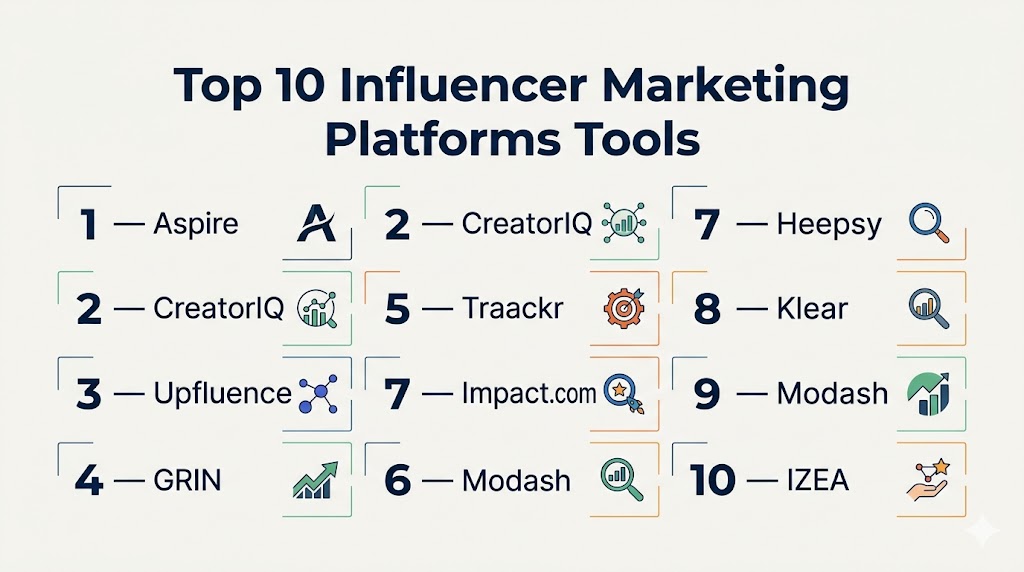
Introduction
Influencer Marketing Platforms help brands discover creators, manage campaigns, track performance, handle outreach, monitor compliance, and measure return on investment from one centralized system. Instead of manually searching social profiles and managing spreadsheets, businesses use these tools to scale creator partnerships with better data and smoother workflows.
As creator-led commerce grows, influencer marketing has moved from experimental budget to core growth channel. Modern platforms now include AI creator matching, audience quality analysis, fraud detection, campaign automation, affiliate tracking, contract management, gifting workflows, payment tools, and advanced analytics. This makes influencer programs more measurable and repeatable.
Common use cases include:
- Creator discovery and vetting
- Campaign management
- Product seeding and gifting
- Affiliate and referral programs
- UGC content sourcing
- Performance reporting
- Brand awareness campaigns
- Sales-driven creator partnerships
What buyers should evaluate:
- Creator database quality
- Fraud detection tools
- Campaign workflows
- Analytics depth
- Multi-platform coverage
- Outreach and CRM tools
- Payment handling
- Ease of use
- Integrations
- Pricing and scalability
Best for: Ecommerce brands, agencies, DTC companies, startups, enterprise marketing teams, consumer brands, and businesses using creators for awareness or sales.
Not ideal for: Businesses with no social audience fit, one-off sponsorship needs, or teams better served by simple manual creator relationships.
Key Trends in Influencer Marketing Platforms and Beyond
- AI creator matching is improving partner discovery speed.
- Performance-based partnerships are growing beyond flat fees.
- Fraud detection is more important than follower count alone.
- UGC workflows are merging with influencer campaigns.
- Affiliate + influencer models are becoming standard.
- Cross-platform creator campaigns now span multiple channels.
- Automated reporting is reducing manual campaign analysis.
- Micro-influencers continue delivering strong niche engagement.
- Compliance workflows are becoming more important.
- ROI-focused budgeting is replacing vanity metrics.
How We Selected These Tools (Methodology)
We selected these tools using practical evaluation criteria:
- Strong market reputation
- Creator discovery capabilities
- Campaign management depth
- Analytics and attribution quality
- Fraud detection and audience insights
- Ease of use for marketers
- Integration ecosystem strength
- Scalability for growing programs
- Support and onboarding quality
- Overall business value
Top 10 Influencer Marketing Platforms Tools
#1 — Aspire
Short description: Aspire is a leading creator commerce platform built for brands running influencer, affiliate, and UGC programs at scale.
Key Features
- Creator marketplace
- Campaign workflows
- Affiliate tools
- Product seeding
- UGC management
- Reporting dashboards
- Outreach automation
Pros
- Strong ecommerce fit
- Broad creator workflow coverage
- Scales well for brands
Cons
- Premium pricing potential
- Advanced features need onboarding
- Smaller teams may need less depth
Platforms / Deployment
Cloud
Security & Compliance
Business-grade controls vary by plan.
Integrations & Ecosystem
Strong for ecommerce creator programs.
- Shopify
- CRM tools
- APIs
- Analytics tools
- Payment tools
Support & Community
Strong onboarding and customer success support.
#2 — CreatorIQ
Short description: CreatorIQ is an enterprise-grade platform focused on large creator programs, governance, analytics, and global brand operations.
Key Features
- Creator discovery
- Workflow automation
- Audience insights
- Global campaign management
- Brand safety tools
- Reporting
- Team collaboration
Pros
- Strong enterprise capabilities
- Scalable governance tools
- Deep analytics
Cons
- Premium pricing
- More complex than SMB tools
- Best for larger programs
Platforms / Deployment
Cloud
Security & Compliance
Enterprise controls vary by plan.
Integrations & Ecosystem
Designed for enterprise ecosystems.
- CRM tools
- BI tools
- APIs
- Commerce tools
- Workflow apps
Support & Community
Enterprise onboarding and dedicated support.
#3 — Upfluence
Short description: Upfluence combines creator discovery, ecommerce data, influencer CRM, and campaign automation for growth-focused brands.
Key Features
- Creator search
- Influencer CRM
- Outreach automation
- Affiliate tools
- Ecommerce insights
- Reporting
- Payments support
Pros
- Strong ecommerce data angle
- Good CRM workflows
- Multi-use growth platform
Cons
- Pricing may vary
- Advanced use needs setup
- UI preference may vary
Platforms / Deployment
Cloud
Security & Compliance
Standard business controls vary.
Integrations & Ecosystem
Good for commerce-led teams.
- Shopify
- WooCommerce
- APIs
- CRM tools
- Analytics tools
Support & Community
Helpful onboarding and documentation.
#4 — GRIN
Short description: GRIN is popular with DTC brands needing creator relationship management, gifting, affiliate tracking, and ecommerce integration.
Key Features
- Creator CRM
- Product gifting
- Affiliate management
- Reporting
- Outreach tools
- Content tracking
- Ecommerce sync
Pros
- Excellent for DTC brands
- Strong relationship workflows
- Good ecommerce integrations
Cons
- Best for commerce brands
- Pricing may rise with scale
- Enterprise breadth lower than some rivals
Platforms / Deployment
Cloud
Security & Compliance
Business controls vary by plan.
Integrations & Ecosystem
Built for ecommerce operations.
- Shopify
- Magento
- APIs
- Email tools
- Analytics tools
Support & Community
Strong brand onboarding resources.
#5 — Traackr
Short description: Traackr focuses on data-rich influencer discovery, benchmarking, and strategic program measurement.
Key Features
- Creator discovery
- Audience insights
- Benchmarking
- Spend tracking
- Reporting
- Campaign analysis
- Global creator data
Pros
- Strong analytics depth
- Good strategic insights
- Useful benchmarking tools
Cons
- Premium positioning
- Less beginner-focused
- Best for mature programs
Platforms / Deployment
Cloud
Security & Compliance
Varies / Not publicly stated.
Integrations & Ecosystem
Strong for data-driven teams.
- BI tools
- APIs
- CRM tools
- Reporting systems
Support & Community
Professional support options available.
#6 — Impact.com
Short description: Impact.com is widely used for partnerships, affiliate marketing, and influencer programs tied closely to measurable revenue.
Key Features
- Partnership management
- Influencer workflows
- Affiliate tracking
- Attribution tools
- Payments
- Contract workflows
- Reporting
Pros
- Strong performance focus
- Great for measurable ROI
- Broad partnership model
Cons
- Setup can be complex
- Best for structured programs
- Smaller teams may need simpler tools
Platforms / Deployment
Cloud
Security & Compliance
Enterprise-grade controls vary.
Integrations & Ecosystem
Excellent for revenue-focused teams.
- Ecommerce tools
- CRM tools
- APIs
- Finance tools
- Analytics tools
Support & Community
Strong enterprise support structure.
#7 — Heepsy
Short description: Heepsy is a creator discovery platform focused on finding influencers by niche, audience, and geography.
Key Features
- Creator search
- Audience filters
- Location filters
- Basic analytics
- List building
- Contact discovery
- Campaign support
Pros
- Easy creator discovery
- Good for SMB budgets
- Simple workflow
Cons
- Less full-suite depth
- Campaign management lighter
- Enterprise controls limited
Platforms / Deployment
Cloud
Security & Compliance
Standard controls vary.
Integrations & Ecosystem
Good for discovery-focused teams.
- CSV exports
- Basic workflows
- APIs may vary
- Reporting tools
Support & Community
Useful for smaller teams.
#8 — Klear
Short description: Klear helps brands discover creators, manage campaigns, and analyze influencer performance across channels.
Key Features
- Creator database
- Campaign tools
- Analytics
- Audience insights
- Outreach tools
- Reporting
- Collaboration
Pros
- Balanced feature set
- Good campaign workflows
- Useful analytics
Cons
- Less visible than category leaders
- Pricing varies
- Advanced enterprise depth may vary
Platforms / Deployment
Cloud
Security & Compliance
Varies / Not publicly stated.
Integrations & Ecosystem
Useful for multi-channel programs.
- APIs
- CRM tools
- Reporting tools
- Commerce tools
Support & Community
Business support available.
#9 — Modash
Short description: Modash focuses on creator discovery and ecommerce influencer workflows with a clean modern interface.
Key Features
- Discovery tools
- Audience insights
- Campaign management
- Ecommerce workflows
- Tracking
- Reporting
- CRM tools
Pros
- Modern user experience
- Strong discovery tools
- Good for growth brands
Cons
- Newer brand than legacy leaders
- Enterprise depth may vary
- Pricing depends on scale
Platforms / Deployment
Cloud
Security & Compliance
Standard controls vary.
Integrations & Ecosystem
Good for modern ecommerce stacks.
- Shopify
- APIs
- CRM tools
- Analytics tools
Support & Community
Helpful onboarding resources.
#10 — IZEA
Short description: IZEA offers influencer collaboration tools, creator marketplaces, and branded content campaign management.
Key Features
- Creator marketplace
- Campaign workflows
- Sponsored content tools
- Reporting
- Content collaboration
- Payments
- Discovery tools
Pros
- Long-standing category presence
- Good marketplace model
- Useful campaign workflows
Cons
- Some teams may prefer newer UX
- Enterprise depth varies
- Best fit depends on campaign style
Platforms / Deployment
Cloud
Security & Compliance
Varies / Not publicly stated.
Integrations & Ecosystem
Useful for sponsored content programs.
- APIs
- Commerce tools
- Reporting tools
- Workflow apps
Support & Community
Established support resources.
Comparison Table (Top 10)
| Tool Name | Best For | Platform(s) Supported | Deployment | Standout Feature | Public Rating |
|---|---|---|---|---|---|
| Aspire | Ecommerce brands | Web | Cloud | Creator commerce workflows | N/A |
| CreatorIQ | Enterprise teams | Web | Cloud | Governance at scale | N/A |
| Upfluence | Growth brands | Web | Cloud | Influencer CRM | N/A |
| GRIN | DTC brands | Web | Cloud | Gifting + ecommerce sync | N/A |
| Traackr | Data-driven teams | Web | Cloud | Benchmarking analytics | N/A |
| Impact.com | ROI-focused programs | Web | Cloud | Partnership attribution | N/A |
| Heepsy | SMB discovery | Web | Cloud | Easy creator search | N/A |
| Klear | Balanced programs | Web | Cloud | Campaign analytics | N/A |
| Modash | Modern ecommerce teams | Web | Cloud | Clean discovery workflows | N/A |
| IZEA | Sponsored content teams | Web | Cloud | Creator marketplace | N/A |
Evaluation & Scoring of Influencer Marketing Platforms
| Tool Name | Core (25%) | Ease (15%) | Integrations (15%) | Security (10%) | Performance (10%) | Support (10%) | Value (15%) | Weighted Total |
|---|---|---|---|---|---|---|---|---|
| Aspire | 9 | 8 | 8 | 7 | 8 | 8 | 7 | 8.0 |
| CreatorIQ | 9 | 7 | 8 | 8 | 8 | 8 | 6 | 7.8 |
| Upfluence | 8 | 8 | 8 | 7 | 8 | 8 | 7 | 7.8 |
| GRIN | 8 | 8 | 8 | 7 | 8 | 8 | 7 | 7.8 |
| Traackr | 8 | 7 | 7 | 7 | 8 | 8 | 6 | 7.3 |
| Impact.com | 9 | 7 | 9 | 8 | 8 | 8 | 6 | 7.9 |
| Heepsy | 7 | 8 | 6 | 6 | 7 | 7 | 9 | 7.3 |
| Klear | 8 | 8 | 7 | 7 | 8 | 7 | 7 | 7.5 |
| Modash | 8 | 8 | 7 | 7 | 8 | 7 | 7 | 7.5 |
| IZEA | 7 | 7 | 7 | 7 | 7 | 7 | 7 | 7.0 |
These scores are comparative, not absolute.
The best platform depends on whether you prioritize creator discovery, ROI tracking, or enterprise governance.
Smaller teams may prefer simplicity, while large brands need scale and controls.
Always test creator quality, workflow efficiency, and reporting before committing.
Strong partnerships matter more than software alone.
Which Influencer Marketing Platform Is Right for You?
Solo / Freelancer
Choose Heepsy or Modash for affordable discovery and simple workflows.
SMB
Aspire, Upfluence, and GRIN offer strong growth-focused capabilities.
Mid-Market
GRIN, Aspire, and Impact.com are strong for scaling structured programs.
Enterprise
CreatorIQ, Impact.com, and Traackr are better for governance and large operations.
Budget vs Premium
Budget tools help find creators fast. Premium tools justify cost through analytics, automation, and controls.
Feature Depth vs Ease of Use
Choose lightweight tools for speed. Choose advanced suites for larger programs.
Integrations & Scalability
Prioritize ecommerce, analytics, CRM, and payment integrations.
Security & Compliance Needs
Review permissions, contracts, approvals, and data governance before rollout.
Frequently Asked Questions (FAQs)
1. What is an influencer marketing platform?
It is software used to discover creators, manage campaigns, and measure influencer results.
2. Why use a platform instead of spreadsheets?
Platforms save time, improve visibility, and help scale partnerships with better data.
3. Which tool is best for ecommerce brands?
Aspire, GRIN, and Upfluence are strong ecommerce-focused choices.
4. Which tool is best for enterprises?
CreatorIQ, Impact.com, and Traackr are strong enterprise options.
5. How are these tools priced?
Pricing may depend on users, campaigns, creators, features, or custom contracts.
6. What is fraud detection in influencer marketing?
It helps identify fake followers, suspicious engagement, or low-quality audiences.
7. Can these tools manage payments?
Many platforms support payments or finance workflows.
8. Are micro-influencers valuable?
Yes. Smaller creators often deliver strong niche trust and engagement.
9. Can I run affiliate programs too?
Yes. Some platforms combine influencer and affiliate management.
10. What is the biggest mistake brands make?
Choosing creators by follower count instead of audience fit and outcomes.
Conclusion
Influencer Marketing Platforms help brands turn creator partnerships into scalable growth channels with better workflows, stronger measurement, and smarter discovery. Some tools excel in ecommerce growth, others in enterprise governance, ROI tracking, or affordable creator sourcing. There is no universal winner. The right choice depends on your budget, campaign model, internal team, and growth goals. Shortlist two or three tools, run a pilot campaign, validate reporting and creator quality, and choose the platform that fits your next stage of growth.

Influencer marketing platforms are becoming more data-driven, but the hardest problems often appear after adoption at scale. Creator discovery and campaign automation are only valuable when the underlying data is reliable — inaccurate audience metrics, delayed engagement data, changing social platform APIs, and inconsistent attribution models can affect campaign decisions and ROI calculations. Engineering teams should consider these platforms as part of a larger marketing data ecosystem by adding data validation, API monitoring, identity verification workflows, and governance around creator performance metrics. Another important area is content lifecycle management, where brands need better controls for approval workflows, compliance checks, and long-term asset reuse. Future influencer platforms will likely evolve from campaign management tools into intelligent partnership infrastructure that combines predictive analytics, trustworthy measurement, privacy-aware data handling, and deeper integration with customer revenue systems.