MOTOSHARE 🚗🏍️
Rent Bikes & Cars Directly from Owners
Motoshare connects vehicle owners with people who need bikes and cars on rent. Owners earn from idle vehicles, and renters get flexible ride options.
Visit Motoshare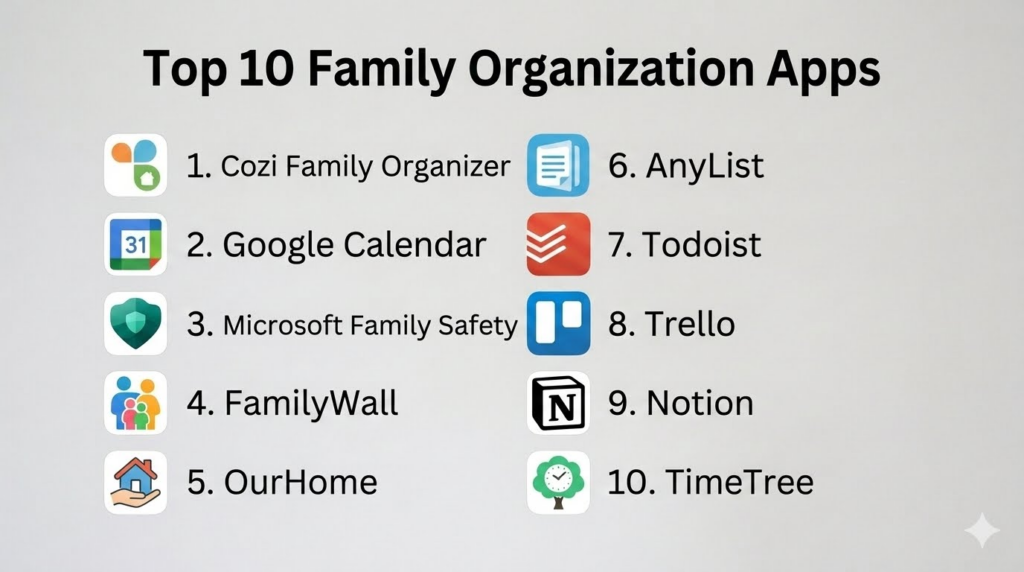
Introduction
Family Organization Apps help families manage calendars, chores, grocery lists, meal plans, reminders, appointments, school activities, household tasks, shared notes, budgets, and daily routines in one place. These apps reduce confusion by giving everyone a shared system for planning, communicating, and tracking responsibilities.Family organization matters because modern households are busy. Parents manage work, school schedules, children’s activities, medical appointments, shopping, bills, meals, travel, and home maintenance. Without a shared system, families often rely on scattered WhatsApp messages, paper calendars, sticky notes, and memory. A good family organization app keeps everyone aligned and helps reduce missed tasks, forgotten events, duplicate shopping, and last-minute stress.
Real-world use cases include:
- Managing shared family calendars and school schedules
- Assigning chores and household responsibilities
- Creating grocery and shopping lists
- Planning meals and family routines
- Sharing reminders, notes, and important information
Buyers evaluating Family Organization Apps should consider:
- Shared calendar functionality
- Chore and task management
- Grocery list and meal planning support
- Family member permissions
- Reminders and notifications
- Cross-device sync
- Ease of use for parents and children
- Privacy and account controls
- Integration with existing calendars
- Free vs premium value
Best for: Parents, families with children, roommates, caregivers, couples, busy households, working professionals, school-going families, and multi-member homes that need better coordination.
Not ideal for: Individuals who only need a personal calendar, families that prefer offline planning, or households that do not want shared digital routines or app-based coordination.
Key Trends in Family Organization Apps
- Shared family calendars are becoming the center of household planning because families need one common view of events and tasks.
- Chore tracking is becoming more interactive, with reminders, points, rewards, and age-appropriate task assignments.
- Grocery lists and meal planning are increasingly included to connect household planning with daily food routines.
- Family apps are adding better permission controls so parents can manage what children can view or edit.
- Cross-device sync is now essential because family members may use iPhones, Android phones, tablets, desktops, and smartwatches.
- Reminder automation is helping families manage school deadlines, appointments, bills, medication schedules, and recurring chores.
- Privacy expectations are increasing because family apps may store sensitive household routines, children’s schedules, and location-related details.
- Simple interfaces are becoming more important because all family members, including children and older adults, need to participate.
- AI-assisted planning is slowly entering household apps through smart suggestions, routine reminders, and calendar organization.
- Families are choosing apps that reduce communication clutter rather than adding another complicated productivity system.
How We Selected These Tools
The apps in this list were selected based on family planning usefulness, ease of use, sharing features, task management, grocery support, platform availability, and long-term household value.
Selection criteria included:
- Strength of shared family calendar features
- Chore and task management capabilities
- Grocery list and meal planning support
- Real-time synchronization across devices
- Ease of onboarding for parents and family members
- Notification and reminder quality
- Privacy and permission controls
- Fit for families, couples, roommates, and caregivers
- Free and premium plan value
- Practical usefulness for daily household coordination
Top 10 Family Organization Apps
1- Cozi Family Organizer
Short description:
Cozi Family Organizer is one of the most popular apps built specifically for family scheduling and household coordination. It combines a shared calendar, grocery lists, to-do lists, meal planning, reminders, and family notes in one simple workspace. Cozi is especially useful for busy families managing school events, appointments, sports, activities, meals, and shopping. Its family-first design makes it easier for parents and household members to stay aligned.
Key Features
- Shared family calendar
- Grocery lists
- To-do lists
- Meal planning
- Family reminders
- Recipe box
- Color-coded family member schedules
Pros
- Designed specifically for families
- Easy shared calendar and list management
- Good balance of planning, groceries, and tasks
Cons
- Advanced features may require premium access
- Interface can feel busy for simple users
- Not as powerful as dedicated task management tools
Platforms / Deployment
- iOS
- Android
- Web
- Cloud
Security & Compliance
- Account-based family sharing controls
- Privacy settings
- Detailed compliance is Not publicly stated
Integrations & Ecosystem
Cozi supports household planning through calendars, lists, meals, and reminders.
- Family calendar workflows
- Grocery lists
- Meal planning
- To-do lists
- Shared household notes
Support & Community
Cozi provides family-focused help resources and is widely used by households looking for a simple shared planning system.
2- Google Calendar
Short description:
Google Calendar is a widely used scheduling app that works well for families needing shared calendars, event reminders, recurring schedules, and cross-device access. While it is not only a family organization app, it is flexible enough to manage school events, appointments, travel, routines, and shared household schedules. It is especially useful for families already using Gmail and Google accounts.
Key Features
- Shared calendars
- Recurring events
- Event reminders
- Color-coded calendars
- Calendar invitations
- Cross-device sync
- Integration with Google services
Pros
- Free and widely accessible
- Strong calendar sharing features
- Easy integration with Google ecosystem
Cons
- No built-in chore system
- Grocery and meal planning require separate tools
- Less child-friendly than family-specific apps
Platforms / Deployment
- iOS
- Android
- Web
- Cloud
Security & Compliance
- Google account-based controls
- Two-step verification support
- Privacy settings
- Compliance depends on Google account configuration
Integrations & Ecosystem
Google Calendar works well as the scheduling foundation for family routines.
- Gmail
- Google Tasks
- Google Keep
- Google Meet
- Shared calendars
Support & Community
Google Calendar has extensive documentation, broad user adoption, and strong ecosystem familiarity.
3- Microsoft Family Safety
Short description:
Microsoft Family Safety is designed for families that want digital safety, location sharing, screen time management, and activity awareness alongside household coordination. It is especially useful for parents managing children’s device usage and online safety within the Microsoft ecosystem. While it is not a complete grocery or meal planning app, it provides strong family safety and monitoring tools.
Key Features
- Family member profiles
- Screen time management
- Location sharing
- Activity reports
- Content filters
- Microsoft account controls
- Device usage insights
Pros
- Strong digital safety features
- Useful for parents managing children’s devices
- Good fit for Microsoft households
Cons
- Not focused on groceries or meal planning
- Requires Microsoft ecosystem setup
- Some advanced features may require subscription
Platforms / Deployment
- iOS
- Android
- Windows
- Web
- Cloud
Security & Compliance
- Microsoft account controls
- Family permissions
- Privacy settings
- Security depends on Microsoft account setup
Integrations & Ecosystem
Microsoft Family Safety works best inside Microsoft-based family and device management workflows.
- Microsoft accounts
- Windows devices
- Xbox family settings
- Location sharing
- Screen time controls
Support & Community
Microsoft provides strong documentation, family safety resources, and broad support across devices.
4- FamilyWall
Short description:
FamilyWall is a family organization app designed to help households manage shared calendars, lists, contacts, location sharing, photos, and communication. It acts like a private family hub where members can coordinate schedules, tasks, and important information. FamilyWall is especially useful for families that want communication and planning inside one dedicated family space.
Key Features
- Shared family calendar
- To-do lists
- Shopping lists
- Location sharing
- Family messaging
- Photo and media sharing
- Important contacts and notes
Pros
- Strong private family hub experience
- Combines communication with planning
- Useful for busy households
Cons
- Some features require paid access
- May feel more feature-heavy than simple calendar apps
- Location sharing may not be needed by all families
Platforms / Deployment
- iOS
- Android
- Web
- Cloud
Security & Compliance
- Account-based access controls
- Family sharing permissions
- Privacy settings
- Detailed compliance is Not publicly stated
Integrations & Ecosystem
FamilyWall combines family scheduling, lists, communication, and location workflows.
- Shared calendar
- Shopping lists
- Family messaging
- Location sharing
- Private family timeline
Support & Community
FamilyWall provides app support resources and is useful for families seeking an all-in-one household coordination hub.
5- OurHome
Short description:
OurHome is a family organization app focused on chores, tasks, rewards, grocery lists, and household responsibility tracking. It is especially useful for families with children because it can assign tasks, track completion, and motivate participation through points and rewards. OurHome helps parents create structure around chores and household routines while keeping grocery and task coordination simple.
Key Features
- Chore assignment
- Task tracking
- Points and rewards
- Grocery lists
- Family member profiles
- Recurring tasks
- Household responsibility management
Pros
- Strong chore and reward system
- Good for families with children
- Encourages shared responsibility
Cons
- Calendar features are limited compared to Cozi
- Interface may feel basic
- Best value depends on consistent family participation
Platforms / Deployment
- iOS
- Android
- Cloud
Security & Compliance
- Account-based controls
- Family member permissions
- Detailed compliance is Not publicly stated
Integrations & Ecosystem
OurHome is focused on household task participation and chore management.
- Chore lists
- Reward tracking
- Grocery lists
- Family task assignments
- Recurring routines
Support & Community
OurHome provides practical support for families using chores and rewards to manage household responsibilities.
6- AnyList
Short description:
AnyList is a shared grocery list and meal planning app that can serve as an important part of family organization. It helps families create shared shopping lists, save recipes, plan meals, and update grocery items in real time. AnyList is especially useful for households where multiple people add items or shop. It is best for families whose main organization challenge is food, groceries, and meal coordination.
Key Features
- Shared grocery lists
- Real-time list syncing
- Recipe storage
- Meal planning calendar
- Item categorization
- Favorites and recent items
- Cross-device access
Pros
- Excellent shared grocery list experience
- Simple for households to adopt
- Good recipe and meal planning support
Cons
- Not a full family calendar app
- Chore management is limited
- Some features require paid access
Platforms / Deployment
- iOS
- Android
- Web
- Cloud
Security & Compliance
- Account-based sharing controls
- Privacy settings
- Detailed compliance is Not publicly stated
Integrations & Ecosystem
AnyList supports family food planning, grocery coordination, and household shopping workflows.
- Shared shopping lists
- Recipe imports
- Meal planning
- Cross-device sync
- Family collaboration
Support & Community
AnyList provides helpful support resources and is widely used by families for grocery planning and shared shopping routines.
7- Todoist
Short description:
Todoist is a flexible task management app that families can use for chores, reminders, errands, projects, and recurring household responsibilities. It is not designed only for families, but its shared projects, recurring tasks, labels, and notifications make it useful for organized households. Todoist works especially well for families that prefer a productivity-style system for managing tasks.
Key Features
- Shared projects
- Task assignments
- Recurring tasks
- Labels and filters
- Priority levels
- Comments and notes
- Cross-device sync
Pros
- Highly flexible for household tasks
- Strong recurring reminders
- Good for organized families and couples
Cons
- Requires manual setup for family workflows
- No built-in grocery or meal planning depth
- May feel too productivity-focused for children
Platforms / Deployment
- iOS
- Android
- Windows
- macOS
- Web
- Cloud
Security & Compliance
- Account-based controls
- Team controls on selected plans
- Detailed compliance varies by plan
Integrations & Ecosystem
Todoist can connect family tasks with broader productivity workflows.
- Shared task projects
- Calendar workflows
- Recurring reminders
- Productivity integrations
- Voice assistant workflows
Support & Community
Todoist has extensive documentation, templates, and a large productivity-focused community.
8- Trello
Short description:
Trello is a visual board-based organization app that families can use for chores, home projects, school planning, travel planning, shopping tasks, and household routines. Its card-and-board structure makes it easy to create columns for tasks, responsibilities, progress, and family projects. Trello is especially useful for visual planners and families managing projects like moving, vacations, home repairs, or school activities.
Key Features
- Visual boards and cards
- Shared family boards
- Task assignments
- Checklists
- Labels and due dates
- Attachments and notes
- Automation on selected plans
Pros
- Very visual and flexible
- Great for family projects
- Easy to customize for different household workflows
Cons
- Requires setup and maintenance
- Not built specifically for families
- Grocery and calendar features are not native strengths
Platforms / Deployment
- iOS
- Android
- Windows
- macOS
- Web
- Cloud
Security & Compliance
- Account-based controls
- Workspace permissions
- Detailed compliance varies by plan
Integrations & Ecosystem
Trello supports visual family planning and household project management.
- Shared boards
- Calendar views
- Checklists
- Attachments
- Automation workflows
Support & Community
Trello provides extensive templates, documentation, and community examples for home and family organization.
9- Notion
Short description:
Notion is a flexible workspace app that families can use to create dashboards for schedules, chores, meal plans, budgets, travel plans, school notes, home projects, and shared documents. It is not a dedicated family app, but it can become a powerful household operating system when customized properly. Notion is best for families that enjoy building structured pages and databases.
Key Features
- Custom family dashboards
- Shared pages and databases
- Task lists
- Notes and documents
- Meal planning templates
- Budget and project tracking
- Cross-device sync
Pros
- Extremely flexible
- Good for families that want custom systems
- Useful for notes, plans, and projects in one place
Cons
- Requires setup time
- Too complex for users wanting simple family planning
- Children may find it less intuitive
Platforms / Deployment
- iOS
- Android
- Windows
- macOS
- Web
- Cloud
Security & Compliance
- Account-based sharing controls
- Workspace permissions
- Encryption
- Compliance details vary by plan
Integrations & Ecosystem
Notion supports highly customized family organization workflows.
- Family dashboards
- Task databases
- Shared notes
- Meal planning templates
- Budget tracking
- Home project planning
Support & Community
Notion has extensive templates, tutorials, and a large creator community for household organization setups.
10- TimeTree
Short description:
TimeTree is a shared calendar app designed for families, couples, teams, and groups that need simple schedule coordination. It allows users to create shared calendars, add comments to events, manage reminders, and coordinate plans with multiple members. TimeTree is especially useful for families that mainly need calendar sharing without a heavy all-in-one household platform.
Key Features
- Shared calendars
- Event comments
- Notifications and reminders
- Multiple calendar support
- Color-coded schedules
- Memo sharing
- Group planning
Pros
- Strong shared calendar experience
- Easy for couples and families
- Good event-based communication
Cons
- Limited grocery and chore features
- Less complete than full family organizer apps
- Advanced household management requires other tools
Platforms / Deployment
- iOS
- Android
- Web
- Cloud
Security & Compliance
- Account-based sharing controls
- Privacy settings
- Detailed compliance is Not publicly stated
Integrations & Ecosystem
TimeTree is focused on shared scheduling and family calendar communication.
- Shared calendars
- Group events
- Comments
- Reminders
- Memo sharing
Support & Community
TimeTree provides user support resources and is popular with families and groups needing simple shared scheduling.
Comparison Table
| Tool Name | Best For | Platform Supported | Deployment | Standout Feature | Public Rating |
|---|---|---|---|---|---|
| Cozi Family Organizer | All-in-one family planning | iOS, Android, Web | Cloud | Shared calendar, lists, and meals | N/A |
| Google Calendar | Shared family schedules | iOS, Android, Web | Cloud | Free shared calendar system | N/A |
| Microsoft Family Safety | Digital safety and screen time | iOS, Android, Windows, Web | Cloud | Family safety controls | N/A |
| FamilyWall | Private family hub | iOS, Android, Web | Cloud | Calendar, lists, chat, and location | N/A |
| OurHome | Chores and rewards | iOS, Android | Cloud | Chore points and rewards | N/A |
| AnyList | Family groceries and meals | iOS, Android, Web | Cloud | Shared grocery lists | N/A |
| Todoist | Household task management | iOS, Android, Windows, macOS, Web | Cloud | Recurring tasks and assignments | N/A |
| Trello | Visual family projects | iOS, Android, Windows, macOS, Web | Cloud | Board-based household planning | N/A |
| Notion | Custom family dashboard | iOS, Android, Windows, macOS, Web | Cloud | Flexible household workspace | N/A |
| TimeTree | Shared family calendars | iOS, Android, Web | Cloud | Calendar comments and group scheduling | N/A |
Evaluation & Scoring of Family Organization Apps
| Tool Name | Core 25% | Ease 15% | Integrations 15% | Security 10% | Performance 10% | Support 10% | Value 15% | Weighted Total |
|---|---|---|---|---|---|---|---|---|
| Cozi Family Organizer | 9 | 8 | 7 | 7 | 8 | 8 | 8 | 8.0 |
| Google Calendar | 8 | 9 | 9 | 8 | 9 | 9 | 10 | 8.9 |
| Microsoft Family Safety | 8 | 7 | 8 | 9 | 8 | 8 | 8 | 8.0 |
| FamilyWall | 8 | 8 | 7 | 7 | 8 | 7 | 7 | 7.5 |
| OurHome | 8 | 8 | 6 | 6 | 7 | 7 | 8 | 7.2 |
| AnyList | 8 | 9 | 7 | 7 | 9 | 8 | 8 | 7.9 |
| Todoist | 8 | 8 | 9 | 8 | 9 | 8 | 8 | 8.3 |
| Trello | 8 | 8 | 9 | 8 | 8 | 8 | 8 | 8.2 |
| Notion | 8 | 7 | 9 | 8 | 8 | 8 | 8 | 8.0 |
| TimeTree | 8 | 9 | 7 | 7 | 8 | 7 | 8 | 7.8 |
These scores are comparative and should be interpreted based on family needs. A household mainly struggling with schedules may prefer Google Calendar or TimeTree. A family needing chores and rewards may prefer OurHome. A household focused on groceries may prefer AnyList, while highly organized families may benefit from Todoist, Trello, or Notion.
Which Family Organization App Is Right for You?
Solo / Freelancer
Solo users may not need a full family app, but they can still benefit from Google Calendar, Todoist, Notion, or Trello for personal routines, home projects, bills, and errands. Google Calendar is best for scheduling, Todoist is strong for tasks, Notion is useful for dashboards, and Trello is good for visual planning.
SMB
Small caregiving businesses, home service teams, coaching businesses, and family support services may use family organization tools for scheduling, tasks, lists, and client coordination. Todoist, Trello, Google Calendar, and Notion are often better for business-style workflows, while Cozi or FamilyWall may fit family-centered coordination.
Mid-Market
Mid-sized schools, community groups, wellness providers, and family service organizations may need shared calendars, task assignments, reminders, and structured communication. Google Calendar, Microsoft Family Safety, Todoist, Trello, and Notion can support different coordination needs. Buyers should prioritize permissions, ease of adoption, and privacy.
Enterprise
Enterprise use cases are usually indirect, such as employee family wellness programs, caregiver coordination, or internal scheduling templates. Enterprises should prioritize privacy, permissions, admin controls, and voluntary usage. Microsoft-based organizations may prefer Microsoft Family Safety or Microsoft-connected tools, while productivity teams may prefer Google Calendar, Todoist, Trello, or Notion.
Budget vs Premium
Budget-conscious families can start with Google Calendar, Microsoft To Do-style workflows, TimeTree, or free tiers of family apps. Premium plans may be worth it when they unlock advanced reminders, ad-free experiences, family sharing, task history, or richer household planning. Families should test whether premium features reduce real stress before paying.
Feature Depth vs Ease of Use
Cozi offers a strong balance of family-specific features and ease of use. Google Calendar and TimeTree are simpler for scheduling. Todoist, Trello, and Notion offer deeper customization but require setup. OurHome is best when chore motivation matters, while AnyList is best when groceries and meal coordination are the main problem.
Integrations & Scalability
Families should choose tools that fit their existing devices and habits. Google families may prefer Google Calendar and Keep-style workflows. Microsoft households may prefer Microsoft Family Safety. Families that want all-in-one household planning may choose Cozi or FamilyWall. Productivity-focused households may prefer Todoist, Trello, or Notion.
Security & Compliance Needs
Family organization apps may store children’s schedules, locations, school events, medical reminders, grocery habits, and private household routines. Families should review sharing permissions, location settings, account security, password protection, and child access controls. Location sharing and children’s data should be handled carefully and only used when truly needed.
Frequently Asked Questions
1. What are Family Organization Apps?
Family Organization Apps are digital tools that help households coordinate calendars, chores, grocery lists, reminders, meal plans, school events, and shared responsibilities. They give family members one shared place to view schedules and tasks instead of relying on scattered messages or paper notes. Some apps focus on calendars, while others include chores, rewards, lists, communication, and location sharing. The goal is to reduce confusion and make daily household routines easier to manage.
2. Which Family Organization App is best for busy parents?
Cozi Family Organizer is one of the strongest choices for busy parents because it combines shared calendars, grocery lists, to-do lists, meal planning, and reminders. Google Calendar is also excellent for families that mainly need scheduling. OurHome is useful when chore tracking and rewards are important. The best choice depends on whether the family’s biggest challenge is schedules, chores, groceries, or communication.
3. Are family organization apps useful for children?
Yes, family organization apps can help children understand routines, chores, responsibilities, and schedules when used appropriately. Apps like OurHome can make chores more structured through points and rewards, while shared calendars can help older children track school activities and events. Parents should keep the system simple and age-appropriate so children do not feel overwhelmed by too many reminders or responsibilities.
4. Can these apps replace family communication?
Family organization apps can reduce repetitive communication, but they should not replace meaningful family conversations. They are useful for reminders, schedules, lists, and task ownership, but families still need direct communication for emotional support, planning decisions, and problem-solving. The best use is to let the app handle routine coordination so family members spend less time repeating logistics.
5. Which app is best for shared family calendars?
Google Calendar, TimeTree, Cozi, and FamilyWall are strong options for shared family calendars. Google Calendar is flexible and widely used, TimeTree is simple for shared scheduling, Cozi is family-specific, and FamilyWall adds a private family hub experience. Families should choose based on whether they need only scheduling or a broader family organization system.
6. Which app is best for chores and household tasks?
OurHome is strong for chores because it supports task assignment, points, rewards, and recurring household responsibilities. Todoist is also useful for families that prefer a productivity-style task system. Trello can work well for visual chore boards or home projects. The right app depends on whether the family wants motivation, structure, flexibility, or visual tracking.
7. Are Family Organization Apps safe for privacy?
Privacy depends on the app, account settings, sharing permissions, and the type of data stored. Family apps may include children’s schedules, location sharing, school details, household routines, and private notes. Families should review privacy settings, avoid unnecessary location sharing, use strong passwords, and limit access to trusted members. Apps involving children should be used with extra care.
8. What are common mistakes families make with organization apps?
A common mistake is choosing an app that is too complex for the family’s real habits. Another mistake is expecting everyone to use the system perfectly from day one. Families also often add too many categories, reminders, or boards, which creates clutter. A better approach is to start with one shared calendar, one grocery list, and a few recurring chores before expanding.
9. Can one app manage calendars, groceries, chores, and meals?
Yes, some apps like Cozi and FamilyWall offer broad family organization features in one place. However, all-in-one apps may not be the strongest in every category. A family may prefer Google Calendar for schedules, AnyList for groceries, and OurHome for chores. The best setup depends on whether the family values simplicity in one app or stronger specialized tools.
10. How should families choose the right organization app?
Families should first identify their biggest problem: missed schedules, forgotten groceries, unclear chores, poor communication, or meal planning stress. Then they should choose an app that solves that main issue first. Testing the app for one or two weeks with real family routines is the best way to judge fit. The right app should reduce stress and confusion, not create another task to manage.
Conclusion
Family Organization Apps help households manage schedules, chores, groceries, meals, reminders, and shared responsibilities more smoothly. The best app depends on the family’s biggest coordination challenge. Cozi is a strong all-in-one family organizer, Google Calendar is excellent for shared schedules, Microsoft Family Safety supports digital safety, FamilyWall works as a private family hub, and OurHome is useful for chores and rewards. AnyList is ideal for grocery coordination, while Todoist, Trello, and Notion offer flexible task and project systems for organized households. TimeTree is a strong choice for simple shared calendars. Families should avoid choosing tools only by popularity and instead shortlist apps based on real household needs, test them with actual routines, review privacy and sharing settings, and keep the system simple enough that everyone can use it consistently.
