MOTOSHARE 🚗🏍️
Rent Bikes & Cars Directly from Owners
Motoshare connects vehicle owners with people who need bikes and cars on rent. Owners earn from idle vehicles, and renters get flexible ride options.
Visit Motoshare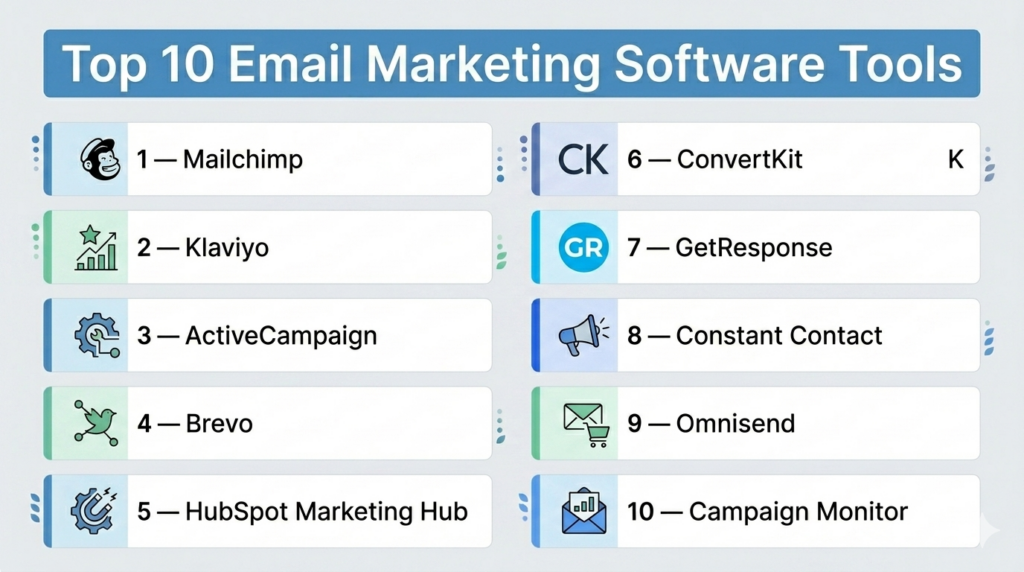
Introduction
Email Marketing Software helps businesses create, send, automate, and measure email campaigns at scale. It allows teams to communicate with prospects, nurture leads, retain customers, recover abandoned carts, promote offers, and build stronger customer relationships through one of the highest-ROI digital channels.
Email remains powerful because businesses own the audience relationship directly. Unlike rented channels where algorithms can limit reach, email gives brands a dependable way to reach subscribers with personalized messages. Modern platforms now go far beyond newsletters. They include automation workflows, segmentation, AI content assistance, A/B testing, analytics, landing pages, and multi-channel messaging.
Common use cases include:
- Promotional campaigns and product launches
- Lead nurturing sequences
- Welcome and onboarding flows
- Abandoned cart recovery
- Newsletter publishing
- Re-engagement campaigns
- Event invitations and reminders
- Customer retention programs
What buyers should evaluate:
- Ease of campaign creation
- Automation depth
- Deliverability reputation
- Segmentation and personalization
- Reporting and attribution
- Template quality
- Integration ecosystem
- Security and compliance
- Scalability
- Pricing and long-term value
Best for: Ecommerce brands, SaaS companies, agencies, creators, local businesses, B2B teams, startups, and enterprises that need consistent audience communication.
Not ideal for: Teams with extremely small lists and minimal campaign needs that can be handled with simpler built-in tools or manual outreach.
Key Trends in Email Marketing Software and Beyond
- AI content generation is speeding up subject lines, copy, and design.
- Predictive send-time optimization is improving open and click performance.
- Hyper-segmentation is becoming easier for non-technical teams.
- Privacy-first tracking models are reshaping analytics expectations.
- Omnichannel messaging now combines email with SMS and push.
- Interactive email design is improving engagement.
- Real-time personalization is expanding beyond static merge tags.
- Revenue attribution tools are becoming more advanced.
- No-code automation builders are standard features.
- Deliverability monitoring is a bigger buying factor than ever.
How We Selected These Tools (Methodology)
We evaluated these tools using practical business criteria:
- Strong market reputation and adoption
- Reliable sending infrastructure
- Automation and segmentation depth
- Ease of use for beginners and experts
- Integration ecosystem quality
- Reporting and analytics strength
- Security and compliance readiness
- Scalability for growing lists
- Support and onboarding resources
- Overall value for different business sizes
Top 10 Email Marketing Software Tools
#1 — Mailchimp
Short description: Mailchimp is one of the most recognized email platforms, known for ease of use, templates, and broad SMB appeal.
Key Features
- Drag-and-drop builder
- Automation journeys
- Audience segmentation
- Templates library
- A/B testing
- Landing pages
- Analytics dashboards
Pros
- Beginner-friendly interface
- Strong brand trust
- Broad feature coverage
Cons
- Pricing can rise with list growth
- Advanced automation less deep than specialists
- Some features locked to higher tiers
Platforms / Deployment
Cloud
Security & Compliance
Standard account security, access controls, encryption. Additional details vary by plan.
Integrations & Ecosystem
Strong ecosystem for SMB operations.
- Ecommerce platforms
- CMS tools
- CRM tools
- APIs
- Social tools
Support & Community
Strong documentation and large user community.
#2 — Klaviyo
Short description: Klaviyo is a leading choice for ecommerce brands focused on revenue-driven lifecycle marketing.
Key Features
- Advanced segmentation
- Email automation
- SMS campaigns
- Predictive analytics
- Product recommendations
- Revenue reporting
- Ecommerce triggers
Pros
- Excellent for ecommerce growth
- Strong revenue visibility
- Powerful targeting tools
Cons
- Best for retail-focused teams
- Pricing scales with contacts
- Less ideal for B2B workflows
Platforms / Deployment
Cloud
Security & Compliance
Standard controls and business-grade security features vary by plan.
Integrations & Ecosystem
Built for ecommerce ecosystems.
- Shopify
- WooCommerce
- BigCommerce
- APIs
- Helpdesk tools
Support & Community
Strong education resources for ecommerce marketers.
#3 — ActiveCampaign
Short description: ActiveCampaign combines email marketing with CRM and advanced automation for growing businesses.
Key Features
- Visual automation builder
- CRM integration
- Lead scoring
- Segmentation
- Site tracking
- Personalization
- Reporting
Pros
- Great balance of power and usability
- Strong automation depth
- Good SMB to mid-market fit
Cons
- Can feel complex for beginners
- Costs increase with scale
- Some reporting depends on tier
Platforms / Deployment
Cloud
Security & Compliance
Encryption, permissions, account security. Additional details vary.
Integrations & Ecosystem
Strong ecosystem for growth teams.
- Ecommerce tools
- CRM systems
- APIs
- Forms tools
- Automation tools
Support & Community
Good onboarding and helpful support resources.
#4 — Brevo
Short description: Brevo offers email, SMS, CRM, and automation with strong value pricing for growing businesses.
Key Features
- Email campaigns
- SMS messaging
- Automation workflows
- CRM features
- Transactional email
- Templates
- Reporting
Pros
- Affordable growth option
- Multi-channel capabilities
- Easy to use
Cons
- Less enterprise depth
- Smaller ecosystem than leaders
- Advanced analytics can be limited
Platforms / Deployment
Cloud
Security & Compliance
Standard security features vary by plan.
Integrations & Ecosystem
Practical ecosystem for SMB teams.
- Ecommerce tools
- APIs
- CRM tools
- CMS tools
- Forms tools
Support & Community
Good onboarding and responsive support options.
#5 — HubSpot Marketing Hub
Short description: HubSpot offers email marketing inside a broader all-in-one CRM and growth platform.
Key Features
- Email automation
- CRM sync
- Smart content
- Workflows
- Lead capture
- Attribution reporting
- Personalization
Pros
- Great all-in-one platform
- Strong usability
- Excellent CRM alignment
Cons
- Premium tiers can be expensive
- Some advanced features gated
- Overkill for simple email needs
Platforms / Deployment
Cloud
Security & Compliance
SSO, RBAC, encryption, audit capabilities vary by plan.
Integrations & Ecosystem
Large ecosystem across marketing and sales.
- CRM tools
- CMS tools
- Ecommerce apps
- APIs
- Ad tools
Support & Community
Excellent training resources and partner network.
#6 — ConvertKit
Short description: ConvertKit is designed for creators, coaches, publishers, and audience-driven businesses.
Key Features
- Subscriber tagging
- Automation sequences
- Landing pages
- Forms
- Broadcast campaigns
- Creator commerce tools
- Analytics
Pros
- Excellent for creators
- Clean interface
- Strong audience management
Cons
- Less enterprise depth
- Limited advanced reporting
- Not ideal for complex B2B ops
Platforms / Deployment
Cloud
Security & Compliance
Standard account security features.
Integrations & Ecosystem
Focused ecosystem for creator businesses.
- Course platforms
- Ecommerce tools
- APIs
- Forms tools
- Creator tools
Support & Community
Strong educational content and creator-focused support.
#7 — GetResponse
Short description: GetResponse combines email marketing, automation, webinars, and landing pages in one platform.
Key Features
- Email campaigns
- Marketing automation
- Webinar tools
- Landing pages
- Funnels
- Templates
- Reporting
Pros
- Broad feature set
- Good value bundle
- Useful for lead generation
Cons
- Interface can feel busy
- Some advanced tools require upgrades
- Not as specialized in one area
Platforms / Deployment
Cloud
Security & Compliance
Standard business security controls vary by plan.
Integrations & Ecosystem
Good fit for campaign-focused teams.
- Ecommerce tools
- CRM tools
- APIs
- Webinar tools
- CMS platforms
Support & Community
Helpful resources and onboarding materials.
#8 — Constant Contact
Short description: Constant Contact is popular with small businesses, nonprofits, and local organizations needing simple email outreach.
Key Features
- Email builder
- Templates
- Contact management
- Basic automation
- Event tools
- Surveys
- Reporting
Pros
- Very easy to start
- Good for small organizations
- Helpful templates
Cons
- Less advanced automation
- Limited enterprise scalability
- Fewer advanced targeting tools
Platforms / Deployment
Cloud
Security & Compliance
Standard security controls vary.
Integrations & Ecosystem
Useful for SMB operations.
- Ecommerce tools
- Social tools
- APIs
- Forms tools
- Event tools
Support & Community
Good support for beginners.
#9 — Omnisend
Short description: Omnisend is built for ecommerce automation with strong prebuilt flows and multi-channel messaging.
Key Features
- Email automation
- SMS campaigns
- Cart recovery
- Product targeting
- Templates
- Segmentation
- Sales reporting
Pros
- Excellent ecommerce workflows
- Quick setup
- Good SMB usability
Cons
- Retail-focused platform
- Less suited for B2B
- Enterprise depth may be limited
Platforms / Deployment
Cloud
Security & Compliance
Standard security controls vary.
Integrations & Ecosystem
Strong online store integrations.
- Shopify
- WooCommerce
- BigCommerce
- APIs
- Forms tools
Support & Community
Merchant-friendly onboarding and support.
#10 — Campaign Monitor
Short description: Campaign Monitor is known for polished templates, brand-friendly design, and solid campaign management.
Key Features
- Email builder
- Templates
- Segmentation
- Automation
- A/B testing
- Analytics
- Brand controls
Pros
- Strong design quality
- Easy campaign creation
- Good for agencies
Cons
- Advanced automation less deep than leaders
- Pricing varies by usage
- Fewer broader platform features
Platforms / Deployment
Cloud
Security & Compliance
Standard business security features vary.
Integrations & Ecosystem
Good for design-focused teams.
- Ecommerce tools
- CRM systems
- APIs
- CMS tools
- Agency workflows
Support & Community
Reliable documentation and support resources.
Comparison Table (Top 10)
| Tool Name | Best For | Platform(s) Supported | Deployment | Standout Feature | Public Rating |
|---|---|---|---|---|---|
| Mailchimp | Beginners & SMBs | Web | Cloud | Easy all-round email platform | N/A |
| Klaviyo | Ecommerce brands | Web | Cloud | Revenue-focused automation | N/A |
| ActiveCampaign | Growing businesses | Web | Cloud | Advanced automation + CRM | N/A |
| Brevo | Budget SMBs | Web | Cloud | Email + SMS value | N/A |
| HubSpot Marketing Hub | All-in-one growth teams | Web | Cloud | CRM-driven marketing | N/A |
| ConvertKit | Creators | Web | Cloud | Subscriber tagging workflows | N/A |
| GetResponse | Lead generation teams | Web | Cloud | Webinars + email bundle | N/A |
| Constant Contact | Small organizations | Web | Cloud | Simplicity and templates | N/A |
| Omnisend | Online stores | Web | Cloud | Ecommerce flows | N/A |
| Campaign Monitor | Design-focused brands | Web | Cloud | Premium templates | N/A |
Evaluation & Scoring of Email Marketing Software
| Tool Name | Core (25%) | Ease (15%) | Integrations (15%) | Security (10%) | Performance (10%) | Support (10%) | Value (15%) | Weighted Total |
|---|---|---|---|---|---|---|---|---|
| Mailchimp | 8 | 9 | 8 | 7 | 8 | 8 | 7 | 8.0 |
| Klaviyo | 9 | 8 | 8 | 7 | 8 | 8 | 7 | 8.0 |
| ActiveCampaign | 9 | 8 | 8 | 7 | 8 | 8 | 8 | 8.2 |
| Brevo | 7 | 8 | 7 | 7 | 7 | 7 | 9 | 7.6 |
| HubSpot Marketing Hub | 9 | 9 | 9 | 8 | 8 | 9 | 6 | 8.4 |
| ConvertKit | 7 | 9 | 7 | 7 | 8 | 8 | 8 | 7.8 |
| GetResponse | 8 | 8 | 7 | 7 | 8 | 7 | 8 | 7.7 |
| Constant Contact | 7 | 9 | 6 | 7 | 7 | 8 | 7 | 7.5 |
| Omnisend | 8 | 8 | 7 | 7 | 8 | 7 | 8 | 7.7 |
| Campaign Monitor | 7 | 8 | 7 | 7 | 8 | 7 | 7 | 7.4 |
These scores are comparative, not absolute.
The highest score is not always the best fit for your business.
Some teams need simplicity, while others need automation depth or ecommerce specialization.
Use these scores as a shortlist tool, then validate with trials and real campaigns.
Long-term ROI matters more than feature count alone.
Which Email Marketing Software Tool Is Right for You?
Solo / Freelancer
Choose ConvertKit, Mailchimp, or Brevo for ease of use and quick launches.
SMB
ActiveCampaign, Mailchimp, and Brevo provide strong balance between features and affordability.
Mid-Market
HubSpot, Klaviyo, and ActiveCampaign are strong for scaling segmentation and automation.
Enterprise
HubSpot advanced tiers and specialized platforms with deep workflows are stronger long-term choices.
Budget vs Premium
Budget tools can deliver excellent ROI for focused campaigns. Premium tools justify cost through automation and reporting scale.
Feature Depth vs Ease of Use
If speed matters, choose simpler tools. If lifecycle automation matters, choose deeper platforms.
Integrations & Scalability
Prioritize platforms with strong ecommerce, CRM, analytics, and API support.
Security & Compliance Needs
Review permissions, data handling, unsubscribe workflows, and governance before committing.
Frequently Asked Questions (FAQs)
1. What is email marketing software?
It is software used to create, send, automate, and analyze email campaigns for marketing and customer communication.
2. Is email still effective?
Yes. Email remains one of the highest-ROI owned channels for many businesses.
3. Which tool is best for ecommerce?
Klaviyo and Omnisend are strong ecommerce-focused choices.
4. Which tool is best for beginners?
Mailchimp and Constant Contact are beginner-friendly options.
5. How are these tools priced?
Pricing may depend on subscribers, sends, features, or enterprise contracts.
6. Can I automate welcome emails?
Yes. Most modern tools support welcome sequences and lifecycle automation.
7. What matters most: opens or revenue?
Both matter, but conversions and revenue are stronger business metrics than opens alone.
8. Can I switch providers later?
Yes, though migration may involve templates, automations, lists, and integrations.
9. Are these tools secure?
Security varies by vendor. Review permissions, encryption, and compliance controls.
10. How often should I send campaigns?
It depends on audience expectations, value of content, and engagement trends.
Conclusion
Email Marketing Software remains one of the smartest investments for businesses that want scalable growth, stronger customer relationships, and measurable ROI. Some tools are best for creators, others for ecommerce, and others for advanced automation or all-in-one growth systems. There is no universal winner. The right platform depends on your audience, workflows, budget, and growth goals. Shortlist two or three tools, run test campaigns, validate deliverability and integrations, and choose the platform that supports your next stage of growth

Email marketing platforms are powerful, but successful execution at scale depends heavily on the reliability of the underlying systems. Teams need to think beyond campaign creation and focus on data accuracy, event tracking consistency, automation failures, and integration monitoring. A broken customer sync, delayed trigger event, or incorrect segmentation rule can impact revenue and customer experience. Engineering teams should treat email workflows as production systems by adding observability, automated validation, retry mechanisms, and governance around customer data usage. Another important area is deliverability engineering, where sender reputation, authentication standards, list quality, and changing privacy regulations directly influence campaign performance. Future email platforms will likely evolve toward intelligent communication systems that combine AI-driven personalization with stronger data governance, predictive optimization, and deeper integration with business intelligence platforms.