MOTOSHARE 🚗🏍️
Rent Bikes & Cars Directly from Owners
Motoshare connects vehicle owners with people who need bikes and cars on rent. Owners earn from idle vehicles, and renters get flexible ride options.
Visit Motoshare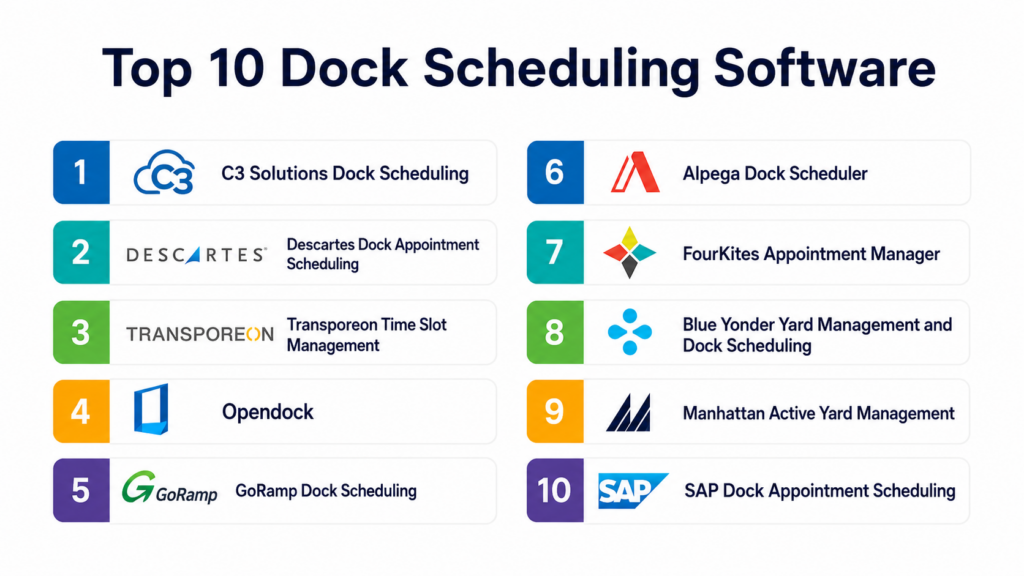
Introduction
Dock Scheduling Software helps warehouses, distribution centers, manufacturers, retailers, carriers, and logistics teams manage inbound and outbound dock appointments in a structured way. In simple terms, it lets shippers, carriers, suppliers, and warehouse teams book time slots, avoid dock congestion, reduce waiting time, improve labor planning, and make loading or unloading more predictable.
Dock scheduling matters now because warehouses are handling higher order volumes, tighter delivery windows, labor shortages, rising detention costs, and more complex transportation networks. Without a proper dock scheduling system, teams often rely on emails, phone calls, spreadsheets, and manual coordination, which can create delays, missed appointments, crowded yards, overtime costs, and poor carrier experience.
Real World Use Cases:
- Managing inbound supplier delivery appointments
- Scheduling outbound carrier pickups
- Reducing truck waiting time and detention charges
- Coordinating dock doors, labor, yard space, and warehouse capacity
- Improving visibility between carriers, warehouses, vendors, and transportation teams
Evaluation Criteria for Buyers:
- Ease of appointment booking for carriers and suppliers
- Dock door, time slot, and capacity management
- Integration with WMS, TMS, ERP, yard management, and carrier portals
- Real-time visibility into appointments, delays, check-ins, and exceptions
- Carrier self-service and automated notifications
- Multi-site and multi-warehouse scalability
- Reporting for wait time, dwell time, no-shows, and dock utilization
- Security controls, user permissions, and audit logs
- Mobile access for warehouse, yard, and gate teams
- Pricing flexibility, support quality, and implementation effort
Best for: Dock Scheduling Software is best for warehouse managers, logistics coordinators, transportation teams, supply chain leaders, 3PLs, retailers, manufacturers, food distributors, grocery networks, eCommerce fulfillment centers, and companies managing frequent inbound or outbound dock appointments.
Not ideal for: These tools may not be necessary for very small warehouses with low delivery volume, fixed carrier routes, or only a few dock appointments per week. In such cases, a basic calendar, spreadsheet, WMS appointment feature, or simple shared scheduling process may be enough before investing in a dedicated dock scheduling platform.
Key Trends in Dock Scheduling Software
- Carrier self-service is becoming standard: More platforms allow carriers, brokers, suppliers, and vendors to book, update, and cancel appointments without constant email or phone coordination.
- Dock scheduling is connecting with yard management: Appointment data is increasingly linked with gate check-in, trailer status, yard moves, dock doors, and live yard visibility.
- AI-assisted capacity planning is emerging: Some platforms are improving recommendations for dock slots based on labor availability, shipment type, unloading time, trailer type, and historical dwell time.
- Real-time notifications are now expected: Warehouses want automated alerts for late arrivals, missed appointments, slot changes, detention risk, and dock congestion.
- Multi-site scheduling is growing: Enterprises need standardized dock rules across multiple warehouses, distribution centers, plants, and supplier networks.
- Integration with WMS and TMS is critical: Dock appointments must connect with shipment planning, receiving, order fulfillment, inventory, and transportation execution.
- Dwell time analytics are becoming more important: Buyers want reports on wait time, loading time, unloading time, carrier punctuality, no-shows, and dock utilization.
- Mobile and gate workflows are expanding: Yard guards, warehouse supervisors, and dock teams need mobile access to check appointments, arrivals, and dock assignments.
- Compliance and food logistics requirements are increasing: Industries like grocery, cold chain, pharma, and food distribution need better appointment control, traceability, and temperature-sensitive coordination.
- Cloud-first deployment is common: Many companies prefer cloud-based dock scheduling because it allows easier carrier access, faster rollout, and centralized multi-location control.
How We Selected These Tools
The Top 10 tools were selected using practical evaluation logic for dock scheduling and warehouse appointment management buyers.
- Market recognition in dock scheduling, appointment management, yard logistics, TMS, WMS, and supply chain execution
- Feature completeness across dock appointment booking, time slot management, carrier communication, and reporting
- Suitability for warehouses, retailers, manufacturers, 3PLs, distributors, food logistics, and enterprise supply chains
- Integration strength with WMS, TMS, ERP, YMS, carrier portals, and transportation networks
- Ability to support inbound and outbound scheduling across single-site and multi-site operations
- Ease of use for carriers, suppliers, warehouse teams, transportation planners, and yard staff
- Reporting depth for appointment performance, dwell time, dock utilization, no-shows, and delays
- Support for automated notifications, configurable dock rules, and exception handling
- Vendor ecosystem, onboarding support, documentation, and implementation maturity
- Practical value for reducing congestion, improving labor planning, and improving carrier experience
Top 10 Dock Scheduling Software
1- C3 Solutions Dock Scheduling
Short description:
C3 Solutions Dock Scheduling is a dedicated dock appointment scheduling platform built for warehouses, distribution centers, retailers, manufacturers, and logistics operations. It helps teams manage inbound and outbound appointments, reduce congestion, improve dock door utilization, and give carriers a structured booking process. The platform is especially useful for companies that want a focused dock scheduling system without relying only on spreadsheets or manual coordination. It fits single-site and multi-site operations that need better visibility into dock capacity and carrier appointments.
Key Features
- Online dock appointment booking for carriers and suppliers
- Configurable dock doors, time slots, rules, and capacity settings
- Inbound and outbound scheduling workflows
- Carrier self-service appointment management
- Automated notifications and appointment confirmations
- Reporting for dwell time, delays, no-shows, and dock utilization
- Multi-site scheduling support for distribution networks
Pros
- Strong focus on dedicated dock scheduling use cases
- Good fit for warehouses that want carrier self-service booking
- Helps reduce manual email, phone, and spreadsheet coordination
Cons
- May need integration work for deeper WMS or TMS workflows
- Best value depends on carrier adoption and rule configuration
- May be more specialized than companies needing a broader logistics suite
Platforms / Deployment
Web / Cloud
Security & Compliance
Not publicly stated. Buyers should verify SSO, MFA, encryption, RBAC, audit logs, and compliance controls directly.
Integrations & Ecosystem
C3 Solutions Dock Scheduling is designed to support dock appointment management and can connect with warehouse, yard, and transportation workflows depending on implementation needs.
- WMS integration depending on configuration
- TMS integration depending on configuration
- Carrier and supplier appointment portals
- Yard management workflows
- Email and notification systems
- Reporting and analytics exports
Support & Community
C3 Solutions provides implementation support, documentation, and customer onboarding for dock and yard logistics use cases. Support experience may vary by deployment scope, integration needs, and region.
2- Descartes Dock Appointment Scheduling
Short description:
Descartes Dock Appointment Scheduling helps logistics teams manage appointment booking, dock capacity, carrier arrivals, and receiving or shipping schedules. It is relevant for shippers, retailers, manufacturers, distributors, and 3PLs that need better coordination between warehouse operations and transportation partners. The tool is part of Descartes’ broader logistics technology ecosystem, making it useful for companies that also need transportation, customs, routing, visibility, and carrier connectivity. It is best for organizations that want dock scheduling connected with wider logistics execution.
Key Features
- Dock appointment scheduling and time slot management
- Carrier and supplier self-service workflows
- Appointment confirmations and automated communication
- Multi-location scheduling visibility
- Reporting for appointment performance and dock activity
- Integration potential with logistics and transportation systems
- Support for inbound and outbound warehouse workflows
Pros
- Strong logistics ecosystem around transportation and supply chain operations
- Suitable for companies managing multiple logistics processes
- Helps connect dock scheduling with broader carrier coordination
Cons
- May be more than needed for very small warehouse operations
- Best value may come when used with other Descartes capabilities
- Configuration and integration should be planned carefully
Platforms / Deployment
Web / Cloud
Security & Compliance
Not publicly stated. Buyers should verify SSO, MFA, encryption, RBAC, audit logs, and compliance requirements for their deployment.
Integrations & Ecosystem
Descartes has a broad logistics ecosystem, making the dock scheduling tool useful for organizations that want appointment management connected to transportation and supply chain execution.
- TMS and transportation systems
- WMS and warehouse workflows
- Carrier communication networks
- Supplier appointment workflows
- Logistics visibility tools
- Reporting and analytics systems
Support & Community
Descartes provides enterprise logistics support, documentation, onboarding resources, and implementation expertise. Support quality depends on the solution package, deployment size, and regional services.
3- Transporeon Time Slot Management
Short description:
Transporeon Time Slot Management helps shippers, carriers, retailers, and manufacturers coordinate loading and unloading appointments across logistics locations. It is designed to reduce waiting times, improve dock planning, and give carriers better appointment visibility. The platform is especially useful for European and global supply chain networks that need structured slot booking and transportation collaboration. It fits companies that want dock scheduling connected with freight procurement, transport execution, visibility, and carrier collaboration.
Key Features
- Time slot booking for loading and unloading operations
- Carrier and supplier self-service appointment management
- Real-time appointment visibility and updates
- Capacity planning for warehouses and logistics sites
- Notifications for schedule changes and exceptions
- Reporting for waiting time, slot usage, and carrier performance
- Integration with transportation and logistics workflows
Pros
- Strong fit for carrier collaboration and transport-connected dock scheduling
- Useful for multi-site and cross-border logistics networks
- Helps reduce truck waiting time and improve site planning
Cons
- Best value is often realized in broader transportation networks
- May require adoption from carriers and logistics partners
- Implementation complexity can increase with multi-country operations
Platforms / Deployment
Web / Cloud
Security & Compliance
Not publicly stated. Buyers should verify SSO, MFA, encryption, RBAC, audit logs, and regional compliance requirements.
Integrations & Ecosystem
Transporeon Time Slot Management works well where dock appointments must connect with transport planning, carrier collaboration, and shipment execution.
- Transportation management systems
- Carrier networks and logistics partners
- Warehouse appointment workflows
- Freight visibility platforms
- Supplier and shipper collaboration
- Reporting and analytics tools
Support & Community
Transporeon has a strong logistics network and enterprise customer base. Support is typically aligned with transportation collaboration and multi-party logistics workflows.
4- Opendock
Short description:
Opendock is a dock scheduling platform built to simplify appointment booking between warehouses, carriers, brokers, and suppliers. It allows logistics partners to book dock appointments online and helps facilities reduce phone calls, emails, delays, and appointment confusion. The platform is especially useful for companies that want an easier way to manage docks without implementing a very complex enterprise suite. It fits warehouses, retailers, food distribution centers, and logistics teams that need practical appointment visibility and carrier self-service.
Key Features
- Online dock appointment booking
- Carrier and broker self-service scheduling
- Appointment calendar and facility availability management
- Automated appointment confirmations and updates
- Warehouse profile and facility scheduling controls
- Appointment visibility for logistics partners
- Reporting and operational appointment tracking
Pros
- Easy-to-understand dock scheduling workflow
- Strong fit for carrier-facing appointment booking
- Useful for reducing manual appointment coordination
Cons
- May not offer the same depth as large enterprise supply chain suites
- Advanced integrations may require additional planning
- Best value depends on carrier and facility adoption
Platforms / Deployment
Web / Cloud
Security & Compliance
Not publicly stated. Buyers should verify SSO, MFA, encryption, RBAC, audit logs, and enterprise security requirements.
Integrations & Ecosystem
Opendock focuses on making dock appointments easier for warehouses and transportation partners. It is useful when the main pain point is carrier appointment booking and facility scheduling visibility.
- Carrier and broker scheduling workflows
- Warehouse appointment calendars
- Facility management workflows
- Notification systems
- WMS or TMS integration depending on configuration
- Reporting and operational dashboards
Support & Community
Opendock provides support and onboarding for dock scheduling users. Community strength is strongest among logistics teams, carriers, brokers, and warehouses using appointment booking workflows.
5- GoRamp Dock Scheduling
Short description:
GoRamp Dock Scheduling helps companies manage loading and unloading appointments, carrier communication, transportation planning, and warehouse time slots. It is commonly used by manufacturers, distributors, retailers, and logistics teams that need a practical way to reduce waiting time and improve dock utilization. The platform also offers broader logistics capabilities, making it useful for companies that want dock scheduling connected with transport management and shipment visibility. It is best for growing businesses and mid-market supply chain teams that want modern cloud-based logistics coordination.
Key Features
- Dock appointment and time slot scheduling
- Carrier self-service and communication workflows
- Transport management and shipment visibility capabilities
- Automated notifications for appointment updates
- Capacity planning for loading and unloading
- Reporting for dock performance and carrier activity
- Multi-location scheduling support depending on configuration
Pros
- Modern interface for logistics and dock coordination
- Useful for connecting dock scheduling with transport workflows
- Good fit for mid-market companies seeking cloud-based deployment
Cons
- May need integration setup for complex enterprise environments
- Advanced warehouse-specific features should be validated
- Best value depends on transportation and dock process maturity
Platforms / Deployment
Web / Cloud
Security & Compliance
Not publicly stated. Buyers should verify SSO, MFA, encryption, RBAC, audit logs, and compliance requirements directly.
Integrations & Ecosystem
GoRamp is useful when dock scheduling needs to connect with broader logistics visibility and transportation coordination.
- Transportation management workflows
- Carrier communication processes
- Warehouse appointment scheduling
- ERP and order systems depending on integration
- Notifications and document workflows
- Logistics reporting dashboards
Support & Community
GoRamp provides onboarding, customer support, and implementation resources for logistics teams. Support quality depends on subscription plan, region, and integration complexity.
6- Alpega Dock Scheduler
Short description:
Alpega Dock Scheduler helps logistics teams organize dock appointments, time slots, loading windows, and carrier arrivals. It is relevant for shippers, manufacturers, retailers, and transportation teams that want better scheduling control across warehouse sites. The tool is part of Alpega’s transport management and logistics software ecosystem, making it useful for companies that need dock scheduling connected with freight and carrier workflows. It is best for businesses looking to reduce delays and improve coordination between transport planning and warehouse execution.
Key Features
- Dock appointment scheduling and time slot booking
- Carrier and logistics partner appointment visibility
- Loading and unloading slot management
- Automated communication for appointment updates
- Capacity planning for warehouse docks
- Integration with transport management workflows
- Reporting for appointment performance and dock usage
Pros
- Good fit for transport-connected dock scheduling
- Useful for shippers and manufacturers managing carrier arrivals
- Supports better coordination between warehouse and transportation teams
Cons
- Best value may depend on Alpega ecosystem alignment
- May require configuration for complex multi-site workflows
- Advanced WMS integration should be validated during selection
Platforms / Deployment
Web / Cloud
Security & Compliance
Not publicly stated. Buyers should verify SSO, MFA, encryption, RBAC, audit logs, and compliance requirements based on deployment needs.
Integrations & Ecosystem
Alpega Dock Scheduler fits into logistics environments where dock appointments and transportation planning need to work together.
- Alpega transportation management tools
- Carrier collaboration workflows
- Warehouse scheduling processes
- ERP and shipment systems depending on integration
- Appointment notifications
- Reporting and analytics
Support & Community
Alpega provides logistics software support, onboarding, and implementation resources. Support quality depends on region, product package, and deployment scope.
7- FourKites Appointment Manager
Short description:
FourKites Appointment Manager helps shippers, carriers, and facilities manage dock appointments with better visibility into transportation and arrival status. It is especially relevant for companies already using FourKites for supply chain visibility and real-time transportation tracking. The tool helps connect appointment scheduling with shipment visibility, carrier updates, and facility operations. It is best for logistics teams that want dock scheduling informed by real-time freight movement and predictive arrival information.
Key Features
- Dock appointment scheduling and appointment visibility
- Connection with real-time transportation visibility workflows
- Carrier, shipper, and facility collaboration
- Alerts for late arrivals, changes, and exceptions
- Facility-level appointment management
- Reporting for wait time and appointment performance
- Integration with logistics visibility and transportation data
Pros
- Strong fit for companies already using FourKites visibility tools
- Helps connect appointment planning with shipment arrival status
- Useful for reducing uncertainty around inbound and outbound freight
Cons
- Best value is often within the broader FourKites ecosystem
- May not be ideal for companies seeking only a simple dock calendar
- Integration and rollout require carrier and facility alignment
Platforms / Deployment
Web / Cloud
Security & Compliance
Not publicly stated. Buyers should verify SSO, MFA, encryption, RBAC, audit logs, and enterprise security controls.
Integrations & Ecosystem
FourKites Appointment Manager is strongest where dock scheduling must connect with real-time transportation visibility and shipment tracking.
- FourKites visibility platform
- Carrier tracking and transportation workflows
- TMS and shipment systems
- Warehouse appointment processes
- Facility and yard operations
- Exception management dashboards
Support & Community
FourKites provides enterprise support, onboarding, documentation, and customer success resources. Support is strongest for logistics visibility and transportation collaboration use cases.
8- Blue Yonder Yard Management and Dock Scheduling
Short description:
Blue Yonder supports dock scheduling through its broader warehouse, yard, and supply chain execution ecosystem. It is useful for large retailers, manufacturers, distributors, and logistics operations that need dock appointments connected with yard visibility, warehouse execution, labor planning, and transportation workflows. The platform is best suited for enterprise operations that want dock scheduling as part of a broader supply chain optimization environment. It can help reduce congestion, improve yard flow, and align inbound or outbound appointments with warehouse capacity.
Key Features
- Dock appointment and yard activity coordination
- Integration with warehouse and transportation workflows
- Multi-site enterprise supply chain visibility
- Carrier appointment and facility planning support
- Yard, dock, and warehouse capacity alignment
- Analytics for operational performance and bottlenecks
- Enterprise scalability for complex logistics networks
Pros
- Strong fit for enterprise supply chain environments
- Useful when dock scheduling must connect with yard and warehouse execution
- Supports broader optimization beyond simple appointment booking
Cons
- May be too complex for small warehouse operations
- Best value depends on Blue Yonder ecosystem alignment
- Implementation can require significant planning and configuration
Platforms / Deployment
Web / Cloud / Hybrid depending on configuration
Security & Compliance
Not publicly stated. Buyers should verify SSO, MFA, encryption, RBAC, audit logs, and compliance controls directly.
Integrations & Ecosystem
Blue Yonder’s dock and yard capabilities are relevant for enterprises that need appointment scheduling connected to supply chain planning and execution.
- Blue Yonder WMS and supply chain tools
- Yard management systems
- Transportation management workflows
- ERP and order systems
- Carrier and supplier communication
- Enterprise analytics and reporting
Support & Community
Blue Yonder offers enterprise support, implementation services, documentation, and partner resources. Support experience depends on deployment size, integration scope, and regional partner capabilities.
9- Manhattan Active Yard Management
Short description:
Manhattan Active Yard Management supports yard visibility, dock coordination, trailer movement, gate operations, and appointment-related logistics workflows. While it is broader than dock scheduling alone, it is highly relevant for companies that need dock appointments connected with yard operations and warehouse execution. It helps large distribution centers and fulfillment networks improve flow from gate arrival to dock door assignment. It is best for enterprises already using Manhattan’s warehouse and supply chain ecosystem.
Key Features
- Yard visibility and trailer status management
- Dock door coordination and appointment-related workflows
- Gate check-in and yard movement support
- Integration with warehouse execution processes
- Real-time visibility into yard and dock activity
- Support for complex distribution and fulfillment operations
- Enterprise-scale logistics execution capabilities
Pros
- Strong fit for companies using Manhattan warehouse systems
- Useful when dock scheduling and yard management must work together
- Helps improve flow across gate, yard, dock, and warehouse operations
Cons
- Not a lightweight standalone dock scheduling tool
- Best value is usually within Manhattan’s broader ecosystem
- Implementation may be complex for smaller facilities
Platforms / Deployment
Web / Cloud
Security & Compliance
Not publicly stated. Buyers should verify SSO, MFA, encryption, RBAC, audit logs, and enterprise security requirements.
Integrations & Ecosystem
Manhattan Active Yard Management fits into enterprise distribution environments where yard, dock, warehouse, transportation, and order fulfillment workflows are connected.
- Manhattan WMS and supply chain products
- Gate and yard workflows
- Dock door and trailer movement processes
- TMS and transportation systems
- ERP and order systems
- Analytics and performance reporting
Support & Community
Manhattan Associates provides enterprise support, documentation, implementation partners, and supply chain expertise. Support quality depends on project scale and implementation complexity.
10- SAP Dock Appointment Scheduling
Short description:
SAP Dock Appointment Scheduling supports appointment planning for inbound and outbound logistics in SAP-centered supply chain environments. It helps companies manage loading and unloading slots, coordinate with carriers or suppliers, and connect dock appointments with warehouse and transportation processes. The tool is especially relevant for organizations using SAP Extended Warehouse Management, SAP Transportation Management, or SAP ERP systems. It is best for enterprises that want dock scheduling aligned with SAP logistics, warehouse, and transportation workflows.
Key Features
- Dock appointment scheduling for inbound and outbound logistics
- Time slot and capacity management
- Integration with SAP warehouse and transportation processes
- Carrier and supplier appointment coordination depending on configuration
- Visibility into planned arrivals and dock activity
- Support for enterprise logistics process control
- Alignment with SAP master data and operational workflows
Pros
- Strong fit for SAP-centric logistics organizations
- Connects dock appointments with broader warehouse and transport processes
- Useful for standardized enterprise workflows
Cons
- Best suited to SAP environments
- Configuration may require SAP logistics expertise
- May be excessive for companies not using SAP supply chain systems
Platforms / Deployment
Web / Cloud / Hybrid depending on SAP landscape and configuration
Security & Compliance
SAP enterprise environments commonly support identity, access control, encryption, auditability, and role-based permissions depending on configuration. Specific certifications and controls should be verified directly.
Integrations & Ecosystem
SAP Dock Appointment Scheduling works best when connected to SAP warehouse, transport, procurement, and logistics execution processes.
- SAP Extended Warehouse Management
- SAP Transportation Management
- SAP ERP and SAP S/4HANA
- Supplier and carrier workflows
- Yard and warehouse processes
- Enterprise reporting and analytics tools
Support & Community
SAP has a large global support network, partner ecosystem, documentation base, and implementation community. Support effectiveness depends on SAP expertise, configuration complexity, and project governance.
Comparison Table
| Tool Name | Best For | Platform Supported | Deployment | Standout Feature | Public Rating |
|---|---|---|---|---|---|
| C3 Solutions Dock Scheduling | Dedicated dock appointment scheduling | Web | Cloud | Configurable dock slots and carrier self-service | N/A |
| Descartes Dock Appointment Scheduling | Logistics teams needing transport-connected dock scheduling | Web | Cloud | Strong logistics ecosystem alignment | N/A |
| Transporeon Time Slot Management | Carrier collaboration and multi-site slot booking | Web | Cloud | Transportation network-based slot management | N/A |
| Opendock | Simple carrier-facing dock appointment booking | Web | Cloud | Easy online appointment scheduling for facilities | N/A |
| GoRamp Dock Scheduling | Mid-market logistics and dock coordination | Web | Cloud | Dock scheduling plus transport visibility | N/A |
| Alpega Dock Scheduler | Shippers and manufacturers using transport workflows | Web | Cloud | Dock scheduling connected with freight operations | N/A |
| FourKites Appointment Manager | Real-time visibility-connected appointment management | Web | Cloud | Appointment scheduling linked with shipment visibility | N/A |
| Blue Yonder Yard Management and Dock Scheduling | Enterprise yard, dock, and warehouse coordination | Web | Cloud / Hybrid | Dock scheduling within broader supply chain execution | N/A |
| Manhattan Active Yard Management | Enterprise yard and dock execution | Web | Cloud | Gate-to-dock visibility inside Manhattan ecosystem | N/A |
| SAP Dock Appointment Scheduling | SAP-centric warehouse and transportation teams | Web | Cloud / Hybrid | Dock appointments aligned with SAP logistics workflows | N/A |
Evaluation & Scoring of Dock Scheduling Software
| Tool Name | Core 25% | Ease 15% | Integrations 15% | Security 10% | Performance 10% | Support 10% | Value 15% | Weighted Total 0–10 |
|---|---|---|---|---|---|---|---|---|
| C3 Solutions Dock Scheduling | 9.0 | 8.3 | 8.0 | 7.5 | 8.5 | 8.2 | 8.4 | 8.4 |
| Descartes Dock Appointment Scheduling | 8.8 | 8.0 | 8.8 | 7.8 | 8.5 | 8.5 | 8.0 | 8.4 |
| Transporeon Time Slot Management | 8.8 | 8.0 | 8.7 | 7.8 | 8.5 | 8.3 | 8.0 | 8.3 |
| Opendock | 8.5 | 8.8 | 7.8 | 7.5 | 8.2 | 8.0 | 8.6 | 8.3 |
| GoRamp Dock Scheduling | 8.3 | 8.5 | 8.0 | 7.5 | 8.2 | 8.0 | 8.5 | 8.2 |
| Alpega Dock Scheduler | 8.4 | 8.0 | 8.5 | 7.8 | 8.3 | 8.2 | 8.0 | 8.2 |
| FourKites Appointment Manager | 8.5 | 8.0 | 8.8 | 8.0 | 8.6 | 8.5 | 7.8 | 8.3 |
| Blue Yonder Yard Management and Dock Scheduling | 8.7 | 7.5 | 9.0 | 8.0 | 8.6 | 8.5 | 7.5 | 8.3 |
| Manhattan Active Yard Management | 8.6 | 7.6 | 9.0 | 8.0 | 8.6 | 8.6 | 7.5 | 8.3 |
| SAP Dock Appointment Scheduling | 8.5 | 7.3 | 9.0 | 8.5 | 8.5 | 8.6 | 7.3 | 8.2 |
These scores are comparative and should be treated as a selection guide, not a fixed universal ranking. A tool with a slightly lower score may be the best fit if it aligns with your WMS, TMS, ERP, carrier network, yard process, or enterprise software stack. Dedicated tools like C3 Solutions and Opendock may be easier for focused scheduling needs, while SAP, Manhattan, and Blue Yonder may be stronger for enterprises that need dock scheduling inside broader warehouse and yard execution. Buyers should validate real carrier workflows, appointment rules, integration needs, and dock capacity logic before making a final decision.
Which Dock Scheduling Software Is Right for You?
Solo / Freelancer
Solo logistics consultants, warehouse advisors, and freight operations specialists usually do not need dock scheduling software for themselves. Instead, they may recommend tools for clients based on warehouse size, dock traffic, carrier count, and integration needs. For focused appointment scheduling projects, C3 Solutions, Opendock, GoRamp, and Alpega can be practical options to evaluate.
If the client already uses SAP, Blue Yonder, Manhattan, Descartes, or FourKites, the best recommendation may be to extend the current ecosystem. This reduces integration effort and helps appointment data connect with warehouse, yard, and transportation workflows.
SMB
Small and mid-sized warehouses should prioritize ease of use, fast carrier adoption, and simple appointment rules. Opendock, GoRamp, C3 Solutions, and Alpega Dock Scheduler can be good options depending on complexity. These tools can help replace manual emails, phone calls, and spreadsheets with structured booking.
SMBs should avoid overbuying if they only have a few dock doors and low appointment volume. The best solution should reduce scheduling effort without requiring a large implementation project.
Mid-Market
Mid-market companies usually need stronger reporting, integrations, capacity rules, and multi-location support. C3 Solutions, Descartes, Transporeon, GoRamp, FourKites, and Alpega can all fit depending on transportation network maturity. These organizations often need dock scheduling to connect with carrier communication, warehouse receiving, outbound shipping, and detention management.
Mid-market buyers should evaluate whether they need only dock appointment booking or a broader platform that also supports transportation visibility, yard management, and carrier collaboration.
Enterprise
Enterprise logistics networks need scalable appointment rules, multi-site control, security, reporting, carrier portals, and deep integration with WMS, TMS, ERP, and YMS systems. Blue Yonder, Manhattan, SAP, Descartes, FourKites, and Transporeon are strong enterprise candidates depending on the existing technology environment.
Enterprises should standardize dock scheduling processes across locations. Without standard rules, each facility may create its own appointment logic, making enterprise reporting and carrier collaboration difficult.
Budget vs Premium
Budget-focused buyers should start with a dedicated dock scheduling platform that solves the core problem: appointment booking, dock capacity, and carrier communication. Opendock, GoRamp, and C3 Solutions may offer practical value for focused use cases.
Premium platforms make sense when dock scheduling must connect with enterprise transportation visibility, yard execution, warehouse automation, labor planning, and ERP workflows. Blue Yonder, Manhattan, SAP, Descartes, Transporeon, and FourKites can provide more enterprise depth when the use case demands it.
Feature Depth vs Ease of Use
If ease of use is the top priority, choose a platform with simple carrier self-service booking, clear calendars, automated notifications, and quick facility setup. If feature depth is more important, choose a solution with dock rules, yard integration, carrier analytics, detention reporting, and multi-site governance.
A simple tool may be best for a warehouse with basic appointment problems. A deeper platform is better when dock scheduling is part of a larger supply chain execution strategy.
Integrations & Scalability
Dock scheduling software should integrate with WMS, TMS, ERP, YMS, carrier portals, and reporting tools. WMS integration helps align dock appointments with receiving and shipping workloads. TMS integration helps connect appointments with shipment plans and carrier execution. YMS integration helps manage trailers after they arrive at the facility.
For scalability, buyers should check whether the platform supports multiple facilities, different dock rules, user roles, carrier profiles, and centralized reporting. Multi-site logistics teams need consistent scheduling logic without removing local flexibility.
Security & Compliance Needs
Dock scheduling tools manage shipment timing, carrier access, facility capacity, user permissions, and operational records. Buyers should evaluate role-based access, audit logs, data encryption, SSO, MFA, and administrator controls. Large enterprises should also review data residency, vendor security documentation, and integration security.
For regulated industries such as food, pharma, and cold chain, appointment accuracy can affect product quality, receiving compliance, and traceability. Security and process control should be reviewed before rollout.
Frequently Asked Questions
1. What is Dock Scheduling Software?
Dock Scheduling Software helps warehouses and logistics teams manage loading and unloading appointments at dock doors. It allows carriers, suppliers, brokers, and internal teams to book time slots based on facility capacity and availability. The software reduces manual scheduling through emails, phone calls, and spreadsheets. It also improves visibility into arrivals, delays, no-shows, and dock utilization. The main goal is to make receiving and shipping more predictable, organized, and efficient.
2. How is Dock Scheduling Software different from a WMS?
A WMS manages warehouse activities such as receiving, putaway, inventory, picking, packing, and shipping. Dock Scheduling Software focuses specifically on appointment booking, dock capacity, time slots, carrier arrivals, and loading or unloading coordination. Some WMS platforms include dock scheduling features, while dedicated dock tools offer more carrier-facing scheduling workflows. In many operations, both systems work together. The dock scheduling tool controls when trucks arrive, and the WMS manages what happens once goods enter warehouse execution.
3. How much does Dock Scheduling Software cost?
Pricing varies based on number of facilities, users, carriers, dock doors, appointments, integrations, and product modules. Some tools may be priced as standalone cloud software, while enterprise platforms may be part of larger WMS, TMS, YMS, or supply chain suites. Buyers should also consider implementation, data setup, carrier onboarding, integration, training, and support costs. The value should be measured against reduced waiting time, fewer detention charges, better dock utilization, lower manual effort, and improved warehouse planning.
4. How long does implementation take?
Implementation time depends on facility complexity, number of dock doors, appointment rules, integrations, and carrier onboarding needs. A simple cloud scheduling tool for one warehouse can be rolled out faster than an enterprise multi-site system connected to WMS, TMS, ERP, and yard operations. The most important preparation steps include defining dock rules, time slot durations, carrier access, user roles, shipment types, and exception workflows. A phased rollout is usually safer, starting with one facility before expanding across the network.
5. What are the common mistakes in dock scheduling projects?
A common mistake is copying spreadsheet logic into software without improving the process. Another mistake is creating too many appointment rules, which makes scheduling confusing for carriers. Some companies fail to involve warehouse teams, yard teams, transportation planners, and carriers during setup. Poor integration with WMS or TMS can also create duplicate work. The best implementations define clear dock rules, test real carrier workflows, train users properly, and monitor appointment performance after launch.
6. Can Dock Scheduling Software reduce detention and waiting time?
Yes, dock scheduling software can help reduce detention and waiting time by improving appointment accuracy, dock capacity planning, carrier communication, and arrival visibility. When carriers know available slots and warehouses can plan labor in advance, trucks spend less time waiting. The system can also help identify repeat delays, no-shows, early arrivals, and bottleneck hours. However, software alone cannot fix poor warehouse processes. Results improve when scheduling is connected with labor planning, yard flow, receiving capacity, and real-time exception handling.
7. What integrations are most important?
The most important integrations are usually WMS, TMS, ERP, YMS, carrier portals, and reporting systems. WMS integration helps connect appointments with inbound receiving and outbound shipping workloads. TMS integration links dock appointments with shipment planning and carrier execution. YMS integration helps manage trailer arrivals, gate activity, yard moves, and dock assignments. ERP integration may support purchase orders, sales orders, and supplier workflows. Strong integrations reduce duplicate data entry and improve operational visibility.
8. Is Dock Scheduling Software useful for multi-site operations?
Yes, dock scheduling software is very useful for multi-site operations because it standardizes appointment booking across warehouses, plants, and distribution centers. It allows companies to compare facility performance, dock utilization, waiting time, no-shows, and carrier punctuality. However, multi-site success requires clear governance. Each site may have different dock rules, operating hours, shipment types, and labor capacity. A good platform should support centralized visibility while allowing local teams to manage practical site-level constraints.
9. Can carriers use dock scheduling software directly?
Yes, many modern dock scheduling tools include carrier self-service portals. Carriers, brokers, suppliers, or vendors can book available slots, update appointments, receive confirmations, and view facility instructions. This reduces manual communication for warehouse and transportation teams. Carrier adoption is important because the system only works well when external partners actually use it. Buyers should choose a tool with a simple booking experience, clear notifications, and minimal friction for carriers.
10. What reports should dock scheduling software provide?
Useful reports include dock utilization, appointment volume, wait time, dwell time, loading time, unloading time, no-shows, late arrivals, early arrivals, carrier performance, facility performance, and peak-hour congestion. Managers should also be able to view appointment trends by carrier, shipment type, dock door, warehouse, and day of week. These reports help identify bottlenecks and improve planning. Good reporting turns scheduling data into operational improvement rather than just appointment tracking.
Conclusion
Dock Scheduling Software helps warehouses and logistics teams bring structure, visibility, and control to one of the most important parts of supply chain execution: loading and unloading appointments. The best tool depends on your warehouse size, dock volume, carrier network, WMS or TMS ecosystem, yard complexity, and reporting needs. C3 Solutions and Opendock are strong focused dock scheduling options, Descartes, Transporeon, GoRamp, and Alpega are useful for transport-connected scheduling, FourKites is valuable when appointment management needs real-time freight visibility, and Blue Yonder, Manhattan, and SAP fit enterprises that need dock scheduling inside broader warehouse, yard, and supply chain execution systems.

Utilizing automated warehouse bay management applications optimizes industrial facility throughput logistics, ensuring streamlined trailer arrival sequencing and reduced detention fee financial exposure.