MOTOSHARE 🚗🏍️
Rent Bikes & Cars Directly from Owners
Motoshare connects vehicle owners with people who need bikes and cars on rent. Owners earn from idle vehicles, and renters get flexible ride options.
Visit Motoshare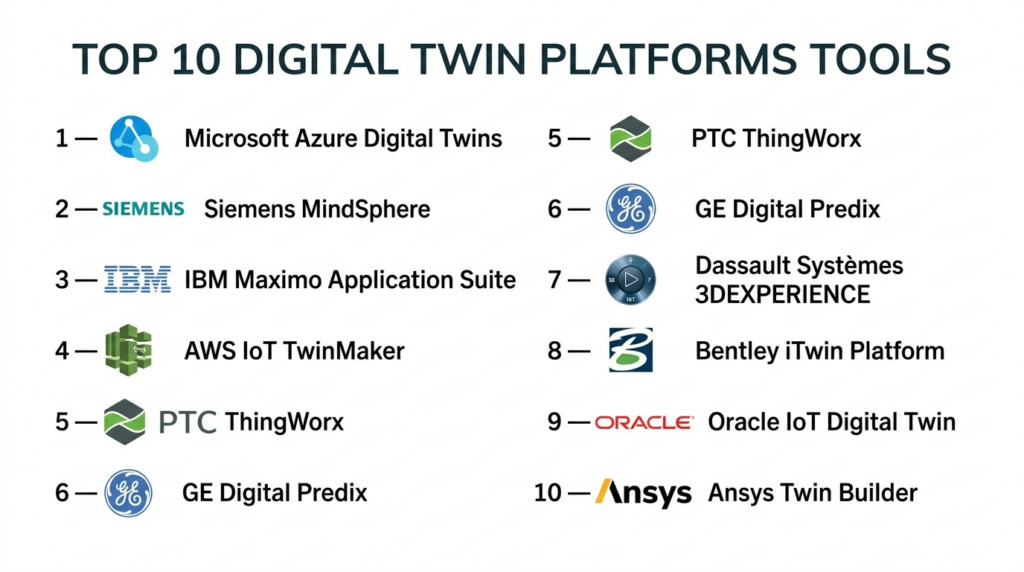
Introduction
Digital Twin Platforms are software systems that create virtual replicas of physical assets, systems, or processes. These digital models continuously receive real-world data from sensors, IoT devices, and enterprise systems, enabling organizations to simulate, monitor, and optimize performance in real time.
As industries move toward smarter operations and predictive decision-making, digital twin platforms have become critical. They allow businesses to test scenarios, detect anomalies early, and improve efficiency without disrupting physical systems.
Common use cases include:
- Industrial equipment monitoring and predictive maintenance
- Smart city infrastructure simulation
- Manufacturing process optimization
- Energy grid and utility management
- Healthcare and building management systems
What buyers should evaluate:
- Real-time data ingestion and processing
- Simulation and modeling capabilities
- Integration with IoT and enterprise systems
- Scalability for large datasets and assets
- Visualization and dashboard capabilities
- AI and predictive analytics support
- Deployment flexibility (cloud, edge, hybrid)
- Security and data governance
- Ease of use and developer tools
- API and customization capabilities
Best for: Enterprises in manufacturing, energy, automotive, smart cities, and infrastructure, as well as engineering teams and data-driven organizations.
Not ideal for: Small teams without IoT infrastructure or those needing only basic monitoring dashboards without simulation capabilities.
Key Trends in Digital Twin Platforms
- AI-driven predictive analytics enhancing decision-making and automation
- Integration with IoT ecosystems for real-time data synchronization
- Edge computing adoption for low-latency processing
- 3D and immersive visualization improving operational insights
- Digital twins for entire systems (not just assets) including supply chains and cities
- Increased focus on interoperability and open standards
- Cloud-native platforms enabling scalability and collaboration
- Simulation-based scenario testing for risk mitigation
- Growing adoption in sustainability and energy optimization
- Security-first architectures for protecting operational data
How We Selected These Tools (Methodology)
- Evaluated market adoption and enterprise usage
- Assessed feature completeness across modeling, simulation, and analytics
- Reviewed performance in handling large-scale data and assets
- Considered integration capabilities with IoT and enterprise systems
- Analyzed security posture and compliance readiness
- Included a mix of enterprise, mid-market, and developer-focused platforms
- Evaluated ease of use and onboarding experience
- Considered deployment flexibility (cloud, edge, hybrid)
- Prioritized tools with strong ecosystems and ongoing innovation
Top 10 Digital Twin Platforms Tools
#1 — Microsoft Azure Digital Twins
Short description (2–3 lines): A cloud-based platform for building digital models of physical environments, integrated deeply with Azure services.
Key Features
- Real-time data modeling
- IoT integration
- Graph-based digital twin modeling
- Event-driven architecture
- Scalable cloud infrastructure
- Visualization tools
Pros
- Strong integration with Azure ecosystem
- Highly scalable
Cons
- Requires Azure expertise
- Pricing complexity
Platforms / Deployment
Web; Cloud
Security & Compliance
Supports enterprise-grade security features; specific certifications not publicly stated
Integrations & Ecosystem
Deep integration within Microsoft ecosystem.
- IoT services
- Data analytics tools
- APIs
Support & Community
Extensive documentation and enterprise support.
#2 — Siemens MindSphere
Short description (2–3 lines): An industrial IoT platform enabling digital twin creation for manufacturing and industrial assets.
Key Features
- Asset modeling
- Data analytics
- IoT connectivity
- Industrial automation integration
- Visualization dashboards
- Application development tools
Pros
- Strong industrial focus
- Robust analytics
Cons
- Complex setup
- Enterprise pricing
Platforms / Deployment
Web; Cloud
Security & Compliance
Not publicly stated
Integrations & Ecosystem
Part of Siemens ecosystem.
- Industrial systems
- APIs
- Analytics tools
Support & Community
Strong enterprise support.
#3 — IBM Maximo Application Suite
Short description (2–3 lines): A platform combining asset management and digital twin capabilities for enterprise operations.
Key Features
- Asset lifecycle management
- Predictive maintenance
- AI-driven insights
- IoT integration
- Workflow automation
- Visualization tools
Pros
- Strong asset management features
- AI-powered analytics
Cons
- Complex deployment
- High cost
Platforms / Deployment
Web / Linux; Hybrid
Security & Compliance
Not publicly stated
Integrations & Ecosystem
Integrated with IBM ecosystem.
- AI tools
- IoT systems
- APIs
Support & Community
Enterprise-grade support.
#4 — AWS IoT TwinMaker
Short description (2–3 lines): A service for creating digital twins of real-world systems using AWS infrastructure.
Key Features
- Data ingestion
- 3D visualization
- Scene composition
- IoT integration
- Scalable cloud infrastructure
- API-driven architecture
Pros
- Scalable and flexible
- Strong cloud ecosystem
Cons
- Requires AWS expertise
- Setup complexity
Platforms / Deployment
Web; Cloud
Security & Compliance
Not publicly stated
Integrations & Ecosystem
Part of AWS ecosystem.
- IoT services
- Analytics tools
- APIs
Support & Community
Strong developer and enterprise support.
#5 — PTC ThingWorx
Short description (2–3 lines): A platform for building industrial IoT applications and digital twins.
Key Features
- Application development tools
- Real-time data integration
- Analytics and visualization
- IoT connectivity
- AR integration
- Workflow automation
Pros
- Strong IoT capabilities
- Flexible platform
Cons
- Learning curve
- Pricing complexity
Platforms / Deployment
Web; Cloud / Hybrid
Security & Compliance
Not publicly stated
Integrations & Ecosystem
Broad industrial ecosystem.
- IoT devices
- AR tools
- APIs
Support & Community
Active enterprise support.
#6 — GE Digital Predix
Short description (2–3 lines): A platform designed for industrial digital twins and asset performance management.
Key Features
- Industrial data analytics
- Asset modeling
- Predictive maintenance
- IoT integration
- Visualization tools
- Workflow automation
Pros
- Strong industrial focus
- Reliable performance
Cons
- Limited flexibility
- Complex setup
Platforms / Deployment
Web; Cloud
Security & Compliance
Not publicly stated
Integrations & Ecosystem
Industrial ecosystem integration.
- IoT devices
- Analytics tools
- APIs
Support & Community
Enterprise support available.
#7 — Dassault Systèmes 3DEXPERIENCE
Short description (2–3 lines): A platform for creating digital twins of products and systems with strong simulation capabilities.
Key Features
- 3D modeling and simulation
- Product lifecycle management
- Data integration
- Collaboration tools
- Visualization
- Engineering workflows
Pros
- Strong simulation capabilities
- Comprehensive platform
Cons
- Expensive
- Complex interface
Platforms / Deployment
Web / Windows; Cloud / Hybrid
Security & Compliance
Not publicly stated
Integrations & Ecosystem
Integrated with design and engineering tools.
- CAD tools
- PLM systems
- APIs
Support & Community
Strong enterprise ecosystem.
#8 — Bentley iTwin Platform
Short description (2–3 lines): A digital twin platform focused on infrastructure and construction projects.
Key Features
- Infrastructure modeling
- Data integration
- Real-time updates
- Visualization tools
- Collaboration features
- Simulation capabilities
Pros
- Strong for infrastructure
- Good visualization
Cons
- Niche focus
- Learning curve
Platforms / Deployment
Web; Cloud
Security & Compliance
Not publicly stated
Integrations & Ecosystem
Infrastructure ecosystem.
- Engineering tools
- Data systems
- APIs
Support & Community
Professional support available.
#9 — Oracle IoT Digital Twin
Short description (2–3 lines): A platform for managing digital twins with enterprise-grade analytics and IoT integration.
Key Features
- IoT data ingestion
- Predictive analytics
- Visualization dashboards
- Workflow automation
- Integration with enterprise systems
- Cloud scalability
Pros
- Strong enterprise integration
- Reliable cloud infrastructure
Cons
- Complex setup
- Enterprise pricing
Platforms / Deployment
Web; Cloud
Security & Compliance
Not publicly stated
Integrations & Ecosystem
Part of Oracle ecosystem.
- ERP systems
- IoT services
- APIs
Support & Community
Enterprise-level support.
#10 — Ansys Twin Builder
Short description (2–3 lines): A simulation-driven digital twin platform for engineering and system-level modeling.
Key Features
- Physics-based simulation
- Real-time analytics
- System modeling
- Integration with simulation tools
- Predictive maintenance
- Visualization
Pros
- Strong simulation capabilities
- Engineering-focused
Cons
- Requires expertise
- High cost
Platforms / Deployment
Windows / Linux; Self-hosted
Security & Compliance
Not publicly stated
Integrations & Ecosystem
Engineering ecosystem integration.
- Simulation tools
- Data systems
- APIs
Support & Community
Strong technical support.
Comparison Table (Top 10)
| Tool Name | Best For | Platform(s) Supported | Deployment | Standout Feature | Public Rating |
|---|---|---|---|---|---|
| Azure Digital Twins | Cloud digital twins | Web | Cloud | Graph modeling | N/A |
| MindSphere | Industrial IoT | Web | Cloud | Industrial analytics | N/A |
| IBM Maximo | Asset management | Web/Linux | Hybrid | Predictive maintenance | N/A |
| AWS TwinMaker | Cloud twins | Web | Cloud | 3D visualization | N/A |
| ThingWorx | IoT apps | Web | Hybrid | AR integration | N/A |
| Predix | Industrial assets | Web | Cloud | Asset performance | N/A |
| 3DEXPERIENCE | Product twins | Web/Windows | Hybrid | 3D simulation | N/A |
| iTwin | Infrastructure | Web | Cloud | Infrastructure modeling | N/A |
| Oracle IoT | Enterprise twins | Web | Cloud | Enterprise integration | N/A |
| Ansys Twin Builder | Simulation | Win/Linux | Self-hosted | Physics modeling | N/A |
Evaluation & Scoring of Digital Twin Platforms
| Tool Name | Core (25%) | Ease (15%) | Integrations (15%) | Security (10%) | Performance (10%) | Support (10%) | Value (15%) | Weighted Total |
|---|---|---|---|---|---|---|---|---|
| Azure Digital Twins | 9 | 7 | 10 | 7 | 9 | 9 | 7 | 8.5 |
| MindSphere | 9 | 6 | 9 | 7 | 9 | 9 | 6 | 8.2 |
| IBM Maximo | 9 | 6 | 9 | 7 | 9 | 9 | 6 | 8.2 |
| AWS TwinMaker | 9 | 7 | 10 | 7 | 9 | 9 | 7 | 8.5 |
| ThingWorx | 8 | 7 | 9 | 6 | 8 | 8 | 7 | 7.9 |
| Predix | 8 | 6 | 8 | 6 | 8 | 8 | 6 | 7.5 |
| 3DEXPERIENCE | 9 | 6 | 9 | 7 | 9 | 9 | 6 | 8.1 |
| iTwin | 8 | 7 | 8 | 6 | 8 | 7 | 7 | 7.6 |
| Oracle IoT | 8 | 6 | 9 | 7 | 8 | 8 | 6 | 7.7 |
| Twin Builder | 9 | 5 | 8 | 6 | 9 | 8 | 6 | 7.8 |
How to interpret scores:
- Scores are comparative and reflect overall capabilities
- Higher scores indicate balanced performance across features
- Enterprise tools excel in scalability and integrations
- Engineering tools prioritize simulation depth
- Use scores to shortlist tools based on your priorities
Which Digital Twin Platforms Tool Is Right for You?
Solo / Freelancer
- Limited options; consider lightweight IoT or simulation tools
SMB
- Best: ThingWorx, iTwin
- Balanced usability and features
Mid-Market
- Best: IBM Maximo, Oracle IoT
- Strong asset management and analytics
Enterprise
- Best: Azure Digital Twins, AWS TwinMaker, Siemens MindSphere
- Scalable and enterprise-ready
Budget vs Premium
- Budget: Limited options
- Premium: Azure, AWS, Siemens
Feature Depth vs Ease of Use
- Deep: Ansys, 3DEXPERIENCE
- Easier: Cloud platforms
Integrations & Scalability
- Strong: Azure, AWS, Oracle
- Flexible: Open ecosystems
Security & Compliance Needs
- Enterprise: Cloud providers
- Basic: Smaller platforms
Frequently Asked Questions (FAQs)
What is a digital twin platform?
A digital twin platform creates a virtual model of a physical system for monitoring and simulation.
How does it work?
It connects real-world data from sensors to a digital model for analysis.
What industries use digital twins?
Manufacturing, energy, healthcare, and smart cities.
Are digital twin platforms expensive?
Most enterprise tools are premium-priced.
Do they require IoT devices?
Yes, they rely on real-world data sources.
Can digital twins predict failures?
Yes, many use AI for predictive maintenance.
Are these platforms cloud-based?
Most modern platforms are cloud or hybrid.
Can small businesses use them?
Yes, but adoption depends on infrastructure.
How secure are digital twin platforms?
Security varies; check vendor capabilities.
Can I switch platforms?
Yes, but it may require migration effort.
Conclusion
Digital Twin Platforms are transforming how organizations monitor, simulate, and optimize real-world systems. From industrial operations to smart infrastructure, these tools provide actionable insights and improve decision-making.

One area I would add is the operational cost of maintaining a digital twin after the initial implementation. In production, the biggest challenge is often not creating the model but keeping it synchronized with the real asset as sensors change, data pipelines fail, and the physical system evolves. Teams also need monitoring for data freshness, model drift, sensor anomalies, and gaps between the twin and the actual environment. Without strong observability, versioning, and automated validation in the CI/CD pipeline, a digital twin can gradually become an inaccurate representation of reality—and decisions based on it may become unreliable. This operational lifecycle is an important factor to consider alongside features, pricing, and integrations when selecting a platform.