MOTOSHARE 🚗🏍️
Rent Bikes & Cars Directly from Owners
Motoshare connects vehicle owners with people who need bikes and cars on rent. Owners earn from idle vehicles, and renters get flexible ride options.
Visit Motoshare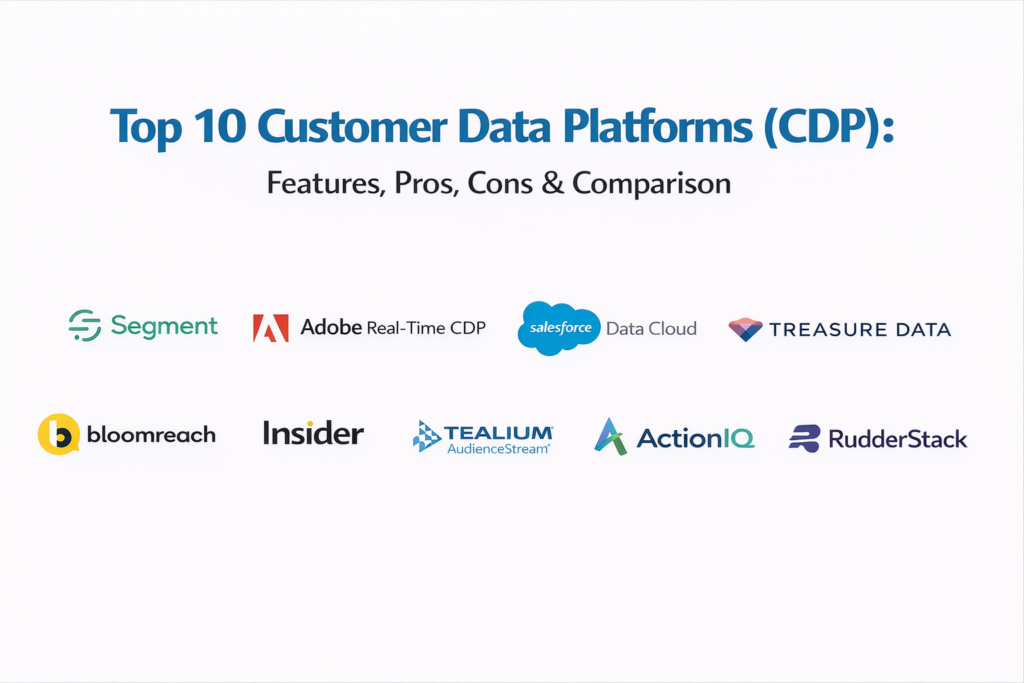
Introduction
Customer Data Platforms (CDPs) are software systems that collect, unify, organize, and activate customer data from multiple sources into one persistent profile. Instead of keeping data scattered across CRM tools, analytics platforms, websites, apps, and advertising systems, a CDP creates a centralized customer view that teams can actually use.
Why does this matter now? Modern businesses rely on personalized experiences, accurate reporting, privacy-safe targeting, and better customer retention. Without unified data, marketing becomes inefficient, sales teams lose context, and customer journeys feel disconnected. A strong CDP helps organizations turn fragmented data into actionable insights.
Common use cases include:
- Unified customer profiles across channels
- Personalized campaigns and journeys
- Better audience segmentation
- Cross-channel attribution and reporting
- Predictive analytics and churn prevention
- Data sharing with sales, support, and product teams
What buyers should evaluate:
- Data ingestion flexibility
- Identity resolution quality
- Real-time processing
- Integration ecosystem
- Security and privacy controls
- Ease of implementation
- Activation capabilities
- Analytics and reporting
- Scalability
- Pricing model and ROI
Best for: Ecommerce brands, SaaS companies, enterprises, digital businesses, marketers, growth teams, product teams, and organizations managing multiple customer touchpoints.
Not ideal for: Very small businesses with limited channels, simple customer journeys, or teams already well-served by lightweight CRM and analytics tools.
Key Trends in Customer Data Platforms (CDP) and Beyond
- AI-powered segmentation is improving targeting and campaign performance.
- First-party data strategies are becoming essential for privacy-focused growth.
- Real-time data activation is replacing delayed batch workflows.
- Composable CDPs are gaining traction with technical teams.
- Warehouse-native architectures are growing rapidly.
- Consent and governance tools are becoming core features.
- Predictive analytics is moving into standard CDP workflows.
- Low-code journey orchestration is helping marketers move faster.
- Usage-based pricing is expanding across vendors.
- Cross-functional data access is increasing beyond marketing teams.
How We Selected These Tools (Methodology)
We selected these CDP tools using a practical market-focused framework:
- Strong market recognition and adoption
- Reliable data unification capabilities
- Feature completeness across ingestion, identity, activation, and analytics
- Real-time performance and scalability signals
- Security and governance readiness
- Strong integrations and APIs
- Fit for SMB, mid-market, and enterprise buyers
- Documentation, onboarding, and support quality
- Innovation in AI and automation
- Long-term relevance in modern data stacks
Top 10 Customer Data Platforms (CDP) Tools
#1 — Segment
Short description: Segment is one of the most recognized CDPs, helping businesses collect customer data once and send it everywhere through a powerful integration ecosystem.
Key Features
- Data collection APIs
- Identity resolution
- Customer profiles
- Real-time event routing
- Audience building
- Governance controls
- Large integration library
Pros
- Excellent integrations
- Strong developer tools
- Trusted market leader
Cons
- Costs can rise with scale
- Advanced use cases need planning
- Some features suit larger teams more
Platforms / Deployment
Cloud
Security & Compliance
SSO/SAML, RBAC, encryption, audit controls. Additional certifications vary by plan.
Integrations & Ecosystem
One of the strongest ecosystems in the category.
- CRM tools
- Analytics platforms
- Advertising tools
- Warehouses
- APIs
Support & Community
Strong documentation, active community, enterprise support options.
#2 — Adobe Real-Time CDP
Short description: Adobe Real-Time CDP helps enterprises unify customer data and activate audiences across digital experiences.
Key Features
- Real-time profiles
- Audience segmentation
- Omnichannel activation
- Identity stitching
- Governance controls
- AI insights
- Enterprise scale
Pros
- Strong enterprise depth
- Great Adobe ecosystem fit
- Real-time activation capabilities
Cons
- Complex for smaller teams
- Premium pricing
- Best with Adobe stack
Platforms / Deployment
Cloud
Security & Compliance
Enterprise controls, encryption, role permissions. Additional certifications vary.
Integrations & Ecosystem
Strongest with Adobe products and enterprise marketing stacks.
- Adobe Experience Cloud
- Analytics tools
- APIs
- Advertising platforms
- Data systems
Support & Community
Strong enterprise support and implementation partners.
#3 — Salesforce Data Cloud
Short description: Salesforce Data Cloud connects customer data across Salesforce products and external systems for smarter customer engagement.
Key Features
- Unified profiles
- Real-time insights
- Audience activation
- AI-ready data layer
- Cross-cloud connectivity
- Analytics support
- Scalable infrastructure
Pros
- Great for Salesforce customers
- Strong ecosystem value
- Enterprise-ready architecture
Cons
- Best inside Salesforce environment
- Pricing varies
- Can be complex initially
Platforms / Deployment
Cloud
Security & Compliance
SSO, RBAC, encryption, enterprise controls. Additional details vary.
Integrations & Ecosystem
Excellent fit for Salesforce-led organizations.
- Salesforce CRM
- Marketing tools
- Commerce systems
- APIs
- Data tools
Support & Community
Large support ecosystem and partner network.
#4 — Treasure Data
Short description: Treasure Data is an enterprise CDP focused on large-scale customer data management, analytics, and activation.
Key Features
- Unified customer records
- Identity resolution
- Advanced segmentation
- Predictive analytics
- Data governance
- Journey activation
- Enterprise scalability
Pros
- Strong enterprise focus
- Good analytics depth
- Robust data capabilities
Cons
- Premium positioning
- Longer implementation cycles
- May exceed SMB needs
Platforms / Deployment
Cloud
Security & Compliance
Enterprise-grade controls. Additional certifications vary.
Integrations & Ecosystem
Designed for complex enterprise environments.
- Warehouses
- CRM tools
- APIs
- Ad platforms
- Analytics tools
Support & Community
Strong enterprise onboarding and managed support.
#5 — mParticle
Short description: mParticle helps businesses unify customer data and orchestrate experiences across mobile, web, and offline touchpoints.
Key Features
- Data pipelines
- Identity resolution
- Audience management
- Governance tools
- Real-time streaming
- Mobile-first support
- Integrations ecosystem
Pros
- Strong mobile capabilities
- Good governance controls
- Enterprise flexibility
Cons
- Better for data-mature teams
- Pricing varies by scale
- Learning curve for new users
Platforms / Deployment
Cloud
Security & Compliance
Encryption, access controls, governance features. Additional details vary.
Integrations & Ecosystem
Strong omnichannel integrations.
- Mobile SDKs
- CRM tools
- Analytics tools
- APIs
- Ad platforms
Support & Community
Strong onboarding and enterprise support.
#6 — Bloomreach Engagement
Short description: Bloomreach Engagement combines CDP functionality with personalization, automation, and commerce activation tools.
Key Features
- Unified profiles
- Audience segmentation
- Campaign automation
- Product recommendations
- Journey orchestration
- Analytics
- Personalization tools
Pros
- Strong for ecommerce teams
- CDP + activation in one platform
- Good marketing usability
Cons
- Best for commerce use cases
- Premium feature depth
- Setup may require planning
Platforms / Deployment
Cloud
Security & Compliance
Enterprise controls vary by plan.
Integrations & Ecosystem
Strong fit for digital commerce stacks.
- Ecommerce platforms
- CRM tools
- APIs
- Analytics tools
- Email platforms
Support & Community
Good onboarding and customer success resources.
#7 — Insider
Short description: Insider combines CDP-style customer unification with journey orchestration and personalization for growth teams.
Key Features
- Customer profiles
- Segmentation
- Journey automation
- Predictive insights
- Omnichannel messaging
- Personalization
- Reporting tools
Pros
- Strong growth marketing focus
- Fast activation workflows
- Good omnichannel reach
Cons
- Broad platform may exceed simple needs
- Pricing varies
- Advanced features may need support
Platforms / Deployment
Cloud
Security & Compliance
Role controls, GDPR support. Other details vary.
Integrations & Ecosystem
Works across common digital marketing tools.
- CRM tools
- Ecommerce systems
- APIs
- Messaging tools
- Analytics tools
Support & Community
Strong customer success model.
#8 — Tealium AudienceStream
Short description: Tealium AudienceStream is a CDP built for real-time data collection, audience management, and activation.
Key Features
- Real-time profiles
- Audience building
- Tag management synergy
- Event streaming
- Data connectors
- Consent tools
- Omnichannel activation
Pros
- Strong real-time capabilities
- Excellent for web data strategies
- Flexible connectors
Cons
- Setup can be technical
- Better for advanced teams
- Pricing varies
Platforms / Deployment
Cloud
Security & Compliance
Enterprise controls and privacy tooling. Additional details vary.
Integrations & Ecosystem
Well known for connectivity and tag ecosystem.
- Web platforms
- APIs
- Analytics tools
- Ad systems
- CRM tools
Support & Community
Good enterprise support and documentation.
#9 — ActionIQ
Short description: ActionIQ is an enterprise CDP focused on helping marketers use data without heavy engineering dependence.
Key Features
- Customer profiles
- Audience management
- Journey activation
- Analytics access
- Governance tools
- Low-code workflows
- Enterprise scalability
Pros
- Marketer-friendly workflows
- Strong governance focus
- Good enterprise usability
Cons
- Enterprise-oriented pricing
- Less ideal for small teams
- Advanced deployment planning needed
Platforms / Deployment
Cloud
Security & Compliance
Enterprise access controls. Additional certifications vary.
Integrations & Ecosystem
Supports modern enterprise data stacks.
- Warehouses
- APIs
- CRM systems
- Marketing tools
- Analytics tools
Support & Community
Strong onboarding and enterprise assistance.
#10 — RudderStack
Short description: RudderStack is a warehouse-first customer data platform popular with technical teams seeking control and flexibility.
Key Features
- Event streaming
- Warehouse-native design
- Identity resolution
- Reverse ETL workflows
- Open architecture
- Developer APIs
- Governance tools
Pros
- Great for technical teams
- Flexible architecture
- Strong warehouse alignment
Cons
- Requires technical resources
- Less plug-and-play for non-technical users
- Advanced setups need planning
Platforms / Deployment
Cloud / Self-hosted
Security & Compliance
Access controls, encryption, governance tooling. Additional details vary.
Integrations & Ecosystem
Strong for modern data stacks.
- Warehouses
- APIs
- Reverse ETL tools
- Analytics tools
- CRM systems
Support & Community
Good docs and growing community.
Comparison Table (Top 10)
| Tool Name | Best For | Platform(s) Supported | Deployment | Standout Feature | Public Rating |
|---|---|---|---|---|---|
| Segment | Broad adoption | Web | Cloud | Huge integrations ecosystem | N/A |
| Adobe Real-Time CDP | Enterprise brands | Web | Cloud | Real-time enterprise profiles | N/A |
| Salesforce Data Cloud | Salesforce users | Web | Cloud | Deep CRM ecosystem value | N/A |
| Treasure Data | Large enterprises | Web | Cloud | Advanced data management | N/A |
| mParticle | Mobile-first brands | Web | Cloud | Strong mobile data support | N/A |
| Bloomreach Engagement | Ecommerce teams | Web | Cloud | CDP + personalization | N/A |
| Insider | Growth teams | Web | Cloud | Fast omnichannel activation | N/A |
| Tealium AudienceStream | Real-time web data | Web | Cloud | Real-time audience building | N/A |
| ActionIQ | Enterprise marketers | Web | Cloud | Low-code enterprise activation | N/A |
| RudderStack | Technical teams | Web | Cloud / Self-hosted | Warehouse-first flexibility | N/A |
Evaluation & Scoring of Customer Data Platforms (CDP)
| Tool Name | Core (25%) | Ease (15%) | Integrations (15%) | Security (10%) | Performance (10%) | Support (10%) | Value (15%) | Weighted Total |
|---|---|---|---|---|---|---|---|---|
| Segment | 9 | 8 | 10 | 8 | 9 | 8 | 7 | 8.5 |
| Adobe Real-Time CDP | 9 | 6 | 8 | 8 | 9 | 8 | 6 | 7.9 |
| Salesforce Data Cloud | 9 | 6 | 9 | 8 | 9 | 8 | 6 | 8.0 |
| Treasure Data | 8 | 6 | 8 | 8 | 8 | 8 | 6 | 7.5 |
| mParticle | 8 | 7 | 8 | 8 | 8 | 8 | 7 | 7.8 |
| Bloomreach Engagement | 8 | 8 | 7 | 7 | 8 | 8 | 7 | 7.7 |
| Insider | 8 | 8 | 7 | 7 | 8 | 8 | 8 | 7.8 |
| Tealium AudienceStream | 8 | 7 | 8 | 8 | 8 | 7 | 7 | 7.7 |
| ActionIQ | 8 | 7 | 7 | 8 | 8 | 8 | 6 | 7.5 |
| RudderStack | 8 | 6 | 8 | 7 | 8 | 7 | 8 | 7.5 |
These scores are comparative, not absolute.
A higher score does not automatically mean the best tool for every organization.
Enterprises may prioritize governance and integrations.
Smaller teams may value ease of use and faster deployment.
Always validate against your internal data strategy, team skills, and budget.
Which Customer Data Platforms (CDP) Tool Is Right for You?
Solo / Freelancer
Most solo users do not need a full CDP. Lightweight CRM + analytics tools may be enough.
SMB
Choose tools with fast setup and clear activation value. Segment, Insider, or Bloomreach Engagement can be practical options.
Mid-Market
Look for scalability with manageable complexity. mParticle, Tealium, and RudderStack are strong contenders.
Enterprise
Prioritize governance, advanced identity resolution, and ecosystem fit. Adobe Real-Time CDP, Salesforce Data Cloud, Treasure Data, and Segment stand out.
Budget vs Premium
Budget-conscious teams should start with one core use case. Premium suites make sense when scale and personalization ROI justify the spend.
Feature Depth vs Ease of Use
The most advanced CDPs may require technical resources. Simpler tools can launch faster with fewer dependencies.
Integrations & Scalability
Choose vendors with strong APIs and connectors if you depend on CRM, warehouses, analytics, and marketing systems.
Security & Compliance Needs
Highly regulated organizations should validate access controls, consent management, audit logs, and data governance before rollout.
Frequently Asked Questions (FAQs)
1. What is a Customer Data Platform?
A CDP is software that unifies customer data from multiple systems into one usable profile for activation and analysis.
2. How is a CDP different from a CRM?
A CRM manages relationships and sales workflows, while a CDP unifies data from many sources for broader customer intelligence.
3. Do small businesses need a CDP?
Not always. Many small teams can start with CRM, analytics, and email tools before investing in a CDP.
4. Are CDPs only for marketing teams?
No. Sales, support, product, analytics, and leadership teams can all benefit from unified customer data.
5. How are CDPs priced?
Pricing may depend on profiles, events, data volume, integrations, seats, or enterprise contracts.
6. How long does implementation take?
Simple deployments may take weeks, while complex enterprise rollouts can take longer.
7. Are CDPs secure?
Security varies by vendor. Review encryption, access controls, privacy features, and governance tools carefully.
8. Can a CDP improve personalization?
Yes. Unified data helps businesses deliver more relevant campaigns, journeys, and recommendations.
9. What is the biggest implementation mistake?
Buying a platform without a clear use case, internal ownership, or clean data foundation.
10. Can I migrate to another CDP later?
Yes, but migration effort depends on integrations, identity models, and activation workflows.
Conclusion
Customer Data Platforms help businesses turn scattered customer information into a unified growth asset. The right CDP can improve personalization, analytics, operational efficiency, and customer experience across teams. Some tools excel in enterprise governance, others in developer flexibility, ecommerce activation, or ecosystem integrations. There is no single best choice for everyone. Shortlist two or three tools, run a focused pilot, validate integrations and security, and choose the platform that best fits your long-term data strategy.

A CDP’s real value depends less on the platform itself and more on the quality and reliability of the data flowing into it. In large-scale environments, teams often struggle with inconsistent customer identifiers, duplicate profiles, missing events, changing data schemas, and unreliable integrations between applications, analytics systems, and marketing tools. Engineering teams should treat the CDP as a critical data platform by implementing data validation, pipeline observability, identity resolution monitoring, access governance, and clear ownership of customer data models. Another overlooked challenge is preventing the CDP from becoming a data storage layer with outdated profiles; continuous data quality checks and lifecycle management are essential for maintaining trust. Future CDP platforms will likely focus more on autonomous data governance, real-time anomaly detection, privacy-aware personalization, and seamless collaboration between engineering, product, and business teams.