MOTOSHARE 🚗🏍️
Rent Bikes & Cars Directly from Owners
Motoshare connects vehicle owners with people who need bikes and cars on rent. Owners earn from idle vehicles, and renters get flexible ride options.
Visit Motoshare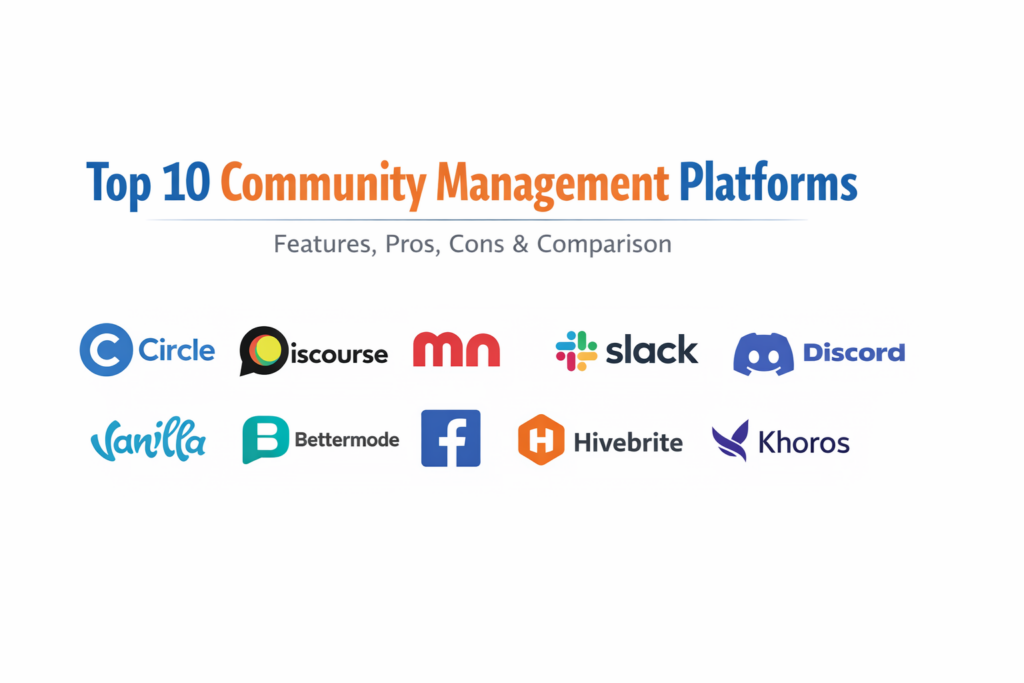
Introduction
Community management platforms are software solutions designed to help businesses build, manage, and grow online communities in a structured and scalable way. Instead of relying on scattered tools like social media groups or messaging apps, these platforms provide a centralized space where users can interact, share knowledge, and engage with a brand or each other.
Today, communities are becoming a core growth and retention channel. Whether it’s customer support, product feedback, or brand advocacy, companies are investing in dedicated platforms to foster meaningful engagement. A well-managed community can reduce support costs, increase loyalty, and even drive revenue through memberships or exclusive content.
Common Use Cases
- Customer support communities and knowledge sharing
- Creator or membership-based communities
- Product feedback and beta user groups
- Internal employee or partner communities
- Brand advocacy and user engagement programs
What Buyers Should Evaluate
- Community structure (forums, groups, feeds, channels)
- Moderation and user management tools
- Customization and branding capabilities
- Analytics and engagement tracking
- Integration with CRM and marketing tools
- Scalability for growing communities
- Mobile experience and accessibility
- Monetization features (subscriptions, courses)
- Security and access control
- Ease of onboarding and user experience
Best for: SaaS companies, creators, educators, customer success teams, and brands that want to build long-term engagement and owned communities.
Not ideal for: Businesses that only need basic communication channels or short-term engagement. In those cases, social media platforms or messaging apps may be sufficient.
Key Trends in Community Management Platforms
- AI-powered moderation: Automated content filtering and spam detection
- Community analytics evolution: Deeper insights into engagement and member behavior
- Hybrid communities: Combining content, courses, and forums in one platform
- Monetization-first features: Subscriptions, gated content, and paid memberships
- In-product communities: Embedded communities within SaaS products
- Decentralized community models: Greater ownership and data control
- Mobile-first experiences: Optimized apps and responsive design
- Integration with customer success tools: Linking communities with CRM and support systems
- Automation workflows: Trigger-based notifications and engagement loops
- Privacy and compliance focus: Stronger data governance and access control
How We Selected These Tools (Methodology)
- Focused on platforms with strong market presence and adoption
- Evaluated community features and flexibility
- Assessed ease of use and onboarding experience
- Reviewed performance and scalability capabilities
- Considered security and compliance signals
- Analyzed integration ecosystems and APIs
- Included tools for creators, SMBs, and enterprises
- Balanced community engagement vs monetization capabilities
- Prioritized platforms with active development and innovation
Top 10 Community Management Platforms Tools
#1 — Circle
Short description: A modern community platform designed for creators and brands to build private, engaging communities.
Key Features
- Spaces and group-based discussions
- Custom branding
- Member management tools
- Events and live streams
- Course integration
- Mobile app support
Pros
- Clean and modern interface
- Strong engagement features
Cons
- Limited advanced analytics
- Pricing may increase with scale
Platforms / Deployment
Web / iOS / Android
Cloud
Security & Compliance
Not publicly stated
Integrations & Ecosystem
Circle integrates with common creator and business tools for workflows and automation.
- Zapier
- Slack
- Email tools
- API
Support & Community
Strong onboarding and active creator community.
#2 — Discourse
Short description: An open-source discussion platform ideal for forums and knowledge-sharing communities.
Key Features
- Threaded discussions
- Moderation tools
- Trust-level system
- Plugin ecosystem
- Self-hosting option
Pros
- Highly customizable
- Strong community features
Cons
- Requires technical setup
- UI may feel traditional
Platforms / Deployment
Web
Cloud / Self-hosted
Security & Compliance
Varies (deployment-based)
Integrations & Ecosystem
Discourse offers flexibility through plugins and APIs.
- Plugins
- APIs
- SSO integrations
Support & Community
Large open-source community and documentation.
#3 — Mighty Networks
Short description: A platform combining community building with courses and memberships.
Key Features
- Community feeds
- Course creation tools
- Membership monetization
- Events and live streaming
- Mobile apps
Pros
- All-in-one solution
- Strong monetization features
Cons
- Limited customization depth
- Pricing tiers vary
Platforms / Deployment
Web / iOS / Android
Cloud
Security & Compliance
Not publicly stated
Integrations & Ecosystem
- Zapier
- Email tools
- Payment integrations
Support & Community
Active user base and onboarding resources.
#4 — Slack (Communities)
Short description: A messaging platform often used for community engagement and collaboration.
Key Features
- Channels and messaging
- File sharing
- Integrations
- Notifications
- Search functionality
Pros
- Familiar interface
- Strong integrations
Cons
- Not designed for large communities
- Limited structure for long-term content
Platforms / Deployment
Web / Windows / macOS / iOS / Android
Cloud
Security & Compliance
SSO, encryption
Other: Not publicly stated
Integrations & Ecosystem
- Google Drive
- Trello
- GitHub
- APIs
Support & Community
Strong documentation and enterprise support.
#5 — Discord
Short description: A real-time communication platform widely used for gaming, creator, and brand communities.
Key Features
- Voice and text channels
- Roles and permissions
- Bots and automation
- Community moderation tools
- Live streaming
Pros
- Highly engaging
- Free to start
Cons
- Can become chaotic at scale
- Limited structured content
Platforms / Deployment
Web / Windows / macOS / iOS / Android
Cloud
Security & Compliance
Not publicly stated
Integrations & Ecosystem
- Bots
- APIs
- Third-party integrations
Support & Community
Massive global user base and resources.
#6 — Vanilla Forums (Higher Logic Vanilla)
Short description: Enterprise-grade community platform focused on customer support and engagement.
Key Features
- Discussion forums
- Knowledge base integration
- Gamification
- Analytics dashboards
- Custom workflows
Pros
- Scalable for enterprises
- Strong engagement tools
Cons
- Complex setup
- Higher pricing
Platforms / Deployment
Web
Cloud
Security & Compliance
Not publicly stated
Integrations & Ecosystem
- CRM integrations
- APIs
- Marketing tools
Support & Community
Enterprise support and onboarding.
#7 — Tribe (Bettermode)
Short description: A flexible community platform for building branded communities and customer hubs.
Key Features
- Customizable widgets
- White-label community
- Member segmentation
- API-first design
- Moderation tools
Pros
- Highly customizable
- Strong branding options
Cons
- Requires setup effort
- Learning curve
Platforms / Deployment
Web
Cloud
Security & Compliance
Not publicly stated
Integrations & Ecosystem
- APIs
- Zapier
- CRM tools
Support & Community
Growing ecosystem and documentation.
#8 — Facebook Groups
Short description: A widely used social platform for building informal communities.
Key Features
- Group discussions
- Content sharing
- Events
- Notifications
Pros
- Easy to start
- Large user base
Cons
- Limited control and ownership
- Algorithm dependency
Platforms / Deployment
Web / Mobile
Cloud
Security & Compliance
Not publicly stated
Integrations & Ecosystem
Limited integrations; primarily social ecosystem.
Support & Community
Large global usage.
#9 — Hivebrite
Short description: A community platform focused on professional networks, alumni, and organizations.
Key Features
- Member directories
- Event management
- CRM features
- Content management
- Monetization tools
Pros
- Strong for professional communities
- Customizable
Cons
- Complex setup
- Pricing not transparent
Platforms / Deployment
Web
Cloud
Security & Compliance
Not publicly stated
Integrations & Ecosystem
- CRM tools
- APIs
Support & Community
Enterprise-level support.
#10 — Khoros Communities
Short description: An enterprise community platform focused on customer engagement and support.
Key Features
- Community forums
- AI moderation
- Analytics tools
- Customer support integration
- Content management
Pros
- Enterprise-ready
- Strong analytics
Cons
- High cost
- Complex implementation
Platforms / Deployment
Web
Cloud
Security & Compliance
Not publicly stated
Integrations & Ecosystem
- CRM systems
- APIs
- Support tools
Support & Community
Enterprise support and onboarding.
Comparison Table (Top 10)
| Tool Name | Best For | Platform(s) Supported | Deployment | Standout Feature | Public Rating |
|---|---|---|---|---|---|
| Circle | Creators | Web, Mobile | Cloud | Clean UI | N/A |
| Discourse | Forums | Web | Hybrid | Open-source flexibility | N/A |
| Mighty Networks | Memberships | Web, Mobile | Cloud | Monetization tools | N/A |
| Slack | Teams | Web, Desktop, Mobile | Cloud | Integrations | N/A |
| Discord | Communities | Web, Desktop, Mobile | Cloud | Real-time engagement | N/A |
| Vanilla Forums | Enterprise | Web | Cloud | Gamification | N/A |
| Bettermode | SMB | Web | Cloud | Customization | N/A |
| Facebook Groups | Social | Web, Mobile | Cloud | Large audience | N/A |
| Hivebrite | Professional | Web | Cloud | Member management | N/A |
| Khoros | Enterprise | Web | Cloud | AI moderation | N/A |
Evaluation & Scoring of Community Management Platforms
| Tool Name | Core | Ease | Integrations | Security | Performance | Support | Value | Weighted Total |
|---|---|---|---|---|---|---|---|---|
| Circle | 8 | 9 | 7 | 7 | 8 | 8 | 8 | 8.0 |
| Discourse | 9 | 6 | 8 | 7 | 8 | 7 | 9 | 7.9 |
| Mighty Networks | 8 | 8 | 7 | 7 | 8 | 8 | 7 | 7.8 |
| Slack | 7 | 9 | 9 | 8 | 9 | 9 | 7 | 8.3 |
| Discord | 8 | 8 | 7 | 7 | 8 | 8 | 9 | 8.1 |
| Vanilla Forums | 9 | 6 | 8 | 8 | 9 | 8 | 6 | 7.9 |
| Bettermode | 8 | 7 | 8 | 7 | 8 | 7 | 7 | 7.6 |
| Facebook Groups | 6 | 9 | 5 | 6 | 8 | 7 | 10 | 7.7 |
| Hivebrite | 8 | 6 | 7 | 7 | 8 | 8 | 6 | 7.3 |
| Khoros | 10 | 5 | 9 | 8 | 9 | 9 | 5 | 8.0 |
How to interpret the scores:
- Scores are comparative, not absolute benchmarks
- Higher scores indicate better overall balance
- Enterprise tools score high on features but lower on ease
- Free tools score high on value but lower on control
- Use this as a shortlisting framework
Which Community Management Platforms Tool Is Right for You?
Solo / Freelancer
- Best: Circle, Discord
- Focus on ease of use and engagement
SMB
- Best: Bettermode, Mighty Networks
- Balance between customization and cost
Mid-Market
- Best: Circle, Discourse
- Need scalability and structure
Enterprise
- Best: Khoros, Vanilla Forums
- Focus on integrations and analytics
Budget vs Premium
- Budget: Discord, Facebook Groups
- Premium: Khoros, Hivebrite
Feature Depth vs Ease of Use
- Easy: Circle
- Advanced: Discourse, Khoros
Integrations & Scalability
- Strong: Slack, Khoros
- Moderate: Circle, Bettermode
Security & Compliance Needs
- High: Enterprise platforms
- Moderate: SMB tools
Frequently Asked Questions (FAQs)
What is a community management platform?
It is software used to build and manage online communities for engagement and collaboration.
Are community platforms free?
Some offer free versions, but advanced features require paid plans.
How long does setup take?
Basic communities can be launched quickly, while advanced setups take more time.
Can I monetize my community?
Yes, many platforms support memberships and paid content.
Are these platforms secure?
Security varies by platform and deployment.
Can I integrate with CRM tools?
Yes, many platforms support integrations.
What is the biggest mistake?
Not engaging members consistently.
Can I migrate platforms later?
Yes, but it may require effort.
Are social platforms enough?
They work for simple needs but lack ownership and control.
What are alternatives?
Forums, messaging apps, or custom-built solutions.
Conclusion
Community management platforms have become essential for building engaged, loyal audiences and creating meaningful interactions beyond traditional channels. Instead of relying on scattered tools, these platforms provide a centralized environment where users can connect, share ideas, and grow together. The right choice depends on your goals—whether it’s fostering engagement, supporting customers, or monetizing a community. Some platforms prioritize simplicity and user experience, while others focus on scalability, integrations, and advanced analytics. The most effective approach is to shortlist a few options, test them with your audience, and evaluate how well they support interaction, growth, and long-term value before making a final decision.

One aspect that could strengthen this comparison is evaluating how each platform supports long-term community operations rather than just initial community building. As communities grow, challenges like moderation consistency, spam detection, content lifecycle management, and identifying inactive or at-risk members become much more significant than feature availability alone. It would also be valuable to compare analytics that measure meaningful engagement—not just post counts, but contributor retention, knowledge reuse, and support deflection. From an operational standpoint, the platforms that provide strong governance controls, automation, and actionable insights often deliver better long-term ROI than those with the longest feature list.
One operational aspect I’d add is that organizations should evaluate how a community platform supports long-term governance rather than just day-one engagement. As communities grow, challenges like moderation workload, content lifecycle management, spam prevention, knowledge discoverability, and member retention become much more significant than adding new features. It also helps to measure business outcomes such as support ticket deflection, contributor retention, response quality, and knowledge reuse instead of relying solely on engagement metrics. In my experience, the most successful community platforms are those that evolve into searchable knowledge ecosystems with strong automation, analytics, and governance—not just active discussion spaces.