MOTOSHARE 🚗🏍️
Rent Bikes & Cars Directly from Owners
Motoshare connects vehicle owners with people who need bikes and cars on rent. Owners earn from idle vehicles, and renters get flexible ride options.
Visit Motoshare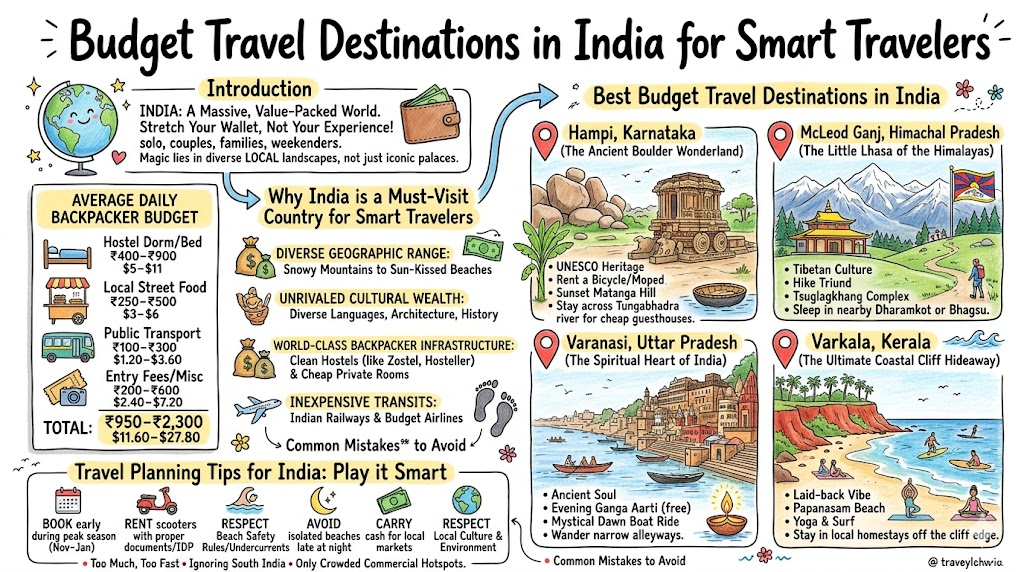
Introduction
Who says you need a massive bank balance to experience world-class travel? If you are a smart traveler, India is one of the most rewarding, value-packed regions on earth. Whether you are a solo backpacker, a couple looking for a romantic escape, a family planning a school-break vacation, or a weekend explorer rushing out after a Friday shift, this country stretches your wallet without watering down your experiences.
When people think of traveling here, they often picture high-end luxury palaces or crowded resort strips. But the real magic lies in its diverse local landscapes. India is far more than just its iconic golden coastlines or high-end heritage properties. It is a massive, living canvas of ancient culture, mist-shrouded mountain peaks, mouth-watering street food, thrilling outdoor adventures, and deeply peaceful historical ruins.
By utilizing an insightful India travel guide, you can discover magnificent spots that cost less per day than a single meal back home. Let’s dive into how you can map out your perfect, budget-friendly journey across this incredible landscape.
Why India is a Must-Visit Country for Smart Travelers
For anyone checking off their global bucket list, India offers an unbeatable financial advantage. Your money goes incredibly far here due to a highly favorable cost of living for international travelers and an abundance of high-quality local infrastructure designed for every budget level. It functions like a choose-your-own-adventure book: you can experience royal treatment, cozy mountain homestays, or coastal hippie culture for just a fraction of global prices.
- Diverse Geographic Range: You can stand on a freezing Himalayan ridge on Monday and walk along a sun-kissed beach by Thursday.
- Unrivaled Cultural Wealth: Every state features its own language, architecture, traditional clothing, and thousands of years of preserved history.
- World-Class Backpacker Infrastructure: The rise of secure, hyper-social premium hostel networks (like Zostel, Hosteller, and Moustache) across the country means you can secure clean, air-conditioned dorm beds or private rooms for rock-bottom rates.
- Inexpensive Transits: The vast Indian Railways network and budget airlines allow you to cross thousands of miles safely for the price of a modest dinner.
The Secret to Smart Budget Planning in India
Before we look at the specific destinations, mastering budget management requires understanding where your money goes. In India, luxury can be expensive, but local living is exceptionally cheap.
+-------------------------------------------------------------+
|               AVERAGE DAILY BACKPACKER BUDGET               |
+-------------------------------------------------------------+
|  Expense Category   |  Cost (INR)       |  Cost (USD Approx)|
+---------------------+-------------------+-------------------+
|  Hostel Dorm / Bed  |  ₹400 – ₹900      |  $5 – $11         |
|  Local Street Food  |  ₹250 – ₹500      |  $3 – $6          |
|  Public Transport   |  ₹100 – ₹300      |  $1.20 – $3.60    |
|  Entry Fees / Misc  |  ₹200 – ₹600      |  $2.40 – $7.20    |
+---------------------+-------------------+-------------------+
|  TOTAL DAILY SPEND  |  ₹950 – ₹2,300    |  $11.60 – $27.80  |
+-------------------------------------------------------------+
Safety and Local Logistics Tips
- Local Transport Options: Always opt for public state transport buses, local trains, or auto-rickshaws. Download ridesharing apps like Ola, Uber, or Rapido (for bike taxis) in major hub cities to view fair prices and avoid haggling.
- Family & Couple-Friendly Suggestions: Look for government-approved homestays (
Atithi Devo Bhavaregistry) where you get entire rooms, home-cooked regional meals, and insider safety advice directly from local families. - Food Options: Stick to crowded local eateries, “Dhabas” (roadside restaurants), and clean street vendors. If a stall has a long line of locals, the food is fresh, safe, and bound to cost less than ₹150 for a massive, filling meal.
- Safety Tips: Always keep an emergency offline map downloaded on your phone. While India is generally very welcoming, keep your wits about you in crowded train stations and avoid exploring isolated city alleys or unlit suburban areas alone late at night.
Best Budget Travel Destinations in India
To build a flawless India itinerary, you need to mix classic highlights with stunning, less-crowded choices. Here are four incredible destinations across different corners of the country that offer top-tier experiences for remarkably low costs.
1. Hampi, Karnataka (The Ancient Boulder Wonderland)
Imagine a surreal, sci-fi landscape covered in millions of giant, precariously balanced boulders, interspersed with the majestic, carved stone ruins of the 14th-century Vijayanagara Empire. Hampi is an open-air museum that feels like another planet.
- Why it is worth visiting: It is a UNESCO World Heritage Site that lets you walk directly through ancient palaces, royal stables, and towering temples without heavy commercial barricades. The contrast between ancient stone architecture and bright green banana plantations is breathtaking.
- Best things to do: Rent a bicycle or moped to map out the vast ruins, catch a magical sunset from the top of Matanga Hill, cross the Tungabhadra River in a traditional round coracle boat, and explore the musical pillars of the Vittala Temple.
- Best time to visit: October to February (when the weather is cool enough for outdoor walking).
- Ideal for whom: History buffs, solo backpackers, photographers, and couples seeking a slow-paced, rustic getaway.
- Travel tip: Stay across the river in the area known as “Virupapur Gaddi” or nearby Hospet for the cheapest hippie-style guesthouses and affordable cafes.
2. McLeod Ganj, Himachal Pradesh (The Little Lhasa of the Himalayas)
Perched high up in the Dhauladhar mountain range, McLeod Ganj is the home of the Dalai Lama and the Tibetan government-in-exile. It offers majestic alpine views, spiritual peace, and crisp mountain air at a fraction of the cost of European mountain towns.
- Why it is worth visiting: It provides a deeply immersive look into Tibetan culture, stunning mountain scenery, and cheap access to high-altitude Himalayan trekking routes.
- Best things to do: Visit the serene Tsuglagkhang Complex (the Dalai Lama’s temple), hike the popular 9-kilometer trail up to the stunning alpine meadow of Triund, and sample authentic Tibetan street food.
- Best time to visit: March to June (for perfect weather) or October to November (for clear mountain views and crisp cold air).
- Ideal for whom: Solo travelers, wellness seekers, adventure backpackers, and weekend travelers from nearby northern cities.
- Travel tip: Skip the busy main square hotels. Walk up the hill to neighboring Dharamkot or Bhagsu villages, where cozy rooms with snow-capped mountain views cost next to nothing.
3. Varanasi, Uttar Pradesh (The Spiritual Heart of India)
As one of the oldest continuously inhabited cities on earth, Varanasi is an intense, beautiful, and deeply spiritual assault on the senses. It is the ultimate cultural destination for travelers looking to understand the ancient soul of India.
- Why it is worth visiting: Most of Varanasi’s incredible experiences happen right out in the open along the stone steps (ghats) facing the holy River Ganges, making it completely free to explore.
- Best things to do: Sit quietly on the steps of Dasaswamedh Ghat to watch the mesmerizing evening Ganga Aarti ceremony, take a mystical dawn boat ride as the city wakes up, and wander through the labyrinth of ancient, narrow alleyways hiding tiny temples and old markets.
- Best time to visit: October to March, when the daytime temperatures are pleasant for walking.
- Ideal for whom: Cultural explorers, spiritual seekers, photographers, and seasoned backpackers.
- Travel tip: Avoid expensive tourist-facing restaurants. Stick to the legendary street food joints down the hidden alleys for iconic snacks like Kachori Sabzi and creamy Lassi served in traditional clay cups.
4. Varkala, Kerala (The Ultimate Coastal Cliff Hideaway)
If you love the ocean but want to avoid the high prices and party crowds of North Goa, Varkala is your dream coastal escape. It is famous for its unique, dramatic red laterite cliffs that look out directly over the crashing waves of the Arabian Sea.
- Why it is visit-worthy: It offers a world-class beach vacation with a laid-back, healthy lifestyle vibe. It is widely considered a key highlight of any South India travel guide.
- Best things to do: Relax on the pristine sands of Papanasam Beach, take a basic surf lesson, practice yoga at a clifftop studio, and watch the sun melt into the ocean from a cliffside cafe.
- Best time to visit: October to March, when the sea is calm and perfect for swimming.
- Ideal for whom: Couples looking for a romantic budget trip, beach bums, digital nomads, and families.
- Travel tip: Stay a few hundred meters back from the cliff edge in local homestays rather than right on the front row to cut your accommodation costs cleanly in half.
Travel Planning Tips for India: Play it Smart
To ensure your budget holiday stays smooth, safe, and stress-free, follow these hard-earned India vacation tips:
- Book Stays Early During Peak Season: If you are traveling between November and January, premium hostels and budget homestays fill up months in advance. Secure your beds early to avoid being forced into overpriced commercial hotels.
- Rent Scooters Only with Proper Documents: Renting a moped is an amazing way to explore places like Varkala or Hampi for ₹300–₹500 a day. However, always carry a valid International Driving Permit (IDP) or local license, and check that the rental paperwork is fully legal.
- Respect Beach Safety Rules: The undercurrents along India’s coastlines can be incredibly powerful. Always swim inside designated safe zones, look for warning flags, and listen to local lifeguards.
- Avoid Isolated Beaches Late at Night: Keep your late-night gatherings to well-lit, popular beach shacks. Avoid walking along dark, unmonitored shorelines alone after midnight.
- Carry Cash for Local Markets: While digital payments (like UPI) are used almost everywhere in India, tiny street vendors, remote auto-rickshaws, and rural markets still rely heavily on physical cash. Keep small denominations (₹10, ₹20, ₹50, and ₹100 notes) handy.
- Respect Local Culture and Environment: Dress modestly when visiting sacred temples or rural areas. Remove your shoes before entering religious spaces, and always pack out your trash to keep India’s beautiful natural spaces clean.
Common Mistakes to Avoid
- Poor Itinerary Planning (The “Too Much, Too Fast” Trap): India is massive. Trying to see Delhi, Agra, Jaipur, Varanasi, and Kerala in a single week means you will spend your entire holiday and budget inside trains or planes. Pick one geographic region (like a dedicated North India travel guide circuit) and explore it deeply.
- Visiting Only Crowded Commercial Hotspots: Skipping smaller, hidden places in India means you miss out on lower prices and authentic hospitality. Mix famous landmarks with smaller regional villages.
- Ignoring South India: Many first-time international visitors stick strictly to the northern golden triangle. By ignoring the south, you miss out on affordable coastal towns, cheap train transits, and incredibly budget-friendly local culinary cultures.
- Overpaying for Transport and Rentals: Never accept the very first price quoted by an unmetered street taxi or rickshaw outside an airport. Check a ridesharing app first to establish the baseline market price, or walk a block away from tourist gates to find fair local rates.
Suggested India Itinerary Angles
Wondering how to bundle these budget strategies into a real-world time frame? You can structure your regional routes to fit perfectly into quick weekend jaunts or short-term holiday tracks.
1-Day Regional Snapshot Plan (e.g., Varanasi Hub)
- Morning: Catch a dawn rowboat ride along the Ganges to see the city wake up. Walk the ghats for free as pilgrims perform morning rituals.
- Afternoon: Indulge in an inexpensive street food lunch crawl. Take a cheap shared auto-rickshaw to Sarnath (the ancient Buddhist site) just outside the city.
- Evening: Secure a free standing spot at Dasaswamedh Ghat by 5:30 PM to witness the breathtaking Ganga Aarti before catching an overnight sleeper train to your next stop.
2-Day Nature and Heritage Plan (e.g., Hampi Circuit)
- Day 1: Rent a cheap bicycle to explore the main sacred temple complex on the southern bank. Eat a traditional, inexpensive lunch served on a banana leaf at a local eatery. Catch the sunset from Hemakuta Hill.
- Day 2: Take a coracle ferry across the river to the relaxed northern side. Rent a scooter to explore Sanapur Dam, cliff-jump into safe fresh waters, and watch the sun go down from Sunset Point.
Weekend Travel Plan (e.g., McLeod Ganj Escape)
- Friday Night: Board an affordable overnight AC sleeper bus from Delhi.
- Saturday: Arrive in the mountains, check into a cheap village hostel, explore the Dalai Lama Temple, and enjoy inexpensive café hopping.
- Sunday: Wake up early for a quick trek up to the stunning waterfalls or Triund ridge. Pack up and catch the evening return bus back to the city hub.
Frequently Asked Questions (FAQs)
1. Is India truly safe for solo female travelers on a tight budget?
Yes, India is highly accessible for solo female travelers. The key to staying safe on a budget is choosing premium, highly-rated social hostels (like Zostel or Hosteller) where you can connect with groups of fellow travelers. Avoid walking through unlit or isolated neighborhoods alone at night, use trusted ridesharing apps for transport, and dress conservatively when visiting religious or rural destinations.
2. How much does a basic meal cost at a local Indian restaurant?
If you eat at traditional local eateries or roadside Dhabas, a massive, unlimited Thali (a platter featuring rice, flatbreads, lentils, and assorted vegetable curries) typically costs between ₹100 and ₹200 ($1.20 to $2.40 USD). It is incredibly healthy, filling, and budget-friendly.
3. What is the cheapest way to travel long distances inside India?
The Indian Railways network is by far the most economical option. For budget-conscious travelers looking for comfort, booking a Sleeper Class (SL) or 3-Tier AC (3AC) train ticket provides a highly affordable way to travel thousands of miles overnight while saving money on a hotel room.
4. Can I find cheap beach destinations in India that aren’t overcrowded?
Absolutely. While mainstream beaches can get packed, heading to places like Varkala or Marari in Kerala, or choosing Gokarna over mainstream Goa, gives you access to pristine, quiet shorelines and incredibly cheap beachfront accommodation.
5. Do I need to book my train tickets months in advance?
Yes! Indian train tickets open for booking 120 days in advance via the official IRCTC portal. Because millions of locals use the network daily, budget AC classes sell out very quickly. Always plan your major long-distance transits early.
6. Is tap water safe to drink in India, or should I buy bottled water?
Tap water is generally not safe for direct consumption. To save money and cut down on plastic waste, avoid buying single-use plastic bottles constantly. Instead, carry a durable water bottle equipped with an integrated purification filter, or refill your bottle using the large, safe “RO purified water” dispensers available for free or minimal charge at most reputable hostels and guesthouses.
7. Are entry fees for major historical monuments expensive for foreign tourists?
India uses a dual-pricing system where international visitors pay more than citizens at ASI (Archaeological Survey of India) sites. However, most tickets still cost only around ₹300 to ₹600 ($3.50 to $7 USD). You can save significantly by focusing on destinations like Hampi or Varanasi, where the best sights are completely free public spaces.
8. Is it common to bargain over prices in India?
Bargaining is expected in local street markets, flea markets, and when hiring unmetered auto-rickshaws. However, always keep it friendly and fair. Do not attempt to negotiate prices in proper restaurants, grocery stores, or places with clearly displayed “Fixed Price” signs.
9. Can couples find private, romantic rooms on a strict budget?
Yes, easily. The budget hospitality industry across India features thousands of boutique homestays and heritage guesthouses. For ₹1,200 to ₹2,500 ($14 to $30 USD) per night, couples can enjoy beautiful private rooms with home-cooked breakfast included.
10. What should I do if a local transport driver tries to overcharge me?
The easiest way to avoid this is to check a ridesharing app like Uber or Ola to see what the actual fair market rate is for your route. If an unmetered driver refuses to quote a fair price, simply walk away politely—there will always be another driver or a public bus nearby.
Conclusion: Travel Smarter, Explore Deeper
Exploring India on a budget isn’t about cutting corners or missing out on great experiences. It is about choosing connection over commercialism, slowing down your pace, and embracing the vibrant local life around you. When you bypass the tourist traps, choose cozy family homestays, and eat delicious local street food, you get a genuine, raw look at one of the world’s most beautiful cultures.
To help you seamlessly map out your upcoming journey, check out holidaylandmark.com. It is an incredibly detailed, practical travel guide designed to help you discover hidden regional gems, navigate local transport routes with ease, and make smart, insightful decisions every single step of the way. Pack your bags, plan your route intentionally, and get ready for the trip of a lifetime!
