MOTOSHARE 🚗🏍️
Rent Bikes & Cars Directly from Owners
Motoshare connects vehicle owners with people who need bikes and cars on rent. Owners earn from idle vehicles, and renters get flexible ride options.
Visit Motoshare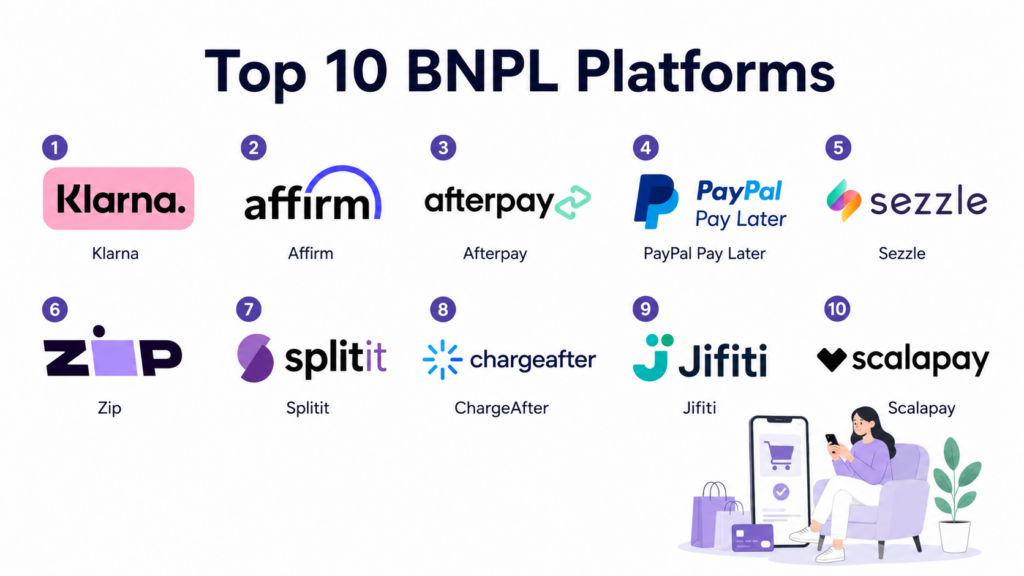
Introduction
BNPL Platforms help merchants, marketplaces, fintech companies, ecommerce brands, and payment providers offer “Buy Now, Pay Later” options at checkout. In simple terms, BNPL lets customers buy a product or service immediately and pay for it later through installments, monthly payments, or short-term financing. For businesses, BNPL can improve checkout flexibility, reduce purchase friction, increase average order value, and make higher-ticket purchases easier for customers.
BNPL matters because consumers increasingly expect flexible payment options across ecommerce, retail, travel, healthcare, education, electronics, fashion, and marketplace experiences. For merchants, BNPL is not only a payment method; it is also a conversion, affordability, and customer acquisition tool. However, it also brings credit risk, compliance requirements, refund complexity, dispute workflows, and customer protection responsibilities.
Real world use cases include ecommerce installment payments, in-store financing, travel payment plans, healthcare financing, education fee installments, marketplace checkout financing, subscription upgrades, electronics purchases, furniture financing, and B2B buyer payment flexibility.
Buyers should evaluate approval rates, repayment options, merchant fees, settlement timelines, regional availability, customer experience, fraud controls, compliance support, refund workflows, integrations, risk model, API quality, reporting, and support.
Best for: ecommerce merchants, marketplaces, retailers, travel platforms, healthcare providers, education platforms, fintech companies, payment providers, and brands selling medium to high-value products. Not ideal for: businesses with very low average order values, products with high refund or fraud risk, companies unable to manage credit-related customer support, or merchants operating in regions where BNPL regulation or lender availability is unclear.
Key Trends in BNPL Platforms
- BNPL is moving from checkout add-on to embedded finance strategy, especially for merchants that want flexible financing built into the full customer journey.
- Regulation and consumer protection are becoming more important, with buyers needing stronger disclosure, affordability checks, repayment transparency, and dispute workflows.
- Multi-lender BNPL marketplaces are growing, helping merchants route customers to different lenders and financing products based on eligibility.
- BNPL is expanding beyond retail, including travel, healthcare, education, home improvement, professional services, and B2B purchasing.
- Pay-in-4 remains popular, but longer-term installment loans are important for higher-ticket purchases.
- Omnichannel BNPL is becoming standard, allowing customers to use financing online, in-store, through call centers, and through assisted sales journeys.
- Risk-based personalization is improving, with platforms offering dynamic financing options based on customer profile, basket size, merchant category, and lender rules.
- Payment providers are bundling BNPL into broader checkout suites, making it easier for merchants to enable multiple payment and financing options from one integration.
- Merchant reporting and analytics are becoming important, especially around approval rates, conversion lift, refunds, chargebacks, and financing product performance.
- Customer experience is a major differentiator, because confusing repayment terms, failed approvals, or poor post-purchase support can damage brand trust.
How We Selected These Tools
- Selected platforms widely recognized in BNPL, checkout financing, installment payments, point-of-sale financing, and embedded consumer lending.
- Balanced global BNPL brands, regional leaders, payment-provider BNPL options, multi-lender financing platforms, and developer-friendly lending APIs.
- Considered merchant adoption, checkout experience, repayment flexibility, ecommerce and in-store support, API quality, reporting, and operational maturity.
- Evaluated suitability for SMB merchants, enterprise retailers, marketplaces, fintech products, and payment providers.
- Considered whether the platform supports ecommerce, in-store, mobile, marketplace, omnichannel, and API-based checkout experiences.
- Avoided public ratings because reliable universal ratings are not consistently available for this category.
- Used “Not publicly stated” where certifications, regulatory details, or security controls are not clearly known.
- Considered regional fit because BNPL availability, lending rules, and repayment models vary significantly by country.
- Prioritized practical buyer relevance over brand popularity alone.
- Scoring is comparative and should be validated against product category, region, basket size, customer profile, compliance obligations, and merchant economics.
Top 10 BNPL Platforms
1- Klarna
Short description:
Klarna is one of the most recognized BNPL and flexible payment platforms, offering pay later, installment, and shopping-related payment experiences across many markets. It is widely used by ecommerce brands, retailers, marketplaces, and consumer-facing merchants that want to offer flexible checkout options. Klarna is especially strong for merchants that value brand recognition, shopper reach, and polished customer experience. It is a good fit for retail, fashion, beauty, electronics, and lifestyle commerce, but buyers should validate country availability, fees, settlement terms, and compliance obligations.
Key Features
- Pay later and installment payment options.
- Ecommerce and in-store checkout support depending on region.
- Merchant dashboard and reporting tools.
- Customer-facing shopping app and consumer ecosystem.
- Fraud and risk assessment workflows.
- Integration with common ecommerce and payment platforms.
- Support for different repayment models depending on market.
Pros
- Strong consumer brand recognition.
- Good fit for ecommerce and retail merchants.
- Broad flexible payment experience across supported markets.
Cons
- Availability and product terms vary by region.
- Merchant fees should be compared against conversion impact.
- Customer repayment experience can affect merchant brand perception.
Platforms / Deployment
Web / API-based / ecommerce plugins / in-store options depending on region.
Cloud.
Security & Compliance
Security and compliance details should be validated directly. Buyers should review data handling, checkout security, consumer credit requirements, dispute workflows, refund processes, regional lending rules, and merchant obligations.
Integrations & Ecosystem
Klarna integrates with ecommerce platforms, payment service providers, retail checkouts, and merchant systems. It is useful for brands wanting a familiar BNPL option at checkout.
- Ecommerce platforms
- Payment gateways
- Retail checkout systems
- Merchant dashboards
- Mobile shopping experiences
- Refund and order management workflows
Support & Community
Klarna provides merchant resources, integration documentation, and business support options. Buyers should validate onboarding, regional support, merchant success resources, and dispute handling procedures.
2- Affirm
Short description:
Affirm is a BNPL and consumer financing platform known for installment payment plans, transparent financing, and merchant checkout integrations. It is especially useful for merchants selling higher-ticket products such as electronics, furniture, travel, fitness equipment, home goods, and lifestyle products. Affirm can help shoppers split purchases into shorter or longer repayment terms depending on eligibility and merchant setup. It is a strong choice for merchants that want financing beyond simple pay-in-4, but regional availability and approval rates should be validated carefully.
Key Features
- Installment financing and pay-over-time options.
- Short-term and longer-term financing depending on merchant program.
- Ecommerce checkout integrations.
- Customer eligibility and approval workflows.
- Merchant reporting and performance insights.
- Suitable for higher average order value products.
- Integration with major commerce and payment ecosystems.
Pros
- Strong fit for higher-ticket purchases.
- Clear financing experience for eligible customers.
- Useful for merchants wanting monthly payment options.
Cons
- Best fit depends on product price and customer profile.
- Approval rates may vary by customer and category.
- Merchant economics should be reviewed carefully.
Platforms / Deployment
Web / API-based / ecommerce integrations.
Cloud.
Security & Compliance
Security and compliance details should be validated directly. Buyers should review consumer credit disclosures, data handling, fraud controls, dispute workflows, regulatory responsibilities, and settlement terms.
Integrations & Ecosystem
Affirm integrates into ecommerce, marketplace, and retail checkout workflows. It is especially useful where monthly payments can improve conversion for higher-value products.
- Ecommerce checkout
- Retail financing workflows
- Marketplace checkout
- Travel and ticketing platforms
- Merchant analytics
- Payment service integrations
Support & Community
Affirm provides merchant support and integration resources. Buyers should validate onboarding, approval performance, customer support workflow, refund handling, and merchant success support.
3- Afterpay
Short description:
Afterpay is a BNPL platform known for pay-in-installment checkout experiences, especially in retail, fashion, beauty, lifestyle, and ecommerce categories. It helps customers split purchases into smaller payments while merchants can offer a more flexible checkout option. Afterpay is especially useful for consumer brands with repeat shoppers and medium basket sizes. It is a strong fit for ecommerce and omnichannel retail, but businesses should review regional availability, merchant fees, refund rules, and customer repayment policies.
Key Features
- Pay-in-installment checkout experience.
- Ecommerce and in-store support depending on region.
- Consumer-facing shopping ecosystem.
- Merchant dashboard and reporting capabilities.
- Integration with commerce platforms and payment providers.
- Useful for retail, fashion, beauty, and lifestyle categories.
- Customer repayment and order management workflows.
Pros
- Strong brand recognition in supported markets.
- Good fit for retail and lifestyle ecommerce.
- Simple customer installment experience.
Cons
- Product availability varies by market.
- Less suitable for very high-ticket financing compared with longer-term lenders.
- Merchant should review fee impact and refund processes.
Platforms / Deployment
Web / ecommerce integrations / in-store options depending on region.
Cloud.
Security & Compliance
Security and compliance details should be validated directly. Buyers should review consumer protection rules, checkout security, data handling, refund handling, dispute processes, and regional obligations.
Integrations & Ecosystem
Afterpay integrates with ecommerce and retail systems where merchants want a recognizable pay-later option.
- Ecommerce platforms
- Retail point-of-sale workflows
- Merchant dashboards
- Payment provider integrations
- Consumer shopping app ecosystem
- Refund and order workflows
Support & Community
Afterpay provides merchant onboarding resources and support options. Buyers should validate support availability, implementation process, and customer issue handling.
4- PayPal Pay Later
Short description:
PayPal Pay Later gives merchants flexible payment options through the PayPal ecosystem. It is useful for businesses that already accept PayPal and want to add BNPL-style choices without a separate standalone financing integration. PayPal Pay Later can be especially practical for SMBs and ecommerce merchants that want a familiar checkout brand and broad consumer trust. It is best suited for merchants that already rely on PayPal checkout or want simple pay-later enablement in supported markets.
Key Features
- BNPL-style payment options within PayPal checkout.
- Familiar PayPal customer experience.
- Ecommerce checkout integration.
- Pay later and installment options depending on region.
- Merchant settlement and reporting through PayPal workflows.
- Useful for SMB and ecommerce merchants.
- Can reduce integration complexity for existing PayPal users.
Pros
- Familiar brand for many online shoppers.
- Easy fit for merchants already using PayPal.
- Useful for simple pay-later checkout enablement.
Cons
- Product availability and terms vary by region.
- Less customizable than specialized BNPL platforms.
- Best fit is PayPal-enabled checkout experiences.
Platforms / Deployment
Web / ecommerce integrations / PayPal checkout.
Cloud.
Security & Compliance
Security and compliance details depend on PayPal product, merchant account, and region. Buyers should validate consumer credit terms, checkout security, data handling, dispute workflows, refund handling, and regulatory requirements directly.
Integrations & Ecosystem
PayPal Pay Later fits ecommerce businesses already using PayPal checkout and payment workflows. It can be added as part of a broader PayPal payment experience.
- PayPal checkout
- Ecommerce platforms
- Merchant dashboards
- Payment workflows
- Refund and dispute systems
- Online store integrations
Support & Community
PayPal provides merchant documentation and support resources. Buyers should validate market availability, checkout configuration, fee structure, and customer support workflows.
5- Sezzle
Short description:
Sezzle is a BNPL platform focused on helping shoppers split purchases into installment payments while enabling merchants to offer flexible checkout options. It is especially popular with ecommerce brands, lifestyle merchants, retail businesses, and younger consumer segments in supported markets. Sezzle can be useful for merchants that want a straightforward BNPL option with a consumer-friendly checkout experience. Buyers should validate merchant fees, supported regions, settlement terms, and customer eligibility rules.
Key Features
- Installment payment options for shoppers.
- Ecommerce checkout integration.
- Merchant dashboard and performance tracking.
- Consumer app and shopping ecosystem.
- Useful for retail, fashion, lifestyle, and ecommerce brands.
- Payment scheduling and repayment workflows.
- Integration options for online stores.
Pros
- Good fit for ecommerce merchants targeting flexible payment shoppers.
- Simple installment checkout experience.
- Useful for retail and consumer product brands.
Cons
- Regional availability should be validated.
- Less suited for complex enterprise financing programs.
- Approval and repayment experience can affect conversion.
Platforms / Deployment
Web / ecommerce integrations.
Cloud.
Security & Compliance
Security and compliance details should be validated directly. Buyers should review credit-related disclosures, data handling, merchant obligations, refund workflows, and customer support responsibilities.
Integrations & Ecosystem
Sezzle integrates with ecommerce platforms and merchant checkout workflows where installment payments can improve affordability and conversion.
- Ecommerce stores
- Retail checkout workflows
- Merchant reporting
- Consumer shopping experience
- Payment processing workflows
- Refund and order management
Support & Community
Sezzle provides merchant support and onboarding resources. Buyers should validate implementation process, support levels, and customer dispute handling.
6- Zip
Short description:
Zip is a BNPL and flexible payments platform that helps customers split purchases into installments across online and in-store shopping experiences. It is useful for merchants that want a simple pay-later option with consumer recognition in supported regions. Zip is especially relevant for retail, ecommerce, lifestyle, travel, and service categories where flexible payment options can support conversion. Buyers should validate availability, repayment terms, merchant fees, and local compliance requirements.
Key Features
- Installment payment options for customers.
- Online and in-store support depending on region.
- Consumer app and merchant checkout ecosystem.
- Ecommerce platform integrations.
- Payment scheduling and repayment workflows.
- Merchant analytics and reporting.
- Useful for retail, travel, services, and ecommerce categories.
Pros
- Good fit for merchants wanting flexible pay-later checkout.
- Supports multiple shopping environments depending on market.
- Consumer-facing app can support discovery.
Cons
- Market availability and product terms vary.
- May not fit highly specialized financing needs.
- Merchant economics should be compared with conversion gains.
Platforms / Deployment
Web / ecommerce integrations / in-store options depending on region.
Cloud.
Security & Compliance
Security and compliance details should be validated directly. Buyers should review regional credit rules, consumer disclosures, data handling, fraud controls, refund workflows, and merchant responsibilities.
Integrations & Ecosystem
Zip integrates with ecommerce platforms, retail workflows, and payment checkout systems in supported markets.
- Online checkout
- Retail point-of-sale
- Consumer shopping app
- Merchant dashboards
- Payment workflows
- Refund and order management
Support & Community
Zip provides merchant resources and support options. Buyers should validate onboarding, integration timeline, market availability, and customer support workflows.
7- Splitit
Short description:
Splitit is a BNPL platform that lets shoppers use their existing credit card line to split purchases into installments, often without requiring a new loan application. It is especially useful for merchants selling higher-value products to customers who already have available credit. Splitit can reduce friction because it uses existing card networks and cardholder credit limits. It is a strong fit for merchants that want installment payments without introducing a traditional consumer loan experience.
Key Features
- Installments using customers’ existing credit cards.
- No new credit line required in many workflows.
- Ecommerce and omnichannel support depending on setup.
- Useful for higher-ticket products and services.
- Merchant integration through APIs and payment workflows.
- Supports global card-based installment use cases depending on region.
- Helps reduce checkout friction for eligible cardholders.
Pros
- Uses existing card credit rather than separate lending approval.
- Good fit for higher-ticket merchant categories.
- Can simplify customer financing experience.
Cons
- Requires customers to have sufficient available card credit.
- Not ideal for shoppers without credit cards.
- Merchant should validate card network, region, and processor compatibility.
Platforms / Deployment
Web / API-based / ecommerce integrations.
Cloud.
Security & Compliance
Security and compliance details should be validated directly. Buyers should review card payment security, PCI implications, processor requirements, refund workflows, data handling, and regional rules.
Integrations & Ecosystem
Splitit integrates into merchant checkout and card payment workflows where installment flexibility is needed.
- Ecommerce checkout
- Payment processors
- Credit card payment flows
- Merchant dashboards
- Higher-ticket retail categories
- Omnichannel financing workflows
Support & Community
Splitit provides merchant support and integration resources. Buyers should validate technical setup, payment processor compatibility, and customer experience requirements.
8- ChargeAfter
Short description:
ChargeAfter is an embedded financing and multi-lender BNPL platform that helps merchants offer multiple financing options through a single integration. It is especially useful for merchants with higher-ticket purchases, omnichannel sales, and customers with different credit profiles. ChargeAfter’s multi-lender approach can help increase approval opportunities by matching customers with suitable financing products. It is a strong fit for furniture, home improvement, healthcare, electronics, automotive, and other categories requiring broader financing options.
Key Features
- Multi-lender embedded financing platform.
- BNPL, installment, and point-of-sale financing options.
- Real-time lender matching and waterfall financing workflows.
- Omnichannel support for online, in-store, telesales, and assisted sales.
- Back-office tools for disputes, refunds, chargebacks, and reporting.
- Useful for higher-ticket and complex financing categories.
- APIs and widgets for merchant integration.
Pros
- Strong fit for merchants needing multiple lender options.
- Useful for improving approvals across customer segments.
- Good for omnichannel and higher-ticket financing workflows.
Cons
- More complex than single-provider BNPL.
- Lender availability and terms vary by region and merchant category.
- Implementation may require more operational planning.
Platforms / Deployment
Web / API-based / widgets / omnichannel integrations.
Cloud.
Security & Compliance
Security and compliance details should be validated directly. Buyers should review lender compliance obligations, data handling, application workflows, credit disclosures, reporting, disputes, and operational responsibilities.
Integrations & Ecosystem
ChargeAfter integrates with merchant point-of-sale systems, ecommerce checkouts, lenders, and back-office financing operations.
- Ecommerce checkout
- Point-of-sale systems
- Lender networks
- Assisted sales workflows
- Merchant reporting
- Refund and dispute management
Support & Community
ChargeAfter provides business and implementation support for merchant financing programs. Buyers should validate lender coverage, implementation timeline, support levels, and analytics capabilities.
9- Jifiti
Short description:
Jifiti is an embedded lending and point-of-sale financing platform that enables merchants, banks, and lenders to offer BNPL and consumer financing through APIs and white-label experiences. It is especially useful for businesses that want lender-backed financing across online, in-store, and assisted sales channels. Jifiti is a strong fit for banks, retailers, healthcare providers, and enterprise merchants that need configurable financing programs. Buyers should validate lender relationships, regional availability, and compliance responsibilities.
Key Features
- Embedded lending and BNPL API platform.
- White-label point-of-sale financing experiences.
- Supports online, in-store, and assisted sales financing.
- Useful for banks, lenders, and merchants.
- Consumer loan and installment workflows.
- API and widget-based integration options.
- Supports enterprise financing program design.
Pros
- Strong fit for white-label financing programs.
- Useful for merchants working with banks or lenders.
- Good for omnichannel consumer financing.
Cons
- More complex than simple pay-in-4 checkout tools.
- Requires lender and compliance coordination.
- Regional and product availability should be validated.
Platforms / Deployment
Web / API-based / widgets.
Cloud.
Security & Compliance
Security and compliance details should be validated directly. Buyers should review lender requirements, customer data handling, credit disclosures, audit logs, regional lending rules, and operational responsibilities.
Integrations & Ecosystem
Jifiti integrates with merchant checkout systems, lender platforms, bank programs, and enterprise financing workflows.
- Ecommerce checkout
- In-store point-of-sale
- Bank and lender systems
- Healthcare financing
- Retail financing
- White-label consumer finance programs
Support & Community
Jifiti provides business and developer resources for financing implementation. Buyers should validate onboarding, lender coordination, support tiers, and rollout planning.
10- Scalapay
Short description:
Scalapay is a BNPL platform focused on installment payments for ecommerce and retail merchants, with strong relevance in European markets. It helps merchants offer pay-later options to customers while supporting checkout conversion and flexible payment experiences. Scalapay is especially useful for fashion, travel, beauty, lifestyle, and consumer commerce categories. Buyers should validate country coverage, repayment options, merchant fees, and integration availability before selecting it.
Key Features
- BNPL installment payment options.
- Ecommerce checkout support.
- Retail and omnichannel use cases depending on region.
- Merchant dashboard and reporting.
- Useful for lifestyle, fashion, beauty, and travel merchants.
- Customer payment scheduling workflows.
- Integration options for online commerce platforms.
Pros
- Strong fit for European ecommerce and retail use cases.
- Useful for customer-friendly installment checkout.
- Good option for lifestyle and consumer brands.
Cons
- Regional availability should be validated.
- Less suitable for complex multi-lender financing.
- Merchant economics should be tested against conversion gains.
Platforms / Deployment
Web / ecommerce integrations / retail options depending on region.
Cloud.
Security & Compliance
Security and compliance details should be validated directly. Buyers should review consumer credit rules, data handling, checkout security, refund processes, dispute handling, and regional merchant obligations.
Integrations & Ecosystem
Scalapay integrates with ecommerce and retail checkout workflows where merchants want flexible installment options.
- Ecommerce platforms
- Retail checkout
- Merchant dashboards
- Consumer shopping workflows
- Payment and order management
- Refund workflows
Support & Community
Scalapay provides merchant resources and support options. Buyers should validate onboarding, country coverage, implementation support, and customer service processes.
Comparison Table
| Tool Name | Best For | Platforms Supported | Deployment | Standout Feature | Public Rating |
|---|---|---|---|---|---|
| Klarna | Retail and ecommerce BNPL | Web / APIs / ecommerce plugins | Cloud | Strong consumer brand and flexible payments | N/A |
| Affirm | Higher-ticket installment financing | Web / APIs / ecommerce integrations | Cloud | Monthly financing for larger purchases | N/A |
| Afterpay | Pay-in-installments retail checkout | Web / ecommerce / in-store options | Cloud | Simple consumer installment experience | N/A |
| PayPal Pay Later | Pay-later inside PayPal checkout | Web / ecommerce integrations | Cloud | Familiar PayPal checkout ecosystem | N/A |
| Sezzle | Ecommerce installment payments | Web / ecommerce integrations | Cloud | Simple BNPL for retail brands | N/A |
| Zip | Online and in-store flexible payments | Web / ecommerce / in-store options | Cloud | Broad pay-later customer experience | N/A |
| Splitit | Credit-card-based installments | Web / APIs / ecommerce integrations | Cloud | Uses existing card credit line | N/A |
| ChargeAfter | Multi-lender embedded financing | Web / APIs / widgets | Cloud | Waterfall lender matching | N/A |
| Jifiti | White-label BNPL and lending APIs | Web / APIs / widgets | Cloud | Bank and lender-backed financing programs | N/A |
| Scalapay | European ecommerce installment payments | Web / ecommerce integrations | Cloud | Consumer-friendly European BNPL checkout | N/A |
Evaluation & Scoring of BNPL Platforms
| Tool Name | Core 25% | Ease 15% | Integrations 15% | Security 10% | Performance 10% | Support 10% | Value 15% | Weighted Total |
|---|---|---|---|---|---|---|---|---|
| Klarna | 9 | 9 | 9 | 8 | 8 | 8 | 8 | 8.50 |
| Affirm | 9 | 8 | 8 | 8 | 8 | 8 | 8 | 8.25 |
| Afterpay | 8 | 9 | 8 | 8 | 8 | 8 | 8 | 8.15 |
| PayPal Pay Later | 8 | 9 | 8 | 8 | 8 | 8 | 8 | 8.15 |
| Sezzle | 8 | 8 | 8 | 8 | 8 | 7 | 8 | 7.90 |
| Zip | 8 | 8 | 8 | 8 | 8 | 7 | 8 | 7.90 |
| Splitit | 8 | 8 | 7 | 8 | 8 | 7 | 8 | 7.75 |
| ChargeAfter | 9 | 7 | 8 | 8 | 8 | 8 | 8 | 8.10 |
| Jifiti | 8 | 7 | 8 | 8 | 8 | 8 | 8 | 7.85 |
| Scalapay | 8 | 8 | 7 | 8 | 8 | 7 | 8 | 7.75 |
These scores are comparative and should be used as an evaluation guide, not public ratings. A higher score means the platform appears stronger across BNPL capability, ease of use, integrations, security expectations, performance, support, and value. A lower score may still be excellent for a specific use case such as white-label lending, card-based installments, European ecommerce, or multi-lender financing. Buyers should test approval rates, conversion impact, refund handling, customer experience, and merchant economics before selecting a platform.
Which BNPL Platform Is Right for You?
Solo / Freelancer
Solo founders and small ecommerce builders should start with simple BNPL options available through existing payment or ecommerce platforms. PayPal Pay Later, Klarna, Afterpay, Sezzle, Zip, or Scalapay may be practical depending on region and platform support. The priority should be easy checkout integration, clear fees, simple settlement, and low operational burden. Solo merchants should avoid complex lender networks unless their product has high ticket values and enough sales volume to justify deeper financing workflows.
SMB
Small and mid-sized merchants should choose BNPL based on average order value, product category, customer segment, and region. Afterpay, Sezzle, Zip, Klarna, and PayPal Pay Later can be strong for retail and ecommerce. Affirm, Splitit, ChargeAfter, and Jifiti may be better for higher-ticket products or more complex financing needs. SMBs should compare conversion lift against merchant fees and support costs. They should also test refunds, partial refunds, failed payments, and customer service workflows before broad rollout.
Mid-Market
Mid-market retailers, marketplaces, and service providers usually need stronger analytics, omnichannel support, reporting, fraud controls, and customer service coordination. Klarna, Affirm, Afterpay, Zip, ChargeAfter, Jifiti, and Splitit are strong candidates depending on product price and financing depth. Multi-lender platforms such as ChargeAfter may be useful when approval coverage is important. Mid-market teams should involve ecommerce, finance, legal, operations, and customer support teams before choosing a platform.
Enterprise
Enterprise merchants should evaluate BNPL platforms through compliance, conversion, customer experience, lender model, settlement, reporting, refunds, fraud, and brand impact. Klarna, Affirm, Afterpay, PayPal Pay Later, ChargeAfter, Jifiti, Splitit, and Scalapay may be relevant depending on region and category. Enterprises selling high-ticket products may need longer-term financing or multi-lender waterfall workflows. Enterprises should validate regulatory responsibilities, data handling, dispute procedures, support escalation, and omnichannel consistency before launch.
Budget vs Premium
Budget-conscious merchants should begin with BNPL options already available through their payment gateway or ecommerce platform. This can reduce integration effort and make testing easier. Premium or more specialized platforms become valuable when financing is core to conversion, average order value is high, or customers need longer-term repayment options. Multi-lender financing may cost more to implement but can improve approval rates. The right comparison is not only platform fees, but conversion lift, approval rate, support workload, refund complexity, and customer satisfaction.
Feature Depth vs Ease of Use
PayPal Pay Later, Afterpay, Sezzle, Zip, and Scalapay are easier options for simple BNPL checkout. Klarna combines strong brand recognition with flexible retail payment experiences. Affirm is better for larger purchases and longer financing terms. Splitit is useful when merchants want card-based installments without a separate loan experience. ChargeAfter and Jifiti provide deeper embedded financing and lender-backed workflows. The right choice depends on whether the merchant needs simple installments, monthly financing, card-based installments, or multi-lender credit options.
Integrations & Scalability
BNPL platforms must integrate with ecommerce stores, point-of-sale systems, payment gateways, order management systems, refund workflows, customer support tools, accounting systems, and fraud platforms. Scaling requires reliable checkout behavior, clear order status, settlement reporting, partial refund support, dispute handling, and customer communication. Merchants should test mobile checkout, abandoned cart recovery, edge-case refunds, failed approvals, and multi-currency behavior where relevant. BNPL should feel like a native checkout option, not a confusing finance redirect.
Security & Compliance Needs
BNPL involves sensitive customer data, credit decisions, repayment obligations, and regulated consumer finance workflows. Buyers should evaluate disclosures, customer consent, data handling, fraud prevention, affordability checks, refund rules, chargeback processes, dispute handling, and regional lending regulations. Merchants should also understand whether the BNPL provider or merchant owns specific customer service responsibilities. Compliance expectations vary by country, so legal review is important before launch. A strong BNPL rollout combines checkout UX, clear terms, risk controls, and customer support readiness.
Frequently Asked Questions
1- What is a BNPL Platform?
A BNPL Platform lets merchants offer customers the option to buy immediately and pay later through installments or financing plans. The platform usually handles customer approval, repayment scheduling, merchant settlement, checkout integration, and payment collection. Some BNPL platforms offer simple pay-in-4 plans, while others provide longer-term financing or multi-lender options. BNPL can improve affordability and reduce checkout friction for customers. For merchants, it can improve conversion and average order value. However, it also adds compliance, refund, dispute, and customer support considerations.
2- How much do BNPL platforms cost?
BNPL costs vary by provider, merchant category, region, transaction volume, financing type, and agreement terms. Merchants may pay a percentage of transaction value, fixed fees, or custom commercial rates. Higher-risk or longer-term financing may have different economics than simple pay-in-4 plans. Some platforms are bundled into payment gateways, while others require direct merchant agreements. Businesses should compare platform cost against conversion lift, average order value increase, approval rate, refund costs, and customer support effort. A low fee is not always best if approval rates or customer experience are poor.
3- How does BNPL work for merchants?
At checkout, the customer selects a BNPL option, completes an approval or confirmation step, and agrees to repayment terms. If approved, the merchant typically receives settlement according to provider terms, while the BNPL provider manages customer repayments. The merchant ships or delivers the order like a normal sale. Refunds, partial refunds, disputes, and cancellations must be handled according to BNPL provider rules. The exact process varies by platform and region. Merchants should test the full order lifecycle before launch.
4- Is BNPL safe for customers?
BNPL can be useful for customers when repayment terms are clear, payments are affordable, and fees are transparent. However, customers can overextend themselves if they use multiple BNPL services or miss payments. Some BNPL products may involve credit checks, late fees, or longer-term financing costs depending on provider and region. Merchants should choose providers that present terms clearly and support responsible lending. Customer education is important. BNPL should improve affordability, not encourage irresponsible spending.
5- What are common mistakes when choosing a BNPL platform?
A common mistake is choosing BNPL only by brand name without testing approval rates, checkout conversion, refund workflows, and merchant economics. Some merchants choose a simple pay-in-4 tool when their products need longer-term financing. Others choose complex lender platforms when a simple checkout option would be enough. Businesses may also ignore customer support impact, dispute handling, and legal review. Another mistake is assuming BNPL availability is the same in every country. The best approach is to run a controlled pilot and compare real performance metrics.
6- Which businesses benefit most from BNPL?
BNPL works best for businesses where affordability affects purchase decisions. Common categories include fashion, beauty, electronics, furniture, home improvement, travel, healthcare, education, fitness, automotive accessories, and lifestyle products. It is especially useful when average order value is high enough for installment payments to matter. BNPL may be less useful for very low-cost products, highly regulated goods, or categories with high fraud and refund risk. Marketplaces and omnichannel retailers can also benefit if BNPL is integrated cleanly. The business should test conversion impact before scaling.
7- What integrations should merchants evaluate?
Merchants should evaluate ecommerce platform integration, payment gateway support, point-of-sale compatibility, order management, refund handling, accounting exports, reporting dashboards, fraud tools, and customer support workflows. Mobile checkout quality is especially important because many BNPL users shop on mobile devices. Merchants should also test partial refunds, abandoned checkouts, failed approvals, and order cancellations. For omnichannel businesses, in-store and online experiences should be consistent. Integration quality can directly affect conversion and customer satisfaction.
8- How do refunds work with BNPL?
Refund workflows vary by provider, but generally the merchant initiates a refund through the ecommerce, payment, or BNPL system. The BNPL provider then adjusts the customer’s repayment schedule or refund amount according to platform rules. Partial refunds can be more complex than full refunds. Merchants should test refund flows before launch because poor handling can create customer confusion and support tickets. Refund timelines, merchant settlement adjustments, and customer payment changes should be documented. Customer support teams should understand BNPL-specific refund rules.
9- What are alternatives to BNPL platforms?
Alternatives include credit cards, debit cards, bank transfers, consumer loans, store financing, merchant credit, subscription billing, layaway, payment plans, and invoice financing. For B2B use cases, trade credit or net terms may be more appropriate than consumer BNPL. For high-value purchases, traditional financing may offer better terms or stronger compliance controls. For low-value purchases, standard payment methods may be simpler. BNPL is strongest when installment flexibility improves checkout conversion without creating excessive operational risk. The right alternative depends on customer profile, purchase size, and merchant category.
10- How should merchants measure BNPL success?
Merchants should measure conversion rate, average order value, approval rate, repeat purchase rate, refund rate, chargeback rate, customer support tickets, settlement timing, and net margin impact. BNPL should be evaluated as a business performance tool, not just a payment method. A platform that increases sales but also increases returns or support costs may not be ideal. Merchants should compare performance by product category, customer segment, and channel. They should also monitor customer feedback about repayment clarity. A successful BNPL rollout improves customer affordability while protecting merchant economics and brand trust.
Conclusion
BNPL Platforms help merchants improve checkout flexibility, affordability, and conversion, but the best option depends on region, product category, customer profile, average order value, and financing needs. Klarna, Afterpay, Sezzle, Zip, PayPal Pay Later, and Scalapay are strong choices for retail and ecommerce installment payments, while Affirm is especially useful for higher-ticket purchases and longer repayment terms. Splitit is valuable for merchants that want card-based installments using customers’ existing credit lines, while ChargeAfter and Jifiti are strong options for multi-lender, white-label, and embedded point-of-sale financing workflows. The right next step is to shortlist two or three BNPL platforms, test approval rates and checkout conversion, review merchant fees and settlement terms, validate refund and dispute workflows, confirm regional compliance requirements, and run a controlled pilot before rolling BNPL out across all customers.
