MOTOSHARE 🚗🏍️
Rent Bikes & Cars Directly from Owners
Motoshare connects vehicle owners with people who need bikes and cars on rent. Owners earn from idle vehicles, and renters get flexible ride options.
Visit Motoshare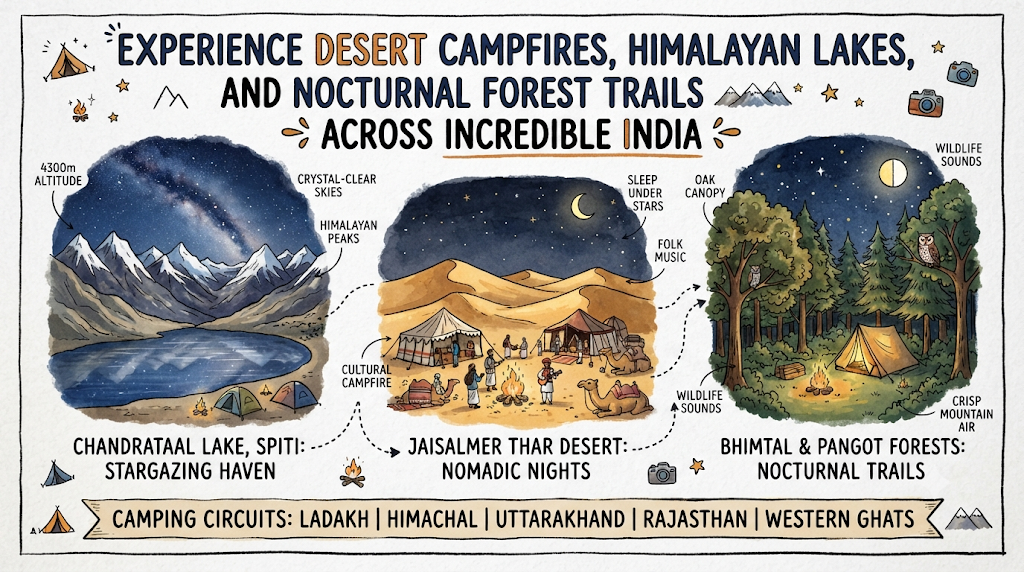
Introduction
Discard the sterile hotel rooms and neon-lit tourist hubs that rob travel of its raw, grounded spirit. India’s true magic reveals itself far from concrete horizons, where vast nocturnal skies stretch endlessly over whispering pine forests, high-altitude cold deserts, and rippling sand dunes. Pitching a tent beneath a canopy of brilliant stars reconnects you with ancestral rhythms, profound silence, and uninterrupted wilderness. If you are a wanderer craving quiet authenticity, India’s premier stargazing and camping circuits offer a luminous escape into the cosmos.
Why India’s Stargazing Camping Circuits Are a Must-Visit
Spanning from the remote, oxygen-thin plateaus of Ladakh to the emerald meadows of the western Ghats and Thar dunes, India’s camping circuits represent a masterclass in geographical contrasts. This region forms an essential chapter in experiential travel, shaped by centuries of nomadic trade, pastoral heritage, and sacred mountain stewardship. Modern accessibility, including well-maintained highways, growing community-led eco-stays, and robust rail links, ensures that pristine wilderness remains within reach for backpackers and families alike.
The ultimate Indian stargazing trail blends high-altitude clarity, nomadic culture, and pristine night skies into an unforgettable journey of celestial wonder.
| Feature | Details |
|---|---|
| Primary Terrain | High-altitude salt flats, desert dunes, and alpine meadows |
| Best Travel Windows | May to September (Himalayas), October to March (Deserts & Ghats) |
| Traveler Archetypes | Astrophotographers, solo backpackers, and nature-loving couples |
| Accessibility | Connected via domestic flights, rugged mountain roads, and scenic railways |
Best Places or Experiences
Chandratal Lake, Spiti Valley
Nestled at a staggering altitude of 4,300 meters, Chandratal—the Moon Lake—is a crescent-shaped wonder framed by jagged, barren Himalayan peaks. As dusk settles, the reflection of a million brilliant stars shimmering across its pristine turquoise waters creates an ethereal, otherworldly atmosphere. This remote sanctuary offers some of the cleanest, light-pollution-free night skies on the entire planet.
- Location: Lahaul and Spiti district, Himachal Pradesh; approx. 110 km from Manali.
- Why it is worth visiting: It provides absolute isolation and crystal-clear atmospheric conditions for pristine Milky Way astrophotography.
- Best things to do: Set up camp in designated eco-zones, circumnavigate the glacial lake on foot, and capture long-exposure night photography.
- Best time to visit: June to September when mountain passes remain clear of snow and roads are navigable.
- Ideal for whom: Astrophotographers, serious trekkers, and hardcore wilderness lovers.
- Travel tip: Temperatures plummet below freezing even in summer; pack heavy-duty sub-zero sleeping bags and thermal wear.
Nubra Valley and Hunder Dunes
Carved by the Shyok River, Nubra Valley is a striking high-altitude desert flanked by dramatic snow-capped peaks and wind-sculpted sand dunes. When night falls over Hunder, the valley transforms into a quiet celestial theater with zero cloud cover and absolute atmospheric stillness. Camping here lets you sleep amidst rolling dunes beneath a blazing river of stars.
- Location: Nubra Valley, Ladakh; approx. 120 km north of Leh across Khardung La.
- Why it is worth visiting: It pairs rare double-humped camel culture with sweeping, unobstructed desert night skies.
- Best things to do: Stay in luxury geodesic dome tents, ride Bactrian camels at dusk, and gaze at deep-space constellations through a telescope.
- Best time to visit: May to September for optimal night temperatures and clear weather windows.
- Ideal for whom: Couples, luxury campers, and desert landscape enthusiasts.
- Travel tip: Secure your Inner Line Permits in Leh beforehand, as military checkpoints strictly verify documentation at Khardung La.
Jaisalmer Desert Thar Camping
The golden dunes of Sam and Khuri in the Thar Desert offer a warm, culturally rich alternative to freezing mountain camping. As the desert sun dips below the horizon, folk musicians play haunting ballads around crackling campfires while the velvet night sky erupts with starlight. Sleeping out on open-air cots under a glittering canopy offers an intimate taste of timeless desert nomadism.
- Location: Jaisalmer district, Rajasthan; approx. 40 km from Jaisalmer city center.
- Why it is worth visiting: It combines vibrant Rajasthani cultural heritage with serene, warm-weather desert stargazing.
- Best things to do: Enjoy traditional Kalbelia dance performances, feast on authentic dal bati churma, and sleep under open desert skies.
- Best time to visit: October to March when evening desert temperatures are crisp and pleasant.
- Ideal for whom: Families, cultural explorers, and first-time campers.
- Travel tip: Book verified eco-camps away from commercial party hubs to ensure true quiet and minimal light pollution.
Bhimtal and Pangot Oak Forests
Tucked away in the Himalayan foothills of Kumaon, the dense oak and rhododendron forests around Pangot and Bhimtal offer lush, green canopy camping. Away from chaotic hill stations, these quiet forest clearings provide incredible nocturnal acoustics and bright starry openings framed by swaying pine branches. It is a haven for nocturnal bird calls and crisp mountain air.
- Location: Nainital district, Uttarakhand; approx. 300 km from Delhi.
- Why it is worth visiting: It offers accessible, tree-fringed camping without requiring grueling high-altitude treks.
- Best things to do: Join guided nocturnal bird-watching walks, sit around intimate forest campfires, and hike scenic ridge trails.
- Best time to visit: March to June and September to November for clear skies and pleasant daytime greenery.
- Ideal for whom: Nature enthusiasts, families with kids, and weekend campers.
- Travel tip: Always pack insect repellent and secure food items inside tents to deter curious forest wildlife.
Offbeat Exploration: Hidden Gems Tourists Miss
Bangus Valley
Hidden deep in the northern frontier of Kashmir, Bangus Valley is an untouched, saucer-shaped alpine meadow surrounded by dense pine forests. Completely free of commercial tourist infrastructure, camping here offers pristine silence and unpolluted night skies where shooting stars streak across the horizon uninterrupted.
Pawna Lake Plateaus
Perched on quiet elevated plateaus near the Western Ghats between Mumbai and Pune, Pawna Lake offers stunning lakeside camping framed by ancient Maratha hill forts. While parts of the lake are popular, secluded western ridges provide tranquil, starlit camping spots reflecting shimmering constellations over calm waters.
Detailed Practical Guidance for Travelers
| Destination | Standard Entry Fee | General Timings | Best Local Food Options Nearby | Recommended Nearby Attractions |
|---|---|---|---|---|
| Chandratal Lake | Free (Eco-permits apply) | Open June to September | Instant noodles, Tibetan stews, hot tea | Kunzum Pass, Kibber Wildlife Sanctuary |
| Nubra Valley | Free (Permit fees apply) | Open May to October | Thukpa, skyu, butter tea, local apricots | Diskit Monastery, Hunder Sand Dunes |
| Jaisalmer Desert | Free (Camp packages vary) | Open October to March | Dal bati churma, ker sangri, bajra roti | Jaisalmer Fort, Patwon ki Haveli |
| Pangot Forests | Free (Camp fees apply) | Open year-round (Best: Mar-Nov) | Kumaoni aloo ke gutke, pahadi thalis | Nainital Lake, Sattal freshwater lakes |
Logistics & On-Ground Navigation
Local Transport Options
- Railways: Vital for reaching primary transit entry points like Chandigarh, Pathankot, Jaisalmer, or Kathgodam.
- 4×4 Shared Jeeps: The reliable backbone for navigating rough, unpaved Himalayan tracks in Spiti and Ladakh.
- Two-Wheeler Rentals: Popular among independent riders tackling scenic mountain and desert loops.
- Auto-Rickshaws & Taxis: Perfect for short-distance town navigation around Jaisalmer or Nainital before heading to campsites.
Budget Planning
- Backpacking Tier (INR 1,200 – 2,500 / $15 – $30 USD per day): Carrying your own tent, staying in designated rustic camp zones, eating at local dhabas, and using shared buses or jeeps.
- Mid-Range Comfort Tier (INR 4,500 – 9,000 / $55 – $110 USD per day): Staying in managed Swiss luxury tents or eco-domes, private cab rentals, and enjoying prepared campfire meals.
Safety and Inclusivity Tips
- For Families: Choose accessible foothill campsites like Pangot or organized desert camps in Jaisalmer; ensure children stay warm during cold desert nights.
- For Couples: Select private luxury eco-pods or quiet lakeside clearings; respect local cultural norms in rural hill settlements.
- General Safety: Always carry a first-aid kit, keep emergency offline navigation maps downloaded, and inform camp managers of your trekking routes.
Strategic Travel Planning Guardrails
Travel Planning Tips for Destination
- Reserve high-altitude campsites and Inner Line permits weeks in advance during peak summer and festival seasons.
- Always keep a healthy reserve of physical cash notes, as digital UPI scanners fail frequently in remote valleys and deep deserts.
- Pack moisture-wicking base layers and down jackets to effortlessly manage extreme temperature drops after sunset.
- Respect local village customs by seeking permission before photographing residents or sacred monastic sites.
- Prepare your physical stamina with light cardio workouts weeks prior if tackling high-altitude mountain camps.
Common Mistakes to Avoid
- Underestimating rapid nighttime temperature drops in high-altitude deserts and mountain basins.
- Over-packing cumbersome luggage that complicates multi-leg jeep transfers and desert camel rides.
- Assuming digital payments work seamlessly in remote gorges without backup paper currency.
- Skipping eco-friendly trash disposal principles and leaving plastic waste behind at pristine camp spots.
- Disregarding sudden weather alerts or wind warnings issued by local camp organizers.
Suggested Itinerary Blueprints
- 3-Day Quick Dash (Jaisalmer Desert Starlight Loop): Tailored for weekend travelers seeking rapid relaxation. Day 1 covers arrival in Jaisalmer, an afternoon heritage walk, and transfer to Thar desert camps for sunset and folk music. Day 2 involves camel safaris, dune stargazing, and traditional dining. Day 3 features sunrise photography and departure from Jaisalmer.
- 7-Day Deep-Dive (Himalayan Spiti Camping Expedition): Perfect for outdoor enthusiasts seeking rugged heights. Days 1-3 focus on acclimatization in Manali and driving over Kunzum Pass to set up camp near Chandratal Lake. Days 4-7 explore Key Monastery, Kibber village, and high-altitude stargazing hubs across the Spiti Valley.
- Complete Weekend Travel Plan (Pangot & Bhimtal Forest Escape): Designed for a quick nature reset. Friday covers arrival in Kathgodam and transfer to a secluded oak forest camp near Pangot. Saturday involves guided bird-watching, night photography, and campfire storytelling. Sunday features a tranquil morning lake walk before heading home.
Common Tourist Mistakes to Avoid
- Geographic Blunders: Trying to combine geographically distant regions like Ladakh and Rajasthan on the exact same weekend.
- Commercial Traps: Spending excessive vacation time in loud, modernized resort strips rather than quiet, atmospheric wilderness camps.
- Neglecting Modern/Alternative Zones: Forgetting to explore the quieter artistic cafes and local artisan workshops surrounding hill and desert towns.
- Transport Overpayment: Always confirm metered rates or cross-reference local taxi union charts before booking private transfers.
- Luxury Dining Bias: Missing out on authentic local dhabas and campfire meals that offer the destination’s true culinary soul.
Frequently Asked Questions
1. What is the best time of year for stargazing and camping in India?
The ideal window depends entirely on the terrain. For high-altitude Himalayan regions like Spiti and Ladakh, June to September offers clear mountain skies. For desert camps in Rajasthan or forest retreats in the Western Ghats, October to March provides crisp, comfortable evening weather.
2. Do I need special permits to camp in remote regions like Spiti or Nubra Valley?
Yes, restricted border regions and high-altitude wildlife zones require Inner Line Permits. These can be secured online through official district administration portals or processed physically at local government offices in Leh, Keylong, or Kaza before heading out.
3. How cold does it get at night in high-altitude mountain campsites?
Temperatures at high-altitude spots like Chandratal Lake or Nubra Valley frequently drop below freezing, even during peak summer months. Packing sub-zero rated sleeping bags, thermal undergarments, windproof outer shells, and woolens is absolutely essential for survival and comfort.
4. Are these camping circuits safe for solo travelers and women?
India’s established eco-camps and managed desert sites are generally very safe for solo travelers. Sticking to verified operators, sharing your itinerary with family, and avoiding isolated unlit areas late at night ensures a secure and rewarding solo journey.
5. What type of physical fitness is required for high-altitude camping?
A moderate level of cardiovascular endurance is recommended for high-altitude camps like Chandratal due to thin air and steep terrain. Light physical preparation, staying well-hydrated, and allowing proper acclimatization days will ensure a smooth and enjoyable experience.
6. Can I rent camping gear locally, or should I bring my own?
While luxury camps provide fully equipped tents, mattresses, and bedding, independent campers should rent or bring reliable waterproof tents, sleeping pads, and warm gear. High-altitude gear rentals are readily available in major hubs like Leh, Manali, and Rishikesh.
7. Is cash necessary for camping trips, or do remote areas accept digital payments?
Digital UPI and mobile wallets work reliably in major tourist towns, but they fail completely in deep mountain gorges and remote desert areas due to network blackouts. Always carry adequate physical cash to cover your camp stays, meals, and local transport.
8. What essential items should I include in my stargazing and camping packing list?
Pack thermal layers, sturdy hiking boots, a red-light headlamp to preserve night vision, a portable power bank, a reusable water filter bottle, high-SPF sunscreen, sunglasses, and a basic first-aid kit containing personal medications and altitude sickness remedies.
9. How can I protect my camera gear from extreme cold and dew during night photography?
High-altitude night air causes heavy dew condensation on camera lenses and bodies. Use lens heaters, moisture-absorbing silica gel packs, and keep spare batteries warm inside your jacket pocket because cold temperatures rapidly drain battery life.
10. What are the best dining practices to maintain health while camping in remote areas?
Stick to freshly cooked hot meals, boiled or purified water, and piping-hot local beverages. Avoid raw salads, unpasteurized dairy items, and untreated water sources to keep your digestive system safe and healthy throughout your outdoor expedition.
11. How should campers manage waste and practice responsible leave-no-trace principles?
Pack out all non-biodegradable trash, including plastic wrappers, wet wipes, and batteries. Use designated eco-toilets where available, respect local wildlife habitats, and ensure campfires are fully extinguished with water before sleeping or leaving the site.
12. What mobile network operators provide the best coverage in remote camping regions?
Prepaid BSNL and Jio connections generally offer the widest signal reach across remote Himalayan and Kashmir sectors. However, satellite communication devices or offline downloadable maps are strongly recommended for deep wilderness expeditions where signals disappear entirely.
Conclusion
Choosing an immersive camping journey under India’s starlit skies offers a profound reward that standard hotel vacations can never replicate. It strips away modern distractions, connects you deeply with the rhythm of the cosmos, and leaves you with unforgettable memories etched into ancient landscapes. Step off the paved tourist trail, embrace the quiet wilderness, and let the magnificent night skies redefine your perspective on true exploration.
