MOTOSHARE 🚗🏍️
Rent Bikes & Cars Directly from Owners
Motoshare connects vehicle owners with people who need bikes and cars on rent. Owners earn from idle vehicles, and renters get flexible ride options.
Visit Motoshare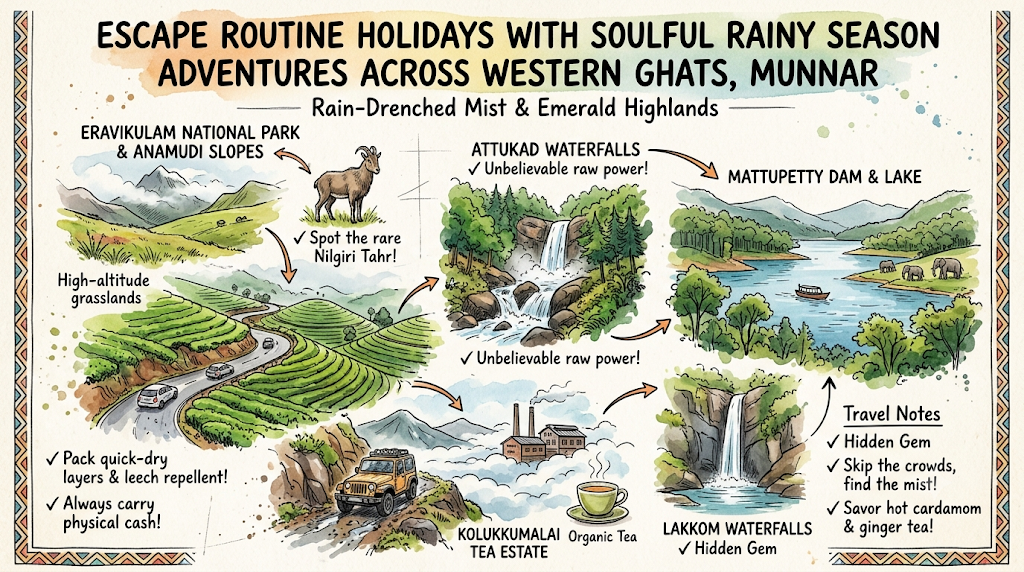
Introduction
While ordinary tourists flock to air-conditioned beach resorts during standard holiday windows, true travelers look for the hypnotic poetry of rain-drenched mist rolling over emerald highlands. Munnar during the monsoon is a world away from commercialized, overcrowded tourist hot spots. Here, cascading waterfalls roar to life, velvety tea gardens glisten under heavy downpours, and the air carries the earthy scent of wet soil and fresh cardamom. This season strips away the superficial layers, offering a profound, meditative connection with the soul of the Western Ghats.
Why Munnar is a must-visit city
Nestled in the Idukki district of Kerala, Munnar is a historic masterclass in colonial-era plantation heritage and breathtaking geographical grandeur. Once the summer resort of the British Raj, this high-altitude haven sits at the confluence of three mountain streams—Mudrapuzha, Nallathanni, and Kundala. Its rich cultural tapestry is woven with indigenous tribal history, ancient spice trades, and generations of tea-picker communities. Accessible via scenic winding highways from Kochi and major railheads like Aluva, Munnar welcomes everyone from slow-travel couples to soul-searching backpackers.
The Munnar monsoon circuit loops through mist-veiled valleys, dense shola forests, and dramatic cascading waterfalls.
| Feature | Details |
| Primary Terrain | Rolling tea plantations, mist-shrouded peaks, and deep valleys |
| Best Travel Windows | June to September (Southwest Monsoon) |
| Traveler Archetypes | Nature photographers, romantic couples, and slow-travel enthusiasts |
| Accessibility | Well-paved hill highways from Kochi International Airport (110 km) |
Best Places or Experiences
Eravikulam National Park and Anamudi Slopes
Sprawling across high-altitude grasslands, Eravikulam National Park transforms into a surreal, emerald paradise during the monsoon season. Its rolling hills are blanketed in a vibrant green carpet, occasionally bursting into bloom with the rare mist-kissed flora that defines this protected sanctuary. The park is world-renowned as the natural sanctuary of the endangered Nilgiri Tahr, which thrives amidst the cloud-veiled cliffs.
- Location: Idukki district; approx. 13 km north of Munnar town center.
- Why it is worth visiting: It offers exclusive views of the Nilgiri Tahr and sweeping panoramas of rain-washed Western Ghat peaks.
- Best things to do: Spot wild Nilgiri Tahrs on the misty ridges, trek through designated shola trails, and witness cloud inversions.
- Best time to visit: Early morning hours during June and July when mist clears for brief windows.
- Ideal for whom: Wildlife enthusiasts, nature photographers, and passionate trekkers.
- Travel tip: The park remains partially closed during peak calving season (usually February-March), but monsoon months offer restricted open valley viewing; always check local forest department advisories.
Attukad Waterfalls
Cascading down through densely forested slopes, Attukad Waterfalls becomes an absolute spectacle of raw power during heavy monsoon rains. Torrents of white water crash over jagged granite boulders, sending up a fine mist that envelops the surrounding spice plantations. The deafening roar of the falls combined with the verdant valley backdrop creates an unforgettable sensory experience.
- Location: Pallivasal, Idukki district; approx. 9 km from Munnar town on the Kochi highway.
- Why it is worth visiting: It is one of Munnar’s most dramatic waterfalls, fueled entirely by heavy seasonal downpours.
- Best things to do: Capture stunning long-exposure photographs, sip hot spiced tea from nearby shacks, and explore adjacent spice gardens.
- Best time to visit: Mid-monsoon (July to August) right after heavy downpours for peak water volume.
- Ideal for whom: Landscape photographers, couples, and casual nature lovers.
- Travel tip: Rocks around the waterfall become extremely slippery during rains; wear high-grip trekking shoes and avoid stepping too close to the surging currents.
Mattupetty Dam and Lake
Set against a backdrop of rolling tea hills and evergreen shola forests, Mattupetty Lake mirrors the dramatic monsoon skies. The reservoir swells with fresh rainwater, creating a tranquil mirror-like expanse where gentle mist weaves through the surrounding valleys. It serves as a vital water source for local wildlife and offers serene views away from bustling town centers.
- Location: Mattupetty, Idukki district; approx. 13 km from Munnar.
- Why it is worth visiting: It provides a peaceful aquatic landscape surrounded by lush tea estates and rolling pastoral hills.
- Best things to do: Take a serene boat ride on the reservoir, spot wild elephants grazing on distant banks, and visit the nearby Indo-Swiss dairy farm.
- Best time to visit: Late mornings when the monsoon clouds briefly part to reveal the surrounding green peaks.
- Ideal for whom: Families, couples, and bird-watching enthusiasts.
- Travel tip: Boating operations may occasionally pause during severe windstorms or heavy downpours, so verify operational status at the jetty counter.
Anamudi Peak Base and Eravikulam Foothills
Standing tall at over 2,695 meters, Anamudi is the highest peak in South India, dominating the skyline of the Cardamom Hills. During the monsoon, its upper slopes are completely swallowed by swirling grey clouds and dense mist, creating an aura of supreme mystery. While summit climbs are restricted to protect the fragile ecosystem, exploring the base trails offers an immersive wilderness trek.
- Location: Eravikulam National Park periphery; approx. 18 km from Munnar.
- Why it is worth visiting: It is the roof of South India, offering supreme trekking terrain and unmatched ecological diversity.
- Best things to do: Undertake guided nature walks along the foothills, explore endemic high-altitude flora, and listen to cascading stream symphonies.
- Best time to visit: June to August during breaks in the monsoon showers.
- Ideal for whom: Hardcore trekkers, mountaineering enthusiasts, and botanists.
- Travel tip: Advance written permission from the Kerala Forest Department is mandatory for any trekking activity near the peak zones.
Kolukkumalai Tea Estate
Perched at an astonishing altitude of 2,170 meters, Kolukkumalai is home to the highest organic tea plantation in the world. Reached via a rugged off-road Jeep track, this estate feels like it floats above a sea of monsoon clouds. The historic colonial-era tea factory still uses traditional 1930s machinery to process orthodox leaf teas.
- Location: Suryanelli, Idukki district; approx. 35 km from Munnar.
- Why it is worth visiting: It offers surreal sunrise views above the cloud line and a fascinating glimpse into vintage tea manufacturing.
- Best things to do: Take a guided tour of the vintage tea factory, taste fresh orthodox orange pekoe tea, and watch monsoon mists roll across the valley.
- Best time to visit: Early morning hours (5:30 AM – 8:00 AM) for dramatic cloud inversions.
- Ideal for whom: Tea connoisseurs, adventure seekers, and sunrise photography buffs.
- Travel tip: The 4×4 Jeep ride up the rocky, rain-slicked mountain track is intensely bumpy; pregnant women and individuals with back conditions should avoid this route.
Offbeat Exploration: Hidden Gems Tourists Miss
Lakkom Waterfalls
Tucked away quietly along the Munnar-Marayoor highway, Lakkom Waterfalls is a hidden cascade that escapes the heavy tourist crowds of major spots. Fed by perennial streams originating from the Eravikulam plateau, the water plunges through a narrow cleft of rocks into a clear, emerald pool. Surrounded by dense eucalyptus and wet semi-evergreen forests, it offers a serene, meditative escape during the rainy season.
Chinnar Wildlife Sanctuary
While most visitors head to humid tropical parks, Chinnar sits in a unique rain-shadow region on the eastern slopes of the Western Ghats. Even during the monsoon, this sanctuary receives significantly less rainfall, creating a striking dry-deciduous landscape contrasting with Munnar’s wet green hills. It is one of the few places where you can spot the elusive Grizzled Giant Squirrel and wild sandalwood forests.
Detailed Practical Guidance for Travelers
| Destination | Standard Entry Fee | General Timings | Best Local Food Options Nearby | Recommended Nearby Attractions |
| Eravikulam National Park | INR 200 (Indians) / INR 500 (Foreigners) | 7:30 AM – 4:00 PM | Kerala beef fry, appam, local tea stalls | Rajamala Hills, Anamudi Peak |
| Attukad Waterfalls | Free | 6:00 AM – 6:00 PM | Steamed puttu, kadala curry, banana fritters | Pallivasal Hydroelectric Project |
| Mattupetty Dam | INR 20 (Entry) / Boating fees extra | 9:00 AM – 5:00 PM | Fresh roasted corn, local spices, masala chai | Echo Point, Kundala Lake |
| Anamudi Peak Base | Permit dependent | 8:00 AM – 3:00 PM | Traditional Kerala meals, local snacks | Eravikulam trails, Tea Museum |
| Kolukkumalai Tea Estate | INR 100 (Factory visit) | 6:00 AM – 6:00 PM | Freshly brewed orthodox tea, homemade chocolates | Suryanelli viewpoints, campsite meadows |
Logistics & On-Ground Navigation
Local Transport Options
- Private Taxis & Cabs: The most reliable and safe method for navigating winding, rain-slicked mountain roads between scattered viewpoints.
- Kerala State Road Transport Corporation (KSRTC) Buses: Budget-friendly connectivity linking Munnar town to nearby villages like Marayoor and Mattupetty.
- Auto-Rickshaws: Convenient for short hops within Munnar town center and immediate suburban tea estates.
- Two-Wheeler Rentals: Generally discouraged during the monsoon season due to slippery hairpin bends and sudden heavy downpours.
Budget Planning
- Backpacking Tier (INR 1,800 – 3,500 / $22 – $42 USD per day): Stays in cozy plantation homestays or budget dorms, eats at local rustic tea shops and dhabas, and uses public buses or shared jeeps.
- Mid-Range Comfort Tier (INR 5,500 – 12,000 / $66 – $145 USD per day): Private rooms in heritage plantation bungalows, private cab rentals for sightseeing, and dining at authentic local restaurants.
Safety and Inclusivity Tips
- For Families: Choose well-established resorts with indoor activity spaces; keep children away from swollen stream banks and slippery waterfall ledges.
- For Couples: Select secluded valley-facing eco-lodges that offer fireplace amenities and romantic mist views.
- General Safety: Always carry high-quality rain gear, sturdy anti-slip footwear, leech repellent, and a basic medical kit for damp weather conditions.
Strategic Travel Planning Guardrails
Travel Planning Tips for Munnar
- Book monsoon-special plantation homestays well in advance to enjoy discounted off-season rates and warm hospitality.
- Carry ample physical cash notes, as network coverage in remote valleys frequently drops during heavy storms.
- Pack quick-dry synthetic clothing layers and waterproof bags to protect cameras and electronics from persistent moisture.
- Respect local plantation labor unions and private estate boundaries by sticking to designated walking trails.
- Sip hot local spices like cardamom and ginger tea regularly to stay warm against chilly mountain winds.
Common Mistakes to Avoid
- Attempting to drive two-wheelers on steep, slippery mountain roads during peak monsoon downpours.
- Over-packing rigid itineraries that ignore the reality of sudden weather delays and mist-covered visibility drops.
- Ignoring leech warnings while trekking through wet shola forests and grassy slopes.
- Skipping local authentic Kerala cuisine in favor of generic continental fast food.
- Failing to check forest department gate closures before setting out for wildlife sanctuaries.
Suggested Itinerary Blueprints
- 3-Day Quick Dash (Munnar Monsoon Mist Circuit): Designed for weekend travelers wanting an immersive rainy season escape. Day 1 covers arrival, check-in at a plantation homestay, and an evening walk through rain-kissed tea gardens. Day 2 features a morning visit to Eravikulam National Park and afternoon views at Attukad Waterfalls. Day 3 includes an early sunrise jeep ride to Kolukkumalai followed by local spice shopping before departure.
- 7-Day Deep-Dive (High Range Western Ghats Expedition): Perfect for slow-travel enthusiasts. Days 1-3 focus on Munnar town, Mattupetty Lake, and Echo Point with detailed plantation walks. Days 4-5 transition to Marayoor sandalwood forests and Chinnar Wildlife Sanctuary. Days 6-7 explore the high-altitude ridges of Anamudi and quiet village trails.
- Complete Weekend Travel Plan (Friday-Sunday Monsoon Loop): Tailored for a quick refreshing getaway. Friday involves evening arrival in Munnar and hot local tea by a fireplace. Saturday covers Mattupetty Dam, Kundala Lake, and a scenic drive through misty valleys. Sunday features a morning visit to Lakkom Waterfalls and a leisurely afternoon cafe crawl.
Common Tourist Mistakes to Avoid
- Geographic Blunders: Trying to combine geographically opposed destinations like Munnar and Alleppey backwaters on the exact same afternoon without accounting for winding mountain roads.
- Commercial Traps: Spending excessive vacation time in modernized commercial shopping centers rather than exploring authentic local spice markets.
- Neglecting Modern/Alternative Zones: Forgetting to explore the quieter, artistic artisan cafes springing up in Munnar’s newer residential pockets.
- Transport Overpayment: Always confirm pre-fixed taxi union rates or meter standards before boarding local cabs to avoid tourist price gouging.
- Luxury Dining Bias: Missing out on authentic roadside toddy shops and local homestay kitchens that serve the true culinary soul of Kerala.
Frequently Asked Questions
1. Is Munnar worth visiting during the monsoon season?
Yes, Munnar transforms into a mesmerizing green paradise during the monsoon. The heavy rains revive waterfalls, wrap tea gardens in mystical fog, and wash away tourist crowds. It offers a deeply peaceful, romantic, and authentic nature experience distinct from crowded peak-season months.
2. What are the primary months of the monsoon season in Munnar?
The southwest monsoon typically hits Munnar strongly from June through September. July and August generally experience the heaviest rainfall, most consistent mist cover, and peak water volume in waterfalls and streams across the region.
3. Are there heavy risks of landslides or road closures in Munnar during monsoons?
While major highways from Kochi are well-maintained, continuous heavy downpours can occasionally trigger minor landslides or tree falls on remote interior routes. Always check with local district disaster management updates or your hotel host before traveling on remote mountain paths.
4. How do I reach Munnar if traveling by air or train during the monsoon?
The nearest international airport is Cochin International Airport, located approximately 110 kilometers away. The closest major railway stations are Aluva and Ernakulam. From these hubs, well-paved mountain highways connect directly to Munnar via scenic taxi or bus rides.
5. What should I pack specifically for a monsoon trip to Munnar?
Essential packing items include a sturdy windproof umbrella, a waterproof hooded rain jacket, quick-dry synthetic clothing, high-traction anti-slip walking shoes, insect and leech repellent, waterproof dry bags for electronics, and a portable first-aid kit.
6. Are outdoor activities like trekking and boating open during the monsoon?
Most outdoor activities remain open, though certain high-altitude trekking trails and reservoir boating services may temporarily halt during severe storms or high wind advisories. Always verify operational safety directly with forest departments or local adventure operators.
7. How can I protect myself against leeches while walking in Munnar’s wet forests?
Leeches thrive in damp monsoon grass and forest floors. Wearing high socks tucked securely into your trousers, applying salt water, tobacco paste, or commercial insect repellent around your footwear, and checking your ankles frequently will keep you safe.
8. What are the must-try local culinary dishes in Munnar during rainy days?
Sipping hot spiced cardamom tea paired with crispy onion pakoras, appam with vegetable stew, traditional Kerala beef fry, and steamed puttu with kadala curry provide ultimate comfort against the chilly mountain air.
9. Is Munnar safe for solo travelers and couples during the rainy season?
Munnar is remarkably safe for both solo travelers and couples. The local hospitality is warm and welcoming. However, it is always wise to avoid walking alone on isolated unlit mountain tracks after dark and to keep family or friends updated on your daily schedule.
10. Do digital payments work smoothly in Munnar during monsoon storms?
While major hotels, restaurants, and shops in Munnar town accept digital UPI apps and credit cards, network connectivity can occasionally fail during severe thunderstorms. Carrying a safe stash of physical cash notes is highly recommended for remote areas.
11. What wildlife can visitors spot in Munnar’s sanctuaries during the monsoon?
The monsoon season provides prime opportunities to spot the endangered Nilgiri Tahr in Eravikulam National Park, wild elephants near Mattupetty Lake, vibrant bird species, and diverse endemic amphibians thriving in the wet shola forest ecosystems.
12. How can I practice responsible and sustainable tourism while visiting Munnar?
Minimize single-use plastics by carrying your own reusable water bottle, respect wildlife sanctuaries and private estate boundaries, support local indigenous homestays, and adhere strictly to Leave No Trace principles throughout your mountain exploration.
Conclusion
Choosing a monsoon journey through the mist-shrouded valleys of Munnar offers an extraordinary reward that standard sunny vacations simply cannot replicate. It washes away the noise of everyday life, invites you to slow down with a cup of fresh cardamom tea, and leaves you with indelible memories of emerald hills kissed by rain. Embrace the moody skies, step into the lush wilderness, and let this majestic hill station redefine your appreciation for nature’s quiet, enduring beauty.
