MOTOSHARE 🚗🏍️
Rent Bikes & Cars Directly from Owners
Motoshare connects vehicle owners with people who need bikes and cars on rent. Owners earn from idle vehicles, and renters get flexible ride options.
Visit Motoshare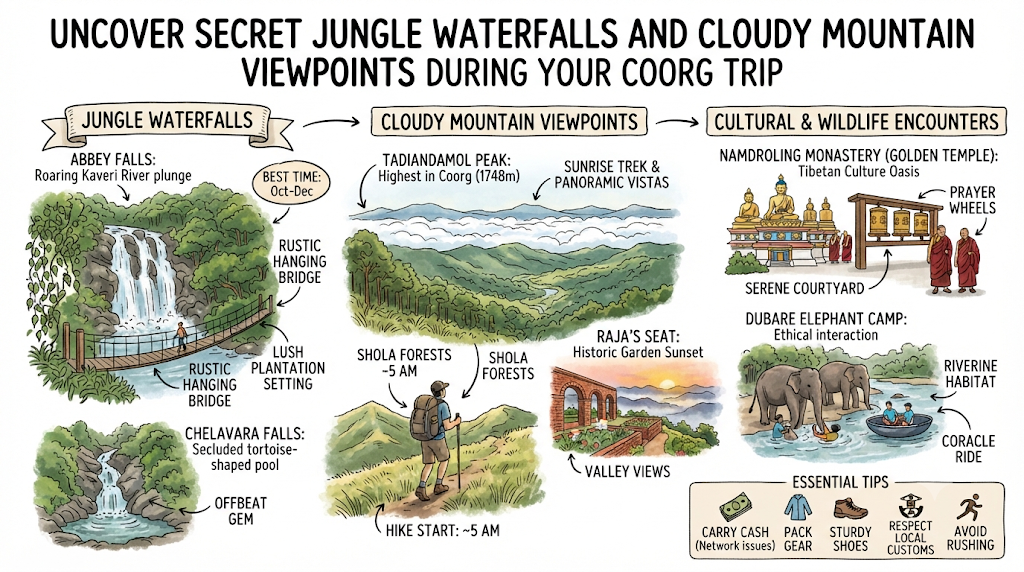
Introduction
Discard the frantic energy of congested urban concrete jungles and mass-market holiday resorts that trade soulful peace for neon-lit convenience. Coorg—the mist-shrouded Scotland of India—invites you into a sanctuary where emerald coffee plantations whisper under monsoon blankets and ancient Kodava heritage runs as deep as its perennial rivers. This Western Ghats haven is a masterclass in slow, immersive travel. Here, crisp mountain air carries the heavy scent of wild cardamom and damp earth, offering a profound cultural and natural connection far removed from ordinary tourist tracks.
Why Coorg is a must-visit city
Nestled amidst the rugged southern crest of the Western Ghats in Karnataka, Coorg (Kodagu) represents a breathtaking chapter in ecological and cultural history. Shaped by martial warrior traditions, spice-scented agrarian roots, and rolling evergreen canopies, the region has long served as a crucial biodiversity hotspot. Modern accessibility via well-maintained national highways from Bengaluru and Mysuru, combined with boutique homestays nestled within working plantations, makes this pristine escapade effortlessly reachable for solo wanderers, couples, and multi-generational families alike.
The quintessential Coorg travel circuit loops effortlessly through rolling hills, cascading waterfalls, and quiet plantation trails.
| Feature | Details |
| Primary Terrain | Rolling hills, evergreen rainforests, and expansive coffee estates |
| Best Travel Windows | October to March (pleasant weather), July to September (monsoon magic) |
| Traveler Archetypes | Nature lovers, slow travelers, couples, and wildlife photographers |
| Accessibility | Well-connected road networks from Bengaluru, Mangaluru, and Mysuru |
Best Places or Experiences
Abbey Falls
Tucked away amid dense coffee and spice plantations, Abbey Falls presents a mesmerizing spectacle where the cascading waters of the Kaveri River plunge down a rocky cliffside. The surrounding canopy of towering green trees and wild pepper vines creates an atmospheric microclimate filled with the roar of falling water. A sturdy hanging bridge offers visitors a front-row vantage point to absorb the misty spray and raw jungle energy.
- Location: Madikeri district, Karnataka; approx. 8 km from Madikeri town center.
- Why it is worth visiting: It offers an accessible yet deeply immersive encounter with Coorg’s legendary waterfall ecosystems and plantation heritage.
- Best things to do: Walk across the suspension bridge, inspect local coffee shrubbery, and sample fresh spices from nearby roadside stalls.
- Best time to visit: Post-monsoon months between October and December when water volume is at its peak.
- Ideal for whom: Nature photographers, weekend couples, and families seeking a scenic retreat.
- Travel tip: Wear sturdy footwear with good grip, as the stone steps leading down to the viewing platform can become slick with mist.
Tadiandamol Peak
As the highest mountain in Coorg and the second-highest in Karnataka, Tadiandamol Peak towers at an elevation of 1,748 meters. Trekking up its grassy slopes rewards travelers with panoramic vistas of unending shola forests, rolling green valleys, and occasional blankets of floating clouds. The historic Nalknad Palace sits quietly at its foothills, adding a layer of royal Kodava history to the wilderness trek.
- Location: Kakkabe region, South Coorg; approx. 35 km from Madikeri.
- Why it is worth visiting: It provides a challenging yet deeply rewarding alpine trekking experience without extreme technical mountaineering hazards.
- Best things to do: Undertake the sunrise summit trek, explore the ancient architecture of Nalknad Palace, and spot endemic Western Ghats bird species.
- Best time to visit: December to February for clear skies; avoid peak monsoons for trekking safety.
- Ideal for whom: Adventure hikers, botanists, and landscape photographers.
- Travel tip: Start your ascent by 5:00 AM to catch the sunrise breaking over the cloud inversion layer and beat the midday mountain heat.
Namdroling Monastery (Golden Temple)
Located within the peaceful Tibetan settlement of Bylakuppe, the Namdroling Monastery is a stunning oasis of Buddhist culture and sacred art. Towering golden statues of Lord Buddha glistening against rich crimson and blue murals create a deeply serene atmosphere. Monks chanting in rhythmic harmony fill the courtyard with an unmistakable spiritual resonance.
- Location: Bylakuppe, North Coorg; approx. 35 km from Madikeri.
- Why it is worth visiting: It houses one of the largest Tibetan teaching centers outside Tibet, offering a vivid cultural contrast to local Kodava traditions.
- Best things to do: Admire the 40-foot gilded Buddha statues, spin the brass prayer wheels, and taste authentic Tibetan thukpa at nearby community stalls.
- Best time to visit: Early morning hours (8:00 AM to 10:00 AM) to witness morning prayer ceremonies in peaceful quiet.
- Ideal for whom: Culture enthusiasts, spiritual seekers, and architectural admirers.
- Travel tip: Dress modestly with shoulders and knees covered as a mark of respect for the active monastic community.
Dubare Elephant Camp
Situated on the banks of the Kaveri River, Dubare Elephant Camp offers an intimate window into the lives of majestic Asian elephants. Historically used for timber logging, these gentle giants are now cared for by trained naturalists and mahouts. Visitors can observe bathing rituals, learn about elephant biology, and walk through the shaded riverine habitat.
- Location: Dubare forest area, near Kushalnagar; approx. 30 km from Madikeri.
- Why it is worth visiting: It provides ethical, educational interaction with pachyderms in their natural riparian habitat.
- Best things to do: Participate in morning elephant bathing sessions, take a coracle boat ride across the Kaveri, and enjoy guided bird-watching walks.
- Best time to visit: September to March during pleasant morning hours.
- Ideal for whom: Wildlife lovers, families with children, and animal conservation enthusiasts.
- Travel tip: Cross the river via motorized boat or coracle early in the morning before tourist crowds peak around midday.
Raja’s Seat
Perched on an elevated ridge in Madikeri, Raja’s Seat is a historic garden of seasonal flowers and artificial fountains historically favored by the Kings of Kodagu. Framed by delicate toadstools and classic brick arches, it offers a sweeping vantage point over green valleys and misty mountain ranges. Sunset here paints the western horizon in dramatic shades of amber and violet.
- Location: Madikeri town center, Central Coorg.
- Why it is worth visiting: It offers accessible, panoramic sunset views that have captivated travelers for centuries.
- Best things to do: Watch the evening sunset over the valley, stroll through the manicured botanical gardens, and ride the toy train with children.
- Best time to visit: Late afternoon to sunset (5:00 PM to 6:30 PM).
- Ideal for whom: Couples, casual sightseers, and sunset photography enthusiasts.
- Travel tip: Arrive at least 30 minutes before sunset to secure prime viewing spots along the terrace railing.
Offbeat Exploration: Hidden Gems Tourists Miss
Chelavara Falls
Hidden deep inside dense coffee estates near Kakkabe, Chelavara Falls is a stunning milk-white cascade dropping into a rocky pool shaped like a tortoise. Locally known as Emmeshambe, this secluded spot remains wonderfully free of large crowds, offering a peaceful sanctuary surrounded by wild ferns and buzzing cicadas.
Mandalpatti Viewpoint
Perched high above the Pushpagiri reserve forest, Mandalpatti delivers a rugged, wind-swept vantage point that puts you above the clouds. Accessible via a bumpy Jeep ride through undulating green hills, this secret plateau provides jaw-dropping 360-degree views of untouched Western Ghats wilderness.
Detailed Practical Guidance for Travelers
| Destination | Standard Entry Fee | General Timings | Best Local Food Options Nearby | Recommended Nearby Attractions |
| Abbey Falls | INR 30 per person | 9:00 AM – 5:00 PM | Bamboo biryani, Pandi curry | Madikeri Fort, Raja’s Seat |
| Tadiandamol Peak | Free (Forest permission required) | 6:00 AM – 4:00 PM | Traditional Kodava pandi curry, Akki rotti | Nalknad Palace, Chelavara Falls |
| Namdroling Monastery | Free | 7:00 AM – 8:00 PM | Tibetan momos, Thukpa, Butter tea | Dubare Elephant Camp, Nisargadhama |
| Dubare Elephant Camp | INR 50 (Activity fees extra) | 9:00 AM – 11:00 AM & 4:30 PM – 5:30 PM | Coorg honey, Fried river fish | Nisargadhama reserve, Bylakuppe |
| Raja’s Seat | INR 10 per person | 5:30 AM – 8:00 PM | Local coffee, Noolputtu with chicken curry | Madikeri Fort, Omkareshwara Temple |
Logistics & On-Ground Navigation
Local Transport Options
- Car Rentals & Cabs: The most reliable way to navigate Coorg’s winding plantation roads and distant viewpoints, as public bus frequencies to offbeat spots are limited.
- Auto-Rickshaws: Convenient for short hops within Madikeri town center and nearby market lanes.
- Two-Wheeler Rentals: Excellent for confident riders wanting to explore scenic coffee routes around Madikeri and Kushalnagar at their own pace.
- State Transport Buses: Affordable connectivity connecting major hubs like Mysuru and Bengaluru to Madikeri and Virajpet bus stands.
Budget Planning
- Backpacking Tier (INR 1,500 – 3,000 / $18 – $36 USD per day): Stays in rustic plantation homestays or budget dorms, eats at local dhabas and street stalls, and utilizes public buses or shared transport.
- Mid-Range Comfort Tier (INR 5,000 – 10,000 / $60 – $120 USD per day): Private estate cottages, private cab rentals for sightseeing, and sit-down dining at authentic regional restaurants.
Safety and Inclusivity Tips
- For Families: Keep children close near water bodies and waterfalls where slippery moss and strong undercurrents pose hidden risks.
- For Couples: Choose secluded plantation villas for privacy; respect local cultural norms in rural villages and temples.
- General Safety: Keep leech repellent handy during monsoon walks, carry a sturdy umbrella, and stay updated on local weather alerts.
Strategic Travel Planning Guardrails
Travel Planning Tips for Destination
- Book your plantation homestays well in advance, especially during the peak winter holiday season and long weekends.
- Carry a healthy balance of physical cash notes, as mobile network signals and card machines can fail in remote estate pockets.
- Pack sturdy walking shoes with reliable grip for navigating uneven mud tracks and mossy waterfall stone steps.
- Respect local customs by maintaining quiet reverence inside sacred monasteries and traditional Kodava ancestral homes (Ainmanes).
- Prepare for sudden mountain showers by packing lightweight waterproof rain gear regardless of the apparent season.
Common Mistakes to Avoid
- Rushing your itinerary by trying to cover distant north and south Coorg attractions in a single compressed afternoon.
- Relying solely on digital payment apps in remote villages where connectivity is intermittent.
- Disregarding leech warnings during monsoon and post-monsoon jungle walks.
- Skipping authentic Kodava cuisine in favor of generic continental hotel buffets.
- Ignoring official forest timings and permit requirements when trekking peaks like Tadiandamol.
Suggested Itinerary Blueprints
- 3-Day Quick Dash (Coorg Highlights Loop): Tailored for weekend travelers seeking iconic sights. Day 1 covers arrival in Madikeri, Raja’s Seat sunset, and Madikeri Fort. Day 2 features Abbey Falls, Namdroling Monastery, and Dubare Elephant Camp. Day 3 includes a morning trek to Mandalpatti viewpoint before departure.
- 7-Day Deep-Dive (Ultimate Western Ghats Expedition): Designed for slow travelers and nature lovers. Days 1-2 focus on settling into a coffee estate homestay, exploring Madikeri local markets and Omkareshwara Temple. Days 3-4 tackle Tadiandamol Peak and Chelavara Falls. Days 5-7 explore Bylakuppe, Dubare, Nisargadhama, and hidden spice trails.
- Complete Weekend Travel Plan (Coorg Nature Escape): Structured for a Friday-to-Sunday getaway. Friday involves evening arrival in Madikeri and dinner featuring authentic Pandi Curry. Saturday covers Abbey Falls, Dubare Elephant Camp, and Raja’s Seat. Sunday features a morning coffee plantation walk and monastery visit before heading home.
Common Tourist Mistakes to Avoid
- Geographic Blunders: Trying to combine geographically opposed attractions like Bylakuppe in the north and Talacauvery in the south on the exact same tight schedule.
- Commercial Traps: Spending excessive vacation time in modernized commercial shopping centers rather than exploring authentic local spice markets and estate stores.
- Neglecting Modern/Alternative Zones: Forgetting to explore the quieter, artistic artisan cafes and organic coffee roasteries springing up around Madikeri.
- Transport Overpayment: Always confirm metered fares or cross-reference local taxi union rates before booking private cab hires to avoid inflated pricing.
- Luxury Dining Bias: Missing out on local street-level eateries and home-cooked Kodava meals that truly define the culinary soul of the region.
Frequently Asked Questions
1. What is the best time of year to visit Coorg for nature lovers?
The ideal window spans from October to March when the weather remains cool, pleasant, and perfect for outdoor trekking and sightseeing. The post-monsoon months offer lush green landscapes, roaring waterfalls, and fresh coffee blossom scents across the entire region.
2. Do I need special permits to trek peaks like Tadiandamol in Coorg?
While general trekking is open, visiting certain reserve forest zones or hiking Tadiandamol may require a nominal entry fee or forest department permission at the base checkpoint. It is always wise to check local guidelines with your homestay host before starting your hike.
3. What makes Coorg’s cuisine unique compared to other South Indian regions?
Kodava cuisine is distinct for its bold use of local spices, wild forest greens, bamboo shoots, and distinct meats like pork (Pandi curry) cooked with dark kachumpuli vinegar. Rice-based accompaniments like Kadambuttu and Akki rotti complete these traditional, hearty mountain meals.
4. Are solo travelers safe when exploring offbeat trails and forests in Coorg?
Coorg is generally very safe and welcoming for solo travelers. However, because many viewpoints and waterfalls are located deep inside remote plantation estates, it is best to stick to marked trails, travel during daylight hours, and inform your accommodation host of your plans.
5. How should I travel around Coorg if I do not drive or rent a car?
While public buses connect major towns like Madikeri, Virajpet, and Kushalnagar, they are infrequent for remote attractions. Hiring a private cab with a local driver or joining organized sightseeing tours is the most practical way to navigate offbeat spots comfortably.
6. Is cash necessary, or do local shops in Coorg accept digital payments?
While digital UPI and mobile wallets work seamlessly in major towns like Madikeri and Kushalnagar, network connectivity can fail in deep estate valleys and remote waterfalls. Carrying adequate physical cash ensures hassle-free purchases at local spice stalls and roadside dhabas.
7. What packing essentials are required for a trip to Coorg?
Comfortable walking boots, light woolens for chilly winter evenings, a sturdy umbrella or rain jacket for unexpected showers, insect repellent for estate walks, and reusable water bottles are essential items for exploring Coorg’s natural landscapes comfortably.
8. Can families with young children easily visit attractions like Dubare Elephant Camp?
Yes, Dubare Elephant Camp and Namdroling Monastery are very family-friendly and offer wonderful educational experiences for children. However, parents should keep a close eye on little ones near riverbanks and uneven stone steps at waterfall sites.
9. What are the best local souvenirs to buy when visiting Coorg?
Coorg is world-famous for its aromatic shade-grown coffee beans, organic forest honey, homemade chocolates, and authentic spices like cardamom, pepper, and vanilla. Buying directly from local plantation owners ensures freshness and supports the regional agrarian economy.
10. How can I avoid heavy crowds during peak tourist seasons in Coorg?
To escape the crowds, plan your visits to popular spots like Abbey Falls or Raja’s Seat early in the morning right at opening time. Alternatively, spend your days exploring lesser-known spots like Chelavara Falls or quiet private estate walking trails.
11. What is the average daily budget required for a comfortable trip to Coorg?
A mid-range traveler can comfortably explore Coorg on INR 5,000 to 10,000 per day, covering a charming plantation cottage stay, private cab rentals, and sit-down meals at authentic regional restaurants. Budget backpackers can manage comfortably on INR 1,500 to 3,000 daily.
12. How can visitors practice responsible tourism in Coorg’s fragile ecosystems?
Travelers can protect Coorg’s natural beauty by avoiding single-use plastics, sticking to designated trails during treks, respecting local Kodava customs and sacred spaces, and choosing eco-friendly homestays that actively support sustainable local conservation efforts.
Conclusion
Choosing an immersive journey across Coorg’s misty hills and coffee-scented valleys offers a restorative reward that ordinary, crowded vacation spots simply cannot match. It connects your spirit to deep agrarian roots, ancient warrior traditions, and timeless natural beauty. Step away from the ordinary, breathe in the fragrant mountain air, and let Coorg redefine your appreciation for authentic travel.
