MOTOSHARE 🚗🏍️
Rent Bikes & Cars Directly from Owners
Motoshare connects vehicle owners with people who need bikes and cars on rent. Owners earn from idle vehicles, and renters get flexible ride options.
Visit Motoshare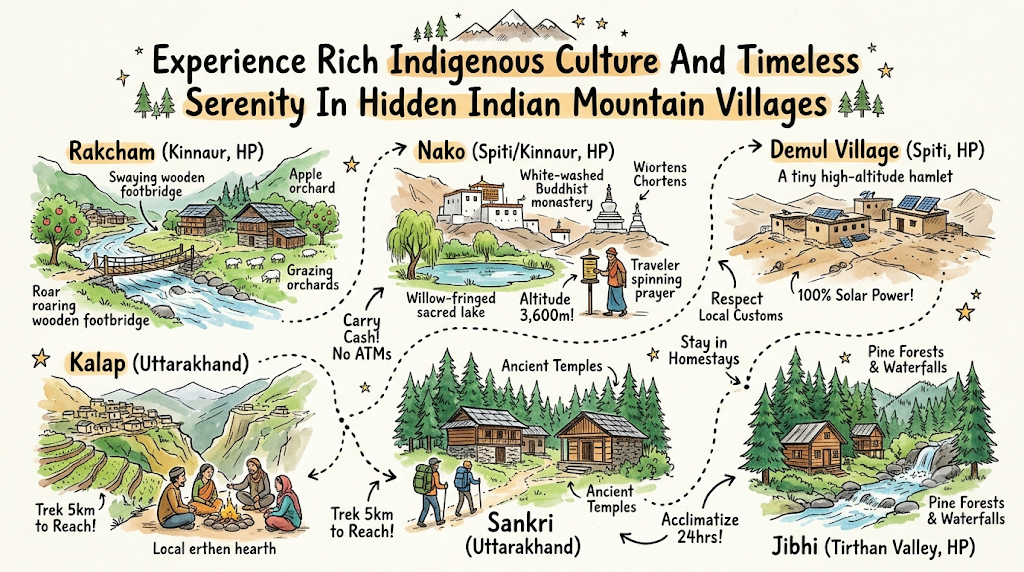
Introduction
Forget the sterile corridors of luxury resorts and the frantic noise of over-commercialized hill stations that trade genuine serenity for neon signs. India’s highest frontiers whisper a different story—one told through the rustling pine needles of ancient forests, the scent of burning juniper, and the rhythmic chanting of remote mountain monasteries. True travel healing happens where the cellular network fades and authentic cultural connections take root. If you are a weary soul searching for stillness, these secluded Himalayan hamlets offer an unhurried escape into timeless mountain grace.
Why Indian Mountain Villages Are a Must-Visit
Spanning the majestic folds of Himachal Pradesh, Uttarakhand, and the high-altitude deserts of Ladakh, India’s mountain settlements represent living museums of indigenous mountain architecture and sustainable living. This region preserves centuries of Himalayan heritage, organic farming traditions, and deep-rooted spiritual harmony. Modern access via upgraded national highways, all-weather tunnels, and expanding boutique homestay networks ensures these tranquil retreats remain within reach for slow travelers, artists, and peace-seeking couples alike.
The ultimate Himalayan village circuit winds through pine-scented valleys, terraced agricultural fields, and mist-shrouded alpine ridges.
| Feature | Details |
| Primary Terrain | Pine forests, terraced mountain slopes, and high-altitude alpine meadows |
| Best Travel Windows | April to June (Spring blooms), September to November (Clear skies) |
| Traveler Archetypes | Solo writers, mindful couples, nature photographers, and slow travelers |
| Accessibility | Well-paved mountain highways, regional flights to Bhuntar or Dehradun, and taxi services |
Best Places or Experiences
Rakcham
Tucked quietly between Sangla and Chitkul in the Baspa Valley, Rakcham is a breathtaking Himalayan hamlet where time seems to slow to a deliberate crawl. Surrounded by snow-draped granite peaks and grazed by herds of local sheep, this village showcases classic Kinnauri wooden architecture and slate-roofed homes. The air here carries the crisp scent of pine and glacial water, inviting deep introspection.
- Location: Kinnauri district, Himachal Pradesh; approx. 340 km from Shimla hub.
- Why it is worth visiting: It offers absolute isolation from mainstream tourist crowds while keeping authentic Kinnauri cultural traditions intact.
- Best things to do: Walk across the swaying wooden footbridge over the roaring Baspa River, explore ancient village temples, and sit quietly by apple orchards.
- Best time to visit: May to June for blooming wildflowers; September to October for golden autumn foliage.
- Ideal for whom: Solitude seekers, landscape photographers, and slow-travel couples.
- Travel tip: Carry adequate physical cash, as digital network connectivity is extremely erratic and local grocery shops cannot process online payments.
Kalap
Perched high on a ridge overlooking the raging Supin River, Kalap is a living time capsule untouched by modern urban commercialization. This remote Garhwali village operates on community-led tourism where travelers live directly with local families, sharing stories around earthen hearths. The surrounding alpine forests and meadows offer pristine trails with zero tourist congestion.
- Location: Rudraprayag/Uttarkashi border region, Uttarakhand; approx. 210 km from Dehradun.
- Why it is worth visiting: It provides a rare, immersive community-tourism experience that directly supports indigenous Himalayan mountain families.
- Best things to do: Trek along ancient pine-fringed shepherd trails, sample authentic organic Garhwali cuisine, and participate in local seasonal folk celebrations.
- Best time to visit: April to June and September to November for clear skies and pleasant trekking weather.
- Ideal for whom: Cultural anthropologists, responsible travelers, and offbeat hiking enthusiasts.
- Travel tip: You must trek the final few kilometers on foot from the nearest motorable road, so pack light, ergonomic rucksacks.
Nako
Perched on the edge of the arid Tibetan plateau in Kinnaur, Nako is a mesmerizing Buddhist village built around a sacred, willow-fringed lake. Its labyrinth of narrow stone-paved alleys, ancient whitewashed chortens, and thousand-year-old monastery reflect an authentic blend of Tibetan and Indian Himalayan spirituality. The silence here is absolute, broken only by the gentle spinning of prayer wheels.
- Location: Hangrang Valley, Kinnaur district, Himachal Pradesh; approx. 320 km from Shimla.
- Why it is worth visiting: It preserves ancient Buddhist murals and architectural heritage in a surreal high-altitude desert setting.
- Best things to do: Walk the serene parikrama trail around Nako Lake, explore the historic Nako Monastery complex, and hike up to the nearby meditation caves.
- Best time to visit: June to September when daytime temperatures are pleasant and mountain roads remain clear.
- Ideal for whom: Spiritual seekers, history enthusiasts, and mindful solo travelers.
- Travel tip: Drink plenty of oral fluids upon arrival, as Nako sits at an altitude of over 3,600 meters where mild breathlessness can occur.
Sankri
Serving as the tranquil gateway to several legendary alpine treks, Sankri is a charming wooden village set against the backdrop of the Govind Pashu Vihar National Park. Unlike bustling base camps, Sankri retains a quiet rustic charm in the early mornings when mist rises above traditional timber homes. It is a haven for travelers seeking deep woods and pine-scented mountain air.
- Location: Uttarkashi district, Uttarakhand; approx. 200 km from Dehradun.
- Why it is worth visiting: It acts as an idyllic staging post for pristine Himalayan valley walks without the overwhelming rush of tourist crowds.
- Best things to do: Take leisurely day walks to Saur village, interact with local woodcarvers, and enjoy stargazing under pollution-free skies.
- Best time to visit: April to June for blooming rhododendrons; September to November for crystal-clear mountain views.
- Ideal for whom: Nature lovers, amateur hikers, and writers seeking quiet inspiration.
- Travel tip: Book your village homestay well in advance during peak trekking seasons, as options are limited to family-run cottages.
Offbeat Exploration: Hidden Gems Tourists Miss
Demul Village
Perched on a high barren ridge in Spiti, Demul is an ultra-remote village that operates entirely on solar energy and community-run homestay tourism. Walking its quiet earthen paths reveals an authentic Himalayan lifestyle untouched by modern commercial distraction.
Jibhi
Hidden away in the Tirthan Valley, Jibhi is a fairytale hamlet wrapped in dense pine forests and crossed by clear trout streams. Its Victorian-style wooden cabins and secret waterfall trails offer a deeply peaceful retreat for artists and readers.
Detailed Practical Guidance for Travelers
| Destination | Standard Entry Fee | General Timings | Best Local Food Options Nearby | Recommended Nearby Attractions |
| Rakcham | Free | Open year-round (Best: May-Oct) | Kinnauri salt tea, Chhang, local trout | Chitkul border village, Baspa River |
| Kalap | Free (Community fees apply) | Open April to November | Mandua roti, Gahat dal, local honey | Supin River Gorge, Jakhol alpine meadows |
| Nako | Free | Open June to October | Tibetan Thukpa, Butter tea, Skyu | Nako Lake, Tabo Monastery, Spiti Valley |
| Sankri | Free | Open year-round | Garhwali Kafula, Chainsoo, local red rice | Kedarkantha trail base, Saur village |
Logistics & On-Ground Navigation
Local Transport Options
- Shared Jeeps & Taxis: The backbone of mountain connectivity, running between regional transport hubs and remote village heads.
- Village Footpaths: Navigating within these hamlets relies entirely on ancient stone-paved walking trails and wooden stairways.
- State Roadways Buses: Economical government buses connect lower valley towns, though schedules can be flexible depending on mountain weather.
- Two-Wheeler Rentals: Available from major transit hubs like Dehradun or Shimla for experienced riders comfortable with winding switchbacks.
Budget Planning
- Backpacking Tier (INR 1,200 – 2,500 / $15 – $30 USD per day): Stays in authentic family-run village homestays, eats simple meals at local dhabas, and uses shared rural transport.
- Mid-Range Comfort Tier (INR 4,000 – 8,000 / $50 – $95 USD per day): Private wooden cottage rooms, private cab hires for scenic day transfers, and meals at boutique eco-lodges.
Safety and Inclusivity Tips
- For Families: Stick to easily accessible valley hamlets like Jibhi or Sankri; ensure children are dressed in warm layers against sudden alpine chill.
- For Couples: Choose isolated heritage cottages that prioritize privacy; respect local village traditions regarding public displays of affection.
- General Safety: Keep offline topographic maps downloaded, carry a basic first-aid kit, and inform your homestay host whenever you step out for long valley walks.
Strategic Travel Planning Guardrails
Travel Planning Tips for Destination
- Confirm village road accessibility with your homestay host before traveling, as sudden landslides can temporarily block mountain routes.
- Always keep a generous amount of physical paper currency, as digital payment scanners do not work reliably in remote high-altitude settlements.
- Pack modest, respectful clothing that covers shoulders and knees to honor local village temples and religious customs.
- Drink boiled or purified water exclusively, and carry personal reusable bottles to minimize plastic waste in fragile eco-systems.
- Allow your body at least 24 hours to adjust to higher elevations before embarking on strenuous walking excursions.
Common Mistakes to Avoid
- Rushing your itinerary by trying to visit multiple distant valleys in a single weekend without factoring in slow mountain transit speeds.
- Over-packing massive rolling suitcases that cannot be easily carried across stone village pathways and suspension bridges.
- Assuming mobile networks will function smoothly without interruption in remote gorges and high-altitude plateaus.
- Skipping traditional homestay meals in favor of standard urban snacks that miss out on authentic regional flavors.
- Disregarding local warnings regarding sudden weather changes or dropping evening temperatures.
Suggested Itinerary Blueprints
- 3-Day Quick Dash (Tirthan Valley Slow Escape): Tailored for busy professionals needing a fast reset. Day 1 covers arrival in Jibhi, a walk through pine forests, and riverside relaxation. Day 2 features a trek to the hidden Jibhi waterfall and interaction with local artisans. Day 3 includes morning meditation by the stream before heading back.
- 7-Day Deep-Dive (Kinnaur Mountain Village Trail): Ideal for slow travelers and cultural explorers. Days 1-3 focus on Shimla transit and settling into Rakcham village for apple orchard walks and river views. Days 4-7 transition to Nako village for monastery tours, lake walks, and high-altitude plateau stargazing.
- Complete Weekend Travel Plan (Garhwali Hamlet Loop): Designed for a refreshing Friday-to-Sunday retreat. Friday involves driving from Dehradun to Sankri village and settling into a wooden homestay. Saturday covers a scenic day hike to Saur village and exploring local Himachali architecture. Sunday features a peaceful morning riverside walk before departure.
Common Tourist Mistakes to Avoid
- Geographic Blunders: Trying to combine geographically opposed regions like Garhwal and Spiti on the exact same day, ignoring winding mountain topography.
- Commercial Traps: Spending excessive time in modernized commercial markets rather than quiet, authentic village courtyards.
- Neglecting Modern/Alternative Zones: Forgetting to explore the artistic cafe corners and quiet reading spaces that modern eco-homestays offer.
- Transport Overpayment: Always cross-reference local taxi union rate cards before booking private vehicles to avoid inflated tourist fares.
- Luxury Dining Bias: Ignoring local street-level dhabas and traditional home-cooked meals that embody the genuine culinary spirit of the mountains.
Frequently Asked Questions
1. What is the best time of year to visit peaceful mountain villages in India?
The most favorable travel window spans from April to June for pleasant weather and blooming landscapes, and from September to November for crystal-clear skies and crisp mountain air. These months offer stable road conditions and comfortable temperatures for outdoor exploration without heavy monsoon disruptions or extreme winter snowfall.
2. Do I need special permits to visit remote mountain villages in regions like Spiti or Kinnaur?
While most standard mountain villages in Himachal and Uttarakhand require no special permits, specific border regions near Tibet or restricted wildlife zones may necessitate Inner Line Permits. These can be easily secured online through official government portals or at local administrative offices before your journey.
3. How can I ensure reliable internet and mobile connectivity during my village stay?
Mobile network coverage is highly unpredictable in remote Himalayan hamlets. Pre-paid BSNL and Jio SIM cards generally offer the best chance of signal in lower valleys, but deep gorges like Spiti or upper Kinnaur frequently experience complete blackouts. It is best to inform family members beforehand.
4. Are these remote mountain villages safe for solo travelers and women explorers?
Yes, these tight-knit mountain communities are exceptionally safe and welcoming for solo travelers. Crime rates are virtually non-existent due to strong cultural values. However, standard common-sense precautions should be maintained, such as avoiding unlit isolated paths late at night and respecting local customs.
5. What kind of accommodation can I expect in these offbeat Himalayan villages?
Luxury hotels are rare in these authentic settings. Instead, travelers stay in warm, family-run homestays, traditional wooden cottages, and eco-lodges. These accommodations offer cozy rooms, homemade organic meals, and an intimate glimpse into traditional rural mountain life.
6. How do I prevent altitude sickness when staying in high-altitude villages like Nako?
Preventing altitude sickness requires slow and steady ascent. Spend your first day resting without heavy physical exertion, drink plenty of water, avoid alcohol and heavy meals, and consider carrying prescribed altitude medication after consulting your doctor before departure.
7. What should I pack for a peaceful mountain village vacation?
Pack sturdy walking shoes, layered thermal clothing, a windproof jacket, a high-SPF sunscreen, sunglasses, a reusable water bottle, a reliable power bank, and a basic personal first-aid kit containing medicines for motion sickness and common colds.
8. Are vegetarian and vegan food options easily available in these remote hamlets?
Yes, traditional village cuisine is predominantly vegetarian, featuring wholesome local grains, lentils, seasonal mountain vegetables, and fresh dairy. Homestay hosts are happy to accommodate dietary preferences when informed in advance during your booking process.
9. How can I practice responsible and sustainable tourism in fragile mountain ecosystems?
Minimize plastic waste by carrying your own water filter, respect local privacy by asking permission before photographing residents, support local artisans and homestay owners directly, and adhere strictly to Leave No Trace principles while walking through nature.
10. What is the best way to handle local transport when local buses are infrequent?
When state buses are limited, hiring shared jeeps from regional transport hubs or arranging private village cabs through your homestay host is the most reliable way to navigate winding mountain roads safely and efficiently.
11. Can I work remotely from these mountain villages?
While some boutique eco-lodges offer Wi-Fi, power outages and fluctuating signal strength make reliable remote work challenging. It is advisable to finish urgent professional tasks beforehand or treat the stay as a true digital detox opportunity.
12. What cultural etiquette should travelers observe in traditional Himalayan villages?
Always remove your shoes before entering village temples or local homes, dress modestly with covered shoulders and knees, greet locals with a respectful “Namaste,” and ask permission before entering sacred courtyards or photographing religious ceremonies.
Conclusion
Choosing a peaceful mountain village escape over an ordinary crowded vacation offers an emotional and spiritual reward that rejuvenates the spirit. It invites you to slow down, listen to the whisper of pine forests, and connect with resilient communities who preserve the true soul of the mountains. Step off the beaten path, embrace the quiet stillness, and let these majestic Himalayan hamlets restore your inner peace.
