MOTOSHARE 🚗🏍️
Rent Bikes & Cars Directly from Owners
Motoshare connects vehicle owners with people who need bikes and cars on rent. Owners earn from idle vehicles, and renters get flexible ride options.
Visit Motoshare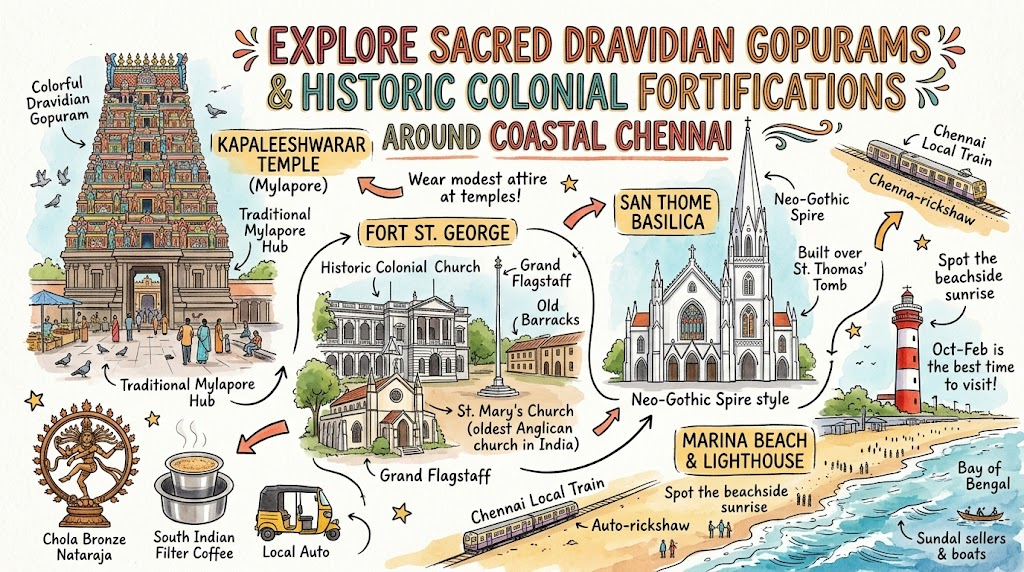
Introduction
Most travelers rushing toward the party beaches of Goa or the royal forts of Rajasthan bypass Chennai, mistaking it for just another sweltering industrial transit hub. That miscalculation is your secret advantage.
Chennai does not put on a rehearsed performance for busloads of tour groups. It invites you into living heritage, where the day begins with the chime of bronze temple bells and the aroma of roasted chicory filtering through ancient doorways.
Here, millenary Dravidian traditions thrive alongside colonial coastal ramparts and serene sandy horizons. If you crave grounded connections, unfiltered cultural depth, and coastal warmth, Chennai welcomes you with open arms.
Why Chennai is a must-visit city
Chennai anchors the maritime and spiritual identity of South India as the capital of Tamil Nadu. Situated along the Coromandel Coast of the Bay of Bengal, it served as a maritime nerve center for powerful seafaring dynasties like the Pallavas and Cholas long before colonial powers arrived. Modern Chennai bridges that ancient trading history with thriving performing arts, classical Carnatic music academies, and pioneering culinary traditions.
Getting here is seamless. Chennai International Airport (MAA) connects directly to major international hubs and domestic capitals. Puratchi Thalaivar Dr. M.G. Ramachandran Central Railway Station (Chennai Central) and Egmore Station run direct express networks across the Indian subcontinent. Meanwhile, the modern Chennai Metro Rail and the scenic East Coast Road (ECR) highway make moving across coastal and central zones remarkably straightforward.
The travel circuit splits naturally into three distinct spatial segments: the historical north and central colonial core, the spiritual south-central enclave of Mylapore, and the breezy southern coastal corridor that traces ancient fishing villages down toward coastal ruins.
| Key Metric | Details |
|---|---|
| Primary Region | Coromandel Coast, Tamil Nadu, Southern India |
| Best Travel Season | November to February (milder tropical winter) |
| Top Transport Hubs | Chennai International Airport (MAA), Chennai Central (MAS) |
| Local Signature Flavor | Authentic Filter Coffee, Ghee Roast Dosa, Chettinad Pepper Curry |
| Core Heritage Roots | 7th-century Pallava architecture, Chola maritime history, British colonial heritage |
Best Places or Experiences
Kapaleeshwarar Temple
Dating in its present form to the 16th-century Vijayanagara period, with roots stretching back to 7th-century Pallava lore, Kapaleeshwarar Temple stands as Chennai’s spiritual epicentre. Dedicated to Lord Shiva and Goddess Karpagambal, the complex features a breathtaking rainbow-hued gopuram (gateway tower) encrusted with hundreds of carved stucco mythological figures.
Step inside past the massive wooden threshold to feel cool granite stones beneath your bare feet. The courtyard buzzes with priests chanting sacred mantras, fragrant camphor smoke drifting toward the sky, and quiet pilgrims seated by the sprawling sacred temple tank.
Kapaleeshwarar Temple tank and gopuram.
- Location: Mylapore, Central-South Chennai; roughly 7 km from Chennai Central Railway Station.
- Why it is worth visiting: Unmatched Dravidian stone architecture and an immersive, everyday spiritual atmosphere unaltered by mass commercialism.
- Best things to do: Admire the detailed carvings of the eastern gopuram, sit beside the stepped temple tank at dusk, and wander the surrounding traditional agraharam flower-market lanes. Incredible India
- Best time to visit: Early morning at 6:00 AM or evening aarti around 6:30 PM.
- Ideal for whom: Culture enthusiasts, photographers, architecture lovers, and solo wanderers.
- Travel tip: Dress modestly covering shoulders and knees; footwear must be deposited at the outer shoe stall before entering the stone courtyard.
Marina Beach & Promenade
Stretching for nearly 13 kilometers along the Bay of Bengal, Marina Beach ranks among the longest natural urban sandbars in the world. Rather than a sunbathing retreat, Marina operates as Chennai’s open-air living room, civic forum, and twilight carnival.
As the blazing afternoon sun dips, sea breezes cool the sands. Thousands of locals gather along the promenade to fly vivid kites, buy roasted corn, and debate politics beside statues honoring historical leaders, philosophers, and Tamil literary legends.
- Location: Kamarajar Salai, Triplicane, along the eastern coastline; 3 km south of Chennai Central.
- Why it is worth visiting: It is the emotional and social pulse of Chennai, offering unmatched people-watching and sensory street-life energy.
- Best things to do: Take a barefoot walk along the surfline at dawn, sample hot sundal (spiced tempered chickpeas) from shore vendors, and climb the Chennai Lighthouse for panoramic coastal views.
- Best time to visit: 5:30 AM to 7:30 AM for a quiet sunrise, or 4:30 PM to 8:00 PM for the vibrant night fair atmosphere.
- Ideal for whom: Families, street-food lovers, budget backpackers, and casual strollers.
- Travel tip: Never attempt to swim; underwater rip currents are notoriously strong and dangerous along this coastline.
Fort St. George & Museum
Constructed in 1644 by the British East India Company, Fort St. George was the initial white bastion around which colonial Madras expanded. It houses the Tamil Nadu Legislative Assembly alongside St. Mary’s Church—the oldest surviving Anglican house of worship in India.
The Fort Museum is housed inside a striking white colonial mansion. Inside, high ceilings shelter historic military uniforms, oil portraits of governors, silver ceremonial coins, and original letters penned by Robert Clive and Arthur Wellesley.
Fort St George legislative complex.
- Location: Rajaji Salai, George Town, North-Central Chennai; 1.5 km east of Chennai Central.
- Why it is worth visiting: It is the political and territorial bedrock where British trade systematically transformed into an empire.
- Best things to do: Explore St. Mary’s 17th-century bomb-proof curved masonry roof, study original colonial maps inside the Museum galleries, and marvel at India’s tallest teak flagstaff outside.
- Best time to visit: Mid-morning on weekdays between 10:00 AM and 1:00 PM.
- Ideal for whom: History buffs, military enthusiasts, and colonial heritage researchers.
- Travel tip: Carry a government-issued photo ID (or passport) as security checks are strict due to active state government offices. Note that the museum is closed on Fridays. GetYourGuide
San Thome Cathedral Basilica
Standing proudly above the fishing hamlets of Santhome, this towering Neo-Gothic Roman Catholic cathedral is one of only three basilicas worldwide built directly over the tomb of an apostle of Jesus Christ (St. Thomas the Apostle). Originally raised by Portuguese navigators in the 16th century, it was rebuilt by the British in 1896 in brilliant white masonry.
Inside, slender nave arches draw your eyes toward stained-glass window panes imported from 19th-century Europe. The quiet subterranean crypt provides a serene, contemplative counterpoint to the vibrant city outside.
San Thome Cathedral Basilica interior.
- Location: Santhome High Road, Mylapore, South-Central Chennai; 5 km south of Fort St. George. GetYourGuide
- Why it is worth visiting: Rare international apostolic heritage paired with breathtaking coastal Neo-Gothic architecture.
- Best things to do: Visit the apostle’s subterranean tomb crypt, inspect the rare 1st-century lance relic inside the museum, and admire the illuminated spire after sunset.
- Best time to visit: 9:00 AM to 11:30 AM or 4:00 PM to 6:00 PM on non-service hours.
- Ideal for whom: Pilgrims, architecture lovers, and heritage seekers.
- Travel tip: Maintain silence in the lower crypt sanctuary and silence your phone completely before stepping into the nave.
Government Museum & National Art Gallery (Egmore)
Established in 1851, the Government Museum at Egmore is India’s second-oldest museum and an unmatched treasure house of antiquities. Spread over a sprawling campus, its Indo-Saracenic brick red buildings are architectural masterworks in their own right, featuring deep colonnades, scalloped arches, and stained-glass ceilings.
The museum’s world-renowned Bronze Gallery holds ancient Chola, Pallava, and Hoysala bronzes. The crowning masterpiece is the 10th-century bronze sculpture of Nataraja (the cosmic dance of Shiva), celebrated globally for its sublime balance and artistic perfection.
- Location: Pantheon Road, Egmore, Central Chennai; 2 km west of Chennai Central.
- Why it is worth visiting: Houses the world’s most comprehensive and valuable collection of Chola-era sacred bronzes.
- Best things to do: Trace the evolution of the iconic Nataraja bronze sculpture, examine 2nd-century Amaravati Buddhist marble reliefs, and wander through the Connemara Public Library hall.
- Best time to visit: 10:00 AM to 1:00 PM; allow at least 2–3 hours to browse the halls comfortably.
- Ideal for whom: Art scholars, history enthusiasts, antiquarians, and curious families.
- Travel tip: The complex closes on Fridays and official public holidays; purchase an extra camera ticket at the main counter if you want to take photos.
DakshinaChitra Heritage Museum
Located along the scenic coastal road, DakshinaChitra is a living history museum dedicated to preserving the diverse vernacular architecture, crafts, and lifestyles of South India. Rather than locking artifacts behind glass cases, the museum painstakingly reconstructed 18 authentic regional houses dismantled from heritage villages across Tamil Nadu, Kerala, Karnataka, and Andhra Pradesh.
MakeMyTrip
Walk down a Chettinad merchant street lined with carved Burmese teak pillars, enter a Syrian Christian home from Kottayam, or watch silk weavers and potters work at traditional looms and wheels.
- Location: Muttukadu, East Coast Road (ECR); roughly 25 km south of central Chennai. MakeMyTrip
- Why it is worth visiting: An immersive, open-air cultural journey across South India’s craft ecosystems within a single landscaped enclave.
- Best things to do: Watch master silk weavers operate traditional fly-shuttle handlooms, take a beginner’s pottery session, and browse folk-art crafts directly from regional artisans.
- Best time to visit: 10:30 AM to 3:30 PM on weekdays to avoid weekend school groups.
- Ideal for whom: Folk-art collectors, families with children, design students, and slow travelers.
- Travel tip: Closed on Tuesdays. Pair your visit with lunch nearby along the East Coast Road.
Offbeat Exploration: Hidden Gems Tourists Miss
Theosophical Society Gardens (Adyar)
Hidden beneath an emerald canopy on the southern banks of the Adyar River lies a 260-acre sanctuary of profound silence. Founded in the late 19th century by Helena Blavatsky and Colonel Olcott, these gardens shelter rare migratory birds, quiet shrines of multiple world faiths, and the legendary Adyar Banyan Tree, one of the largest trees on Earth whose aerial roots cover over an acre.
Pattinapakkam Fishermen’s Wharf
While crowds gather along the paved pathways of Marina Beach, adventurous food lovers head south toward the sandy fish-landing stalls of Pattinapakkam. Here, small motorized catamarans bring their daily catch directly to beachside woks. You can choose fresh crab, pomfret, or prawns and have them spiced with red chili paste and fried crisp right in front of you over hot coconut oil.
Cholamandal Artists’ Village
Founded in 1966 by the pioneering modernist painter K.C.S. Paniker, Cholamandal is India’s largest self-supporting artists’ community. Located along the coastal stretch of Injambakkam, this tranquil artists’ commune invites you to stroll through sculpture gardens, browse contemporary galleries, and talk with resident painters and sculptors working in open-air studios.
Detailed Practical Guidance for Travelers
| Destination | Standard Entry Fee | General Timings | Best Local Food Options Nearby | Recommended Nearby Attractions |
|---|---|---|---|---|
| Kapaleeshwarar Temple | Free (₹20 special darshan) | 5:30 AM – 12:30 PM & 4:00 PM – 9:30 PM | Rayar’s Mess (idli, vadai), Mami Tiffin Stall | San Thome Basilica, Mylapore Tank Market |
| Marina Beach | Free access | Open 24 Hours (best: 5:00 AM – 9:00 PM) | Hot crispy sundal stalls, Murugan Idli Shop | Chennai Lighthouse, Fort St. George |
| Fort St. George & Museum | ₹25 (Indian), ₹300 (Foreign) | 9:00 AM – 5:00 PM (Closed Fridays) | National Lodge George Town (meals), Royal Cafe | St. Mary’s Church, Parry’s Corner Bazaars |
| San Thome Basilica | Free | 6:00 AM – 9:00 PM | Sea Gate Restaurant, Mylapore filter coffee stalls | Marina Beach Promenade, Kapaleeshwarar |
| Government Museum Egmore | ₹20 (Indian), ₹250 (Foreign) | 9:30 AM – 5:00 PM (Closed Fridays) | Matheena Hotel (Biryani), Woodlands Drive-In | Connemara Public Library, National Art Gallery |
| DakshinaChitra Museum | ₹175 (Indian), ₹350 (Foreign) | 10:00 AM – 6:00 PM (Closed Tuesdays) | In-house DakshinaChitra Thali Mess, ECR cafes | Kovalam Beach, Muttukadu Boat House |
Logistics & On-Ground Navigation
Local Transport Options
- Chennai Metro: Fast, immaculate, and air-conditioned; ideal for connecting the airport with Chennai Central, Egmore, and Kilpauk. Use contactless QR tokens or transit cards.
- Auto-Rickshaws: Abundant on every corner. Street-hailed auto drivers rarely use meters; always negotiate and lock in the fare before stepping in, or book through Ola or Uber Auto for transparent pricing.
- Suburban Railway (MRTS): Useful elevated rail connecting Fort St. George, Chepauk, and Mylapore to south Chennai for just ₹5 to ₹10 per ticket.
- Ride-Hailing Cabs: Uber and Ola operate extensively with low wait times; ideal for traveling comfortably down the East Coast Road (ECR).
- Private Chauffeur Car Rentals: Highly recommended if planning an extensive day combining central sights with DakshinaChitra and coastal monuments.
Budget Planning
- Backpacker / Budget Tier:₹1,500 – ₹2,400 per person/day
- Stay: Heritage guesthouse or hostel bed in Mylapore or Triplicane (₹800–₹1,200).
- Food: Tiffin meals and authentic filter coffee at neighborhood mess halls (₹300–₹500).
- Transport: Metro, local suburban trains, and shared rides (₹150–₹250).
- Entry Tickets: State monuments and free beach walks (₹100–₹250).
- Mid-Range / Comfort Tier:₹5,000 – ₹9,500 per couple/day
- Stay: 4-star boutique hotel or coastal resort along ECR (₹3,500–₹6,500).
- Food: Traditional Chettinad feasts and coastal seafood restaurants (₹1,500–₹2,200).
- Transport: App-based air-conditioned cabs for the entire day (₹1,200–₹1,800).
- Entry Tickets: Full museum passes and guided heritage walks (₹500–₹1,000).
Safety and Inclusivity Tips
- For Families: Chennai is one of the safest metropolitan cities in India with low rates of violent street crime. Beach promenades and public temple grounds welcome families with young children. Ensure everyone drinks bottled or UV-filtered water and carries sunhats.
- For Couples: Chennai remains socially conservative in public spaces. Discretion is valued; avoid overt public displays of affection along traditional streets and sacred areas to prevent unwanted stares.
- General Safety: Stay alert with bags in crowded market alleys like George Town. Female travelers can feel comfortable moving around via daytime public transit and registered app cabs; for late-night transit, app-booked cabs directly from hotel lobbies are the best choice.
Strategic Travel Planning Guardrails
Travel Planning Tips for Chennai
- Book Winter Stays Early: Secure heritage homestays and coastal hotels 2 to 3 months ahead if visiting during the peak December–January music festival season.
- Keep Small Cash Handy: Digital UPI payments work almost everywhere, but ₹10 and ₹20 currency notes remain essential for temple shoe storage counters, auto-rickshaws, and beach snack stalls.
- Honor Sacred Dress Codes: Temples mandate traditional or modest attire—no bare shoulders, tank tops, shorts, or short skirts. Several traditional temples require men to remove their shirts before entering the inner sanctum.
- Time Around the Midday Sun: Plan outdoor sights like temples, open courtyards, and beach walks before 10:30 AM or after 4:00 PM; use midday hours for air-conditioned museums or long leisurely lunches.
- Drink Filter Coffee Correctly: Don’t stir filter coffee with a spoon. Drink it directly from the stainless steel tumbler after aerating it with gentle pours back and forth into the flared saucer (davarah).
Common Mistakes to Avoid
- Do Not Schedule Non-Air-Conditioned Midday Treks: Walking unshaded outdoor streets between 12:00 PM and 3:00 PM leads to rapid heat exhaustion, even during winter months.
- Never Step Into Ocean Currents at Marina: The Bay of Bengal along Marina has sharp drops and violent undertows; keep your coastal walks along the dry sands.
- Avoid Street-Hailed Auto-Rickshaws Without Fixed Fares: Stepping in before agreeing on a firm price invites steep misunderstandings; book through an app first to gauge baseline rates.
- Do Not Miss Traditional Neighborhood Tiffin Spots: Dining only at continental hotel buffets means missing out on the city’s finest culinary staples, from wood-fired dosas to steaming idlis.
- Avoid Booking Accommodations Too Far Out: Booking far down the south coastal highway when your main interests are city museums and inner temples adds hours of daily commuting traffic.
Suggested Itinerary Blueprints
1. Day Quick Dash (The Coastal Heritage Express)
Ideal for transit travelers with a single layover day.
- Morning (7:00 AM – 10:30 AM): Start at Kapaleeshwarar Temple in Mylapore, explore the colorful temple streets, and enjoy breakfast with filter coffee at a traditional tiffin mess. GetYourGuide
- Midday (11:00 AM – 2:00 PM): Head to the Government Museum in Egmore to view the historic Chola Bronzes, followed by an authentic Chettinad banana-leaf thali lunch.
- Afternoon to Sunset (3:30 PM – 7:00 PM): Visit San Thome Cathedral Basilica, then take a sunset stroll along Marina Beach to experience the sea breeze and twilight snack market.
2. Day Deep-Dive (The Culture and Coast Circuit)
Ideal for weekenders seeking a balanced exploration of heritage and coastal charm.
- Day 1: Imperial Footprints & Sacred Traditions
- Morning: Begin at Fort St. George Museum and St. Mary’s Church in George Town.
- Lunch: Enjoy traditional south Indian meals in central Chennai.
- Afternoon: Explore Kapaleeshwarar Temple and browse Mylapore’s silk and handicraft shops. GetYourGuide
- Sunset: Relax along the shore at Marina Beach and visit the Lighthouse.
- Day 2: Art, Craft & Coastal Air
- Morning: Tour the outdoor houses and workshops at DakshinaChitra Heritage Village. MakeMyTrip
- Lunch: Fresh coastal seafood or vegetarian fare along the East Coast Road.
- Afternoon: Visit the galleries and outdoor sculptures at Cholamandal Artists’ Village.
- Sunset: Wind down at Besant Nagar (Elliot’s) Beach, enjoying the cafes and cool sea breeze.
3. Complete Weekend Travel Plan (The Grand Madras Odyssey)
A comprehensive Friday-to-Sunday loop across Chennai’s historic eras.
- Friday (The Living City): Arrive, settle into a boutique hotel in Mylapore or Alwarpet, experience an evening Carnatic concert or cultural performance at a local sabha, and dine at an authentic tiffin spot.
- Saturday (Imperial Forts & Ancient Bronzes): Spend the morning uncovering colonial history at Fort St. George, followed by an afternoon admiring sacred art at the Government Museum. Conclude with sunset and street food at Marina Beach. Experiences | Curated
- Sunday (Coastal Art & Southern Horizons): Take an early morning drive south along the East Coast Road to DakshinaChitra, stop by the serene Theosophical Society gardens, and wrap up your weekend with dinner along the vibrant promenade of Besant Nagar Beach.
Common Tourist Mistakes to Avoid
- Geographic Blunders: Don’t try to visit the northern colonial fort and far-southern coastal villages on the same morning. Splitting your days into northern, central, and southern zones saves you hours in cross-town traffic.
- Commercial Traps: Spending your afternoons in air-conditioned western-style malls like Express Avenue robs you of Chennai’s true charm. Head instead to authentic bazaar streets around Mylapore Tank or Parry’s Corner to see traditional life unfold.
- Neglecting Modern/Alternative Zones: Many visitors stick entirely to historic monuments and miss out on Chennai’s creative modern side. Explore the independent coffee shops, quiet tree-lined avenues, and contemporary art galleries of Alwarpet and Besant Nagar.
- Transport Overpayment: Flagging down roadside autos outside major train stations without a pre-negotiated fare often leads to paying triple the going rate. Always check ride-hailing apps first to know the fair market price.
- Luxury Dining Bias: Restricting your meals to international hotel buffets means missing out on the city’s heart and soul. True culinary artistry in Chennai thrives in modest neighborhood messes, where fresh dosas and filter coffee cost just a fraction of the price.
Frequently Asked Questions
1. When is the best time of year to visit Chennai?
The most pleasant window is the mild winter season from November to February. During these months, daytime temperatures hover around 28°C to 30°C with lower humidity and refreshing sea breezes, making outdoor sightseeing, heritage walks, and beach visits much more comfortable than during the scorching summer months of May and June.
2. Is it safe to swim in the sea at Marina Beach?
No, swimming at Marina Beach is strongly discouraged and strictly restricted by local beach patrols. The Coromandel coastline features treacherous underwater rip currents and steep sand shelves that pull even experienced swimmers out into deep waters. Enjoy the beach by taking barefoot walks along the edge of the surf instead.
3. What is the dress code for visiting temples in Chennai?
Temples in Chennai require modest attire out of cultural respect. Men should wear full-length trousers, traditional dhotis, or pyjamas; women should wear sarees, salwar kameez, or long pants paired with tops that cover the shoulders and chest. Shorts, sleeveless shirts, and mini-skirts are strictly prohibited, and footwear must be removed before entering.
4. How can I avoid auto-rickshaw overcharging in the city?
To avoid fare disputes, book your auto-rickshaws using app platforms like Ola, Uber, or Rapido, which provide upfront metered pricing. If hailing an auto from the street, always agree on a clear, firm price before getting in, or ask your hotel concierge for typical rates to your destination.
5. How many days are ideal for a first-time trip to Chennai?
A 2-to-3-day stay lets you comfortably see Chennai’s top landmarks without feeling rushed. This gives you enough time to explore central heritage spots like Kapaleeshwarar Temple and Fort St. George, visit the bronze galleries at the Government Museum, relax along Marina Beach, and take a half-day trip to DakshinaChitra.
6. Can non-Hindus enter Kapaleeshwarar Temple?
Non-Hindu visitors are welcome to explore the open-air outer stone courtyards, view the intricate sculptures of the exterior gopuram towers, and observe ceremonies around the central complex. However, entry into the innermost sanctum sanctorum (garbhagriha) housing the primary deity is reserved exclusively for practicing Hindus.
7. Where can I find the most authentic Chennai filter coffee?
You can find the best filter coffee at historic neighborhood tiffin joints and local mess halls. Iconic spots include Rayar’s Mess in Mylapore, Mylai Karpagambal Mess, and Madras Coffee House outlets across the city. They serve freshly brewed coffee made with chicory, frothed with boiled milk in traditional stainless steel tumblers.
8. Is Chennai a safe destination for solo female travelers?
Yes, Chennai is widely regarded as one of the safest major metropolitan cities in India for solo female travelers. People are generally helpful and respectful. To ensure a smooth trip, use registered app-based taxis for late-night travel, dress modestly in traditional areas, and book well-reviewed accommodations in central neighborhoods like Mylapore or Alwarpet.
9. What makes San Thome Cathedral Basilica globally unique?
San Thome Basilica is one of only three known churches in the world built directly above the tomb of an original apostle of Jesus Christ (St. Thomas), alongside St. Peter’s Basilica in Vatican City and Santiago de Compostela Cathedral in Spain. This rare history makes it an internationally significant pilgrimage site.
10. What is the difference between Marina Beach and Besant Nagar Beach?
Marina Beach is expansive, historic, and bustling with evening crowds, street stalls, and civic energy. Besant Nagar (Elliot’s) Beach, located further south, is smaller, cleaner, and more relaxed. It is popular with younger crowds and families who enjoy strolling along the promenade and dining at nearby contemporary seaside cafes.
Experiences | Curated
11. Is photography allowed inside heritage monuments and temples?
Photography rules vary by site. Most active Hindu temples allow photography in outer courtyards but strictly forbid cameras and phones near inner sanctums. State museums like the Government Museum at Egmore allow photography with an inexpensive permit ticket purchased at the gate, while Fort St. George allows photography except near sensitive government administrative zones.
12. What authentic souvenirs should I buy in Chennai?
Authentic souvenirs to bring home include handwoven Kanchipuram silk sarees from reputed showrooms like Nalli or sundari Silks, traditional brass lamps (kuthuvilakku), authentic bronze handicrafts from Poompuhar emporium, freshly roasted Mysore filter coffee grounds, and hand-carved Tanjore art plates.
Conclusion
Traveling through Chennai isn’t about checking items off a tourist checklist; it’s about settling into a rhythm that honors the beauty of living tradition. Beyond the warm sea breezes of the Bay of Bengal, the city leaves you with indelible memories—the resonance of temple bells at dawn, the taste of frothy filter coffee poured into stainless steel cups, and conversations with locals who take deep pride in their heritage. Choosing Chennai over typical resort vacations rewards you with something far more lasting: an authentic encounter with the living soul of South India.
