MOTOSHARE 🚗🏍️
Rent Bikes & Cars Directly from Owners
Motoshare connects vehicle owners with people who need bikes and cars on rent. Owners earn from idle vehicles, and renters get flexible ride options.
Visit Motoshare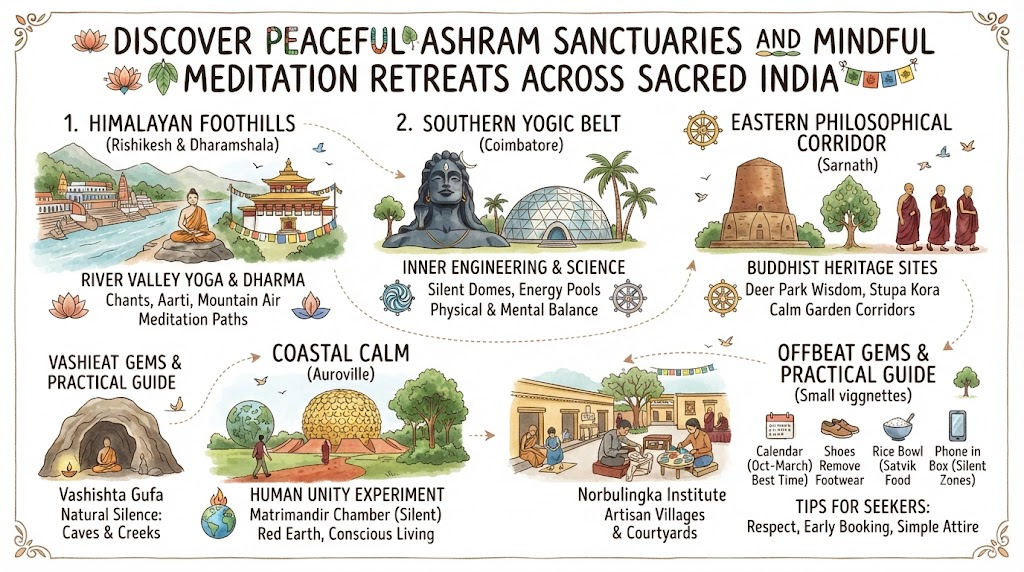
Introduction
Modern travel has largely devolved into frantic check-ins, crowded selfie points, and sensory overload. Travelers board long flights only to find themselves navigating congested tourist corridors and rehearsed hospitality routines that leave them more exhausted than when they left home.
True exploration demands an intentional pause. In an era dominated by hyper-connectivity, the search for genuine stillness has transformed from a luxury into an absolute necessity.
India’s ancient spiritual sanctuaries provide the antithesis to mainstream tourism. Rooted in millennia-old philosophies of Vedanta, Buddhism, and classical yoga, these sacred spaces invite you to disconnect from digital noise, reflect deeply, and rediscover mental clarity amid tranquil river valleys, mountain heights, and sacred groves.
Why India is a must-visit destination
India is not merely a geographic expanse; it is the cradle of human introspective philosophy. For over five thousand years, seekers, philosophers, and travelers have walked these soil trails along glacial riverbanks, coastal palms, and Himalayan forests to master meditation, self-inquiry, and internal alignment.
The country’s sacred circuits are uniquely diverse, spanning the crisp pine air of Uttarakhand and Himachal Pradesh down to the fertile plains of the Cauvery and the coastal calm of Tamil Nadu. Modern expressways, high-speed Vande Bharat rail corridors, and well-connected regional airports now make reaching remote monastic havens and heritage ashrams comfortable for solo backpackers, couples, and multigenerational families alike.
| Circuit Dimension | Overview & Regional Highlights |
| Primary Spiritual Circuits | Himalayan Foothills (Rishikesh, Dharamshala), Southern Yogic Belt (Coimbatore, Puducherry), and Eastern Philosophical Corridor (Varanasi, Bodh Gaya) |
| Geographic Variety | Ranging from subtropical foothill river terraces to deodar forests and tranquil coastal biospheres |
| Connectivity & Hubs | Major international gateways (DEL, BOM, BLR, MAA) linking seamlessly via domestic air, high-speed rail, and private highways |
| Hospitality Formats | Traditional non-profit ashram dormitories, monastic guest complexes, eco-villages, and luxury Ayurvedic wellness estates |
| Best Universal Season | October through March for clear skies, temperate weather, and pleasant morning meditation conditions |
Best Places or Experiences
Parmarth Niketan & Swarg Ashram, Rishikesh
Nestled along the fast-flowing, emerald-green currents of the holy Ganga, Parmarth Niketan sits right at the base of the forested Garhwal Himalayas. The ashram compound houses over a thousand residential rooms framed by manicured gardens, open-air yoga halls, and ancient banyan trees that rustle in the morning breeze. Walking through the arched gateways immediately distances you from the bustling lanes of Ram Jhula.
As dusk settles over Rishikesh, the ghats outside Parmarth transform into a tranquil amphitheater of light and devotion during the sacred Ganga Aarti. Chants resonate across the river while brass oil lamps illuminate the swirling waters. The gentle rhythm of community living, combined with rigorous hatha yoga sessions and communal dining, fosters an grounding environment ideal for emotional rejuvenation.
- Location: Swarg Ashram enclave, Rishikesh, Uttarakhand; approximately 240 km north of New Delhi and 30 km from Dehradun Airport.
- Why it is worth visiting: It represents the spiritual heart of the global yoga movement, offering direct, undisturbed access to the sacred Ganga without the heavy commercialization found in main bazaar areas.
- Best things to do: Attend dawn Pranayama classes on the riverfront terraces; sit quietly on the stone steps of the ghat during sunset; walk the silent meditation path through the inner neem orchard.
- Best time to visit: October through April, when daytime temperatures remain between 18°C and 25°C.
- Ideal for whom: Beginners to yoga, solo contemplative travelers, and seekers craving structured ashram routines.
- Travel tip: Book residential stays at least three months ahead for autumn and spring, and keep a set of modest white cotton clothing for morning practice.
Isha Yoga Center, Coimbatore
Situated at the foothills of the dense Velliangiri mountain range, the Isha Yoga Center is a sprawling, architecturally striking sanctuary dedicated to inner engineering and yogic sciences. The complex integrates modern geometric masonry with raw granite stone, surrounded by bamboo groves and mist-covered mountain ridges. At its entrance stands the monumental 112-foot bust of Adiyogi, honoring the first yogi who introduced human consciousness mechanics.
Within the sanctuary, the consecrated Dhyanalinga dome provides a rare, completely silent meditation environment that does not adhere to any single religion or dogma. Water bodies like the Suryakund and Chandrakund—subterranean mineral pools energized with consecrated mercury lingas—allow visitors to center their physical energies before entering the core meditation halls. The atmosphere promotes profound physical stillness and mindful balance.
- Location: Semmedu Village, Velliangiri Foothills, Tamil Nadu; roughly 30 km west of Coimbatore city center.
- Why it is worth visiting: It offers an intensely focused, non-sectarian yogic space designed specifically for deep mental recalibration and physical alignment.
- Best things to do: Experience fifteen minutes of deep silence beneath the Dhyanalinga vault; take a dip in the subterranean Chandrakund water pool; witness the evening light projection mapping the Adiyogi statue.
- Best time to visit: November to February, when cool mountain winds keep humidity low and evening temperatures refreshing.
- Ideal for whom: Working professionals seeking stress relief, wellness enthusiasts, and travelers curious about intensive yogic breathwork.
- Travel tip: Mobile phones and cameras must be deposited in digital lockers before entering the inner sanctum, ensuring total silence.
Tsuglagkhang Complex & McLeod Ganj, Dharamshala
Perched on the pine-covered ridges of the upper Kangra Valley, the Tsuglagkhang Complex serves as the spiritual center of Tibetan Buddhism in exile and the official residence of the Dalai Lama. Colorful prayer flags flutter across deodar trees against the backdrop of snow-dusted Dhauladhar peaks. The air carries scents of burning juniper incense, butter lamps, and mountain cedar.
Inside the temple, rows of maroon-robed monks engage in analytical dialectic debates, clapping their hands rhythmically on the courtyard stone to emphasize philosophical points. Surrounding the perimeter, the paved Kora trail winds through quiet hillside woods where pilgrims gently turn brass prayer wheels in clockwise devotion. It is an extraordinary space for learning mindfulness and emotional equanimity amid majestic mountain scenery.
- Location: McLeod Ganj, Dharamshala, Kangra District, Himachal Pradesh; roughly 490 km north of New Delhi and 20 km from Kangra Airport.
- Why it is worth visiting: It is the premier center outside Tibet for authentic Mahayana Buddhist philosophical discourse, meditation instruction, and mental clarity practices.
- Best things to do: Walk the peaceful Kora path circling the Dalai Lama’s residence; observe the lively philosophical debates among monks in the main courtyard; practice silent walking meditation through the deodar woods near St. John in the Wilderness.
- Best time to visit: March to June for crisp spring weather, or September to November for clear, panoramic Himalayan views.
- Ideal for whom: Philosophy lovers, mountain trekkers seeking silence, and travelers drawn to Tibetan culture.
- Travel tip: Bring warm layers even in midsummer, as high mountain gusts sweep down from the passes by late afternoon.
Matrimandir & Auroville, Puducherry
Located near the Coromandel Coast, Auroville is an international township founded to realize human unity, conscious living, and collective harmony. At its core stands the Matrimandir, a colossal golden sphere surrounded by twelve serene green gardens and silent amphitheaters. It resembles a golden lotus emerging from red laterite earth, designed as a focal point for silent individual concentration rather than religious worship.
Inside the Matrimandir lies an inner meditation chamber constructed entirely of white marble, illuminated by a single ray of sunlight directed onto a massive optically pure crystal globe. The room remains in absolute, uninterrupted silence. Spending time within this architectural marvel allows the mind to drop its racing thoughts and rest in spacious, spacious stillness.
- Location: Viluppuram District, Tamil Nadu (bordering Puducherry); approximately 150 km south of Chennai International Airport.
- Why it is worth visiting: It is one of the world’s most unique experiments in sustainable communal living and architecturally engineered silence, completely detached from dogma.
- Best things to do: Book an early morning concentration slot inside the Matrimandir Inner Chamber; ride a rented bicycle along the red-earth forested lanes; explore the experimental permaculture and afforestation farms in the green belt.
- Best time to visit: December to March, avoiding both the intense midday heat and the wet northeast monsoon.
- Ideal for whom: Architects, eco-conscious travelers, creative writers, and practitioners of silent meditation.
- Travel tip: Access to the Inner Chamber requires advance in-person or online booking several days ahead; day visitors can view the exterior from the viewing point after watching an orientation video.
Dhamek Stupa & Sarnath, Varanasi Circuit
While Varanasi’s ghats offer intense, fiery vitality, just ten kilometers north lies Sarnath, the peaceful deer park where Gautama Buddha delivered his first sermon setting the Wheel of Dhamma in motion. The focal point of this sacred sanctuary is the monumental Dhamek Stupa, a massive cylindrical stone and brick tower rising over thirty meters against manicured lawns and ancient brick monastery foundations.
Unlike the bustling streets of old Kashi, Sarnath exudes monastic restraint. Chants from Thai, Tibetan, Sri Lankan, and Japanese monasteries drift across the landscaped parklands throughout the day. Meditating beneath the shade of the ancient Bodhi tree sapling provides a calming contrast to the riverfront, offering space to reflect on the core roots of Indian contemplative history.
- Location: Sarnath, Varanasi District, Uttar Pradesh; 10 km north of Varanasi Junction railway station and 25 km from Lal Bahadur Shastri Airport.
- Why it is worth visiting: It is one of the four foundational Buddhist pilgrimage sites, celebrated for centuries of continuous peace, archaeological dignity, and quiet garden corridors.
- Best things to do: Walk contemplative circumambulations around the Dhamek Stupa; inspect the intricate Gupta-period stone carvings etched into the stupa’s drum; visit the quiet gardens of the nearby Mulagandha Kuti Vihar.
- Best time to visit: October to March, particularly during the early morning hours before day-tripper buses arrive.
- Ideal for whom: History scholars, archaeological enthusiasts, and travelers in search of quiet meditation near Varanasi.
- Travel tip: Combine Sarnath with an early morning sunrise boat ride on the Ganga in Varanasi for a balanced perspective on ancient Indian spirituality.
Offbeat Exploration: Hidden Gems Tourists Miss
Vashishta Gufa, Rishikesh Outer Valley
Located roughly twenty-two kilometers upstream from Rishikesh along the Badrinath highway, this natural limestone cave sits right on the edge of the rushing white waters of the upper Ganga. Legend identifies this cool subterranean space as the meditation hermitage of Sage Vashishta.
The interior of the cave remains pitch-black, illuminated only by a faint oil wick at the far altar. The dense rock walls completely isolate you from external sound, creating a natural acoustic isolation chamber where the mind calms within seconds.
Norbulingka Institute, Sidhpur
While most visitors stay clustered around the central market of McLeod Ganj, a short descent down to the village of Sidhpur reveals the tranquil Norbulingka Institute. Built in traditional Tibetan architectural style with ornate wooden beams, flowing water streams, and stone footpaths, it preserves master arts such as thangka painting, woodcarving, and statue making.
The open-air courtyards feature quiet tearooms where you can read, sketch, or listen to water cascading through mossy stone channels without tourist traffic.
The Sacred Groves of Auroville (Kaluveli Buffer)
Bordering the outer belt of the Auroville township are pockets of indigenous dry evergreen forests restored over five decades of deliberate planting. These lesser-visited pathways house community herbal tea shacks, earthen pottery workshops, and hidden open-air bamboo meditation pavilions.
Walking these tranquil red-dirt lanes at sunrise provides an intimate glimpse into sustainable forest restoration and deep connection with the earth.
Detailed Practical Guidance for Travelers
| Destination | Standard Entry Fee | General Timings | Best Local Food Options Nearby | Recommended Nearby Attractions |
| Parmarth Niketan & Swarg Ashram | Free entry (retreat stays require donation fees) | 06:00 AM – 09:00 PM | Chotiwala (traditional satvik thali), pure ghee lassi counters | Ram Jhula, Beatles Ashram, Neer Garh Waterfall |
| Isha Yoga Center, Coimbatore | Free entry (special pooja tokens vary) | 06:00 AM – 08:00 PM | Pepper Vine Eatery (ragi dosa, herbal teas, fresh juices) | Velliangiri Andavar Temple, Siruvani Waterfalls |
| Tsuglagkhang Complex, Dharamshala | Free entry (valid photo ID required) | 05:00 AM – 07:00 PM | Common Ground Cafe, Tibetan herbal tea stalls, handmade tingmo vendors | Bhagsu Nag Waterfall, Dal Lake, Norbulingka Institute |
| Matrimandir & Auroville | Free entry (Inner chamber requires confirmed pass) | 09:00 AM – 05:30 PM | Solar Kitchen (organic communal dining), Naturellement Cafe | Quiet Beach, Serenity Beach, Sri Aurobindo Ashram |
| Dhamek Stupa & Sarnath | ₹25 (Indian nationals) / ₹300 (International visitors) | Sunrise to Sunset | Simple satvik vegetarian bhojanalayas, fresh clay-cup kulhad chai | Sarnath Archaeological Museum, Chaukhandi Stupa |
Logistics & On-Ground Navigation
Local Transport Options
- Indian Railways & Express Trains: Vande Bharat and Shatabdi trains connect Delhi to Haridwar (for Rishikesh) and Una/Kangra, as well as Chennai to Coimbatore. Trains offer punctual, scenic, and comfortable travel.
- Prepaid Cabs & Ride-Hailing Apps: Use app-based taxis (Uber and Ola) in tier-one and tier-two transit hubs like Coimbatore, Chennai, and Varanasi to ensure transparent fares.
- Electric Auto-Rickshaws: E-rickshaws provide inexpensive, low-emission travel in flat town centers like Rishikesh, Sarnath, and Pondicherry.
- Two-Wheeler Rentals: Renting a gearless scooter is one of the most flexible ways to navigate Auroville’s spread-out dirt trails and Rishikesh’s riverbanks, typically costing ₹300 to ₹500 per day.
Budget Planning
- Backpacker / Independent Seeker Tier: Budget approximately ₹1,200 to ₹2,200 per day. This covers simple ashram dormitory accommodation with communal vegetarian meals (prasad/langar), municipal transport, and shared auto rides.
- Mid-Range / Comfort Tier: Budget approximately ₹4,500 to ₹8,500 per day. This provides an air-conditioned boutique heritage room or private ashram cottage, cafe dining, private cab transfers, and customized guided meditation workshops.
Safety and Inclusivity Tips
- Solo Women & Female Travelers: Ashram environments are among the safest lodging spaces in India. When venturing outside ashram gates after dark, use registered pre-booked taxis and dress in loose-fitting linen or cotton attire that covers shoulders and knees.
- Families with Children: Many classical ashrams enforce strict silence rules during dining and meditation hours; verify whether a center welcomes young children before booking a multi-night stay.
- General Traveler Comfort: Drink only filtered, boiled, or reverse-osmosis (RO) purified water, which is supplied freely in almost all legitimate retreat centers.
Strategic Travel Planning Guardrails
Travel Planning Tips for India
- Reserve Residential Accommodations Early: Reputable spiritual retreats like Isha, Parmarth, and Sivananda run at peak capacity; book your rooms at least 60 to 90 days in advance.
- Embrace Digital UPI Payments: While carrying small paper cash denominations (₹100, ₹200) helps at street stalls, digital payments via scan-and-pay UPI are accepted almost everywhere in India.
- Pack Easy Slip-Off Footwear: You will take off your footwear before entering any temple hall, stupa base, or yoga shala. Bring comfortable sandals, slip-ons, or mules.
- Respect Photography Boundaries: Many consecrated halls prohibit smartphones and cameras; always ask permission before taking portraits of monks, sadhus, or fellow meditators.
- Acclimate to Satvik Food: Most ashrams serve purely vegetarian meals without onion, garlic, or excessive chilies. Eating light, wholesome food supports digestion and meditation.
Common Mistakes to Avoid
- Treating Ashrams Like Leisure Resorts: Ashrams are dedicated spiritual communities, not weekend hotels. Respect curfew hours, dress guidelines, and scheduled volunteer chores (seva).
- Rushing Across Too Many Regions: Trying to cram Rishikesh, Varanasi, and Coimbatore into a single week leads to travel fatigue. Choose one geographic hub and stay for multiple days.
- Falling for Unofficial Spiritual Brokers: Ignore self-appointed “gurus” or unofficial tour touts near river ghats who offer paid blessings or private access to restricted spaces.
- Skipping Regional Vegetarian Specialties: Limiting yourself to Western hotel food cuts you off from authentic regional culinary traditions like South Indian steamed idlis, herbal broths, and pahadi mountain dal.
- Overpacking Bulky Luggage: Narrow hillside streets and pedestrian ashram bridges make handling heavy rolling suitcases frustrating. Travel with a practical, durable backpack.
Suggested Itinerary Blueprints
1. Day Quick Dash (The Rishikesh Foothills Awakening)
Designed for travelers on a tight schedule seeking a refreshing mountain-river weekend break:
- Morning: Catch an early morning train or cab from Dehradun, arrive in Rishikesh, and cross the pedestrian suspension bridge to Swarg Ashram for morning pranayama.
- Midday: Settle into a quiet riverside cafe for a light Ayurvedic meal; follow with a visit to the Beatles Ashram for an afternoon forest walk.
- Evening: Gather at the stone steps of Parmarth Niketan by 5:30 PM for the sunset Ganga Aarti, ending the day with a warm meal of dal, roti, and kheer.
2. Day Deep-Dive (The Dharamshala Tibetan Mind-Shift)
A dedicated 48-hour journey through mountain forests and Buddhist philosophy:
- Day 1: Begin at dawn walking the sacred Kora circuit around the Dalai Lama’s residence; explore the Tsuglagkhang Temple inner rooms; attend the afternoon monk debates; conclude with dinner at a traditional Tibetan cafe in McLeod Ganj.
- Day 2: Take an early taxi down through the pine valleys to the Norbulingka Institute; spend your morning observing master artisan workshops; practice silent sitting in the Japanese-style gardens; finish with an evening tea walk through the village of Dharamkot.
3. Complete Weekend Travel Plan (The Coromandel Consciousness Loop)
A three-day coastal circuit between Chennai, Auroville, and Puducherry:
- Friday: Land at Chennai Airport, drive down the scenic East Coast Road (ECR), check into an eco-guesthouse in Auroville, and attend your visitor orientation at the Matrimandir Visitors Centre.
- Saturday: Wake early for an inner concentration session inside the Matrimandir chamber; spend your afternoon cycling between organic farms and forest pottery studios; enjoy a community dinner at Solar Kitchen.
- Sunday: Drive twenty minutes into the French Quarter of Puducherry; meditate at the quiet marble samadhi of Sri Aurobindo Ashram; take a peaceful evening stroll along the seaside Promenade before catching your departure flight.
Common Tourist Mistakes to Avoid
- Geographic Blunders: Many visitors assume they can easily combine Rishikesh in the north with Varanasi in the east or Coimbatore in the south over a single weekend. India’s vast geography requires strategic domestic flight routing or overnight sleeper transit.
- Commercial Traps: Spending hours in overpriced souvenir shopping complexes near popular monuments detracts from your retreat experience. Look for genuine non-profit ashram cooperatives or artisan-run trusts for authentic herbal teas, khadi cotton, and incense.
- Neglecting Modern/Alternative Zones: Focusing strictly on historic temple zones can cause travelers to miss vibrant creative hubs. Places like the artsy cafes of Dharamkot or the alternative permaculture forests of Auroville offer quiet, modern spaces for contemplation.
- Transport Overpayment: Agreeing to arbitrary cash prices from street taxi touts often results in paying double the actual rate. Always insist on official prepaid booths at airports, use meter-taxis where required, or verify fares on ride-hailing applications.
- Luxury Dining Bias: Eating only inside five-star international hotels isolates you from authentic regional food culture. Local temple canteens, clean satvik eateries, and heritage family diners serve some of the freshest, most wholesome meals in the country.
Frequently Asked Questions
1. Do I have to follow Hinduism to stay at an Indian spiritual retreat?
No, the vast majority of legitimate spiritual ashrams, Buddhist centers, and meditation institutions in India welcome people of all faiths, beliefs, and secular backgrounds. Centers like the Matrimandir in Auroville, Isha Yoga Center, and Vipassana centers intentionally emphasize universal human well-being, mindfulness, and inner peace rather than religious adherence.
2. What is the dress code required inside traditional Indian ashrams?
Retreats and sacred temple spaces generally mandate modest clothing covering your shoulders, chest, and knees. Loose, breathable white or light-colored cotton pants, linen tunics, and long kurtas are ideal. Avoid tight athletic leggings, tank tops, and transparent fabrics, and remember that shoes must always be removed before entering meditation halls.
3. How far in advance should I reserve an ashram stay?
For globally recognized institutions such as Parmarth Niketan in Rishikesh, the Isha Yoga Center in Coimbatore, or Sri Aurobindo Ashram in Puducherry, you should reserve your stay between six to twelve weeks ahead. Peak travel months from October through March see high demand, making spontaneous walk-in accommodation difficult to secure.
4. Is it safe for a woman traveling solo to stay at a spiritual retreat in India?
Yes, ashrams and registered monasteries are among the safest, most supportive environments for solo female travelers in India. The presence of structured schedules, security staff, alcohol-free premises, and community dining makes them secure. Standard street-smart precautions should still be observed when traveling outside retreat grounds late in the evening.
5. What is satvik food, and why is it served at meditation retreats?
Satvik food is a plant-based diet based on Ayurvedic principles, cooked fresh using whole grains, seasonal vegetables, lentils, fruit, and mild spices, prepared without onion or garlic. It is specifically formulated to be easy to digest, helping to calm mental chatter, reduce physical lethargy, and support long periods of focused seated meditation.
6. Can absolute beginners participate in ashram yoga and meditation programs?
Yes, most centers cater directly to beginners and offer structured introductory programs, gentle hatha yoga, and guided breathwork workshops. Instructors are accustomed to teaching students of varying flexibility and experience levels, making retreats an encouraging environment to establish a sustainable personal meditation practice from scratch.
7. Are electronic devices and mobile phones permitted inside retreat centers?
Policies vary by retreat, but nearly all consecrated sanctuaries, temples, and meditation domes require phones to be switched off or placed in secure lockers. Certain centers, like Vipassana facilities, enforce complete digital silences for the duration of the course, which helps facilitate deeper introspection.
8. What health precautions should I take before visiting spiritual centers in India?
Drink only purified bottled, boiled, or RO-filtered water, which is provided freely by reputable retreat centers. Carry your personal prescription medications, pack oral rehydration salts and digestive remedies, use reliable insect repellent in tropical zones, and verify that routine vaccinations are current before embarking on your trip.
9. How do I reach Rishikesh from New Delhi easily and comfortably?
The fastest and most comfortable rail option is the high-speed Vande Bharat Express or Shatabdi Express train running from New Delhi Railway Station to Haridwar, followed by a forty-minute taxi ride to Rishikesh. Alternatively, you can book a direct 45-minute domestic flight from Delhi to Dehradun’s Jolly Grant Airport.
10. What is the typical cost for a week-long ashram retreat?
Ashram retreat costs are remarkably accessible compared to Western wellness resorts. Simple ashrams operate on voluntary donations or nominal boarding fees ranging from ₹500 to ₹1,500 per day including meals, while private boutique wellness retreats and structured multi-day workshops generally range between ₹3,000 and ₹7,000 per day.
11. Is complete silence mandatory during retreat stays in India?
Silence depends entirely on the institution and the specific program you book. Standard ashrams permit pleasant conversation during free hours while keeping meditation halls and dining rooms quiet. Intensive programs like Vipassana require noble silence (silence of speech, gestures, and eye contact) for the full ten-day duration.
12. When is the ideal season to plan a spiritual pilgrimage across India?
The overall best window runs from October through late March, when temperatures across both North and South India remain temperate, cool, and comfortable for open-air yoga and travel. The high Himalayan valleys around Dharamshala are pleasant from March through June, while summer heat in northern plains can prove taxing.
Conclusion
Choosing a journey to India’s spiritual sanctuaries is fundamentally different from booking a typical holiday. Instead of running through a hurried itinerary of generic tourist sights, you give yourself the rare permission to slow down, breathe deeply, and reconnect with your inner self. Whether you are listening to Vedic chants echo over the rushing Ganga at dawn, walking around a quiet stupa in the Himalayan breeze, or sitting in stillness inside a sunlit marble dome, this path delivers lasting mental clarity, grounded calm, and authentic inner peace that remains long after your travels conclude.
