MOTOSHARE 🚗🏍️
Rent Bikes & Cars Directly from Owners
Motoshare connects vehicle owners with people who need bikes and cars on rent. Owners earn from idle vehicles, and renters get flexible ride options.
Visit Motoshare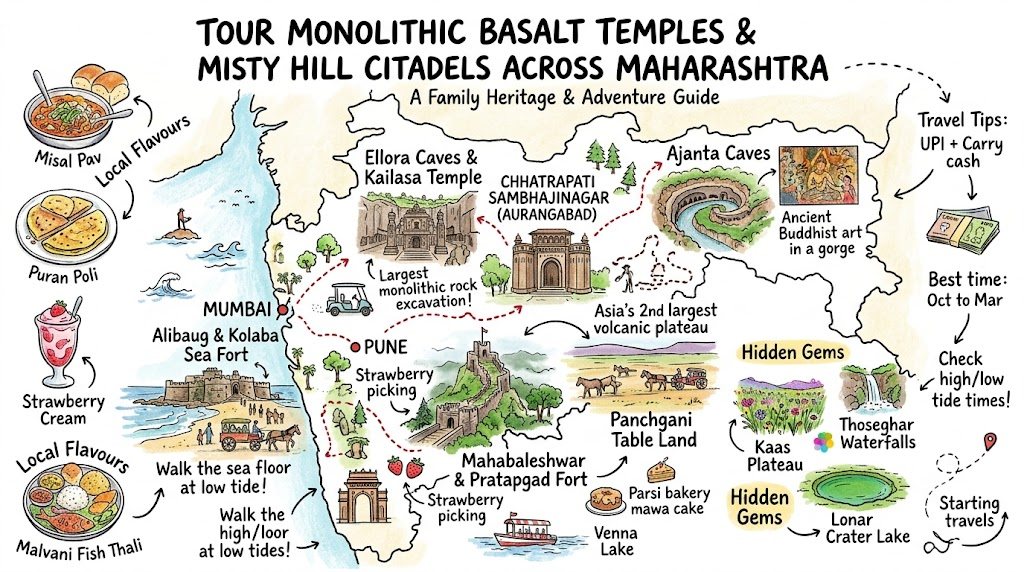
Introduction
Step away from crowded, homogenized tourist traps and discover a landscape where ancient basalt rock meets the misty heights of the Western Ghats. Maharashtra offers families an authentic connection to India’s living past, from centuries-old fortress walls to sacred hillside sanctums.
Here, multigenerational travel thrives on real texture: steaming bowls of Kolhapuri misal, crisp red strawberries picked at sunrise, and sea forts washed by the Arabian tides. This land invites you to slow down, listen to local folklore, and share timeless discoveries together.
Why Maharashtra is a must-visit city
Maharashtra stands as a colossal chapter in Indian heritage, bridging peninsular empires, ancient trading routes, and dramatic Sahyadri biodiversity. Its rugged geography shaped Maratha valour, while natural volcanic plateaus gifted the world some of humanity’s finest rock-cut cave sanctuaries.
For modern traveling families, the state combines profound cultural weight with unmatched logistics. Expansive expressways like the Mumbai-Pune Expressway and Samruddhi Mahamarg link major cultural hubs smoothly. The rail network seamlessly connects metropolitan stations to heritage districts, while heritage MTDC resorts and rural boutique homestays cater gracefully to children and senior travelers alike.
The state’s primary family travel circuit flows between three distinct experiences: the dramatic mountain trails of the Western Ghats, the ancient rock-cut art galleries of Marathwada, and the relaxed coastal heritage along the Konkan belt.
| Dimension | Regional Characteristic |
| Primary Landscape | Deccan volcanic plateau, Sahyadri mountain ranges, Arabian coastline |
| Best Travel Months | October to March (pleasant winter weather) & July to September (lush monsoon) |
| Transit Gateways | Mumbai (BOM), Pune (PNQ), and Chhatrapati Sambhajinagar (IXU) |
| Signature Flavours | Puran Poli, Misal Pav, Malvani fish curry, freshly churned strawberry cream |
| Ideal Trip Length | 7 to 10 Days for a balanced multi-region family circuit |
Best Places or Experiences
Ellora Caves & Kailasa Temple
Carved directly into the vertical face of the Charanandri hills, Ellora showcases 34 monolithic cave temples spanning Hindu, Buddhist, and Jain faiths. Dating from the 6th to 10th centuries, this UNESCO World Heritage Site stands as a historic symbol of ancient Indian architectural brilliance and inter-faith harmony.
The crown jewel is Cave 16—the breathtaking Kailasa Temple. Chiseled from the top down out of a single volcanic basalt cliff, an estimated 200,000 tons of rock were excavated by hand over generations to reveal intricate multi-story shrines, soaring pillars, and life-sized elephant friezes.
- Location: Chhatrapati Sambhajinagar (Aurangabad) District, approximately 30 km from the city center.
- Why it is worth visiting: It is the largest single monolithic rock excavation on Earth, offering kids and adults an unmatched look into ancient engineering.
- Best things to do: Stand in awe before the three-story courtyard of Cave 16, spot the dramatic Ramayana and Mahabharata relief panels, and explore the serene Carpenter’s Cave (Cave 10).
- Best time to visit: November to February; enter right at 6:00 AM to explore in cool air before tourist buses arrive.
- Ideal for whom: Multi-generational families, architecture enthusiasts, and history lovers.
- Travel tip: Hire battery-operated golf carts on-site to help senior family members easily navigate the expansive cave circuit.
Mahabaleshwar & Pratapgad Fort
Perched high in the Sahyadri mountain range, Mahabaleshwar served as the summer capital of the Bombay Presidency during the British Raj. Today, it treats families to cool mountain air, emerald evergreen forests, and sweeping valley overlooks like Arthur’s Seat and Elephant’s Head Point.
Just a short drive away sits Pratapgad Fort, a commanding fortress built under Chhatrapati Shivaji Maharaj in 1656. The climb reveals historic bastions, watchtowers, and panoramic views of the rugged Konkan plains below, where crucial chapters of Maratha history were written.
- Location: Satara District, roughly 120 km from Pune and 260 km from Mumbai.
- Why it is worth visiting: It blends cool hill-station relaxation with inspiring Maratha history and farm-fresh berry trails.
- Best things to do: Pick fresh berries at Mapro Garden, rent a colorful paddleboat on Venna Lake, and hike up the upper ramparts of Pratapgad Fort.
- Best time to visit: October to June for pleasant sightseeing; December to February for fresh strawberry harvests.
- Ideal for whom: Families with young children, nature photographers, and leisurely vacationers.
- Travel tip: Start the drive to Pratapgad before 9:00 AM to secure parking and complete the fortress steps before midday heat.
Ajanta Caves
Tucked into a dramatic horseshoe bend along the Waghur River gorge, the Ajanta Caves house the world’s most celebrated masterpieces of early Buddhist art. Excavated between the 2nd century BCE and the 5th century CE, these 30 rock-hewn caves served as monastic retreats and prayer halls for Buddhist scholars.
Inside, magnificent tempera mural paintings bring Jataka tales vividly to life. The soft curves of the Bodhisattvas Padmapani and Vajrapani still gleam with natural earth pigments, mineral glazes, and lapis lazuli that have survived across millennia.
- Location: Chhatrapati Sambhajinagar District, around 100 km northeast of the district hub.
- Why it is worth visiting: Home to the world’s finest surviving classical Indian mural paintings and serene rock sanctuaries.
- Best things to do: Observe the illuminated expressions of Padmapani in Cave 1, see the massive Reclining Buddha in Cave 26, and walk up to the panoramic canyon viewpoint.
- Best time to visit: October to March; visit on weekday mornings to avoid school holiday lines.
- Ideal for whom: Art scholars, contemplative travelers, and curious school-age children.
- Travel tip: Carry a small pocket flashlight to inspect intricate ceiling murals, as artificial flash photography is strictly prohibited inside.
Alibaug & Kolaba Sea Fort
Offering a refreshing coastal alternative to mountain forts, Alibaug pairs historic seaside ramparts with peaceful black-sand beaches and swaying betel-nut groves. Its historic anchor, Kolaba Fort, was fortified in the 1680s as a primary naval station for the Maratha maritime forces.
The fort is built directly on an offshore reef in the Arabian Sea. During low tide, the sea pulls back, allowing families to walk or ride a traditional horse-drawn cart across the ocean floor straight to the water-gate bastions.
- Location: Raigad District, a scenic 1-hour ferry ride from Gateway of India (Mumbai) or 100 km by road.
- Why it is worth visiting: A rare opportunity to walk across the tidal sea floor into an intact 17th-century naval stronghold.
- Best things to do: Walk across the seabed at low tide to Kolaba Fort, taste fresh coconut water along Varsoli Beach, and explore the ancient freshwater well inside the sea citadel.
- Best time to visit: November to February for mild ocean breezes and calm tides.
- Ideal for whom: Young families, beach lovers, and casual weekend explorers.
- Travel tip: Always check daily local tide timetables with your hotel; entering the fort during high tide is impossible on foot.
Panchgani Table Land & Colonial Sanatoriums
Resting just below Mahabaleshwar, Panchgani owes its charm to five surrounding hills and the vast volcanic plateau known as the Table Land. Covering 95 acres of laterite rock, this flat plateau is the second-largest volcanic tableland in Asia.
The town grew during the 19th century as an educational hub and tuberculosis sanatorium retreat, prized for its exceptionally clean mountain air. Today, kids love the open breeze of the plateau, surrounded by historic boarding schools and cozy Parsi bakeries.
- Location: Satara District, just 18 km downhill from Mahabaleshwar.
- Why it is worth visiting: Expansive, open volcanic plateaus that offer 360-degree views without steep, tiring climbs.
- Best things to do: Take a horse-carriage ride across Table Land, discover Rajpuri Caves, and sample freshly baked mawa cakes and cream rolls at local heritage bakeries.
- Best time to visit: September to March for clear skies and cool breezes.
- Ideal for whom: Elderly grandparents, young toddlers, and relaxed family groups.
- Travel tip: Visit Table Land around 4:30 PM to enjoy the golden hour sunset without strong plateau winds.
Offbeat Exploration: Hidden Gems Tourists Miss
Kaas Plateau (The Valley of Flowers of Maharashtra)
Located 25 km from Satara, this UNESCO World Natural Heritage plateau bursts into millions of wild blossoms each autumn. Over 850 species of flowering plants paint the rocky soil in vibrant purple, blue, and yellow hues. Because daily visitor quotas are strictly capped to protect endemic plants, your family enjoys a serene nature walk away from crowded commercial attractions.
Thoseghar Waterfalls & Chalkewadi Windmill Farm
Tucked past Satara, Thoseghar features a dramatic series of cascading waterfalls dropping up to 200 meters into deep wooded gorges. Continue just 10 km further to reach the windswept hills of Chalkewadi. Here, hundreds of giant white windmills turn quietly over open green ridges, creating an unforgettable, surreal drive that kids will love.
Lonar Meteorite Crater Lake
Formed over 50,000 years ago when a hyper-velocity meteorite slammed into the Deccan basalt plateau, Lonar Lake is a rare natural marvel. This saline-alkaline body of water is surrounded by ancient, partially submerged temples and lush forest trails. It offers older children and curious adults a one-of-a-kind geology adventure far off the beaten track.
Detailed Practical Guidance for Travelers
| Destination | Standard Entry Fee | General Timings | Best Local Food Options Nearby | Recommended Nearby Attractions |
| Ellora Caves | ₹40 (Indian adults), Free (Children under 15), ₹600 (Foreign tourists) | 6:00 AM – 6:00 PM (Closed on Tuesdays) | Hotel Kailas Restaurant (Jowar Bhakri, Pithla, authentic Thali) | Grishneshwar Jyotirlinga Temple, Daulatabad Fort |
| Pratapgad Fort | Free Entry (Parking fees apply: ₹50–₹100) | 6:00 AM – 6:00 PM (Open all days) | Fort Canteen Stalls (Pithla Bhakri, fresh lemon juice, Kanda Bhaji) | Mahabaleshwar viewpoints, Venna Lake boating |
| Ajanta Caves | ₹40 (Indian adults), Free (Children under 15), ₹600 (Foreign tourists) | 9:00 AM – 5:00 PM (Closed on Mondays) | MTDC Restaurant Fardapur (Mild vegetable pulao, dal tadka) | Viewpoint Plateau, Waghur River gorge trails |
| Kolaba Fort | ₹25 (Adults), ₹5 (Children); ₹100–₹200 per horse cart ride | 10:00 AM – 5:00 PM (Subject to low tides) | Sanman Restaurant (Malvani surmai thali, solkadhi, fried bombil) | Alibaug Beach, Varsoli Beach, Kanakeshwar Temple |
| Panchgani Table Land | Free Entry; Horse-drawn cart rides ₹300–₹500 | Open all day (Daylight hours recommended) | Lucky Bakery (Mawa cakes, bun maska, fresh raspberry soda) | Sydney Point, Parsi Point, Mapro Strawberry Farm |
Logistics & On-Ground Navigation
Local Transport Options
- Private Chauffeur Vehicles: Hiring an SUV (Innova or Ertiga) from Pune or Mumbai remains the smoothest option for families traveling with children and luggage across mountain ghats.
- State Transport (MSRTC): Regular Shivshahi (air-conditioned) and ordinary state transport buses connect every town affordably, though mountain routes can run slowly during peak holidays.
- Ferries (Mandwa to Gateway of India): Speedboats and roll-on/roll-off (Ro-Ro) car ferries connect South Mumbai straight to Mandwa (Alibaug) in 20 to 60 minutes, cutting out hours of highway traffic.
- Auto-Rickshaws: Excellent for short city trips in Chhatrapati Sambhajinagar and Satara; make sure to ask drivers to turn on the meter or agree on fares before boarding.
Budget Planning
- Budget / Homestay Tier: ₹2,500 – ₹4,000 per family per day. Covers budget MTDC family rooms or family-run homestays, meals at authentic local thali spots, and public transport or shared taxis.
- Mid-Range / Comfort Tier: ₹7,500 – ₹14,000 per family per day. Covers comfortable 3- to 4-star mountain resorts with swimming pools, private dedicated AC car hire, guide fees, and sit-down dining.
Safety and Inclusivity Tips
- For Families: Mountain ghats (especially Ambenali Ghat and Pasarni Ghat) have multiple sharp switchbacks; keep anti-nausea tablets handy for children and avoid heavy meals before driving.
- For Couples: Early morning hours at the viewpoints offer calm, uncrowded trails and beautiful natural light away from weekend crowds.
- General Safety: Keep a respectful distance from wild macaques around tourist forts and hill viewpoints; keep food packets, drinks, and bright toys hidden inside zipped daypacks.
Strategic Travel Planning Guardrails
Travel Planning Tips for Maharashtra
- Pre-book monument entry tickets via the Archaeological Survey of India (ASI) mobile portal to skip weekend ticket lines at cave monuments.
- While digital UPI payments work reliably across urban hubs, always keep ₹3,000–₹5,000 in cash for remote highway tolls, village entry parking, and local farm stands.
- Pack slip-on walking shoes for visiting heritage monuments, as caves and shrines frequently require taking shoes off at sanctuary entrances.
- Keep light woolen sweaters or jackets packed for hill stations between November and February; nighttime mountain temperatures can drop to a brisk 12°C.
- Book specialized monsoon or winter weekend hotel stays at least 4 to 6 weeks in advance to avoid steep last-minute rate hikes.
Common Mistakes to Avoid
- Packing too many far-flung destinations into a single weekend trip.
- Expecting fast driving speeds on mountain roads; average speeds on twisting ghat roads rarely exceed 35–40 km/h.
- Skipping local cuisine to eat standard hotel buffets; missing a rustic roadside Pithla Bhakri means missing the true soul of rural Maharashtra.
- Visiting cave sites on their scheduled weekly closing days (Ajanta is closed Mondays; Ellora is closed Tuesdays).
- Ignoring sea tide timetables in coastal towns, which can leave you stranded by incoming tides at ocean forts.
Suggested Itinerary Blueprints
- 2-Day Quick Dash (The Sahyadri Mountain Escapade)Target Audience: Busy urban families seeking fresh mountain air without long road journeys.Depart early from Mumbai or Pune straight up to Panchgani. Spend the afternoon exploring Table Land and sipping tea at colonial bakeries. On Day 2, head up to Mahabaleshwar for an early morning walk to Arthur’s Seat, enjoy strawberry picking at Mapro Garden, and drive down through Wai by evening.
- 3-Day Deep-Dive (Marathwada Rock-Cut Heritage Route)Target Audience: History buffs and school-aged children exploring Indian art and architecture.
- Day 1: Arrive in Chhatrapati Sambhajinagar; explore the grand gateways of Daulatabad Fort and the delicate marble architecture of Bibi Ka Maqbara.
- Day 2: Spend a full day at Ellora Caves, dedicating your morning to the monolithic wonders of Cave 16 (Kailasa) and afternoon to the Buddhist viharas.
- Day 3: Take a scenic morning drive to the Ajanta gorge to admire its celebrated ancient frescoes before departing via Jalgaon or Sambhajinagar.
- Complete Weekend Travel Plan (The Coastal Forts & Palms Circuit)Target Audience: Multigenerational families looking for relaxed coastal walks, historic fort ruins, and seafood.
- Friday: Board the afternoon Ro-Ro ferry with your car from Mumbai to Mandwa; check into an Alibaug boutique coconut-grove resort and watch the sunset along Awas Beach.
- Saturday: Walk across the sea floor at low tide to explore Kolaba Fort; head into town for an authentic coastal fish thali, and unwind on quiet Varsoli Beach in the evening.
- Sunday: Visit the historic ruins of Korlai Fort and its active lighthouse; enjoy fresh coconut water along Nagaon Beach before heading home.
Common Tourist Mistakes to Avoid
- Geographic Blunders: Trying to combine Konkan beaches and Marathwada caves into the same short weekend. The travel distances exceed 450 km across winding mountain roads, which leaves families exhausted.
- Commercial Traps: Spending afternoon hours inside crowded market souvenir shops buying imported toys, rather than walking through authentic weekly village bazaars (athavadi bazaar) where farmers sell fresh jaggery and spices.
- Neglecting Modern/Alternative Zones: Skipping the vibrant culinary spots, modern art studios, and heritage cafes tucked inside Pune’s Koregaon Park or Mumbai’s renovated mill districts.
- Transport Overpayment: Agreeing to flat off-meter rates with tourist taxi stands outside major stations. Always use official prepaid taxi counters or ride-hailing apps to confirm standard fares.
- Luxury Dining Bias: Eating only inside four-star resort restaurants. Roadside family-run khanavals often serve far fresher, regionally authentic food cooked over wood fires.
Frequently Asked Questions
1. Which destination in Maharashtra is best for a relaxed family holiday?
Mahabaleshwar and Panchgani offer the ideal setting for relaxed family vacations. Their pleasant mountain weather, scenic viewpoints, fun boat rides, and farm-fresh berry estates keep travelers of every age happy without requiring strenuous physical hikes.
2. Can senior citizens easily visit the Ellora and Ajanta Caves?
Ellora is very accessible for seniors thanks to paved walkways, shaded sitting spots, and battery-operated carts near Cave 16. Ajanta features steeper rock steps, but local porter chairs (dolis) carried by two or four attendants are available for hire at the visitor plaza.
3. What is the most scenic season to explore Maharashtra with family?
The winter months from November through February provide pleasant, sunny days and cool nights perfect for outdoor sightseeing. Alternatively, the late monsoon season from August to September turns the Sahyadri mountains into an emerald paradise filled with cascading waterfalls.
4. How can families visit Kolaba Fort safely during high tides?
Always check the local daily tide forecast with your hotel front desk or boat operators before leaving. The ocean bed is only safe to walk or ride across during low tide; you must head back to the main beach before high tide begins flooding the path.
5. What are the best regional Maharashtrian dishes to try with kids?
Start with mild, warm Puran Poli (sweet jaggery flatbread with melted ghee) and fresh Aamras Puri when mangoes are in season. For savory meals, try mildly spiced Batata Vada, Kande Pohe, or a wholesome Thalipeeth served with fresh white butter.
6. Do we need pre-booked entry tickets for heritage monuments?
Yes, popular Archaeological Survey of India (ASI) sites like Ajanta and Ellora strongly encourage booking digital entry tickets online. Pre-booking online helps your family bypass long weekend queues at physical ticket counters under the warm sun.
7. How long should a family plan to spend exploring Ajanta and Ellora?
Plan for at least three full days based in Chhatrapati Sambhajinagar. Ellora requires around four to five hours, while Ajanta is a full-day trip due to its 100-kilometer drive each way from the city.
8. What should families pack for a Sahyadri hill station holiday?
Pack comfortable walking shoes with good grip, light cotton clothing for warm afternoons, and lightweight sweaters for cool evenings. A compact first-aid kit with motion sickness medication is also helpful for winding mountain ghat drives.
9. Is it easy to find pure vegetarian or Jain food across Maharashtra?
Yes, pure vegetarian and Jain dining options are widely available across Maharashtra. Most tourist destinations feature dedicated vegetarian restaurants serving Gujarati, Marwari, and traditional Maharashtrian thalis prepared without root vegetables on request.
10. What is the most convenient way to reach Alibaug from Mumbai with family?
Taking the roll-on/roll-off (Ro-Ro) ferry from Bhaucha Dhakka (Ferry Wharf) in Mumbai to Mandwa Jetty is the fastest and most comfortable option. It transports your family and vehicle in an hour, completely bypassing highway traffic jams.
11. Are credit cards and UPI digital payments widely accepted in rural attractions?
UPI mobile apps work at most roadside stalls and restaurants, but remote mountain viewpoints and village parking stands often face weak cell reception. Always carry several thousand rupees in paper currency for smaller daily purchases.
12. Is it safe to hire a self-drive rental car for Maharashtra hill stations?
Self-driving is fun if you have experience navigating steep mountain roads and narrow hairpin turns. For families traveling with small children or seniors, hiring an experienced local driver allows everyone to sit back and enjoy the scenic views safely.
Conclusion
A family holiday through Maharashtra leaves you with memories far richer than any standard resort escape. Standing beneath the carved basalt ceilings of ancient cave temples, walking across ocean sands into fortress gates, and sharing fresh strawberries on quiet mountain ridges brings everyone closer together. It is a journey that reveals India’s deep history through quiet everyday wonders—rewarding your family with stories, perspective, and shared adventures that will linger for years to come.
