MOTOSHARE 🚗🏍️
Rent Bikes & Cars Directly from Owners
Motoshare connects vehicle owners with people who need bikes and cars on rent. Owners earn from idle vehicles, and renters get flexible ride options.
Visit Motoshare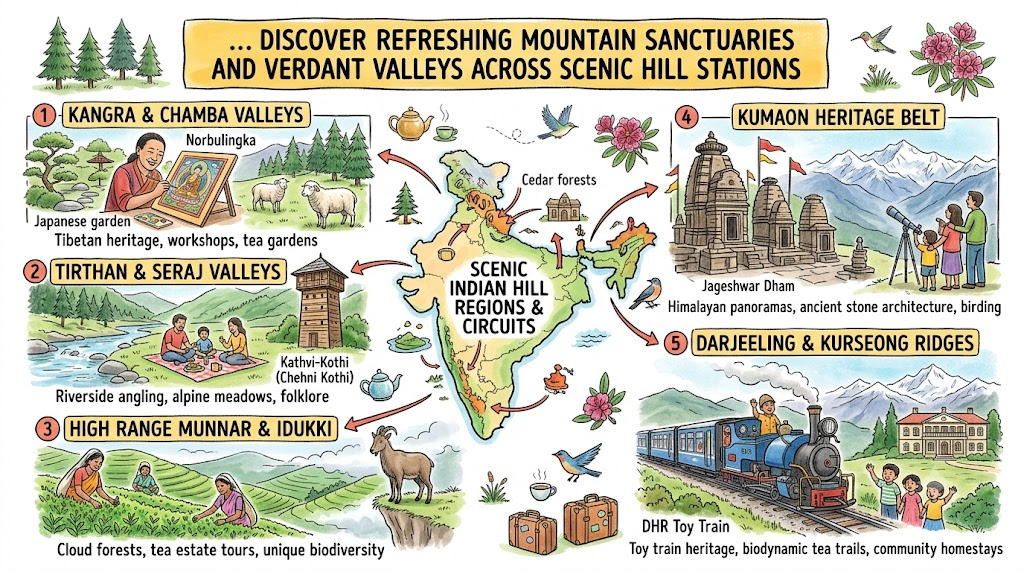
Introduction
When the scorching plains of India touch blistering temperatures, family vacations often default to the frantic, horn-blaring gridlock of commercialized hill stations. Stepping off the beaten track reveals a vastly different country—one framed by whispering deodar forests, fragrant spice-scented mountain air, and villages where generational craft outshines neon souvenir stalls.
Traveling together across India during the hotter months does not have to mean wrestling through tour-bus crowds or settling for synthetic resort experiences. By steering your family toward valleys steeped in living folklore and ancient trade routes, your summer escape becomes an authentic cultural communion.
Why India Hill Regions are Must-Visit Destinations
India’s high-altitude valleys and upland plateaus represent far more than geographical relief from sweltering heat; they house the country’s most intricate micro-cultures and architectural traditions. From the timber-bonded Kath-Kuni architecture of the Western Himalayas to the stone-built plantation bungalows perched above Kerala’s Western Ghats, these regions preserve indigenous ways of life molded by elevation and seasonal cycles. Modern highway corridors, scenic broad-gauge rail links, and mountain airstrips now connect these upland havens seamlessly, offering families world-class boutique homestays and heritage retreats without compromising comfort.
The regional circuits link accessible base towns to tranquil highland pockets, allowing multigenerational families to tailor journeys around relaxed walks, slow-brewed local teas, and immersive outdoor learning.
| Region / Circuit | Primary Gateway | Ideal Duration | Core Character | Terrain & Elevation |
| Kangra & Chamba Valleys | Gaggal Airport / Pathankot Rail | 5–7 Days | Tibetan heritage, tea gardens, cedar forests | 1,400 m to 2,400 m |
| Tirthan & Seraj Valleys | Bhuntar Airport / Chandigarh | 4–6 Days | Riverside angling, alpine meadows, folklore | 1,600 m to 3,100 m |
| High Range Munnar & Idukki | Kochi International Airport | 4–5 Days | Cloud forests, tea estates, biodiversity reserves | 1,500 m to 2,600 m |
| Kumaon Heritage Belt | Pantnagar / Kathgodam Rail | 5–7 Days | Himalayan panoramas, stone architecture, birding | 1,800 m to 2,300 m |
| Darjeeling & Kurseong Ridges | Bagdogra Airport / NJP Rail | 4–6 Days | Toy train heritage, mist-wrapped tea trails | 1,450 m to 2,200 m |
Best Places and Experiences
Norbulingka Institute and Dharamkot Ridge
Set amid terraced hillsides beneath the snow-capped Dhauladhar range, the Norbulingka Institute preserves Tibetan cultural traditions through working ateliers of thangka painting, woodcarving, and statue making. Wandering through its Japanese-inspired water gardens, stone bridges, and shaded courtyards offers children and adults a tactile, contemplative introduction to Himalayan crafts.
Just up the ridge, Dharamkot transitions from cedar trails to pine-scented paths where family-run bakeries serve cinnamon-spiced apple crumbles and herbal infusions. The walk between these pockets lets travelers witness traditional Gaddi pastoral traditions alongside world-renowned spiritual sanctuaries.
- Location: Kangra District, Himachal Pradesh; roughly 15 km from Kangra Airport (Gaggal) and 240 km from Chandigarh.
- Why it is worth visiting: Witness living master artisans keeping centuries-old Tibetan art forms alive in real-time workshops.
- Best things to do: Book a hands-on woodcarving or thangka workshop; take a morning family walk to the pine-fringed Gallu temple; sample wood-fired sourdough pizzas in rustic mountain cafes.
- Best time to visit: April through June for clear mountain views and daytime temperatures averaging 22°C to 26°C.
- Ideal for whom: Multigenerational families, young artists, mindful travelers, and culture enthusiasts.
- Travel tip: Book an artisan-guided campus tour before 11:00 AM to see wood-carvers and metalworkers active in their studios before midday breaks.
Great Himalayan National Park Buffer Zone, Tirthan Valley
Carved by the glacial, crystal-clear Tirthan River, this UNESCO World Heritage buffer zone offers family-friendly trails through deep pine and walnut groves. Unlike hyper-commercialized mountain hubs, days here revolve around pebble-skipping on riverbanks, crossing traditional wooden suspension bridges, and spotting colorful western tragopans in the canopy.
The local settlements, built in the Kath-Kuni style using alternating layers of dry stone and deodar wood beams without mortar, showcase centuries of earthquake-resistant Himalayan engineering. Staying in sustainable community-run homestays along the river allows kids to unplug completely while learning about mountain ecology directly from local guides.
- Location: Kullu District, Himachal Pradesh; 50 km south of Bhuntar Airport and 270 km north of Chandigarh.
- Why it is worth visiting: Unspoiled alpine biodiversity with gentle nature trails that do not require intense trekking experience.
- Best things to do: Try catch-and-release trout fishing with local licensed handlers; hike the gentle forest path to Chhoie Waterfall; picnic on the pebble banks near Gushaini.
- Best time to visit: May to June when alpine wildflowers bloom and mountain waters run clear and calm.
- Ideal for whom: Nature lovers, families with school-age kids, and eco-conscious travelers.
- Travel tip: Forest department angling permits must be purchased in person at Sai Ropa; pick them up first thing in the morning.
Eravikulam National Park and Munnar Tea Highlands
Rising dramatically above Kerala’s coastline, the undulating emerald hills of the High Range in Munnar cradle some of the world’s highest tea gardens. Eravikulam National Park protects the rolling shola-grassland ecosystem and shelters the largest wild population of the endangered Nilgiri Tahr, a mountain goat uniquely adapted to sheer granite cliffs.
Walking the park’s paved, stroller-friendly paths lets families observe these calm ungulates grazing just feet away against panoramic backdrops of mist. The surrounding colonial-era estates offer private factory tours where families can pluck fresh two-leaves-and-a-bud flushes and watch classic rolling, fermenting, and drying processes.
- Location: Idukki District, Kerala; 110 km east of Cochin International Airport.
- Why it is worth visiting: The highest peak in South India (Anamudi) provides the backdrop to pristine shola forests and rare endemic fauna.
- Best things to do: Take the morning safari bus into the Rajamalai zone; explore the processing rooms at the century-old Tea Museum; cycle along private estate trails in Lockhart Gap.
- Best time to visit: March to mid-June before heavy southwestern monsoon downpours set in.
- Ideal for whom: Wildlife lovers, families traveling with grandparents or toddlers, and landscape photographers.
- Travel tip: Secure morning park entry slots online at least two weeks ahead to bypass long ticket queues at the Marayoor road base.
Jageshwar Dham and Binsar Wildlife Sanctuary
Hidden within a dense forest of towering Himalayan cedar trees in Kumaon, Jageshwar Dham comprises an extraordinary cluster of over 100 stone temples dating between the 7th and 12th centuries. The intricate Nagara stone carvings, moss-covered plinths, and soothing sounds of flowing rivulets create a deeply peaceful atmosphere unmarred by city clamor.
Nearby, the Binsar Wildlife Sanctuary perches on a high ridge that once served as the summer capital of the Chand Kings. A short family walk to Zero Point rewards travelers with an unobstructed 300-kilometer panoramic vista of Himalayan peaks, including Nanda Devi, Trishul, and Panchachuli.
- Location: Almora District, Uttarakhand; 120 km north of Kathgodam Railway Station.
- Why it is worth visiting: Ancient stone temple architecture preserved inside one of North India’s densest deodar groves.
- Best things to do: Take an interpretive heritage walk through the main temple cluster with an Archaeological Survey guide; watch the sunrise illuminate Trishul peak from Zero Point; spot laughingthrushes along shaded birding trails.
- Best time to visit: April to June for pleasant 18°C to 24°C days and clear Himalayan horizons.
- Ideal for whom: History aficionados, multi-generational families seeking quiet, and birdwatching hobbyists.
- Travel tip: Private vehicles must pay an entry toll at the Binsar sanctuary gate; enter before 3:00 PM to reach your forest lodge before dusk.
Makaibari Estate and the Kurseong Heritage Ridge
While neighboring Darjeeling often struggles with traffic jams, nearby Kurseong maintains the languid, nostalgic charm of the Eastern Himalayas. Makaibari, founded in 1859, operates the world’s first certified biodynamic tea estate, where tea bushes grow under a diverse forest canopy rather than exposed monocultures.
Families can stay in community homestays operated directly by tea-plucker families, sharing home-cooked Nepali and Bengali meals while listening to local folktales. The heritage narrow-gauge DHR “Toy Train” still rattles gently along the hillside roads, offering unforgettable joyrides for young children.
- Location: Darjeeling District, West Bengal; 40 km southwest of Bagdogra Airport.
- Why it is worth visiting: Experience a world-renowned biodynamic tea garden through intimate, community-managed family stays.
- Best things to do: Take a plucking and tea-tasting masterclass with a veteran tea sommelier; take a vintage steam-hauled Toy Train ride to Ghum; watch the sunset from Eagle’s Crag viewpoint.
- Best time to visit: April to early June during the prized second-flush tea harvest.
- Ideal for whom: Tea aficionados, railway history fans, and families seeking deep cultural immersion.
- Travel tip: Request a cottage on the upper village ridge of the estate to enjoy morning views of Kangchenjunga through the pine trees.
Offbeat Exploration: Hidden Gems Tourists Miss
Andretta Artists’ Village
Tucked away in the shadow of the Dhauladhars near Palampur, this tranquil enclave was founded in the 1920s by Irish dramatist Norah Richards and later nurtured by painter Sobha Singh. Families can escape highway traffic and step into an authentic village of mud-plastered cottages where master potters spin clay using foot-powered wheels. Children can sit down for a one-hour pottery session, shaping local mountain clay into bowls to take home.
Chehni Kothi Fortress Tower
Located in the Seraj Valley, Chehni Kothi is a magnificent 11-story defensive tower built entirely out of interlocking deodar cedar and stone masonry without cement or steel. Reaching it requires a gentle 45-minute uphill stroll through apple orchards and small rural hamlets where sheep graze freely. The tower has withstood major earthquakes over centuries, presenting an awe-inspiring lesson in traditional vernacular engineering.
Marayoor Sandalwood Forests and Dolmens
Just beyond the tea estates of Munnar lies Marayoor, the only natural sandalwood forest reserve in Kerala. Tucked along the hillsides are ancient megalithic dolmens (Muniyaras)—stone burial chambers dating back to the Neolithic age. Visiting this dry, rain-shadow valley introduces travelers to ancient cave paintings and traditional jaggery-making farms where fresh sugarcane juice boils in massive copper pans.
Detailed Practical Guidance for Travelers
| Destination | Standard Entry Fee | General Timings | Best Local Food Options Nearby | Recommended Nearby Attractions |
| Norbulingka Institute | ₹100 per adult; kids under 8 free | 9:00 AM – 5:30 PM (Mon–Sat) | Tibetan steamed momos and butter tea at the Norbulingka Cafe | Gyuto Monastery, Kangra Art Museum |
| Tirthan River Buffer Zone | Free access; ₹100 angling permit | Dawn to dusk daily | Local pan-fried river trout and siddu with ghee at Gushaini eateries | Chehni Kothi, Serolsar Lake trail |
| Eravikulam National Park | ₹200 for Indian adults, ₹500 foreigners | 7:30 AM – 4:00 PM (Daily) | Hot appams and vegetable stew at hilltop tea counters | Tea Museum, Mattupetty Dam |
| Jageshwar Dham Cluster | Free entry; ₹20 museum fee | 6:00 AM – 8:00 PM (Daily) | Kumaoni thali featuring bhatt ki churkani and madua roti in Jageshwar bazaar | Binsar Sanctuary, Chitai Golu Devta |
| Makaibari Tea Estate | ₹250 factory tour fee | 8:30 AM – 4:30 PM (Daily) | Steamed thukpa, aloo dum, and organic estate teas at Kurseong cafes | Eagle’s Crag, Dow Hill Forest |
Logistics & On-Ground Navigation
Local Transport Options
- Self-Drive and Chauffeur Taxis: Hiring an experienced hill driver with an SUV or high-ground-clearance vehicle is the safest, most convenient option for families negotiating hairpin curves.
- Toy Trains & Hill Railways: Historic narrow-gauge lines like the Kalka-Shimla or Darjeeling Himalayan Railway offer scenic, leisurely journeys that make travel fun for children.
- Local Shared Jeeps: Common throughout Himachal and Bengal; while cost-effective for solo adventurers, they run crowded and are not recommended for families with small luggage.
- Pre-paid Airport/Station Taxis: Always book through official transport union counters situated inside airport arrival halls to secure standardized rates without on-the-spot bartering.
Budget Planning
- Backpacking & Homestay Tier: ₹2,200 to ₹3,800 per day for two people. Covers family-run village homestays, roadside diner meals (dhabas), and shared regional bus or jeep hops.
- Mid-Range & Family Comfort Tier: ₹7,500 to ₹14,000 per day for a family of three to four. Covers private heritage cottages or tea bungalows, chauffeur-driven SUVs, guided estate walks, and cafe dining.
Safety and Inclusivity Tips
- For Families with Young Children: Keep motion sickness remedies and hydration salts handy, as narrow mountain switchbacks can cause nausea.
- For Elderly Travelers: Confirm beforehand that your chosen boutique hotel or homestay provides ground-floor rooms without steep exterior staircases.
- General Mountain Safety: Keep evening travel to a minimum. Mountain roads rarely feature bright overhead lighting, and sudden valley fog can roll in by dusk.
Strategic Travel Planning Guardrails
Travel Planning Tips for Hill Circuits
- Secure High-Season Permits Early: Reserve national park safari slots and toy train seats at least three weeks ahead of your travel date.
- Pack Adaptable Clothing Layers: Mountain temperatures shift dramatically; sunny 26°C afternoons quickly plunge to 12°C once the sun drops behind the ridges.
- Carry Physical Currency: While digital UPI payments work widely across town shops, remote valley villages and forest checkpoints regularly face cellular network outages.
- Allow Acclimatization Windows: Plan an easy first day without heavy uphill hiking, allowing children and seniors to adjust smoothly to elevations above 2,000 meters.
- Carry Essential Medication Stocks: Refills for specific prescription drugs are hard to find in remote village pharmacies; pack a complete family medical kit.
Common Mistakes to Avoid
- Packing Too Many Destinations into One Trip: Attempting three distinct mountain valleys over a single long weekend turns a restful holiday into exhausting car travel.
- Relying Exclusively on Digital Navigation: GPS navigation apps frequently suggest impassable tractor tracks or unpaved forestry cuts as shortcuts in the hills; always check routes with local drivers.
- Overlooking Seasonal Downpours: Visiting steep river valleys during late-June monsoon transitions risks unexpected landslides and road closures.
- Ignoring Regional Dining Specialties: Sticking strictly to generic hotel buffet spreads means missing out on fresh, wholesome local staples like steamed siddu, kodu rotis, and freshly churned butter.
- Discarding Single-Use Plastics: Several mountain districts enforce strict plastic bans; carry refillable stainless-steel water bottles for your family.
Suggested Itinerary Blueprints
3-Day Quick Dash (The Kangra Valley Cultural Loop)
- Target Audience: Families with young children seeking a brief, revitalizing mountain break with minimal travel fatigue.
- Day 1: Arrive at Kangra Airport, transfer to your hotel near Norbulingka, explore artisan craft studios, and enjoy an early garden dinner.
- Day 2: Morning visit to the tea gardens of Palampur; afternoon pottery session in Andretta Artists’ Village.
- Day 3: Scenic morning walk along Dharamkot pine trail, cafe brunch, and afternoon departure from Pathankot or Kangra.
5-Day Deep-Dive (Tirthan River & Seraj Architectural Circuit)
- Target Audience: Nature-loving families, birders, and parents wanting to unplug their kids from digital screens.
- Day 1–2: Arrive via Bhuntar or Chandigarh, check into a riverside wooden cottage in Gushaini, and spend the afternoon skipping stones by the river.
- Day 3: Guided, easy day walk into the Great Himalayan National Park buffer zone; picnic lunch along the crystal-clear river.
- Day 4: Day excursion to the towering architectural marvel of Chehni Kothi fortress tower and the cedar-fringed village of Shringa Rishi.
- Day 5: Leisurely farm breakfast, purchase of local orchard jams and wild honey, and afternoon return drive.
Complete Weekend Travel Plan (Munnar High-Range Exploration)
- Target Audience: Southern road-trippers and families seeking cool mountain air and estate heritage over an extended weekend.
- Friday: Morning scenic drive from Kochi through spice-growing foothills; check into a historic tea bungalow; evening tea-tasting session.
- Saturday: Early morning safari at Eravikulam National Park to view the Nilgiri Tahr; afternoon visit to the Tata Tea Museum followed by a walk through Lockhart Gap.
- Sunday: Morning trip to the ancient dolmens and sandalwood groves of Marayoor; enjoy an authentic banana-leaf lunch before heading down to Kochi.
Common Tourist Mistakes to Avoid
- Geographic Blunders: Grouping remote Himalayan valleys like Spiti and Dharamshala into the same 4-day trip leads to exhaustion. Focus on a single river valley or ridge to spend your time exploring rather than sitting in transit.
- Commercial Traps: Spending hours in packed town-center souvenir malls buying mass-produced trinkets pulls families away from tranquil village walks and artisan cooperatives.
- Neglecting Modern/Alternative Zones: Skipping the emerging cafe culture, private art foundations, and contemporary organic farms outside the old colonial centers misses the exciting creative pulse of today’s hill communities.
- Transport Overpayment: Always verify one-way and day-hire taxi rates with the local taxi union booth, or ask your homestay host to book trusted neighborhood drivers at standard prices.
- Luxury Dining Bias: Eating only inside your resort dining room deprives you of seasonal, home-cooked regional food. Small family-run village kitchens prepare some of the freshest, most nutritious meals you will ever taste.
Frequently Asked Questions
1. Which mountain destinations in India are most comfortable for families traveling with toddlers?
Munnar in Kerala and Kurseong in West Bengal are exceptionally comfortable for toddlers. Both feature gentle, paved walking paths through tea estates, lower chances of acute altitude sickness, and modern medical clinics within easy driving distance.
2. How should parents manage motion sickness for children along winding mountain roads?
Keep children seated near open windows where they can look out at the horizon, avoid heavy meals right before driving, and schedule 15-minute stops at scenic overlooks every hour to let them stretch and breathe fresh air.
3. What are the best methods to secure dependable Wi-Fi when working remotely from hill homestays?
Look for homestays equipped with fiber-optic broadband connections, and carry dual SIM cards using different major national telecom carriers to ensure continuous mobile hotspot backup.
4. Is self-driving advisable for families renting cars to navigate high-altitude hill stations?
Unless you are thoroughly experienced with mountain hairpin turns, single-lane roads, and steep clutch control, hiring a professional local driver is significantly safer and lets the entire family take in the scenery.
5. What clothing should families pack for an Indian hill holiday during May and June?
Pack breathable cotton shirts for warm, sunlit afternoons, along with lightweight fleece jackets, windbreakers, and light thermal layers for sudden temperature drops after sunset.
6. Are national park safaris in high-altitude zones safe and manageable for elderly family members?
Yes, provided you choose parks like Eravikulam that use comfortable, low-floor electric safari buses on paved roads rather than open, bumpy four-wheel-drive jeeps traversing rough terrain.
7. How accessible are clean, filtered drinking water options across remote mountain routes?
Most established family homestays and heritage cafes provide RO-purified or boiled mountain spring water. Carrying reusable insulated bottles helps you avoid purchasing single-use plastic bottles.
8. Which regional dishes are best suited to young children not accustomed to heavy spices?
Freshly steamed Tibetan vegetable tingmo, Himachali wheat siddu served with warm ghee, and South Indian idlis with coconut milk are delicious, non-spicy staples that children enjoy.
9. What should families do if unexpected weather causes road blocks or flight disruptions?
Keep an extra day open at the end of your itinerary before work or school commitments, and stay in direct contact with your homestay host, who can arrange alternate routes or trusted local drivers.
10. Can travelers with reduced mobility comfortably experience high-altitude tea plantations?
Yes, many colonial-era estate bungalows in Munnar and Kurseong offer level access, ground-floor verandas, and motorable roads that cut through the center of tea gardens without demanding steep hiking.
11. What specific permits are mandatory for domestic and foreign travelers visiting border-adjacent hill areas?
While regions like Dharamshala and Munnar need no special permits, certain sensitive frontier areas in Ladakh, Sikkim, or Arunachal Pradesh require Inner Line Permits (ILPs) or Protected Area Permits (PAPs) arranged through official government portals.
12. How do homestays in mountain regions handle special dietary restrictions or allergies?
Local homestay hosts are exceptionally accommodating when informed ahead of arrival. They prepare fresh, customized meals using local produce, easily catering to vegan, gluten-free, or low-spice preferences.
Conclusion
Stepping away from crowded tourist centers into India’s high-altitude valleys rewards families with something far more lasting than typical vacation snapshots. It offers your children the chance to drink pure mountain spring water, listen to village elders share fireside folklore, and discover that life moves best at an unhurried, natural pace. This summer, trade packed markets and traffic jams for mist-veiled deodar groves and sunlit tea gardens, returning home refreshed, connected, and deeply inspired.

Edge proxy cache stampedes overwhelm regional travel reservation clusters during sudden holiday booking surges. SREs should deploy probabilistic early cache invalidation with stale-while-revalidate headers to prevent backend database connection pool exhaustion across remote telemetry endpoints.