MOTOSHARE 🚗🏍️
Rent Bikes & Cars Directly from Owners
Motoshare connects vehicle owners with people who need bikes and cars on rent. Owners earn from idle vehicles, and renters get flexible ride options.
Visit Motoshare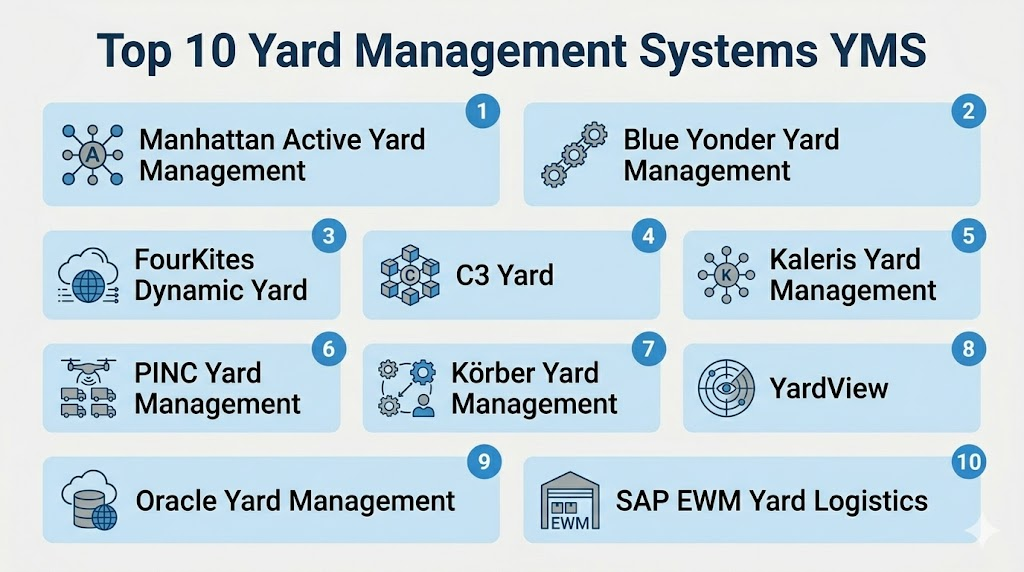
Introduction
Yard Management Systems YMS help companies control trailers, containers, trucks, docks, gates, drivers, yard jockeys, parking slots, appointments, and shipment movement inside distribution centers, warehouses, plants, ports, and logistics hubs. In simple terms, a YMS gives operations teams real-time visibility into what is in the yard, where each trailer is located, which dock it should go to, how long it has been waiting, and what action should happen next. Without a YMS, many yards still depend on radios, spreadsheets, whiteboards, phone calls, and manual check-ins, which creates delays, detention charges, congestion, missed appointments, and poor dock utilization.
Real World Use Cases
- Gate check-in and check-out: Digitize driver arrivals, trailer verification, security checks, and departure workflows.
- Trailer and container tracking: Know where every trailer, container, chassis, or yard asset is located.
- Dock door coordination: Match inbound and outbound trailers with available dock doors and warehouse priorities.
- Yard move tasking: Assign moves to yard jockeys, spotters, shunters, and hostlers with better visibility.
- Detention and dwell reduction: Track time on site and reduce penalties caused by long trailer wait times.
- Warehouse and transportation alignment: Connect yard operations with WMS, TMS, dock scheduling, ERP, and carrier workflows.
Evaluation Criteria for Buyers
- Yard visibility: Real-time trailer, container, gate, dock, and parking location visibility.
- Dock scheduling: Appointment booking, dock door allocation, carrier communication, and warehouse coordination.
- Gate automation: Driver self-check-in, security validation, QR codes, mobile workflows, and paperless gate processes.
- Move optimization: Yard jockey dispatching, task prioritization, move history, and trailer sequencing.
- Integration readiness: WMS, TMS, ERP, carrier visibility, RFID, GPS, IoT, mobile apps, and warehouse automation.
- Ease of use: Simple dashboards for gate teams, warehouse teams, yard drivers, carriers, and supervisors.
- Scalability: Support for multi-site yards, high-volume distribution centers, ports, plants, and 3PL networks.
- Analytics: Dwell time, detention, dock utilization, gate throughput, trailer status, and labor productivity reporting.
- Security controls: RBAC, SSO, audit logs, encryption, user permissions, and secure partner access.
- Implementation fit: Ability to model real yard layouts, rules, traffic patterns, trailer types, and operational exceptions.
Best for: Retailers, manufacturers, distributors, 3PLs, food and beverage companies, consumer goods businesses, automotive plants, parcel networks, warehouses, ports, and logistics hubs that manage frequent truck arrivals, trailer movement, dock scheduling, and yard congestion.
Not ideal for: Very small warehouses with only a few daily trucks, businesses without trailer staging needs, teams that already operate efficiently with basic dock scheduling, or companies that do not have enough yard complexity to justify dedicated YMS software.
Key Trends in Yard Management Systems YMS
- Real-time trailer visibility: YMS platforms are moving from static yard lists to live visibility using mobile apps, RFID, GPS, IoT, and integrated carrier data.
- Dock scheduling convergence: Yard management and dock scheduling are increasingly combined so appointment planning connects directly with gate and dock execution.
- Driver self-service: Digital check-in, mobile forms, QR codes, kiosks, and automated notifications reduce gate congestion and manual paperwork.
- Control tower integration: YMS data is increasingly connected with supply chain visibility platforms, TMS tools, and warehouse control towers.
- Yard move optimization: Systems now help prioritize moves based on warehouse needs, appointment windows, trailer dwell, shipment urgency, and dock availability.
- Detention and demurrage reduction: Companies are using YMS analytics to reduce avoidable charges caused by poor trailer visibility and slow turn times.
- Multi-site standardization: Large retailers, manufacturers, and 3PLs want consistent yard workflows across regional and global distribution networks.
- Mobile-first execution: Yard drivers, gate staff, supervisors, and carriers increasingly use mobile workflows instead of paper sheets and radio-only coordination.
- Automation and sensor adoption: RFID portals, license plate recognition, geofencing, GPS tags, and automated gate systems are becoming more common.
- Warehouse-yard synchronization: YMS platforms are expected to connect with WMS priorities so trailers are moved to docks based on inventory, labor, and order needs.
How We Selected These Tools
- We prioritized YMS platforms and supply chain suites with recognized yard, dock, gate, trailer, and logistics execution capabilities.
- We considered tools used by retailers, manufacturers, distributors, 3PLs, food and beverage companies, and high-volume logistics operations.
- We looked for solutions that support trailer tracking, dock scheduling, gate workflows, yard move tasking, and dwell-time visibility.
- We evaluated integration potential with WMS, TMS, ERP, carrier visibility tools, mobile apps, and warehouse execution systems.
- We included both dedicated YMS vendors and broader supply chain platforms with strong yard management capabilities.
- We considered scalability for single-site warehouses, large distribution centers, multi-site networks, and enterprise supply chains.
- We avoided guessing public ratings, certifications, or pricing where information is not clearly known.
- We considered practical usability for gate guards, warehouse supervisors, yard jockeys, carriers, and logistics managers.
- We reviewed the balance between depth, ease of use, implementation effort, support ecosystem, and long-term value.
- The scoring is comparative and should be validated through demos, pilots, integration checks, and real yard workflow testing.
Top 10 Yard Management Systems YMS
1- Manhattan Active Yard Management
Short description:
Manhattan Active Yard Management is a yard management solution designed to connect yard execution with warehouse, transportation, and broader supply chain operations. It is especially useful for retailers, distributors, 3PLs, and large logistics operations that already rely on Manhattan’s supply chain ecosystem. The platform helps teams manage trailers, dock doors, yard moves, gates, and real-time yard visibility. It is strongest when yard operations must work closely with warehouse execution and fulfillment priorities. Manhattan Active Yard Management is best for enterprise operations that need yard visibility as part of a larger supply chain execution strategy.
Key Features
- Real-time trailer and yard asset visibility
- Dock and yard workflow coordination
- Yard move tasking and execution control
- Integration with Manhattan WMS and supply chain tools
- Gate, dock, and trailer status tracking
- Operational dashboards and exception visibility
- Multi-site support for complex distribution networks
Pros
- Strong fit for enterprises already using Manhattan supply chain tools.
- Good alignment between yard, warehouse, order, and transportation workflows.
- Useful for high-volume distribution centers and complex fulfillment operations.
Cons
- May be too advanced for small warehouses with simple yard needs.
- Best value is often achieved when used with broader Manhattan ecosystem tools.
- Implementation may require experienced supply chain technology partners.
Platforms / Deployment
Web / Mobile
Cloud
Security & Compliance
Enterprise security controls may vary by deployment and contract.
Buyers should validate SSO, RBAC, encryption, audit logs, identity controls, and partner access policies directly.
Integrations & Ecosystem
Manhattan Active Yard Management is designed to work within broader supply chain execution workflows, especially where yard activity must align with warehouse and transportation operations.
- Manhattan Active Warehouse Management
- Transportation management systems
- ERP systems
- Carrier and logistics platforms
- Dock scheduling workflows
- Supply chain analytics tools
Support & Community
Manhattan Associates provides enterprise support, documentation, professional services, partner implementation assistance, and supply chain domain expertise. Support is strongest for larger operations with structured implementation programs.
2- Blue Yonder Yard Management
Short description:
Blue Yonder Yard Management helps companies manage trailer movement, gate activity, dock coordination, and yard visibility within distribution and warehouse operations. It is especially relevant for organizations using Blue Yonder’s warehouse management, transportation, and planning ecosystem. The solution helps reduce congestion, improve trailer visibility, and coordinate yard activity with warehouse priorities. It is suitable for retailers, manufacturers, distributors, and 3PLs that need yard visibility connected to broader supply chain execution. Blue Yonder is best for enterprise environments that require strong planning and execution alignment.
Key Features
- Trailer, gate, and yard move visibility
- Dock door and warehouse coordination
- Yard asset tracking and status management
- Integration with WMS and supply chain systems
- Labor and move task visibility
- Exception handling and operational dashboards
- Enterprise supply chain ecosystem alignment
Pros
- Strong fit for companies using Blue Yonder WMS or supply chain tools.
- Useful for reducing yard congestion and improving trailer control.
- Good choice for large distribution and retail networks.
Cons
- May require significant integration work in non-Blue Yonder environments.
- Smaller operations may not need the full enterprise depth.
- Advanced configuration may require expert implementation support.
Platforms / Deployment
Web / Mobile
Cloud / Hybrid options may vary
Security & Compliance
Not publicly stated for every deployment context.
Buyers should validate SSO, RBAC, encryption, audit logs, data governance, and secure external-user access.
Integrations & Ecosystem
Blue Yonder Yard Management fits naturally into warehouse, transportation, planning, and supply chain execution environments where yard visibility supports broader logistics decisions.
- Blue Yonder Warehouse Management
- Transportation management systems
- ERP systems
- Carrier platforms
- Dock scheduling tools
- Supply chain analytics dashboards
Support & Community
Blue Yonder provides enterprise support, implementation services, documentation, and partner resources. Support quality is usually strong for large supply chain organizations, but rollout success depends on data and process readiness.
3- FourKites Dynamic Yard
Short description:
FourKites Dynamic Yard is a yard management solution connected with real-time transportation visibility. It is designed to help companies track trailers, arrivals, dwell time, dock activity, and yard movements while connecting inbound and outbound visibility with on-site execution. The platform is useful for shippers, retailers, manufacturers, and logistics teams that want yard operations linked to transportation ETAs and supply chain visibility. It helps operations teams prioritize crews, reduce detention, and improve coordination between carriers, docks, and warehouse teams. FourKites Dynamic Yard is best for companies that already value real-time visibility across transportation and yard operations.
Key Features
- Real-time trailer and yard visibility
- ETA-connected yard planning
- Gate, dock, and dwell-time tracking
- Carrier and shipment visibility integration
- Yard move and trailer status management
- Mobile workflows for yard operations
- Analytics for detention, dwell, and throughput
Pros
- Strong connection between transportation visibility and yard execution.
- Useful for companies managing many inbound and outbound carrier movements.
- Helps reduce blind spots between transportation, gate, dock, and warehouse teams.
Cons
- Best fit may depend on broader visibility platform adoption.
- Hardware, tagging, or mobile workflows may require process changes.
- Companies needing deep WMS-native execution should validate integration depth.
Platforms / Deployment
Web / Mobile
Cloud / Edge-enabled options may vary
Security & Compliance
Not publicly stated for every deployment context.
Buyers should validate SSO, RBAC, encryption, audit logs, carrier access rules, and data sharing policies.
Integrations & Ecosystem
FourKites Dynamic Yard is strongest when yard activity needs to connect with live transportation data, carrier visibility, and supply chain control tower workflows.
- Transportation visibility platforms
- TMS systems
- WMS systems
- Carrier networks
- Mobile driver workflows
- IoT, RFID, and yard tracking technologies
Support & Community
FourKites provides vendor-led onboarding, customer success, documentation, and supply chain visibility expertise. Support is especially valuable for companies connecting transportation visibility with yard execution.
4- C3 Yard
Short description:
C3 Yard is a dedicated yard management system focused on gate, dock, trailer, shunter, appointment, and yard visibility workflows. It is designed for high-volume distribution centers, retailers, manufacturers, and logistics operations that want to move away from manual yard tracking. The platform helps teams control trailer status, yard moves, dock assignments, gate activity, and operational exceptions. It is practical for businesses that need a configurable YMS without relying only on a broad supply chain suite. C3 Yard is best for organizations that want dedicated yard control and strong operational visibility.
Key Features
- Yard asset and trailer visibility
- Gate check-in and check-out workflows
- Dock coordination and trailer status tracking
- Yard driver and shunter task management
- Configurable workflows and site rules
- Dwell, detention, and operational reporting
- Support for high-volume distribution yards
Pros
- Dedicated YMS focus with practical yard operations depth.
- Useful for replacing spreadsheets, whiteboards, radios, and manual tracking.
- Strong fit for distribution centers with high trailer movement.
Cons
- May require integration work with existing WMS, TMS, and ERP tools.
- Best value depends on accurate process mapping and yard layout setup.
- Public pricing and detailed compliance information are limited.
Platforms / Deployment
Web / Mobile
Cloud
Security & Compliance
Not publicly stated.
Buyers should validate SSO, RBAC, encryption, audit logs, driver access controls, and data retention policies.
Integrations & Ecosystem
C3 Yard can connect yard execution with warehouse, transportation, appointment, and logistics workflows. It is often useful where teams need a focused yard system that fits existing operations.
- WMS systems
- TMS systems
- Dock scheduling tools
- ERP systems
- Gate and security workflows
- Carrier communication channels
Support & Community
C3 Solutions provides vendor-led support, implementation assistance, onboarding, and configuration guidance. Support is important because yard workflows are site-specific and require detailed operational setup.
5- Kaleris Yard Management
Short description:
Kaleris Yard Management supports yard visibility, trailer tracking, gate operations, dock coordination, and logistics execution across supply chain environments. It is especially relevant for companies that manage complex yards, distribution networks, intermodal operations, or logistics-heavy sites. The platform helps teams understand what products or trailers are in the yard, where they are located, and what movement should happen next. It can support better coordination between warehouse replenishment, transportation, and yard teams. Kaleris Yard Management is best for operations that need connected yard visibility across logistics and supply chain execution.
Key Features
- Trailer, container, and yard asset visibility
- Gate and dock workflow management
- Yard move tasking and operational control
- Support for logistics and distribution environments
- Real-time yard status dashboards
- Integration with warehouse and transportation systems
- Multi-site and complex yard support
Pros
- Strong fit for logistics-heavy and complex yard operations.
- Useful for connecting yard activity with broader supply chain execution.
- Good option for companies needing visibility into trailers and product movement.
Cons
- Implementation scope may vary by yard complexity.
- Buyers should validate fit for specific warehouse and transportation systems.
- Public security and pricing information is limited.
Platforms / Deployment
Web / Mobile
Cloud / Hybrid options may vary
Security & Compliance
Not publicly stated.
Buyers should validate user permissions, secure access, encryption, audit logs, and operational data controls.
Integrations & Ecosystem
Kaleris Yard Management can support connected logistics operations where yard data needs to flow into warehouse, transportation, and supply chain visibility systems.
- Warehouse management systems
- Transportation management systems
- Gate systems
- Carrier workflows
- Logistics platforms
- Operational dashboards
Support & Community
Kaleris provides vendor-led support, implementation services, and logistics technology expertise. Support quality should be reviewed based on selected modules, deployment scope, and site complexity.
6- PINC Yard Management
Short description:
PINC Yard Management is a yard automation and visibility platform designed to help companies track trailers, containers, assets, and yard movements in real time. It is often associated with yard visibility, automation, RFID, sensor-based tracking, and logistics execution. The platform is useful for organizations that need more accurate yard location data and better control over trailer movement. It can help reduce search time, improve dock coordination, and increase yard productivity. PINC is best for companies that want yard visibility combined with automation and asset tracking technology.
Key Features
- Real-time trailer and asset tracking
- Yard automation and visibility workflows
- RFID, GPS, and sensor-based tracking support
- Gate and dock activity monitoring
- Yard move and trailer status management
- Analytics for dwell, utilization, and productivity
- Support for large and complex yard operations
Pros
- Strong fit for asset tracking and yard automation.
- Useful for reducing trailer search time and manual yard checks.
- Good option where real-time yard location accuracy is a priority.
Cons
- Hardware and tracking infrastructure may add implementation complexity.
- Best results depend on disciplined yard processes and accurate tagging.
- Buyers should validate integration depth with current WMS and TMS tools.
Platforms / Deployment
Web / Mobile
Cloud / Edge / Hybrid options may vary
Security & Compliance
Not publicly stated.
Buyers should validate access controls, encryption, audit logs, device security, and partner access policies.
Integrations & Ecosystem
PINC Yard Management fits well where yard visibility needs to be supported by physical tracking technologies and integrated execution systems.
- RFID and IoT tracking systems
- WMS systems
- TMS systems
- Gate systems
- Mobile yard workflows
- Operational analytics platforms
Support & Community
Support is vendor-led and often includes deployment planning, hardware setup, workflow configuration, and operational training. Buyers should confirm support coverage for both software and tracking infrastructure.
7- Körber Yard Management
Short description:
Körber Yard Management supports yard, dock, warehouse, and logistics operations within a broader supply chain execution ecosystem. It is useful for companies that need yard management connected with warehouse management, labor, automation, and fulfillment workflows. The platform helps teams control trailer flow, dock assignments, yard moves, and operational visibility. It is especially relevant for distribution, retail, manufacturing, and 3PL environments that already use or plan to use Körber supply chain tools. Körber Yard Management is best for companies looking for yard functionality within a broader warehouse and supply chain technology stack.
Key Features
- Yard visibility and trailer movement tracking
- Dock and warehouse coordination
- Gate and appointment workflow support
- Integration with WMS and supply chain execution tools
- Operational dashboards and exception management
- Support for complex fulfillment operations
- Multi-site scalability depending on implementation
Pros
- Strong fit for companies using Körber warehouse or supply chain systems.
- Useful for aligning yard activity with warehouse execution.
- Good option for logistics-heavy and distribution-focused operations.
Cons
- Best value may depend on Körber ecosystem alignment.
- Buyers should validate depth of standalone YMS requirements.
- Implementation may require supply chain technology expertise.
Platforms / Deployment
Web / Mobile
Cloud / Self-hosted / Hybrid options may vary
Security & Compliance
Not publicly stated.
Buyers should validate SSO, RBAC, encryption, audit logs, and access governance directly.
Integrations & Ecosystem
Körber Yard Management can connect yard workflows with warehouse, fulfillment, labor, automation, and enterprise supply chain systems.
- Körber WMS
- ERP systems
- Transportation systems
- Warehouse automation
- Dock scheduling workflows
- Analytics and reporting tools
Support & Community
Körber provides enterprise support, implementation services, partner resources, and supply chain expertise. Support is strongest when the YMS is deployed as part of a broader Körber ecosystem.
8- YardView
Short description:
YardView is a yard management system designed to provide real-time visibility, reduce congestion, manage trailer movement, and improve yard control. It is useful for distribution centers, warehouses, container operations, and logistics teams that need better visibility into trailers and yard activity. The platform helps teams manage yard inventory, trailer status, dock coordination, and operational workflows. It is especially relevant where manual tracking causes delays, detention, or difficulty locating trailers. YardView is best for companies that need focused yard visibility and practical day-to-day yard control.
Key Features
- Real-time yard and trailer visibility
- Trailer status and location tracking
- Dock and move coordination
- Gate and yard workflow support
- Congestion and dwell-time visibility
- Operational reporting and analytics
- Support for container and trailer operations
Pros
- Focused YMS functionality for yard visibility and control.
- Useful for reducing congestion and improving trailer movement.
- Practical for operations moving away from manual yard tracking.
Cons
- Public product details may be less extensive than larger suite vendors.
- Buyers should validate integration options and scalability.
- Security and compliance details are Not publicly stated.
Platforms / Deployment
Web / Mobile options may vary
Cloud / Varies / N/A
Security & Compliance
Not publicly stated.
Integrations & Ecosystem
YardView can support yard operations that need visibility across trailers, containers, docks, and gate workflows. Buyers should validate integrations based on current systems.
- WMS systems
- TMS systems
- Gate workflows
- Dock scheduling tools
- Carrier communication workflows
- Operational dashboards
Support & Community
Support is Varies / Not publicly stated. Buyers should confirm onboarding support, training, documentation, implementation assistance, and service-level expectations before selection.
9- Oracle Yard Management
Short description:
Oracle Yard Management capabilities are relevant for companies that want yard workflows connected with Oracle supply chain, warehouse, inventory, transportation, and enterprise operations. It is most practical for businesses already using Oracle systems and wanting yard visibility within a broader cloud or enterprise architecture. The platform can support trailer tracking, dock coordination, yard movement, and logistics execution depending on configuration and product scope. It is well suited for companies that prioritize ERP and SCM alignment. Oracle Yard Management is best for Oracle-centered supply chain organizations that need yard operations connected with enterprise planning and execution.
Key Features
- Yard and trailer activity support within Oracle ecosystem
- Dock and shipment workflow coordination
- Integration with inventory, warehouse, and transportation processes
- Enterprise reporting and visibility
- Support for logistics and supply chain operations
- Role-based operational workflows
- Scalable enterprise architecture depending on deployment
Pros
- Strong fit for companies already using Oracle SCM or ERP.
- Useful when yard workflows must connect with enterprise operations.
- Good option for businesses that prefer one connected vendor ecosystem.
Cons
- May not be as specialized as dedicated YMS vendors for every yard use case.
- Best value depends on Oracle ecosystem alignment.
- Configuration and integration planning may be required.
Platforms / Deployment
Web / Mobile
Cloud
Security & Compliance
Enterprise cloud security controls may vary by configuration.
Buyers should validate SSO, RBAC, encryption, audit logs, data access rules, and compliance needs.
Integrations & Ecosystem
Oracle Yard Management capabilities are most valuable when connected with Oracle’s broader supply chain and enterprise operations stack.
- Oracle SCM
- Oracle ERP
- Warehouse and inventory systems
- Transportation systems
- Procurement and order workflows
- Analytics and reporting tools
Support & Community
Oracle provides enterprise support, partner implementation, documentation, and training resources. Support strength is high for Oracle customers, but yard-specific success depends on configuration and implementation expertise.
10- SAP Extended Warehouse Management Yard Logistics
Short description:
SAP Extended Warehouse Management includes yard logistics and yard-related capabilities for companies that need warehouse, transportation, inventory, and enterprise operations connected in one SAP-centered environment. It is especially relevant for manufacturers, retailers, distributors, and logistics operations already using SAP systems. The platform can help coordinate yard activity with warehouse execution, inbound and outbound processing, and logistics workflows. It is best suited for enterprise environments that want yard operations connected with SAP warehouse and supply chain processes. SAP EWM Yard Logistics is a strong option when yard management must align closely with ERP, inventory, and warehouse execution.
Key Features
- Yard logistics support within SAP EWM ecosystem
- Dock, gate, and warehouse process coordination
- Inbound and outbound yard activity visibility
- Integration with SAP ERP and supply chain workflows
- Trailer and transportation unit process support
- Warehouse execution alignment
- Enterprise reporting and process control
Pros
- Strong fit for companies already using SAP EWM or SAP supply chain tools.
- Useful for connecting yard operations with warehouse and ERP processes.
- Good option for enterprise standardization across sites.
Cons
- May require SAP-specific expertise for configuration and rollout.
- Not the simplest option for companies outside the SAP ecosystem.
- Dedicated YMS vendors may offer more focused yard features in some cases.
Platforms / Deployment
Web / Mobile
Cloud / Hybrid options may vary by SAP environment
Security & Compliance
Enterprise security features may vary by SAP deployment and configuration.
Buyers should validate RBAC, SSO, encryption, audit logs, identity management, and compliance requirements.
Integrations & Ecosystem
SAP EWM Yard Logistics works best when yard management is part of a broader SAP warehouse, logistics, ERP, and supply chain architecture.
- SAP EWM
- SAP ERP
- Transportation management systems
- Inventory and warehouse workflows
- Dock and gate operations
- Analytics and reporting platforms
Support & Community
SAP provides extensive enterprise support, documentation, training, implementation partners, and consulting services. Successful rollout depends on SAP process expertise, warehouse operations alignment, and careful change management.
Comparison Table
| Tool Name | Best For | Platform Supported | Deployment | Standout Feature | Public Rating |
|---|---|---|---|---|---|
| Manhattan Active Yard Management | Enterprise warehouse and yard execution | Web / Mobile | Cloud | Yard unified with broader supply chain execution | N/A |
| Blue Yonder Yard Management | Large distribution and retail networks | Web / Mobile | Cloud / Hybrid | Yard visibility connected with warehouse operations | N/A |
| FourKites Dynamic Yard | Transportation visibility and yard execution alignment | Web / Mobile | Cloud / Edge-enabled varies | ETA-connected yard visibility | N/A |
| C3 Yard | Dedicated yard control for high-volume DCs | Web / Mobile | Cloud | Configurable gate, dock, and yard workflows | N/A |
| Kaleris Yard Management | Logistics-heavy and complex yard operations | Web / Mobile | Cloud / Hybrid varies | Connected yard and logistics visibility | N/A |
| PINC Yard Management | Yard automation and asset tracking | Web / Mobile | Cloud / Edge / Hybrid varies | RFID and real-time yard asset visibility | N/A |
| Körber Yard Management | Warehouse-connected yard execution | Web / Mobile | Cloud / Self-hosted / Hybrid varies | Yard functionality within supply chain execution stack | N/A |
| YardView | Focused trailer and container yard visibility | Web / Mobile varies | Cloud / Varies / N/A | Practical yard visibility and congestion reduction | N/A |
| Oracle Yard Management | Oracle-centered supply chain operations | Web / Mobile | Cloud | Yard workflows aligned with Oracle SCM | N/A |
| SAP EWM Yard Logistics | SAP warehouse and ERP-connected yard operations | Web / Mobile | Cloud / Hybrid varies | Yard logistics within SAP EWM ecosystem | N/A |
Evaluation & Scoring of Yard Management Systems YMS
| Tool Name | Core 25% | Ease 15% | Integrations 15% | Security 10% | Performance 10% | Support 10% | Value 15% | Weighted Total |
|---|---|---|---|---|---|---|---|---|
| Manhattan Active Yard Management | 9.3 | 8.0 | 9.0 | 8.5 | 8.8 | 8.8 | 8.0 | 8.65 |
| Blue Yonder Yard Management | 9.0 | 7.8 | 8.8 | 8.2 | 8.7 | 8.6 | 7.8 | 8.41 |
| FourKites Dynamic Yard | 8.8 | 8.4 | 8.7 | 8.0 | 8.5 | 8.5 | 8.2 | 8.47 |
| C3 Yard | 8.7 | 8.3 | 8.0 | 7.6 | 8.3 | 8.2 | 8.4 | 8.28 |
| Kaleris Yard Management | 8.5 | 8.0 | 8.2 | 7.8 | 8.3 | 8.1 | 8.0 | 8.17 |
| PINC Yard Management | 8.6 | 7.8 | 8.2 | 7.6 | 8.5 | 8.0 | 8.0 | 8.15 |
| Körber Yard Management | 8.3 | 7.8 | 8.4 | 8.0 | 8.2 | 8.2 | 8.0 | 8.16 |
| YardView | 8.0 | 8.1 | 7.6 | 7.2 | 8.0 | 7.5 | 8.2 | 7.85 |
| Oracle Yard Management | 8.0 | 7.6 | 8.8 | 8.5 | 8.2 | 8.6 | 7.8 | 8.19 |
| SAP EWM Yard Logistics | 8.2 | 7.4 | 8.8 | 8.5 | 8.3 | 8.7 | 7.7 | 8.18 |
These scores are comparative and should be interpreted based on yard size, system ecosystem, and operational complexity. Enterprise suite-based tools score strongly when yard operations must connect with warehouse, transportation, ERP, and supply chain execution. Dedicated YMS platforms may be easier to adopt when the main goal is trailer visibility, gate control, and yard move efficiency. Buyers should validate these scores using real yard workflows, trailer volumes, dock rules, carrier processes, integration needs, and pilot results.
Which Yard Management System YMS Is Right for You?
Solo / Freelancer
Solo consultants, logistics advisors, and independent supply chain professionals usually do not need a YMS for their own operations. They may use process maps, yard audits, spreadsheet models, and client system reports to assess yard problems. If advising clients, they should understand tools like C3 Yard, FourKites Dynamic Yard, Manhattan Active Yard Management, Blue Yonder, and SAP EWM Yard Logistics. For consulting projects, the focus should be on identifying yard bottlenecks, detention cost, gate delays, dock utilization, and manual process gaps.
SMB
Small and mid-sized warehouses should start with practical yard visibility and dock coordination. C3 Yard, YardView, Kaleris Yard Management, and FourKites Dynamic Yard can be strong options depending on volume and integration needs. SMBs should avoid overbuying enterprise suites unless they already use SAP, Oracle, Manhattan, or Blue Yonder. The best YMS for SMBs is one that improves gate flow, trailer location accuracy, dock readiness, and carrier communication without heavy implementation complexity.
Mid-Market
Mid-market companies often need stronger integration between warehouse operations, transportation, yard activity, and dock scheduling. FourKites Dynamic Yard, C3 Yard, Kaleris Yard Management, PINC Yard Management, Körber Yard Management, and Blue Yonder Yard Management are strong candidates. If the business has several distribution centers, yard standardization becomes important. Mid-market buyers should prioritize systems that support multi-site visibility, repeatable workflows, mobile execution, and measurable dwell-time reduction.
Enterprise
Large retailers, manufacturers, 3PLs, logistics networks, and global distribution operations should evaluate Manhattan Active Yard Management, Blue Yonder Yard Management, FourKites Dynamic Yard, Oracle Yard Management, SAP EWM Yard Logistics, and Körber Yard Management. Enterprises usually need strong integration with WMS, TMS, ERP, appointment scheduling, carrier visibility, and supply chain control towers. The right platform should support multi-site standards, security governance, high trailer volume, role-based workflows, and operational analytics.
Budget vs Premium
Budget-sensitive teams should begin with the highest-value pain point, such as lost trailers, long gate queues, detention charges, poor dock planning, or manual yard checks. C3 Yard, YardView, and focused YMS platforms may offer practical value without requiring a full supply chain suite. Premium buyers should evaluate Manhattan, Blue Yonder, SAP, Oracle, FourKites, and Körber when yard management must connect with enterprise supply chain execution. Premium tools can deliver more integration and scalability, but they also require better planning and process discipline.
Feature Depth vs Ease of Use
For feature depth, Manhattan Active Yard Management, Blue Yonder Yard Management, SAP EWM Yard Logistics, Oracle Yard Management, and FourKites Dynamic Yard are strong options. These platforms are suitable when yard operations must connect deeply with WMS, TMS, and enterprise systems. For ease of use and focused yard control, C3 Yard, YardView, Kaleris Yard Management, and PINC Yard Management may be more practical. The best choice depends on whether the main goal is enterprise integration or fast yard operational improvement.
Integrations & Scalability
If integration is critical, buyers should test connections with WMS, TMS, ERP, dock scheduling, carrier visibility, RFID, GPS, mobile devices, gate systems, and reporting tools. Manhattan, Blue Yonder, SAP, Oracle, and Körber are strong when yard workflows must align with larger enterprise systems. FourKites is strong when yard decisions depend on live transportation visibility and ETA data. PINC is strong when physical asset tracking and yard automation are key requirements.
Security & Compliance Needs
Yard systems often handle carrier data, driver information, shipment details, trailer contents, gate access, appointment schedules, and facility movement records. Buyers should validate RBAC, SSO, MFA, audit logs, encryption, device security, carrier access rules, and data retention policies. Facilities with food, pharmaceuticals, automotive, chemicals, or high-value goods should pay extra attention to traceability and access governance. Security should be reviewed before enabling external carrier or driver self-service access.
Frequently Asked Questions
1- What is a Yard Management System YMS?
A Yard Management System YMS is software that helps companies manage trailers, containers, docks, gates, drivers, yard moves, and parking locations inside a warehouse or distribution center yard. It gives teams visibility into what is on site, where each trailer is located, and what action should happen next. A YMS helps reduce manual tracking, gate delays, dock congestion, trailer search time, and detention charges. It acts as the execution layer between transportation and warehouse operations.
2- How is YMS different from WMS?
A Warehouse Management System WMS controls inventory, picking, packing, receiving, putaway, and warehouse labor inside the building. A Yard Management System controls trailers, gates, docks, yard moves, parking slots, and driver activity outside the building. The two systems work best when connected because warehouse teams need the right trailer at the right dock at the right time. WMS manages the warehouse floor, while YMS manages the movement and visibility of assets in the yard.
3- How is YMS different from TMS?
A Transportation Management System TMS manages carrier planning, freight execution, routing, tendering, shipment tracking, and freight costs. A YMS manages what happens after the truck arrives at the facility yard. TMS focuses on transportation movement across the network, while YMS focuses on gate, dock, trailer, and yard operations on site. When connected, TMS can provide ETA and shipment context, while YMS controls appointment, arrival, dwell, and dock execution.
4- What pricing models are common for YMS software?
YMS pricing often depends on the number of sites, users, gates, docks, trailers, modules, integrations, and hardware requirements. Some vendors use subscription pricing, while others use enterprise licensing or project-based pricing. Costs may also include implementation, configuration, mobile devices, RFID hardware, gate kiosks, integrations, training, and support. Buyers should compare total cost, not only software subscription fees, because yard technology often requires process and infrastructure setup.
5- How long does YMS implementation usually take?
Implementation time depends on yard size, dock count, gate complexity, integration requirements, hardware needs, and process standardization. A focused single-site rollout can be much faster than a multi-site enterprise deployment. Teams usually need to map yard layouts, define trailer statuses, configure dock rules, set user roles, integrate WMS or TMS systems, and train gate and yard users. A phased rollout is usually safer than attempting to automate every yard process at once.
6- What are common mistakes when adopting a YMS?
A common mistake is buying software without first mapping real yard workflows and pain points. Another mistake is ignoring gate teams, yard jockeys, dock supervisors, carriers, and warehouse users during design. Some companies also underestimate data accuracy, trailer status discipline, and integration requirements. A successful YMS rollout needs clear yard rules, accurate location mapping, user training, clean workflows, and management support.
7- Can a YMS reduce detention and demurrage costs?
Yes, a YMS can help reduce detention and demurrage by improving trailer visibility, dwell-time tracking, dock planning, and carrier communication. It helps teams identify trailers that are waiting too long, prioritize urgent moves, and reduce unnecessary delays. However, software alone does not eliminate charges if staffing, dock capacity, appointment discipline, or carrier processes are weak. The best results come when YMS insights are connected to daily operational action.
8- What integrations should a YMS have?
A YMS should ideally integrate with WMS, TMS, ERP, dock scheduling, carrier visibility, gate systems, RFID, GPS, mobile apps, and reporting tools. Integration ensures that inbound appointments, warehouse priorities, trailer contents, shipment status, and dock readiness are connected. Without integration, teams may still rely on duplicate manual entry and delayed updates. The most important integrations depend on whether the yard is driven by warehouse operations, transportation schedules, or carrier activity.
9- Is RFID or GPS required for YMS?
RFID or GPS is not always required, but it can improve trailer location accuracy and reduce manual yard checks. Some yards use mobile workflows and manual status updates, while others use RFID portals, GPS tags, license plate recognition, or IoT sensors. The right approach depends on yard size, trailer volume, labor availability, and accuracy requirements. High-volume yards often benefit more from automation because manual tracking becomes unreliable at scale.
10- Can small warehouses use YMS?
Small warehouses can use YMS if they face trailer congestion, frequent missed appointments, detention charges, or poor dock visibility. However, if the site handles only a few trucks per day, a full YMS may be unnecessary. A dock scheduling tool or lightweight logistics workflow may be enough. The decision should be based on trailer volume, yard complexity, labor cost, and the financial impact of delays.
Conclusion
Yard Management Systems YMS help companies turn the yard from a blind spot into a controlled, visible, and measurable part of the supply chain. The right YMS can reduce trailer search time, improve dock utilization, speed up gate processing, lower detention costs, support yard jockey productivity, and connect transportation with warehouse execution. The best tool depends on your yard size, trailer volume, warehouse system, transportation complexity, automation needs, and enterprise technology ecosystem. Manhattan Active Yard Management, Blue Yonder Yard Management, SAP EWM Yard Logistics, Oracle Yard Management, and Körber Yard Management are strong choices when yard operations must connect deeply with enterprise supply chain systems. FourKites Dynamic Yard is strong when real-time transportation visibility and ETA-driven yard planning matter most. C3 Yard, Kaleris Yard Management, PINC Yard Management, and YardView are practical options for focused yard control, trailer visibility, and operational improvement.

Implementing advanced trailer tracking infrastructure software optimizes complex distribution hub logistics, ensuring accelerated vehicle movement sequencing and seamless terminal gate check-in workflows.