MOTOSHARE 🚗🏍️
Rent Bikes & Cars Directly from Owners
Motoshare connects vehicle owners with people who need bikes and cars on rent. Owners earn from idle vehicles, and renters get flexible ride options.
Visit Motoshare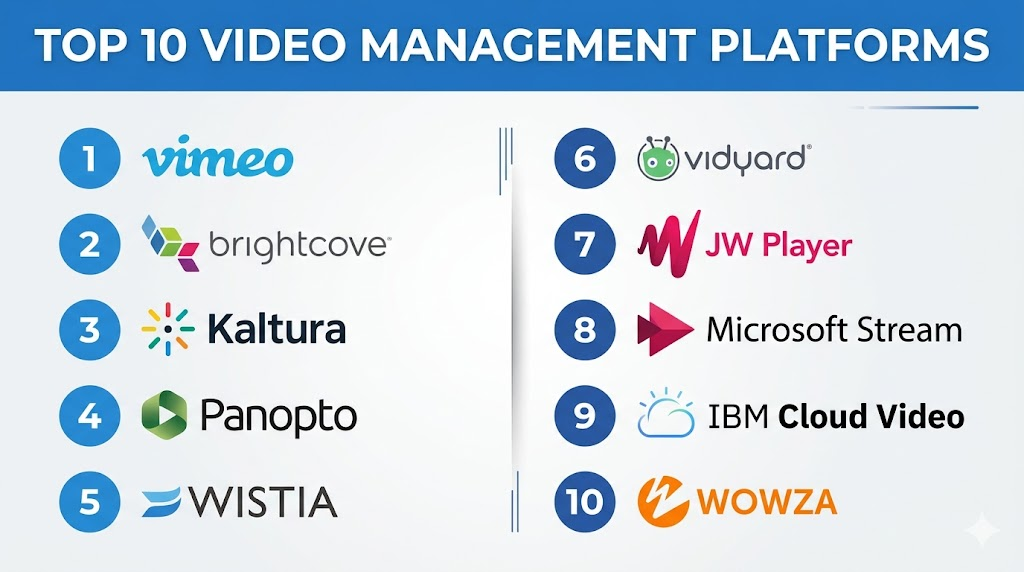
Introduction
Video Management Platforms help businesses upload, organize, manage, secure, stream, distribute, and analyze video content across internal and external channels. These platforms are designed for organizations handling training videos, webinars, live events, marketing campaigns, OTT streaming, enterprise communication, customer engagement, and large video libraries.Video has become one of the most important content formats for marketing, education, sales, collaboration, and digital media. Businesses now rely heavily on video for employee onboarding, product demonstrations, social media campaigns, customer support, virtual events, and internal communication. Basic cloud storage or public video-sharing sites are often not enough for organizations that require governance, analytics, security, branding, workflow automation, and scalable streaming infrastructure.
Common real-world use cases include:
- Managing internal employee training videos
- Hosting webinars and virtual conferences
- Streaming live events and broadcasts
- Organizing enterprise video libraries
- Delivering marketing and customer engagement videos
Buyers evaluating Video Management Platforms should focus on:
- Video hosting and streaming quality
- Live streaming support
- Video search and metadata management
- Analytics and viewer engagement tracking
- Security and access controls
- AI-powered transcription and tagging
- Workflow automation and approvals
- Integrations with CMS, CRM, and LMS platforms
- Scalability and CDN performance
- Monetization and OTT capabilities
Best for: Enterprises, media companies, education providers, SaaS businesses, marketers, broadcasters, training teams, and organizations managing large-scale video operations.
Not ideal for: Small teams that only upload occasional public videos and do not require advanced security, analytics, governance, or workflow automation capabilities.
Key Trends in Video Management Platforms
- AI-powered transcription and auto-tagging are improving video discoverability.
- Enterprise video CMS platforms are replacing generic storage systems.
- Low-latency streaming and 4K delivery are becoming standard expectations.
- Interactive analytics are helping businesses measure engagement more accurately.
- Automated captioning and multilingual localization are expanding accessibility.
- OTT and subscription-based video monetization are growing rapidly.
- API-first architectures are improving integration flexibility.
- Enterprise security features such as DRM, SSO, and governance controls are becoming critical.
- Collaborative review and approval workflows are improving remote production operations.
- Video personalization and AI-generated summaries are becoming more common.
How We Selected These Tools
The tools in this list were selected using a balanced evaluation framework focused on scalability, usability, streaming performance, and operational maturity.
- Evaluated market adoption and enterprise visibility
- Compared hosting and streaming capabilities
- Assessed analytics and reporting depth
- Reviewed AI-powered transcription and automation features
- Evaluated workflow collaboration and content management
- Compared integration ecosystems and API flexibility
- Assessed scalability for enterprise deployments
- Reviewed security and governance controls
- Considered usability for both technical and non-technical teams
- Included enterprise, creator-focused, and developer-oriented platforms
Top 10 Video Management Platforms
1- Vimeo
Short Description:
Vimeo is a professional video hosting and management platform used by creators, enterprises, educators, and marketing teams. It supports video hosting, collaboration, streaming, monetization, and enterprise video workflows. Vimeo is widely recognized for its high-quality playback experience, collaboration tools, and user-friendly interface. The platform is especially useful for businesses that need professional video delivery without excessive technical complexity.
Key Features
- Professional video hosting
- Live streaming capabilities
- AI-powered video search
- Video review and approvals
- Monetization support
- Customizable video players
- Team collaboration workflows
Pros
- Excellent streaming quality
- Strong collaboration tools
- User-friendly platform
Cons
- Enterprise features can become expensive
- Advanced analytics require premium plans
- OTT workflows may need additional services
Platforms / Deployment
- Web / iOS / Android
- Cloud
Security & Compliance
- SSO/SAML
- MFA
- Privacy controls
- GDPR support
Integrations & Ecosystem
Vimeo integrates with creative, collaboration, and marketing ecosystems to streamline video workflows.
- Adobe Premiere Pro
- Slack
- Google Workspace
- HubSpot
- APIs
- CMS platforms
Support & Community
Strong documentation, enterprise onboarding, creator resources, and customer support programs.
2- Brightcove
Short Description:
Brightcove is an enterprise-grade video platform focused on large-scale streaming, monetization, enterprise communication, and media operations. It is widely used by global enterprises, broadcasters, publishers, and marketing organizations that require scalable infrastructure, advanced analytics, and enterprise-grade governance capabilities.
Key Features
- Enterprise video hosting
- Live streaming infrastructure
- OTT video delivery
- Monetization support
- Advanced analytics
- DRM security controls
- AI-powered metadata optimization
Pros
- Excellent enterprise scalability
- Strong streaming reliability
- Advanced monetization capabilities
Cons
- Higher enterprise pricing
- Complex implementation
- Requires operational planning
Platforms / Deployment
- Web
- Cloud
Security & Compliance
- DRM support
- SSO/SAML
- MFA
- Access controls
- Audit capabilities
Integrations & Ecosystem
Brightcove integrates with enterprise marketing, publishing, and analytics ecosystems.
- Salesforce
- Adobe Experience Cloud
- APIs
- CMS platforms
- Marketing automation tools
Support & Community
Enterprise onboarding, implementation services, and premium support programs are available.
3- Kaltura
Short Description:
Kaltura is a highly customizable enterprise video platform used by education providers, enterprises, media companies, and virtual event teams. It supports webinars, live streaming, virtual classrooms, and enterprise video management workflows. Kaltura is particularly known for its API-first architecture and deployment flexibility.
Key Features
- Video hosting and streaming
- Webinar and virtual classroom tools
- API-first architecture
- Interactive video features
- Multi-device streaming
- Video analytics
- Enterprise customization
Pros
- Highly customizable
- Strong enterprise flexibility
- Excellent education use cases
Cons
- Setup complexity can be high
- UI may feel technical
- Requires expertise for advanced workflows
Platforms / Deployment
- Web
- Cloud / Hybrid
Security & Compliance
- SSO/SAML
- MFA
- DRM support
- Access governance
- GDPR support
Integrations & Ecosystem
Kaltura integrates with enterprise communication, learning, and content ecosystems.
- Moodle
- Blackboard
- Zoom
- APIs
- LMS platforms
- CMS systems
Support & Community
Strong developer documentation, enterprise onboarding, and implementation support.
4- Panopto
Short Description:
Panopto is a video management platform focused on enterprise training, education, internal communication, and knowledge management. It provides searchable video libraries, AI-powered transcription, lecture capture, and secure enterprise video workflows. Panopto is particularly strong for organizations managing internal knowledge and employee learning operations.
Key Features
- Searchable video libraries
- AI-powered transcription
- Lecture and meeting capture
- Video analytics
- Secure internal streaming
- LMS integration
- Enterprise organization workflows
Pros
- Excellent for training and education
- Strong search functionality
- Good enterprise knowledge management
Cons
- Less focused on external marketing workflows
- UI prioritizes functionality over aesthetics
- Branding customization is limited
Platforms / Deployment
- Web / iOS / Android
- Cloud / Hybrid
Security & Compliance
- SSO/SAML
- MFA
- RBAC
- Encryption
- Audit controls
Integrations & Ecosystem
Panopto integrates strongly with enterprise learning and collaboration systems.
- Moodle
- Blackboard
- Microsoft Teams
- Zoom
- LMS platforms
- APIs
Support & Community
Enterprise onboarding, implementation support, and education-focused customer services are available.
5- Wistia
Short Description:
Wistia is a video hosting and marketing platform designed for businesses using video for customer engagement, lead generation, and brand communication. It is popular among SaaS companies, marketers, agencies, and content-driven businesses because of its strong analytics and easy-to-use workflows.
Key Features
- Marketing video hosting
- Lead capture tools
- Video engagement analytics
- Webinar support
- Collaboration workflows
- SEO optimization tools
- Customizable video players
Pros
- Excellent for marketing teams
- Easy onboarding process
- Strong engagement analytics
Cons
- Less enterprise governance depth
- Limited OTT streaming capabilities
- Advanced scaling may require additional infrastructure
Platforms / Deployment
- Web
- Cloud
Security & Compliance
- MFA
- Privacy controls
- GDPR support
Integrations & Ecosystem
Wistia integrates with CRM, marketing automation, and publishing ecosystems.
- HubSpot
- Salesforce
- Mailchimp
- WordPress
- APIs
- Marketing automation tools
Support & Community
Strong onboarding guidance, marketing-focused resources, and customer support.
6- Vidyard
Short Description:
Vidyard is a business video platform focused on sales enablement, customer communication, and personalized engagement workflows. It helps organizations create, manage, and analyze sales videos while integrating deeply with CRM and marketing ecosystems. Vidyard is especially useful for SaaS companies and revenue-focused teams.
Key Features
- Personalized video messaging
- Sales engagement workflows
- Analytics dashboards
- Screen recording
- Team video management
- Lead tracking
- Video hosting
Pros
- Excellent for sales teams
- Strong CRM integrations
- Easy personalized video creation
Cons
- Less suited for OTT operations
- Video editing capabilities are basic
- Enterprise pricing can grow quickly
Platforms / Deployment
- Web / iOS / Android
- Cloud
Security & Compliance
- SSO/SAML
- MFA
- Access controls
- GDPR support
Integrations & Ecosystem
Vidyard integrates with CRM, marketing, and customer engagement ecosystems.
- Salesforce
- HubSpot
- Microsoft tools
- APIs
- Marketing automation platforms
Support & Community
Strong onboarding programs, customer documentation, and sales-focused support resources.
7- JW Player
Short Description:
JW Player is a video hosting, streaming, and monetization platform commonly used by publishers, broadcasters, and digital media companies. It supports live streaming, advertising monetization, scalable delivery, and enterprise video operations. The platform is especially useful for organizations focused on audience engagement and video revenue generation.
Key Features
- Video hosting and delivery
- Live streaming support
- Advertising monetization
- Video analytics
- CDN-backed streaming
- Custom video players
- AI-driven contextual tools
Pros
- Strong monetization capabilities
- Reliable streaming infrastructure
- Good scalability for media companies
Cons
- Less focused on internal communication workflows
- Monetization setup can be complex
- Premium features may increase costs
Platforms / Deployment
- Web
- Cloud
Security & Compliance
- DRM support
- Access controls
- Enterprise security features
Integrations & Ecosystem
JW Player integrates with publishing, advertising, and streaming ecosystems.
- Ad networks
- CMS platforms
- APIs
- Analytics tools
- Streaming workflows
Support & Community
Professional support programs and publisher-focused onboarding are available.
8- Microsoft Stream
Short Description:
Microsoft Stream is an enterprise video platform integrated within the Microsoft ecosystem for internal communication, employee collaboration, and enterprise knowledge sharing. It simplifies secure video distribution across Microsoft 365 environments and is commonly used for training, meeting recordings, and internal communication workflows.
Key Features
- Internal video sharing
- Microsoft 365 integration
- Enterprise search
- Video transcription
- Meeting recording storage
- Access management
- Collaboration workflows
Pros
- Excellent Microsoft ecosystem integration
- Good internal communication workflows
- Familiar enterprise usability
Cons
- Limited external streaming flexibility
- Less advanced monetization support
- Better suited for internal enterprise use cases
Platforms / Deployment
- Web / iOS / Android
- Cloud
Security & Compliance
- SSO integration
- MFA
- RBAC
- Microsoft enterprise compliance ecosystem
Integrations & Ecosystem
Microsoft Stream integrates deeply with Microsoft collaboration and productivity tools.
- Microsoft Teams
- SharePoint
- OneDrive
- Microsoft 365
- Enterprise communication workflows
Support & Community
Supported by Microsoft enterprise services and extensive documentation.
9- IBM Cloud Video
Short Description:
IBM Cloud Video is an enterprise streaming and video management platform designed for live streaming, virtual events, and enterprise communication. It provides scalable infrastructure, analytics, and enterprise-grade streaming capabilities for organizations handling large virtual audiences and mission-critical broadcasts.
Key Features
- Live streaming infrastructure
- Enterprise video hosting
- Virtual event support
- Viewer analytics
- Access management
- Scalable video delivery
- Cloud streaming workflows
Pros
- Reliable enterprise streaming
- Strong live event capabilities
- Good scalability
Cons
- UI is less modern than some competitors
- Enterprise pricing structure
- Smaller creator-focused ecosystem
Platforms / Deployment
- Web
- Cloud
Security & Compliance
- Access controls
- Encryption
- Audit capabilities
- Enterprise security controls
Integrations & Ecosystem
IBM Cloud Video integrates with enterprise communication and event management ecosystems.
- APIs
- CMS platforms
- Enterprise streaming workflows
- Collaboration tools
Support & Community
Enterprise onboarding, technical support, and implementation services are available.
10- Wowza
Short Description:
Wowza is a developer-focused streaming and video management platform built for organizations requiring customizable streaming infrastructure and low-latency delivery. It supports live streaming, OTT workflows, multi-device streaming, and scalable video operations for technical teams and enterprise streaming deployments.
Key Features
- Low-latency streaming
- OTT video delivery
- Live streaming infrastructure
- Streaming APIs
- Multi-device delivery
- Scalable video workflows
- Custom infrastructure flexibility
Pros
- Highly customizable
- Strong low-latency performance
- Good developer flexibility
Cons
- Requires technical expertise
- Less beginner-friendly
- UI is more infrastructure-focused
Platforms / Deployment
- Web
- Cloud / Hybrid
Security & Compliance
- DRM support
- Access controls
- Encryption
- API security features
Integrations & Ecosystem
Wowza integrates with streaming infrastructure, OTT systems, and enterprise video ecosystems.
- APIs
- CDN services
- OTT workflows
- Media delivery systems
- Custom applications
Support & Community
Strong developer documentation and enterprise technical support are available.
Comparison Table
| Tool Name | Best For | Platform(s) Supported | Deployment | Standout Feature | Public Rating |
|---|---|---|---|---|---|
| Vimeo | Professional collaboration | Web, iOS, Android | Cloud | High-quality streaming | N/A |
| Brightcove | Enterprise streaming | Web | Cloud | Enterprise scalability | N/A |
| Kaltura | Education and enterprise video | Web | Cloud / Hybrid | API-first customization | N/A |
| Panopto | Training and knowledge management | Web, iOS, Android | Cloud / Hybrid | Searchable video libraries | N/A |
| Wistia | Marketing workflows | Web | Cloud | Engagement analytics | N/A |
| Vidyard | Sales communication | Web, iOS, Android | Cloud | Personalized videos | N/A |
| JW Player | Publisher monetization | Web | Cloud | Video advertising support | N/A |
| Microsoft Stream | Internal communication | Web, iOS, Android | Cloud | Microsoft integration | N/A |
| IBM Cloud Video | Enterprise live streaming | Web | Cloud | Virtual event infrastructure | N/A |
| Wowza | Developer streaming operations | Web | Cloud / Hybrid | Low-latency streaming | N/A |
Evaluation & Scoring of Video Management Platforms
| Tool Name | Core (25%) | Ease (15%) | Integrations (15%) | Security (10%) | Performance (10%) | Support (10%) | Value (15%) | Weighted Total |
|---|---|---|---|---|---|---|---|---|
| Vimeo | 9 | 9 | 8 | 8 | 9 | 8 | 8 | 8.5 |
| Brightcove | 10 | 7 | 9 | 9 | 10 | 9 | 6 | 8.6 |
| Kaltura | 9 | 6 | 9 | 9 | 9 | 8 | 7 | 8.1 |
| Panopto | 9 | 8 | 8 | 9 | 8 | 8 | 8 | 8.3 |
| Wistia | 8 | 9 | 8 | 7 | 8 | 8 | 8 | 8.0 |
| Vidyard | 8 | 9 | 9 | 8 | 8 | 8 | 8 | 8.2 |
| JW Player | 9 | 7 | 8 | 8 | 9 | 8 | 7 | 8.0 |
| Microsoft Stream | 8 | 8 | 9 | 9 | 8 | 8 | 8 | 8.2 |
| IBM Cloud Video | 8 | 7 | 7 | 8 | 9 | 8 | 7 | 7.7 |
| Wowza | 9 | 6 | 9 | 8 | 9 | 8 | 7 | 8.0 |
These scores are comparative and intended to help buyers evaluate platforms across priorities such as scalability, analytics, streaming performance, collaboration, governance, and monetization. Enterprise-focused platforms usually score higher in governance and scalability, while creator-focused tools often provide better usability and workflow simplicity. The best platform depends on whether the organization prioritizes marketing, training, live streaming, OTT delivery, or enterprise communication. Testing shortlisted platforms with real workflows is strongly recommended before selecting a long-term solution.
Which Video Management Platform Is Right for You?
Solo / Freelancer
Freelancers, coaches, creators, and small production teams generally benefit most from Vimeo or Wistia because these platforms provide professional hosting, simple workflows, strong playback quality, and collaboration features without enterprise complexity.
SMB
SMBs usually require a balance between analytics, affordability, hosting quality, and customer engagement capabilities. Vimeo, Wistia, and Vidyard are strong choices for webinars, product demos, customer communication, and marketing workflows.
Mid-Market
Mid-market organizations should prioritize integrations, analytics, workflow automation, and scalability. Panopto, Vimeo, and Brightcove are strong options depending on whether the focus is training, communication, or external streaming.
Enterprise
Large enterprises generally require governance, advanced security, large-scale streaming infrastructure, and integration flexibility. Brightcove, Kaltura, Panopto, and Microsoft Stream are especially strong for enterprise deployments and distributed communication operations.
Budget vs Premium
Budget-focused organizations may prefer Vimeo or Wistia because of their usability and flexible pricing models. Premium enterprise platforms such as Brightcove and Kaltura provide broader scalability and governance but require larger investments.
Feature Depth vs Ease of Use
Platforms with extensive enterprise functionality usually involve more onboarding and technical planning. Brightcove and Kaltura provide deeper operational control, while Vimeo and Wistia prioritize ease of use and faster adoption.
Integrations & Scalability
Organizations already invested in Microsoft ecosystems may benefit most from Microsoft Stream. Marketing-focused organizations may prefer Wistia or Vidyard, while media companies and streaming operations may prioritize Brightcove, Wowza, or JW Player.
Security & Compliance Needs
Healthcare, finance, education, and regulated industries should prioritize platforms with DRM, SSO, MFA, RBAC, audit controls, and governance capabilities. Enterprise-focused platforms generally provide stronger operational oversight and compliance support.
Frequently Asked Questions
1. What is a Video Management Platform?
A Video Management Platform helps businesses upload, organize, manage, stream, analyze, and distribute video content. These systems support marketing videos, employee training, live streaming, webinars, virtual events, internal communication, and media distribution workflows. They also provide analytics, permissions management, collaboration tools, and security controls. Modern platforms increasingly include AI-powered transcription and metadata automation capabilities.
2. How is a Video Management Platform different from regular cloud storage?
Regular cloud storage focuses mainly on file storage and sharing, while Video Management Platforms are designed specifically for video workflows. They provide streaming optimization, metadata tagging, analytics, adaptive playback, governance controls, and live streaming capabilities. Organizations managing large video libraries or enterprise streaming operations usually require these specialized capabilities.
3. Which platform is best for enterprise video management?
Brightcove, Kaltura, Panopto, and Microsoft Stream are strong enterprise-focused options depending on operational goals. Brightcove is particularly strong for large-scale streaming and monetization, while Panopto excels in training and knowledge management. Kaltura offers deep customization flexibility, and Microsoft Stream works well for Microsoft-centric organizations.
4. Are AI features important in modern video platforms?
Yes. AI-powered transcription, auto-tagging, search indexing, translation, and chapter generation significantly improve video discoverability and workflow efficiency. AI also helps businesses organize large content libraries more effectively. However, organizations should still maintain governance and quality oversight processes to ensure accuracy and compliance.
5. What integrations matter most?
CMS integrations, CRM connectivity, marketing automation tools, LMS systems, collaboration software, and analytics platforms are usually the most important integrations. API flexibility is also critical for scalability and workflow automation. Businesses should evaluate ecosystem compatibility carefully before selecting a platform.
6. Can these platforms support live streaming?
Yes. Most modern Video Management Platforms support live streaming, but capabilities vary significantly. Enterprise platforms like Brightcove, Kaltura, IBM Cloud Video, and Wowza provide stronger scalability and lower latency for large virtual events. Smaller creator-focused platforms often prioritize simplicity over advanced broadcasting controls.
7. What are the biggest mistakes organizations make?
One major mistake is selecting a platform without evaluating future scalability and integration requirements. Another issue is underestimating metadata organization and governance planning. Some businesses also purchase overly complex enterprise platforms when simpler solutions would meet operational needs more effectively.
8. Which platform is best for marketing teams?
Wistia, Vimeo, and Vidyard are particularly strong for marketing-focused use cases because they combine analytics, branding, collaboration, and engagement tracking. Wistia is especially useful for lead generation and customer engagement workflows, while Vidyard works well for sales communication and personalized outreach.
9. Can Video Management Platforms support monetization?
Yes. Platforms like Brightcove and JW Player support advertising, subscriptions, OTT workflows, and other monetization strategies. These features are especially important for publishers, broadcasters, and media companies. Buyers should carefully review monetization requirements before choosing a platform.
10. What should organizations prioritize when selecting a platform?
Organizations should prioritize workflow fit, streaming reliability, scalability, integrations, analytics, security controls, and usability. Businesses focused on internal training may require different capabilities than OTT streaming providers or marketing teams. Testing shortlisted platforms using real workflows is usually the best way to validate long-term fit.
Conclusion
Video Management Platforms have become critical operational systems for businesses managing training content, webinars, enterprise communication, marketing campaigns, virtual events, and large-scale media distribution. Modern platforms now provide much more than basic video hosting by combining analytics, AI-powered search, workflow automation, collaboration, governance, streaming infrastructure, and monetization into centralized ecosystems. The best solution depends heavily on operational priorities, audience scale, workflow complexity, and integration requirements. Enterprises focused on governance and large-scale streaming may prefer Brightcove or Kaltura, while organizations prioritizing training and internal knowledge sharing may benefit more from Panopto or Microsoft Stream. Marketing and customer engagement teams may find Vimeo, Wistia, or Vidyard more aligned with their workflows, while technical streaming operations may prefer Wowza or JW Player. Rather than selecting a platform based only on feature lists, businesses should evaluate scalability, workflow compatibility, security requirements, integration maturity, and operational usability. The best next step is to shortlist a few platforms, test them using real streaming and collaboration workflows, validate governance and analytics capabilities, and then select the platform that best supports long-term video operations.
