MOTOSHARE 🚗🏍️
Rent Bikes & Cars Directly from Owners
Motoshare connects vehicle owners with people who need bikes and cars on rent. Owners earn from idle vehicles, and renters get flexible ride options.
Visit Motoshare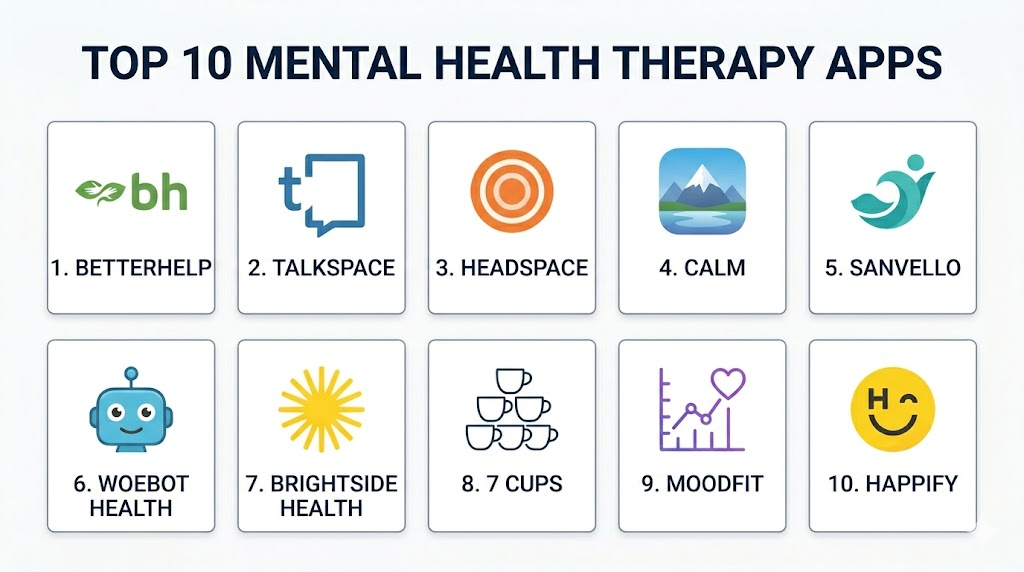
Introduction
Mental health therapy apps are digital platforms designed to provide psychological support, emotional guidance, and clinical therapeutic interventions through mobile devices. These applications bridge the gap between traditional in-office therapy and the modern need for accessible, on-demand mental healthcare. By utilizing various delivery models—including asynchronous messaging, live video sessions, and interactive cognitive-behavioral tools—these platforms allow individuals to engage with mental health resources at their own pace and from any location.
The shift toward digital mental health has been driven by the need to overcome barriers such as high costs, geographical limitations, and the social stigma often associated with seeking help. Modern therapy apps are not merely repositories of information; they are sophisticated ecosystems that connect users with licensed professionals and evidence-based exercises. Whether someone is managing a diagnosed condition or simply seeking to improve their emotional resilience, these tools provide a structured environment for mental wellness.
Real-world use cases:
- Remote Clinical Therapy: Connecting individuals in rural areas with specialized licensed therapists via video conferencing.
- Daily Mood Tracking: Monitoring emotional patterns over time to identify triggers and improve self-awareness.
- Crisis Support: Providing immediate, text-based intervention for individuals experiencing acute emotional distress.
- Stress Management: Utilizing guided meditation and breathing exercises to reduce workplace or academic anxiety.
- Cognitive Restructuring: Using interactive modules to challenge and change negative thought patterns in real-time.
Evaluation criteria for buyers:
- Clinical Credentialing: The rigor used to vet and verify the licenses of participating therapists.
- Therapeutic Modalities: Availability of specific evidence-based treatments like CBT, DBT, or EMDR.
- Communication Flexibility: Options for video, audio, and unlimited text-based messaging.
- Data Privacy Protocols: Adherence to healthcare-specific security standards and encryption methods.
- User Interface Design: How intuitive and stress-free the application is for someone in emotional distress.
- Insurance Compatibility: The ability to use employer-provided benefits or private insurance to cover costs.
- Assessment Tools: The quality of initial intake surveys used to match users with the right professional.
- Self-Help Resources: The depth of the library of articles, exercises, and guided meditations.
- Emergency Procedures: The presence of clear protocols for users requiring immediate psychiatric hospitalization.
- Subscription Value: The balance between the monthly cost and the frequency of professional interaction.
Mandatory paragraph
- Best for: Individuals seeking flexible mental health support, those with busy schedules, and organizations looking to provide employee wellness benefits.
- Not ideal for: Individuals experiencing active suicidal ideation, those with severe psychotic disorders requiring in-person stabilization, or people without reliable internet access.
Key Trends in Mental Health Therapy Apps
- AI-Enhanced Matching: Using machine learning to pair users with therapists based on communication style and success metrics.
- Passive Biometric Monitoring: Integrating with wearables to track heart rate and sleep patterns to predict emotional shifts.
- Stepped-Care Models: Automatically adjusting the level of care from self-help modules to live therapy based on user progress.
- Virtual Reality Integration: Using VR for exposure therapy to treat phobias and PTSD within the app ecosystem.
- Hyper-Personalized Content: Content libraries that adapt in real-time based on the user’s daily mood inputs.
- Digital Phenotyping: Analyzing smartphone usage patterns to provide early warnings for depressive episodes.
- Group-Based Digital Support: Creating secure, moderated digital spaces for peer-to-peer emotional support.
- Interoperable Health Records: Allowing therapy apps to share data securely with primary care physicians for holistic treatment.
How We Selected These Tools (Methodology)
To identify the most effective and reliable mental health therapy applications, we utilized a comprehensive evaluation framework. The methodology for selecting these ten tools was based on the following logic:
- Clinical Integrity: We prioritized platforms that exclusively employ licensed, accredited, and board-certified professionals.
- Accessibility: The tools selected offer a variety of price points and communication methods to suit diverse user needs.
- User Security: We evaluated the strength of the encryption and the privacy policies regarding sensitive health data.
- Feature Breadth: The list includes a mix of dedicated clinical platforms and high-quality self-help applications.
- Market Reputation: We analyzed user satisfaction signals and the longevity of the platforms within the digital health space.
- Evidence-Based Foundations: Preference was given to apps that utilize established psychological frameworks like Cognitive Behavioral Therapy.
Top 10 Mental Health Therapy Apps
#1 — BetterHelp
BetterHelp is one of the largest providers of online therapy, offering a massive network of licensed counselors available through various digital communication channels.
Key Features
- Counselor Matching: Uses a detailed questionnaire to pair users with a therapist suited to their specific needs.
- Multiple Communication Modes: Supports live video sessions, phone calls, and asynchronous text messaging.
- Unlimited Messaging: Users can send messages to their therapist at any time through a secure “room.”
- Journaling Tools: Built-in digital journal that users can choose to share with their counselor.
- Group Webinars: Access to live, interactive sessions on various mental health topics led by professionals.
- Global Access: One of the few platforms with a large presence of therapists available in multiple languages.
Pros
- Largest therapist network in the world ensures a high likelihood of finding a good match.
- High flexibility for users who prefer text-based communication over video.
Cons
- Subscription-based model can be expensive if not used frequently.
- Does not provide psychiatric medication management.
Platforms / Deployment
- iOS / Android / Web
- Cloud / SaaS
Security & Compliance
- Encryption at rest and in transit, 256-bit SSL.
- Not publicly stated.
Integrations & Ecosystem
BetterHelp is designed as a standalone therapeutic environment for deep personal work.
- Google Calendar for session scheduling.
- Employer wellness platforms.
- Apple Health (for basic activity tracking).
Support & Community
Comprehensive help center and dedicated customer support for billing and technical issues.
#2 — Talkspace
Talkspace is a prominent digital therapy platform that provides both traditional talk therapy and specialized psychiatric services including medication management.
Key Features
- Psychiatry Services: Offers specialized consultations with medical doctors who can prescribe and manage medications.
- Insurance Integration: Partners with many major insurance providers and employers to reduce out-of-pocket costs.
- Daily Check-ins: Therapists typically respond to messages five days a week, providing consistent support.
- Niche Specialties: Specialized tracks for couples, teenagers, and LGBTQ+ individuals.
- Progress Tracking: Visual milestones and assessments to monitor therapeutic outcomes over time.
- Secure Video: High-definition, HIPAA-compliant video conferencing for live therapeutic sessions.
Pros
- Broad range of services including both therapy and psychiatry.
- Stronger emphasis on insurance and employee assistance program (EAP) coverage.
Cons
- Therapist response times can vary depending on the chosen plan.
- Initial matching process is less automated than some competitors.
Platforms / Deployment
- iOS / Android / Web
- Cloud / SaaS
Security & Compliance
- Banking-grade encryption, HIPAA compliant.
- SOC 2.
Integrations & Ecosystem
Talkspace integrates with various corporate and health ecosystems.
- Cigna / Optum / Aetna (Insurance portals).
- Corporate EAP systems.
- Standard mobile health tracking.
Support & Community
Extensive library of mental health resources and 24/7 technical support for users.
#3 — Headspace
Originally known for meditation, Headspace has expanded into a full mental health platform offering coaching and clinical therapy services.
Key Features
- Guided Meditation: Thousands of sessions ranging from beginner basics to advanced mindfulness techniques.
- Mental Health Coaching: Quick access to certified coaches for managing daily stress and building habits.
- Clinical Therapy: Licensed therapists available for deep emotional work and clinical diagnoses.
- Sleepcast: Specialized audio content designed to help users fall asleep and stay asleep.
- The “Wake Up”: Daily bite-sized content focused on mindfulness and positive psychology.
- Mindful Movement: Video-led yoga and stretching exercises to connect physical and mental health.
Pros
- Excellent user interface that is calming and easy to navigate.
- Great for users who want a mix of self-guided meditation and professional coaching.
Cons
- Therapy services are a separate add-on to the standard meditation subscription.
- Coaches are not licensed therapists and cannot provide clinical diagnosis.
Platforms / Deployment
- iOS / Android / Web
- Cloud / SaaS
Security & Compliance
- MFA, SSO for enterprise users.
- GDPR compliant.
Integrations & Ecosystem
Headspace is a leader in corporate wellness integrations.
- Slack / Microsoft Teams.
- Apple Health / Google Fit.
- Spotify.
Support & Community
Strong community presence with global challenges and extensive online help resources.
#4 — Calm
Calm is a premier application focused on sleep, relaxation, and mindfulness, providing a wide array of tools to manage anxiety and improve sleep hygiene.
Key Features
- Sleep Stories: Narrated stories designed to help users drift off into a deep sleep.
- Daily Calm: A new 10-minute meditation session every day focusing on a specific life theme.
- Calm Masterclass: Video lessons taught by world-renowned experts on various wellness topics.
- Breathing Exercises: Interactive tools to guide users through different breathing patterns for stress relief.
- Calm Kids: Specialized content designed to help children manage their emotions and sleep better.
- Scenes: High-quality background audio of nature environments to assist with focus or relaxation.
Pros
- Highest quality audio production and narrations in the market.
- Extremely effective for managing acute anxiety and insomnia.
Cons
- Focus is primarily on self-guidance rather than clinical therapy.
- Subscription is required for the vast majority of high-quality content.
Platforms / Deployment
- iOS / Android / Web
- Cloud / SaaS
Security & Compliance
- Standard mobile data encryption.
- Not publicly stated.
Integrations & Ecosystem
Calm focuses on lifestyle and workspace integrations.
- Sonos / Apple Watch.
- Bose / Samsung Health.
- Corporate wellness portals.
Support & Community
Huge global user base with regular community-led meditation events and robust online help.
#5 — Sanvello
Sanvello provides a comprehensive set of tools based on Cognitive Behavioral Therapy (CBT) to help users manage stress, anxiety, and depression.
Key Features
- Daily Mood Tracking: Allows users to record their mood and identify patterns related to their activities.
- Guided Journeys: Skill-building programs that use CBT techniques to change thought patterns.
- Coping Tools: Immediate exercises for dealing with panic, stress, or public speaking anxiety.
- Community Support: Anonymous peer-to-peer message boards moderated for safety and support.
- Professional Coaching: Access to coaches who provide 1-on-1 support for habit building.
- Therapy Integration: Ability to connect with licensed therapists directly through the app interface.
Pros
- Very strong foundation in evidence-based Cognitive Behavioral Therapy.
- Good transition from self-help tools to professional clinical support.
Cons
- The interface can be data-heavy for users who prefer simplicity.
- Full clinical therapy is not available in all geographic regions.
Platforms / Deployment
- iOS / Android / Web
- Cloud / SaaS
Security & Compliance
- HIPAA compliant data handling.
- Standard industry encryption.
Integrations & Ecosystem
Sanvello is often integrated into larger healthcare provider networks.
- UnitedHealthcare / Optum.
- Apple Health.
- External provider referrals.
Support & Community
Active peer community and professional support for navigating insurance coverage.
#6 — Woebot Health
Woebot is an AI-powered relational agent that uses CBT principles to provide immediate, conversational mental health support.
Key Features
- AI Conversations: A chatbot that checks in daily to help users process their emotions through text.
- CBT Techniques: Teaches users how to identify cognitive distortions and reframe thoughts.
- Immediate Availability: Accessible 24/7 for users who need to talk through an issue instantly.
- Mood Graphing: Visual representations of a user’s emotional state over weeks and months.
- Psych-Education: Delivers short, engaging lessons on the science of mental health.
- Gratitude Journaling: Integrated prompts to help users focus on positive life aspects.
Pros
- No human-to-human judgment, making it easier for some users to be honest.
- Completely free or highly affordable compared to traditional therapy.
Cons
- An AI bot cannot replace the depth and empathy of a human therapist.
- Not suitable for complex trauma or serious mental health crises.
Platforms / Deployment
- iOS / Android
- Cloud / SaaS
Security & Compliance
- GDPR compliant, data anonymization.
- Standard mobile encryption.
Integrations & Ecosystem
Woebot is primarily a standalone mobile companion.
- Standard mobile notification systems.
- Limited external health integrations.
Support & Community
FAQ-based support and a strong emphasis on user privacy and data protection.
#7 — Brightside Health
Brightside Health focuses on providing clinical-grade care for depression and anxiety, specializing in both therapy and precision psychiatry.
Key Features
- Precision Psychiatry: Uses data points to help doctors prescribe the most effective medication for the user.
- Evidence-Based Therapy: Offers structured therapy sessions focusing on CBT and other clinical models.
- Unlimited Messaging: Constant access to a care team for questions regarding treatment or medication.
- Crisis Safety Planning: Specific tools to help users create a plan for high-risk moments.
- Pharmacy Delivery: Medication can be delivered directly to the user’s door in many regions.
- Regular Assessments: Frequent clinical surveys to ensure the treatment plan is working effectively.
Pros
- One of the best platforms for combined medication and therapy management.
- Focuses on measurable clinical outcomes rather than just wellness.
Cons
- Not available for individuals under the age of 18.
- Service area is limited by regional licensing and medication regulations.
Platforms / Deployment
- iOS / Android / Web
- Cloud / SaaS
Security & Compliance
- HIPAA compliant, secure messaging.
- Not publicly stated.
Integrations & Ecosystem
Brightside integrates with the broader clinical healthcare system.
- Health insurance portals.
- Pharmacy networks.
- Lab testing facilities.
Support & Community
Dedicated care coordinators who help users navigate the medical side of mental health.
#8 — 7 Cups
7 Cups is a unique platform that provides free emotional support through a network of trained volunteer “listeners” and professional therapists.
Key Features
- Volunteer Listeners: 24/7 access to trained individuals who provide a compassionate ear for free.
- Professional Therapy: Optional paid access to licensed therapists for more serious clinical needs.
- Community Chat Rooms: Categorized rooms for discussing specific issues like loneliness, anxiety, or work stress.
- Growth Paths: Interactive modules and steps to help users work through specific emotional challenges.
- Anonymous Interaction: Users can remain completely anonymous while talking to listeners or in chat rooms.
- Teen Community: A dedicated, moderated space for users aged 13-17 to seek support.
Pros
- The only platform offering 24/7 human interaction completely free of charge.
- Excellent for reducing immediate feelings of isolation and loneliness.
Cons
- Volunteer listeners are not professionals and cannot provide medical advice.
- Chat rooms require heavy moderation to ensure user safety.
Platforms / Deployment
- iOS / Android / Web
- Cloud / SaaS
Security & Compliance
- Encrypted messaging, anonymous handles.
- Not publicly stated.
Integrations & Ecosystem
7 Cups is built as an independent social support network.
- Standard web browsers.
- Minimal external health integrations.
Support & Community
Massive volunteer community and professional moderators who ensure a safe environment.
#9 — Moodfit
Moodfit is a “fitness tracker” for your brain, providing a wide range of tools to help users understand how their lifestyle impacts their mental health.
Key Features
- Customizable Goals: Users can set daily goals for sleep, exercise, and nutrition to see their effect on mood.
- CBT Thought Record: A structured tool to help users challenge negative self-talk.
- Mindfulness Meditations: A library of audio sessions for various emotional states.
- Gratitude Journal: A space to record daily positives and build long-term resilience.
- Insights and Reports: Detailed charts showing correlations between lifestyle choices and emotional states.
- Breathing Tools: Visual guides for various breathing techniques to manage stress.
Pros
- Great for users who love data and want to see the “why” behind their emotions.
- Highly customizable to fit into any existing lifestyle or routine.
Cons
- Does not provide direct access to human therapists.
- Requires a high level of user discipline to input data consistently.
Platforms / Deployment
- iOS / Android
- Cloud / SaaS
Security & Compliance
- Local data encryption.
- Not publicly stated.
Integrations & Ecosystem
Moodfit is designed to work with your phone’s existing health data.
- Apple Health.
- Google Fit.
- Device-level notifications.
Support & Community
Email support and a library of educational articles on mental wellness.
#10 — Happify
Happify uses games and activities based on positive psychology to help users break old habits and build new, healthier ones.
Key Features
- Science-Based Games: Interactive activities designed to build skills like resilience and gratitude.
- Themed Tracks: Programs like “Conquering Negative Thoughts” or “Coping with Stress.”
- Happify Daily: A feed of inspiring articles, videos, and daily positive news.
- Happiness Score: A quantified measure of your progress based on your interaction with the app.
- Progress Tracking: Visual maps showing your journey through different mental health “tracks.”
- Employer Programs: Specialized versions for companies looking to improve employee morale.
Pros
- Makes mental health work feel fun and engaging through gamification.
- Excellent for people who find traditional therapy or meditation boring.
Cons
- Not a clinical tool; should not be used to treat serious psychiatric conditions.
- The “fun” approach may not feel appropriate for users in deep grief or trauma.
Platforms / Deployment
- iOS / Android / Web
- Cloud / SaaS
Security & Compliance
- Industry-standard encryption.
- Not publicly stated.
Integrations & Ecosystem
Happify is a popular choice for corporate wellness platforms.
- Virgin Pulse.
- Sharecare.
- Standard mobile health APIs.
Support & Community
Responsive customer support and a positive, community-focused content feed.
Comparison Table (Top 10)
| Tool Name | Best For | Platform(s) Supported | Deployment | Standout Feature | Public Rating |
| 1. BetterHelp | Flexible Therapy | iOS, Android, Web | Cloud | Unlimited Messaging | 4.8/5 |
| 2. Talkspace | Insurance Users | iOS, Android, Web | Cloud | Psychiatry Services | 4.7/5 |
| 3. Headspace | Mindfulness | iOS, Android, Web | Cloud | Guided Meditation | 4.9/5 |
| 4. Calm | Sleep & Anxiety | iOS, Android, Web | Cloud | Sleep Stories | 4.8/5 |
| 5. Sanvello | CBT Tools | iOS, Android, Web | Cloud | Guided Journeys | 4.6/5 |
| 6. Woebot Health | Immediate AI Support | iOS, Android | Cloud | AI Conversations | 4.7/5 |
| 7. Brightside Health | Depression/Meds | iOS, Android, Web | Cloud | Precision Psychiatry | 4.5/5 |
| 8. 7 Cups | Peer Support | iOS, Android, Web | Cloud | Volunteer Listeners | 4.4/5 |
| 9. Moodfit | Mood Tracking | iOS, Android | Cloud | Lifestyle Insights | 4.3/5 |
| 10. Happify | Gamified Wellness | iOS, Android, Web | Cloud | Science-Based Games | 4.5/5 |
Evaluation & Scoring of Mental Health Therapy Apps
The following scores reflect how each tool performs against professional mental health standards and user accessibility requirements.
| Tool Name | Core (25%) | Ease (15%) | Integrations (15%) | Security (10%) | Performance (10%) | Support (10%) | Value (15%) | Weighted Total |
| BetterHelp | 10 | 9 | 7 | 8 | 9 | 9 | 8 | 8.85 |
| Talkspace | 10 | 8 | 9 | 10 | 9 | 9 | 7 | 8.70 |
| Headspace | 8 | 10 | 10 | 9 | 10 | 9 | 8 | 9.05 |
| Calm | 7 | 10 | 9 | 8 | 10 | 8 | 8 | 8.45 |
| Sanvello | 9 | 7 | 8 | 9 | 8 | 8 | 9 | 8.30 |
| Woebot Health | 6 | 9 | 6 | 8 | 9 | 7 | 10 | 7.45 |
| Brightside Health | 10 | 7 | 8 | 9 | 8 | 9 | 7 | 8.20 |
| 7 Cups | 6 | 8 | 5 | 7 | 8 | 9 | 10 | 7.30 |
| Moodfit | 7 | 8 | 8 | 8 | 8 | 7 | 9 | 7.60 |
| Happify | 7 | 9 | 8 | 8 | 9 | 8 | 8 | 7.95 |
How to Interpret These Scores:
- Core (25%): Represents the clinical depth and validity of the therapeutic interventions.
- Ease (15%): Reflects the simplicity and stress-free nature of the app’s user interface.
- Value (15%): Measures the balance between cost and the frequency/quality of care.
Which Mental Health Therapy App Tool Is Right for You?
Solo / Freelancer
For an individual with a variable schedule, BetterHelp is the most versatile option. The ability to message your therapist at any time allows you to fit therapy into the “gaps” of your workday without needing to schedule a rigid weekly hour.
SMB
Small business owners looking to provide wellness benefits should evaluate Headspace or Calm. These platforms are exceptionally easy to roll out to a small team and provide immediate, high-quality tools for stress reduction that don’t require the overhead of a full clinical insurance plan.
Mid-Market
For medium-sized organizations with established HR departments, Talkspace is a strong choice. Its deep integration with insurance providers and EAPs makes it a seamless addition to a standard benefits package, often resulting in lower costs for both the employer and employee.
Enterprise
Large corporations with diverse global workforces should look at a combination of Happify and BetterHelp. Happify provides a fun, low-barrier entry point for wellness, while BetterHelp ensures that employees in any region have access to a therapist in their local language.
Budget vs Premium
- Budget: Woebot Health and 7 Cups (Volunteer side) provide free or extremely low-cost entry points for those with limited funds.
- Premium: Brightside Health and Talkspace Psychiatry provide the most comprehensive, high-touch medical care for serious conditions.
Feature Depth vs Ease of Use
- Feature Depth: Brightside Health and Sanvello offer the most clinical structure.
- Ease of Use: Calm and Headspace are the gold standard for intuitive, beautiful user design.
Integrations & Scalability
- Top Integrations: Headspace and Talkspace are the best-connected platforms in the corporate and medical worlds.
- Top Scalability: BetterHelp can handle the massive influx of users due to its sheer volume of professional therapists.
Security & Compliance Needs
Individuals with high privacy concerns should prioritize Talkspace or Onfido (for ID verification, but in this context, Talkspace), as they maintain the most rigorous clinical security standards and HIPAA compliance.
Frequently Asked Questions (FAQs)
1. Are mental health therapy apps as effective as in-person therapy?
Many studies have shown that for conditions like depression and anxiety, online therapy can be just as effective as traditional face-to-face sessions, provided the user remains consistent with their treatment.
2. Can I get a formal clinical diagnosis through a therapy app?
Yes, platforms that employ licensed clinical psychologists or psychiatrists, such as BetterHelp or Brightside, can provide formal diagnoses and structured treatment plans.
3. How does the billing for these therapy apps typically work?
Most therapy apps operate on a monthly subscription model that includes a set number of live sessions and unlimited messaging, though some specialized services like psychiatry are billed per session.
4. Is the data I share on these therapy apps confidential?
Leading apps use banking-grade encryption and adhere to HIPAA regulations to ensure that your conversations and health data remain strictly between you and your provider.
5. Can these apps help in an emergency or crisis situation?
While some have crisis resources, therapy apps are generally not designed for immediate emergencies. If you are in a crisis, you should contact a national hotline or your local emergency services.
6. Do these apps prescribe medications like antidepressants?
Specialized platforms like Talkspace and Brightside have psychiatrists on staff who can prescribe and manage medications, which are then filled through your local or mail-order pharmacy.
7. How long does the matching process take for a therapist?
On most platforms, the matching process is very fast, typically taking anywhere from a few hours to 48 hours depending on your specific requirements and therapist availability.
8. Can I change my therapist if I don’t feel a connection?
Yes, almost all therapy apps allow you to switch therapists at any time with the click of a button, ensuring you can find someone you truly feel comfortable with.
9. Will my employer see what I discuss if I use an app through work?
No, employers only see high-level usage data (like how many employees are signed up); they never have access to your individual sessions, messages, or health information.
10. Can I use these apps for couples or family therapy?
Yes, specialized platforms like Talkspace and BetterHelp (through their Regain brand) offer specific tracks designed for couples and families to attend sessions together.
Conclusion
The evolution of mental health therapy apps has fundamentally changed how we access psychological support. Whether you need the clinical precision of Brightside Health or the mindfulness-based resilience of Headspace, there is now a digital tool for every stage of the mental health journey.The most important factor in success is finding a tool that fits your specific lifestyle and therapeutic needs. We recommend starting with a platform that offers a free trial or a low-cost introductory period to ensure the interface and the therapist matching process align with your personal goals.
