MOTOSHARE 🚗🏍️
Rent Bikes & Cars Directly from Owners
Motoshare connects vehicle owners with people who need bikes and cars on rent. Owners earn from idle vehicles, and renters get flexible ride options.
Visit Motoshare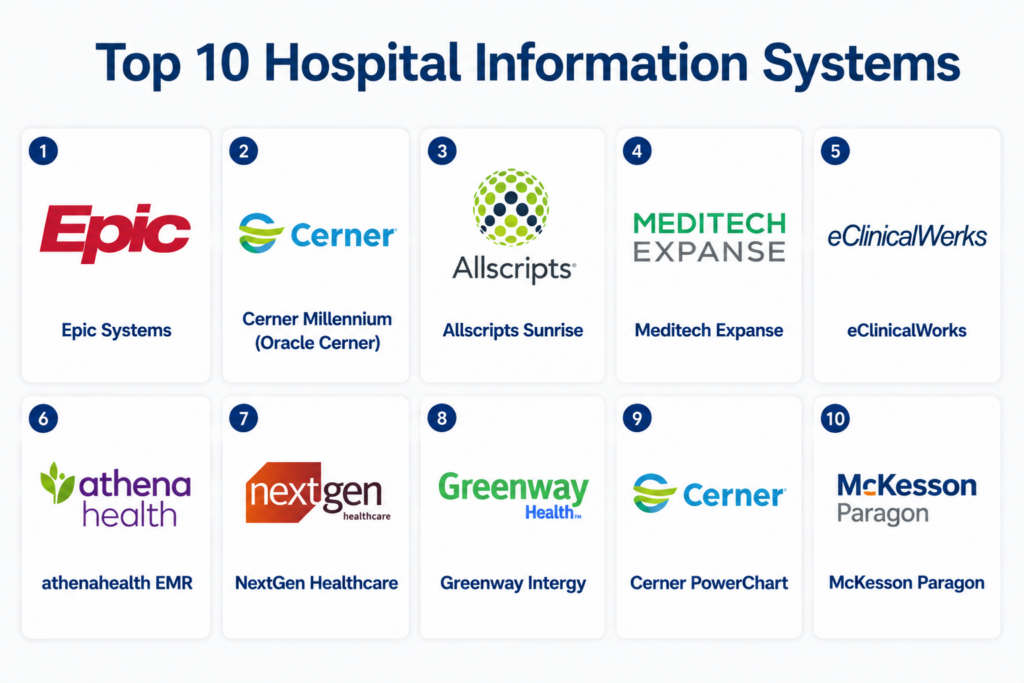
Introduction
Hospital Information Systems (HIS) are integrated software platforms designed to manage the clinical, administrative, financial, and operational aspects of hospitals. HIS centralizes patient records, streamlines workflows, supports decision-making, and ensures regulatory compliance. Modern HIS solutions enable hospitals to improve patient care quality, optimize resource utilization, and provide data-driven insights across departments.In HIS adoption is crucial for healthcare facilities due to increasing patient volumes, digital health initiatives, telemedicine integration, and regulatory demands for secure and interoperable systems. By implementing a robust HIS, hospitals can automate administrative tasks, reduce errors, enhance data visibility, and improve overall operational efficiency.
Real-world use cases:
- Centralized electronic patient records for inpatient and outpatient services.
- Automated billing and revenue cycle management.
- Scheduling and resource allocation for clinical staff, operating rooms, and equipment.
- Inventory and pharmacy management to optimize supply chains.
- Analytics dashboards for hospital performance, compliance, and quality monitoring.
Evaluation Criteria for Buyers:
- Patient data management and electronic medical records
- Billing and revenue cycle integration
- Scheduling and resource management
- Laboratory, pharmacy, and imaging interfaces
- Reporting and analytics capabilities
- Compliance and security features (HIPAA, GDPR, etc.)
- Scalability for multi-department or multi-hospital networks
- User interface and workflow customization
- Integration with external healthcare systems (EHR/EMR, HIEs)
- Vendor support and training resources
Best for: Hospital administrators, IT managers, clinical leaders, and operational staff in hospitals, health systems, and large clinics.
Not ideal for: Small clinics or practices with minimal patient volumes and administrative complexity; simpler EMRs or practice management software may suffice.
Key Trends in Hospital Information Systems
- Cloud-based HIS adoption for scalability and multi-site access.
- Integration with electronic medical records (EMR) and laboratory information systems (LIS).
- AI-assisted workflow optimization and predictive analytics.
- Telehealth integration for virtual patient encounters.
- Patient engagement through portals and mobile apps.
- Real-time data dashboards for decision-making and performance monitoring.
- Regulatory compliance tracking and audit-ready reporting.
- Interoperability using FHIR and HL7 standards.
- Modular and customizable workflows for specialty departments.
- Security enhancements, including encryption, multi-factor authentication, and role-based access.
How We Selected These Tools (Methodology)
- Market adoption and reputation among hospitals and health systems.
- Feature completeness for clinical, administrative, and financial workflows.
- Scalability and performance on cloud and on-premise deployments.
- Integration with EMR, LIS, pharmacy, and imaging systems.
- Security and compliance features for patient data protection.
- Analytics and reporting capabilities for hospital performance and quality monitoring.
- User interface and ease of training for staff.
- Customization for specialty workflows and departmental needs.
- Vendor support, training programs, and community engagement.
- Innovation and alignment with modern digital healthcare trends.
Top 10 Hospital Information Systems
#1 — Epic Systems
Short description:
Epic Systems is an enterprise-grade HIS widely used in large hospitals and health systems, offering comprehensive clinical, administrative, and revenue cycle management.
Key Features
- Patient registration and electronic medical records
- Scheduling and resource management
- Billing and revenue cycle integration
- Laboratory, pharmacy, and imaging modules
- Analytics dashboards for quality and compliance
- Telehealth and patient portal integration
Pros
- Highly scalable for multi-site hospitals
- Comprehensive interoperability capabilities
- Robust analytics and decision support
Cons
- High implementation cost and complexity
- Longer training and onboarding
- Requires dedicated IT resources
Platforms / Deployment
- Web, Desktop
- Cloud, On-prem
Security & Compliance
- SSO, MFA, encryption, audit trails
- HIPAA compliant
Integrations & Ecosystem
- LIS, pharmacy, and imaging systems
- Telehealth modules
- Revenue cycle partners
Support & Community
- Vendor-provided support and training
- Large user community networks
- Extensive documentation
#2 — Cerner Millennium
Short description:
Cerner Millennium is a widely adopted HIS platform for hospitals and multi-department health systems, providing clinical workflow management and interoperability.
Key Features
- Clinical charting and electronic records
- CPOE and order management
- Scheduling and resource optimization
- Billing and revenue cycle modules
- Data analytics and reporting tools
Pros
- Strong interoperability with external systems
- Scalable for large health systems
- Comprehensive clinical decision support
Cons
- Customization requires professional services
- User interface complexity
- Implementation timeline can be extensive
Platforms / Deployment
- Web, Desktop
- Cloud, On-prem
Security & Compliance
- Encryption, access control, audit logs
- HIPAA compliant
Integrations & Ecosystem
- Lab and imaging interfaces
- Pharmacy and specialty modules
- Population health analytics
Support & Community
- Vendor support tiers
- User groups and forums
- Training programs
#3 — Allscripts Sunrise
Short description:
Allscripts Sunrise HIS delivers integrated hospital management, including EMR, clinical workflows, and revenue cycle solutions for acute care facilities.
Key Features
- Patient record management and charting
- Scheduling and workflow automation
- Laboratory, pharmacy, and radiology integration
- Billing and claims management
- Clinical decision support tools
Pros
- Flexible for various hospital sizes
- Cloud and on-prem deployment
- Strong practice management integration
Cons
- Feature set may require additional modules
- Training and support vary by site
- Complex reporting setup
Platforms / Deployment
- Web, Desktop
- Cloud, On-prem
Security & Compliance
- Encryption and role-based access
- HIPAA compliant
Integrations & Ecosystem
- LIS, EMR, pharmacy, and imaging systems
- Third-party integration via APIs
- Analytics and reporting platforms
Support & Community
- Vendor training and documentation
- Community forums
#4 — Meditech Expanse
Short description:
Meditech Expanse is a modern HIS platform designed for hospitals and health systems, integrating clinical, administrative, and financial modules in a cloud-enabled environment.
Key Features
- Comprehensive EMR and patient charting
- CPOE and clinical workflows
- Scheduling and resource management
- Billing and revenue cycle
- Patient portal and telehealth modules
Pros
- Unified platform for hospitals
- Cloud-enabled for multi-site access
- Flexible workflows for departments
Cons
- Customization options are limited
- Onboarding and training required
- Smaller third-party integration ecosystem
Platforms / Deployment
- Web, Desktop
- Cloud, On-prem
Security & Compliance
- Encryption, audit trails
- HIPAA compliance
Integrations & Ecosystem
- Lab, imaging, and pharmacy systems
- Patient engagement portals
- APIs for third-party applications
Support & Community
- Vendor support and knowledge base
- Training programs
#5 — eClinicalWorks EMR/HIS
Short description:
eClinicalWorks provides HIS and EMR solutions optimized for ambulatory care hospitals and outpatient centers, combining patient management with revenue cycle support.
Key Features
- Clinical documentation and charting
- Scheduling and patient flow
- Billing and revenue cycle management
- Population health and analytics
- Telehealth integration
Pros
- Cloud-first and scalable
- Integrated practice management
- Telehealth capabilities
Cons
- Steeper learning curve for advanced workflows
- Limited integration for some third-party modules
- Support experience may vary
Platforms / Deployment
- Web, Desktop
- Cloud
Security & Compliance
- Encryption and secure access
- HIPAA compliant
Integrations & Ecosystem
- Lab, pharmacy, and imaging interfaces
- Analytics dashboards
- Telehealth platforms
Support & Community
- Vendor support and tutorials
- Documentation and forums
#6 — NextGen Healthcare
Short description:
NextGen HIS focuses on ambulatory and specialty care hospitals, offering EMR, patient engagement, and analytics in a scalable platform.
Key Features
- Patient records and charting
- Scheduling and clinical workflow support
- Billing and revenue cycle
- Analytics dashboards
- Patient portals
Pros
- Specialty-focused templates
- Scalable across small to mid-size hospitals
- Cloud and on-prem deployment options
Cons
- Training required for full feature utilization
- Limited third-party integration options
- Complexity in advanced analytics setup
Platforms / Deployment
- Web, Desktop
- Cloud, On-prem
Security & Compliance
- Encryption, RBAC
- HIPAA compliant
Integrations & Ecosystem
- Lab and imaging systems
- EMR/PM connectors
- APIs for workflow automation
Support & Community
- Vendor support tiers
- Documentation and training
#7 — Allscripts TouchWorks
Short description:
TouchWorks HIS targets ambulatory hospitals and specialty clinics, offering EMR, scheduling, and practice management tools in an integrated system.
Key Features
- Patient charting and documentation
- Scheduling and appointment management
- Billing and revenue cycle integration
- Clinical decision support
- Reporting and analytics
Pros
- Strong ambulatory focus
- Integration with practice management modules
- Cloud and on-prem options
Cons
- Feature depth may vary for complex hospital needs
- User interface may require training
- Limited advanced analytics modules
Platforms / Deployment
- Web, Desktop
- Cloud, On-prem
Security & Compliance
- Encryption, access controls
- HIPAA compliant
Integrations & Ecosystem
- Lab, imaging, and pharmacy systems
- Billing and financial tools
- APIs for custom integration
Support & Community
- Vendor training and knowledge base
- User forums
#8 — Greenway Health Intergy
Short description:
Greenway Intergy HIS provides ambulatory and hospital modules with integrated EMR, practice management, and patient engagement.
Key Features
- Clinical documentation and EMR
- Scheduling and resource allocation
- Revenue cycle management
- Patient portals and engagement tools
- Reporting and analytics
Pros
- Integrated clinical and administrative tools
- Specialty templates
- Cloud deployment available
Cons
- Smaller hospital footprint
- Some modules require training
- Limited customization for enterprise settings
Platforms / Deployment
- Web, Desktop
- Cloud, On-prem
Security & Compliance
- Encryption, RBAC
- HIPAA compliant
Integrations & Ecosystem
- Lab and imaging systems
- Pharmacy modules
- API connectivity
Support & Community
- Vendor support
- Documentation
#9 — Cerner PowerChart
Short description:
PowerChart is a module within Cerner Millennium, offering clinical documentation, order management, and patient engagement for hospitals.
Key Features
- EMR and patient charting
- Order entry and results management
- Clinical decision support
- Patient engagement portals
- Reporting and analytics dashboards
Pros
- Enterprise-level clinical documentation
- Strong integration within Cerner ecosystem
- Scalable across departments
Cons
- Requires training for optimal use
- Workflow customization is limited
- Costly for smaller hospitals
Platforms / Deployment
- Web, Desktop
- Cloud, On-prem
Security & Compliance
- Encryption and audit logs
- HIPAA compliant
Integrations & Ecosystem
- Lab, imaging, and pharmacy interfaces
- Cerner analytics modules
- APIs for external integration
Support & Community
- Vendor support and user community
- Training and documentation
#10 — McKesson Paragon
Short description:
McKesson Paragon HIS is designed for community and small hospitals, providing integrated EMR, clinical workflows, and financial management tools.
Key Features
- Patient charting and EMR
- Scheduling and resource management
- Billing and revenue cycle
- Laboratory, pharmacy, and imaging integration
- Reporting and dashboards
Pros
- Affordable and suitable for smaller hospitals
- Comprehensive integrated modules
- Easy to deploy and train staff
Cons
- Limited scalability for large multi-site networks
- Less advanced analytics
- Smaller third-party integration ecosystem
Platforms / Deployment
- Web, Desktop
- Cloud, On-prem
Security & Compliance
- Encryption, access control
- HIPAA compliant
Integrations & Ecosystem
- Lab, imaging, and pharmacy systems
- Financial modules
- API support
Support & Community
- Vendor support and documentation
Comparison Table (Top 10)
| Tool Name | Best For | Platform(s) Supported | Deployment | Standout Feature | Public Rating |
|---|---|---|---|---|---|
| Epic Systems | Large health systems | Web, Desktop | Cloud, On-prem | Unified clinical & administrative | N/A |
| Cerner Millennium | Multi-department hospitals | Web, Desktop | Cloud, On-prem | Interoperability | N/A |
| Allscripts Sunrise | Acute care hospitals | Web, Desktop | Cloud, On-prem | Practice management integration | N/A |
| Meditech Expanse | Community hospitals | Web, Desktop | Cloud, On-prem | Cloud-enabled unified record | N/A |
| eClinicalWorks | Ambulatory hospitals | Web, Desktop | Cloud | Telehealth and patient engagement | N/A |
| athenahealth EMR | Outpatient hospitals | Web | Cloud | Revenue cycle support | N/A |
| NextGen Healthcare | Specialty & ambulatory | Web, Desktop | Cloud, On-prem | Specialty templates | N/A |
| Greenway Intergy | Ambulatory & hospital modules | Web, Desktop | Cloud, On-prem | Integrated practice management | N/A |
| Cerner PowerChart | Enterprise clinical documentation | Web, Desktop | Cloud, On-prem | EMR within Cerner ecosystem | N/A |
| McKesson Paragon | Community hospitals | Web, Desktop | Cloud, On-prem | Affordable integrated solution | N/A |
Evaluation & Scoring of Hospital Information Systems
| Tool Name | Core (25%) | Ease (15%) | Integrations (15%) | Security (10%) | Performance (10%) | Support (10%) | Value (15%) | Weighted Total |
|---|---|---|---|---|---|---|---|---|
| Epic Systems | 10 | 6 | 10 | 9 | 9 | 8 | 6 | 8.90 |
| Cerner Millennium | 9 | 6 | 9 | 9 | 8 | 7 | 6 | 8.30 |
| Allscripts Sunrise | 8 | 7 | 8 | 8 | 7 | 7 | 7 | 7.75 |
| Meditech Expanse | 8 | 7 | 7 | 8 | 7 | 7 | 7 | 7.65 |
| eClinicalWorks | 8 | 7 | 7 | 8 | 7 | 7 | 7 | 7.65 |
| athenahealth EMR | 8 | 8 | 7 | 9 | 8 | 7 | 7 | 7.85 |
| NextGen Healthcare | 7 | 7 | 7 | 8 | 7 | 7 | 7 | 7.40 |
| Greenway Intergy | 7 | 7 | 7 | 8 | 7 | 7 | 7 | 7.35 |
| Cerner PowerChart | 8 | 6 | 8 | 8 | 7 | 7 | 6 | 7.50 |
| McKesson Paragon | 7 | 7 | 6 | 7 | 7 | 7 | 8 | 7.30 |
Interpretation: Weighted totals reflect each HIS’s balance of clinical functionality, usability, integration capabilities, security, performance, support, and value. Higher scores indicate more comprehensive and scalable systems suitable for large hospitals and multi-site networks.
Which Hospital Information System Is Right for You?
Solo / Small Clinic
- athenahealth EMR, Greenway Intergy, McKesson Paragon for cloud ease, affordability, and integrated workflows.
Mid-Size Hospital
- Meditech Expanse, eClinicalWorks for unified record management and outpatient care integration.
Large Health System
- Epic Systems, Cerner Millennium, Allscripts Sunrise for enterprise-grade scalability, interoperability, and advanced analytics.
Budget vs Premium
- Budget: McKesson Paragon, Greenway Intergy, athenahealth EMR
- Premium: Epic Systems, Cerner Millennium, Allscripts Sunrise
Feature Depth vs Ease of Use
- Cloud-based EMRs prioritize usability, while enterprise HIS platforms offer depth and configurability with a learning curve.
Interoperability & Scalability
- Enterprise systems integrate with HIEs, labs, imaging, and multi-site facilities. Mid-size HIS supports moderate interoperability and scalability.
Security & Compliance Needs
- All top HIS systems implement encryption, access control, and HIPAA compliance, essential for patient safety and regulatory adherence.
Frequently Asked Questions (FAQs)
1. What is a hospital information system?
A HIS is an integrated software platform managing clinical, administrative, and financial operations in hospitals. It centralizes patient records and streamlines workflows.
2. How long does it take to implement an HIS?
Implementation varies: small hospitals can deploy cloud-based systems in weeks, while large enterprise systems require months for configuration, training, and integration.
3. Are HIS systems secure?
Reputable HIS platforms include encryption, multi-factor authentication, role-based access, and audit trails to protect patient data.
4. Can HIS systems integrate with EMRs or LIS?
Yes; integration with laboratory, imaging, and EMR systems ensures seamless data flow across clinical and administrative workflows.
5. Do HIS platforms support telehealth?
Modern HIS platforms include telemedicine modules or integrations to capture virtual encounter data in patient records.
6. What are common challenges with HIS adoption?
Challenges include clinician training, workflow redesign, data migration, and balancing customization with usability.
7. How do HIS systems assist with billing?
HIS platforms often integrate with revenue cycle management, automating claims, coding, and payment tracking.
8. Can small clinics benefit from HIS?
Yes; cloud-based, lightweight HIS solutions can streamline administrative tasks and improve care coordination even for small hospitals or outpatient centers.
9. How do HIS dashboards help administrators?
Dashboards provide analytics on patient flow, resource utilization, compliance metrics, and operational efficiency.
10. Are there mobile options for HIS?
Many HIS platforms offer mobile access for clinicians to view charts, enter notes, and manage tasks securely from tablets or smartphones.
Conclusion
Hospital Information Systems are vital to modern healthcare operations, enabling improved patient care, operational efficiency, and compliance. Selecting the right HIS depends on hospital size, departmental complexity, interoperability needs, and budget. Cloud-based platforms like athenahealth EMR, Greenway Intergy, and McKesson Paragon serve small to mid-sized hospitals effectively, while Epic Systems, Cerner Millennium, and Allscripts Sunrise provide enterprise-grade scalability and interoperability for large health systems. To implement successfully,
