MOTOSHARE 🚗🏍️
Rent Bikes & Cars Directly from Owners
Motoshare connects vehicle owners with people who need bikes and cars on rent. Owners earn from idle vehicles, and renters get flexible ride options.
Visit Motoshare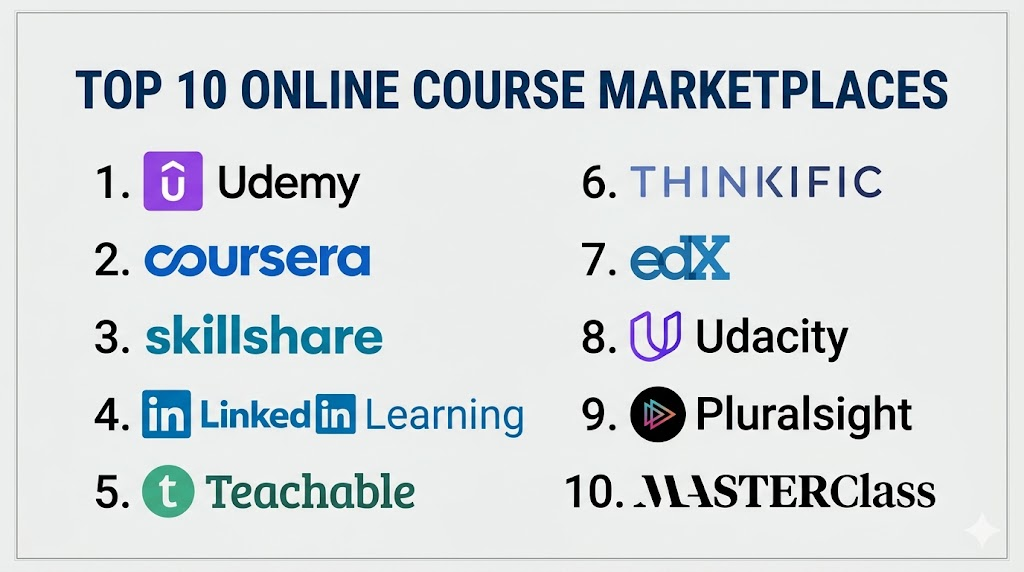
Introduction
Online Course Marketplaces are platforms where instructors, universities, training organizations, and businesses can create, publish, sell, and distribute digital courses to global learners. These platforms provide course hosting, payment systems, student management, certifications, analytics, and marketing tools that help educators scale online education without building their own infrastructure.The category has expanded rapidly as remote learning, professional upskilling, AI education, creator-led businesses, and workforce reskilling continue growing globally. Modern course marketplaces support video learning, cohort-based training, live sessions, mobile learning, AI-assisted recommendations, and enterprise workforce education. Many platforms now combine marketplace reach with creator monetization tools and business-grade learning management capabilities.
Real-World Use Cases
- Selling professional development and certification courses
- Hosting corporate and workforce training programs
- Building creator-led education businesses
- Teaching coding, business, design, and AI skills online
- Running subscription-based learning communities
Evaluation Criteria for Buyers
When evaluating Online Course Marketplaces, buyers should consider:
- Audience reach and discoverability
- Revenue model and creator earnings
- Course hosting and delivery quality
- Certification and accreditation support
- Mobile learning experience
- Analytics and reporting capabilities
- Community and engagement features
- Enterprise and team learning support
- Integrations with LMS and productivity tools
- Scalability for creators and institutions
Best for: Independent educators, universities, coaching businesses, enterprises, creators, training institutes, and learners seeking flexible online education.
Not ideal for: Organizations needing fully custom self-hosted LMS infrastructure with complete branding and governance control.
Key Trends in Online Course Marketplaces
- AI-focused learning content is becoming one of the fastest-growing course categories.
- Subscription-based learning models continue expanding rapidly.
- Enterprise workforce reskilling programs are driving platform growth.
- Creator-led education businesses are becoming more mainstream.
- AI-assisted course recommendations and learning personalization are improving engagement.
- Mobile-first learning experiences are becoming standard expectations.
- Cohort-based and community-driven learning models are growing rapidly.
- Skills verification and employer-recognized certifications are becoming more important.
- Platforms are increasingly supporting hybrid learning with live sessions and recordings.
- Marketplace consolidation is accelerating as competition intensifies.
How We Selected These Tools
The following Online Course Marketplaces were selected using practical e-learning and creator economy evaluation criteria.
- Strong global adoption and brand recognition
- Course quality and marketplace reach
- Instructor monetization capabilities
- Learner experience and accessibility
- Mobile and cloud learning support
- Enterprise and institutional adoption
- Community and engagement tools
- Integration ecosystem maturity
- Scalability for creators and businesses
- Long-term platform growth and innovation
Top 10 Online Course Marketplaces
1- Udemy
Short description:
Udemy is one of the world’s largest online course marketplaces, offering courses across technology, business, design, productivity, personal development, and creative skills. It is widely used by independent instructors because of its massive learner audience and simplified publishing workflows. The platform supports both consumer learning and enterprise workforce education.
Key Features
- Large global learner marketplace
- Self-paced video learning
- Instructor analytics
- Mobile learning support
- Certificates of completion
- Enterprise learning platform
- Course pricing flexibility
Pros
- Massive learner audience
- Easy course publishing workflows
- Strong category diversity
Cons
- Revenue sharing can vary
- Marketplace competition is intense
- Heavy discounting may impact pricing control
Platforms / Deployment
- Web / iOS / Android / Cloud
Security & Compliance
- User authentication available
- Enterprise account controls supported
- Additional certifications not publicly stated
Integrations & Ecosystem
Udemy integrates with enterprise learning and self-paced education ecosystems.
- Enterprise workforce learning
- Mobile learning apps
- Business training workflows
- Analytics dashboards
- Cloud content delivery
Support & Community
Very large instructor and learner ecosystem with strong global adoption.
2- Coursera
Short description:
Coursera focuses heavily on university-level education, professional certificates, and enterprise workforce training. It partners with major universities and technology companies to provide accredited learning programs, certifications, and degree pathways. The platform is especially strong for professional upskilling and structured career learning.
Key Features
- University-backed courses
- Professional certificates
- Guided projects
- Enterprise learning solutions
- Degree programs
- AI and technology training
- Career-focused learning paths
Pros
- Strong academic credibility
- Excellent professional certifications
- Enterprise workforce learning support
Cons
- Premium certifications can be expensive
- Some programs require significant time commitment
- Less creator-driven flexibility
Platforms / Deployment
- Web / iOS / Android / Cloud
Security & Compliance
- Enterprise access management supported
- Authentication controls available
- Additional certifications not publicly stated
Integrations & Ecosystem
Coursera integrates with enterprise workforce education and academic ecosystems.
- University partnerships
- Corporate training workflows
- Mobile learning
- Enterprise reporting systems
- Professional certification pathways
Support & Community
Strong enterprise and academic ecosystem with global institutional adoption.
3- Skillshare
Short description:
Skillshare is a creator-focused learning marketplace known for creative education, entrepreneurship, design, productivity, and lifestyle courses. It uses a subscription model where learners access a broad catalog of content. The platform is especially popular among creators, freelancers, and creative professionals.
Key Features
- Subscription-based learning
- Creative skill education
- Community-driven learning
- Project-based lessons
- Instructor monetization
- Mobile learning support
- Creator-focused ecosystem
Pros
- Strong creative learning community
- Good engagement workflows
- Accessible subscription model
Cons
- Less structured certification support
- Revenue depends heavily on watch time
- Enterprise depth is lighter
Platforms / Deployment
- Web / iOS / Android / Cloud
Security & Compliance
- User authentication available
- Additional certifications not publicly stated
Integrations & Ecosystem
Skillshare integrates with creator learning and project-based education workflows.
- Creative communities
- Mobile learning
- Video-based education
- Freelancer learning ecosystems
- Design education workflows
Support & Community
Strong creator ecosystem with active learner participation and project sharing.
4- LinkedIn Learning
Short description:
LinkedIn Learning provides professional development and business-focused online education integrated directly into the LinkedIn professional network ecosystem. It focuses on business skills, leadership, software tools, productivity, AI, and career advancement learning paths.
Key Features
- Professional skill development
- LinkedIn profile integration
- Business learning pathways
- AI and technology training
- Certificates of completion
- Enterprise workforce learning
- Learning analytics
Pros
- Excellent professional ecosystem integration
- Strong business and productivity training
- Good enterprise deployment support
Cons
- Less creator monetization flexibility
- Creative course diversity is narrower
- Advanced technical depth varies
Platforms / Deployment
- Web / iOS / Android / Cloud
Security & Compliance
- Enterprise authentication available
- Administrative controls supported
- Additional certifications not publicly stated
Integrations & Ecosystem
LinkedIn Learning integrates closely with professional networking and workforce ecosystems.
- LinkedIn profiles
- Enterprise HR systems
- Workforce analytics
- Professional learning pathways
- Business productivity ecosystems
Support & Community
Strong enterprise and professional development adoption globally.
5- Teachable
Short description:
Teachable is a creator-focused online course platform that helps educators build branded course businesses with memberships, coaching, and digital product sales. It is especially useful for creators who want more control over branding and monetization than traditional marketplaces.
Key Features
- Course hosting and publishing
- Membership subscriptions
- Coaching workflows
- Student analytics
- Digital product sales
- Payment processing
- Custom branding support
Pros
- Strong creator monetization flexibility
- Good business-building tools
- Supports memberships and coaching
Cons
- Discoverability depends on creator marketing
- Advanced workflows may require paid plans
- Marketplace traffic is limited compared with Udemy
Platforms / Deployment
- Web / Cloud
Security & Compliance
- Account security controls available
- Payment management supported
- Additional certifications not publicly stated
Integrations & Ecosystem
Teachable integrates with creator business and course monetization workflows.
- Email marketing tools
- Payment systems
- Membership workflows
- Coaching environments
- Analytics platforms
Support & Community
Strong creator and online business community with extensive onboarding resources.
6- Thinkific
Short description:
Thinkific is an online course platform designed for creators, training businesses, and organizations building branded online academies. It supports course creation, memberships, digital products, and business-focused online learning environments.
Key Features
- Custom online academies
- Membership management
- Digital product support
- Student analytics
- Website customization
- Marketing tools
- Course monetization workflows
Pros
- Strong branding flexibility
- Good scalability for training businesses
- Broad creator monetization support
Cons
- Marketplace discoverability is limited
- Advanced features require premium plans
- Some customization workflows require onboarding
Platforms / Deployment
- Web / Cloud
Security & Compliance
- User authentication available
- Administrative controls supported
- Additional certifications not publicly stated
Integrations & Ecosystem
Thinkific integrates with online business and learning management ecosystems.
- Marketing platforms
- Analytics tools
- Membership workflows
- Community platforms
- Payment gateways
Support & Community
Strong creator-focused ecosystem with growing enterprise learning adoption.
7- edX
Short description:
edX is a university-focused online learning platform that offers academic courses, professional certificates, and online degree programs. It is widely recognized for partnerships with universities and institutions delivering structured higher education experiences.
Key Features
- University-backed courses
- Online degree pathways
- Professional certifications
- Self-paced learning
- STEM and business education
- Academic credibility
- Enterprise learning support
Pros
- Strong academic reputation
- Good professional certification support
- High-quality structured learning
Cons
- Premium certificates can be costly
- Less creator-focused flexibility
- Course publishing is institution-centric
Platforms / Deployment
- Web / iOS / Android / Cloud
Security & Compliance
- Authentication controls available
- Enterprise access support available
- Additional certifications not publicly stated
Integrations & Ecosystem
edX integrates with academic and enterprise education ecosystems.
- University partnerships
- Corporate learning programs
- Professional certification pathways
- STEM learning ecosystems
- Online degree workflows
Support & Community
Strong university and institutional ecosystem with global learner adoption.
8- Udacity
Short description:
Udacity focuses heavily on technology, AI, programming, cloud computing, and workforce-oriented technical education. It is best known for nanodegree programs and industry-aligned technical learning pathways.
Key Features
- AI and programming education
- Technical nanodegrees
- Industry-focused curriculum
- Project-based learning
- Mentor support workflows
- Career-focused pathways
- Technical assessments
Pros
- Strong technical education focus
- Industry-aligned curriculum
- Good AI and cloud learning depth
Cons
- Premium pricing can be high
- Less broad category diversity
- Smaller creator ecosystem
Platforms / Deployment
- Web / Cloud
Security & Compliance
- User account controls available
- Additional certifications not publicly stated
Integrations & Ecosystem
Udacity integrates with workforce technology education ecosystems.
- AI learning pathways
- Cloud computing education
- Career-focused technical training
- Technical project environments
- Workforce upskilling workflows
Support & Community
Strong technical learning ecosystem with industry-oriented programs.
9- Pluralsight
Short description:
Pluralsight is a technology skills learning platform focused on software development, cloud computing, cybersecurity, DevOps, and enterprise technology education. It is widely used by businesses and IT professionals for technical upskilling.
Key Features
- Technical skill assessments
- Cloud and cybersecurity learning
- Developer-focused content
- Enterprise learning analytics
- Certification preparation
- Skill benchmarking
- Team learning management
Pros
- Strong technical course quality
- Excellent enterprise skill tracking
- Good cloud and DevOps coverage
Cons
- Narrower non-technical course variety
- Premium subscriptions can be expensive
- Less creator-driven marketplace flexibility
Platforms / Deployment
- Web / iOS / Android / Cloud
Security & Compliance
- Enterprise access controls available
- Administrative reporting supported
- Additional certifications not publicly stated
Integrations & Ecosystem
Pluralsight integrates with enterprise technology and workforce training ecosystems.
- Enterprise IT learning
- Cloud certification pathways
- Workforce analytics
- Technical skills benchmarking
- Team management workflows
Support & Community
Strong enterprise technology learning ecosystem with professional developer adoption.
10- MasterClass
Short description:
MasterClass is a premium online learning platform focused on celebrity-led education across creative arts, business, cooking, writing, entertainment, and lifestyle categories. The platform emphasizes cinematic production quality and inspirational learning experiences.
Key Features
- Celebrity-led courses
- High-production video lessons
- Creative and lifestyle education
- Subscription-based access
- Mobile learning support
- Curated learning pathways
- Downloadable learning materials
Pros
- Excellent production quality
- Engaging storytelling format
- Strong creative and lifestyle categories
Cons
- Less practical assessment depth
- Limited professional certification focus
- Enterprise features are lighter
Platforms / Deployment
- Web / iOS / Android / TV Apps / Cloud
Security & Compliance
- User authentication available
- Additional certifications not publicly stated
Integrations & Ecosystem
MasterClass integrates with premium consumer learning and entertainment-style education workflows.
- Mobile learning
- Smart TV streaming
- Subscription learning ecosystems
- Lifestyle education workflows
- Creative learning environments
Support & Community
Strong consumer learning brand recognition with premium content positioning.
Comparison Table
| Tool Name | Best For | Platforms Supported | Deployment | Standout Feature | Public Rating |
|---|---|---|---|---|---|
| Udemy | Massive marketplace reach | Web, iOS, Android | Cloud | Huge course catalog | N/A |
| Coursera | Professional certifications | Web, iOS, Android | Cloud | University partnerships | N/A |
| Skillshare | Creative learning | Web, iOS, Android | Cloud | Subscription-based creator learning | N/A |
| LinkedIn Learning | Professional development | Web, iOS, Android | Cloud | LinkedIn integration | N/A |
| Teachable | Creator businesses | Web | Cloud | Branded course monetization | N/A |
| Thinkific | Online academies | Web | Cloud | Custom learning business tools | N/A |
| edX | Academic learning | Web, iOS, Android | Cloud | University-backed programs | N/A |
| Udacity | Technical nanodegrees | Web | Cloud | AI and cloud career pathways | N/A |
| Pluralsight | Enterprise technology training | Web, iOS, Android | Cloud | Technical skill assessments | N/A |
| MasterClass | Premium creative education | Web, Mobile, TV Apps | Cloud | Celebrity-led learning | N/A |
Evaluation & Scoring of Online Course Marketplaces
| Tool Name | Core 25% | Ease 15% | Integrations 15% | Security 10% | Performance 10% | Support 10% | Value 15% | Weighted Total |
|---|---|---|---|---|---|---|---|---|
| Udemy | 9 | 9 | 8 | 7 | 8 | 8 | 9 | 8.5 |
| Coursera | 9 | 8 | 9 | 8 | 9 | 9 | 8 | 8.7 |
| Skillshare | 8 | 9 | 7 | 7 | 8 | 8 | 8 | 8.0 |
| LinkedIn Learning | 8 | 9 | 9 | 8 | 8 | 8 | 8 | 8.3 |
| Teachable | 8 | 8 | 8 | 7 | 8 | 8 | 8 | 8.0 |
| Thinkific | 8 | 8 | 8 | 7 | 8 | 8 | 8 | 8.0 |
| edX | 9 | 7 | 8 | 8 | 8 | 8 | 7 | 8.0 |
| Udacity | 8 | 7 | 7 | 7 | 8 | 8 | 7 | 7.6 |
| Pluralsight | 8 | 8 | 8 | 8 | 8 | 8 | 7 | 7.9 |
| MasterClass | 7 | 9 | 6 | 7 | 9 | 8 | 7 | 7.6 |
These scores are comparative and should be evaluated according to learning goals, monetization strategy, audience reach, and enterprise requirements. Coursera and LinkedIn Learning are stronger for professional development, while Udemy offers broader marketplace reach. Teachable and Thinkific are better for branded creator businesses, while Pluralsight and Udacity focus heavily on technical workforce education.
Which Online Course Marketplace Is Right for You?
Solo / Freelancer
Independent creators and educators often benefit most from Udemy, Skillshare, Teachable, and Thinkific. Udemy provides the strongest built-in marketplace reach, while Teachable and Thinkific offer more control over branding and monetization.
SMB
Small businesses and coaching companies usually prioritize flexible monetization, memberships, and scalable course delivery. Thinkific, Teachable, and LinkedIn Learning are strong choices depending on whether the focus is creator-led education or workforce development.
Mid-Market
Mid-sized organizations often need structured reporting, team learning, analytics, and professional learning pathways. Coursera, LinkedIn Learning, and Pluralsight provide stronger workforce learning ecosystems for these environments.
Enterprise
Large enterprises and universities should prioritize governance, reporting, certifications, enterprise access management, and scalable workforce learning. Coursera, Pluralsight, LinkedIn Learning, and edX are particularly strong for enterprise and institutional deployments.
Budget vs Premium
Budget-conscious learners often prefer Udemy, Khan Academy-style ecosystems, or Skillshare subscriptions because of accessibility and lower barriers. Premium learners may prefer Coursera, edX, MasterClass, or Udacity for structured and higher-production experiences.
Feature Depth vs Ease of Use
Udemy and Skillshare are easier for fast publishing and broad discovery. Teachable and Thinkific provide deeper business-building tools. Coursera and edX offer more structured academic learning experiences.
Integrations & Scalability
Organizations should evaluate whether the platform integrates with existing HR systems, LMS platforms, payment gateways, marketing tools, and analytics environments before scaling deployment.
Security & Compliance Needs
Educational organizations and enterprises should evaluate authentication workflows, account controls, reporting access, data governance, and administrative permissions before adopting a platform at scale.
Frequently Asked Questions FAQs
1. What are Online Course Marketplaces?
Online Course Marketplaces are digital platforms where instructors and organizations can publish, sell, and distribute educational content to learners globally. These platforms provide infrastructure for hosting videos, managing learners, handling payments, tracking progress, and issuing certificates. They make online education accessible without requiring instructors to build their own technical infrastructure.
2. Why are online course marketplaces growing so quickly?
Online learning demand has increased because people want flexible education, career upskilling, AI training, and remote learning opportunities. Businesses are also investing heavily in workforce reskilling programs. Online marketplaces make education accessible globally while reducing infrastructure and travel barriers.
3. Which platform is best for selling online courses?
Udemy is often best for broad marketplace reach, while Teachable and Thinkific are stronger for building independent branded education businesses. The right choice depends on whether creators want built-in traffic or more ownership and monetization control.
4. Which platform is best for professional certifications?
Coursera and edX are among the strongest options for professional certificates and university-backed education. LinkedIn Learning is also valuable for business-focused workforce development and professional skills training.
5. Are subscription-based learning models better than one-time purchases?
Subscription models provide continuous access to large content libraries and encourage ongoing learning. One-time purchases may work better for specialized technical courses or premium training programs. The best approach depends on learning frequency, course depth, and budget preferences.
6. What are the biggest mistakes creators make when choosing a platform?
A common mistake is selecting a platform based only on popularity instead of evaluating revenue sharing, audience ownership, branding flexibility, integrations, and long-term business goals. Some creators also underestimate the importance of marketing and student engagement workflows.
7. Are free online learning platforms useful?
Yes. Free platforms can provide valuable foundational learning opportunities, especially for beginners and budget-conscious learners. However, premium platforms often provide deeper structured curriculum, certificates, analytics, mentoring, and enterprise learning support.
8. How important are mobile learning capabilities?
Mobile learning is increasingly critical because many learners access courses through smartphones and tablets. Platforms with strong mobile apps, offline viewing, and responsive interfaces usually provide better engagement and accessibility.
9. Can businesses use these platforms for employee training?
Yes. Coursera, LinkedIn Learning, Pluralsight, and Udemy Business are widely used for enterprise workforce training and employee upskilling. They provide analytics, reporting, team management, and professional learning pathways for organizations.
10. How should organizations evaluate platform success?
Organizations should evaluate learner engagement, course completion rates, certification outcomes, workforce skill improvement, learner retention, and business impact. Successful platforms should improve learning accessibility, scalability, and measurable educational outcomes over time.
Conclusion
Online Course Marketplaces have transformed modern education by making learning more flexible, scalable, and globally accessible for students, professionals, businesses, and creators. Udemy remains one of the strongest marketplace-driven platforms for broad reach, while Coursera and edX lead in university-backed professional education. Skillshare and MasterClass focus more on creative and subscription-based learning experiences, while Teachable and Thinkific help creators build independent online education businesses. LinkedIn Learning and Pluralsight provide strong workforce-focused professional development ecosystems, while Udacity continues specializing in technical and AI-focused career pathways. The right platform depends on learning goals, monetization strategy, audience reach, branding requirements, and enterprise needs. Organizations and creators should shortlist platforms based on target learners, evaluate integrations and reporting carefully, test student engagement workflows, and validate long-term scalability before committing to a learning ecosystem.
