MOTOSHARE 🚗🏍️
Rent Bikes & Cars Directly from Owners
Motoshare connects vehicle owners with people who need bikes and cars on rent. Owners earn from idle vehicles, and renters get flexible ride options.
Visit Motoshare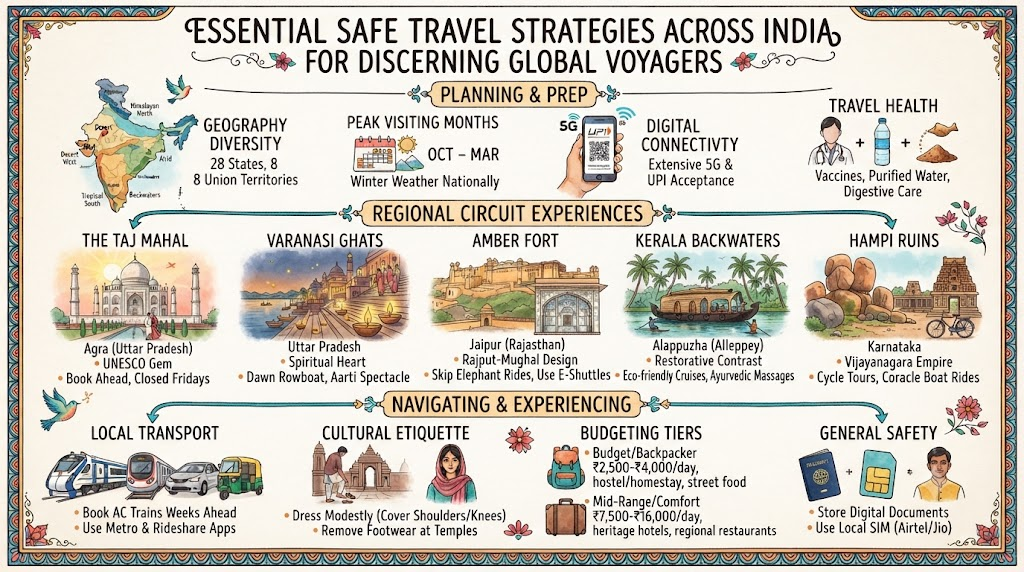
Introduction
Most international holidays funnel travelers into hyper-curated, sanitized tourist corridors where global chains outnumber local artisans. India shatters that predictability from the exact moment you land, immersing you in sensory poetry, sacred traditions, and monumental heritage.
Traveling here is an exploration of living history rather than a passive sightseeing stop. Ancient spiritual rites unfold beside cutting-edge tech hubs, welcoming curious travelers with unfiltered warmth and genuine human connection.
Why India is a must-visit city
India is an entire subcontinent masquerading as a country, holding civilizational memory spanning five millennia. Its geographical tapestry transitions seamlessly from Himalayan snowscapes and desert citadels to emerald tropical backwaters and coastal plateaus. For international globetrotters, the country delivers unmatched cultural depth supported by high-speed express trains, world-class international airports, and legendary hospitality traditions rooted in Atithi Devo Bhava (the guest is sacred).
The classic journey centers along historic regional circuits. The Golden Triangle (Delhi, Agra, Jaipur) presents iconic Mughal and Rajput royal architecture, the Ganga Heritage Corridor showcases sacred spiritual traditions, and the Southern Coastal Circuit immerses visitors in verdant waterways, Ayurvedic wellness, and temple art.
| Key Dimension | Regional Metric & Travel Reality |
|---|---|
| Geographic Diversity | 28 States, 8 Union Territories; alpine north to tropical peninsular south |
| Primary Transit Corridors | Vande Bharat Express network, domestic flights connecting 140+ airports |
| Peak Visiting Months | October through March (pleasant winter weather nationwide) |
| Standard Tourist Visa | Indian e-Tourist Visa (30-day, 1-year, or 5-year multi-entry options) |
| Language Dynamics | Hindi and English widely spoken in transit hubs and hospitality centers |
| Digital Connectivity | Extensive 5G coverage; UPI digital payments accepted by virtually all merchants |
Top Places and Experiences
The Taj Mahal
Rising beside the Yamuna River, this 17th-century white marble mausoleum built by Emperor Shah Jahan for his wife Mumtaz Mahal remains an architectural pinnacle of human love and symmetry. The structure blends Persian, Islamic, and Indian architectural styles with translucent Makrana marble inlaid with lapis lazuli, jade, and carnelian.
Walking through the monumental red sandstone gateway at sunrise reveals soft morning light reflecting across pristine dome reflections. The sheer precision of its optical proportions and intricate floral calligraphy leaves visitors in quiet reverie.
- Location: Agra, Uttar Pradesh; 210 km southeast of New Delhi
- Why it is worth visiting: A UNESCO World Heritage masterpiece and one of the New Seven Wonders of the World
- Best things to do: Observe the color shift from blush pink to bright ivory at dawn, admire floral marble inlays in the central chamber, and view river-facing vistas from the rear terrace
- Best time to visit: Sunrise (05:45 AM – 07:00 AM) between October and March
- Ideal for whom: Architecture purists, history enthusiasts, romantic couples, and photographers
- Travel tip: Book tickets in advance online via the official portal; the monument remains strictly closed on Fridays
Varanasi Ghats & Ganga Aarti
As one of the world’s oldest continuously inhabited cities, Varanasi embodies the philosophical core of northern India. Steps made of ancient stone line the western bank of the sacred River Ganges, where pilgrims seek spiritual liberation through daily devotion and sacred rituals.
At dusk, Dashashwamedh Ghat illuminates with brass lamps during the sacred Maha Aarti ceremony. Chanted Sanskrit mantras, incense smoke, and ringing bells echo across the water, creating a transcendent communal spectacle.
Varanasi Ganga Aarti evening ceremony.
- Location: Varanasi District, Uttar Pradesh; 320 km east of Lucknow
- Why it is worth visiting: The epic spiritual heart of Hinduism offering raw, authentic civilizational insight
- Best things to do: Drift along the ghats on a dawn wooden rowboat, witness the evening Ganga Aarti from the river, and explore ancient silk-weaving alleyways
- Best time to visit: November to February; evening ceremonies begin at sunset around 06:00 PM
- Ideal for whom: Cultural researchers, spiritual seekers, photographers, and experiential travelers
- Travel tip: Respect solemn cremations at Manikarnika Ghat by keeping all camera gear concealed
Amber Fort
Perched on rugged Amer hills outside the Pink City, Amber Fort showcases the zenith of Rajput royal architecture. Built using pale yellow and pink sandstone combined with pure white marble, its fortress walls encircle sprawling courtyards, opulent private quarters, and defensive ramparts.
Inside lies the Sheesh Mahal (Mirror Palace), where walls and arched ceilings glisten with imported Belgian convex glass mirrors. Strategic window lattices channel breezes across mountain gardens, blending defensive muscle with palatial luxury.
Amber Fort royal courtyard.
- Location: Amer, Jaipur, Rajasthan; 11 km north of Jaipur city center
- Why it is worth visiting: The finest preserved example of Rajput-Mughal defensive and decorative luxury
- Best things to do: Marvel at light reflections inside the Sheesh Mahal, climb up to neighboring Jaigarh Fort via subterranean tunnels, and catch the evening light show
- Best time to visit: 08:00 AM – 10:30 AM to explore before midday heat arrives
- Ideal for whom: Fortification fans, families, history lovers, and design admirers
- Travel tip: Skip controversial elephant ascents; take licensed electric shuttle vehicles or the scenic stone walkway to the main gate
Kerala Backwaters
The serene backwaters of Kerala form a 900-kilometer labyrinth of natural lagoons, palm-fringed canals, and freshwater lakes running parallel to the Arabian Sea. Traditional kettuvallams—vintage rice barges crafted from jackwood and coir without nails—glide quietly past village shores.
Cruising past emerald paddy fields reveals life in gentle rhythm: fishermen casting coir nets, children cycling along canal paths, and birds soaring overhead. Freshly cooked Keralan meals scented with curry leaves and coconut oil complete the peaceful retreat.
Alleppey houseboat backwater cruise.
- Location: Alappuzha (Alleppey), Kerala; 85 km south of Cochin International Airport
- Why it is worth visiting: An unhurried, restorative contrast to the bustling cities of northern India
- Best things to do: Spend a night on an eco-friendly solar houseboat, navigate narrow village canals by traditional canoe, and experience an authentic Ayurvedic herbal massage
- Best time to visit: October to February for temperate breezes and clear sunny days
- Ideal for whom: Wellness travelers, honeymooners, nature lovers, and slow-travel advocates
- Travel tip: Choose government-certified green palm houseboats to ensure ethical waste handling and support sustainable local water ecosystems
Hampi Ruins
Scattered across a surreal landscape of giant granite boulders, Hampi preserves the magnificent ruins of the Vijayanagara Empire from the 14th to 16th centuries. Once among the world’s wealthiest capitals, this open-air museum features stone temples, aqueducts, and royal pavilion complexes.
The iconic stone chariot at the Vittala Temple complex showcases engineering wizardry with its revolving stone wheels and musical pillars carved from granite blocks. Climbing nearby boulder-strewn hills at sunset reveals ruins glowing amber against the Tungabhadra River.
- Location: Vijayanagara District, Karnataka; 350 km north of Bengaluru
- Why it is worth visiting: A UNESCO landscape where medieval royal architecture meets dramatic geological formations
- Best things to do: Cycle across the sacred temple ruins, climb Matanga Hill for panoramic vistas, and cross the river in a round wicker coracle boat
- Best time to visit: November to February; sunrise and sunset yield ideal light and comfortable temperatures
- Ideal for whom: Solo backpackers, photographers, geological buffs, and archeology enthusiasts
- Travel tip: Rent a lightweight bicycle or electric scooter in Hampi Bazaar to cover distant complexes efficiently
Offbeat Exploration: Hidden Gems Tourists Miss
Orchha Cenotaphs
Located on the banks of the Betwa River in Madhya Pradesh, Orchha remains wonderfully overlooked by fast-paced travelers. Fourteen chhatris (cenotaphs) honouring Bundela kings stand proud against the forest canopy. The multi-tiered sandstone towers reflect in the river’s calm waters, offering peaceful historical exploration without tour bus crowds.
Chettinad Heritage Mansions
In rural Tamil Nadu, the Chettinad region holds thousands of palatial heritage mansions built by affluent merchant banking families in the 19th century. Featuring Italian marble, Burmese teak pillars, and handmade Athangudi tiles, these estates deliver extraordinary vernacular design alongside world-renowned, pepper-forward Chettinad cuisine.
The Living Root Bridges of Cherrapunji
Deep in the rainforests of Meghalaya, indigenous Khasi communities train the aerial roots of rubber fig trees across rushing streams. These bio-engineered living bridges grow stronger over centuries. Reaching them requires descending steep jungle valleys, rewarding intrepid hikers with untamed nature and clean river pools.
Detailed Practical Guidance for Travelers
| Destination | Standard Entry Fee | General Timings | Best Local Food Options Nearby | Recommended Nearby Attractions |
|---|---|---|---|---|
| Taj Mahal | ₹1,100 (Foreigners) / ₹50 (Indians) | Sunrise to Sunset (Closed Fridays) | Petha sweets at Panchhi Petha; Mughlai curries at Pinch of Spice | Agra Fort, Mehtab Bagh gardens |
| Varanasi Ghats | Free access; Boat rides ~₹500–₹1,500/hr | Open 24/7; Aarti starts ~06:00 PM | Blue Lassi Shop, hot kachori-sabzi at Ram Bhandar | Sarnath archeological park, Kashi Vishwanath temple |
| Amber Fort | ₹550 (Foreigners) / ₹100 (Indians) | 08:00 AM – 05:30 PM, 06:30 PM – 09:15 PM | Dal Baati Churma at 1135 AD inside fort; lassi at Lassiwala | Jaigarh Fort, Panna Meena ka Kund stepwell |
| Kerala Backwaters | Houseboats: ₹8,000–₹22,000/night; Public ferry: ₹20–₹50 | Day cruises: 11:30 AM – 05:00 PM | Karimeen pollichathu (pearl spot fish) at shoreline toddy shops | Marari Beach, Pathiramanal bird sanctuary |
| Hampi Ruins | ₹600 (Foreigners) / ₹40 (Indians) | 06:00 AM – 06:00 PM (Daily) | Fresh south Indian thalis at Mango Tree Restaurant | Virupaksha Temple, Hemakuta Hill, Lotus Mahal |
Logistics & On-Ground Navigation
Local Transport Options
- Indian Railways: The lifeblood of regional travel. Book air-conditioned classes (1AC, 2AC, 3AC, or Executive Chair Car) weeks ahead through the IRCTC portal.
- Metro Rail Networks: Major metropolises like Delhi, Bengaluru, and Mumbai feature modern, clean, air-conditioned metro systems with dedicated women-only coaches.
- Auto-Rickshaws & E-Rickshaws: Ideal for quick hops through narrow bazaars. Always confirm fare meters or agree on a firm price before climbing aboard.
- Rideshare Apps: Uber and Ola operate reliably across 100+ cities, eliminating language barriers, cash haggling, and route confusion.
Budget Planning
- Budget/Backpacker Tier (₹2,500 to ₹4,000 / $30 to $48 USD per day): Clean hostel dorms or family homestays, flavorful street-side dining, public buses, unreserved metro hops, and second-class sleeper trains.
- Mid-Range/Comfort Tier (₹7,500 to ₹16,000 / $90 to $195 USD per day): Restored heritage hotels or boutique guesthouses, private air-conditioned cars with drivers, sit-down regional restaurants, domestic flights, and express trains.
Safety and Inclusivity Tips
- Family Travelers: Reserve private air-conditioned cabs for day-trips, pack child-friendly snacks, and carry water purifiers or bottled water brands with sealed caps.
- Couples: Choose verified boutique homestays or heritage properties; practice discreet public displays of affection in conservative temple towns.
- General Safety Protocol: Store digital copies of your passport and visa on secure cloud drives, use local SIM cards (Airtel or Jio) for live maps, and purchase travel health insurance.
Strategic Travel Planning Guardrails
Travel Planning Tips for India
- Seasonality Decisions: Travel between October and March for dry days, or head north into Ladakh and Himachal during the summer months.
- Payment Strategy: Carry some cash for rural bazaars, but link a travel debit card to digital UPI apps for seamless contactless payments everywhere.
- Temple Etiquette: Dress respectfully with covered shoulders and knees; remove footwear outside temple gates, and accept holy water or sweets with your right hand.
- Hydration Discipline: Stick exclusively to boiled, filtered, or sealed bottled water, avoiding iced street beverages unless using clean ice at established venues.
- Digestive Care: Introduce regional spices gradually; carry oral rehydration salts, activated charcoal, and electrolyte packets in your day bag.
Common Mistakes to Avoid
- Overcrowded Schedules: Cramming six cities into seven days guarantees exhaustion; dedicate at least 3-4 days to each destination to absorb its local rhythms.
- Overlooking Regional Cuisine: Ordering standard butter chicken nationwide misses local delights like Rajasthani ker sangri, Goan vindaloo, or Keralan stew.
- Assuming Universal Transport Punctuality: Always leave a 3 to 4-hour cushion when connecting between train journeys and domestic flights.
- Discarding Small Currency: Street vendors rarely break ₹500 bills, so keep stacks of ₹20, ₹50, and ₹100 notes handy for small purchases.
- Ignoring Inner-Line Permits: High-security borders like Ladakh, Sikkim, and Arunachal Pradesh require authorized government travel permits arranged ahead of time.
Suggested Itinerary Blueprints
1-Day Quick Dash (The Capital & Marble Heritage Express)
Designed for business visitors or short layovers:
- 06:00 AM: Depart Delhi on the rapid Gatimaan Express train toward Agra Cantt.
- 09:00 AM – 01:00 PM: Explore the Taj Mahal complex with an accredited guide before midday crowds arrive.
- 01:30 PM – 03:30 PM: Enjoy a traditional Mughlai lunch followed by a walk through Agra Fort.
- 05:50 PM: Board the evening return train back to New Delhi.
2-Day Deep-Dive (The Royal Rajasthan & Pink City Immersion)
Designed for weekend explorers uncovering Rajasthani art and fortresses:
- Day 1 (Jaipur Citadel Heritage): Scale Amber Fort early in the morning, photograph the water-locked Jal Mahal from the promenade, and tour the City Palace royal rooms.
- Day 2 (Old City Artisans & Bazaars): Catch sunrise reflections at Hawa Mahal, explore Jantar Mantar observatory, and hunt for blue pottery and block-printed textiles in Johari Bazaar.
Complete Weekend Travel Plan (The Sacred Ganga & Silk Corridor)
A 3-day spiritual circuit in Varanasi:
- Friday: Arrive, settle into an old-city riverfront heritage haveli, and witness the hypnotic Ganga Aarti at Dashashwamedh Ghat from a wooden boat.
- Saturday: Take a peaceful dawn rowboat ride past the cremation ghats, walk ancient silk-weaving alleys, sample lassi, and tour the sacred Kashi Vishwanath temple corridor.
- Sunday: Take a half-day excursion to Sarnath, where Lord Buddha gave his first sermon, before heading to the airport for an evening departure.
Common Tourist Mistakes to Avoid
Geographic Blunders
Attempting to visit the Taj Mahal, Jaipur, and Goa in a four-day vacation creates transit headaches. India spans over 3 million square kilometers; pick a single focused geographical zone (like northern heritage or southern coastal waterways) rather than crisscrossing regional flight paths.
Commercial Traps
Spending precious holiday hours inside generic air-conditioned luxury shopping malls robs you of character. Step into century-old bazaars where brass smiths, spice merchants, and handloom weavers work right before your eyes.
Neglecting Modern/Alternative Zones
Travelers often focus solely on antique palaces while missing vibrant contemporary neighborhoods. Cities like Bengaluru’s Indiranagar or New Delhi’s Hauz Khas Village feature bustling indie art galleries, specialty coffee roasters, and microbreweries.
Transport Overpayment
Unmetered roadside auto-rickshaws often inflate fares for arriving international tourists. Check base pricing on apps like Uber, Ola, or Rapido first to negotiate fair rates or book directly through digital platforms.
Luxury Dining Bias
Eating all your meals within hotel restaurants keeps you insulated from authentic flavors. Join curated evening walking food tours led by culinary guides to savor fresh dosas, samosas, and chai from celebrated neighborhood masters.
Frequently Asked Questions
1. Is India safe for solo female international travelers?
India welcomes millions of solo women travelers annually, provided you take practical precautions. Stick to registered pre-paid transport or rideshare apps, reserve verified guesthouses with top ratings, dress in modest breathable clothing covering shoulders, and avoid traversing unfamiliar poorly lit alleys late at night.
2. What is the single best season to plan a journey across India?
The prime window across central, western, and southern regions runs from October through March, when daytime temperatures hover comfortably between 18°C and 28°C. For the high Himalayan valleys of Ladakh, Spiti, and Kashmir, summer months from June through September provide ideal road conditions.
3. Do international visitors need specific travel vaccines before arrival?
Standard recommended inoculations include Hepatitis A, Tetanus, and Typhoid. Travelers arriving from yellow-fever endemic regions must show valid international vaccination certificates upon arrival. Always consult your local travel clinic six weeks before departure for tailored medical and prophylactic guidance.
4. How can international travelers avoid digestive issues while dining?
Dine at bustling eateries with high turnover, drink only sealed bottled or UV-purified water, avoid uncooked street salads, and peel fresh fruit yourself. Introducing mild yogurt dishes like raita helps your stomach adjust gently to unfamiliar aromatic spices.
5. What is the easiest way to secure mobile data upon arriving at Indian airports?
Major international arrival terminals in Delhi, Mumbai, and Bengaluru feature official counters for carriers like Airtel and Jio. Present your passport, visa copy, and a passport photo; activation typically takes between two and four hours, providing fast 5G data connectivity nationwide.
6. Can foreign tourists easily purchase Indian train tickets online in advance?
Foreign nationals can register on the official IRCTC portal using their international mobile numbers and credit cards. You can also book under the specialized Foreign Tourist Quota (FTQ) at major international booking bureaus located inside major rail stations across Delhi, Mumbai, and Kolkata.
7. How widely accepted are international credit cards throughout India?
High-end hotels, malls, supermarkets, and upscale restaurants accept international Visa and Mastercard cards without issue. For roadside stalls, regional tuk-tuks, and village markets, always keep smaller cash notes on hand, as many local vendors rely exclusively on indigenous UPI mobile payment codes.
8. What is the golden rule of bargaining in local open-air markets?
Approach bargaining with lighthearted humor and polite smiles rather than tense confrontation. Counter the opening merchant offer with roughly 50 to 60 percent, gradually working toward a fair middle price where both you and the skilled local artisan walk away content.
9. Are domestic flights reliable for hopping between distant Indian states?
Airlines like IndiGo, Air India, and Vistara offer punctual, affordable, and frequent domestic flights linking all major hubs. Luggage rules are strictly enforced, with domestic check-in allowances usually capped at 15 kg per ticket unless you purchase extra baggage allowances beforehand.
10. What specific clothing etiquette applies when entering religious temples?
Modesty is key across all sacred Hindu, Sikh, Jain, and Islamic heritage complexes. Cover your legs past the knees and keep shoulders concealed. Carry a light scarf to cover your head when entering Sikh gurdwaras and mosques, and remove your shoes at the entrance.
11. How much should international tourists tip service workers across India?
Tipping is customary and warmly received. In casual sit-down dining spots, a 7% to 10% tip is standard unless a service charge is already included in the bill. For private drivers and guided tours, ₹400 to ₹700 per day reflects fair appreciation for dedicated service.
12. Is English widely spoken throughout the main tourist paths?
English is widely spoken across India’s hospitality sector, transport hubs, restaurants, and shopping complexes. Most official signboards, rail indicators, and museum displays are bilingual, making self-guided exploration straightforward for international travelers without needing an interpreter.
Conclusion
Choosing to travel through India is an enriching departure from cookie-cutter vacations. It is a journey that sharpens your senses, challenges expectations, and rewards open curiosity with genuine human warmth. Long after your bags are unpacked, you will remember the ringing of evening temple bells, the scent of morning cardamom tea, and the radiant smiles of new friends. Step forward with open eyes and an open heart, and this historic subcontinent will leave a lasting mark on your soul.
