MOTOSHARE 🚗🏍️
Rent Bikes & Cars Directly from Owners
Motoshare connects vehicle owners with people who need bikes and cars on rent. Owners earn from idle vehicles, and renters get flexible ride options.
Visit Motoshare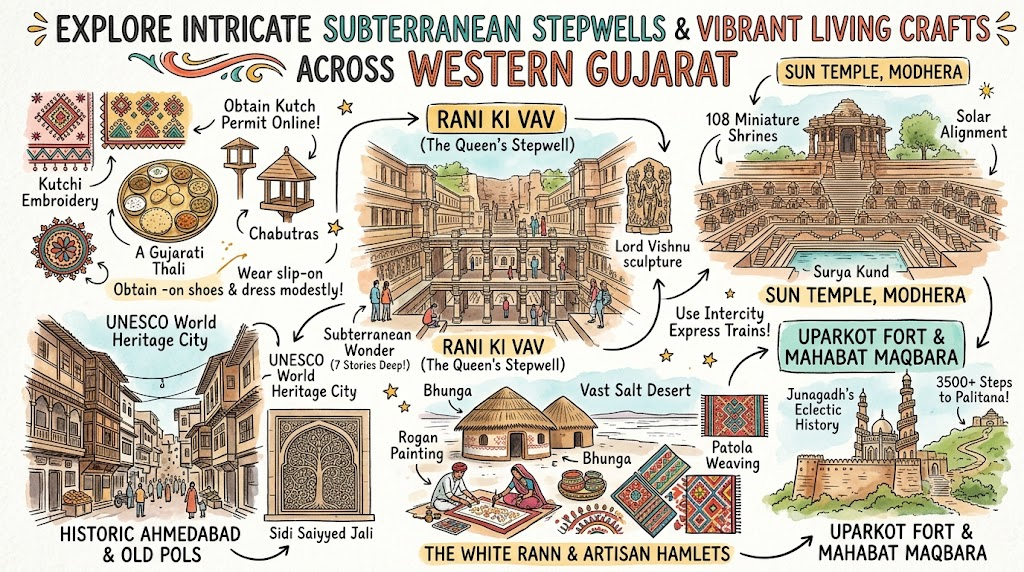
Introduction
Most travelers chasing India’s cultural soul instinctively rush into crowded golden triangles or resort-packed beaches. Yet, true cultural depth thrives where ancient history is still etched into daily village routines, subterranean stone sanctuaries, and vibrant hand-spun textiles.
Gujarat offers a refreshing departure from frantic commercial tourism circuits. Here, architectural brilliance unfolds underground inside intricate stepwells, sacred chants reverberate across multi-faith pilgrimage peaks, and desert communities preserve century-old art forms with effortless pride.
Why Gujarat is a must-visit city
Gujarat stands as an indispensable chapter of the subcontinent’s living heritage. Flanked by an extensive coastline and boundless desert plains, this western frontier fostered legendary trading empires, Harappan port civilizations, and enduring architectural traditions. Its seamless infrastructure—spanning pristine multi-lane state expressways, expansive rail corridors, and modern airports—makes immersive cross-district journeys smooth for history scholars, family explorers, and independent adventurers alike.
The cultural travel circuit naturally anchors around three primary corridors: the UNESCO-listed architectural heritage of Central-North Gujarat, the coastal and spiritual temple trails of Saurashtra, and the vibrant artisan communities of Kutch. Traveling across this state feels like unearthing a sequence of living museums, where each region preserves distinct dialects, textiles, and sacred folklore.
| Key Metric / Fact | Details & Highlights |
|---|---|
| Primary Cultural Hubs | Ahmedabad, Patan, Modhera, Bhuj, Junagadh, Palitana |
| UNESCO World Heritage Sites | Historic City of Ahmedabad, Rani ki Vav, Champaner-Pavagadh, Dholavira |
| Peak Cultural Travel Season | October to March (mild winters with crisp desert evenings) |
| Prominent Living Crafts | Patola double-ikat, Rogan painting, Ajrakh block-printing, Kutchi embroidery |
| Culinary Identity | Balanced vegetarian thalis (sweet, salty, spicy notes), Farsan snacks |
| State Connectivity | Major international airports at Ahmedabad and Surat; domestic links at Bhuj, Rajkot, Vadodara |
Best Places or Experiences
Rani ki Vav (The Queen’s Stepwell)
Carved during the 11th-century Chaulukya dynasty under the patronage of Queen Udayamati, Rani ki Vav is an inverted temple descending seven stories deep into the earth. Built as an elaborate memorial along the banks of the Saraswati River, the subterranean monument features over five hundred masterfully carved principal sculptures and over a thousand minor ones that honor the supreme avatar manifestations of Lord Vishnu.
Walking down through its pillared pavilions reveals an overwhelming exhibition of subterranean Maru-Gurjara stonework. The cool underground breeze carries the subtle aroma of aged sandstones, while razor-sharp sculptural reliefs depict mythological damsels, celestial dancers, and resting cosmic deities in breathtaking detail.
- Location: Patan District, approximately 125 km northwest of Ahmedabad.
- Why it is worth visiting: It is an upside-down subterranean wonder recognized as a UNESCO World Heritage site that elevates everyday water management into high temple art.
- Best things to do: Study the reclining Sheshashayi Vishnu sculptures on the lowest level, marvel at the geometric symmetry of the pavilions, and photograph the afternoon light filtering across the stepped tiers.
- Best time to visit: November to February, ideally between 8:00 AM and 11:00 AM to beat the mid-day sun and catch softer illumination.
- Ideal for whom: Architectural historians, photographers, solo heritage explorers, and multi-generational families.
- Travel tip: > Book your ASI entry ticket online via the official portal before arriving to bypass physical ticket queue delays on weekends.
Sun Temple, Modhera
Resting gracefully along the banks of the Pushpavati River, the Sun Temple at Modhera is a grand 11th-century monument constructed by King Bhima I. Designed so that the rays of the rising sun illuminated the sanctum during the equinoxes, the complex is divided into three distinct segments: the sacred stepped tank (Surya Kund), the grand assembly hall (Sabha Mandapa), and the inner sanctum (Guda Mandapa).
The true showstopper is the Surya Kund, a rectangular water body framed by 108 miniature shrines chiseled with immaculate geometric harmony. Sitting quietly on its stone steps while the morning sun warms the weather-worn sandstone brings the spiritual sophistication of medieval India into vivid focus.
Surya Kund at Modhera Sun Temple.
- Location: Modhera, Mehsana District, approximately 98 km north of Ahmedabad.
- Why it is worth visiting: An architectural masterclass of planetary alignment, solar devotion, and mathematical terraced step design.
- Best things to do: Count the miniature shrines around the Surya Kund, trace the intricate Ramayana and Mahabharata panels carved around the Sabha Mandapa pillars, and attend the evening light and sound show.
- Best time to visit: October to March; visit at dawn (6:30 AM – 8:30 AM) for mystical golden reflections or at twilight for illuminated facades.
- Ideal for whom: Classical architecture lovers, spiritual travelers, and landscape photographers.
- Travel tip: Combine your visit to Modhera with Patan on the same day by hiring a private vehicle from Ahmedabad.
Historic City of Ahmedabad (Old Pols & Sidi Saiyyed)
Founded in 1411 CE by Sultan Ahmed Shah along the Sabarmati River, Ahmedabad is India’s first UNESCO World Heritage City. The historic walled core is celebrated for its dense residential settlements known as “pols”—interconnected gated micro-neighborhoods featuring carved wooden bird feeders (chabutras), hidden escape passages, and community courtyards that have preserved communal living across centuries.
A short walk from the central bazaar stands the Sidi Saiyyed Mosque, renowned for its celebrated “Tree of Life” stone jali. This delicate filigree window, carved out of single slabs of yellow sandstone, transforms solid stone into flowing palm fronds and intertwined foliage that filter soft sunlight into the tranquil prayer hall.
Sidi Saiyyed Stone Jali in Ahmedabad.
- Location: Central Ahmedabad, Old City Quarter.
- Why it is worth visiting: A rare living synthesis of Indo-Islamic stone masonry, communal Gujarati wooden vernacular architecture, and thriving street life.
- Best things to do: Take the official early morning heritage walk through the Old Pols, admire the stone lace jali at Sidi Saiyyed Mosque, and sample midnight street delicacies at Manek Chowk.
- Best time to visit: November to February, especially early mornings between 7:00 AM and 10:00 AM when the old alleys are free of vehicular congestion.
- Ideal for whom: Urban heritage enthusiasts, street food connoisseurs, and cultural storytellers.
- Travel tip: Wear slip-on footwear and carry a scarf or shawl, as active heritage mosques and temples require modest attire and frequent shoe removal.
The White Rann of Kutch & Artisan Hamlets
Spanning the Indo-Pakistani border zone, the Great Rann of Kutch is a vast salt marsh that dries into an endless expanse of crystalline white salt desert each winter. Beyond its surreal natural landscape, Kutch represents the beating heart of India’s indigenous crafts, sustained by local pastoralist and artisan communities who have inhabited these remote outposts for generations.
The true cultural reward lies in visiting nearby villages like Nirona, Hodka, and Bhujodi. Watching master craftsmen practice Rogan art—painting intricate patterns on fabric using castor oil and natural pigments—or shaping bell metal by ear provides an intimate look into ancestral human ingenuity that modern machinery cannot replicate.
Sunset at the White Rann of Kutch.
- Location: Kutch District, approximately 85 km north of Bhuj.
- Why it is worth visiting: The unmatched combination of an ethereal salt desert landscape paired with India’s highest concentration of master craftspeople.
- Best things to do: Walk across the white salt flats during a full moon evening, witness live Rogan painting demonstrations in Nirona village, and explore traditional mud Bhunga dwellings.
- Best time to visit: November to February; plan your desert excursions for late afternoon (4:30 PM – 7:00 PM) to catch the changing desert colors.
- Ideal for whom: Textile collectors, cultural anthropologists, couples, and experiential photographers.
- Travel tip: > Foreign and domestic travelers must obtain a mandatory border permit online or at the Bhirandiyara checkpoint before entering the salt desert zone.
Palitana Shatrunjaya Temples
Rising steeply above the town of Palitana, Shatrunjaya Hill is the supreme pilgrimage destination of Jainism, crowned with an astonishing complex of over 850 marble-carved shrines. Dating from the 11th century onwards, this sacred hilltop was built not as a royal palace, but as a silent celestial city dedicated entirely to the veneration of the Tirthankaras.
Reaching the summit requires climbing more than 3,500 stone steps alongside devoted pilgrims. The reward at the top is profound: pristine white marble sanctums glowing against the morning haze, delicate stone floral arches, and an all-encompassing aura of deep meditative silence where staying after sunset is forbidden.
- Location: Bhavnagar District, approximately 215 km south of Ahmedabad.
- Why it is worth visiting: The world’s largest hilltop temple complex, offering an unmatched physical and spiritual immersion into pure marble artistry and Jain philosophy.
- Best things to do: Begin the summit ascent before dawn to watch the morning mist lift over the Shetrunji River, admire the Adinath Temple’s carvings, and observe the devout ritual of silent morning worship.
- Best time to visit: December to February; start climbing between 5:30 AM and 6:30 AM to avoid midday heat.
- Ideal for whom: Spiritual pilgrims, high-endurance heritage trekkers, and lovers of fine sculpture.
- Travel tip: Leather items (belts, wallets, shoes) are strictly forbidden on the hill; deposit them at base cloakrooms and hire a doli (chair palanquin) if traveling with seniors.
Uparkot Fort & Mahabat Maqbara, Junagadh
Nestled at the base of the sacred Girnar hills, Junagadh offers one of the most eclectic cultural tapestries in western India. Its historic core is anchored by the ancient Uparkot Fort, established over 2,300 years ago during the Mauryan Empire. The fortress houses rock-cut Buddhist caves chiseled directly into bedrock, immense stepwells cut through solid rock (Adi Kadi Vav and Navghan Kuvo), and medieval siege cannons.
Just a short drive away stands the Mahabat Maqbara, a 19th-century mausoleum built by the Nawabs of Junagadh. Its dizzying synthesis of Indo-Islamic, European Gothic, and Rajput styles—featuring spiral outdoor staircases coiling around slender minarets—creates an architectural spectacle unlike anything else on the subcontinent.
- Location: Junagadh City, approximately 315 km southwest of Ahmedabad.
- Why it is worth visiting: A multi-layered crossroads showcasing Mauryan antiquity, Buddhist monastic cave history, and extravagant Nawabi tomb architecture.
- Best things to do: Descend the rock-cut stairs of Navghan Kuvo, study the 2nd-century Buddhist cave halls inside Uparkot, and marvel at the spiraling exterior minarets of Mahabat Maqbara.
- Best time to visit: October to March; explore the outdoor fort walls in the late afternoon for expansive views of Mount Girnar.
- Ideal for whom: History buffs, vintage architecture fans, and off-the-beaten-path explorers.
- Travel tip: Wear sturdy walking shoes with good traction, as the stone steps carved inside Uparkot’s ancient rock wells can be smooth and worn.
Offbeat Exploration: Hidden Gems Tourists Miss
The Harappan Metropolis of Dholavira
Located on the isolated island of Khadir Bet within the Great Rann of Kutch, Dholavira is an extraordinary UNESCO World Heritage archaeological site. It preserves one of the most sophisticated urban settlements of the ancient Indus Valley Civilization, dating back to 2500 BCE. Visitors can walk along excavated stone citadel walls, inspect gigantic water reservoirs cut into stone, and see the ancient city planning that flourished long before the classical antiquities of Europe.
Patan’s Master Patola Weaving Workshops
While thousands visit Rani ki Vav, few take the time to step into the modest nearby ancestral workshops of the Salvi family. Here, craftsmen still practice the rare art of double-ikat Patola weaving, creating silk textiles where both warp and weft threads are tie-dyed with natural pigments before going onto the loom. A single sari takes anywhere from six months to a year to produce, resulting in a cloth that looks identical on both sides and lasts for centuries.
The Wooden Havelis of Vaso Village
Tucked away in the Kheda district between Vadodara and Ahmedabad lies Vaso, a quiet village renowned for its elaborate multi-story aristocratic mansions (havelis). Built by wealthy landholders during the 18th and 19th centuries, these grand residences feature timber facades adorned with thousands of hand-carved pillars, brackets, and ornate peacock ceilings that showcase the golden age of indigenous Gujarati woodcraft away from crowded tourist centers.
Detailed Practical Guidance for Travelers
| Destination | Standard Entry Fee | General Timings | Best Local Food Options Nearby | Recommended Nearby Attractions |
|---|---|---|---|---|
| Rani ki Vav (Patan) | ₹40 (Indians), ₹600 (Foreigners) | 6:00 AM – 6:00 PM | Patan Ni Mithai, Traditional Kathiyawadi thalis near city station | Patan Patola Heritage Museum, Sahastralinga Talav |
| Sun Temple (Modhera) | ₹40 (Indians), ₹600 (Foreigners) | 6:00 AM – 6:00 PM | Gujarati street fafda-jalebi stalls on Mehsana Highway | Becharaji Temple, Bahuchar Mata Shrines |
| Old City Ahmedabad | Free (Temples/Mosques); ₹350 for Heritage Walk | Sunrise to Sunset (Monuments); Mosque timings vary | Agashiye (fine Gujarati thali), Chandravilas, Manek Chowk stalls | Sabarmati Ashram, Adalaj Stepwell, Sarkhej Roza |
| White Rann (Dhordo/Kutch) | ₹100 per adult per day (permit fee) | Open all hours; best 4:00 PM – 10:00 PM | Kutchi Khichdi, fresh Bajra Roti with garlic chutney and buttermilk | Kalo Dungar (Black Hill), Nirona Artisan Village, Hodka |
| Palitana Shatrunjaya | Free entry; ₹100 for camera permits | 5:30 AM – 5:00 PM (Hill closed after dark) | Simple Jain Bhojanalayas serving pure satvik vegetarian fare | Shetrunji River dam, Hastagiri Jain pilgrimage |
| Uparkot & Mahabat Maqbara | ₹50 (Uparkot Fort); Free for Maqbara exterior | 9:00 AM – 6:00 PM | Local Kathiyawadi joints serving Sev Tameta and Ringan No Olo | Girnar ropeway and summit trails, Sakkarbaug Zoo |
Logistics & On-Ground Navigation
Local Transport Options
- Intercity Rail Network: The Western Railway zone operates frequent Vande Bharat and express connections linking Ahmedabad with Vadodara, Surat, Rajkot, and Bhuj.
- Private Chauffeur Car Rentals: Renting a car with an experienced local driver (₹3,000–₹4,200 per day for a comfortable sedan) remains the most practical way to navigate cross-district heritage circuits like Patan, Modhera, and Kutch.
- Auto-Rickshaws & App-Based Cabs: Uber and Ola operate reliably across major urban hubs like Ahmedabad and Vadodara, while local metered auto-rickshaws dominate historical towns like Junagadh and Bhuj.
- GSRTC State Express Buses: Government-run Volvo and deluxe buses run frequent, budget-friendly services between all major district headquarters.
Budget Planning
- Budget / Backpacking Tier: ₹1,800 – ₹2,800 per person/day. This includes clean homestays or heritage dharamshalas, traveling via state trains and express buses, and dining at local thali dining halls and street vendors.
- Mid-Range / Comfort Tier: ₹5,500 – ₹9,500 per couple/day. This covers private air-conditioned heritage boutique hotels, an assigned rental car with driver, guided walking tours, and full-course multi-course thali dining experiences.
Safety and Inclusivity Tips
- Families: Gujarat consistently ranks as one of the safest Indian states for travel. Paved roads, welcoming locals, and widespread vegetarian dining make family travel easy and stress-free.
- Couples: Heritage towns are culturally conservative; dressing respectfully with covered shoulders and knees ensures positive, frictionless interactions with locals.
- Solo Female Travelers: Nighttime movement across major cities and state transit terminals is exceptionally safe compared to national averages; however, hiring pre-screened government guides for remote village visits is recommended.
Strategic Travel Planning Guardrails
Travel Planning Tips for Gujarat
- Reserve your desert stays in Kutch well in advance if your visit coincides with the winter Rann Utsav festival period (November through February).
- Obtain your mandatory Kutch border permits online prior to arriving in Bhirandiyara to save precious travel time.
- Keep small cash denominations (₹50, ₹100, ₹200) ready for remote craft village purchases, even though UPI digital payment QR codes are widespread across most towns.
- Always dress conservatively when visiting functional places of worship, packing airy cotton scarves and easily removable slip-on footwear.
- Drink plenty of fluids during afternoon excursions, carrying bottled water, local chaas (buttermilk), or fresh coconut water to stay hydrated.
Common Mistakes to Avoid
- Trying to cover the White Rann and the Gir forest national park on the same short weekend trip without factoring in the massive driving distances between them.
- Over-relying on ride-hailing apps in rural districts like Patan or Hodka where only local shared autos and pre-arranged private cars operate.
- Skipping the traditional Gujarati thali in favor of continental dishes at modern hotel chains.
- Purchasing mass-produced factory prints instead of seeking out authentic master weavers and certified cooperative craft centers in Kutch.
- Forgetting to verify local weekly monument closure dates (such as state-run museums closing on Mondays) before finalizing day itineraries.
Suggested Itinerary Blueprints
1. 3-Day Quick Dash (Heritage Golden Triangle)
- Target Audience: Time-sensitive business travelers, solo heritage photographers, and weekend explorers based out of Ahmedabad.
- Route: Ahmedabad to Modhera, Patan, and Adalaj.
- Day 1: Explore Ahmedabad’s Old Pols early morning; visit Sidi Saiyyed Mosque and Sarkhej Roza; dine at Agashiye.
- Day 2: Full-day driving loop north to the Sun Temple at Modhera and the seven-story Rani ki Vav in Patan; return to Ahmedabad.
- Day 3: Morning visit to Gandhi’s Sabarmati Ashram, explore Adalaj Stepwell, and browse the Calico Museum of Textiles before departure.
2. 5-Day Deep-Dive (Textiles, Desert & Ancient Harappa)
- Target Audience: Culture enthusiasts, textile collectors, and slow travelers seeking deep artisanal connections.
- Route: Ahmedabad to Bhuj, Nirona, Hodka, White Rann, and Dholavira.
- Day 1–2: Morning rail transfer to Bhuj; explore Prag Mahal, Aina Mahal, and the artisan villages of Bhujodi and Nirona.
- Day 3: Transfer into the Kutch desert; check into a mud bhunga resort in Hodka; enjoy a full-moon sunset on the White Rann.
- Day 4: Day trip across the salt flats to the excavated Harappan metropolis of Dholavira; inspect ancient stone reservoirs.
- Day 5: Morning souvenir shopping at local women’s embroidery cooperatives in Bhuj; return flight or train to Ahmedabad.
3. Complete Weekend Travel Plan (Saurashtra Spiritual Loop)
- Target Audience: Multi-generational families and architectural pilgrims looking for an evocative weekend loop.
- Route: Ahmedabad to Palitana, Junagadh, and back.
- Friday: Drive early from Ahmedabad to Palitana (approx. 4.5 hours); settle into your hotel and rest early for the morning trek.
- Saturday: Pre-dawn climb up Mount Shatrunjaya to explore the marble temple city; afternoon drive to Junagadh (approx. 3.5 hours).
- Sunday: Morning exploration of Uparkot Fort and Mahabat Maqbara; enjoy a traditional Kathiyawadi lunch before your evening return to Ahmedabad.
Common Tourist Mistakes to Avoid
- Geographic Blunders: Don’t attempt to combine Saurashtra’s coastal temple towns (like Somnath and Dwarka) with the remote Kutch salt flats on a quick three-day weekend. The driving distances across the state are substantial, often requiring five to eight hours between distinct zones.
- Commercial Traps: Avoid spending your evenings in generic indoor shopping malls along modern highways. The real soul of Gujarati craftsmanship lives in local craft clusters like Bhujodi and Nirona, where you can watch artisans work firsthand rather than buying marked-up machine replicas.
- Neglecting Modern/Alternative Zones: Don’t limit your stay solely to historical ruins. Take time to explore Ahmedabad’s modern riverside promenade, browse its indie contemporary design galleries, and relax in its open-air garden cafes.
- Transport Overpayment: Always insist on using the auto-rickshaw meter in urban centers, or agree on a firm price before getting in. When booking private cars, confirm whether highway toll taxes, parking fees, and driver allowances are included up front to prevent unexpected charges.
- Luxury Dining Bias: Sticking only to multi-cuisine hotel buffets means missing out on the state’s incredible culinary heritage. Pull up a chair at a bustling local dining hall for an authentic unlimited thali, and head to historic night markets like Manek Chowk to sample regional snacks like khakra, handvo, and freshly fried fafda.
Frequently Asked Questions
1. Is an official entry permit required to visit the White Rann of Kutch?
Yes, because the White Rann lies close to the international border, both Indian and foreign visitors must secure a permit. You can easily register online through the official portal or obtain a physical slip at the Bhirandiyara checkpoint by presenting a valid government identity card and paying a nominal fee.
2. What is the most pleasant time of year to explore cultural landmarks in Gujarat?
The winter months between November and February offer the best conditions for travel across the state. Daytime temperatures hover pleasantly between 20°C and 28°C, and the cool, crisp nights make walking tours and desert expeditions comfortable, unlike the scorching summer months when temperatures regularly exceed 42°C.
3. Are all meals served in Gujarat strictly vegetarian?
While traditional Gujarati and Jain culinary cultures are strictly vegetarian, non-vegetarian dining is available in major urban cities and historic Muslim localities. However, trying an authentic vegetarian thali is an absolute highlight of traveling here, celebrated for its exquisite balance of sweet, savory, and spicy flavors.
4. How many days are needed to cover the essential cultural highlights of Gujarat?
To properly experience the primary heritage circuit—including Ahmedabad, Patan, Modhera, and the artisan villages of Kutch—you should plan for at least seven to eight days. A shorter four-day visit works well for exploring the central architectural corridor around Ahmedabad, Patan, and Modhera without feeling rushed.
5. What is the best way to travel between Ahmedabad, Patan, and Modhera?
Hiring a private air-conditioned car with a driver from Ahmedabad is the smoothest and most efficient choice. The round-trip journey takes around three hours each way over smooth highways, allowing you to easily visit the Sun Temple in the morning and Rani ki Vav in the afternoon.
6. Can international visitors easily climb the sacred Shatrunjaya Hill in Palitana?
Yes, visitors of all backgrounds are welcome to make the trek up Mount Shatrunjaya. You must be prepared to climb over 3,500 stone stairs, so starting before dawn is essential to beat the heat; travelers who prefer not to walk can hire a traditional doli (palanquin) carried by local porters.
7. What dress code should travelers observe when entering heritage temples and stepwells?
Modest dress that covers both shoulders and knees is expected across all functional religious shrines and historic monuments. Wearing easily removable shoes or slip-ons is convenient, as you must take off your footwear before entering temples, stepwells, and sacred assembly halls.
8. Are credit cards and mobile digital payments accepted in rural craft hamlets?
India’s UPI digital payment system is widely accepted by even small street vendors across the state. However, carrying some cash in small denominations is still wise when visiting remote desert artisans in Kutch, where occasional network dead zones can temporarily disrupt digital payment apps.
9. Why is the double-ikat Patola textile of Patan considered so precious and rare?
Patan Patola is prized because both the vertical warp and horizontal weft silk threads are tie-dyed separately with natural pigments before weaving begins. The complex geometric alignment requires months of painstaking mathematical precision by master weavers, producing an exquisite, reversible silk textile whose vibrant colors can endure for centuries.
10. Is hiring an authorized tour guide recommended for visiting Rani ki Vav and Modhera?
Hiring a certified guide on-site greatly enhances your visit to these intricate monuments. Their expert commentary helps bring the thousands of sandstone carvings to life, pointing out subtle astronomical alignments, mythological narratives, and engineering feats that casual visitors might otherwise overlook.
11. Is Gujarat a safe destination for women traveling solo?
Gujarat is widely considered one of the safest states in India for solo female travelers, supported by low crime rates and responsive local policing. Even so, standard travel safety practices apply: book verified accommodations, arrange reliable transport for late-night journeys, and dress respectfully when visiting conservative villages.
12. What authentic regional souvenirs should cultural travelers prioritize buying?
Focus on picking up authentic, GI-tagged local crafts directly from artisan communities. Top choices include hand-embroidered textiles from Kutch, castor-oil Rogan paintings from Nirona, hand-block-printed Ajrakh fabrics from Ajrakhpur, authentic Patola silk scarves from Patan, and handmade Sankheda lacquered wooden furniture.
Conclusion
Choosing to explore Gujarat’s cultural heartlands instead of ordinary, crowded tourist spots rewards you with genuine discovery, ancient craftsmanship, and warm local hospitality. Standing beneath the quiet subterranean arches of a thousand-year-old stepwell, watching an artisan bring a textile to life by hand, or gazing across an endless salt desert under the evening sky leaves you with memories that linger long after the journey ends. It is a rare, enriching adventure that deepens your perspective and connects you directly to the living pulse of India’s cultural heritage.
