MOTOSHARE 🚗🏍️
Rent Bikes & Cars Directly from Owners
Motoshare connects vehicle owners with people who need bikes and cars on rent. Owners earn from idle vehicles, and renters get flexible ride options.
Visit Motoshare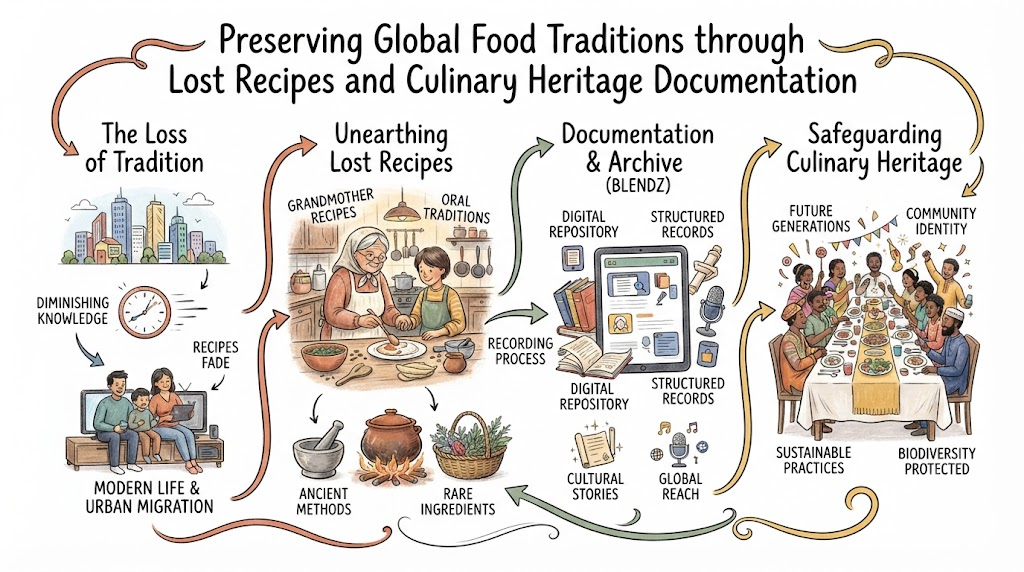
Introduction
Across every continent, traditional food knowledge is quietly diminishing as modern lifestyles, industrial food production, and urban migration rewrite our daily eating habits. When a community loses a dish, it loses far more than an combination of ingredients; it loses generations of agricultural wisdom, oral history, seasonal rituals, and distinct cultural identity. Families no longer spend hours simmering heritage grains, grinding native spices on stone slabs, or waiting for seasonal ferments to mature, causing irreplaceable grandmother recipes to fade into obscurity. Documenting forgotten recipes, ancient cooking techniques, rare heirloom ingredients, and cherished family memories is essential to safeguard our shared global food heritage before these vital culinary traditions vanish forever from human memory.
What is Blendz
Blendz is a dedicated global food heritage archive built to discover, document, and preserve the world’s endangered culinary traditions before they are lost to time. Functioning as a digital repository for traditional food recipes, the platform collects lost recipes, regional cooking methods, and rare ingredient profiles directly from communities and home cooks worldwide. By focusing heavily on authentic cultural stories, historical context, and generational food knowledge, the platform transforms oral history into structured, accessible digital records. Users can seamlessly explore ancient dishes organized by country, ingredient, festival, or family origin, ensuring that invaluable culinary heritage remains available for future generations of cooks, historians, and cultural enthusiasts.
Why Blendz
As modern culinary patterns shift toward convenience and standardized global diets, Blendz serves as a vital bridge between vanishing foodways and contemporary kitchens. The platform offers a structured, community-driven space specifically designed to catalog grandmother recipes, festival food recipes, rare heirloom crops, and ancient preparation methods that mainstream recipe archives frequently overlook. Readers can explore detailed food stories sorted by cultural regions, while passionate cooks are empowered to contribute their own family heirloom dishes to build a comprehensive global database. By connecting authentic traditional recipes from around the world with rigorous cultural context, the platform ensures that irreplaceable regional food traditions remain active, celebrated, and accessible across generations.
What Are Lost Recipes?
Lost recipes are traditional dishes, regional preparation techniques, and ancestral food combinations that have gradually fallen out of daily household preparation and cultural memory. These forgotten recipes often disappear because they require labor-intensive manual methods, hard-to-source local ingredients, or extended preparation times that modern daily routines no longer comfortably accommodate. For example, complex heritage preparations like long-fermented wild grain porridges, stone-ground spice pastes, or clay-pot stews cooked overnight over embers are rarely made today. When elder generations pass away without recording these precise steps, entire culinary lineages disappear, leaving modern cooks reliant on simplified, commercialized versions that lack historical depth and regional authenticity.
Why Traditional Recipes Matter
Traditional recipes serve as living artifacts that preserve vital historical, cultural, and environmental knowledge far beyond basic nutritional requirements or step-by-step cooking instructions. Every traditional dish reflects local climate conditions, historical trade routes, agricultural biodiversity, and the ingenious conservation techniques developed by ancestors to survive resource scarcity. When families cook ancestral dishes, they maintain an intangible link to their heritage, reinforcing community identity and honoring the lived experiences of previous generations. Preserving these recipes safeguards native crop diversity, reinforces sustainable nose-to-tail eating practices, and protects deep agricultural intelligence that modern food systems frequently ignore, ensuring that cultural identity remains vibrant, tangible, and delicious for centuries to come.
Grandmother Recipes and Oral Food Traditions
Grandmother recipes represent the heart of domestic food heritage, carrying unwritten culinary wisdom passed down through centuries of intuitive kitchen practice rather than structured cookbooks. These oral traditions rely heavily on sensory cues—such as the distinct aroma of roasted spices, the specific sound of bubbling broths, or the feel of perfectly hydrated dough—rather than precise digital measurements or timed instructions. Consider a family gathering where an elder demonstrates shaping delicate dumplings or estimating hand-measured spice blends; this personal experience transfers essential techniques that written text alone cannot fully capture. Documenting these intimate domestic moments preserves crucial insights regarding texture, timing, and seasonal adaptions, keeping family legacies alive across changing generations.
Ancient Recipes and Traditional Cooking Methods
Ancient recipes depend on foundational cooking methods developed over millennia to enhance nutrient density, maximize flavor, and safely preserve perishable harvests without modern refrigeration. Techniques like wild fermentation, sun drying, wood smoking, underground pit roasting, stone grinding, and slow earthenware simmering completely transform raw ingredients while imparting distinctive regional characteristics. Preserving these historic preparation methods is just as critical as recording ingredient lists because the method itself dictates the chemical structure, digestive benefit, and authentic taste profile of the finished dish. Understanding ancient cooking techniques provides invaluable insights into ancestral ingenuity, showing modern cooks how early human civilizations utilized natural elements to sustain their communities sustainably through harsh seasons.
Rare Ingredients and Food Heritage
The survival of traditional food heritage depends directly on cultivating, harvesting, and preserving rare heirloom ingredients that are rapidly disappearing from global agricultural markets. Indigenous grains, wild forage herbs, unique landrace vegetables, native spices, and specialized regional ferments provide the authentic flavors and nutritional richness that define ancestral cooking traditions.
| Ingredient Category | Examples | Cultural & Culinary Importance | Preservation Risk Factors |
| Heirloom Grains | Black emmer, native millets, wild red rice | Provides rich regional flavors and complex dietary fiber | Industrial farming monoculture and low yield market demand |
| Wild Foraged Herbs | Coastal sea fennel, mountain sumac, wild garlic | Delivers distinctive medicinal aromas and micro-nutrients | Urban expansion, deforestation, and loss of foraging knowledge |
| Native Spices & Seeds | Wild mountain peppercorns, dried lime, mahleb | Imparts deep, irremediable taste signatures to local stews | Over-harvesting and climate-driven ecosystem disruptions |
| Traditional Ferments | Heirloom starter cultures, wild sourdoughs | Enhances gut health while naturally preserving produce | Reliance on commercial yeast and lab-synthesized starters |
Festival Food Recipes
Festival food recipes celebrate critical community milestones, agricultural harvests, religious observances, and seasonal transitions, bringing extended families together around deeply symbolic, shared meals. Dishes like sweetened harvest porridges, intricate holiday pastries, ceremonial steamed cakes, and slow-cooked communal stews carry profound cultural meanings tied directly to abundance, gratitude, and spiritual renewal. These festive preparations require extensive labor, specialized cookware, and rare seasonal ingredients, making their annual preparation an essential ritual for intergenerational bonding and cultural continuity. Documenting festival recipes within their full socio-historical context ensures that future generations understand not just how to prepare complex holiday foods, but also why these culinary rituals remain sacred to their community.
Traditional Recipes From Around the World
India
India’s vast culinary landscape features ancient regional traditions like Tamil Nadu’s stone-ground temple rice preparations, slow-cooked winter greens from Punjab, and complex fish stews from coastal Bengal. Indigenous millets, heritage rice varieties, wild greens, and toasted whole spices form the foundation of dishes designed around Ayurvedic principles and seasonal balance. Documenting these varied regional specialties preserves intricate spice-blooming techniques, clay-pot cooking methods, and complex fermentations that define local community health and cultural identity.
Japan
Japanese culinary heritage extends far beyond modern sushi, encompassing regional washoku traditions like Kyoto’s subtle vegetarian shojin ryori and centuries-old mountain preservation techniques. Traditional cooks rely on koji fermentation, sun-dried seaweeds, aged miso pastes, and hyper-seasonal wild forest vegetables to create deep umami profiles without heavy fats. Preserving these precise regional recipes highlights an enduring philosophy of culinary harmony, seasonal respect, and meticulously balanced nutritional simplicity passed down through generations.
Mexico
Central and Southern Mexican food heritage rests upon ancient Mesoamerican techniques, most notably nixtamalization—the process of soaking native heirloom corn in alkaline lime water to unlock essential nutrients. Traditional cooks utilize volcanic stone mortars to grind native chilies, heirloom cacao, roasted seeds, and wild herbs into complex regional moles and ancient corn tamales. Documenting these ancient prep methods preserves priceless agricultural biodiversity and honors indigenous culinary traditions that have sustained communities across Central America for thousands of years.
Ethiopia
Ethiopian food traditions feature nutrient-dense teff flour ferments, rich slow-simmered stews infused with spiced clarified butter, and complex hand-ground pepper blends like berbere. The central culinary ritual revolves around sharing meals from a single large platter lined with sourdough injera, fostering communal solidarity, social unity, and deep familial ties. Cataloging these traditional dishes preserves unique fermentation processes, endemic grain cultivation methods, and a profound communal dining culture rooted in historical hospitality.
Italy
Beyond standardized pasta dishes lies Italy’s rich cucina povera—the rustic, resource-efficient cooking of rural grandmothers using wild greens, stale breads, legumes, and preserved meats. Regional specialties like fermented farro soups, hand-rolled mountain pasta shapes, and cured heritage vegetables reflect deep connections to local microclimates and seasonal agricultural cycles. Preserving these humble village recipes safeguards regional biodiversity, zero-waste kitchen wisdom, and centuries of hyper-local culinary pride that define Italian domestic culture.
What, Why, and How Section
Understanding the preservation of traditional food knowledge requires analyzing its core definition, its broader societal value, and practical individual steps for action.
| Framework | Core Concept | Impact & Purpose |
| What | Archiving lost recipes, grandmother cooking methods, rare heirloom crops, and ancestral food stories | Stops the permanent destruction of intangible human culture and agricultural heritage |
| Why | Connects modern societies to historical identity, protects biodiversity, and preserves sustainable cooking wisdom | Ensures future generations retain nutritional resilience, cultural identity, and culinary variety |
| How | Interviewing elders, documenting precise hand techniques, photographing steps, and sharing records digitally | Transforms fleeting oral traditions into permanent, accessible educational archives for global preservation |
Real-Life Scenarios / Experiences
Scenario A: Documenting a Grandmother’s Unwritten Holiday Stew
A family realizes their elderly grandmother never wrote down her complex, seasonal holiday stew recipe, relying entirely on sensory memory and unmeasured spice hand-counts. A grandchild arranges a recorded weekend cooking session, photographing every step, weighing ingredients on a digital scale as they are added, and noting exact visual cues like simmering bubbles. This practical recording process creates a clear, reproducible written recipe that allows future generations to recreate the exact holiday memory accurately.
Scenario B: Preserving an Endangered Regional Heirloom Crop
A rural community notices that a native, drought-resistant heritage grain is losing ground to high-yield commercial crops, threatening a centuries-old local porridge recipe. Local home cooks team up with agricultural historians to document the precise grain-soaking times, stone-grinding ratios, and traditional clay-pot boiling methods unique to the harvest. By recording the recipe alongside its farming context, the community creates renewed culinary interest, supporting local heirloom farmers and keeping their agricultural heritage viable.
Scenario C: Saving a Village Fermentation Tradition
An urban researcher visits a remote village to study historical food preservation methods before the remaining master fermenters retire without apprentices. The researcher records video logs of the underground earthenware aging process, documents exact brine concentrations, and transcribes local dialect terms for each stage of fermentation. Publishing these detailed records ensures that ancient microbial preservation techniques remain available to food historians and artisanal producers worldwide.
Common Mistakes to Avoid
- Recording only basic ingredient lists while failing to document specific physical preparation steps, heating levels, or resting times required for true taste accuracy.
- Ignoring crucial cooking techniques such as hand-grinding, clay-pot roasting, or wood-fire heat distribution that define the sensory character of traditional dishes.
- Removing regional variations by trying to standardize a family recipe to match mainstream commercial internet versions or generic modern taste preferences.
- Replacing rare ingredients without explanation, substituting unique heirloom spices or wild herbs with basic store-bought alternatives without noting the original flavor profile.
- Ignoring the story behind the recipe, stripping away vital historical contexts, family memories, agricultural seasons, or cultural origin stories that give the dish meaning.
- Over-modernizing traditional dishes by prematurely introducing electric food processors or modern short-cuts that alter the authentic texture and structural integrity of the final product.
- Failing to document local names and terminology, substituting native dialect terms for generic cooking words and losing critical linguistic connections to culinary heritage.
How to Preserve a Family Recipe
Preserving a family recipe requires a structured, deliberate approach that captures subtle sensory techniques alongside exact technical data. Begin by setting up a relaxed cooking session with your family elder, ensuring you bring a notebook, camera, and digital kitchen scale to measure unwritten “handfuls” or “pinches” precisely. Observe every single step carefully, taking clear high-resolution photographs of crucial stages such as dough consistency, color changes during roasting, or sauce thickness. Ask open-ended questions about the dish’s origin, seasonal variations, and specific ingredient choices, recording these audio notes to preserve the story alongside the cooking instructions. Finally, transcribe your notes into a clear digital format, cross-test the recipe independently in your own kitchen to verify accuracy, and share the finalized document across extended family channels for long-term safe-keeping.
How to Document Traditional Food Responsibly
Documenting traditional food knowledge requires deep cultural respect, historical accuracy, and ethical consideration toward the communities that developed these culinary practices. Always seek explicit permission from recipe holders and indigenous knowledge bearers before recording or publishing their traditional recipes, ensuring proper attribution is given to specific families or regional groups. Take care to distinguish between verifiable historical facts, regional folklore, and personal family memories, presenting each aspect clearly without embellishing cultural narratives for modern engagement. Strive to record original local terms, dialect names, and traditional measurements alongside modern equivalents to maintain historical authenticity. By prioritizing community consent and cultural integrity, food writers help protect intellectual food property while building meaningful, respectful digital bridges across global culinary traditions.
Frequently Asked Questions
1. What makes a traditional recipe classified as lost or forgotten?
A recipe becomes classified as lost or forgotten when it drops out of daily household preparation, lacks written documentation, and exists only within the fading memories of elder generations. These dishes usually involve complex manual techniques, specialized cookware, extended preparation times, or rare regional ingredients that modern, fast-paced food systems no longer accommodate.
2. Why are heirloom ingredients so critical for preserving traditional culinary heritage?
Heirloom ingredients carry distinct genetic traits, bold flavors, and micro-nutrients developed over centuries of localized agriculture that modern commercial monoculture lacks. Using authentic heirloom grains, wild herbs, and native produce ensures that traditional recipes maintain their intended taste profile, nutritional integrity, and structural consistency.
3. How can home cooks measure ingredients that elders add by intuition?
Home cooks can accurately record intuitive measurements by weighing the primary ingredient containers before and after an elder cooks. Subtracting the remaining weight provides precise metric grams for every “pinch,” “handful,” or “spoonful,” transforming sensory habits into a repeatable written standard.
4. What is the difference between authentic food preservation and modern fusion cooking?
Authentic food preservation focuses on documenting and practicing historic preparation techniques, cultural contexts, and original ingredient profiles to protect heritage. Modern fusion cooking adapts traditional flavors using contemporary ingredients and shortcut methods for modern commercial convenience, often altering original characteristics.
5. Why is documenting traditional cooking techniques as important as recording ingredient lists?
The specific technique—such as stone grinding, wood-fire roasting, or pit fermentation—fundamentally alters chemical structures, textures, and flavor compounds in food. Recording ingredients without capturing accurate heating, grinding, or resting techniques usually results in a final dish that lacks authentic regional character.
6. How does industrial food production contribute to the loss of traditional recipes?
Industrial food production prioritizes high-yield crops, extended shelf life, and standardized global flavors over diverse regional foodways. This commercial shift makes rare local ingredients hard to buy, encouraging families to adopt fast, processed meal options rather than labor-intensive traditional preparations.
7. Can lost recipes be recreated accurately without original regional ingredients?
While modern substitutions allow cooks to approximate a dish, true historical accuracy requires finding ingredients with matching acid, starch, or oil contents. Documenting the original ingredient’s specific flavor profile helps cooks select suitable local alternatives without distorting the overall integrity of the traditional recipe.
8. What role do festival food recipes play in preserving community cultural identity?
Festival food recipes link culinary practices directly to seasonal harvests, religious events, and ancestral rituals, fostering strong community solidarity. Because these dishes are prepared communally during distinct holiday events, they serve as vital intergenerational classrooms for passing down unwritten food traditions.
9. How do oral food traditions survive without formal written recipes or cookbooks?
Oral food traditions survive through repeated communal cooking, shared domestic labor, and real-time sensory instruction passed from elders to younger family members. Intangible memory, repetition, and oral storytelling replace written manuals, transferring culinary skills across generations through hands-on practice.
10. How can digital recipe archives help protect regional food culture from extinction?
Digital archives convert vulnerable oral histories and unwritten domestic recipes into permanently accessible, searchable online records. By centralizing global recipes, rare ingredient data, and prep methods, digital platforms prevent localized food knowledge from disappearing when elder generations pass away.
11. What is the most respectful way to publish traditional recipes from other cultures?
Respectful documentation requires obtaining explicit permission from knowledge holders, giving proper credit to origin communities, and recording accurate historical context. Writers should avoid claiming ownership over traditional dishes, ensuring local names, cultural meanings, and original practices are honored truthfully.
12. Why are clay pots, stone mortars, and traditional cookware vital to recipe authenticity?
Traditional cookware materials like unglazed clay, soapstone, or heavy cast iron distribute heat uniquely and interact chemically with acidic or alkaline ingredients. These traditional tools impart distinct minerals, earthy flavors, and tender textures that modern stainless steel or non-stick cookware cannot replicate.
Conclusion
Documenting global food heritage, forgotten village recipes, heirloom ingredients, and grandmother traditions is essential for preserving our shared human history and cultural diversity. When we record ancestral cooking methods and festival dishes, we maintain vital links between generations, honoring the agricultural intelligence and family memories embedded within traditional meals. Exploring digital archives like Blendz helps home cooks and food researchers safeguard these fragile culinary practices, ensuring that priceless global traditions continue to nourish future kitchens. Mastering these food heritage concepts reinforces the importance of hands-on domestic practice, while continuous study through technical ebooks and historical guides supports long-term culinary learning. Sustained technical education and dedicated practice remain the ultimate tools for protecting authentic food traditions and mastering timeless culinary arts across an evolving world.

Oral culinary histories degrade without persistent open-access metadata registries. Archival initiatives must implement standardized semantic tagging for rare vernacular preparation techniques, preventing localized heirloom ingredients and ancestral preservation methods from fading into permanent digital obscurity.