MOTOSHARE 🚗🏍️
Rent Bikes & Cars Directly from Owners
Motoshare connects vehicle owners with people who need bikes and cars on rent. Owners earn from idle vehicles, and renters get flexible ride options.
Visit Motoshare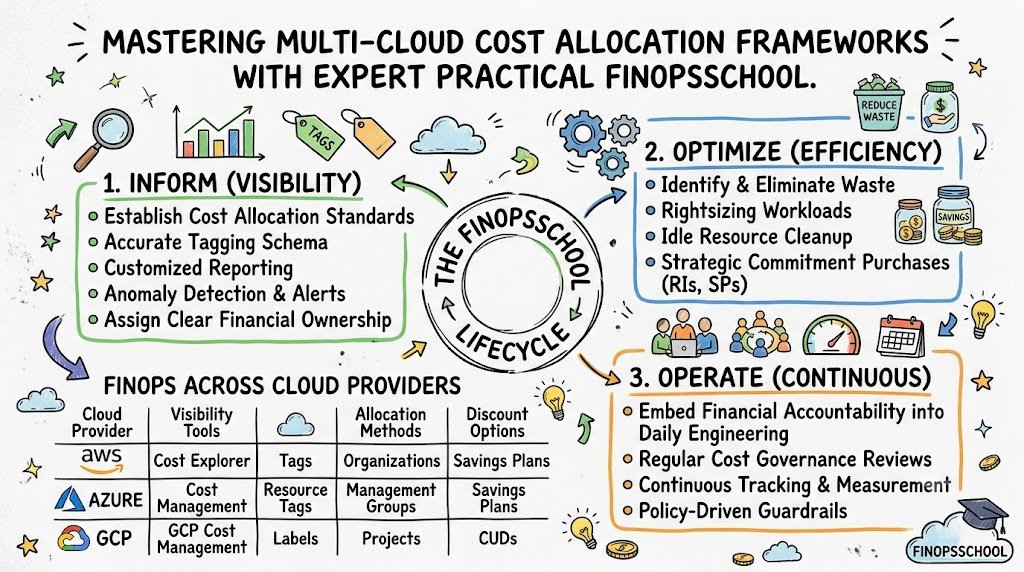
Introduction
As digital transformation accelerates worldwide, organizations are shifting away from traditional static data center investments toward dynamic, highly scalable public cloud infrastructure. This migration fundamentally alters how enterprises handle technology budgets, replacing predictable annual capital expenditures with variable, real-time consumption-based operational expenses. While this shift provides incredible agility, engineering teams can now instantly deploy resources that directly impact the monthly bill, often without prior financial oversight or immediate budgetary approval. Without clear cross-functional alignment, companies frequently encounter severe budget overruns, unpredictable invoices, and significant idle capacity across their multi-cloud environments. This financial friction is why modern enterprises rely on FinOps—an operational discipline that unites engineering, finance, procurement, and executive leadership to align cloud decisions with measurable business outcomes. Mastering these practices allows technical teams to build efficient systems while ensuring finance maintains accurate visibility. Professionals looking to lead these initiatives can sharpen their skills at FinOpsSchool.
What Is FinOps?
FinOps, short for Cloud Financial Operations, is a cultural and operational practice that brings financial accountability to the variable spend model of public cloud environments. Rather than acting solely as a cost-cutting exercise, its core purpose is to help organizations maximize the true business value generated by every cloud dollar spent. In a healthy framework, engineering teams gain full visibility into resource costs so they can make cost-aware architectural decisions without sacrificing delivery speed or performance. Simultaneously, finance departments receive real-time granular usage data to build accurate forecasts, while procurement specialists leverage aggregated consumption patterns to negotiate stronger vendor commitments. Technology leaders and executives gain the strategic insights necessary to evaluate unit economics, balancing infrastructure costs directly against revenue growth. By transforming cloud spending from an opaque IT overhead expense into a clear driver of business value, cross-functional teams collaborate continuously to optimize usage, enforce governance, and maintain accountability.
The FinOps Lifecycle
Inform
The Inform phase serves as the critical foundation of the operating framework, giving organizations deep visibility into their real-time cloud expenditures across all accounts and applications. During this initial stage, teams establish accurate cost allocation standards using consistent tagging schemas, account structures, and automated metadata policies to map cloud spend back to specific business units, products, and environments. Access to granular, customized reporting allows finance and engineering teams to establish baseline budgets, create precise rolling forecasts, and configure proactive anomaly detection alerts that catch sudden spending spikes before invoices arrive. By assigning clear financial ownership to individual development teams, organizations foster an accountable engineering culture where every group understands the exact cost footprint of their infrastructure.
Optimize
Once organizations establish baseline visibility, they transition into the Optimize phase, focusing on identifying waste and improving resource efficiency across their entire footprint. Technical teams actively analyze historical performance metrics to execute rightsizing initiatives, adjusting CPU, memory, and storage allocations to match actual application demands without compromising system performance. This phase involves systematically eliminating idle infrastructure, configuring automated cleanup routines for unattached storage volumes, and applying aggressive tiering strategies to lower data retention costs. Furthermore, teams perform detailed workload evaluations to purchase strategic, commitment-based discount instruments across cloud providers, while optimizing containerized environments to ensure maximum cluster density and minimal compute waste.
Operate
The Operate phase turns optimization into a continuous, repeatable operational routine by embedding financial accountability directly into daily engineering workflows and organizational governance. Cross-functional teams establish key performance indicators, track budget variances against rolling forecasts, and hold regular cost governance reviews to maintain alignment between technology and business goals. Organizations leverage cloud automation tools to enforce tagging compliance, deploy policy-driven guardrails, and execute automated power-scheduling scripts for non-production environments during off-hours. By continuously measuring operational metrics, refining allocation rules, and celebrating efficiency wins, engineering and finance teams maintain an agile environment where cost management is treated as a core architectural requirement.
Key FinOps Capabilities
Cost Visibility
Achieving comprehensive cost visibility requires organizations to systematically ingest, normalize, and visualize complex cloud billing data across every active account and cloud platform. Engineering and finance teams rely on centralized dashboards to break down daily expenditures by specific applications, technical services, deployment environments, and internal business units. Clear visibility enables teams to move away from monthly invoice surprises and toward real-time telemetry, making it easy to identify trend anomalies, cost drivers, and unexpected architectural spikes. By democratizing this data across the organization, technical teams gain the context necessary to evaluate the financial impact of their infrastructure choices alongside traditional metrics like uptime, latency, and system throughput.
Cost Allocation
Cost allocation is the practice of mapping every dollar of cloud expenditure directly to the specific business unit, project, or application team responsible for generating that cost. Organizations achieve precise allocation by enforcing standardized metadata tagging protocols, organizing cloud accounts logically, and leveraging provider-specific resource groupings such as projects or subscriptions. Accurately attributing shared cloud resources—such as centralized networking hubs, shared database clusters, and management tools—requires clear, rules-based allocation formulas based on actual consumption percentages. Establishing a clean, fully allocated cost structure ensures that finance departments maintain complete transparency into operational overhead while empowering engineering teams to take full ownership of their cloud footprints.
Showback and Chargeback
Showback and chargeback represent two distinct accountability models designed to drive cost awareness and financial discipline across engineering and product teams. Showback provides teams with regular, detailed reports detailing their exact cloud resource consumption and associated costs without actually deducting those funds from their operational budgets. Chargeback takes financial accountability a step further by directly debiting the cloud infrastructure costs from the responsible department or project budget. While showback builds initial cost awareness and encourages voluntary optimization without financial friction, chargeback creates strict organizational accountability, ensuring that product leaders factor cloud infrastructure costs directly into their operational margins and business unit profitability.
Budgeting and Forecasting
Effective budgeting and forecasting in dynamic cloud environments requires shifting away from traditional static annual planning toward continuous, data-driven financial modeling. Finance and engineering teams collaborate to build dynamic rolling forecasts that combine historical usage trends with anticipated business growth, scheduled product launches, seasonal traffic variations, and upcoming architectural changes. By continuously monitoring real-time consumption against projected monthly budgets, organizations can identify negative trends, potential overruns, and unexpected usage anomalies weeks before the billing cycle closes. This proactive approach allows procurement and technical leaders to strategically time commitment purchases, adjust infrastructure scaling rules, and realign operational priorities to maintain predictable cloud spend without slowing business velocity.
What Does FinOps Training Teach?
Comprehensive training programs equip technical and business professionals with the end-to-end skills required to implement cloud financial management frameworks across modern enterprise environments.
- Establishing granular cloud cost visibility and configuring centralized telemetry dashboards across multi-cloud environments.
- Designing and enforcing standardized metadata tagging, label strategies, and automated resource allocation models.
- Implementing showback and chargeback frameworks to map cloud expenses directly to business units and product lines.
- Building dynamic rolling forecasts and proactive budget tracking systems using historical usage trends and growth projections.
- Executing advanced rightsizing strategies to balance compute, memory, and storage performance against operational costs.
- Evaluating and managing commitment-based discount instruments such as Reserved Instances and Savings Plans.
- Detecting and remediating real-time cost anomalies using policy-driven alerts and automated guardrails.
- Optimizing Kubernetes clusters, container density, and shared microservice infrastructure costs.
- Establishing organizational governance, tracking key unit economic metrics, and fostering cross-functional collaboration.
Cloud Cost Optimization Strategies
Rightsizing
Rightsizing involves continuously evaluating compute, memory, disk, and network performance metrics to match infrastructure configurations precisely with actual workload requirements. Technical teams analyze historical utilization trends to identify overprovisioned virtual machines and database instances, scaling them down to smaller, more cost-effective instance families without impacting performance. Advanced rightsizing strategies also incorporate auto-scaling policies, enabling infrastructure to automatically expand during peak traffic periods and contract during off-peak hours to minimize baseline operational spend. By balancing capacity requirements with real-time demand, engineering teams maintain high application availability while eliminating the substantial financial waste associated with permanent, static buffer capacity.
Eliminating Idle Resources
Eliminating idle resources focuses on systematically discovering and removing orphaned, unutilized, or temporary cloud components that continue to generate billing charges despite providing zero business value. Common examples include unattached block storage volumes, obsolete machine snapshots, unused elastic IP addresses, abandoned load balancers, and idle development databases left running indefinitely. Engineering teams deploy automated discovery tools and policy-driven cleanup scripts to identify orphaned infrastructure and safely terminate non-production resources outside of normal business hours. Implementing automated life-cycle management rules ensures that short-lived testing environments are cleanly decommissioned, preventing forgotten infrastructure from accumulating significant background spend over time.
Storage Optimization
Storage optimization requires aligning data lifecycle requirements with the most cost-effective cloud storage tiers available across object, block, and file storage services. Organizations establish policy-driven storage lifecycles that automatically transition infrequently accessed data from high-performance tiers to lower-cost warm, cold, and archival storage options over time. Technical teams regularly review snapshot retention schedules, clean up multi-part upload artifacts, compress log files, and enforce strict data deletion guidelines to prevent runaway storage accumulation. By implementing modern storage classes and automated lifecycle rules, enterprises significantly reduce long-term data retention costs while ensuring that high-performance, expensive storage remains reserved exclusively for active production workloads.
Commitment Optimization
Commitment optimization leverages provider-specific discount programs, such as Reserved Instances and Savings Plans, to secure significant price reductions in exchange for steady-state usage commitments. Technical and financial leaders analyze historical baseline compute and database consumption to construct balanced, low-risk commitment portfolios that maximize savings without creating financial inflexibility. Successful commitment management requires continuous monitoring of utilization rates to ensure purchased instruments remain fully covered, adjusting strategies dynamically as workload architectures evolve over time. By basing commitment decisions on rigorous data analytics rather than guesswork, organizations achieve optimal discount rates while minimizing the financial risk of over-committing to obsolete infrastructure types.
FinOps Across AWS, Azure and Google Cloud
| FinOps Area | AWS | Microsoft Azure | Google Cloud |
|---|---|---|---|
| Cost Analysis | Cost Explorer, AWS CUR | Azure Cost Management | GCP Cost Management, BigQuery |
| Budgeting | AWS Budgets, Anomaly Detection | Azure Budgets & Cost Alerts | GCP Budgets & Pub/Sub Alerts |
| Cost Allocation | Cost Allocation Tags, AWS Organizations | Resource Tags, Management Groups | Resource Labels, Projects |
| Commitment Options | Savings Plans, Reserved Instances | Savings Plans, Reserved Instances | Sustained Use & Committed Use Discounts |
| Optimization | AWS Compute Optimizer, Trusted Advisor | Azure Advisor, Cost Recommendations | Active Assist, Recommender |
FinOps and Kubernetes
Managing cloud spend within Kubernetes environments introduces unique financial challenges because container orchestration layers abstract underlying physical compute and memory infrastructure away from traditional cloud billing models. In a shared Kubernetes cluster, multiple microservices, development teams, and business applications share the same pool of worker nodes, making traditional server-level cost allocation virtually impossible. Organizations must analyze CPU requests, memory limits, and persistent storage claims at the pod, namespace, and workload levels to attribute cluster costs accurately to individual business units. Implementing dedicated container cost monitoring tools allows engineering teams to identify over-provisioned pod specifications, eliminate idle cluster capacity, optimize node autoscaling parameters, and ensure that shared infrastructure expenses are distributed fairly across all consuming applications.
FinOps and Cloud Cost Optimization Are Not the Same Thing
While cloud cost optimization focuses on specific technical actions—such as rightsizing servers, deleting unattached disk volumes, or turning off dev instances—FinOps represents an overarching, organization-wide operating culture that continuously connects cloud spend to business value. Cost optimization is often treated as a tactical, reactive exercise executed by engineering teams to reduce an immediate monthly bill. In contrast, FinOps is an ongoing, strategic methodology that combines technology, finance, procurement, and executive leadership to manage cloud investments holistically over time. For example, a tactical cost reduction might involve shutting down a $5,000 monthly server cluster to save money, whereas a FinOps approach might justify upgrading that cluster to $10,000 if it enables a new feature that generates $50,000 in new monthly revenue, proving that maximizing business value takes priority over simply reducing spend.
FinOps Training for Different Professional Roles
- Cloud and DevOps Engineers: Gain the skills to write cost-aware Infrastructure as Code, configure automated resource guardrails, optimize container workloads, and embed financial efficiency metrics directly into CI/CD deployment pipelines.
- Finance Professionals: Learn to interpret complex multi-cloud billing datasets, build dynamic rolling forecasts, manage showback/chargeback models, and track unit economics alongside traditional corporate accounting frameworks.
- Architects: Master designing cost-optimized, scalable cloud architectures, selecting optimal compute and storage tiers, evaluating serverless options, and conducting trade-off analyses between performance, resiliency, and spend.
- Procurement Teams: Acquire the expertise needed to evaluate cloud vendor pricing structures, negotiate enterprise agreement terms, optimize strategic commitment portfolios, and align vendor contracts with real usage patterns.
- Managers and Technology Leaders: Learn to establish cross-functional governance frameworks, align engineering activities with corporate business goals, drive organizational culture shifts, and evaluate cloud ROI using unit economics.
FinOps Certification vs. Practical Training
Pursuing formal certification validates a professional’s theoretical understanding of core cloud financial frameworks, terminology, and lifecycle concepts, establishing immediate professional credibility across the industry. However, theoretical knowledge alone is insufficient when dealing with complex, real-world enterprise billing datasets, multi-cloud account hierarchies, and intricate container cost allocations. Comprehensive professional development requires balancing formal certification preparation with practical, hands-on training that simulates authentic operational scenarios, such as writing custom billing queries, configuring anomaly detection rules, and executing rightsizing policies. Combining structured certification with practical technical exercises ensures that practitioners not only understand the governing principles of financial management but also possess the technical execution skills needed to implement lasting operational changes within their organizations.
FinOps Practitioner Training
Practitioner training provides a thorough, foundational understanding of cloud financial management principles, frameworks, and cross-functional operational practices. This learning track is specifically designed for professionals entering the discipline, including business analysts, finance partners, junior cloud engineers, and IT managers seeking to bridge the gap between technical operations and financial governance. Key coursework focuses on understanding the three lifecycle phases, mastering basic cost allocation models, setting up budget alerts, interpreting standard vendor reporting tools, and facilitating collaborative communication across siloed departments. Completing practitioner training equips individuals with the fundamental knowledge required to support enterprise cost visibility initiatives, contribute to budget forecasting reviews, and champion cost-conscious cultural practices within their respective teams.
FinOps Engineer Training
Targeted directly at technical professionals, engineering-focused training dives deep into the programmatic, architectural, and automated mechanisms used to manage and optimize cloud infrastructure spend. Participants learn to interact directly with cloud provider billing APIs, build custom data pipelines using SQL and big data tools, write automated governance scripts, and enforce metadata tagging policies using Infrastructure as Code tools. Advanced modules cover container cost allocation within Kubernetes, configuring automated spot instance strategies, building real-time dashboarding integrations, and deploying policy-driven remediation guardrails across complex CI/CD environments. Mastering these advanced technical capabilities enables cloud engineers, DevOps specialists, and platform architects to build naturally self-optimizing systems that maintain high performance and reliability while preventing runaway infrastructure costs.
FinOps in Kubernetes and Modern Cloud Environments
As enterprises modernize their application architectures, containerization and microservice frameworks significantly increase the complexity of cloud cost allocation and visibility. In Kubernetes environments, resources are dynamically distributed across shared pools of compute nodes, requiring teams to monitor CPU requests, memory limits, namespace usage, and persistent volume claims to attribute costs accurately. Modern cloud environments also incorporate complex managed services, such as serverless compute, distributed database clusters, event-driven pipelines, and specialized AI/ML infrastructure, each utilizing distinct pricing models based on execution time, API calls, or data throughput. Managing spend across these advanced architectures requires specialized tooling and technical expertise to track variable operational costs, optimize resource utilization, and ensure that dynamic, auto-scaling microservices remain financially efficient.
FinOps in Multi-Cloud Environments
Operating across multiple public cloud providers—such as AWS, Microsoft Azure, and Google Cloud—introduces significant financial complexity due to disparate billing structures, unique service naming conventions, and isolated management consoles. To maintain effective financial governance, organizations must consolidate disparate vendor cost data into a unified, normalized data schema that provides comprehensive visibility across all environments. Achieving consistency requires establishing provider-agnostic cost allocation tags, standardized budgeting workflows, and centralized dashboarding systems that allow finance and leadership teams to analyze enterprise-wide spend effortlessly. Furthermore, technical teams must balance cloud-specific optimization opportunities, such as provider-native commitment discounts, with organization-wide governance policies to ensure that multi-cloud flexibility does not result in operational fragmentation or uncontrolled overhead.
Choosing the Right FinOps Course
Selecting an effective training program requires evaluating curriculum depth across technical, operational, and financial domains to ensure it delivers actionable, practical skills.
- Curriculum Depth: Ensure the course thoroughly covers all lifecycle phases, advanced allocation methodologies, commitment strategies, and unit economics principles.
- Practical Exercises: Look for programs featuring hands-on labs, real-world billing dataset analysis, custom SQL querying, and live scenario simulations.
- Multi-Cloud Coverage: Confirm that the training addresses pricing models, billing structures, and optimization tools across AWS, Azure, and Google Cloud.
- Technical Optimization: Verify inclusion of technical topics such as Kubernetes cost allocation, Infrastructure as Code governance, and programmatic automation.
- Certification Alignment: Check whether the curriculum prepares participants for recognized industry certifications while building practical job skills.
- Instructor Expertise: Choose courses led by experienced industry practitioners who possess real-world experience managing enterprise cloud spend.
- Learning Flexibility: Evaluate delivery formats, such as live instructor-led online training, self-paced modules, and corporate team workshops.
FinOps Skills Comparison by Career Path
| Career Path | Core FinOps Skills | Useful Learning Focus |
|---|---|---|
| FinOps Practitioner | Lifecycle phases, cost visibility, basic allocation, showback models | Stakeholder alignment, baseline reporting, budget tracking |
| FinOps Engineer | Billing APIs, automated cleanup scripts, IaC policy enforcement | Kubernetes cost tooling, data pipeline construction, automation |
| Finance Professional | Variance analysis, rolling forecasting, unit economics, chargeback | Cloud billing data analysis, vendor pricing models, capital optimization |
| Cloud Engineer | Compute/storage rightsizing, lifecycle management, auto-scaling | Cost-aware architecture, automated resource scheduling, spot instances |
| DevOps Professional | CI/CD cost guardrails, tagging enforcement, environment cleanup | Infrastructure as Code policies, container efficiency, pipeline integration |
| Technology Manager | KPI tracking, team accountability, budget variance management | Cross-functional alignment, vendor contract evaluation, team governance |
| Procurement Specialist | Commitment instrument management, enterprise negotiation | Discount portfolio balancing, vendor pricing structures, contract terms |
| Technology Leader | Unit economic modeling, strategic cloud ROI, governance framework | Executive dashboarding, strategic investment alignment, organizational culture |
FinOpsSchool: Practical Learning for FinOps Skills
FinOpsSchool delivers comprehensive, career-oriented training designed to equip tech professionals and business teams with practical skills for modern cloud financial management. Through structured FinOps Course options, students gain hands-on experience navigating real billing datasets across AWS, Microsoft Azure, and Google Cloud platforms. Learners explore essential operational disciplines, including tagging enforcement, custom showback and chargeback implementation, precise cost allocation, dynamic forecasting, and automated anomaly detection. The practical FinOps Training curriculum emphasizes actionable technical execution, covering rightsizing strategies, commitment optimization, custom dashboard creation, and advanced Kubernetes cost allocation. Whether preparing for career advancement through instructor-led FinOps Online Training or developing specialized skill sets via dedicated FinOps Practitioner Training and FinOps Engineer Training tracks, students work through real-world case studies and practical exercises that build true operational capability.
Benefits of FinOps Certification Training
Enrolling in structured certification programs provides a clear, guided learning pathway that systematically covers all essential aspects of cloud financial management.
- Structured Knowledge Base: Builds a complete, standardized understanding of lifecycle phases, capability domains, and financial governance principles.
- Industry Validation: Formally validates your expertise to employers, clients, and peers, boosting professional credibility across the cloud industry.
- Career Advancement: Qualifies professionals for high-demand specialized roles, such as FinOps Analyst, Cloud Financial Manager, and FinOps Architect.
- Cross-Functional Fluency: Teaches technical and business professionals a shared language, enabling smoother collaboration between engineering and finance teams.
- Best Practice Adoption: Exposes learners to proven industry standards, preventing common architectural, allocation, and budgeting mistakes in real-world deployments.
Corporate FinOps Training
Organizing corporate training programs allows enterprise organizations to upskill entire cross-functional teams simultaneously, driving rapid cultural alignment and operational consistency across engineering, finance, procurement, and leadership units. Tailored corporate sessions focus directly on an enterprise’s unique multi-cloud architecture, existing technology stack, internal tagging guidelines, and specific governance requirements. Through interactive workshops, cloud billing analysis exercises, custom cost allocation building, and optimization case studies, engineering and business teams learn to collaborate effectively using standardized operational workflows. Establishing this shared knowledge base accelerates organizational maturity, breaks down traditional departmental silos, enforces proactive cost governance, and ensures that ongoing cloud infrastructure investments directly support corporate financial goals.
FinOps Training in India
As India solidifies its position as a global technology and software engineering hub, local technology professionals and enterprise IT organizations are rapidly prioritizing specialized cloud financial management skills. Indian cloud engineers, DevOps specialists, SREs, systems architects, and technology managers are increasingly tasked with managing massive, multi-cloud footprints for international clients and high-growth enterprise platforms. Acquiring comprehensive training enables these technical professionals to step beyond traditional infrastructure management and deliver strategic financial value by controlling rapidly growing AWS, Azure, and Google Cloud operational expenditures. Developing expertise in cloud cost visibility, automated governance, commitment management, and unit economics positions Indian tech professionals for lucrative global career opportunities while helping local enterprise organizations maintain high operational efficiency.
Individual Training vs Corporate DevSecOps Training
While individual training programs focus on personal career advancement, tool mastery, and passing professional certification exams, organizational learning initiatives address broader workflow integration and culture alignment across technical teams. For instance, an individual pursuing specialized cloud learning gains personal expertise in writing automation scripts, interpreting billing data, and implementing best practices within their daily tasks. Conversely, enterprise programs, such as Corporate DevSecOps Training or enterprise-wide financial management workshops, focus on embedding security, compliance, and cost guardrails directly into an organization’s existing CI/CD pipelines, internal security policies, and custom cloud architecture. By combining individual technical skill development with structured corporate training initiatives, enterprises build highly capable technical teams operating within standardized, secure, and financially efficient operational frameworks.
Real-Life FinOps Scenario: Reducing Cloud Waste in a Growing Enterprise
Step 1: Establish Cost Visibility
A rapidly growing enterprise, CloudRetail, found itself struggling with an unmonitored $250,000 monthly multi-cloud bill across AWS and Azure, driven by decentralized deployment practices and zero cost visibility. The engineering and finance teams initiated their transformation by deploying unified cost analytics dashboards and establishing a mandatory resource tagging strategy enforced across all deployment pipelines. By mapping infrastructure components back to specific engineering teams, environments, and business units, CloudRetail achieved 92% cost allocation coverage within thirty days. This immediate visibility allowed team leads to identify exact cost drivers, monitor daily spending trends, and hold individual product groups accountable for their infrastructure footprints.
Step 2: Identify Idle Resources
With baseline visibility established, CloudRetail configured automated discovery tools to scan their multi-cloud environment for orphaned, unutilized, and temporary infrastructure components. The automated scans revealed dozens of unattached block storage volumes, obsolete database snapshots, unused load balancers, and running development instances left unattended over weekends. The DevOps team implemented policy-driven cleanup scripts and automated power-scheduling routines that safely shut down non-production environments outside of standard business hours. These immediate cleanup actions permanently eliminated $28,000 in unnecessary monthly background spend without affecting production system performance or developer productivity.
Step 3: Analyze Rightsizing Opportunities
Next, CloudRetail turned its attention to active compute resources, leveraging utilization metrics to evaluate instance sizing across their production and staging environments. Analysis revealed that over 60% of their virtual machines were running at less than 15% average CPU and memory utilization due to conservative over-provisioning during early application deployment. Engineering teams executed controlled performance tests, systematically downscaling over-provisioned instances to modern, highly efficient instance families and configuring aggressive auto-scaling parameters to handle traffic bursts dynamically. This comprehensive rightsizing initiative improved overall hardware utilization while generating an additional $35,000 in recurring monthly infrastructure savings.
Step 4: Review Commitments
To address steady-state production workloads, CloudRetail’s finance and engineering leads conducted a comprehensive review of historical compute consumption to build a data-driven commitment portfolio. Rather than relying on guesswork, the team analyzed minimum baseline usage over the preceding six months and strategically purchased a balanced mix of flexible Compute Savings Plans and Reserved Instances. By securing multi-year commitment discounts on steady-state database and application servers while leaving variable workloads on on-demand capacity, CloudRetail lowered its baseline compute costs by an additional 25%. This data-driven commitment strategy provided substantial financial savings while preserving necessary architectural flexibility for future application growth.
Step 5: Improve Kubernetes Efficiency
Analyzing CloudRetail’s containerized infrastructure revealed significant financial waste within shared Kubernetes clusters due to inaccurate pod resource requests and limits. Development teams routinely requested excessive CPU and memory headroom to prevent application throttling, causing cluster autoscalers to provision unnecessary worker nodes. Platform engineers implemented container cost management tooling to track real-time resource consumption at the namespace and workload levels, allowing developers to adjust pod specifications based on actual usage profiles. Optimizing cluster density, configuring horizontal pod autoscaling, and utilizing spot instances for fault-tolerant worker nodes reduced cluster compute requirements by 30%, saving $18,000 monthly.
Step 6: Introduce Ongoing Governance
To prevent cost bloat from recurring, CloudRetail established a permanent, cross-functional governing committee comprising engineering, finance, and product leadership representatives. The team established monthly budget variance reviews, integrated real-time cost anomaly alerts into Slack engineering channels, and published internal team efficiency scorecards comparing unit costs against application transaction volume. Cost guardrails were embedded directly into Infrastructure as Code deployment templates, automatically blocking non-compliant resource deployments that lacked required allocation tags or exceeded predefined size limits. By embedding continuous financial oversight directly into the operational software development lifecycle, CloudRetail transformed cloud financial management from a one-time cleanup project into a permanent, value-driven culture.
How FinOpsSchool Supports FinOps Learning
Through comprehensive educational tracks, FinOpsSchool provides tech professionals and enterprise teams with the practical tools required to master cloud financial management. Students participating in specialized FinOps Certification Training engage in practical, hands-on modules designed around live multi-cloud environments, covering AWS, Microsoft Azure, and Google Cloud billing mechanics. The curriculum offers deep exploration of foundational disciplines, including cloud billing data ingestion, automated metadata tagging, custom showback and chargeback design, dynamic forecasting, and programmatic anomaly detection. Learners enrolled in targeted tracks like FinOps Engineer Training or Cloud Cost Optimization Training gain direct technical experience configuring automated rightsizing policies, optimizing commitment discount portfolios, managing Kubernetes cluster costs, and building real-time visualization dashboards. Delivering flexible learning options ranging from instructor-led online sessions to customized Corporate FinOps Training, FinOpsSchool ensures that both individuals and enterprise organizations develop real-world capabilities to manage cloud spend effectively.
Building a FinOps Career
Transitioning into a dedicated cloud financial management role allows professionals from diverse backgrounds—including DevOps, cloud engineering, systems architecture, finance, procurement, and IT operations—to combine technical expertise with strategic business management. Career progression typically begins with mastering foundational cloud infrastructure and billing concepts, before advancing through cost visibility, allocation modeling, optimization execution, and automated governance.
Cloud Fundamentals ➔ FinOps Fundamentals ➔ Cost Visibility ➔ Cost Allocation ➔ Optimization ➔ Automation ➔ Governance ➔ Business Value
Successful practitioners cultivate a unique blend of technical proficiency and soft skills, learning to query complex billing datasets using SQL while translating technical infrastructure decisions into clear financial metrics for executive stakeholders. As enterprise cloud investments expand globally, professionals who master this cross-functional domain position themselves for high-growth roles driving strategic cloud economics, corporate financial governance, and engineering efficiency.
Measuring FinOps Success
Evaluating the maturity of an organization’s financial operations framework requires tracking key performance indicators that extend far beyond simple gross monthly cost reductions.
- Forecast Accuracy: The percentage variance between projected monthly cloud spend and actual billed costs, reflecting financial predictability.
- Allocation Coverage: The proportion of total cloud spend attributed directly to specific business units, applications, or team cost centers via tags.
- Cost Ownership: The percentage of engineering teams actively reviewing, managing, and optimizing their assigned infrastructure spend.
- Realized Savings: The net financial savings generated through executed rightsizing, idle resource cleanup, and architecture optimization initiatives.
- Commitment Utilization: The percentage of purchased Reserved Instances and Savings Plans actively covering steady-state workloads without waste.
- Unit Economics: The direct cloud infrastructure cost calculated per business output, such as cost per active user, cost per customer transaction, or cost per API call.
For example, if an e-commerce company increases its monthly cloud spend from $50,000 to $80,000 while customer transactions grow from 100,000 to 300,000, its unit cost drops from $0.50 to $0.27 per transaction, demonstrating improved financial efficiency despite a higher total bill.
Common FinOps Mistakes
A frequent mistake organizations make is treating financial management as a temporary cost-cutting project rather than establishing a permanent, continuous operational culture.
Another major error is managing cloud spend in isolated functional silos, where finance demands blanket budget cuts without understanding architectural requirements, or engineering provisions expensive resources without considering financial impact.
Relying exclusively on manual spreadsheet tracking rather than implementing automated billing telemetry, real-time dashboards, and policy-driven anomaly detection leads to inaccurate forecasts and missed overrun alerts.
Failing to establish clear, standardized resource tagging enforcement early in cloud adoption makes accurate cost allocation, showback modeling, and departmental accountability nearly impossible later on.
Over-committing to rigid, multi-year discount instruments without analyzing historical baseline consumption profiles risks paying for unused capacity when architectural requirements change.
Focusing exclusively on compute optimization while neglecting data transfer costs, unattached storage accumulation, log retention fees, and idle database instances leaves significant financial waste unaddressed.
Attempting to enforce aggressive financial controls by severely restricting developer provisioning access creates operational friction, slows product innovation, and leads teams to bypass official governance workflows.
The Future of FinOps
As enterprise technology landscapes expand, cloud financial management is evolving to address multi-cloud architectures, edge computing, private cloud environments, SaaS platforms, and specialized AI infrastructure. The rapid adoption of compute-heavy artificial intelligence models, large language model training pipelines, and data analytics platforms introduces highly complex, dynamic spending patterns that demand real-time cost visibility and specialized optimization strategies. Furthermore, modern management frameworks are expanding to integrate environmental sustainability metrics alongside financial KPIs, enabling organizations to evaluate carbon footprints and energy consumption directly alongside infrastructure spend. Emerging machine learning platforms now deliver automated predictive analytics, dynamic rightsizing recommendations, and intelligent commitment balancing, empowering cross-functional teams to maintain precise financial governance across increasingly complex, distributed technology ecosystems.
Frequently Asked Questions
1. What is the difference between FinOps and traditional IT budgeting?
Traditional IT budgeting relies on fixed, capital-intensive annual forecasts for physical hardware purchasing. In contrast, FinOps manages dynamic, consumption-based operational expenses in real time. It enables engineering teams to provision cloud resources instantly while giving finance teams continuous visibility to track, allocate, and optimize variable costs dynamically against changing business needs.
2. How does FinOps help engineering teams without slowing down development speed?
FinOps empowers engineering teams by providing clear cost visibility, automated guardrails, and real-time telemetry directly within their existing workflows. Rather than imposing slow approval hierarchies, it gives engineers the financial context needed to make cost-aware architectural decisions independently, ensuring fast feature delivery remains aligned with budget expectations.
3. Why is cloud cost allocation so important for enterprise organizations?
Cloud cost allocation maps raw, complex cloud provider billing data directly back to specific business units, product features, applications, or development teams. This precise financial attribution eliminates unallocated overhead, enables accurate showback or chargeback models, fosters engineering accountability, and allows leadership to evaluate product profitability using unit economics.
4. Can an organization practice FinOps if it only uses one cloud provider?
Yes, financial governance practices are equally valuable for single-cloud deployments as they are for multi-cloud environments. Managing variable spend, enforcing resource tagging, optimizing compute commitments, rightsizing workloads, tracking budgets, and fostering cross-functional alignment are essential operational capabilities regardless of whether an enterprise operates on AWS, Azure, or Google Cloud.
5. What are the most common causes of unexpected cloud cost spikes?
Unexpected cloud cost spikes typically stem from unmonitored auto-scaling events, runaway recursive serverless functions, forgotten non-production environments, unauthorized high-spec instance provisioning, unexpected cross-region data transfer fees, and unoptimized database queries. Implementing automated anomaly detection alerts helps catch and remediate these operational issues immediately before they impact monthly invoices.
6. How do Reserved Instances and Savings Plans differ from On-Demand pricing?
On-Demand pricing offers complete flexibility with hourly or per-second billing but carries the highest base rates. Reserved Instances and Savings Plans provide significant discount rates—often up to 72%—in exchange for committing to a consistent amount of compute usage over a one-year or three-year period, balancing cost savings against flexibility.
7. What role does Kubernetes play in modern cloud cost management challenges?
Kubernetes aggregates multiple containerized applications onto shared compute nodes, masking individual resource consumption from standard cloud provider billing reports. Managing Kubernetes spend requires specialized pod-level tracking of CPU and memory requests, namespace allocation, and node utilization to distribute cluster costs accurately across consuming business units and applications.
8. Is FinOps primarily a finance function or an engineering responsibility?
FinOps is a collaborative, cross-functional discipline that belongs equally to engineering, finance, procurement, and business leadership teams. Engineering manages technical architecture and resource efficiency, finance oversees budgeting and rolling forecasts, procurement handles vendor commitments, and business leaders align spend with unit economics and strategic revenue goals.
9. How do organizations measure the return on investment of a FinOps practice?
Organizations measure financial management ROI by tracking metrics such as reduced monthly cloud waste, improved forecast accuracy, increased commitment discount coverage, faster anomaly detection, and lower unit costs per business transaction. Beyond direct cost savings, successful implementation speeds up product delivery by eliminating financial friction between engineering and finance teams.
10. What technical skills are required to become a FinOps Engineer?
A FinOps Engineer needs strong expertise in cloud architecture, Infrastructure as Code, automation scripting, SQL data querying, cloud provider billing APIs, and container management platforms like Kubernetes. They must also possess a clear understanding of basic accounting concepts, budgeting frameworks, cost allocation methodologies, and executive visualization tooling.
11. How does automated governance prevent cloud cost overruns?
Automated governance uses policy-driven tools and CI/CD guardrails to enforce organizational rules, such as mandatory resource tagging, maximum instance sizing, and non-production power scheduling. By automatically flagging or blocking non-compliant infrastructure deployments, automated governance prevents accidental overprovisioning and untagged waste before resources generate significant billing charges.
12. What is unit economics in cloud financial management?
Unit economics measures cloud infrastructure costs relative to specific business outputs, such as cost per active user, cost per customer order, or cost per API call. Tracking unit metrics allows organizations to determine whether rising cloud bills stem from operational inefficiency or healthy, revenue-generating business growth.
Conclusion
Establishing a mature cloud financial management practice is essential for modern enterprise organizations seeking to control variable infrastructure spend while accelerating digital innovation. By uniting engineering, finance, procurement, and executive leadership under a shared operational framework, companies transform unpredictable cloud invoices into transparent, value-driven business investments. Embracing continuous cost visibility, rigorous allocation standards, automated governance, and data-driven commitment strategies ensures that every cloud dollar directly supports corporate strategic growth. Mastering these cross-functional capabilities allows technical teams to build scalable, high-performance architectures without sacrificing financial predictability or operational control. As enterprise cloud environments expand in complexity, professionals and technology leaders can develop practical, real-world execution capabilities through comprehensive education programs offered by FinOpsSchool.

Cross-cloud billing telemetry reconciliation encounters fundamental schema divergence across AWS CUR, Azure Cost Management exports, and GCP BigQuery tables. FinOps platform engineers must implement canonical schema translation pipelines and robust idempotent event ingestion; otherwise, asynchronous billing adjustments and mismatched spot instance usage windows introduce severe cost allocation inaccuracies across engineering cost centers.