MOTOSHARE 🚗🏍️
Rent Bikes & Cars Directly from Owners
Motoshare connects vehicle owners with people who need bikes and cars on rent. Owners earn from idle vehicles, and renters get flexible ride options.
Visit Motoshare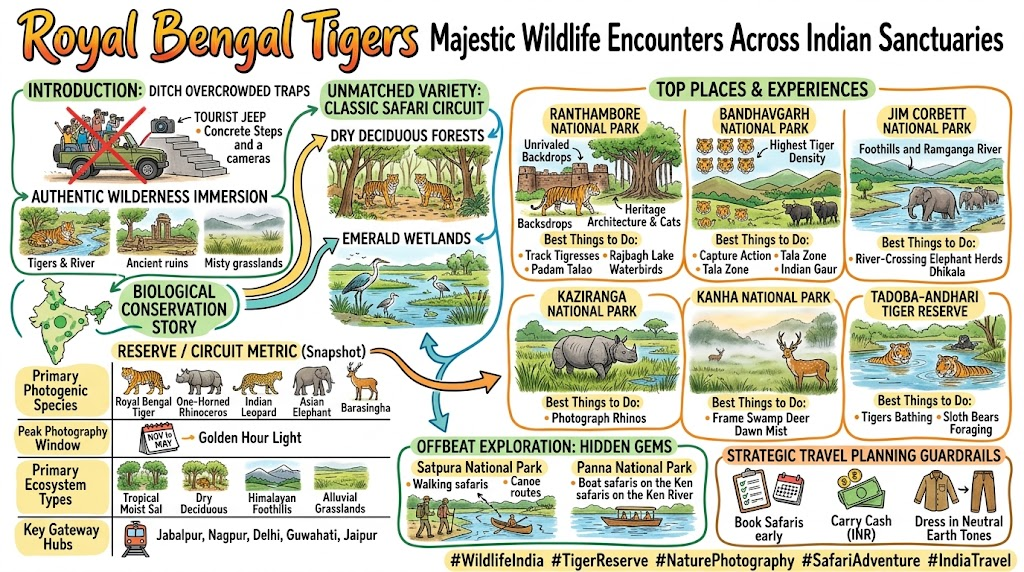
Introduction
Ditch the overcrowded, commercially sanitized tourist traps where concrete sight-seeing replaces genuine wilderness immersion. Deep within India’s ancient wilderness ecosystems, nature operates on an entirely different rhythm—one dictated by the raw call of the wild, dramatic light plays, and untamed natural heritage.
Wildlife photography across India offers an authentic lens into deep-rooted biological conservation stories. Frame majestic big cats framing ancient fort ruins, armor-plated mammals traversing misty alluvial grasslands, and dense sal canopies alive with avian fauna.
Why India is a must-visit city
India stands as the premier global epicenter for big cat conservation and megafauna biodiversity. Protecting over three-quarters of the global wild tiger population, its protected reserves span diverse biomes—from the Himalayan terra-firma down to moist deciduous central reserves and eastern floodplains. Solid highway linkages, robust regional railway grids, and specialized safari lodges make these sanctuaries seamlessly accessible for amateur shutterbugs and seasoned naturalists alike.
The classic Indian wildlife safari circuit offers unmatched variety. Photographers transition seamlessly from dry deciduous scrublands to emerald wetlands, capturing dramatically varying backdrops in a single expedition.
| Reserve / Circuit Metric | Core Details & Snapshot |
| Primary Photogenic Species | Royal Bengal Tiger, One-Horned Rhinoceros, Indian Leopard, Asian Elephant, Barasingha |
| Peak Photography Window | November to May (Optimal Golden Hour Lighting & High Waterhole Density) |
| Primary Ecosystem Types | Tropical Moist Sal, Dry Deciduous, Himalayan Foothills, Alluvial Grasslands |
| Key Gateway Hubs | Jabalpur, Nagpur, Delhi, Guwahati, Jaipur |
Top Places or Experiences
Ranthambore National Park
Ranthambore offers a breathtaking collision between historic human architecture and untamed wilderness. The sight of a apex predator stalking past thousand-year-old stone ramparts creates dynamic compositions unparalleled anywhere else on earth.
Dry deciduous forests provide open vistas and crisp sightlines. Shutterbugs frequently frame big cats maneuvering around sprawling banyan trees, deep lake basins, and crumbling stone archways.
- Location: Sawai Madhopur District, Rajasthan; approximately 130 km from Jaipur.
- Why it is worth visiting: Unrivaled photographic backdrops blending heritage ruin architecture with big cat activity.
- Best things to do: Track tigresses along Rajbagh Lake, photograph waterbirds at Padam Talao, and capture sweeping landscape vistas from Ranthambore Fort.
- Best time to visit: October to April for comfortable weather; April to June for high-frequency waterhole sightings.
- Ideal for whom: Heritage photography enthusiasts, wildlife shutterbugs, and first-time safari travelers.
- Travel tip: Book Zone 1 through 5 several months in advance to secure the highest-density sighting routes.
Bandhavgarh National Park
Nestled within the Vindhya hills, Bandhavgarh boasts legendary status among wildlife photographers due to its exceptional tiger density. High concentration levels dramatically increase on-ground odds of capturing active behavioral shots during morning drives.
The landscape transitions smoothly between steep rocky ridges, moist sal woodlands, and open swampy meadows. This topographical variety offers diverse framing conditions, from low-light canopy captures to sun-drenched valley portraits.
- Location: Umaria District, Madhya Pradesh; roughly 190 km from Jabalpur.
- Why it is worth visiting: Globally recognized as having one of the highest wild tiger densities per square kilometer.
- Best things to do: Capture action shots in the historic Tala Zone, photograph Indian Gaur grazing, and capture morning mist across open grasslands.
- Best time to visit: November to May; early morning safaris deliver ideal golden-hour rim lighting.
- Ideal for whom: Action-oriented wildlife photographers and dedicated big cat trackers.
- Travel tip: Equip yourself with a versatile 100-400mm telephoto lens to adapt quickly to sudden close-range roadside appearances.
Jim Corbett National Park
As India’s inaugural national reserve, Jim Corbett showcases dramatic Himalayan foothill topography cut through by the crystal waters of the Ramganga River. Lush sal canopies, riverine belts, and sweeping grasslands offer pure forest aesthetics.
It serves as a prime canvas for capturing wild Asian elephant herds wading through river channels alongside elusive big cats. Avian photographers also flock here to document over six hundred recorded resident and migratory bird species.
- Location: Nainital & Pauri Garhwal Districts, Uttarakhand; 245 km from New Delhi.
- Why it is worth visiting: Spectacular landscape photography combined with rich elephant and bird biodiversity.
- Best things to do: Capture river-crossing elephant herds in Dhikala, photograph raptors along the Ramganga, and lodge overnight inside core forest rest houses.
- Best time to visit: Mid-November to June; Dhikala zone opens strictly during winter and spring months.
- Ideal for whom: Landscape artists, avian photography specialists, and wilderness purists.
- Travel tip: Secure inside-the-park forest lodge permits (Dhikala Zone) for exclusive dawn photography before external jeeps enter.
Kaziranga National Park
Spread across the floodplains of the mighty Brahmaputra River, Kaziranga is a UNESCO World Heritage Site defined by massive elephant grass and marshy swamps. It harbors the world’s largest single population of the prehistoric Great One-Horned Rhinoceros.
Photographers are treated to dramatic morning atmospheres as dense river fogs rise to reveal grazing rhinos, wild water buffaloes, and swamp deer. The unique low-angle viewpoints from elephant-back rides provide unparalleled access for close-range portraits.
- Location: Golaghat and Nagaon Districts, Assam; 193 km from Guwahati airport.
- Why it is worth visiting: The definitive global sanctuary for photographing the endangered Great One-Horned Rhinoceros.
- Best things to do: Photograph rhinos framed against tall grasslands, capture aquatic bird flocks at Central Range waterbodies, and shoot wild buffalo herds.
- Best time to visit: November to April when marsh waters recede and grass height shrinks.
- Ideal for whom: Wetland specialists, birdwatchers, and big-game megafauna photographers.
- Travel tip: Book early morning elephant-back photography slots for ultra-low angle shots without motor noise.
Kanha National Park
Kanha’s sprawling, manicured meadows and towering sal forests directly inspired Rudyard Kipling’s natural descriptions. The reserve is world-renowned for bringing the hard-ground Barasingha (swamp deer) back from the absolute brink of extinction.
Sunlight piercing through dense morning mist onto grazing deer creates atmospheric shots. Excellent conservation management translates into wide forest tracks ideal for tracking predators on the move.
- Location: Mandla and Balaghat Districts, Madhya Pradesh; 160 km from Jabalpur.
- Why it is worth visiting: Picture-perfect forest glades, glowing golden light, and exclusive Barasingha photography.
- Best things to do: Frame swamp deer mist-breathing at dawn, shoot big cats walking down wide forest firebreaks, and explore Kanha Meadow.
- Best time to visit: October to May; frosty winter mornings create surreal misty forest atmospheres.
- Ideal for whom: Fine-art nature photographers, mist-and-light lovers, and conservation enthusiasts.
- Travel tip: Use a beanbag stabilizer on your open safari vehicle door to execute tack-sharp low-light dawn shots.
Tadoba-Andhari Tiger Reserve
Tadoba has rapidly surged to elite status among wildlife shutterbugs due to frequent tiger sightings across all seasons. Dry bamboo corridors and lakes ensure predators remain highly active near open tracks.
The reserve’s earthy, reddish soil provides a warm background tone for wildlife portraits. In addition to big cats, Tadoba offers superb chances to capture sloth bears, leopards, and wild dogs.
- Location: Chandrapur District, Maharashtra; 140 km from Nagpur airport.
- Why it is worth visiting: Consistent year-round big cat sightings and dynamic multi-predator interactions.
- Best things to do: Capture tigers bathing in Telia Lake, photograph leopards along bamboo thickets, and shoot sloth bears foraging.
- Best time to visit: March to May for high-density waterhole tracking; November to February for mild safari weather.
- Ideal for whom: High-volume action photographers and big cat tracking enthusiasts.
- Travel tip: Book buffer zone safaris alongside core zones; Tadoba’s buffer corridors often yield equal big cat encounters.
Offbeat Exploration: Hidden Gems Tourists Miss
Satpura National Park
Satpura breaks away from standard motorized safari constraints by offering walking safaris, canoe routes, and night drives. Silent waterborne approaches allow photographers to capture mugger crocodiles, waterbirds, and drinking mammals from water level without engine vibration.
Panna National Park
Carved through by the emerald Ken River, Panna is a remarkable conservation story of tiger repopulation. The river offers boat safaris to photograph nesting gharials alongside cliff-dwelling vultures and stalking leopards against dramatic sandstone gorges.
Detailed Practical Guidance for Travelers
| Destination | Standard Entry Fee | General Timings | Best Local Food Options Nearby | Recommended Nearby Attractions |
| Ranthambore | ₹1,200 – ₹2,500 per permit | 06:00-10:00 AM / 02:30-06:30 PM | Dal Baati Churma, Ker Sangri | Ranthambore Fort, Surwal Lake |
| Bandhavgarh | ₹1,500 – ₹3,000 per permit | 06:00-11:00 AM / 03:00-06:00 PM | Bhutte Ka Kees, Poha-Jalebi | Bandhavgarh Fort, Shesh Shaiya Statue |
| Jim Corbett | ₹1,000 – ₹2,200 per permit | 05:30-10:00 AM / 02:00-06:00 PM | Kumaoni Bhatt Ki Churkani, Aloo Ke Gutke | Garjiya Devi Temple, Corbett Falls |
| Kaziranga | ₹800 – ₹2,000 per permit | 07:30-10:00 AM / 01:30-04:00 PM | Assamese Thali, Duck Curry with Ash Gourd | Kakochang Waterfalls, Orchid Park |
| Kanha | ₹1,500 – ₹2,800 per permit | 06:00-11:00 AM / 03:00-06:00 PM | Mahua Dishes, Tribal Millets Meal | Bamni Dadar (Sunset Point) |
| Tadoba | ₹1,000 – ₹2,500 per permit | 06:00-10:00 AM / 02:00-06:00 PM | Varhadi Chicken, Saoji Mutton | Erai Dam, Moharli Lake |
Logistics & On-Ground Navigation
Local Transport Options
- Open 4×4 Gypsies: The universal standard for safari access within core reserves; offers 360-degree unobstructed photo angles.
- Intercity Express Trains: Connect major Indian hubs efficiently to gateway stations like Sawai Madhopur, Umaria, or Ramnagar.
- Private Car Rentals: Preferred for long multi-reserve hops across central India’s wildlife corridors.
- Local Auto-Rickshaws: Excellent for short-distance transfers between rural safari lodges and village marketplaces.
Budget Planning
- Backpacker / Solo Traveler Tier: ₹2,500 – ₹4,000 per day (Homestays, shared canter safaris, regional train transit).
- Mid-Range / Comfort Tier: ₹8,000 – ₹18,000 per day (Eco-lodges, private open Gypsy permits, dedicated driver transfers).
Safety and Inclusivity Tips
- For Families: Ensure children wear dust scarves and ear mufflers; long gypsy rides over unpaved forest trails can get bumpy and dusty.
- For Couples: Select eco-resorts with private forest decks to combine wilderness photography with relaxed evening dining.
- General Safety: Strictly follow your guide’s directives; never attempt to stand up abruptly or break vehicle silhouette when close to predators.
Safety Notice: Wild animals always have the right of way. Keep hands, cameras, and gear strictly inside vehicle boundaries at all times during predator sightings.
Strategic Travel Planning Guardrails
Travel Planning Tips for India
- Book your core forest safari permits at least 90 to 120 days early on state forest portals.
- Carry ample local currency (INR cash) as network coverage in deep forest buffer zones is spotty for digital payments.
- Dress strictly in neutral earth tones—olive green, khaki, and muted brown—to blend smoothly into natural forest surroundings.
- Pack high-capacity memory cards and dual power banks; cold dawn safaris drain camera battery reserves rapidly.
- Invest in a quality weather-sealed camera dust cover to protect gear from dry track dust clouds.
- Ensure your physical prep accounts for early 4:30 AM wake-up calls and multi-hour bumpy rides.
Common Mistakes to Avoid
- Attempting to cover geographically distant parks like Kaziranga and Bandhavgarh within a single short week.
- Expecting guaranteed big cat sightings on a single safari drive rather than booking multiple slots across zones.
- Relying exclusively on mobile phones instead of utilizing dedicated camera bodies equipped with telephoto lenses.
- Skipping local thali meals at roadside dhabas in favor of bland hotel buffets.
- Ignoring buffer zone permits when core zone slots are fully booked.
- Over-packing heavy non-essential gear instead of prioritizing versatile zoom optics.
Suggested Itinerary Blueprints
3-Day Quick Dash (The Central Tiger Sprint)
- Target Audience: Time-strapped photographers seeking maximum big cat odds.
- Day 1: Morning arrival at Bandhavgarh via Jabalpur; afternoon safari in Tala Zone.
- Day 2: Dual morning and afternoon safaris across Magdhi and Khitauli Zones.
- Day 3: Early dawn landscape and birding drive; checkout and late afternoon return transfer to Jabalpur.
5-Day Deep-Dive (The Royal Rajasthan & Wilderness Loop)
- Target Audience: Heritage enthusiasts and wildlife photography specialists.
- Day 1 & 2: Arrival in Sawai Madhopur; explore historical Ranthambore Fort followed by core zone safaris.
- Day 3 & 4: Shift focus to waterbody photography near Padam Talao; capture predators along ancient stone ruins.
- Day 5: Morning safari wrap-up, local handicraft shopping in town, and evening transit back to Jaipur.
Complete Weekend Travel Plan (Assam Rhino & Wetland Escape)
- Friday: Land in Guwahati; scenic morning drive to Kaziranga; evening cultural Assamese folk show.
- Saturday: Dawn elephant safari in Central Range followed by afternoon jeep drive through Western Range.
- Sunday: Early morning birding session along Diphlu River; departure transfer back to Guwahati airport.
Common Tourist Mistakes to Avoid
- Geographic Blunders: Trying to combine Rajasthan’s dry forests with Assam’s eastern floodplains in a weekend itinerary.
- Commercial Traps: Spending daytime breaks in souvenir arcades instead of visiting village artisan workshops or nature trails.
- Neglecting Modern/Alternative Zones: Skipping rich buffer zones surrounding core parks that often yield quiet, uncrowded wildlife sightings.
- Transport Overpayment: Failing to pre-arrange station pickups through verified lodge operators or official taxi counters.
- Luxury Dining Bias: Eating only inside resort dining rooms, missing out on authentic regional specialties like Rajasthani Dal Baati or Assamese fish curry.
Frequently Asked Questions
1. What is the single best month for wildlife photography in India?
March and April offer the ideal balance for wildlife photography. Summer heat dries up internal forest vegetation, forcing animals to visit waterholes frequently and improving visibility significantly.
2. How far in advance should safari permits be booked?
Permits open up to 120 days in advance on official state forestry portals. You should secure permits as soon as bookings open, particularly for prime zones in Ranthambore and Bandhavgarh.
3. Is a telephoto lens strictly necessary for camera gear?
Yes, a lens with a focal range of at least 300mm to 600mm is essential for capturing frame-filling wildlife portraits safely from your vehicle.
4. Are national parks open throughout the entire year?
Most core reserves close during the monsoon season (July to September). However, select buffer zones and specific parks like Jim Corbett’s Jhirna zone remain accessible year-round.
5. Can I bring my own vehicle inside national park circuits?
No, private personal vehicles are restricted inside core areas. Visitors must hire registered forest 4×4 gypsies driven by authorized local naturalists.
6. What camera accessories are critical for dusty dusty environments?
Dust covers, soft micro-fiber cloths, a manual air blower, and a sturdy protective camera bag are critical to protect gear from fine track dust.
7. Are night safaris permitted in Indian tiger reserves?
Select reserves like Satpura and specific buffer zones in Madhya Pradesh offer night drives to spot nocturnal fauna.
8. What clothing colors are recommended on jungle drives?
Stick strictly to earth tones such as khaki, beige, olive green, and brown. Avoid bright reds, whites, or fluorescent shades that startle animals.
9. Is it safe to take children on wildlife safaris?
Yes, safaris are safe provided children remain seated inside the vehicle and refrain from sudden loud movements or high-pitched noises.
10. Do I need cash on hand, or are digital payments widely accepted?
Always carry adequate cash. While resorts accept cards, tipping guides, purchasing roadside snacks, and paying remote entry checkpoints require cash.
11. Which park is best for photographing Asian Elephants?
Jim Corbett National Park in Uttarakhand and Kaziranga in Assam offer the finest landscape settings for capturing wild Asian elephants.
12. How do open canters compare to private open gypsies for photography?
Private gypsies seat fewer people and offer low-angle maneuvering, making them far superior for serious photography compared to elevated, noisy canter buses.
Conclusion
Choosing an Indian wildlife expedition over a conventional holiday replaces predictable sightseeing with exhilarating, raw encounters in the natural world. Watching dawn light burn through forest mist while a Royal Bengal Tiger steps onto a red-dirt track leaves an indelible mark on your soul—a spiritual and artistic reward that lingers long after your camera is packed away.

State forestry reservation portals face extreme thundering herd race conditions when 120-day safari permit windows open. Without distributed rate-limiting, transactional queuing, and robust captcha shielding, automated scalping bots exhaust core-zone vehicle allocations instantly, starving legitimate travelers and destabilizing downstream safari operator booking pipelines.