MOTOSHARE 🚗🏍️
Rent Bikes & Cars Directly from Owners
Motoshare connects vehicle owners with people who need bikes and cars on rent. Owners earn from idle vehicles, and renters get flexible ride options.
Visit Motoshare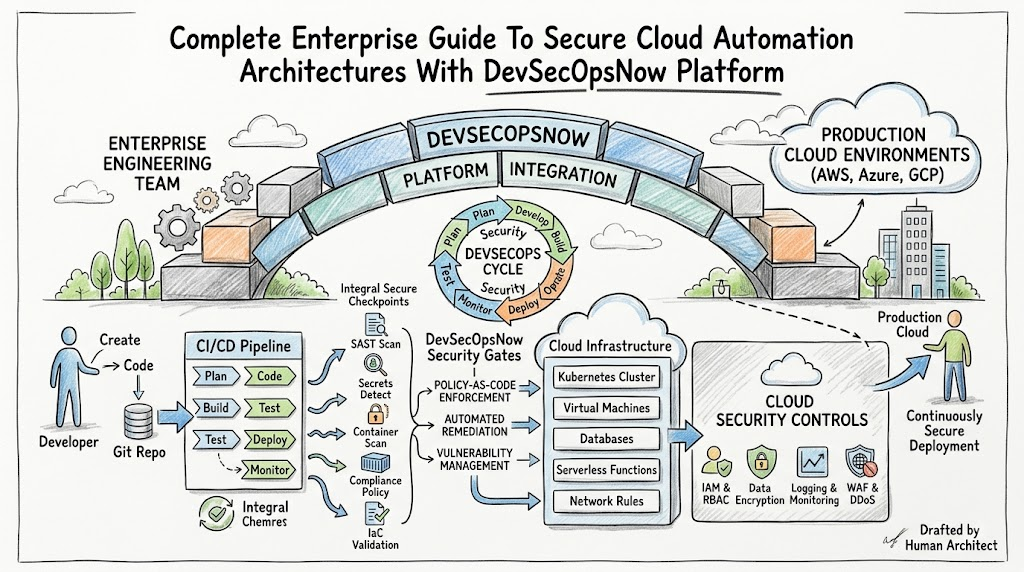
Introduction
Modern software organizations develop and deploy applications rapidly using continuous integration and automated release workflows. However, as cloud platforms, container orchestrators, Kubernetes clusters, REST APIs, open-source libraries, and CI/CD pipelines proliferate, software environments become increasingly complex and vulnerable to security threats. Relying solely on traditional end-stage security testing creates severe release bottlenecks and misses critical architecture flaws right before production deployment. DevSecOps addresses this operational challenge by integrating security controls, continuous automated testing, and active risk governance across every stage of development and operations. Resources like DevSecOpsNow provide actionable guidance for engineering teams modernizing their software delivery infrastructure. This comprehensive guide covers core DevSecOps principles, implementation strategies, cloud and container security, supply chain protection, maturity models, and long-term security management.
Understanding DevSecOps
DevSecOps represents the structural integration of development, security, and operational practices into a unified software engineering workflow. Rather than treating security as an isolated, external gatekeeper, this methodology establishes shared operational accountability across every software release. Through shift-left security strategies, security checks occur at the earliest stages of source code creation rather than during late-stage staging reviews. Continuous automation executes security activities—including Static Application Security Testing (SAST), Dynamic Application Security Testing (DAST), Software Composition Analysis (SCA), secrets scanning, Infrastructure as Code (IaC) verification, container scanning, Software Bill of Materials (SBOM) generation, and policy-as-code enforcement—directly inside CI/CD pipelines. This automated feedback provides developers with instant remediation guidance within native workflows, keeping release velocity fast while maintaining robust software defenses.
Why Organizations Are Adopting DevSecOps
Modern application architectures rely heavily on complex, distributed ecosystems including Git repositories, CI/CD runners, Docker containers, Kubernetes orchestration, Terraform automation, public cloud platforms like AWS, Azure, and Google Cloud, REST APIs, microservices, and third-party open-source libraries stored in artifact repositories. Managing security risk manually across these distributed environments is practically impossible. Organizations adopt DevSecOps to establish automated security controls that identify software vulnerabilities early in the development lifecycle when they are cheapest and easiest to resolve. Embedded scanning policies deliver continuous visibility across running infrastructure, encourage cross-team collaboration, streamline regulatory governance, and significantly reduce Mean Time to Remediate (MTTR) critical defects without disrupting agile deployment schedules.
DevSecOps Consulting Services
Navigating a full security transformation requires a clear technical strategy, structured architectural blueprints, and cross-functional alignment across development and operations teams. Professional DevSecOps Consulting Services help enterprises analyze existing delivery environments, evaluate active pipeline risks, select appropriate tooling, and establish robust security governance frameworks. Experienced security architects guide organizations through cloud security controls, Kubernetes hardening strategies, supply chain protections, and regulatory compliance standards while crafting an actionable transformation roadmap tailored to business goals. Consulting engagements are essential for enterprises struggling with tool fragmentation, manual security reviews, persistent deployment delays, uncoordinated cloud migrations, or complex hybrid-cloud architectures requiring unified governance models.
DevSecOps Implementation Services
Moving from an abstract security strategy to a fully automated pipeline requires configuring and embedding specialized security tools directly into daily developer workflows. Professional DevSecOps Implementation Services focus on integrating automated security gates across every phase of the delivery engine to capture vulnerabilities before code reaches production environments.
Static Application Security Testing – SAST
Static Application Security Testing analyzes application source code, binaries, and bytecode for hidden security defects, bad coding practices, and structural logic flaws without executing the application. Integrating SAST engines into native Git repository workflows and CI/CD pull requests ensures that developers receive immediate, inline feedback on potential SQL injections, cross-site scripting (XSS), buffer overflows, and insecure API calls before code is merged into primary repositories.
Dynamic Application Security Testing – DAST
Dynamic Application Security Testing evaluates running applications from an external perspective to detect operational vulnerabilities, runtime configuration errors, authentication bypass flaws, and parameter tampering issues. Executing automated DAST scans within staging environments allows engineering teams to identify complex web application and API security weaknesses that static code scanners cannot catch, ensuring runtime interfaces remain resilient against external threats.
Software Composition Analysis – SCA
Software Composition Analysis continuously inspects application codebases to identify third-party open-source dependencies, track transitive package risks, and flag known Common Vulnerabilities and Exposures (CVEs). SCA tools maintain compliance across open-source software libraries by identifying restrictive software licenses, highlighting unmaintained packages, and automating pull requests for upstream security patches before dependencies introduce production risks.
Secrets Scanning
Secrets scanning engines continuously monitor code repositories, commit histories, build logs, and continuous integration environments to detect hardcoded credentials, API keys, private certificates, and database passwords. Automated secrets detection prevents high-risk credential leaks by intercepting risky commits through local pre-commit hooks and instantly revoking exposed tokens before public exposure or unauthorized access occurs.
Infrastructure as Code Security
Infrastructure as Code (IaC) security tools evaluate Terraform modules, AWS CloudFormation templates, and ARM configurations against industry compliance frameworks prior to resource provisioning. Scanning infrastructure blueprints early prevents accidental cloud misconfigurations, such as publicly exposed storage buckets, open security groups, disabled audit logging, unencrypted data volumes, and overly permissive IAM roles before cloud resources are deployed.
Container Security
Container security mechanisms inspect container base images, layer contents, and registry storage for embedded system vulnerabilities, outdated binaries, and unsafe configurations. Modern container security practice enforces image signing, restricts root runtime privileges, verifies artifact provenance, and continuously monitors active container registries to isolate malformed or vulnerable images before cluster deployment occurs.
Kubernetes Security
Protecting containerized workloads requires specialized expertise focused on container orchestrators, service meshes, and dynamic cloud resources. Comprehensive Kubernetes Security Consulting Services help engineering teams harden production clusters by securing control planes, node communication channels, runtime workloads, and ingress traffic points.
RBAC
Role-Based Access Control (RBAC) enforces strict authorization boundaries across Kubernetes clusters by restricting API server interactions based on explicitly defined service accounts, roles, and namespace bindings. Implementing least-privilege RBAC minimizes lateral threat movement and prevents unauthorized users or compromised pods from accessing administrative cluster resources.
Network Policies
Kubernetes Network Policies act as localized firewall rules, explicitly controlling how pods communicate with each other and with external network endpoints across namespaces. Defining granular ingress and egress network controls isolates sensitive microservices, blocks unauthorized inter-pod traffic, and prevents lateral attacker movement within compromised cluster environments.
Admission Controls
Validating and mutating admission controllers enforce organizational policies at the API server level before objects are persisted into cluster storage. Utilizing tools like Open Policy Agent (OPA) Gatekeeper or Kyverno guarantees that non-compliant deployment manifests, unapproved image registries, and privileged pods are automatically blocked from running inside production environments.
Secrets Management
Native Kubernetes secrets are merely base64-encoded strings, requiring integration with dedicated enterprise secrets managers like HashiCorp Vault or AWS Secrets Manager. Vault integration, external secrets operators, and envelope encryption mechanisms secure sensitive operational tokens without exposing plaintext keys within manifest files or persistent cluster storage.
Container Image Security
Container image security policies enforce mandatory cryptographic image signing, verify binary provenance via Cosign, and restrict pod execution to verified private registries. Automated admission gates inspect image signatures continuously, preventing unverified, altered, or vulnerable third-party images from running inside production clusters.
Kubernetes Configuration Security
Kubernetes configuration security focuses on auditing manifest definitions to restrict privileged containers, enforce read-only root filesystems, and block host path mounts. Regular configuration auditing prevents security drift, limits node-level compromises, and ensures cluster settings conform to Center for Internet Security (CIS) benchmarks.
Runtime Security
Runtime security tools monitor kernel-level system calls, process executions, and network socket activity inside running pods using eBPF technology. Continuous runtime monitoring detects anomalous container behavior, file tampering attempts, unexpected shell spawning, and privilege escalation attempts instantly during active cluster operation.
Cluster Access Management
Cluster access management standardizes administrative entry points through centralized Single Sign-On (SSO), short-lived access certificates, and bastion proxies. Disabling anonymous API access, auditing API server logs, and enforcing multi-factor authentication keeps cluster access tightly controlled and fully traceable.
Cloud Security
Securing modern cloud platforms requires consistent governance across identity systems, compute workloads, virtual networks, and storage infrastructure. Engaging specialized Cloud Security Consulting Services ensures that multi-cloud environments are built on resilient security foundations aligned with industry standards.
Identity and Access Management
Identity and Access Management (IAM) forms the primary security perimeter within cloud platforms by controlling user identities, service roles, and resource access policies. Enforcing strict least-privilege principles, temporary session credentials, identity federation, and mandatory multi-factor authentication limits credential exposure risks across AWS, Azure, and Google Cloud environments.
Cloud Network Security
Cloud network security isolates production workloads using Virtual Private Clouds (VPCs), isolated subnets, micro-segmentation, and web application firewalls. Implementing dedicated private endpoints, transit gateways, and strict security group rules prevents unnecessary exposure of cloud infrastructure to the public internet.
Cloud Configuration Security
Cloud configuration security involves continuously evaluating cloud tenant settings against recognized industry security standards to prevent operational oversights. Automated auditing flags public storage buckets, unencrypted databases, missing audit trails, and permissive firewall rules before exploitation occurs.
Encryption
Comprehensive data protection strategies require robust cryptographic controls for both data-at-rest across storage volumes and data-in-transit across network channels. Implementing customer-managed encryption keys, automated key rotation schedules, and compulsory TLS protocols secures sensitive data against unauthorized inspection or data interception.
Logging and Monitoring
Aggregating centralized system logs, API call trails, network flow telemetry, and platform alerts builds essential visibility across multi-cloud environments. Integrating centralized log repositories with Security Information and Event Management (SIEM) engines enables real-time threat detection, automated alerting, and rapid incident response capabilities.
Infrastructure as Code Security
Infrastructure as Code security automates policy checks across cloud resource templates before deployment, ensuring cloud infrastructure adheres to security standards. Continuous drift detection tools compare deployed cloud states against version-controlled repositories to catch and revert manual, unauthorized infrastructure edits automatically.
Workload Security
Cloud workload security protects dynamic virtual machines, serverless functions, and managed container instances from runtime threats. Deploying lightweight agentless scanners, host-based intrusion detection systems, and vulnerability management tools preserves the integrity of application execution layers across cloud environments.
Cloud Security Posture Management
Cloud Security Posture Management (CSPM) solutions offer real-time compliance tracking, risk visualization, and automated remediation capabilities across multi-cloud platforms. CSPM engines continuously analyze resource configurations, highlighting policy violations and identifying risky multi-cloud architectures before security breaches occur.
Software Supply Chain Security
Modern application delivery depends heavily on open-source dependencies, external package managers, continuous integration build servers, and third-party container bases. Software Supply Chain Security Services help organizations evaluate and isolate these multi-layered dependencies across package repositories, build systems, artifact repositories, CI/CD platforms, and container registries. Enforcing mandatory code signing and verifying artifact integrity prevents malicious code injection, package typosquatting, CI/CD pipeline tampering, and compromised build artifacts from reaching production software releases.
Understanding Software Bill of Materials
A Software Bill of Materials (SBOM) acts as a comprehensive nested inventory listing every component, open-source package, sub-dependency, build tool, and license built into a software release. Organizations require automated SBOM generation to establish clear visibility across complex software supply chains, evaluate downstream vulnerability exposures rapidly when new CVEs are disclosed, fulfill open-source license obligations, maintain software inventory accuracy, and satisfy stringent enterprise compliance standards during third-party security audits.
CI/CD Pipeline Security
Continuous integration and continuous deployment pipelines are primary targets for cyber attackers because they possess elevated access to source code, production credentials, and cloud environments. Hardening CI/CD platforms requires restricting pipeline runner access, enforcing strict branch protection rules, managing pipeline secrets via external stores, verifying build artifact signatures, requiring multi-party deployment approvals, maintaining tamper-proof audit logging, and executing automated security scanning across every pipeline step to prevent unauthorized pipeline tampering.
Policy-as-Code
Policy-as-code automates regulatory compliance and security governance by converting manual security policies into version-controlled, executable code rules. Frameworks such as Open Policy Agent (OPA) allow engineering teams to enforce non-negotiable operational rules automatically—such as prohibiting root container processes, requiring cloud storage encryption, mandating approved registries, enforcing Kubernetes workload limits, and restricting open network ports—directly within CI/CD pipelines. This approach guarantees consistency, repeatability, automation, and reduced manual review overhead across enterprise infrastructure.
DevSecOps Assessment
A formal maturity review evaluates an organization’s existing software delivery ecosystem to highlight operational security gaps, tool inefficiencies, and process bottlenecks. Utilizing specialized DevSecOps Assessment Services allows enterprises to evaluate application security practices, CI/CD workflows, cloud configurations, Kubernetes clusters, secrets management systems, open-source dependencies, vulnerability management lifecycles, regulatory governance, security culture, and developer habits, resulting in a clear, prioritized transformation roadmap.
DevSecOps Maturity Model
Evaluating an organization’s security posture requires analyzing people, processes, technical tooling, automation capabilities, governance structures, and cross-team collaboration frameworks rather than relying solely on individual security tools.
| Level | Characteristics | Key Focus Areas |
| Initial | Mostly manual security checks, reactive vulnerability patching, security reviews at project end | Ad-hoc testing, security isolated from development teams |
| Developing | Basic automated scanning, initial static code analysis, basic vulnerability tracking | Initial tool integration into repository workflows |
| Integrated | Security automated in CI/CD pipelines, automated SAST/SCA checks in pull requests | Shift-left testing, direct developer security feedback |
| Automated | End-to-end security automation, policy-as-code enforcement, IaC and container scanning | Automated security gates, continuous vulnerability tracking |
| Optimized | Real-time observability, continuous metric tracking, dynamic risk response and tuning | Continuous improvement, adaptive threat management |
Vulnerability Management
Effective vulnerability management extends beyond simple flaw discovery to encompass a complete operational lifecycle: discovery, validation, classification, prioritization, assignment, remediation, verification, reporting, and continuous monitoring. Prioritizing fixes based on contextual risk factors—such as Common Vulnerability Scoring System (CVSS) severity scores, exploitability, application exposure, business importance, data sensitivity, and internet accessibility—ensures engineering teams focus immediate remediation efforts on critical risks rather than wasting resources on low-impact alerts.
DevSecOps Managed Services
Maintaining modern security tooling, tuning scanning rules, monitoring build pipelines, and managing continuous vulnerability backlogs can overwhelm existing platform engineering and development teams. Retaining expert DevSecOps Managed Services provides organizations with dedicated security engineering support, continuous pipeline monitoring, vulnerability triage, policy maintenance, compliance reporting, developer guidance, cloud and Kubernetes monitoring, and ongoing security optimization without the high overhead of recruiting and maintaining specialized internal security staff.
Penetration Testing Services
While automated security tools identify known software flaws and code misconfigurations rapidly, they cannot evaluate complex business logic flaws or chained exploit vectors. Professional Penetration Testing Services complement automated pipeline security by conducting controlled, expert-led manual security assessments across web applications, APIs, cloud environments, networks, Kubernetes clusters, container layers, authentication systems, and infrastructure to validate defenses against real-world attack strategies before threat actors exploit them.
DevSecOps Training
Building a sustainable security architecture requires cultivating practical security knowledge across development, operations, and security engineering teams. Comprehensive DevSecOps Training programs cover essential technical competencies including secure SDLC principles, CI/CD pipeline security, SAST, DAST, SCA, cloud security, Kubernetes security, container security, secrets management, Infrastructure as Code auditing, SBOM management, supply chain protection, policy-as-code, and automated security controls across modern delivery platforms.
Corporate DevSecOps Training
Tailored learning initiatives empower multi-disciplinary engineering groups to adopt secure coding standards and modern security automation tools effectively. Customized Corporate DevSecOps Training delivers role-based, hands-on lab experiences for software developers, DevOps engineers, security specialists, platform engineers, cloud teams, and engineering managers across technologies such as Jenkins, GitHub Actions, GitLab CI/CD, Docker, Kubernetes, Terraform, AWS, Azure, Google Cloud, and SonarQube to align organizational teams around shared security practices.
Example DevSecOps Pipeline
- Developer Commit: Code is committed to a version-controlled repository, triggering local pre-commit security checks.
- Secrets Scan: Automated scanning engines check commits instantly to prevent exposed API keys or tokens from entering code repositories.
- SAST & SCA: Static code analysis inspects source code for defects while SCA tools evaluate open-source dependency risks.
- Artifact Build: Secure build runners compile application binaries and automatically generate a Software Bill of Materials (SBOM).
- Container Scan: Container base images and operating system packages are audited for known software vulnerabilities.
- IaC Scan: Infrastructure as Code templates are audited to verify cloud configurations adhere to security standards.
- Test Deployment: Validated builds deploy automatically into an isolated staging environment for dynamic security testing.
- DAST Scan: Automated dynamic scanners test running application endpoints and APIs for runtime security flaws.
- Policy Validation: Policy engines verify that deployment manifests comply with organizational governance rules.
- Production Release: Cryptographically signed, fully compliant build artifacts release into production environments.
- Runtime Monitoring: Runtime agents monitor active workloads continuously to identify and isolate anomalous operational activity.
DevSecOps Implementation Roadmap
Adopting DevSecOps successfully requires a phased, realistic implementation strategy that minimizes operational friction while establishing foundational security controls step by step.
- Phase 1 – Assessment & Alignment: Audit existing software delivery workflows, evaluate current security tools, identify primary delivery risks, and define shared cross-functional security objectives.
- Phase 2 – Foundations & Secrets Control: Deploy automated secrets scanning across repositories, enforce pre-commit checks, establish centralized secrets management, and define baseline security policies.
- Phase 3 – Pipeline Integration: Embed SAST and SCA scanning tools into primary CI/CD workflows, set up automated pull-request feedback, and establish clear vulnerability triage processes.
- Phase 4 – Infrastructure & Container Security: Introduce IaC scanning for cloud blueprints, enforce container base image scanning, configure registry security, and implement image signing.
- Phase 5 – Policy-as-Code & Admission Controls: Deploy policy-as-code engines within build pipelines and enforce automated Kubernetes admission controls across cluster environments.
- Phase 6 – Dynamic Testing & Supply Chain Security: Integrate automated DAST scanning into staging deployments, generate automated SBOMs, and secure CI/CD build environments.
- Phase 7 – Runtime Protection & Observability: Deploy runtime security monitoring across container environments, aggregate SIEM security logging, and automate incident alerting workflows.
- Phase 8 – Continuous Optimization & Upskilling: Track core security metrics, refine policy rules to reduce false positive alerts, and deliver continuous role-based engineering training.
Common DevSecOps Challenges
Integrating security across rapid delivery environments can introduce operational hurdles, but practical engineering strategies help teams overcome these obstacles effectively.
- Security Alert Overload: Excessive false positives create alert fatigue for developers. Tune scanning rules continuously, filter non-exploitable findings, and prioritize fixes based on business risk context.
- Developer Resistance: Security controls that slow down releases meet with resistance. Embed security feedback natively inside developer tools like Git repositories, IDEs, and pull requests to minimize friction.
- Tool Fragmentation: Deploying disparate, uncoordinated security scanners increases management overhead. Adopt unified security platforms or standardize tool integration through centralized security dashboards.
- Lack of Security Ownership: Development teams often treat security as someone else’s job. Establish Security Champions programs to foster security leadership and expertise within development squads.
- Skills Gaps: Traditional security engineers often lack software development experience, while developers lack threat modeling skills. Invest in hands-on, role-based technical training programs.
- Poor Tool Integration: Standalone scanners that run outside CI/CD pipelines get ignored. Automate security scanning execution directly within primary build pipelines.
- Excessive Pipeline Delays: Slow security scans frustrate engineering teams. Run deep security scans asynchronously and keep inline pull-request checks fast and lightweight.
- Inconsistent Security Policies: Manual policy application leads to compliance gaps. Use policy-as-code frameworks to enforce uniform rules across all environments automatically.
DevSecOps Metrics
Tracking clear operational metrics helps engineering leaders measure security efficiency, identify pipeline bottlenecks, and drive continuous software delivery improvements over time.
| Metric | Purpose | Operational Target |
| Mean Time to Remediate (MTTR) | Measures remediation speed for identified security defects | Rapid resolution of critical security findings |
| Critical Vulnerabilities | Tracks severe unpatched findings across systems | Continuous reduction across release cycles |
| Security Test Coverage | Measures pipeline adoption across repositories | 100% automated scanning integration |
| Secrets Detected | Monitors credential exposure in commits and logs | Zero credentials committed to code stores |
| Dependency Risk | Tracks vulnerable open-source packages in use | Automated patching for high-risk dependencies |
| Policy Violations | Measures compliance issues across infrastructure manifests | Continuous drop in non-compliant code submissions |
| Secure Deployment Rate | Measures compliant releases passing all security gates | High percentage of fully compliant builds |
Choosing a DevSecOps Service Model
Selecting the appropriate service model depends on an organization’s existing internal technical capabilities, security maturity level, resource constraints, and overall business objectives.
- DevSecOps Consulting Services: Ideal for organizations needing strategic guidance, architecture design, tooling selection, and security transformation roadmaps.
- DevSecOps Assessment Services: Designed for enterprises wanting a comprehensive audit of their security posture, pipeline bottlenecks, and technical risk areas.
- DevSecOps Implementation Services: Suited for engineering teams requiring expert technical support to configure, integrate, and automate security tools in CI/CD pipelines.
- DevSecOps Managed Services: Perfect for businesses seeking ongoing operational management, continuous vulnerability triage, pipeline monitoring, and security support.
- Cloud Security Consulting Services: Essential for enterprises migrating workloads, refactoring infrastructure, or hardening multi-cloud security environments.
- Kubernetes Security Consulting Services: Designed for teams deploying containerized applications that require robust cluster, network, and runtime security controls.
- Software Supply Chain Security Services: Critical for organizations looking to secure third-party dependencies, protect CI/CD platforms, and implement SBOM tracking.
- Penetration Testing Services: Recommended for businesses needing thorough manual testing to uncover complex logical flaws and validate automated controls.
- DevSecOps Training: Valuable for individual practitioners looking to upskill in secure coding, CI/CD automation, cloud security, and modern DevSecOps tools.
- Corporate DevSecOps Training: Tailored for organizations seeking to upskill entire engineering, cloud, and security teams through customized hands-on labs.
Frequently Asked Questions
1. What is the main difference between DevOps and DevSecOps?
DevOps focuses on integrating software development and IT operations to accelerate release velocity, continuous integration, and automated deployment pipelines. DevSecOps builds upon this foundation by embedding automated security testing, policy enforcement, and risk governance directly into every stage of that delivery lifecycle, ensuring releases remain secure without reducing deployment speed.
2. How does DevSecOps impact software development velocity?
While adding manual security gates slows down releases, DevSecOps uses automated scanning engines inside existing pipelines to give instant feedback. Identifying and resolving bugs early in pull requests prevents late-stage security blocks, reducing overall release friction and increasing deployment velocity over time.
3. What tools are typically used in a DevSecOps pipeline?
A modern DevSecOps pipeline uses SAST tools like SonarQube, SCA platforms like Snyk, secrets scanners like GitGuardian, IaC scanners like Checkov, container security tools like Trivy, policy engines like Open Policy Agent, and runtime protection systems like Falco.
4. Why is static testing (SAST) alone insufficient for complete security?
SAST scans uncompiled source code to catch logic defects and bad coding practices early. However, it cannot analyze dynamic runtime behavior, web server configurations, authentication workflows, or underlying cloud infrastructure risks, making dynamic testing (DAST) and runtime monitoring equally necessary.
5. How does policy-as-code improve cloud and container security?
Policy-as-code converts security policies into version-controlled, executable code rules. Frameworks like Open Policy Agent automatically check infrastructure code and deployment manifests against these rules, ensuring non-compliant resources—such as unencrypted storage or root containers—are blocked before deployment.
6. What role does an SBOM play in software supply chain security?
A Software Bill of Materials (SBOM) provides an accurate inventory of every open-source package, third-party library, and sub-dependency within an application. This transparency allows security teams to identify exposed systems instantly when new open-source vulnerabilities (CVEs) are publicly disclosed.
7. How often should penetration testing be performed alongside automated DevSecOps scanning?
Automated tools run continuously within pipelines, but manual penetration testing should be conducted annually or after major architectural changes. Manual testing uncovers complex business logic flaws and chained exploit vectors that automated scanners routinely miss.
8. What is the most common reason DevSecOps initiatives fail?
DevSecOps initiatives often fail due to alert fatigue from unconfigured tools, treating security purely as a tool purchase rather than a cultural shift, or forcing complex security processes onto development teams without proper training or native integration.
9. How do organizations secure Kubernetes clusters effectively?
Securing Kubernetes requires a defense-in-depth approach: enforcing strict Role-Based Access Control (RBAC), applying restrictive Network Policies, using admission controllers for governance, managing secrets via external vaults, scanning container layers, and monitoring kernel system calls at runtime.
10. Can small engineering teams implement DevSecOps without large budgets?
Yes, small engineering teams can implement effective DevSecOps architectures using open-source tools. Free tools for secrets scanning, static code analysis, dependency checking, container scanning, and IaC verification easily integrate into standard build platforms like GitHub Actions or GitLab CI/CD.
11. How does secrets scanning prevent major cloud security breaches?
Secrets scanning tools continuously inspect commit histories, repository code, and build outputs for exposed API keys, database credentials, and cloud tokens. Intercepting exposed keys before commits reach public repositories prevents attackers from abusing leaked credentials.
12. What is the first step an enterprise should take to adopt DevSecOps?
Enterprises should begin by conducting a comprehensive assessment of their current software delivery lifecycle, pipeline workflows, tooling overhead, and active security risks. This assessment helps teams establish a clear, prioritized DevSecOps implementation roadmap.
Conclusion
DevSecOps is a fundamental shift in how modern software is built, secured, and operated across cloud ecosystems. By moving away from delayed, manual security checks and embedding automated security gates across CI/CD pipelines, engineering teams can maintain fast release cycles while keeping applications secure. Successful implementation requires a balanced strategy that combines continuous security automation, clear cloud and Kubernetes governance, supply chain protection, structured vulnerability management, and ongoing team training. Building a mature DevSecOps architecture enables organizations to release resilient software faster, adapt to evolving security threats, and protect critical digital infrastructure across every deployment.

Managing policy-as-code admission gates across multi-cluster hybrid environments creates severe control-plane serialization bottlenecks. When thousands of ephemeral pods attempt concurrent image signature verification and Open Policy Agent (OPA/Gatekeeper) webhook evaluations against centralized policy registries, control-plane saturation can delay scheduling, trigger cascading admission webhook timeouts, and stall automated rollouts across distributed Kubernetes topologies