MOTOSHARE 🚗🏍️
Rent Bikes & Cars Directly from Owners
Motoshare connects vehicle owners with people who need bikes and cars on rent. Owners earn from idle vehicles, and renters get flexible ride options.
Visit Motoshare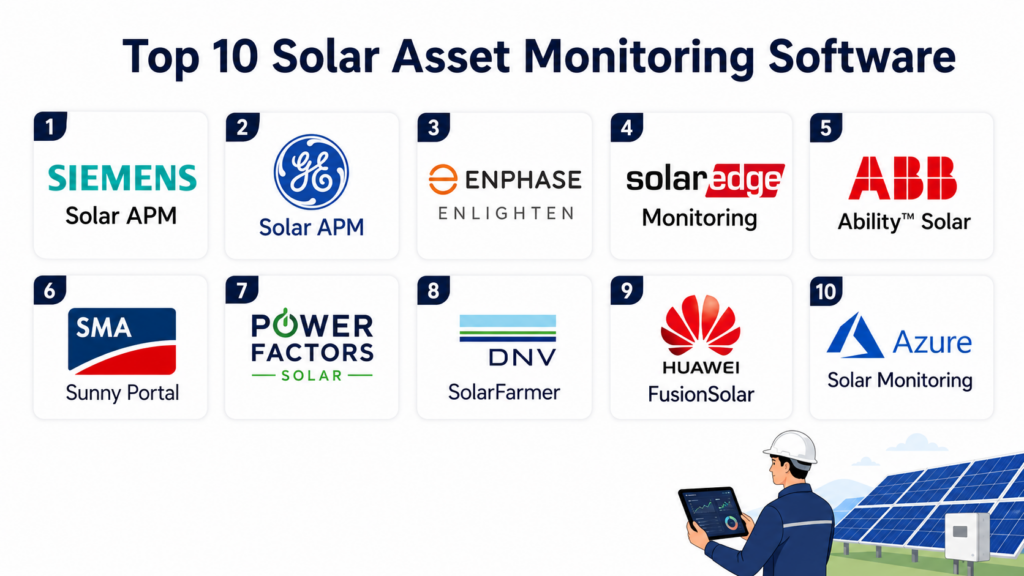
Introduction
Solar Asset Monitoring Software is used to track, analyze, and optimize the performance of solar energy systems such as rooftop solar installations, solar farms, and utility-scale photovoltaic (PV) plants. These platforms collect real-time data from inverters, sensors, SCADA systems, and weather services to help operators maximize energy generation and reduce operational losses.They are widely used by solar plant operators, utilities, independent power producers (IPPs), EPC contractors, and energy asset managers to ensure solar assets perform efficiently across their lifecycle.
Modern solar monitoring systems combine IoT integration, AI-based performance analytics, predictive maintenance, weather forecasting, and financial performance tracking to improve ROI and system reliability.
Common real-world use cases include:
- Utility-scale solar farm performance monitoring
- Rooftop solar system monitoring and analytics
- Inverter-level fault detection and diagnostics
- Energy yield forecasting and optimization
- Solar panel degradation tracking
- Portfolio-wide solar asset management
Buyers evaluating Solar Asset Monitoring Software should focus on:
- Real-time data monitoring from inverters and sensors
- SCADA and IoT integration capabilities
- AI-driven fault detection and predictive maintenance
- Energy yield forecasting accuracy
- Multi-site and portfolio scalability
- Weather data integration
- Dashboard visualization and reporting tools
- Cloud vs on-premise deployment options
- Integration with billing and energy trading systems
- Cybersecurity and data governance
Best for: Solar farm operators, utilities, renewable energy companies, EPC contractors, and distributed rooftop solar providers.
Not ideal for: Organizations without solar generation assets or energy production operations.
Key Trends in Solar Asset Monitoring Software
- AI-based performance optimization is improving solar yield efficiency
- Cloud-native monitoring platforms are replacing legacy SCADA systems
- Digital twin models are enabling solar plant simulation and forecasting
- Drone and satellite imaging integration is improving inspection accuracy
- Real-time inverter analytics is becoming standard
- Hybrid solar + storage monitoring is increasing rapidly
- Edge computing is reducing latency in solar data processing
- ESG and carbon reporting integration is expanding
- Predictive maintenance is reducing inverter and panel failures
- Multi-tenant SaaS solar monitoring platforms are growing
How We Selected These Tools
The platforms below were selected based on global solar industry adoption, monitoring capabilities, scalability, and analytics depth.
- Evaluated adoption in utility-scale and distributed solar markets
- Assessed real-time monitoring and SCADA integration capabilities
- Reviewed predictive maintenance and fault detection strength
- Considered energy yield forecasting accuracy
- Evaluated multi-site portfolio management capabilities
- Assessed cloud vs on-premise flexibility
- Reviewed integration with inverter OEM systems
- Considered AI and analytics maturity
- Evaluated vendor ecosystem maturity in solar energy sector
- Reviewed reporting, ESG, and compliance capabilities
Top 10 Solar Asset Monitoring Software
#1 — Siemens Solar Asset Performance Management
Short description: Siemens Solar Asset Performance Management platform is designed for utility-scale and industrial solar farms. It provides real-time monitoring, predictive maintenance, and energy yield optimization. The platform is widely used in global solar energy projects. It is especially strong in large-scale solar farm analytics. Siemens focuses on industrial-grade renewable intelligence.
Key Features
- Real-time solar plant monitoring
- Inverter performance tracking
- Predictive maintenance analytics
- SCADA integration
- Energy yield forecasting
- Fault detection and diagnostics
- Portfolio-level analytics
Pros
- Strong enterprise reliability
- High scalability for solar farms
- Advanced analytics engine
Cons
- Complex implementation
- High cost
- Requires technical expertise
Platforms / Deployment
- Cloud / Hybrid / On-premise
Security & Compliance
Supports enterprise encryption, RBAC, audit logs, and energy compliance frameworks.
Integrations & Ecosystem
- SCADA systems
- IoT sensors
- Inverters (multiple OEMs)
- ERP systems
- APIs
- Data warehouses
Support & Community
Strong global renewable energy support ecosystem.
#2 — GE Digital Solar Performance Management (APM)
Short description: GE Digital provides a solar asset performance management platform designed for utility-scale solar farms. It enables real-time monitoring, predictive analytics, and operational optimization. The platform is widely used in renewable energy portfolios. It is especially strong in AI-driven asset optimization. GE focuses on digital energy transformation.
Key Features
- Solar plant performance monitoring
- Predictive maintenance analytics
- SCADA integration
- Energy yield optimization
- Fault detection systems
- Asset health scoring
- Portfolio dashboards
Pros
- Strong predictive analytics
- Multi-site scalability
- Enterprise-grade reliability
Cons
- Complex configuration
- High cost
- Requires expertise
Platforms / Deployment
- Cloud / Hybrid
Security & Compliance
Supports enterprise encryption, RBAC, audit logs, and critical infrastructure compliance standards.
Integrations & Ecosystem
- SCADA systems
- IoT solar sensors
- ERP systems
- Energy trading systems
- APIs
- Data platforms
Support & Community
Strong global renewable energy ecosystem support.
#3 — Enphase Enlighten Solar Monitoring
Short description: Enphase Enlighten is a widely used solar monitoring platform designed for residential, commercial, and distributed solar systems. It provides module-level monitoring and performance analytics. The platform is especially strong in rooftop solar visibility. Enphase focuses on microinverter-based solar intelligence. It is widely adopted in distributed solar ecosystems.
Key Features
- Module-level solar monitoring
- Real-time performance tracking
- Energy production analytics
- Fault detection alerts
- Mobile monitoring dashboard
- Inverter performance insights
- Weather-based forecasting
Pros
- Excellent for rooftop solar
- Easy-to-use interface
- Strong real-time visibility
Cons
- Limited utility-scale depth
- Ecosystem tied to Enphase hardware
- Less customization flexibility
Platforms / Deployment
- Cloud / Mobile / Web
Security & Compliance
Supports encryption, authentication controls, and cloud security standards.
Integrations & Ecosystem
- Enphase inverters
- IoT devices
- Energy storage systems
- APIs
- Smart home platforms
- Data dashboards
Support & Community
Strong residential solar user ecosystem.
#4 — SolarEdge Monitoring Platform
Short description: SolarEdge Monitoring Platform provides solar asset monitoring for residential, commercial, and utility-scale installations. It delivers module-level visibility and inverter analytics. The platform is widely used in global solar deployments. It is especially strong in inverter-based optimization. SolarEdge focuses on intelligent solar power management.
Key Features
- Module-level monitoring
- Inverter performance analytics
- Energy production tracking
- Fault detection alerts
- Weather data integration
- Mobile dashboard access
- Performance reporting
Pros
- Strong inverter ecosystem
- Easy deployment
- Good residential + commercial coverage
Cons
- Limited deep utility analytics
- Hardware dependency
- Moderate customization
Platforms / Deployment
- Cloud / Web / Mobile
Security & Compliance
Supports encryption, authentication, and cloud security frameworks.
Integrations & Ecosystem
- SolarEdge inverters
- IoT devices
- Energy storage systems
- APIs
- Smart grid systems
- Data platforms
Support & Community
Strong global solar installer ecosystem.
#5 — ABB Ability Solar Monitoring
Short description: ABB Ability Solar Monitoring platform is designed for utility-scale solar plants and industrial renewable systems. It provides real-time monitoring, predictive maintenance, and grid integration analytics. The platform is widely used in large solar farms. It is especially strong in industrial energy systems. ABB focuses on reliable renewable infrastructure.
Key Features
- Solar plant monitoring
- SCADA integration
- Predictive maintenance tools
- Energy yield optimization
- Fault detection systems
- Portfolio analytics
- Grid integration support
Pros
- Strong industrial reliability
- Good grid integration
- Scalable architecture
Cons
- Complex deployment
- Limited modern UI
- High enterprise cost
Platforms / Deployment
- On-premise / Hybrid
Security & Compliance
Supports enterprise encryption, RBAC, and critical infrastructure compliance frameworks.
Integrations & Ecosystem
- SCADA systems
- IoT sensors
- ERP systems
- Grid systems
- APIs
- Data warehouses
Support & Community
Strong global industrial energy support ecosystem.
#6 — SMA Sunny Portal (Solar Monitoring)
Short description: SMA Sunny Portal is a solar monitoring platform designed for residential, commercial, and utility-scale solar systems. It provides performance tracking, energy analytics, and inverter monitoring. The platform is widely used in global solar installations. It is especially strong in inverter-based solar ecosystems. SMA focuses on reliable solar energy management.
Key Features
- Solar inverter monitoring
- Energy production tracking
- Fault detection alerts
- Performance analytics
- Weather data integration
- Mobile dashboard access
- Reporting tools
Pros
- Strong inverter integration
- Reliable performance tracking
- Easy deployment
Cons
- Limited advanced analytics
- Ecosystem dependency
- Moderate customization
Platforms / Deployment
- Cloud / Web / Mobile
Security & Compliance
Supports encryption, authentication, and cloud security standards.
Integrations & Ecosystem
- SMA inverters
- IoT systems
- Energy storage
- APIs
- Smart grid platforms
- Data systems
Support & Community
Strong residential and commercial solar ecosystem.
#7 — Power Factors Drive Solar Platform
Short description: Power Factors provides a solar asset monitoring platform designed for performance optimization and predictive analytics. It supports utility-scale solar farms and multi-site portfolios. The platform is widely used in renewable energy operations. It is especially strong in portfolio analytics. Power Factors focuses on clean energy intelligence.
Key Features
- Solar performance monitoring
- SCADA integration
- Predictive maintenance
- Energy yield optimization
- Fault detection systems
- Portfolio dashboards
- Reporting analytics
Pros
- Strong solar analytics
- Easy deployment
- Good usability
Cons
- Limited enterprise complexity
- Smaller ecosystem
- Requires integration effort
Platforms / Deployment
- Cloud / Web
Security & Compliance
Supports encryption, RBAC, and renewable compliance frameworks.
Integrations & Ecosystem
- SCADA systems
- IoT sensors
- ERP systems
- APIs
- Energy trading systems
- Data platforms
Support & Community
Strong renewable SaaS ecosystem.
#8 — DNV SolarFarmer Monitoring Suite
Short description: DNV SolarFarmer is a solar asset modeling and monitoring platform focused on energy yield forecasting and performance optimization. It provides advanced analytics for solar project development and operations. The platform is widely used in engineering and consultancy environments. It is especially strong in solar forecasting. DNV focuses on energy risk and performance analytics.
Key Features
- Solar energy yield modeling
- Performance monitoring
- SCADA integration
- Loss analysis tools
- Forecasting models
- Portfolio analytics
- Risk assessment tools
Pros
- Strong modeling accuracy
- Good forecasting tools
- Reliable engineering support
Cons
- Complex interface
- Limited real-time depth
- Requires expertise
Platforms / Deployment
- On-premise / Hybrid
Security & Compliance
Supports encryption, RBAC, and compliance-grade frameworks.
Integrations & Ecosystem
- SCADA systems
- IoT sensors
- ERP systems
- Energy platforms
- APIs
- Data warehouses
Support & Community
Strong engineering and consulting ecosystem.
#9 — Huawei FusionSolar Smart PV Platform
Short description: Huawei FusionSolar is a smart solar monitoring platform designed for utility-scale and commercial solar systems. It provides AI-driven monitoring, inverter analytics, and energy optimization. The platform is widely used in global solar deployments. It is especially strong in smart inverter ecosystems. Huawei focuses on intelligent solar energy systems.
Key Features
- AI-based solar monitoring
- Inverter analytics
- Energy yield optimization
- Fault detection systems
- SCADA integration
- Smart grid integration
- Performance dashboards
Pros
- Strong AI optimization
- High scalability
- Advanced inverter ecosystem
Cons
- Hardware dependency
- Regional availability constraints
- Limited openness
Platforms / Deployment
- Cloud / Hybrid
Security & Compliance
Supports encryption, RBAC, and enterprise security frameworks.
Integrations & Ecosystem
- Huawei inverters
- IoT devices
- SCADA systems
- Energy storage
- APIs
- Smart grid systems
Support & Community
Strong global solar hardware ecosystem.
#10 — Azure Solar Asset Monitoring (Custom Solution Framework)
Short description: Azure Solar Asset Monitoring is a cloud-based framework built on Microsoft Azure that enables organizations to develop custom solar monitoring solutions using IoT, AI, and analytics services. It is widely used in enterprise solar digital transformation projects. It is especially strong in scalable cloud architecture. Microsoft focuses on flexible renewable energy platforms.
Key Features
- Cloud-based solar monitoring
- AI-driven analytics
- IoT integration
- Predictive maintenance models
- Energy forecasting tools
- Dashboard visualization
- Data pipelines
Pros
- Highly scalable architecture
- Strong AI capabilities
- Flexible customization
Cons
- Requires custom development
- Not a standalone product
- Integration complexity
Platforms / Deployment
- Cloud / Web
Security & Compliance
Supports Azure enterprise encryption, RBAC, and compliance frameworks.
Integrations & Ecosystem
- Azure IoT Hub
- SCADA systems
- ERP systems
- APIs
- Data lakes
- Energy platforms
Support & Community
Strong Microsoft cloud ecosystem support.
Comparison Table
| Tool Name | Best For | Platform(s) Supported | Deployment | Standout Feature | Public Rating |
|---|---|---|---|---|---|
| Siemens Solar APM | Utility solar farms | Web | Hybrid | Industrial analytics | N/A |
| GE Solar APM | Predictive analytics | Web | Hybrid | AI optimization | N/A |
| Enphase Enlighten | Rooftop solar | Web | Cloud | Module-level tracking | N/A |
| SolarEdge Monitoring | Residential/commercial | Web | Cloud | Inverter ecosystem | N/A |
| ABB Ability Solar | Industrial solar | Web | Hybrid | Grid integration | N/A |
| SMA Sunny Portal | Inverter-based solar | Web | Cloud | Easy monitoring | N/A |
| Power Factors Solar | Portfolio solar | Web | Cloud | Solar analytics | N/A |
| DNV SolarFarmer | Forecasting | Web | Hybrid | Yield modeling | N/A |
| Huawei FusionSolar | Smart PV systems | Web | Cloud | AI inverter analytics | N/A |
| Azure Solar Monitoring | Custom platforms | Web | Cloud | IoT + AI flexibility | N/A |
Evaluation & Scoring of Solar Asset Monitoring Software
| Tool Name | Core 25% | Ease 15% | Integrations 15% | Security 10% | Performance 10% | Support 10% | Value 15% | Weighted Total |
|---|---|---|---|---|---|---|---|---|
| Siemens Solar APM | 9.0 | 8.0 | 9.0 | 9.0 | 9.0 | 9.0 | 8.5 | 8.8 |
| GE Solar APM | 9.5 | 8.0 | 9.5 | 9.5 | 9.5 | 9.0 | 8.5 | 9.0 |
| Enphase Enlighten | 8.5 | 9.0 | 8.5 | 8.5 | 8.5 | 8.5 | 8.5 | 8.6 |
| SolarEdge | 8.5 | 9.0 | 8.5 | 8.5 | 8.5 | 8.5 | 8.5 | 8.6 |
| ABB Ability Solar | 9.0 | 7.5 | 9.0 | 9.0 | 9.0 | 9.0 | 8.0 | 8.7 |
| SMA Sunny Portal | 8.5 | 9.0 | 8.5 | 8.5 | 8.5 | 8.5 | 8.5 | 8.6 |
| Power Factors | 8.5 | 9.0 | 8.5 | 8.5 | 8.5 | 8.5 | 8.5 | 8.5 |
| DNV SolarFarmer | 8.5 | 7.5 | 8.5 | 9.0 | 8.5 | 8.5 | 8.0 | 8.4 |
| Huawei FusionSolar | 8.5 | 8.5 | 9.0 | 9.0 | 8.5 | 8.5 | 8.5 | 8.6 |
| Azure Solar | 8.5 | 8.5 | 9.0 | 9.0 | 8.5 | 8.5 | 8.5 | 8.6 |
Which Solar Asset Monitoring Software Is Right for You?
Solo / Small Solar Installations
Enphase Enlighten, SMA Sunny Portal, and SolarEdge are ideal for rooftop systems.
SMB Solar Operators
Power Factors and Huawei FusionSolar are strong for mid-sized solar farms.
Mid-Market
ABB Ability, DNV SolarFarmer, and Power Factors are suitable for growing solar portfolios.
Enterprise
GE Solar APM, Siemens Solar APM, and ABB Ability are best for utility-scale solar farms.
Budget vs Premium
Budget tools focus on monitoring and alerts, while premium systems provide AI-driven optimization and forecasting.
Feature Depth vs Ease of Use
Advanced platforms provide deep analytics, while simpler tools focus on real-time visibility.
Integrations & Scalability
These systems integrate with SCADA, IoT sensors, inverters, ERP systems, and energy markets.
Security & Compliance Needs
Enterprise systems require encryption, RBAC, audit logs, and energy compliance standards.
Frequently Asked Questions
1. What is solar asset monitoring software?
It is software that tracks and analyzes solar energy system performance. It monitors energy output and faults. It improves efficiency. It supports maintenance.
2. Who uses these platforms?
Solar farm operators, utilities, EPC contractors, and energy companies use them. They manage solar assets. They improve energy production. Usage depends on solar infrastructure.
3. What data do they collect?
They collect inverter data, energy output, weather data, and fault logs. They integrate SCADA and IoT systems. Data supports optimization. Accuracy is important.
4. Why are these systems important?
They improve solar efficiency and reduce downtime. They optimize energy yield. They support predictive maintenance. They increase ROI.
5. Do they support real-time monitoring?
Yes, most platforms provide real-time dashboards. They connect to inverters and SCADA. They enable fast response. It is essential.
6. What is predictive maintenance?
It uses AI to predict equipment failures before they happen. It reduces downtime. It improves system reliability. It is widely used.
7. Can they integrate with SCADA systems?
Yes, SCADA integration is a core requirement. It enables real-time monitoring. It improves control. It is essential.
8. Are these systems cloud-based?
Modern systems are mostly cloud-based. Some are hybrid or on-premise. Cloud improves scalability. Adoption is increasing.
9. What are common challenges?
Challenges include integration complexity, data volume, and hardware compatibility. Solar systems are distributed. Data accuracy is critical. Scalability is required.
10. How should a platform be selected?
Selection depends on system size, inverter type, integration needs, and budget. Real-world testing is important. Long-term energy strategy should guide decisions.
Conclusion
Solar Asset Monitoring Software is essential for maximizing efficiency, reliability, and energy output across residential, commercial, and utility-scale solar systems. These platforms enable real-time monitoring, predictive maintenance, and advanced analytics that help operators reduce downtime and improve ROI. Enterprise solutions like GE Digital, Siemens Solar APM, and ABB Ability deliver deep industrial-grade capabilities, while platforms like Enphase, SolarEdge, and Power Factors provide accessible and scalable solutions for distributed solar assets. The right choice depends on system scale, integration complexity, and operational goals. Organizations should prioritize real-time visibility, predictive intelligence, and interoperability to build efficient and future-ready solar energy operations.
