MOTOSHARE 🚗🏍️
Rent Bikes & Cars Directly from Owners
Motoshare connects vehicle owners with people who need bikes and cars on rent. Owners earn from idle vehicles, and renters get flexible ride options.
Visit Motoshare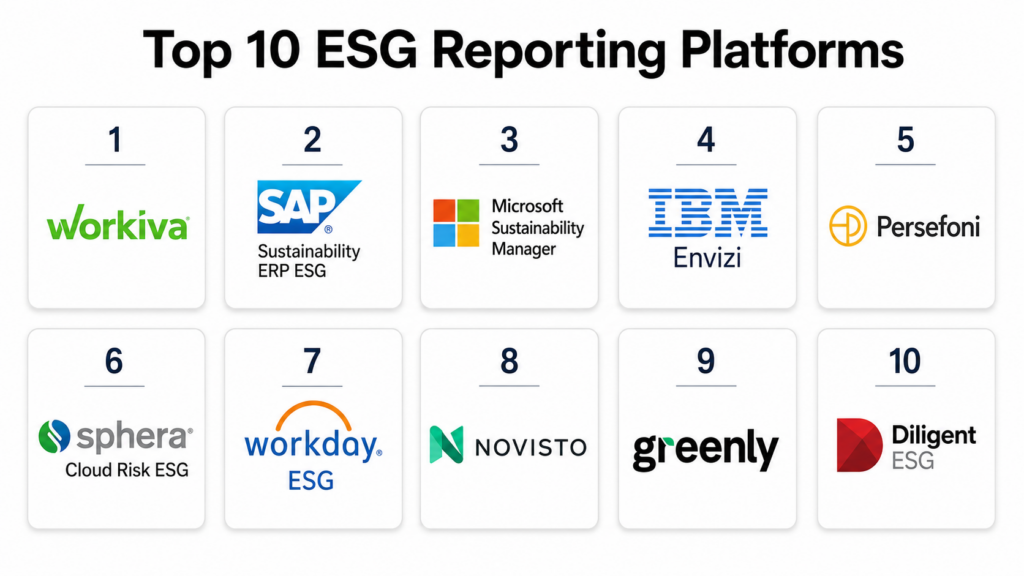
Introduction
ESG Reporting Platforms are software systems that help organizations collect, manage, analyze, and disclose Environmental, Social, and Governance (ESG) data in a structured and compliant way. These platforms convert fragmented corporate data—across sustainability, HR, finance, supply chain, and operations—into standardized ESG reports aligned with global frameworks.
They are widely used by enterprises, investors, regulators, sustainability teams, and compliance officers to meet reporting requirements such as CSRD, GRI, SASB, TCFD, and other ESG disclosure standards.
Modern ESG platforms go beyond reporting. They combine AI-driven analytics, carbon accounting integration, real-time dashboards, audit trails, and automated data collection from ERP and IoT systems.
Common real-world use cases include:
- Annual ESG and sustainability reporting
- Regulatory compliance reporting (CSRD, SEC climate disclosure, etc.)
- Investor ESG score reporting and benchmarking
- Supply chain sustainability tracking
- Risk management and ESG performance monitoring
- Integrated sustainability + financial reporting
Buyers evaluating ESG Reporting Platforms should focus on:
- Coverage of ESG frameworks (GRI, SASB, TCFD, CSRD)
- Scope 1/2/3 emissions integration capabilities
- Data automation and integration (ERP, HR, finance systems)
- Auditability and traceability of ESG data
- AI-driven ESG insights and anomaly detection
- Dashboard and visualization capabilities
- Supplier and value-chain reporting support
- Scalability for global enterprises
- Security, governance, and compliance controls
- Ease of reporting and stakeholder communication
Best for: Large enterprises, publicly listed companies, financial institutions, ESG compliance teams, and sustainability reporting departments.
Not ideal for: Small businesses without formal ESG obligations or companies not required to publish sustainability disclosures.
Key Trends in ESG Reporting Platforms
- AI-driven ESG data validation is reducing manual reporting effort
- Automated framework mapping (GRI, SASB, CSRD) is becoming standard
- Real-time ESG dashboards are replacing static annual reports
- Integration with carbon accounting platforms is increasing
- Regulatory-driven ESG compliance is accelerating adoption
- Investor-grade ESG analytics is becoming more important
- Supply chain ESG visibility (Scope 3) is expanding rapidly
- ESG + financial reporting convergence is emerging
- Cloud-native ESG platforms are replacing legacy systems
- ESG assurance and audit-readiness features are increasing
How We Selected These Tools
The platforms below were selected based on ESG reporting depth, regulatory alignment, enterprise adoption, and integration capabilities.
- Evaluated global adoption in ESG reporting and sustainability sectors
- Assessed coverage of major ESG frameworks (GRI, SASB, CSRD, TCFD)
- Reviewed automation and AI-driven reporting capabilities
- Considered integration with ERP, finance, and carbon accounting systems
- Evaluated auditability and traceability features
- Reviewed scalability for global enterprises
- Assessed supplier and supply chain ESG reporting support
- Considered data visualization and stakeholder reporting features
- Evaluated security, governance, and compliance readiness
- Reviewed vendor maturity in ESG and sustainability tech ecosystem
Top 10 ESG Reporting Platforms
#1 — Workiva ESG Reporting Platform
Short description: Workiva is a leading ESG reporting and compliance platform that enables organizations to manage financial, sustainability, and regulatory reporting in a unified environment. It is widely used by large enterprises and publicly listed companies. The platform is especially strong in audit-ready ESG disclosures. It supports collaborative reporting workflows and real-time data updates. Workiva focuses on trusted, transparent, and compliant ESG reporting.
Key Features
- ESG reporting automation
- Multi-framework support (GRI, SASB, TCFD, CSRD)
- Audit-ready reporting workflows
- Real-time collaborative editing
- Data linking across reports
- Governance and compliance controls
- Integrated financial + ESG reporting
Pros
- Strong compliance-grade reporting
- Excellent auditability features
- Widely adopted by enterprises
Cons
- High cost for enterprise usage
- Complex setup for new users
- Requires onboarding time
Platforms / Deployment
- Web / Cloud
Security & Compliance
Supports enterprise encryption, RBAC, audit logs, and regulatory compliance standards.
Integrations & Ecosystem
- ERP systems
- Finance platforms
- Carbon accounting tools
- Data warehouses
- APIs
- Cloud storage systems
Support & Community
Strong enterprise support and global compliance ecosystem.
#2 — SAP Sustainability Control Tower
Short description: SAP Sustainability Control Tower is an ESG and sustainability reporting platform integrated into SAP’s enterprise ecosystem. It enables organizations to track ESG metrics alongside operational and financial data. The platform is widely used in manufacturing and large enterprises. It is especially strong in ERP-linked ESG reporting. SAP focuses on unified sustainability and business data management.
Key Features
- ESG KPI tracking dashboards
- Integrated sustainability reporting
- Scope 1/2/3 emissions linkage
- Supplier ESG data tracking
- Compliance reporting tools
- Data governance framework
- Real-time ESG analytics
Pros
- Strong SAP ERP integration
- Enterprise-grade scalability
- Reliable governance controls
Cons
- Complex implementation
- SAP ecosystem dependency
- High licensing cost
Platforms / Deployment
- Cloud / Hybrid
Security & Compliance
Supports SAP enterprise security standards, RBAC, encryption, and compliance frameworks.
Integrations & Ecosystem
- SAP ERP
- Supply chain systems
- Finance tools
- APIs
- Cloud data platforms
- ESG systems
Support & Community
Strong global SAP enterprise support ecosystem.
#3 — Microsoft Sustainability Manager
Short description: Microsoft Sustainability Manager is a cloud-based ESG reporting platform that helps organizations track environmental impact and generate sustainability disclosures. It integrates deeply with Microsoft cloud services. The platform is widely used for ESG data consolidation and reporting automation. It is especially strong in cloud data integration. Microsoft focuses on scalable ESG intelligence solutions.
Key Features
- ESG data collection automation
- Carbon and ESG tracking dashboards
- Framework-based reporting support
- AI-driven sustainability insights
- Data integration from enterprise systems
- Emissions and ESG analytics
- Visualization dashboards
Pros
- Strong Microsoft ecosystem integration
- Scalable cloud architecture
- Good ESG reporting automation
Cons
- Requires Azure dependency
- Complex configuration
- Pricing varies by usage
Platforms / Deployment
- Cloud / Web
Security & Compliance
Supports Azure security framework, encryption, RBAC, and enterprise compliance standards.
Integrations & Ecosystem
- Microsoft Azure
- Power BI
- ERP systems
- IoT platforms
- APIs
- Data lakes
Support & Community
Strong enterprise cloud support ecosystem.
#4 — IBM Envizi ESG Suite
Short description: IBM Envizi is a powerful ESG reporting and sustainability data management platform designed for large enterprises. It enables organizations to consolidate ESG data across operations and supply chains. The platform is especially strong in Scope 3 reporting and ESG analytics. IBM focuses on enterprise-grade sustainability intelligence. Envizi supports structured ESG disclosure workflows.
Key Features
- ESG data consolidation
- Scope 1/2/3 reporting support
- Automated ESG reporting workflows
- Supplier ESG tracking
- Sustainability analytics dashboards
- Data validation tools
- Audit-ready reporting
Pros
- Strong enterprise ESG capabilities
- Excellent data consolidation
- Robust reporting tools
Cons
- Complex onboarding
- Enterprise-focused pricing
- Requires technical setup
Platforms / Deployment
- Web / Cloud
Security & Compliance
Supports enterprise encryption, RBAC, audit logging, and ESG compliance frameworks.
Integrations & Ecosystem
- IBM Cloud
- ERP systems
- Finance platforms
- Supply chain tools
- APIs
- Data warehouses
Support & Community
Strong global ESG enterprise support ecosystem.
#5 — Persefoni ESG Platform
Short description: Persefoni is a financial-grade ESG reporting platform designed for accurate, audit-ready sustainability disclosures. It is widely used by enterprises and financial institutions. The platform is especially strong in carbon-linked ESG reporting. It focuses on transparency and regulatory alignment. Persefoni enables investor-grade ESG disclosures.
Key Features
- ESG and carbon reporting integration
- Audit-ready reporting workflows
- Framework compliance support
- Scope 1/2/3 emissions linkage
- Supplier ESG tracking
- ESG analytics dashboards
- Data validation tools
Pros
- High data transparency
- Strong audit readiness
- Financial-grade reporting
Cons
- Requires onboarding effort
- Premium pricing model
- Learning curve
Platforms / Deployment
- Cloud / Web
Security & Compliance
Supports enterprise-grade encryption, RBAC, audit logs, and compliance frameworks.
Integrations & Ecosystem
- ERP systems
- Finance platforms
- Carbon accounting tools
- APIs
- Cloud data warehouses
- ESG systems
Support & Community
Strong ESG and financial reporting ecosystem support.
#6 — SpheraCloud ESG Reporting
Short description: SpheraCloud is an ESG and sustainability reporting platform focused on risk management, compliance, and environmental performance tracking. It is widely used in industrial and manufacturing sectors. The platform is especially strong in risk-based ESG reporting. Sphera focuses on operational sustainability intelligence. It supports enterprise ESG governance.
Key Features
- ESG risk management tools
- Sustainability reporting dashboards
- Environmental compliance tracking
- Data collection workflows
- Supplier ESG monitoring
- Audit-ready reporting
- Risk analytics tools
Pros
- Strong risk management focus
- Good compliance capabilities
- Industrial-grade solution
Cons
- Complex deployment
- Requires training
- Limited modern UI experience
Platforms / Deployment
- Web / Cloud
Security & Compliance
Supports enterprise encryption, RBAC, audit logging, and compliance frameworks.
Integrations & Ecosystem
- ERP systems
- Supply chain tools
- IoT platforms
- APIs
- Cloud systems
- ESG frameworks
Support & Community
Strong enterprise industrial ESG support ecosystem.
#7 — Workday Sustainability Reporting
Short description: Workday provides ESG and sustainability reporting capabilities integrated into its enterprise HR and finance platform. It enables organizations to link workforce, financial, and ESG data. The platform is widely used in enterprise workforce sustainability reporting. It is especially strong in HR-linked ESG analytics. Workday focuses on people and sustainability integration.
Key Features
- Workforce ESG reporting
- Sustainability dashboards
- HR + ESG data integration
- Compliance reporting tools
- Carbon workforce analytics
- ESG data visualization
- Automated reporting workflows
Pros
- Strong HR integration
- Unified enterprise data model
- Easy reporting workflows
Cons
- Limited deep environmental analytics
- Requires Workday ecosystem
- Enterprise-only usage
Platforms / Deployment
- Cloud / Web
Security & Compliance
Supports Workday enterprise security framework, RBAC, and compliance controls.
Integrations & Ecosystem
- Workday HCM
- Finance systems
- ERP platforms
- APIs
- Data warehouses
- ESG tools
Support & Community
Strong enterprise HR-tech ecosystem support.
#8 — Novisto ESG Platform
Short description: Novisto is an ESG reporting platform designed for structured sustainability data management and disclosure. It helps organizations manage ESG metrics, reporting workflows, and compliance frameworks. The platform is especially strong in ESG data structuring. Novisto focuses on simplifying ESG reporting processes. It supports enterprise sustainability reporting needs.
Key Features
- ESG data management
- Reporting framework alignment
- Compliance reporting tools
- ESG dashboards
- Data validation systems
- Supplier ESG tracking
- Audit-ready workflows
Pros
- Easy ESG structuring
- Strong reporting workflows
- Good usability
Cons
- Smaller ecosystem
- Limited advanced analytics
- Requires integration setup
Platforms / Deployment
- Cloud / Web
Security & Compliance
Supports encryption, RBAC, and ESG compliance frameworks.
Integrations & Ecosystem
- ERP systems
- Finance tools
- APIs
- Cloud platforms
- ESG systems
- Data warehouses
Support & Community
Growing ESG SaaS support ecosystem.
#9 — Greenly ESG Reporting Platform
Short description: Greenly is an ESG and carbon reporting platform that helps organizations track emissions and generate sustainability reports. It is widely used by mid-market companies and SMEs. The platform is especially strong in automated ESG reporting. Greenly focuses on simplifying sustainability compliance. It supports fast ESG onboarding.
Key Features
- ESG reporting dashboards
- Carbon footprint tracking
- Automated reporting tools
- Supplier data collection
- Compliance frameworks support
- Sustainability analytics
- Emissions tracking
Pros
- Easy to use
- Fast onboarding
- Good for SMEs
Cons
- Limited enterprise depth
- Smaller ecosystem
- Fewer advanced features
Platforms / Deployment
- Cloud / Web
Security & Compliance
Supports encryption, RBAC, and ESG reporting compliance standards.
Integrations & Ecosystem
- ERP systems
- Finance tools
- APIs
- Cloud platforms
- ESG systems
- Supply chain tools
Support & Community
Strong mid-market ESG support ecosystem.
#10 — Diligent ESG Platform
Short description: Diligent ESG is a governance and ESG reporting platform that helps organizations manage compliance, risk, and sustainability reporting. It is widely used by corporate boards and governance teams. The platform is especially strong in governance-driven ESG reporting. Diligent focuses on board-level ESG insights. It supports integrated risk and sustainability reporting.
Key Features
- ESG governance dashboards
- Compliance reporting tools
- Risk and sustainability tracking
- Board reporting tools
- ESG data visualization
- Audit-ready reporting
- Framework alignment support
Pros
- Strong governance focus
- Board-level reporting capabilities
- Good compliance alignment
Cons
- Less technical ESG depth
- Requires onboarding
- Premium pricing
Platforms / Deployment
- Cloud / Web
Security & Compliance
Supports enterprise encryption, RBAC, audit logs, and governance compliance frameworks.
Integrations & Ecosystem
- ERP systems
- Finance platforms
- Risk management systems
- APIs
- Cloud data warehouses
- ESG tools
Support & Community
Strong corporate governance and ESG ecosystem support.
Comparison Table
| Tool Name | Best For | Platform(s) Supported | Deployment | Standout Feature | Public Rating |
|---|---|---|---|---|---|
| Workiva | Enterprise ESG reporting | Web/Cloud | Cloud | Audit-ready workflows | N/A |
| SAP Sustainability | ERP ESG | Web | Hybrid | ERP integration | N/A |
| Microsoft Sustainability Manager | Cloud ESG | Web | Cloud | Azure integration | N/A |
| IBM Envizi | ESG analytics | Web | Cloud | Data consolidation | N/A |
| Persefoni | Financial ESG | Web | Cloud | Audit-grade reporting | N/A |
| SpheraCloud | Risk ESG | Web | Cloud | Risk analytics | N/A |
| Workday ESG | HR ESG reporting | Web | Cloud | HR integration | N/A |
| Novisto | ESG data management | Web | Cloud | Structured reporting | N/A |
| Greenly | SME ESG reporting | Web | Cloud | Fast onboarding | N/A |
| Diligent ESG | Governance ESG | Web | Cloud | Board reporting | N/A |
Evaluation & Scoring of ESG Reporting Platforms
| Tool Name | Core 25% | Ease 15% | Integrations 15% | Security 10% | Performance 10% | Support 10% | Value 15% | Weighted Total |
|---|---|---|---|---|---|---|---|---|
| Workiva | 9.5 | 8.5 | 9.5 | 9.5 | 9.0 | 9.0 | 8.5 | 9.0 |
| SAP Sustainability | 9.5 | 7.5 | 9.5 | 9.5 | 9.0 | 9.0 | 8.0 | 8.9 |
| Microsoft Sustainability | 9.0 | 8.5 | 9.0 | 9.0 | 9.0 | 9.0 | 8.5 | 8.8 |
| IBM Envizi | 9.0 | 8.0 | 9.0 | 9.0 | 9.0 | 9.0 | 8.5 | 8.8 |
| Persefoni | 9.0 | 8.5 | 9.0 | 9.0 | 9.0 | 8.5 | 8.5 | 8.8 |
| SpheraCloud | 8.5 | 7.5 | 8.5 | 9.0 | 8.5 | 8.5 | 8.0 | 8.4 |
| Workday ESG | 8.5 | 8.5 | 9.0 | 9.0 | 8.5 | 8.5 | 8.0 | 8.6 |
| Novisto | 8.5 | 8.5 | 8.5 | 8.5 | 8.5 | 8.5 | 8.5 | 8.5 |
| Greenly | 8.0 | 9.0 | 8.5 | 8.5 | 8.0 | 8.5 | 9.0 | 8.5 |
| Diligent ESG | 8.5 | 8.0 | 8.5 | 9.0 | 8.5 | 8.5 | 8.0 | 8.5 |
Which ESG Reporting Platform Is Right for You?
Solo / Small Organization
Greenly and Novisto are ideal for small teams starting ESG reporting.
SMB
Greenly, Novisto, and SpheraCloud are suitable for growing ESG programs.
Mid-Market
Persefoni, IBM Envizi, and Microsoft Sustainability Manager are strong for structured ESG reporting.
Enterprise
Workiva, SAP Sustainability, IBM Envizi, and Microsoft Sustainability Manager are best for global compliance reporting.
Budget vs Premium
Budget tools focus on simple ESG reporting, while premium platforms offer audit-grade governance and automation.
Feature Depth vs Ease of Use
Advanced systems provide deep compliance mapping, while simpler tools focus on fast reporting workflows.
Integrations & Scalability
ESG platforms must integrate with ERP, finance, HR, supply chain, and carbon accounting systems.
Security & Compliance Needs
Enterprise ESG systems require encryption, RBAC, audit logs, and regulatory-grade reporting controls.
Frequently Asked Questions
1. What is ESG reporting software?
It is a system used to collect and report environmental, social, and governance data. It helps organizations meet sustainability disclosure requirements. It supports regulatory compliance. It standardizes ESG reporting.
2. Who uses ESG reporting platforms?
Enterprises, public companies, ESG teams, investors, and regulators use them. They help track sustainability performance. They support compliance and transparency. Usage depends on regulatory requirements.
3. What frameworks do they support?
Common frameworks include GRI, SASB, TCFD, and CSRD. These define reporting standards. Platforms map data to these frameworks. Support varies by tool.
4. Why is ESG reporting important?
It improves transparency and accountability. It is required by regulators and investors. It helps track sustainability goals. It reduces business risk.
5. Are these platforms automated?
Many platforms automate ESG data collection and reporting. They integrate with enterprise systems. AI improves accuracy. Manual input is still sometimes needed.
6. Do they support carbon accounting?
Yes, many ESG platforms integrate carbon emissions data. This includes Scope 1, 2, and 3 emissions. Integration improves reporting accuracy. Carbon tools are often embedded.
7. Can they integrate with ERP systems?
Yes, ERP integration is common. It improves data accuracy and automation. It connects financial and ESG data. It is essential for enterprises.
8. Are ESG reports real-time?
Some platforms offer real-time dashboards. Most support periodic reporting cycles. Real-time capability depends on data sources. Cloud systems improve speed.
9. What are common challenges?
Challenges include data complexity, Scope 3 tracking, integration issues, and compliance mapping. Data quality is critical. Supplier data collection is difficult. Standardization is evolving.
10. How should a platform be selected?
Selection depends on scale, compliance needs, integration requirements, and reporting complexity. Industry and geography matter. Real-world testing is important. Long-term ESG strategy should guide decisions.
Conclusion
ESG Reporting Platforms are essential tools for organizations that need to measure, manage, and disclose sustainability performance in a structured and compliant way. These systems transform fragmented operational data into standardized ESG reports aligned with global regulatory frameworks. Enterprise leaders like Workiva, SAP Sustainability, IBM Envizi, and Microsoft Sustainability Manager provide deep integration, audit readiness, and large-scale reporting capabilities, while tools like Greenly and Novisto offer simpler, faster ESG adoption for smaller organizations. The right platform depends on regulatory requirements, integration complexity, and organizational scale. Companies should prioritize automation, framework alignment, and data governance to build strong and future-ready ESG reporting systems.
