MOTOSHARE 🚗🏍️
Rent Bikes & Cars Directly from Owners
Motoshare connects vehicle owners with people who need bikes and cars on rent. Owners earn from idle vehicles, and renters get flexible ride options.
Visit Motoshare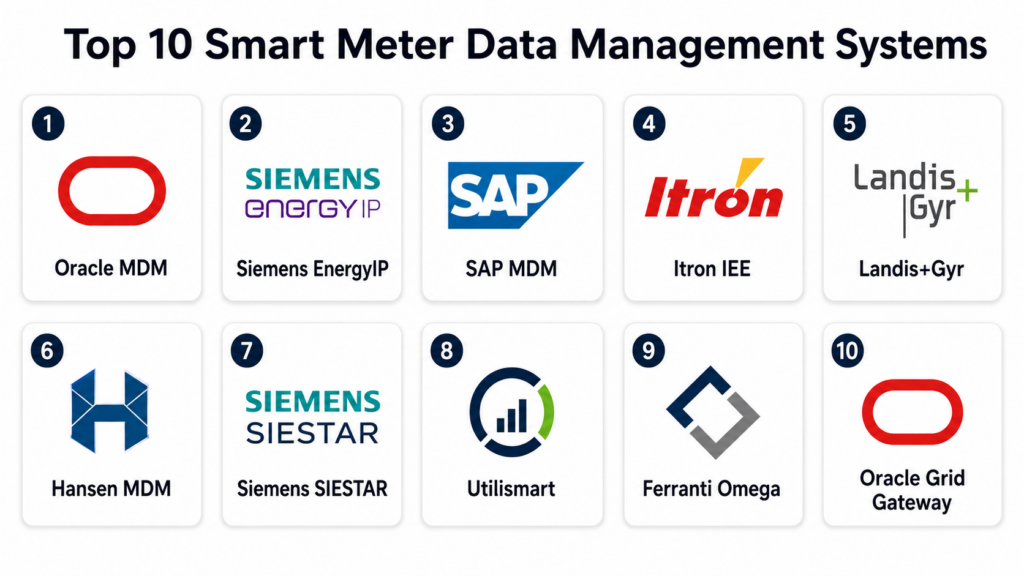
Introduction
Smart Meter Data Management Systems (MDMS) are enterprise platforms designed to collect, validate, store, and analyze data generated by smart meters for utilities such as electricity, water, and gas. These systems act as the central intelligence layer between smart meters and utility billing, grid operations, and customer analytics platforms.
They are widely used by utility providers, energy companies, water utilities, and smart city operators to manage high-frequency meter data, detect anomalies, optimize consumption, and improve billing accuracy.
Modern MDMS platforms go far beyond simple data storage. They support real-time data ingestion, interval data processing, AI-based anomaly detection, outage analytics, load forecasting, and integration with billing and grid management systems.
Common real-world use cases include:
- Electricity smart grid data analytics
- Water consumption monitoring and leak detection
- Gas usage tracking and billing validation
- Outage detection and restoration analytics
- Time-of-use billing optimization
- Demand forecasting and load balancing
Buyers evaluating Smart Meter Data Management Systems should focus on:
- Real-time data ingestion and scalability
- Support for millions of meter endpoints
- Data validation and estimation (VEE processes)
- Integration with billing and CIS systems
- AI-based anomaly detection capabilities
- Interoperability with AMI/SCADA systems
- Regulatory compliance and audit support
- Cloud vs on-premise deployment flexibility
- Data storage and processing performance
- Security, encryption, and access control
Best for: Utility companies, smart grid operators, water utilities, gas providers, and large-scale energy distributors.
Not ideal for: Small businesses or organizations without large-scale metering infrastructure.
Key Trends in Smart Meter Data Management Systems
- AI-driven anomaly detection is improving fraud and leak detection
- Real-time streaming analytics is replacing batch processing
- Cloud-native MDMS platforms are becoming industry standard
- Edge computing is reducing latency in meter data processing
- Integration with smart grids and DER systems is expanding
- Time-of-use and dynamic pricing models are increasing adoption
- Advanced data validation (VEE) automation is standardizing accuracy
- IoT interoperability across utilities is growing rapidly
- Demand response analytics is becoming more important
- Cybersecurity requirements for utility data are increasing
How We Selected These Tools
The platforms below were selected based on utility adoption, smart meter compatibility, analytics depth, and scalability.
- Evaluated global usage in electricity, water, and gas utilities
- Assessed real-time meter data ingestion capabilities
- Reviewed VEE (validation, estimation, editing) strength
- Considered scalability for millions of endpoints
- Evaluated integration with billing and CIS systems
- Assessed AI and anomaly detection capabilities
- Reviewed cloud vs on-premise deployment models
- Considered interoperability with AMI and SCADA systems
- Evaluated vendor maturity in utility data ecosystems
- Reviewed security and compliance capabilities
Top 10 Smart Meter Data Management Systems
#1 — Oracle Utilities Meter Data Management (MDM)
Short description: Oracle Utilities MDM is a leading enterprise-grade platform designed to manage smart meter data at scale for electricity, water, and gas utilities. It provides advanced data validation, estimation, and editing (VEE) processes along with real-time analytics. The platform is widely used by large utilities globally. It is especially strong in high-volume meter data processing. Oracle focuses on end-to-end smart utility data management.
Key Features
- High-volume meter data ingestion
- Advanced VEE processing engine
- Time-series data management
- Outage and event detection
- Integration with CIS and billing systems
- Demand analytics and forecasting
- Regulatory reporting support
Pros
- Extremely scalable architecture
- Strong utility industry adoption
- Robust validation engine
Cons
- Complex implementation
- High enterprise cost
- Requires specialized expertise
Platforms / Deployment
- Cloud / On-premise / Hybrid
Security & Compliance
Supports enterprise encryption, RBAC, audit logs, and utility regulatory compliance standards.
Integrations & Ecosystem
- Oracle Utilities CIS
- Billing systems
- SCADA systems
- AMI networks
- APIs
- Data warehouses
Support & Community
Strong global utility ecosystem support.
#2 — Siemens EnergyIP (MDMS)
Short description: Siemens EnergyIP is a powerful smart meter data management platform designed for large-scale utilities and smart grid operations. It provides advanced meter data processing, validation, and analytics capabilities. The platform is widely used in energy and water utilities. It is especially strong in smart grid integration. Siemens focuses on industrial-grade utility intelligence.
Key Features
- Smart meter data processing
- Validation and estimation engine
- Grid analytics and insights
- Time-series data storage
- Outage detection tools
- Demand response analytics
- Integration with grid systems
Pros
- Strong grid integration
- High reliability
- Scalable architecture
Cons
- Complex deployment
- High cost
- Requires technical expertise
Platforms / Deployment
- On-premise / Hybrid / Cloud
Security & Compliance
Supports enterprise-grade encryption, RBAC, and regulatory compliance frameworks.
Integrations & Ecosystem
- Smart grid systems
- AMI infrastructure
- SCADA systems
- ERP platforms
- APIs
- Billing systems
Support & Community
Strong global energy utility support ecosystem.
#3 — SAP Meter Data Management
Short description: SAP Meter Data Management integrates smart meter data processing within SAP’s utility ecosystem. It supports meter reading validation, billing integration, and energy analytics. The platform is widely used in large utilities and energy providers. It is especially strong in ERP integration. SAP focuses on unified utility and business data management.
Key Features
- Meter data collection and validation
- Time-series data processing
- Integration with billing systems
- Energy usage analytics
- Demand forecasting tools
- Regulatory reporting support
- Customer usage insights
Pros
- Strong SAP ecosystem integration
- Reliable enterprise platform
- Good financial alignment
Cons
- Complex implementation
- SAP dependency
- High licensing cost
Platforms / Deployment
- Cloud / Hybrid
Security & Compliance
Supports SAP enterprise security framework, RBAC, encryption, and audit logging.
Integrations & Ecosystem
- SAP Utilities
- ERP systems
- Billing platforms
- SCADA systems
- APIs
- Data lakes
Support & Community
Strong enterprise utility support ecosystem.
#4 — Itron Enterprise Edition (IEE)
Short description: Itron Enterprise Edition is a widely used smart meter data management system designed for electricity, gas, and water utilities. It provides meter data collection, validation, and analytics capabilities. The platform is especially strong in AMI integration. Itron focuses on smart infrastructure optimization. It supports large-scale utility deployments.
Key Features
- Meter data collection and processing
- VEE engine (validation & estimation)
- AMI integration support
- Usage analytics dashboards
- Outage detection
- Demand forecasting
- Billing system integration
Pros
- Strong AMI ecosystem
- Reliable utility performance
- Scalable architecture
Cons
- Legacy system complexity
- Limited modern UI
- Requires integration effort
Platforms / Deployment
- On-premise / Hybrid
Security & Compliance
Supports encryption, RBAC, audit logs, and utility compliance frameworks.
Integrations & Ecosystem
- AMI systems
- Billing platforms
- SCADA systems
- ERP systems
- APIs
- Data warehouses
Support & Community
Strong global utility industry support.
#5 — Landis+Gyr Gridstream MDMS
Short description: Landis+Gyr Gridstream MDMS is a smart meter data management platform designed for utility-scale meter data processing and grid optimization. It supports real-time analytics and AMI integration. The platform is widely used in electricity utilities. It is especially strong in smart grid operations. Landis+Gyr focuses on intelligent energy distribution systems.
Key Features
- Smart meter data aggregation
- Real-time analytics engine
- Grid monitoring and insights
- VEE processing system
- Outage detection
- Demand response support
- Energy usage analytics
Pros
- Strong smart grid integration
- High reliability
- Good scalability
Cons
- Complex setup
- Limited flexibility
- High cost
Platforms / Deployment
- On-premise / Hybrid
Security & Compliance
Supports enterprise encryption, RBAC, and utility compliance standards.
Integrations & Ecosystem
- Smart grid systems
- AMI infrastructure
- Billing systems
- SCADA platforms
- APIs
- ERP systems
Support & Community
Strong utility-focused support ecosystem.
#6 — Hansen Meter Data Management
Short description: Hansen MDM is a utility-focused meter data management platform designed for electricity, water, and gas utilities. It provides data validation, billing integration, and usage analytics. The platform is widely used by mid-to-large utilities. It is especially strong in operational utility workflows. Hansen focuses on flexible utility data management.
Key Features
- Meter data processing engine
- Validation and estimation tools
- Usage analytics dashboards
- Billing integration
- Customer usage insights
- Reporting tools
- Data quality management
Pros
- Flexible configuration
- Good utility focus
- Strong data validation
Cons
- Limited global adoption
- Moderate complexity
- Smaller ecosystem
Platforms / Deployment
- Cloud / On-premise
Security & Compliance
Supports encryption, RBAC, and utility compliance frameworks.
Integrations & Ecosystem
- Billing systems
- ERP platforms
- AMI systems
- APIs
- Data warehouses
- SCADA systems
Support & Community
Moderate utility industry support ecosystem.
#7 — Siemens SIESTAR MDMS
Short description: Siemens SIESTAR MDMS is a utility-grade meter data management system designed for smart grid and energy distribution networks. It provides advanced analytics, validation, and real-time processing of smart meter data. The platform is widely used in European utilities. It is especially strong in grid analytics. Siemens focuses on intelligent infrastructure systems.
Key Features
- Meter data ingestion engine
- Validation and estimation system
- Smart grid analytics
- Outage detection
- Demand forecasting
- Time-series analytics
- Integration with utility systems
Pros
- Strong grid intelligence
- Reliable performance
- Good scalability
Cons
- Complex implementation
- Limited UI flexibility
- High cost
Platforms / Deployment
- On-premise / Hybrid
Security & Compliance
Supports enterprise encryption, RBAC, and compliance frameworks.
Integrations & Ecosystem
- SCADA systems
- AMI networks
- ERP systems
- Billing platforms
- APIs
- Data systems
Support & Community
Strong utility industry support ecosystem.
#8 — Utilismart MDMS Platform
Short description: Utilismart is a smart meter data management platform designed for utilities seeking modern, cloud-based data processing solutions. It supports meter data validation, analytics, and integration with billing systems. The platform is widely used in North American utilities. It is especially strong in cloud-native utility operations. Utilismart focuses on simplified meter data intelligence.
Key Features
- Cloud meter data processing
- VEE engine
- Usage analytics
- Billing integration
- Outage detection
- Customer insights
- Reporting dashboards
Pros
- Modern cloud design
- Easy deployment
- Good usability
Cons
- Smaller ecosystem
- Limited enterprise depth
- Requires integration effort
Platforms / Deployment
- Cloud / Web
Security & Compliance
Supports encryption, RBAC, and standard utility compliance frameworks.
Integrations & Ecosystem
- Billing systems
- ERP platforms
- AMI systems
- APIs
- Data warehouses
- Cloud platforms
Support & Community
Growing utility SaaS support ecosystem.
#9 — Ferranti MDMS (Omega)
Short description: Ferranti Omega MDMS is a smart meter data management platform designed for utility-scale energy and water providers. It supports meter data validation, analytics, and smart grid integration. The platform is widely used in European utilities. It is especially strong in energy data management. Ferranti focuses on reliable utility operations.
Key Features
- Meter data ingestion system
- Validation and estimation engine
- Energy analytics dashboards
- Outage detection tools
- Demand forecasting
- Billing integration
- Reporting systems
Pros
- Strong energy focus
- Reliable performance
- Good utility integration
Cons
- Limited global adoption
- Complex setup
- Moderate UI experience
Platforms / Deployment
- On-premise / Hybrid
Security & Compliance
Supports encryption, RBAC, and utility compliance frameworks.
Integrations & Ecosystem
- SCADA systems
- AMI networks
- ERP systems
- Billing platforms
- APIs
- Data warehouses
Support & Community
Moderate European utility support ecosystem.
#10 — Oracle Utilities Smart Grid Gateway
Short description: Oracle Utilities Smart Grid Gateway is a supporting MDMS system that enables real-time smart meter data integration and grid analytics. It works alongside Oracle Utilities platforms to manage large-scale meter data. The platform is widely used in enterprise utilities. It is especially strong in smart grid integration. Oracle focuses on end-to-end utility intelligence.
Key Features
- Real-time meter data ingestion
- Grid analytics and monitoring
- Outage detection
- AMI integration support
- Data validation tools
- Demand forecasting
- Utility reporting
Pros
- Strong real-time processing
- Excellent scalability
- Deep Oracle ecosystem
Cons
- Complex architecture
- High cost
- Requires integration expertise
Platforms / Deployment
- Cloud / Hybrid
Security & Compliance
Supports enterprise encryption, RBAC, audit logging, and utility compliance frameworks.
Integrations & Ecosystem
- Oracle Utilities suite
- AMI systems
- Billing platforms
- SCADA systems
- APIs
- Data warehouses
Support & Community
Strong enterprise utility support ecosystem.
Comparison Table
| Tool Name | Best For | Platform(s) Supported | Deployment | Standout Feature | Public Rating |
|---|---|---|---|---|---|
| Oracle MDM | Enterprise utilities | Web | Hybrid | VEE engine | N/A |
| Siemens EnergyIP | Smart grids | Web | Hybrid | Grid analytics | N/A |
| SAP MDM | ERP utilities | Web | Hybrid | ERP integration | N/A |
| Itron IEE | AMI utilities | Web | Hybrid | AMI integration | N/A |
| Landis+Gyr | Grid operations | Web | Hybrid | Smart grid analytics | N/A |
| Hansen MDM | Utility billing link | Web | Cloud | Flexible validation | N/A |
| Siemens SIESTAR | Grid analytics | Web | Hybrid | Energy intelligence | N/A |
| Utilismart | Cloud utilities | Web | Cloud | Modern SaaS model | N/A |
| Ferranti Omega | Energy utilities | Web | Hybrid | Energy analytics | N/A |
| Oracle Grid Gateway | Smart grid data | Web | Hybrid | Real-time ingestion | N/A |
Evaluation & Scoring of Smart Meter Data Management Systems
| Tool Name | Core 25% | Ease 15% | Integrations 15% | Security 10% | Performance 10% | Support 10% | Value 15% | Weighted Total |
|---|---|---|---|---|---|---|---|---|
| Oracle MDM | 9.5 | 7.5 | 9.5 | 9.5 | 9.5 | 9.0 | 8.0 | 8.9 |
| Siemens EnergyIP | 9.0 | 8.0 | 9.0 | 9.0 | 9.0 | 9.0 | 8.0 | 8.8 |
| SAP MDM | 9.0 | 7.5 | 9.5 | 9.5 | 9.0 | 9.0 | 8.0 | 8.8 |
| Itron IEE | 9.0 | 8.0 | 9.0 | 9.0 | 9.0 | 9.0 | 8.5 | 8.8 |
| Landis+Gyr | 9.0 | 7.5 | 9.0 | 9.0 | 9.0 | 9.0 | 8.0 | 8.7 |
| Hansen MDM | 8.5 | 8.5 | 8.5 | 8.5 | 8.5 | 8.5 | 8.5 | 8.5 |
| Siemens SIESTAR | 8.5 | 8.0 | 8.5 | 9.0 | 8.5 | 8.5 | 8.0 | 8.5 |
| Utilismart | 8.5 | 8.5 | 8.5 | 8.5 | 8.5 | 8.5 | 8.5 | 8.5 |
| Ferranti Omega | 8.5 | 7.5 | 8.5 | 8.5 | 8.5 | 8.5 | 8.0 | 8.4 |
| Oracle Grid Gateway | 9.0 | 7.5 | 9.0 | 9.5 | 9.0 | 9.0 | 8.0 | 8.8 |
Which Smart Meter Data Management System Is Right for You?
Solo / Small Utility
Utilismart and Hansen MDM are suitable for smaller utilities.
SMB Utilities
Hansen MDM and Ferranti Omega are strong for mid-sized utility operations.
Mid-Market
Itron IEE, Landis+Gyr, and Siemens EnergyIP are ideal for growing utilities.
Enterprise
Oracle MDM, SAP MDM, and Siemens EnergyIP are best for large-scale utility infrastructure.
Budget vs Premium
Budget systems focus on basic meter processing, while premium platforms offer real-time analytics and AI-driven grid intelligence.
Feature Depth vs Ease of Use
Advanced systems provide deep grid analytics, while simpler tools focus on billing and validation.
Integrations & Scalability
MDMS platforms must integrate with AMI, SCADA, ERP, billing systems, and smart grid infrastructure.
Security & Compliance Needs
Enterprise systems require encryption, RBAC, audit logs, and utility regulatory compliance standards.
Frequently Asked Questions
1. What is a Smart Meter Data Management System?
It is software that collects and processes data from smart meters. It validates and stores consumption data. It supports billing and analytics. It enables utility operations.
2. Who uses MDMS platforms?
Electricity, water, and gas utilities use them. They manage smart meter data at scale. They support billing and grid operations. Usage depends on infrastructure.
3. What is VEE in MDMS?
VEE stands for Validation, Estimation, and Editing. It ensures data accuracy. It corrects missing or incorrect readings. It is a core function.
4. Why are MDMS platforms important?
They ensure accurate billing and grid efficiency. They support smart grid operations. They help detect outages and leaks. They improve utility performance.
5. Do they support real-time data?
Yes, modern systems support real-time or near real-time ingestion. This improves monitoring. It enables faster decisions. It depends on infrastructure.
6. What is AMI integration?
AMI (Advanced Metering Infrastructure) connects smart meters to utility systems. MDMS platforms process this data. It enables automated billing and analytics. It is essential for smart grids.
7. Can they detect outages?
Yes, many platforms include outage detection features. They analyze meter behavior. They help utilities respond quickly. Accuracy depends on data quality.
8. Are these systems cloud-based?
Modern systems increasingly support cloud deployment. Legacy systems are often on-premise. Hybrid models are common. Cloud improves scalability.
9. What are common challenges?
Challenges include integration complexity, data volume, and system cost. Smart meter deployment is complex. Data validation is critical. Scalability is required.
10. How should a platform be selected?
Selection depends on utility size, data volume, integration needs, and budget. Grid complexity matters. Real-world testing is important. Long-term infrastructure goals should guide decisions.
Conclusion
Smart Meter Data Management Systems are the core intelligence layer of modern utility infrastructure, enabling accurate collection, validation, and analysis of massive volumes of meter data from electricity, water, and gas networks. These platforms power smart grids, automated billing, outage detection, and demand forecasting while ensuring data accuracy and regulatory compliance. Enterprise solutions like Oracle Utilities MDM, Siemens EnergyIP, SAP MDM, and Itron IEE deliver highly scalable and robust architectures for large utilities, while tools like Utilismart and Hansen MDM offer more flexible options for mid-sized providers. The right system depends on grid complexity, data scale, and integration requirements. Utilities should prioritize real-time processing, scalability, and interoperability to build efficient, intelligent, and future-ready energy and utility networks.
