MOTOSHARE 🚗🏍️
Rent Bikes & Cars Directly from Owners
Motoshare connects vehicle owners with people who need bikes and cars on rent. Owners earn from idle vehicles, and renters get flexible ride options.
Visit Motoshare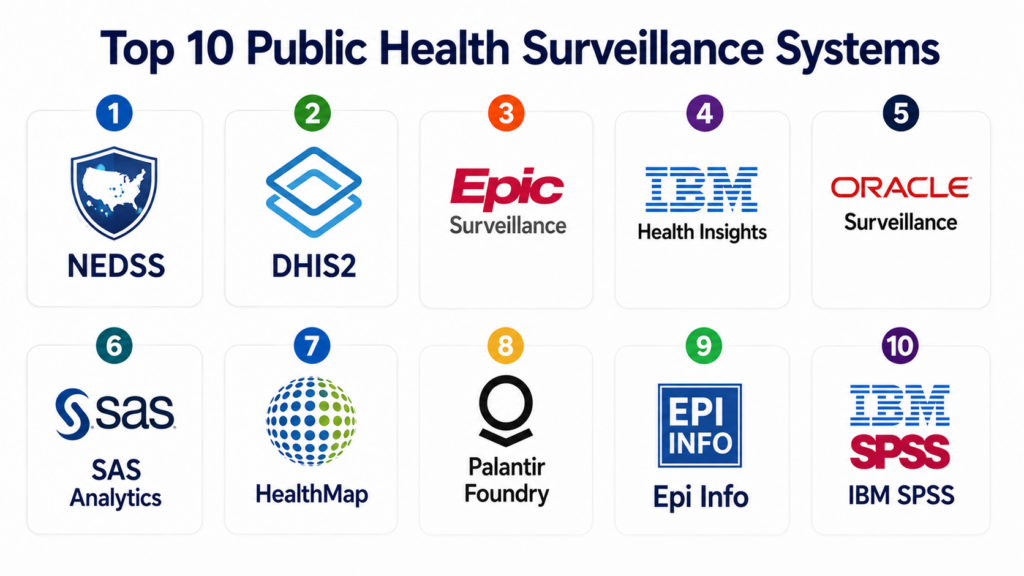
Introduction
Public Health Surveillance Systems are digital platforms used by health departments, hospitals, laboratories, government agencies, and global health organizations to monitor disease outbreaks, track health indicators, manage epidemiological data, and support early warning systems for public health threats.These systems collect, analyze, and visualize health data from multiple sources such as hospitals, labs, clinics, pharmacies, and field reports to detect patterns, identify outbreaks, and guide public health interventions. They are essential for managing infectious diseases, chronic disease monitoring, vaccination programs, and emergency health responses.
In a world where pandemics, climate-related health risks, and rapid urbanization are increasing, surveillance systems play a critical role in protecting populations through timely detection and response.
Common real-world use cases include:
- Disease outbreak detection and tracking
- Syndromic surveillance from hospitals and ERs
- Vaccination coverage monitoring
- Laboratory reporting and confirmation tracking
- Chronic disease trend analysis
- Public health emergency response coordination
Buyers evaluating Public Health Surveillance Systems should focus on:
- Real-time data collection and reporting capabilities
- Integration with hospitals, labs, and EHR systems
- Data analytics and visualization dashboards
- Outbreak detection and alerting mechanisms
- Interoperability standards (HL7, FHIR, etc.)
- Scalability for regional or national use
- Data privacy and security compliance
- Mobile and field reporting support
- GIS mapping for disease spread tracking
- Automation and AI-driven anomaly detection
Best for: National and regional health departments, CDC-style agencies, hospitals, epidemiology units, global health organizations, and public health research institutions.
Not ideal for: Private businesses without healthcare or epidemiological responsibilities or organizations not dealing with population health data.
Key Trends in Public Health Surveillance Systems
- AI-powered outbreak detection is improving early warning capabilities.
- Real-time data ingestion from hospitals and labs is becoming standard.
- Cloud-based surveillance platforms are replacing legacy reporting systems.
- Integration with EHR systems is improving clinical-to-public health data flow.
- GIS-based disease mapping is enhancing spatial outbreak analysis.
- Mobile reporting tools are improving field epidemiology response time.
- Interoperability using HL7 and FHIR standards is increasing globally.
- Syndromic surveillance is expanding for faster anomaly detection.
- Data sharing between countries is improving global health response coordination.
- Predictive analytics is helping forecast disease spread patterns.
How We Selected These Tools
The platforms listed below were selected using a structured evaluation approach focused on epidemiological monitoring, data integration, outbreak detection, and public health reporting capabilities.
- Evaluated adoption by health departments and government agencies
- Assessed real-time surveillance and reporting capabilities
- Reviewed integration with hospitals, labs, and EHR systems
- Considered outbreak detection and alerting features
- Evaluated GIS mapping and visualization capabilities
- Reviewed interoperability standards support (HL7, FHIR)
- Assessed data security and privacy compliance
- Considered scalability for national health systems
- Evaluated analytics and epidemiological modeling tools
- Reviewed vendor maturity in public health ecosystems
Top 10 Public Health Surveillance Systems
#1 — CDC National Electronic Disease Surveillance System (NEDSS)
Short description: NEDSS is a widely used public health surveillance framework developed to standardize disease reporting across local, state, and national health agencies. It enables real-time collection, analysis, and reporting of disease data from healthcare providers and laboratories. The system supports outbreak detection, case management, and epidemiological investigation workflows. It is widely adopted across public health departments in the United States. NEDSS is especially strong in standardized disease reporting and interoperability.
Key Features
- Electronic disease reporting
- Case-based surveillance system
- Laboratory data integration
- Outbreak detection workflows
- Standardized data formats
- Public health reporting tools
- Interoperability support
Pros
- Strong standardized reporting framework
- Widely adopted across health departments
- Good interoperability support
Cons
- Complex setup and configuration
- Requires technical expertise
- Limited modern UI in some implementations
Platforms / Deployment
- Web
- Hybrid
Security & Compliance
Supports HIPAA-aligned controls, role-based access, audit logs, and encrypted data handling.
Integrations & Ecosystem
NEDSS integrates with public health and clinical systems.
- Hospital EHR systems
- Laboratory systems
- State health databases
- CDC reporting systems
- Immunization registries
- APIs
Support & Community
Strong government support and public health implementation ecosystem.
#2 — WHO DHIS2 Health Information System
Short description: DHIS2 is a globally used open-source health information system developed for collecting, analyzing, and visualizing public health data. It is widely used by ministries of health in developing and developed countries. The platform supports disease surveillance, health program monitoring, and real-time dashboards. DHIS2 is highly flexible and used for both routine health data and outbreak monitoring. It is especially strong in low-resource and national-scale deployments.
Key Features
- Health data collection and reporting
- Disease surveillance modules
- Real-time dashboards
- GIS health mapping
- Mobile data entry support
- Program monitoring tools
- Data analytics engine
Pros
- Open-source and highly flexible
- Strong global adoption
- Works in low-resource environments
Cons
- Requires customization
- Technical setup complexity
- Needs skilled implementation teams
Platforms / Deployment
- Web / Mobile
- Cloud / Self-hosted
Security & Compliance
Supports role-based access, encryption, and configurable data privacy controls.
Integrations & Ecosystem
DHIS2 integrates with global health systems.
- Hospital systems
- Lab reporting tools
- Immunization systems
- Mobile health apps
- Government databases
- APIs
Support & Community
Strong global open-source community and WHO-backed support ecosystem.
#3 — Epic Public Health Surveillance Module
Short description: Epic Public Health Surveillance Module integrates directly with hospital EHR systems to support real-time disease reporting and outbreak detection. It enables automated case reporting, lab result integration, and public health notifications. The system is widely used in hospital networks for syndromic surveillance. It supports seamless clinical-to-public health data flow. Epic is especially strong in integrated healthcare environments.
Key Features
- Automated disease reporting
- EHR integration
- Laboratory data capture
- Syndromic surveillance
- Public health alerts
- Case tracking workflows
- Reporting dashboards
Pros
- Strong hospital integration
- Real-time data flow
- Reliable clinical reporting
Cons
- Limited outside Epic ecosystem
- High implementation cost
- Complex configuration
Platforms / Deployment
- Web
- Cloud / Hybrid
Security & Compliance
Supports HIPAA compliance, RBAC, encryption, and audit logging.
Integrations & Ecosystem
Epic integrates with healthcare systems.
- Hospital EHR modules
- Lab systems
- Public health agencies
- Immunization systems
- Billing systems
- APIs
Support & Community
Strong enterprise healthcare support ecosystem.
#4 — IBM Health Surveillance Insights Platform
Short description: IBM Health Surveillance Insights is an AI-driven public health analytics platform designed to detect outbreaks, analyze epidemiological trends, and support health decision-making. It leverages AI and data analytics to process large-scale health data from multiple sources. The platform is used by governments and health organizations for predictive surveillance. It is especially strong in advanced analytics and AI-based anomaly detection. IBM is widely used in large-scale health intelligence systems.
Key Features
- AI-driven outbreak detection
- Health data analytics engine
- Predictive modeling tools
- Real-time dashboards
- Data integration pipelines
- Visualization tools
- Risk assessment analytics
Pros
- Strong AI analytics capabilities
- Scalable for national systems
- Advanced predictive insights
Cons
- Complex setup
- High cost
- Requires data science expertise
Platforms / Deployment
- Web
- Cloud / Hybrid
Security & Compliance
Supports enterprise-grade encryption, RBAC, audit logs, and compliance frameworks.
Integrations & Ecosystem
IBM integrates with health and government systems.
- Hospital EHR systems
- Laboratory databases
- Government health agencies
- Research institutions
- Data warehouses
- APIs
Support & Community
Enterprise-level global support and consulting services.
#5 — Oracle Public Health Surveillance Cloud
Short description: Oracle Public Health Surveillance Cloud is a scalable platform designed for managing epidemiological data, outbreak tracking, and health analytics. It supports integration with healthcare systems and government databases. The platform enables real-time monitoring of disease trends and public health indicators. Oracle is widely used in enterprise and government health environments. It is especially strong in data management and scalability.
Key Features
- Disease surveillance dashboards
- Real-time data ingestion
- Health analytics tools
- Outbreak tracking systems
- Laboratory reporting integration
- Data visualization tools
- Reporting automation
Pros
- Highly scalable platform
- Strong enterprise data management
- Reliable analytics engine
Cons
- High cost of deployment
- Complex implementation
- Requires technical expertise
Platforms / Deployment
- Web
- Cloud / Hybrid
Security & Compliance
Supports encryption, RBAC, audit logs, and healthcare compliance standards.
Integrations & Ecosystem
Oracle integrates with healthcare and government systems.
- Hospital EHR systems
- Laboratory platforms
- Public health databases
- Research systems
- Data lakes
- APIs
Support & Community
Enterprise support with global implementation services.
#6 — SAS Health Surveillance Analytics
Short description: SAS Health Surveillance Analytics is a powerful data analytics platform used for epidemiological analysis, disease modeling, and public health surveillance. It supports statistical modeling, outbreak detection, and predictive analytics. The platform is widely used in research institutions and government health agencies. SAS is especially strong in advanced statistical health analysis. It is suitable for data-driven public health decision-making.
Key Features
- Disease trend analysis
- Statistical modeling tools
- Outbreak detection analytics
- Predictive health modeling
- Data visualization dashboards
- Risk assessment tools
- Reporting automation
Pros
- Strong statistical analytics
- Reliable predictive modeling
- Good for research institutions
Cons
- Requires analytics expertise
- Complex user interface
- High cost
Platforms / Deployment
- Web / Desktop
- Cloud / Hybrid
Security & Compliance
Supports enterprise-grade security, encryption, RBAC, and audit logging.
Integrations & Ecosystem
SAS integrates with health data systems.
- Hospital databases
- Public health agencies
- Research institutions
- Data warehouses
- Lab systems
- APIs
Support & Community
Strong enterprise analytics support and training ecosystem.
#7 — HealthMap Surveillance System
Short description: HealthMap is a global disease surveillance platform that aggregates data from news, reports, and official health sources to detect outbreaks and monitor disease spread. It is widely used for early warning systems and epidemiological awareness. The platform visualizes disease outbreaks on global maps. HealthMap is especially strong in real-time global disease tracking. It is widely used by researchers and public health organizations.
Key Features
- Global disease tracking
- Real-time outbreak alerts
- GIS mapping dashboards
- Data aggregation engine
- Epidemiological visualization
- Trend analysis tools
- Public health reporting
Pros
- Strong global surveillance coverage
- Real-time outbreak detection
- Easy visualization tools
Cons
- Limited clinical integration
- Not a full case management system
- Data source dependency limitations
Platforms / Deployment
- Web
- Cloud
Security & Compliance
Supports public health data standards and secure data processing.
Integrations & Ecosystem
HealthMap integrates with public health data sources.
- News feeds
- Health agencies
- Research databases
- GIS systems
- WHO data sources
- APIs
Support & Community
Strong academic and research community support.
#8 — Palantir Foundry Health Surveillance Module
Short description: Palantir Foundry Health Surveillance Module is a data integration and analytics platform used for large-scale public health monitoring and crisis response. It enables real-time data fusion from hospitals, labs, and government systems. The platform supports advanced analytics and operational dashboards. It is widely used in pandemic response and national health systems. Palantir is especially strong in data integration and intelligence workflows.
Key Features
- Real-time data integration
- Health analytics dashboards
- Outbreak detection tools
- Data fusion engine
- Predictive analytics
- Operational reporting
- Scenario modeling tools
Pros
- Strong data integration capabilities
- Real-time analytics
- Suitable for national systems
Cons
- High complexity
- Expensive deployment
- Requires specialized expertise
Platforms / Deployment
- Web
- Cloud / Hybrid
Security & Compliance
Supports advanced encryption, RBAC, audit logs, and government-grade security controls.
Integrations & Ecosystem
Palantir integrates with enterprise health systems.
- Hospital EHR systems
- Lab reporting systems
- Government databases
- Research institutions
- Data lakes
- APIs
Support & Community
Enterprise-level consulting and support services.
#9 — Epi Info (CDC Epidemiological Tool)
Short description: Epi Info is a public health software tool developed for epidemiological data collection, outbreak investigation, and statistical analysis. It is widely used by public health professionals and researchers. The platform supports survey creation, data analysis, and reporting workflows. Epi Info is especially strong in field epidemiology and outbreak investigation. It is commonly used in training and government health programs.
Key Features
- Epidemiological data collection
- Outbreak investigation tools
- Statistical analysis engine
- Survey and form builder
- Reporting dashboards
- Data visualization tools
- Field data entry support
Pros
- Free and widely used
- Strong epidemiology focus
- Easy to deploy
Cons
- Limited enterprise scalability
- Basic UI compared to modern tools
- Not fully real-time
Platforms / Deployment
- Desktop / Web
- Hybrid
Security & Compliance
Supports standard data security practices, but advanced compliance depends on deployment.
Integrations & Ecosystem
Epi Info integrates with public health tools.
- CDC systems
- Health databases
- Research platforms
- Survey tools
- Statistical systems
- APIs
Support & Community
Strong public health community and CDC support ecosystem.
#10 — IBM SPSS Health Surveillance Module
Short description: IBM SPSS Health Surveillance Module is a statistical analysis platform used for public health research, epidemiology, and disease trend analysis. It enables advanced statistical modeling and predictive analytics for health surveillance. The platform is widely used in research institutions and government health departments. SPSS is especially strong in statistical analysis and forecasting. It is suitable for data-driven epidemiological research.
Key Features
- Statistical health analysis
- Disease trend modeling
- Predictive analytics tools
- Data visualization dashboards
- Survey analysis tools
- Reporting automation
- Epidemiological modeling
Pros
- Strong statistical capabilities
- Widely used in research
- Reliable predictive modeling
Cons
- Requires statistical expertise
- Not real-time focused
- Limited operational surveillance features
Platforms / Deployment
- Desktop / Web
- Cloud / Hybrid
Security & Compliance
Supports enterprise security controls, encryption, and audit logging.
Integrations & Ecosystem
SPSS integrates with health analytics systems.
- Hospital databases
- Research institutions
- Public health agencies
- Data warehouses
- Statistical tools
- APIs
Support & Community
Strong academic and enterprise analytics support ecosystem.
Comparison Table
| Tool Name | Best For | Platform(s) Supported | Deployment | Standout Feature | Public Rating |
|---|---|---|---|---|---|
| NEDSS | National disease reporting | Web | Hybrid | Standardized surveillance | N/A |
| DHIS2 | Global health systems | Web/Mobile | Cloud/Self-hosted | Open-source flexibility | N/A |
| Epic Surveillance | Hospital systems | Web | Cloud/Hybrid | EHR integration | N/A |
| IBM Health Insights | AI outbreak detection | Web | Cloud/Hybrid | AI analytics engine | N/A |
| Oracle Surveillance | Enterprise health systems | Web | Cloud/Hybrid | Scalable data platform | N/A |
| SAS Analytics | Research institutions | Web/Desktop | Cloud/Hybrid | Statistical modeling | N/A |
| HealthMap | Global outbreak tracking | Web | Cloud | Real-time GIS mapping | N/A |
| Palantir Foundry | National intelligence systems | Web | Cloud/Hybrid | Data fusion engine | N/A |
| Epi Info | Field epidemiology | Desktop/Web | Hybrid | Free epidemiology tool | N/A |
| IBM SPSS | Health research | Desktop/Web | Cloud/Hybrid | Statistical forecasting | N/A |
Evaluation & Scoring of Public Health Surveillance Systems
| Tool Name | Core 25% | Ease 15% | Integrations 15% | Security 10% | Performance 10% | Support 10% | Value 15% | Weighted Total |
|---|---|---|---|---|---|---|---|---|
| NEDSS | 9.0 | 7.5 | 9.0 | 9.0 | 9.0 | 9.0 | 8.0 | 8.5 |
| DHIS2 | 9.5 | 8.0 | 9.0 | 8.5 | 8.5 | 8.5 | 9.5 | 8.8 |
| Epic | 9.0 | 8.0 | 9.5 | 9.0 | 9.0 | 9.0 | 7.5 | 8.7 |
| IBM Health | 9.0 | 7.5 | 9.0 | 9.0 | 9.0 | 9.0 | 7.5 | 8.6 |
| Oracle | 9.0 | 7.0 | 9.5 | 9.0 | 9.0 | 9.0 | 7.5 | 8.5 |
| SAS | 8.5 | 7.5 | 9.0 | 9.0 | 9.0 | 8.5 | 7.5 | 8.3 |
| HealthMap | 8.5 | 9.0 | 8.0 | 8.0 | 8.5 | 8.0 | 9.0 | 8.4 |
| Palantir | 9.5 | 7.0 | 9.5 | 9.5 | 9.5 | 9.0 | 7.0 | 8.6 |
| Epi Info | 8.0 | 8.5 | 7.5 | 8.0 | 7.5 | 8.0 | 9.5 | 8.1 |
| SPSS | 8.5 | 7.5 | 8.5 | 8.5 | 8.5 | 8.0 | 7.5 | 8.2 |
Which Public Health Surveillance System Is Right for You?
Solo / Freelancer
These systems are not designed for individuals. Epidemiologists, researchers, or consultants may use tools like Epi Info or SPSS for analysis.
SMB
Small health departments should consider DHIS2, Epi Info, or HealthMap for cost-effective surveillance and reporting.
Mid-Market
Regional health agencies should evaluate NEDSS, SAS, Epic, and Oracle depending on integration needs.
Enterprise
National health systems should consider DHIS2, Palantir Foundry, IBM Health Insights, and Oracle for large-scale surveillance.
Budget vs Premium
Budget tools focus on reporting and basic surveillance, while premium systems offer AI analytics, real-time integration, and national-scale data processing.
Feature Depth vs Ease of Use
Advanced platforms offer predictive analytics but require expertise. Simpler tools improve accessibility for field health workers.
Integrations & Scalability
Systems must integrate with hospitals, labs, EHRs, and global health networks. Scalability is essential for national and global health programs.
Security & Compliance Needs
These systems handle sensitive health data requiring HIPAA-style compliance, encryption, RBAC, audit logs, and strict privacy controls.
Frequently Asked Questions
1. What is a Public Health Surveillance System?
It is a digital platform used to monitor, analyze, and report health data for disease tracking and outbreak detection. It helps governments and health agencies identify health risks early. These systems collect data from hospitals, labs, and field reports. They are essential for public health management. They support decision-making and emergency response.
2. Who uses these systems?
Health departments, hospitals, laboratories, epidemiologists, and global health organizations use them. Governments rely on them for disease monitoring. Researchers also use them for analysis. Usage depends on public health responsibilities.
3. What is disease surveillance?
Disease surveillance is the continuous monitoring of health data to detect disease outbreaks. It helps identify patterns and trends in population health. It is used for infectious and chronic diseases. It supports early warning systems.
4. Why are these systems important?
They help detect outbreaks early, improve response times, and protect public health. They enable data-driven decision-making. They also improve coordination between agencies. They reduce health risks.
5. What is syndromic surveillance?
It is the collection of health data based on symptoms before confirmed diagnosis. It helps detect outbreaks early. It uses emergency room and clinical data. It is useful for real-time monitoring.
6. Can these systems integrate with hospitals?
Yes, most systems integrate with EHR and hospital systems. This enables real-time data sharing. It improves accuracy of reporting. Integration is essential for modern surveillance.
7. Are these systems cloud-based?
Many modern systems are cloud-based, though some support hybrid or on-premise deployment. Cloud systems improve scalability and access. Deployment depends on government policies.
8. What is GIS in surveillance systems?
GIS is geographic mapping of health data. It helps visualize disease spread across regions. It is used for outbreak tracking. It improves spatial analysis.
9. What are common challenges?
Challenges include data quality, system integration, training, and infrastructure limitations. Privacy concerns are also important. Real-time data ingestion can be complex. Proper planning is essential.
10. How do agencies choose a system?
They evaluate scalability, integration, analytics, security, and real-time capabilities. Real-world testing is important. Interoperability is critical. Long-term public health goals should guide selection.
Conclusion
Public Health Surveillance Systems are essential for modern healthcare governance, enabling early detection of disease outbreaks, real-time monitoring of health trends, and coordinated public health responses. These platforms integrate data from hospitals, laboratories, and field systems to provide actionable insights that protect populations and guide policy decisions. Enterprise systems like DHIS2, Palantir Foundry, IBM Health Insights, and Oracle provide large-scale intelligence and analytics capabilities, while tools like Epi Info and HealthMap offer accessible solutions for research and field epidemiology. The best system depends on national health priorities, integration complexity, and data scale. Governments and health organizations should prioritize interoperability, real-time analytics, and data security while ensuring strong collaboration between clinical and public health systems for effective disease surveillance and response.
