MOTOSHARE 🚗🏍️
Rent Bikes & Cars Directly from Owners
Motoshare connects vehicle owners with people who need bikes and cars on rent. Owners earn from idle vehicles, and renters get flexible ride options.
Visit Motoshare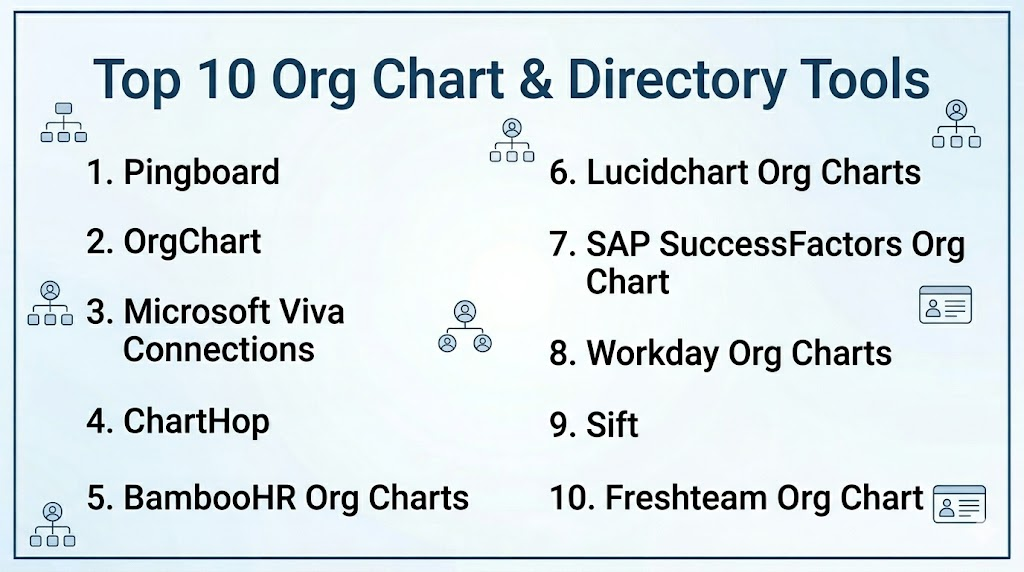
Introduction
Org Chart & Directory Tools help organizations visualize company structures, employee hierarchies, reporting relationships, team information, and workforce directories in a centralized platform. These tools simplify workforce visibility by allowing employees, managers, and HR teams to quickly understand organizational structures, locate colleagues, manage reporting lines, and improve internal collaboration.As organizations continue expanding globally and operating hybrid or remote workforces, maintaining accurate employee directories and dynamic organizational charts has become increasingly important. Modern org chart tools now include AI-powered workforce mapping, employee profiles, skills directories, collaboration integrations, and workforce planning capabilities. These platforms are often integrated directly with HR systems, identity management platforms, and collaboration tools to keep workforce data synchronized automatically.
Real-world use cases include:
- Visualizing organizational structures and reporting hierarchies
- Managing employee directories and contact information
- Supporting workforce planning and restructuring
- Improving onboarding and internal collaboration
- Identifying team structures and leadership visibility
Key evaluation criteria buyers should consider:
- Ease of org chart creation and updates
- HRIS and identity management integrations
- Employee directory search capabilities
- Scalability across large organizations
- Access controls and security
- Mobile accessibility
- Workforce planning functionality
- Collaboration platform integrations
- Customization and branding options
- Pricing and deployment flexibility
Best for: HR departments, people operations teams, enterprise organizations, remote and hybrid companies, growing startups, and businesses managing complex organizational structures.
Not ideal for: Very small teams with simple reporting structures or organizations that only require static spreadsheet-based employee lists.
Key Trends in Org Chart & Directory Tools
- AI-assisted org chart generation is becoming increasingly common.
- Employee directories now include skills, expertise, and collaboration profiles.
- Hybrid workforce visibility tools are improving remote collaboration support.
- Real-time HRIS synchronization is replacing manual org chart updates.
- More platforms now include workforce planning and restructuring analytics.
- Employee experience platforms increasingly bundle org chart functionality.
- Mobile-first workforce directories are improving accessibility for distributed teams.
- Integration with Microsoft Teams, Slack, and Google Workspace continues expanding.
- Security and role-based access controls are becoming stronger enterprise priorities.
- Visual workforce mapping and succession planning tools are becoming more advanced.
How We Selected These Tools
The following org chart and directory platforms were selected based on practical workforce management and enterprise collaboration criteria.
- Evaluated market adoption and workforce management reputation
- Reviewed org chart automation capabilities
- Assessed employee directory functionality
- Considered HRIS and collaboration integrations
- Evaluated scalability across SMB and enterprise environments
- Reviewed workforce planning and restructuring support
- Assessed user experience and interface simplicity
- Considered security posture and access controls
- Evaluated mobile accessibility and remote workforce support
- Balanced enterprise-focused and SMB-friendly platforms
Top 10 Org Chart & Directory Tools
1- Pingboard
Short description: Pingboard is a modern org chart and employee directory platform designed to help organizations visualize workforce structures and improve internal collaboration. The platform automatically syncs employee data from HR systems and creates dynamic org charts that update in real time. Organizations use Pingboard for workforce visibility, employee directories, onboarding support, and team management. The platform is especially popular among growing companies and hybrid work environments because of its ease of use and employee-friendly interface.
Key Features
- Automated org chart generation
- Employee directory search
- Workforce planning tools
- HRIS synchronization
- Employee profile management
- Custom reporting relationships
- Mobile accessibility
Pros
- Easy to deploy and manage
- Strong visualization capabilities
- Excellent user-friendly interface
Cons
- Advanced analytics are limited
- Enterprise customization can be restricted
- Some integrations require premium plans
Platforms / Deployment
- Web / iOS / Android
- Cloud
Security & Compliance
Supports SSO, RBAC, encryption, and audit controls. Additional certifications not publicly stated.
Integrations & Ecosystem
Pingboard integrates with HR systems, collaboration platforms, and identity management tools for automated employee data synchronization.
- BambooHR
- Workday
- Slack
- Microsoft Teams
- Google Workspace
Support & Community
Strong onboarding support and easy-to-use documentation with responsive customer service for SMB and mid-market teams.
2- OrgChart
Short description: OrgChart is an enterprise workforce visualization platform focused on organizational chart automation, workforce planning, and reporting structure analysis. The platform helps organizations create highly customizable org charts directly from HR systems and workforce databases. Enterprises commonly use OrgChart for restructuring projects, succession planning, and executive workforce reporting. The platform supports advanced chart customization and large-scale workforce visualization environments.
Key Features
- Enterprise org chart automation
- Workforce planning visualization
- Custom chart templates
- Reporting structure analysis
- HRIS integration
- Succession planning support
- Export and presentation tools
Pros
- Strong enterprise scalability
- Highly customizable charts
- Advanced workforce planning support
Cons
- Higher learning curve
- Premium enterprise pricing
- Smaller SMB focus
Platforms / Deployment
- Web
- Cloud / Hybrid
Security & Compliance
Supports SSO/SAML, RBAC, encryption, and audit logging. Additional certifications vary by deployment.
Integrations & Ecosystem
OrgChart integrates with enterprise HR systems and workforce management environments to automate reporting structures.
- Workday
- SAP SuccessFactors
- Oracle HCM
- ADP
- APIs
Support & Community
Strong enterprise onboarding and implementation support with workforce planning expertise.
3- Microsoft Viva Connections
Short description: Microsoft Viva Connections combines employee directories, organizational visibility, internal communications, and collaboration experiences within the Microsoft ecosystem. Organizations use the platform to improve workforce connectivity, employee discovery, and hybrid work collaboration. Viva Connections integrates directly with Microsoft Teams and Microsoft 365, making it particularly valuable for enterprises already operating within Microsoft environments. The platform also supports employee engagement and personalized workforce experiences.
Key Features
- Employee directory access
- Microsoft Teams integration
- Workforce communication tools
- Personalized employee dashboards
- Organizational visibility
- Mobile workforce access
- Collaboration insights
Pros
- Deep Microsoft ecosystem integration
- Excellent hybrid workforce support
- Strong employee experience focus
Cons
- Best suited for Microsoft environments
- Advanced org chart features are lighter
- Some features require additional licensing
Platforms / Deployment
- Web / Windows / iOS / Android
- Cloud
Security & Compliance
Supports MFA, SSO, RBAC, encryption, and audit logging.
Integrations & Ecosystem
Viva Connections integrates directly with Microsoft collaboration and identity management services.
- Microsoft Teams
- Microsoft 365
- Azure Active Directory
- SharePoint
- Power Platform
Support & Community
Large Microsoft ecosystem with extensive implementation resources and enterprise support options.
4- ChartHop
Short description: ChartHop is a people operations platform that combines org charts, workforce analytics, compensation planning, and employee directories into a centralized environment. The platform provides dynamic organizational visualization and workforce insights for HR and leadership teams. Organizations use ChartHop for workforce planning, diversity reporting, compensation visibility, and organizational transparency. The platform is especially popular among technology companies and rapidly growing organizations.
Key Features
- Dynamic org charts
- Compensation planning
- Workforce analytics
- Employee directory management
- Diversity reporting
- Workforce planning tools
- HR data visualization
Pros
- Strong workforce analytics capabilities
- Modern user interface
- Good transparency and reporting features
Cons
- Premium pricing for advanced features
- Smaller ecosystem than large enterprise vendors
- Some advanced workflows require setup effort
Platforms / Deployment
- Web
- Cloud
Security & Compliance
Supports encryption, RBAC, SSO/SAML, and audit controls.
Integrations & Ecosystem
ChartHop integrates with HR systems, payroll tools, and collaboration environments to centralize workforce data.
- Workday
- BambooHR
- Greenhouse
- Slack
- APIs
Support & Community
Strong onboarding experience and growing HR analytics community support.
5- BambooHR Org Charts
Short description: BambooHR Org Charts provides simple workforce visualization and employee directory functionality within the BambooHR ecosystem. The platform helps SMB and mid-market organizations create clear reporting structures and searchable employee directories. BambooHR emphasizes usability and fast onboarding rather than advanced enterprise workforce planning. Growing companies commonly use the platform to improve workforce visibility and simplify employee discovery.
Key Features
- Automated org chart creation
- Employee directory management
- Reporting hierarchy visualization
- Employee profile access
- Mobile accessibility
- HRIS synchronization
- Workforce visibility tools
Pros
- Easy to use
- Fast implementation process
- Strong SMB fit
Cons
- Limited advanced analytics
- Less suitable for large enterprises
- Fewer customization capabilities
Platforms / Deployment
- Web / iOS / Android
- Cloud
Security & Compliance
Supports MFA, encryption, RBAC, and audit controls.
Integrations & Ecosystem
BambooHR integrates with payroll software, ATS tools, and collaboration applications.
- Payroll systems
- ATS platforms
- Slack
- Benefits systems
- APIs
Support & Community
Well-regarded SMB customer support experience with simple onboarding and implementation.
6- Lucidchart Org Charts
Short description: Lucidchart provides flexible diagramming and organizational chart creation capabilities for businesses of all sizes. Organizations use Lucidchart to build visual workforce structures, collaboration maps, and reporting hierarchies. The platform supports drag-and-drop design, collaborative editing, and automated data imports from workforce systems. Lucidchart is especially valuable for organizations requiring flexible visualization and presentation capabilities.
Key Features
- Drag-and-drop org charts
- Collaborative editing
- Data import automation
- Workforce visualization
- Custom templates
- Presentation tools
- Team collaboration features
Pros
- Highly flexible visualization
- Strong collaboration tools
- Easy diagram customization
Cons
- Limited HR-specific functionality
- Advanced workforce planning is limited
- Enterprise governance requires configuration
Platforms / Deployment
- Web / Windows / macOS / iOS / Android
- Cloud
Security & Compliance
Supports SSO, MFA, RBAC, encryption, and audit logging.
Integrations & Ecosystem
Lucidchart integrates with productivity tools, HR systems, and collaboration environments.
- Google Workspace
- Microsoft Teams
- Slack
- Atlassian
- APIs
Support & Community
Large user community with extensive templates, tutorials, and onboarding resources.
7- SAP SuccessFactors Org Chart
Short description: SAP SuccessFactors Org Chart provides enterprise workforce visualization and reporting hierarchy management within the SAP HCM ecosystem. Organizations use the platform to visualize organizational structures, manage employee directories, and support workforce planning initiatives. SAP focuses on scalability, enterprise workforce visibility, and HR process integration. Large global organizations commonly use the platform for centralized workforce management.
Key Features
- Enterprise org charts
- Workforce hierarchy management
- Employee directory access
- HRIS synchronization
- Workforce planning support
- Mobile workforce access
- Executive reporting
Pros
- Excellent enterprise scalability
- Strong SAP ecosystem integration
- Centralized workforce visibility
Cons
- Complex implementation requirements
- Steeper learning curve
- Premium enterprise pricing
Platforms / Deployment
- Web / iOS / Android
- Cloud / Hybrid
Security & Compliance
Supports MFA, SSO/SAML, RBAC, encryption, and audit controls.
Integrations & Ecosystem
SAP SuccessFactors integrates deeply with SAP business applications and enterprise HR environments.
- SAP ERP
- SAP Payroll
- Recruiting systems
- Learning systems
- APIs
Support & Community
Comprehensive enterprise support ecosystem with strong implementation consulting services.
8- Workday Org Charts
Short description: Workday Org Charts provides workforce visualization and reporting hierarchy management within the Workday HCM ecosystem. Organizations use the platform to visualize team structures, monitor workforce changes, and improve organizational transparency. Workday emphasizes real-time workforce synchronization and enterprise workforce management capabilities. The platform is commonly adopted by large enterprises with complex reporting structures.
Key Features
- Real-time org chart updates
- Workforce visualization
- Reporting hierarchy management
- Employee directory access
- Mobile workforce visibility
- Workforce planning support
- HCM synchronization
Pros
- Deep Workday ecosystem integration
- Strong enterprise scalability
- Real-time workforce updates
Cons
- Best suited for Workday customers
- Premium enterprise costs
- Complex configuration for advanced use cases
Platforms / Deployment
- Web / iOS / Android
- Cloud
Security & Compliance
Supports SSO/SAML, MFA, RBAC, encryption, and audit logging.
Integrations & Ecosystem
Workday integrates closely with workforce management, payroll, and talent management environments.
- Workday HCM
- Payroll systems
- Talent platforms
- ERP systems
- APIs
Support & Community
Strong enterprise onboarding support and mature implementation partner ecosystem.
9- Sift
Short description: Sift is a people directory and organizational discovery platform focused on helping employees find coworkers, expertise, and internal team information quickly. The platform combines searchable employee profiles, skills directories, and org chart functionality into a user-friendly workforce discovery environment. Organizations commonly use Sift to improve collaboration and workforce connectivity across distributed teams.
Key Features
- Employee search directory
- Skills and expertise profiles
- Organizational charts
- Workforce discovery tools
- Employee profile management
- Mobile workforce access
- Team visibility tools
Pros
- Strong employee discovery experience
- Easy-to-use interface
- Good collaboration support
Cons
- Advanced workforce planning is limited
- Smaller enterprise ecosystem
- Analytics functionality is lighter
Platforms / Deployment
- Web / Mobile
- Cloud
Security & Compliance
Supports encryption, RBAC, SSO, and audit controls.
Integrations & Ecosystem
Sift integrates with HR systems and collaboration platforms to improve workforce discovery.
- Azure Active Directory
- Slack
- Microsoft Teams
- HR systems
- APIs
Support & Community
Responsive onboarding support with user-friendly documentation and growing adoption among hybrid organizations.
10- Freshteam Org Chart
Short description: Freshteam Org Chart is part of the Freshworks HR platform and provides employee directory and reporting hierarchy visualization capabilities for SMB organizations. The platform helps businesses maintain workforce visibility, manage employee profiles, and simplify organizational navigation. Freshteam emphasizes simplicity, affordability, and ease of deployment for growing teams.
Key Features
- Employee directory management
- Reporting hierarchy visualization
- Employee profile access
- Workforce search functionality
- HR workflow integration
- Mobile accessibility
- SMB workforce management
Pros
- Affordable pricing structure
- Easy implementation process
- Strong SMB usability
Cons
- Limited enterprise functionality
- Fewer advanced customization options
- Workforce analytics capabilities are basic
Platforms / Deployment
- Web / iOS / Android
- Cloud
Security & Compliance
Supports encryption, MFA, RBAC, and audit controls.
Integrations & Ecosystem
Freshteam integrates with HR tools, productivity platforms, and collaboration environments.
- Freshworks ecosystem
- Slack
- Google Workspace
- Payroll software
- APIs
Support & Community
Good SMB onboarding experience with responsive customer support and straightforward documentation.
Comparison Table
| Tool Name | Best For | Platform(s) Supported | Deployment | Standout Feature | Public Rating |
|---|---|---|---|---|---|
| Pingboard | SMB and hybrid teams | Web, iOS, Android | Cloud | Automated org chart creation | N/A |
| OrgChart | Enterprise workforce planning | Web | Cloud, Hybrid | Advanced workforce visualization | N/A |
| Microsoft Viva Connections | Microsoft-centric organizations | Web, Windows, Mobile | Cloud | Employee collaboration integration | N/A |
| ChartHop | Workforce analytics and org planning | Web | Cloud | Dynamic people analytics | N/A |
| BambooHR Org Charts | SMB HR teams | Web, iOS, Android | Cloud | Easy workforce visibility | N/A |
| Lucidchart Org Charts | Flexible workforce visualization | Web, Desktop, Mobile | Cloud | Diagram customization | N/A |
| SAP SuccessFactors Org Chart | Enterprise workforce management | Web, iOS, Android | Cloud, Hybrid | Enterprise HR integration | N/A |
| Workday Org Charts | Workday ecosystem enterprises | Web, iOS, Android | Cloud | Real-time workforce updates | N/A |
| Sift | Employee discovery and directories | Web, Mobile | Cloud | Skills-based employee search | N/A |
| Freshteam Org Chart | SMB workforce management | Web, iOS, Android | Cloud | Affordable org visibility | N/A |
Evaluation & Scoring of Org Chart & Directory Tools
| Tool Name | Core 25% | Ease 15% | Integrations 15% | Security 10% | Performance 10% | Support 10% | Value 15% | Weighted Total |
|---|---|---|---|---|---|---|---|---|
| Pingboard | 8.5 | 9.0 | 8.0 | 8.0 | 8.0 | 8.5 | 8.5 | 8.4 |
| OrgChart | 9.0 | 7.0 | 8.5 | 8.5 | 8.5 | 8.0 | 7.0 | 8.1 |
| Microsoft Viva Connections | 8.5 | 8.5 | 9.0 | 9.0 | 8.5 | 8.5 | 8.0 | 8.5 |
| ChartHop | 8.5 | 8.0 | 8.0 | 8.0 | 8.0 | 8.0 | 7.5 | 8.0 |
| BambooHR Org Charts | 7.5 | 9.0 | 7.5 | 7.5 | 7.5 | 8.5 | 9.0 | 8.1 |
| Lucidchart Org Charts | 8.0 | 8.5 | 8.5 | 8.0 | 8.0 | 8.5 | 8.5 | 8.3 |
| SAP SuccessFactors Org Chart | 9.0 | 7.0 | 9.0 | 9.0 | 8.5 | 8.0 | 7.0 | 8.2 |
| Workday Org Charts | 9.0 | 7.5 | 9.0 | 9.0 | 8.5 | 8.5 | 7.0 | 8.4 |
| Sift | 7.5 | 8.5 | 7.5 | 7.5 | 7.5 | 8.0 | 8.5 | 7.9 |
| Freshteam Org Chart | 7.0 | 8.5 | 7.0 | 7.5 | 7.5 | 8.0 | 9.0 | 7.8 |
These scores are comparative and intended to help organizations evaluate platforms relative to workforce complexity, collaboration needs, and integration requirements. Enterprise-focused platforms generally provide stronger scalability and governance, while SMB-focused tools prioritize usability and affordability. Organizations should validate integrations, user experience, and workforce synchronization capabilities through pilot deployments before making a final decision.
Which Org Chart & Directory Tool Is Right for You?
Solo / Freelancer
Solo users and very small teams generally only need lightweight employee directories or basic visualization tools. Lucidchart or Freshteam may provide sufficient functionality without requiring enterprise complexity.
SMB
SMBs commonly benefit from Pingboard, BambooHR Org Charts, or Freshteam because these platforms are easier to deploy, affordable, and focused on workforce visibility rather than advanced enterprise planning.
Mid-Market
Mid-market organizations often require stronger workforce visualization, collaboration integrations, and employee directory functionality. ChartHop, Microsoft Viva Connections, and Pingboard are strong choices in this segment.
Enterprise
Large enterprises with global workforces should evaluate Workday Org Charts, SAP SuccessFactors Org Chart, OrgChart, and Microsoft Viva Connections for advanced scalability and governance.
Budget vs Premium
Organizations with limited budgets may prefer Freshteam or BambooHR because of lower implementation costs and operational simplicity. Enterprise platforms provide deeper workforce planning functionality but require larger investments.
Feature Depth vs Ease of Use
Lucidchart and Pingboard focus on usability and workforce visibility, while OrgChart and ChartHop provide deeper workforce planning and analytics capabilities.
Integrations & Scalability
Organizations already using Microsoft, SAP, or Workday ecosystems should prioritize native integrations to simplify workforce synchronization and operational management.
Security & Compliance Needs
Highly regulated industries should prioritize platforms with mature governance controls, SSO support, audit logging, and enterprise access management features.
Frequently Asked Questions
1. What are org chart and directory tools?
Org chart and directory tools help organizations visualize reporting structures, manage employee directories, and improve workforce visibility. These platforms provide searchable employee profiles, organizational hierarchies, and workforce discovery functionality. Modern solutions often integrate directly with HR systems to automate updates and reduce manual administration. Organizations use these tools to improve collaboration, onboarding, workforce planning, and organizational transparency. They are especially valuable in hybrid and remote workforce environments.
2. How much do org chart platforms typically cost?
Pricing varies depending on organization size, workforce complexity, deployment model, and feature depth. SMB-focused tools usually offer subscription pricing based on employee count, while enterprise platforms often require custom contracts. Additional costs may include onboarding, integrations, advanced workforce planning modules, and consulting services. Enterprise implementations generally involve larger operational investments. Organizations should evaluate long-term scalability alongside initial licensing costs.
3. Are org chart tools difficult to implement?
Implementation complexity depends on the number of HR systems, workforce size, and integration requirements. SMB cloud deployments are typically fast and straightforward. Enterprise deployments may require workforce data mapping, governance planning, and phased rollouts. Most modern platforms support automated synchronization with HR systems to simplify ongoing management. Clear workforce data structures significantly improve implementation outcomes.
4. Why are employee directories important for modern organizations?
Employee directories improve workforce visibility and make it easier for employees to identify colleagues, reporting structures, skills, and team relationships. In remote and hybrid environments, directories help employees connect and collaborate more efficiently. Many organizations also use employee profiles to improve onboarding and internal communication. Centralized workforce visibility supports operational efficiency and organizational transparency.
5. Can org chart tools integrate with HR systems?
Most modern org chart tools integrate directly with HRIS platforms, payroll systems, identity providers, and collaboration environments. Automated synchronization ensures organizational charts remain accurate and updated in real time. Common integrations include Workday, SAP SuccessFactors, BambooHR, Microsoft 365, Slack, and Google Workspace. API availability is increasingly important for enterprise-scale workforce management environments.
6. Are these platforms secure?
Enterprise-grade org chart and directory platforms typically support SSO, MFA, RBAC, encryption, and audit logging. Workforce directories often contain sensitive employee information, making access management and governance important considerations. Organizations should review vendor compliance capabilities and internal governance requirements carefully before deployment. Regulated industries may require additional security validation processes.
7. What features should buyers prioritize?
Important features include automated org chart generation, employee search functionality, HRIS synchronization, workforce planning tools, mobile accessibility, and collaboration integrations. Organizations should also evaluate scalability, reporting flexibility, and governance controls. The right priorities depend on workforce complexity and organizational size. Hybrid workforce support is increasingly important.
8. What are the benefits of automated org charts?
Automated org charts reduce manual administrative work and improve workforce accuracy by synchronizing directly with HR systems. Real-time updates ensure reporting structures remain current during workforce changes. Organizations can improve workforce transparency, onboarding efficiency, and executive visibility. Automated charts also simplify workforce planning and organizational restructuring projects.
9. How long does deployment usually take?
SMB-focused cloud deployments may take only a few days or weeks, while enterprise implementations can require several months depending on integration complexity and workforce size. Factors affecting deployment timelines include HRIS integrations, workforce data quality, and governance approvals. Pilot rollouts are commonly used before organization-wide adoption. User training also impacts deployment success.
10. What mistakes should organizations avoid?
One common mistake is selecting a platform without validating integration compatibility with existing HR systems. Organizations also underestimate workforce data cleanup requirements before deployment. Choosing overly complex enterprise platforms for simple workforce visibility needs can increase operational costs unnecessarily. Buyers should prioritize usability, scalability, integration maturity, and long-term workforce management goals before making a decision.
Conclusion
Org chart and directory tools have evolved from simple reporting hierarchy applications into modern workforce visibility and collaboration platforms that support organizational transparency, employee discovery, workforce planning, and hybrid workforce management. As organizations continue expanding across distributed and global environments, maintaining accurate workforce visibility and centralized employee directories has become increasingly important for operational efficiency and employee experience. Enterprise platforms such as Workday Org Charts, SAP SuccessFactors Org Chart, OrgChart, and Microsoft Viva Connections provide advanced scalability and workforce management capabilities for large organizations, while Pingboard, BambooHR, Freshteam, and Sift offer more accessible and user-friendly solutions for SMB and mid-market teams. The best org chart and directory platform ultimately depends on workforce size, HR ecosystem maturity, integration requirements, security needs, and organizational complexity. Organizations should shortlist suitable tools, validate HRIS and collaboration integrations, run pilot deployments, and carefully evaluate usability, scalability, governance, and long-term workforce management goals before making a final investment decision.
