MOTOSHARE 🚗🏍️
Rent Bikes & Cars Directly from Owners
Motoshare connects vehicle owners with people who need bikes and cars on rent. Owners earn from idle vehicles, and renters get flexible ride options.
Visit Motoshare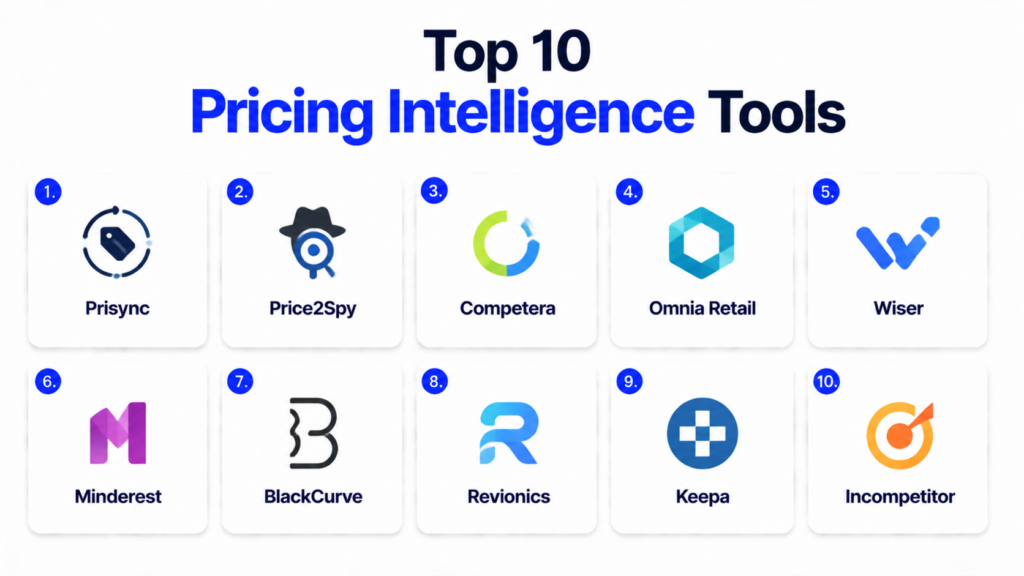
Introduction
Pricing Intelligence Tools are software platforms that help businesses monitor competitor prices, analyze market pricing trends, and optimize their own pricing strategies in real time. These tools aggregate pricing data from ecommerce sites, marketplaces, retailers, and online catalogs, then apply analytics and automation to inform pricing decisions. The outputs can be alerts, dashboards, pricing recommendations, repricing automation, and predictive modeling.In modern digital commerce pricing intelligence has become essential because competition is fiercer, pricing volatility is higher, and consumer price comparison behavior is instantaneous. With AI and big data advancements, pricing tools now leverage machine learning to detect trends, forecast demand, and recommend price moves that balance profit and competitiveness.
Real‑world use cases include:
- Monitoring competitor prices across ecommerce marketplaces
- Dynamic repricing for online retailers to maximize margins
- Price optimization for new product launches
- Detecting pricing anomalies or violations of MAP (Minimum Advertised Price) policies
- Bundling and promotional pricing strategies
Key evaluation criteria include:
- Breadth of market coverage and data sources
- Repricing automation and rule engines
- Competitor tracking capabilities
- Predictive analytics and AI features
- Integration with ecommerce and ERP systems
- Alerts and notification systems
- Ease of use and onboarding
- Reporting and visualization tools
- Security and access control
Best for: Ecommerce brands, digital marketplaces, pricing teams, revenue managers, category managers, online retailers.
Not ideal for: Small local businesses with static pricing, B2B sales without online price transparency, or companies without significant ecommerce exposure.
Key Trends in Pricing Intelligence Tools
- AI‑Driven Price Forecasting: Machine learning models forecast demand elasticity and competitive shifts.
- Real‑Time Repricing Automation: Near‑instant price updates based on rules, competitor changes, and inventory levels.
- Cross‑Market Tracking: Monitoring prices across marketplaces, geographies, and retail channels.
- SKU Level Granularity: Per‑SKU demand and profitability analytics for precise pricing decisions.
- MAP and Compliance Monitoring: Ensuring partners and resellers comply with pricing policies.
- Dynamic Discounting: Automated rules for promotions and flash pricing.
- API‑First Architectures: Seamless integration with ecommerce platforms, PIM, ERP, and CRM systems.
- Sentiment & Demand Signals: Incorporation of social and search trends into pricing decisions.
- Competitive Feature Tracking: Bundling pricing with feature comparison alerts.
- Self‑Serve Dashboards: Democratized pricing insights for product managers and category owners.
How We Selected These Tools (Methodology)
We assessed tools based on the following criteria:
- Market adoption and industry recognition
- Depth of competitive pricing data coverage
- Flexibility and sophistication of repricing engines
- Usability, dashboards, and alert systems
- Availability of predictive analytics or demand forecasting
- Integration capabilities with ecommerce and business systems
- Scalability across SMB to enterprise scenarios
- Security measures and compliance posture
- Support responsiveness and documentation quality
- Value relative to functionality and feature depth
Top 10 Pricing Intelligence Tools
#1 — Prisync
Short description:
Prisync is a dynamic competitor price tracking and repricing tool designed for ecommerce retailers to monitor competitor prices, stock levels, and marketplace dynamics, and adjust their own pricing using automated rules.
Key Features
- Real‑time competitor price tracking
- Repricing automation with rule engines
- Stock level monitoring for competitors
- SKU‑level analytics and visualization
- Alerts and notifications for price changes
- Custom competitor grouping and watchlists
- Exportable reports
Pros
- Strong competitive price tracking for ecommerce
- Easy‑to‑use interface with clear dashboards
Cons
- Advanced forecasting features are limited
- Repricing may require manual rule tuning
Platforms / Deployment
- Web
- Cloud
Security & Compliance
Not publicly stated
Integrations & Ecosystem
Connected with ecommerce and marketplace workflows.
- Shopify
- WooCommerce
- Magento
- Custom API
Support & Community
Documentation and onboarding materials; responsive customer support.
#2 — Price2spy
Short description:
Price2spy is a pricing intelligence platform supporting price monitoring, automated repricing, MAP monitoring, and historical pricing data analysis for retailers and brands with multichannel presence.
Key Features
- Competitor price monitoring
- Automated repricing engine
- Price change alerts
- MAP price violation detection
- Historical pricing trends
- API and CSV import/export
- Multi‑marketplace support
Pros
- Good support for MAP and compliance
- Flexible data import/export options
Cons
- UI can feel dated
- Less advanced predictive analytics
Platforms / Deployment
- Web
- Cloud
Security & Compliance
Not publicly stated
Integrations & Ecosystem
Supports ecommerce and marketplace data ingestion.
- Custom APIs
- CSV workflows
- Ecommerce platforms
Support & Community
Onboarding resources and support team assistance.
#3 — Competera
Short description:
Competera is an AI‑powered pricing platform for retailers and brands looking for price optimization, demand forecasting, competitive analytics, and automated rule orchestration that balance profit, competitive positioning, and revenue growth.
Key Features
- AI‑based price recommendations
- Competitor price and assortment tracking
- Demand forecasting
- Scenario simulation
- Automated pricing rules
- Margin and elasticity analytics
- SKU‑level strategy insights
Pros
- AI‑enhanced forecasting and recommendations
- Rich analytical capabilities
Cons
- Premium tool with enterprise pricing
- Requires training for full feature utilization
Platforms / Deployment
- Web
- Cloud
Security & Compliance
Not publicly stated
Integrations & Ecosystem
Integrates with a variety of commerce systems.
- Ecommerce platforms
- ERP systems
- Marketplaces
- BI tools
Support & Community
Documentation, onboarding support, and professional services.
#4 — Omnia Retail
Short description:
Omnia Retail provides a pricing intelligence suite focused on ecommerce retailers seeking real‑time repricing, competitor monitoring, demand insights, and profit maximization through automation and analytics.
Key Features
- Real‑time price tracking
- Automated pricing rules
- Competitor and category analytics
- Demand trend insights
- Promotion optimization support
- Custom alerting
Pros
- Real‑time repricing for competitive ecommerce
- Strong analytics dashboards
Cons
- Less prevalent outside core ecommerce markets
- Some advanced settings require expertise
Platforms / Deployment
- Web
- Cloud
Security & Compliance
Not publicly stated
Integrations & Ecosystem
Supports connections with commerce and analytics platforms.
- Ecommerce systems
- CRM
- Custom APIs
Support & Community
Support materials, documentation, and onboarding.
#5 — Wiser
Short description:
Wiser provides a broad pricing intelligence suite covering competitor price tracking, dynamic pricing automation, analytics, promotions, and MAP monitoring tailored for retail and brands across ecommerce and physical channels.
Key Features
- Competitor monitoring
- Dynamic pricing engine
- MAP violation alerts
- Promotion performance analytics
- Product assortment insights
- Price elasticity models
- Dashboard visualizations
Pros
- Comprehensive retail focus
- Integration of promotional insights
Cons
- Premium pricing tier
- Complexity for smaller players
Platforms / Deployment
- Web
- Cloud
Security & Compliance
Not publicly stated
Integrations & Ecosystem
Data connects with commerce and analytics systems.
- ERP
- Ecommerce platforms
- BI tools
Support & Community
Implementation support, documentation, and professional services.
#6 — Minderest
Short description:
Minderest is a pricing intelligence platform offering competitor price tracking, pricing dashboards, repricing alerts, and market trend insights, suited for both online retailers and brands seeking pricing visibility.
Key Features
- Competitor price monitoring
- Dynamic alerts
- Market trend analytics
- Price distribution summaries
- SKU‑level tracking
- Custom competitive sets
Pros
- Strong historical pricing views
- Easy competitor set creation
Cons
- Does not always include repricing automation
- Limited forecasting
Platforms / Deployment
- Web
- Cloud
Security & Compliance
Not publicly stated
Integrations & Ecosystem
Connects via APIs and imports.
- Ecommerce platforms
- Custom data feeds
Support & Community
Documentation and support services.
#7 — BlackCurve
Short description:
BlackCurve is a pricing optimization platform that combines competitor tracking, rule‑based automation, profitability analytics, and market data visualization to help retailers make smarter pricing decisions.
Key Features
- Competitive pricing dashboards
- Profitability and margin analytics
- Rule‑based price automation
- Scenario testing
- Price elasticity analysis
- Custom alerts
Pros
- Good balance of automation and analytics
- Clear visualization tools
Cons
- Smaller market footprint
- Some advanced features may require support
Platforms / Deployment
- Web
- Cloud
Security & Compliance
Not publicly stated
Integrations & Ecosystem
Integrates with commerce systems.
- Ecommerce platforms
- BI tools
- Custom APIs
Support & Community
Documentation and onboarding support.
#8 — Revionics
Short description:
Revionics offers a pricing and promotion optimization platform built for larger retailers and brands, combining competitive data, demand forecasting, and revenue management analytics.
Key Features
- Demand forecasting
- Price and promotion optimization
- Assortment pricing strategies
- Competitor tracking
- Scenario planning
- Analytics dashboards
Pros
- Strong optimization for larger catalogs
- Forecasting integrated with promotional planning
Cons
- Enterprise complexity
- Premium pricing
Platforms / Deployment
- Web
- Cloud
Security & Compliance
Not publicly stated
Integrations & Ecosystem
Broad integration with commerce and planning systems.
- ERP
- Ecommerce platforms
Support & Community
Enterprise onboarding, professional services, and documentation.
#9 — Incompetitor
Short description:
Incompetitor is a competitor price tracking tool that captures pricing information across online channels and simplifies price comparison and reporting for retailers and ecommerce teams.
Key Features
- Competitor price scraping
- Aggregated pricing dashboards
- Custom price alerts
- Historical price comparisons
- SKU tracking
Pros
- Straightforward competitor pricing insights
- Simple alerting
Cons
- Limited analytics beyond basic comparisons
- No repricing automation
Platforms / Deployment
- Web
- Cloud
Security & Compliance
Not publicly stated
Integrations & Ecosystem
Basic integration ability via exports and APIs.
- CSV export
- API
Support & Community
Documentation and responding support.
#10 — Keepa (Pricing Intelligence Focus)
Short description:
Keepa is primarily known for Amazon price history and tracking but is used by brands and sellers as a pricing intelligence source for competitive pricing insights, sales rank trends, and marketplace price patterns.
Key Features
- Amazon price history charts
- Price drop alerts
- Marketplace trend tracking
- Historical pricing analytics
Pros
- Deep Amazon pricing insight
- Useful for marketplace sellers
Cons
- Focused mainly on Amazon
- Not a full pricing intelligence suite
Platforms / Deployment
- Web
- Cloud
Security & Compliance
Not publicly stated
Integrations & Ecosystem
APIs and extensions for data extraction.
- Browser extension
- API access
Support & Community
Community resources and support channels.
Comparison Table (Top 10)
| Tool Name | Best For | Platforms Supported | Deployment | Standout Feature | Public Rating |
|---|---|---|---|---|---|
| Prisync | Ecommerce price tracking | Web | Cloud | Competitor price monitoring | N/A |
| Price2spy | MAP & pricing compliance | Web | Cloud | MAP enforcement insights | N/A |
| Competera | AI pricing optimization | Web | Cloud | AI‑based recommendations | N/A |
| Omnia Retail | Repricing automation | Web | Cloud | Real‑time repricing | N/A |
| Wiser | Retail pricing ecosystem | Web | Cloud | Comprehensive retail intelligence | N/A |
| Minderest | Market trend insights | Web | Cloud | Pricing trend analysis | N/A |
| BlackCurve | Profit & rule analytics | Web | Cloud | Profit analytics dashboards | N/A |
| Revionics | Demand & promo optimization | Web | Cloud | Forecasting + promotions | N/A |
| Incompetitor | Basic competitor tracking | Web | Cloud | Simplified pricing comparison | N/A |
| Keepa | Marketplace pricing history | Web | Cloud | Amazon price trends | N/A |
Evaluation & Scoring of Pricing Intelligence Tools
| Tool Name | Core (25%) | Ease (15%) | Integrations (15%) | Security (10%) | Performance (10%) | Support (10%) | Value (15%) | Weighted Total |
|---|---|---|---|---|---|---|---|---|
| Prisync | 8 | 9 | 8 | 7 | 8 | 8 | 8 | 8.2 |
| Price2spy | 8 | 8 | 7 | 7 | 8 | 8 | 7 | 7.7 |
| Competera | 9 | 7 | 9 | 8 | 9 | 8 | 7 | 8.4 |
| Omnia Retail | 8 | 8 | 8 | 7 | 8 | 8 | 8 | 8.0 |
| Wiser | 9 | 7 | 9 | 8 | 8 | 8 | 7 | 8.2 |
| Minderest | 7 | 8 | 7 | 7 | 7 | 8 | 7 | 7.5 |
| BlackCurve | 7 | 8 | 7 | 7 | 7 | 7 | 7 | 7.4 |
| Revionics | 9 | 6 | 9 | 8 | 9 | 8 | 7 | 8.2 |
| Incompetitor | 6 | 9 | 6 | 7 | 7 | 8 | 8 | 7.2 |
| Keepa | 5 | 8 | 5 | 7 | 6 | 8 | 9 | 6.9 |
How to interpret these scores:
- Higher weighted totals reflect a stronger overall combination of features, integrations, and performance.
- SMBs may prioritize ease of use and value over deep forecasting analytics.
- Enterprise buyers should weigh predictive analytics, integrations, and security more heavily.
- These scores are comparative and contextual to common ecommerce pricing needs.
Which Pricing Intelligence Tool Is Right for You?
Solo / Freelancer
Simpler competitor tracking like Incompetitor or Keepa provides quick pricing visibility without complexity.
SMB
Prisync, Price2spy, and Omnia Retail deliver actionable competitor tracking and decent automation for growing retailers.
Mid‑Market
Competera, Wiser, and Omnia Retail balance advanced analytics with automation and scalability.
Enterprise
Competera, Wiser, and Revionics offer deep AI‑driven forecasting, automated repricing, and enterprise governance.
Budget vs Premium
Budget‑oriented businesses can start with Prisync or Price2spy; premium enterprises benefit from AI forecasting and deep integrations in Competera or Revionics.
Feature Depth vs Ease of Use
More complex tools like Revionics and Competera provide deeper analytics but require onboarding. Tools like Prisync and Omnia Retail offer straightforward setup.
Integrations & Scalability
Enterprise environments requiring ERP and BI integrations should prioritize Competera, Wiser, or Revionics.
Security & Compliance Needs
Ensure role‑based access, audit logs, encryption, and secure data handling in enterprise implementations.
Frequently Asked Questions (FAQs)
1. What are Pricing Intelligence Tools?
Pricing Intelligence Tools collect, analyze, and automate pricing data from competitors and marketplaces to help businesses optimize their own prices competitively while maximizing profit.
2. How do these tools improve revenue?
By tracking competitor pricing, forecasting demand, and recommending price changes, they reduce guesswork, improve margins, and keep brands competitive in real time.
3. Are these tools suitable for small ecommerce stores?
Yes. Tools like Prisync and Price2spy are accessible to small and mid‑sized retailers who need competitor insights without enterprise complexity.
4. Do these platforms integrate with ecommerce systems?
Most tools offer integrations or APIs for ecommerce platforms, ERP systems, and marketplaces to automate pricing workflows and sync data across systems.
5. How important is AI in pricing intelligence?
AI enhances forecasting, elasticity modeling, competitor pattern detection, and optimized pricing recommendations, making pricing decisions data‑driven rather than reactive.
6. Can pricing intelligence tools automate repricing?
Yes, many tools support rule‑based or automated repricing that adjusts prices based on competitor thresholds, inventory, and demand signals in near real time.
7. What industries benefit most from pricing intelligence?
Online retail, marketplaces, consumer electronics, fashion, CPG brands, digital bookings, and any ecommerce category with transparent competition benefit significantly.
8. How do these platforms handle data security?
Security measures typically include access control, encryption, and secure data storage. Enterprise buyers should verify compliance and governance capabilities before purchase.
9. What is MAP monitoring?
MAP (Minimum Advertised Price) monitoring ensures that resellers comply with pricing policies set by brands. Many pricing intelligence tools offer alerts when MAP violations occur.
10. How do I choose the right tool?
Define pricing goals (competitive tracking, repricing automation, forecasting), evaluate integration needs, budget constraints, and test tools with sample products to validate fit.
Conclusion
Pricing Intelligence Tools are indispensable for ecommerce brands and retailers seeking competitive edge in pricing strategies. From simple competitor tracking in tools like Incompetitor and Keepa to advanced AI‑driven forecasting and automation in Competera and Revionics, businesses have options across budgets and complexity levels. SMBs may prioritize ease of use and value, mid‑market teams will benefit from balanced analytics and automation, and enterprises require deep integrations, forecasting, and governance. The best tool depends on the company’s pricing goals, catalog size, integration needs, and operational maturity. Shortlist based on these criteria, pilot key workflows, validate integrations, and scale intelligently to maintain competitive pricing and profitable growth.
