MOTOSHARE 🚗🏍️
Rent Bikes & Cars Directly from Owners
Motoshare connects vehicle owners with people who need bikes and cars on rent. Owners earn from idle vehicles, and renters get flexible ride options.
Visit Motoshare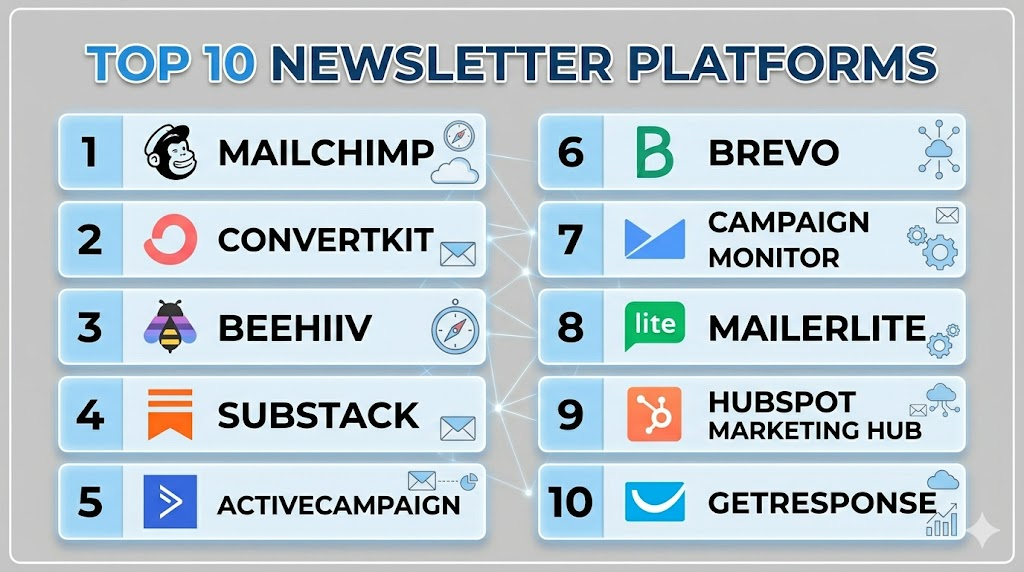
Introduction
Newsletter Platforms help businesses, creators, publishers, and marketers create, manage, automate, and distribute email newsletters to subscribers. These platforms provide tools for audience management, email campaign creation, automation workflows, analytics, personalization, monetization, and subscriber engagement. Instead of manually managing email lists and campaigns, organizations use newsletter platforms to scale communication and maintain audience relationships efficiently.Newsletter platforms have evolved significantly as email continues to remain one of the highest-performing owned communication channels. Modern platforms now combine AI-assisted writing, automation, segmentation, monetization, landing pages, analytics, subscriber management, and creator-focused workflows. Businesses use these tools for marketing campaigns, product announcements, educational content, lead nurturing, creator monetization, community engagement, and media publishing.Buyers should evaluate ease of use, automation depth, deliverability, audience segmentation, analytics, monetization support, integrations, scalability, design flexibility, and pricing structure.
Best for: Content creators, SaaS companies, marketers, publishers, ecommerce brands, media businesses, agencies, startups, and community-driven organizations.
Not ideal for: Organizations that only need basic transactional emails or businesses with no recurring content or audience engagement strategy.
Key Trends in Newsletter Platforms
- AI-assisted newsletter writing is becoming increasingly common.
- Creator monetization tools are expanding rapidly.
- Audience segmentation and personalization are becoming more advanced.
- Deliverability optimization is now a major competitive factor.
- Newsletter platforms are adding website and landing page builders.
- Automation workflows are becoming more visual and accessible.
- Subscriber referral systems are growing in popularity.
- First-party audience ownership is becoming more important.
- Analytics are shifting toward engagement quality and retention metrics.
- Multichannel publishing workflows are expanding beyond email.
How We Selected These Tools
The platforms in this list were selected using practical email marketing and publishing evaluation criteria.
- Market adoption and industry reputation
- Newsletter creation and automation depth
- Deliverability and audience management capabilities
- Monetization and creator support features
- Analytics and reporting functionality
- Ease of onboarding and usability
- Integration ecosystem and API support
- Scalability for creators and enterprises
- Security and governance capabilities
- Overall balance between usability, flexibility, and value
Top 10 Newsletter Platforms
#1 — Mailchimp
Short description: Mailchimp is one of the most widely recognized newsletter and email marketing platforms in the market. It helps businesses create newsletters, automate campaigns, manage audiences, and analyze engagement performance. Mailchimp is especially useful for SMBs and growing businesses because of its ease of use and broad integration ecosystem. It combines newsletter publishing, automation, segmentation, and campaign analytics in a unified platform suitable for both beginners and experienced marketers.
Key Features
- Drag-and-drop newsletter builder
- Email automation workflows
- Audience segmentation
- A/B testing
- Campaign analytics
- Landing pages
- Ecommerce integrations
Pros
- Easy onboarding experience
- Large integration ecosystem
- Strong automation workflows for SMBs
Cons
- Pricing increases with audience growth
- Advanced enterprise workflows are limited
- Some customization features require higher plans
Platforms / Deployment
- Web / iOS / Android
- Cloud
Security & Compliance
Supports encryption, access controls, and administrative account management features.
Integrations & Ecosystem
Mailchimp integrates with ecommerce, CRM, social media, and productivity systems for marketing automation workflows.
- Shopify
- Salesforce
- HubSpot
- WordPress
- Zapier
- Google Analytics
Support & Community
Provides extensive documentation, onboarding resources, templates, and customer support options for businesses and creators.
#2 — ConvertKit
Short description: ConvertKit is a newsletter and creator marketing platform focused on creators, educators, bloggers, and independent publishers. It helps users build subscriber lists, automate campaigns, sell digital products, and manage audience engagement workflows. ConvertKit is especially strong for creator-focused businesses that prioritize audience ownership and monetization.
Key Features
- Newsletter automation
- Creator monetization tools
- Subscriber tagging
- Landing pages
- Email sequences
- Audience segmentation
- Automation workflows
Pros
- Strong creator-focused workflows
- Easy automation setup
- Good monetization support
Cons
- Enterprise features are limited
- Advanced analytics depth is lighter
- Large-scale ecommerce workflows may need integrations
Platforms / Deployment
- Web
- Cloud
Security & Compliance
Supports secure account management and encrypted workflows.
Integrations & Ecosystem
ConvertKit integrates with creator, ecommerce, and automation systems to support audience growth workflows.
- Shopify
- WordPress
- Zapier
- Teachable
- Stripe
- Gumroad
Support & Community
Provides educational resources, onboarding guidance, and active creator-focused community support.
#3 — Beehiiv
Short description: Beehiiv is a modern newsletter publishing platform designed for creators, media businesses, and independent publishers. It combines newsletter publishing, referral programs, monetization tools, audience analytics, and website publishing in one system. Beehiiv is especially attractive for creators building media-style newsletter businesses and audience-driven brands.
Key Features
- Newsletter publishing
- Referral programs
- Audience analytics
- Monetization workflows
- Landing pages
- Website publishing
- Subscriber segmentation
Pros
- Strong creator monetization support
- Modern publishing workflows
- Useful referral system features
Cons
- Enterprise marketing automation is lighter
- Ecommerce depth is limited
- Integration ecosystem is still growing
Platforms / Deployment
- Web
- Cloud
Security & Compliance
Supports encrypted workflows and account-level security management.
Integrations & Ecosystem
Beehiiv integrates with creator and workflow tools for newsletter publishing and audience growth.
- Stripe
- Zapier
- Google Analytics
- WordPress
- Creator workflows
Support & Community
Provides onboarding support, documentation, templates, and active creator-focused resources.
#4 — Substack
Short description: Substack is a newsletter publishing platform designed for writers, journalists, creators, and independent publishers. It helps users create subscription-based newsletters, manage paid memberships, and publish content directly to audiences. Substack is especially popular among independent media creators and writers monetizing long-form content.
Key Features
- Paid newsletter subscriptions
- Audience management
- Content publishing
- Subscriber payments
- Analytics dashboards
- Community engagement
- Publishing workflows
Pros
- Easy monetization setup
- Simple publishing workflow
- Strong creator ecosystem
Cons
- Limited marketing automation depth
- CRM workflows are minimal
- Advanced segmentation capabilities are lighter
Platforms / Deployment
- Web / iOS / Android
- Cloud
Security & Compliance
Supports secure account access and payment workflow protections.
Integrations & Ecosystem
Substack primarily focuses on publishing workflows with selective integration support.
- Stripe
- Podcast workflows
- Social publishing tools
Support & Community
Provides creator-focused onboarding, publishing guidance, and community support resources.
#5 — ActiveCampaign
Short description: ActiveCampaign is a marketing automation and newsletter platform focused on advanced customer engagement workflows. It combines email newsletters, automation, CRM functionality, segmentation, and behavioral targeting into one system. ActiveCampaign is especially useful for SMB and mid-market businesses that need more sophisticated automation than traditional newsletter tools.
Key Features
- Newsletter automation
- CRM workflows
- Behavioral segmentation
- Lead scoring
- Email sequences
- Customer journeys
- Campaign analytics
Pros
- Strong automation depth
- Advanced audience segmentation
- Useful CRM integration workflows
Cons
- Learning curve for beginners
- Complex workflows require planning
- Pricing increases with advanced usage
Platforms / Deployment
- Web / iOS / Android
- Cloud
Security & Compliance
Supports encryption, administrative controls, and secure workflow management features.
Integrations & Ecosystem
ActiveCampaign integrates with CRM, ecommerce, sales, and automation systems for advanced marketing workflows.
- Shopify
- Salesforce
- HubSpot
- WordPress
- Zapier
- Stripe
Support & Community
Provides onboarding programs, automation training, documentation, and customer success resources.
#6 — Brevo
Short description: Brevo is an email marketing and newsletter platform focused on affordability and multichannel communication workflows. It supports newsletters, SMS campaigns, automation, transactional emails, and audience segmentation. Brevo is especially useful for SMBs and startups that want a cost-effective communication platform with both marketing and transactional messaging support.
Key Features
- Newsletter campaigns
- Email automation
- SMS marketing
- Transactional email support
- Audience segmentation
- CRM workflows
- Campaign analytics
Pros
- Affordable pricing structure
- Useful multichannel communication support
- Good transactional email capabilities
Cons
- Enterprise workflow depth is lighter
- Advanced analytics are limited
- Some UI workflows require learning
Platforms / Deployment
- Web
- Cloud
Security & Compliance
Supports encrypted communication workflows and administrative account controls.
Integrations & Ecosystem
Brevo integrates with ecommerce, CRM, and automation systems for communication workflows.
- Shopify
- WooCommerce
- Salesforce
- Zapier
- WordPress
- API workflows
Support & Community
Provides onboarding resources, templates, documentation, and SMB-focused customer support.
#7 — Campaign Monitor
Short description: Campaign Monitor is a newsletter and email marketing platform known for strong design flexibility and campaign management workflows. It helps businesses create visually appealing newsletters, automate campaigns, and manage subscriber engagement. Campaign Monitor is especially useful for agencies, marketers, and design-focused brands.
Key Features
- Newsletter builder
- Automation workflows
- Audience segmentation
- Email templates
- Campaign analytics
- A/B testing
- Personalization support
Pros
- Strong design capabilities
- Good template flexibility
- Easy campaign management
Cons
- Automation depth is lighter than some competitors
- Enterprise CRM workflows are limited
- Pricing can increase with audience growth
Platforms / Deployment
- Web
- Cloud
Security & Compliance
Supports secure workflows and account access controls.
Integrations & Ecosystem
Campaign Monitor integrates with ecommerce, CRM, and workflow automation systems for marketing operations.
- Shopify
- Salesforce
- WordPress
- Zapier
- Analytics platforms
Support & Community
Provides onboarding guidance, campaign resources, and documentation for marketing teams.
#8 — MailerLite
Short description: MailerLite is a lightweight newsletter and email marketing platform focused on simplicity, affordability, and usability. It helps users create newsletters, automate campaigns, build landing pages, and manage subscriber lists. MailerLite is especially popular among creators, startups, bloggers, and small businesses.
Key Features
- Newsletter builder
- Automation workflows
- Landing pages
- Subscriber segmentation
- Campaign analytics
- Email templates
- Website builder
Pros
- Very easy to use
- Affordable for smaller teams
- Strong value for creators and SMBs
Cons
- Enterprise automation depth is lighter
- Advanced CRM workflows are limited
- Analytics are simpler than enterprise tools
Platforms / Deployment
- Web
- Cloud
Security & Compliance
Supports secure account workflows and encrypted communication handling.
Integrations & Ecosystem
MailerLite integrates with ecommerce, creator, and workflow systems for audience management.
- Shopify
- WordPress
- Zapier
- Stripe
- WooCommerce
- Creator workflows
Support & Community
Provides onboarding tutorials, campaign templates, and support for creators and SMB users.
#9 — HubSpot Marketing Hub
Short description: HubSpot Marketing Hub combines newsletters, marketing automation, CRM workflows, segmentation, analytics, and customer engagement tools in one platform. It is especially useful for businesses that want email newsletters tightly integrated with broader inbound marketing and CRM operations. HubSpot is widely used by SMB and mid-market organizations focused on inbound growth.
Key Features
- Newsletter automation
- CRM integration
- Audience segmentation
- Workflow automation
- Landing pages
- Campaign analytics
- Lead nurturing workflows
Pros
- Strong CRM integration
- Excellent inbound marketing workflows
- Good automation depth
Cons
- Higher pricing for advanced features
- Complexity grows with scale
- Smaller teams may not need full platform scope
Platforms / Deployment
- Web / iOS / Android
- Cloud
Security & Compliance
Supports SSO, encryption, administrative governance, and enterprise access management controls.
Integrations & Ecosystem
HubSpot integrates with CRM, sales, ecommerce, and analytics systems for unified marketing workflows.
- Salesforce
- Shopify
- WordPress
- Slack
- Zapier
- Google Analytics
Support & Community
Provides extensive documentation, onboarding resources, certification programs, and customer support.
#10 — GetResponse
Short description: GetResponse is an email marketing and newsletter platform that combines automation, webinars, landing pages, ecommerce workflows, and subscriber management. It helps businesses automate newsletters, manage campaigns, and engage audiences through multiple channels. GetResponse is especially useful for SMBs and digital marketers looking for broader marketing functionality beyond newsletters.
Key Features
- Newsletter automation
- Webinar support
- Landing pages
- Audience segmentation
- Marketing automation
- Ecommerce workflows
- Campaign analytics
Pros
- Broad feature set for SMBs
- Useful webinar integrations
- Good automation workflows
Cons
- UI complexity increases with advanced workflows
- Enterprise governance depth is lighter
- Advanced customization may require setup time
Platforms / Deployment
- Web
- Cloud
Security & Compliance
Supports encrypted workflows and administrative access management features.
Integrations & Ecosystem
GetResponse integrates with ecommerce, CRM, and workflow automation systems for marketing campaigns.
- Shopify
- WooCommerce
- Salesforce
- Zapier
- WordPress
- Stripe
Support & Community
Provides onboarding support, templates, educational resources, and marketing workflow guidance.
Comparison Table
| Tool Name | Best For | Platform(s) Supported | Deployment | Standout Feature | Public Rating |
|---|---|---|---|---|---|
| Mailchimp | SMB email marketing | Web, iOS, Android | Cloud | Broad marketing ecosystem | N/A |
| ConvertKit | Creator newsletters | Web | Cloud | Creator monetization tools | N/A |
| Beehiiv | Media-style newsletters | Web | Cloud | Referral growth workflows | N/A |
| Substack | Paid publishing newsletters | Web, iOS, Android | Cloud | Subscription publishing | N/A |
| ActiveCampaign | Advanced automation | Web, iOS, Android | Cloud | Behavioral automation workflows | N/A |
| Brevo | Affordable multichannel marketing | Web | Cloud | Transactional plus marketing messaging | N/A |
| Campaign Monitor | Design-focused campaigns | Web | Cloud | Newsletter design flexibility | N/A |
| MailerLite | Simple SMB newsletters | Web | Cloud | Ease of use | N/A |
| HubSpot Marketing Hub | CRM-integrated newsletters | Web, iOS, Android | Cloud | CRM and inbound marketing alignment | N/A |
| GetResponse | Marketing plus webinars | Web | Cloud | Webinar and automation workflows | N/A |
Evaluation & Scoring of Newsletter Platforms
| Tool Name | Core (25%) | Ease (15%) | Integrations (15%) | Security (10%) | Performance (10%) | Support (10%) | Value (15%) | Weighted Total |
|---|---|---|---|---|---|---|---|---|
| Mailchimp | 9.1 | 9.0 | 9.2 | 8.7 | 8.9 | 8.8 | 8.3 | 8.8 |
| ConvertKit | 8.7 | 9.1 | 8.3 | 8.2 | 8.5 | 8.6 | 8.9 | 8.6 |
| Beehiiv | 8.5 | 8.9 | 8.0 | 8.1 | 8.4 | 8.5 | 8.8 | 8.5 |
| Substack | 8.2 | 9.2 | 7.5 | 8.0 | 8.3 | 8.4 | 8.7 | 8.3 |
| ActiveCampaign | 9.3 | 8.1 | 9.0 | 8.8 | 9.0 | 8.7 | 8.2 | 8.8 |
| Brevo | 8.5 | 8.8 | 8.4 | 8.2 | 8.5 | 8.4 | 9.0 | 8.5 |
| Campaign Monitor | 8.3 | 8.9 | 8.2 | 8.1 | 8.4 | 8.3 | 8.5 | 8.4 |
| MailerLite | 8.2 | 9.2 | 8.0 | 8.1 | 8.3 | 8.4 | 9.1 | 8.4 |
| HubSpot Marketing Hub | 9.4 | 8.3 | 9.5 | 8.9 | 9.1 | 8.8 | 7.9 | 8.9 |
| GetResponse | 8.6 | 8.5 | 8.4 | 8.2 | 8.5 | 8.4 | 8.7 | 8.5 |
These scores are comparative and designed to help buyers evaluate newsletter platforms across different operational scenarios. Enterprise-focused tools generally score higher in integrations, automation depth, and governance, while creator-focused tools often score higher in usability and monetization support. Buyers should prioritize workflow fit, audience size, automation needs, and monetization goals when selecting a platform.
Which Newsletter Platform Is Right for You?
Solo / Freelancer
Solo creators, consultants, writers, and coaches usually need easy newsletter publishing, audience growth, and affordable pricing. ConvertKit, Beehiiv, Substack, and MailerLite are strong choices because they are easier to manage without dedicated marketing teams. Simplicity, monetization, and subscriber ownership should be key priorities.
SMB
SMBs often require automation, segmentation, CRM integrations, and campaign analytics without enterprise complexity. Mailchimp, Brevo, GetResponse, and ActiveCampaign are strong options depending on marketing maturity. SMB teams should prioritize usability and automation flexibility.
Mid-Market
Mid-market organizations usually need stronger workflow automation, CRM synchronization, analytics, and multichannel engagement. HubSpot Marketing Hub, ActiveCampaign, Mailchimp, and GetResponse are strong choices for scaling audience operations and marketing workflows.
Enterprise
Enterprise organizations often require governance controls, advanced segmentation, CRM integration depth, analytics, and scalable automation. HubSpot Marketing Hub and ActiveCampaign are particularly strong for enterprise-level customer engagement and automation operations.
Budget vs Premium
Budget-conscious users may prefer MailerLite, Brevo, Beehiiv, or ConvertKit for lower operational costs. Premium buyers needing deeper automation and CRM alignment may benefit more from HubSpot Marketing Hub or ActiveCampaign.
Feature Depth vs Ease of Use
HubSpot and ActiveCampaign provide deeper automation and workflow control but may require more setup and operational management. MailerLite, Beehiiv, and ConvertKit are easier to deploy and more approachable for creators and smaller teams.
Integrations & Scalability
CRM and ecommerce integration quality is important because newsletters increasingly connect with sales, customer engagement, and automation workflows. Organizations using Shopify, Salesforce, or HubSpot CRM should prioritize mature integration ecosystems and API flexibility.
Security & Compliance Needs
Organizations handling large subscriber databases should review encryption standards, authentication controls, administrative permissions, unsubscribe handling, and audience privacy management carefully before deployment.
Frequently Asked Questions
1. What is a Newsletter Platform?
A Newsletter Platform helps businesses and creators send recurring email communications to subscribers. These platforms support newsletter creation, automation, audience segmentation, analytics, and subscriber management. Modern platforms also include monetization, landing pages, and workflow automation features. They are widely used for marketing, education, publishing, and audience engagement.
2. How is a newsletter platform different from email marketing software?
Newsletter platforms often focus on recurring audience engagement and content publishing, while broader email marketing software may include transactional messaging, CRM workflows, advertising automation, and customer lifecycle management. Many modern platforms combine both capabilities together, especially for SMB and creator-focused workflows.
3. Why are newsletters still important?
Newsletters remain valuable because email is one of the few owned communication channels businesses fully control. Social media algorithms change frequently, but newsletters provide direct audience access. Newsletters also support relationship-building, education, retention, lead nurturing, and monetization workflows more effectively than many short-form channels.
4. What features should buyers prioritize first?
Buyers should prioritize deliverability, audience segmentation, automation workflows, analytics, integrations, ease of use, and pricing structure. Creator-focused users should additionally evaluate monetization and referral features. Enterprise buyers should prioritize governance, permissions, CRM alignment, and advanced automation capabilities.
5. Are newsletter platforms suitable for creators?
Yes. Many modern newsletter platforms are specifically designed for creators, writers, educators, and independent publishers. Tools like ConvertKit, Beehiiv, and Substack focus heavily on audience growth and monetization workflows. These platforms help creators build direct audience relationships without depending entirely on social platforms.
6. What are common mistakes organizations make with newsletters?
One common mistake is sending inconsistent or low-value content that reduces subscriber engagement. Another issue is failing to segment audiences properly, which leads to generic messaging. Organizations also struggle when they ignore deliverability setup, analytics, or unsubscribe management. Successful newsletters require consistency, relevance, and audience understanding.
7. How important is automation in newsletter platforms?
Automation is extremely important because it helps organizations scale communication without increasing manual work. Automated welcome sequences, nurture campaigns, onboarding workflows, and re-engagement campaigns improve subscriber experience and operational efficiency. Businesses with larger audiences especially benefit from automation workflows.
8. Can small businesses benefit from newsletter platforms?
Yes. Small businesses often gain significant value from newsletters because email marketing remains cost-effective and scalable. Newsletters help SMBs nurture leads, announce products, educate customers, and maintain engagement with limited marketing budgets. Tools like Mailchimp, MailerLite, and Brevo are especially practical for smaller organizations.
9. What role does deliverability play in newsletter performance?
Deliverability determines whether emails reach the inbox, promotions tab, or spam folder. Poor deliverability reduces open rates, engagement, and campaign effectiveness. Strong newsletter platforms help maintain sender reputation, authentication setup, unsubscribe handling, and audience hygiene to improve inbox placement.
10. What alternatives exist if a company does not need a full newsletter platform?
Alternatives include lightweight email tools, transactional email services, CRM-native email systems, or manual communication workflows. Some creators may rely primarily on social platforms or blogging systems instead of dedicated newsletters. However, as audience size and communication complexity grow, dedicated newsletter platforms become increasingly valuable.
Conclusion
Newsletter Platforms have become essential tools for businesses, creators, publishers, and marketers that want to build direct audience relationships and maintain long-term engagement. Modern platforms now combine newsletter publishing, automation, monetization, analytics, segmentation, and workflow management into unified systems that support both creators and enterprise marketing teams. The best platform depends on audience size, monetization goals, automation requirements, operational complexity, and budget. Enterprise and automation-focused organizations often benefit most from HubSpot Marketing Hub or ActiveCampaign because of their workflow depth and CRM alignment, while creators and independent publishers may prefer ConvertKit, Beehiiv, or Substack for audience ownership and monetization flexibility. SMBs often find Mailchimp, MailerLite, Brevo, or GetResponse practical because they balance usability, automation, and affordability effectively. Before selecting a platform, organizations should validate deliverability performance, review automation capabilities, test integrations carefully, evaluate subscriber management workflows, and run pilot campaigns to ensure the platform aligns with their audience engagement and growth strategy.

A practical comparison should include subscriber migration and sender-reputation recovery. Moving lists between platforms can disrupt authentication, suppression data, and deliverability, so teams should test authentication, warm-up plans, and unsubscribe preservation before switching.