MOTOSHARE 🚗🏍️
Rent Bikes & Cars Directly from Owners
Motoshare connects vehicle owners with people who need bikes and cars on rent. Owners earn from idle vehicles, and renters get flexible ride options.
Visit Motoshare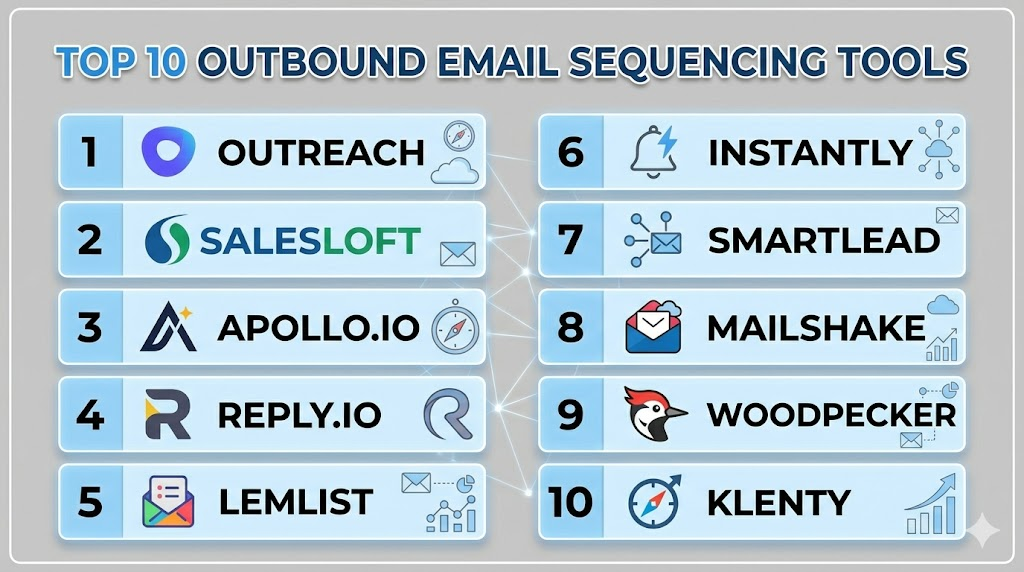
Introduction
Outbound Email Sequencing Tools help sales, marketing, recruiting, and business development teams automate structured email follow-up campaigns. These platforms allow users to create multi-step sequences, personalize outreach, schedule follow-ups, track opens and replies, manage prospect lists, and sync activity with CRM systems. Instead of manually remembering every follow-up, teams use sequencing tools to create consistent outreach workflows that improve productivity and pipeline generation.Outbound email sequencing is important because buyers are busy, inboxes are crowded, and manual follow-up often becomes inconsistent. Modern sequencing tools now include AI-assisted personalization, deliverability monitoring, inbox rotation, A/B testing, CRM synchronization, lead enrichment, reply detection, and engagement analytics. These capabilities help teams scale outreach while maintaining quality and relevance.
Common use cases include cold email outreach, sales development campaigns, recruiting outreach, partner outreach, event follow-ups, account-based prospecting, and re-engagement campaigns.Buyers should evaluate deliverability controls, sequence flexibility, personalization, CRM integrations, analytics, AI writing support, compliance controls, inbox management, scalability, and pricing structure.
Best for: SDR teams, BDR teams, outbound sales teams, recruiters, agencies, founders, SaaS companies, demand generation teams, and revenue operations teams.
Not ideal for: Businesses without outbound outreach workflows, organizations that cannot maintain lead quality, or teams that need only simple newsletter-style email marketing.
Key Trends in Outbound Email Sequencing Tools
- AI-assisted personalization is becoming a core feature for improving reply rates.
- Deliverability monitoring is now essential because inbox placement directly affects campaign performance.
- Inbox rotation and sender health management are becoming popular for high-volume outbound teams.
- Multichannel sequencing is expanding beyond email into calls, LinkedIn tasks, and SMS workflows.
- CRM synchronization is becoming mandatory for sales-led outbound operations.
- Compliance controls and unsubscribe management are increasingly important.
- A/B testing is helping teams refine subject lines, messaging, and timing.
- Intent-based targeting is improving outbound campaign relevance.
- Email verification and enrichment are being bundled into sequencing platforms.
- Analytics are shifting from basic opens to reply quality, meeting booked rate, and pipeline impact.
How We Selected These Tools
The tools in this list were selected using practical outbound sales and marketing evaluation criteria.
- Market adoption and recognition among sales teams
- Email sequencing and follow-up automation depth
- Deliverability monitoring and sender management capabilities
- CRM and sales workflow integrations
- Personalization, A/B testing, and AI support
- Ease of onboarding and campaign setup
- Reporting and analytics quality
- Scalability for SMB, agency, and enterprise teams
- Security and account governance capabilities
- Overall balance between usability, flexibility, and value
Top 10 Outbound Email Sequencing Tools
#1 — Outreach
Short description: Outreach is an enterprise sales engagement platform with strong outbound email sequencing capabilities. It helps sales teams build structured email sequences, automate follow-ups, manage prospect engagement, and connect outreach activity with CRM workflows. Outreach is best suited for mid-market and enterprise organizations that need advanced governance, analytics, and multichannel sales execution. Its strength is combining email sequencing with broader sales engagement and pipeline visibility.
Key Features
- Advanced email sequencing
- Multichannel sales engagement
- AI-assisted workflow insights
- CRM synchronization
- Task and call automation
- Sequence analytics
- Sales performance dashboards
Pros
- Strong enterprise workflow depth
- Excellent CRM integration capabilities
- Useful analytics for large sales teams
Cons
- Higher pricing for small teams
- Implementation can require planning
- Advanced features may need training
Platforms / Deployment
- Web / iOS / Android
- Cloud
Security & Compliance
Supports SSO, encryption, RBAC, audit controls, and enterprise administration features.
Integrations & Ecosystem
Outreach integrates with CRM, enrichment, communication, and sales productivity systems to support outbound workflows.
- Salesforce
- HubSpot
- ZoomInfo
- Slack
- Microsoft Dynamics 365
- LinkedIn workflows
Support & Community
Provides enterprise onboarding, customer success support, implementation guidance, and documentation for large sales organizations.
#2 — Salesloft
Short description: Salesloft is a sales engagement platform that helps teams create email cadences, automate follow-ups, track engagement, and manage outbound workflows. It is widely used by sales development teams that need structured outreach and CRM-connected activity tracking. Salesloft is suitable for SMB, mid-market, and enterprise teams that want reliable email sequencing with broader sales workflow features. Its cadence management is one of its strongest capabilities.
Key Features
- Email cadence automation
- Follow-up scheduling
- CRM synchronization
- Call and task workflows
- Engagement analytics
- AI-assisted insights
- Pipeline visibility
Pros
- Strong cadence management
- Good usability for sales teams
- Reliable CRM workflow alignment
Cons
- Premium pricing at scale
- Advanced workflows require admin setup
- Some teams may not need the full sales engagement suite
Platforms / Deployment
- Web / iOS
- Cloud
Security & Compliance
Supports enterprise authentication, encryption, access management, and administrative governance features.
Integrations & Ecosystem
Salesloft integrates with CRM, data enrichment, communication, and productivity tools for outbound sales workflows.
- Salesforce
- HubSpot
- ZoomInfo
- LinkedIn workflows
- Slack
- Microsoft Dynamics 365
Support & Community
Offers onboarding programs, documentation, customer success support, and training resources for sales teams.
#3 — Apollo.io
Short description: Apollo.io combines outbound email sequencing, contact discovery, enrichment, and sales engagement in one platform. It is popular among startups, SMBs, and mid-market sales teams because it allows users to find prospects and launch email campaigns from the same system. Apollo is useful for teams that need both lead data and automated outreach without managing multiple tools. Its value comes from combining prospecting, verification, sequencing, and analytics.
Key Features
- Email sequencing
- Contact database
- Lead enrichment
- Email verification
- CRM synchronization
- Campaign analytics
- Sales engagement workflows
Pros
- Strong value for growing teams
- Combines data and sequencing
- Easy to start outbound campaigns
Cons
- Data quality varies by region
- Deliverability must be managed carefully
- Enterprise governance depth is lighter
Platforms / Deployment
- Web
- Cloud
Security & Compliance
Supports encryption and account-level access management. Additional governance features vary by plan.
Integrations & Ecosystem
Apollo integrates with CRM, email inboxes, and workflow tools to support outbound prospecting and sequencing.
- Salesforce
- HubSpot
- Gmail
- Outlook
- Zapier
- LinkedIn workflows
Support & Community
Provides onboarding resources, workflow templates, documentation, and support for SMB and mid-market teams.
#4 — Reply.io
Short description: Reply.io is an outbound sales engagement platform focused on email sequencing, multichannel outreach, and AI-assisted prospecting workflows. It helps teams automate email follow-ups, manage LinkedIn tasks, run calls, and track engagement across multiple outreach channels. Reply.io is a strong fit for SMB and mid-market sales teams that need flexible sequencing without heavy enterprise complexity. It is useful for outbound sales, recruiting, and agency workflows.
Key Features
- Email sequence automation
- Multichannel outreach workflows
- AI-assisted email generation
- CRM synchronization
- Reply detection
- A/B testing
- Engagement analytics
Pros
- Flexible sequencing workflows
- Good multichannel outreach support
- Strong usability for SMB teams
Cons
- Enterprise governance is lighter
- Workflow complexity can grow with scale
- Deliverability still requires careful setup
Platforms / Deployment
- Web
- Cloud
Security & Compliance
Supports encryption and administrative access controls.
Integrations & Ecosystem
Reply.io integrates with CRM, inbox, communication, and automation platforms for outbound campaigns.
- Salesforce
- HubSpot
- Gmail
- Outlook
- Slack
- Zapier
Support & Community
Provides onboarding assistance, documentation, templates, and customer support for outbound teams.
#5 — Lemlist
Short description: Lemlist is an outbound email sequencing platform known for personalization, deliverability features, and creative cold outreach workflows. It helps users create personalized email campaigns, automate follow-ups, and track engagement performance. Lemlist is commonly used by startups, agencies, founders, and sales teams that want more personalized outbound campaigns. Its strength is combining sequencing with deliverability and personalization tools.
Key Features
- Personalized email sequences
- Automated follow-ups
- Deliverability monitoring
- A/B testing
- Campaign analytics
- CRM synchronization
- Multichannel outreach support
Pros
- Strong personalization capabilities
- Good deliverability-focused features
- Easy campaign setup
Cons
- Enterprise governance is limited
- Advanced reporting is lighter than enterprise tools
- High-volume workflows require careful management
Platforms / Deployment
- Web
- Cloud
Security & Compliance
Supports encryption and secure account access controls.
Integrations & Ecosystem
Lemlist integrates with CRM, inbox, enrichment, and workflow automation systems for outbound campaigns.
- HubSpot
- Salesforce
- Gmail
- Outlook
- Zapier
- LinkedIn workflows
Support & Community
Provides onboarding resources, campaign templates, educational content, and active community support.
#6 — Instantly
Short description: Instantly is an outbound email sequencing tool focused on cold email automation, deliverability, and high-volume campaign management. It helps users create sequences, manage multiple inboxes, monitor campaign performance, and scale outbound email operations. Instantly is especially popular among agencies, lead generation companies, and outbound sales teams that need deliverability-focused sequencing. Its strength is managing cold email infrastructure at scale.
Key Features
- Cold email sequencing
- Inbox rotation
- Deliverability monitoring
- Automated follow-ups
- Campaign analytics
- Email warm-up support
- Lead management
Pros
- Strong high-volume outbound support
- Useful inbox rotation features
- Good value for agencies
Cons
- Focused mainly on email workflows
- CRM depth is lighter than enterprise platforms
- Governance features are limited
Platforms / Deployment
- Web
- Cloud
Security & Compliance
Supports encrypted workflows and account-level security controls.
Integrations & Ecosystem
Instantly integrates with inbox systems, enrichment tools, and workflow automation platforms for outbound email operations.
- Gmail
- Outlook
- Zapier
- CRM workflows
- Lead enrichment tools
- Webhook workflows
Support & Community
Provides campaign setup guidance, documentation, onboarding resources, and outbound-focused support.
#7 — Smartlead
Short description: Smartlead is an outbound email automation platform built for scalable cold outreach and sender management. It supports email sequences, inbox rotation, deliverability workflows, campaign analytics, and lead engagement tracking. Smartlead is commonly used by agencies, outbound teams, and growth teams managing multiple campaigns. Its strength is supporting larger outbound email operations with workflow flexibility.
Key Features
- Email sequence automation
- Inbox rotation
- Deliverability support
- Lead engagement tracking
- Campaign analytics
- Automated follow-ups
- Sender management
Pros
- Strong scalability for cold outreach
- Useful sender management workflows
- Good agency use-case fit
Cons
- CRM workflow depth is lighter
- Enterprise reporting is limited
- Requires deliverability discipline
Platforms / Deployment
- Web
- Cloud
Security & Compliance
Supports secure account access and encrypted workflow handling.
Integrations & Ecosystem
Smartlead integrates with email inboxes, workflow automation tools, and CRM-related workflows.
- Gmail
- Outlook
- HubSpot workflows
- Zapier
- Lead enrichment tools
- Webhooks
Support & Community
Provides documentation, outbound campaign support, and workflow guidance for teams managing cold email at scale.
#8 — Mailshake
Short description: Mailshake is an outbound email sequencing platform built for sales outreach, link building, recruiting, and partnership campaigns. It helps users create campaigns, automate follow-ups, track replies, and manage prospect engagement. Mailshake is especially useful for SMBs, agencies, consultants, and founders that need simple cold email sequencing without enterprise complexity. Its strength is ease of use and straightforward campaign management.
Key Features
- Cold email sequencing
- Automated follow-ups
- Campaign tracking
- Reply detection
- A/B testing
- Lead management
- CRM synchronization
Pros
- Simple and quick to deploy
- Good fit for SMB and agency workflows
- Easy follow-up automation
Cons
- Limited enterprise workflow depth
- Multichannel support is narrower
- Advanced analytics are lighter
Platforms / Deployment
- Web
- Cloud
Security & Compliance
Supports encrypted workflows and secure account access controls.
Integrations & Ecosystem
Mailshake integrates with CRM, email, and automation tools to support outbound campaigns.
- Salesforce
- HubSpot
- Gmail
- Outlook
- Zapier
- Slack
Support & Community
Provides onboarding resources, campaign guides, support documentation, and customer assistance for outbound teams.
#9 — Woodpecker
Short description: Woodpecker is an outbound email sequencing tool designed for cold email campaigns, follow-ups, and agency-style outreach workflows. It focuses on automation, personalization, deliverability, and inbox safety for sales and lead generation teams. Woodpecker is a strong fit for small businesses and agencies that need reliable cold email sequencing with simple campaign controls. It is especially useful for teams prioritizing sender reputation.
Key Features
- Cold email sequencing
- Automated follow-ups
- Deliverability controls
- Personalization fields
- Reply detection
- Campaign analytics
- Agency account management
Pros
- Good cold email deliverability focus
- Simple campaign management
- Useful for agencies and SMBs
Cons
- Limited enterprise sales engagement depth
- CRM integrations may require setup
- Advanced AI features are lighter
Platforms / Deployment
- Web
- Cloud
Security & Compliance
Supports encrypted workflows and secure user access features.
Integrations & Ecosystem
Woodpecker integrates with CRM, inbox, and workflow automation systems for outbound email campaigns.
- Gmail
- Outlook
- HubSpot
- Pipedrive
- Zapier
- CRM workflows
Support & Community
Provides onboarding documentation, deliverability guidance, and support resources for outbound email teams.
#10 — Klenty
Short description: Klenty is a sales engagement platform with strong outbound email sequencing and multichannel outreach capabilities. It helps SDR and BDR teams automate email cadences, calls, LinkedIn tasks, and CRM updates. Klenty is particularly useful for SMB and mid-market teams that want structured outbound workflows at a practical price point. Its strength is combining sequencing, sales engagement, and CRM synchronization.
Key Features
- Email cadence automation
- LinkedIn outreach tasks
- Call workflow support
- CRM synchronization
- Prospect engagement tracking
- A/B testing
- Sequence analytics
Pros
- Good SMB and mid-market fit
- Useful multichannel workflows
- Easy cadence setup
Cons
- Enterprise governance depth is lighter
- Advanced reporting may be limited
- Some integrations require configuration
Platforms / Deployment
- Web
- Cloud
Security & Compliance
Supports encrypted workflows and secure account management features.
Integrations & Ecosystem
Klenty integrates with CRM, email, and productivity platforms to support outbound sequencing workflows.
- Salesforce
- HubSpot
- Gmail
- Outlook
- Slack
- Zapier
Support & Community
Provides onboarding resources, workflow templates, documentation, and support for sales development teams.
Comparison Table
| Tool Name | Best For | Platform(s) Supported | Deployment | Standout Feature | Public Rating |
|---|---|---|---|---|---|
| Outreach | Enterprise sales sequencing | Web, iOS, Android | Cloud | Advanced sales engagement workflows | N/A |
| Salesloft | Structured sales cadences | Web, iOS | Cloud | Cadence management | N/A |
| Apollo.io | Prospecting plus sequencing | Web | Cloud | Data and outreach in one platform | N/A |
| Reply.io | Multichannel outreach | Web | Cloud | AI-assisted sequencing | N/A |
| Lemlist | Personalized cold outreach | Web | Cloud | Personalization and deliverability | N/A |
| Instantly | High-volume cold email | Web | Cloud | Inbox rotation | N/A |
| Smartlead | Scalable outbound agencies | Web | Cloud | Sender management workflows | N/A |
| Mailshake | Simple cold email campaigns | Web | Cloud | Easy follow-up automation | N/A |
| Woodpecker | SMB cold email outreach | Web | Cloud | Deliverability-focused sequencing | N/A |
| Klenty | SMB sales engagement | Web | Cloud | Multichannel cadences | N/A |
Evaluation & Scoring of Outbound Email Sequencing Tools
| Tool Name | Core (25%) | Ease (15%) | Integrations (15%) | Security (10%) | Performance (10%) | Support (10%) | Value (15%) | Weighted Total |
|---|---|---|---|---|---|---|---|---|
| Outreach | 9.6 | 8.2 | 9.5 | 9.1 | 9.2 | 8.9 | 7.8 | 8.9 |
| Salesloft | 9.2 | 8.5 | 9.0 | 8.8 | 8.9 | 8.7 | 8.0 | 8.7 |
| Apollo.io | 8.9 | 8.9 | 8.7 | 8.2 | 8.6 | 8.4 | 9.0 | 8.7 |
| Reply.io | 8.6 | 8.7 | 8.4 | 8.0 | 8.5 | 8.3 | 8.8 | 8.5 |
| Lemlist | 8.5 | 8.9 | 8.3 | 8.0 | 8.4 | 8.5 | 8.9 | 8.5 |
| Instantly | 8.4 | 8.8 | 8.0 | 7.8 | 8.5 | 8.1 | 9.0 | 8.4 |
| Smartlead | 8.4 | 8.5 | 8.1 | 7.9 | 8.6 | 8.0 | 8.8 | 8.4 |
| Mailshake | 8.0 | 8.9 | 8.0 | 7.8 | 8.2 | 8.0 | 8.8 | 8.3 |
| Woodpecker | 8.1 | 8.8 | 8.0 | 7.9 | 8.3 | 8.2 | 8.7 | 8.3 |
| Klenty | 8.3 | 8.8 | 8.2 | 7.9 | 8.3 | 8.2 | 8.8 | 8.4 |
These scores are comparative and should be used as a practical buying guide rather than absolute rankings. Enterprise tools usually score higher in governance, integrations, reporting, and workflow depth. SMB-focused tools often score better in ease of use and pricing value. Buyers should prioritize deliverability, personalization, CRM fit, and campaign scale when comparing platforms.
Which Outbound Email Sequencing Tool Is Right for You?
Solo / Freelancer
Solo professionals, consultants, recruiters, and founders usually need simple email sequencing, easy follow-up automation, and basic campaign tracking. Mailshake, Lemlist, Woodpecker, and Instantly are good options because they are easy to deploy and do not require heavy administration. Solo users should prioritize simplicity, deliverability, and message personalization.
SMB
SMBs typically need affordable sequencing with CRM synchronization and reliable campaign analytics. Apollo.io, Reply.io, Lemlist, Klenty, and Mailshake are strong options for small sales teams. SMB buyers should avoid overly complex enterprise platforms unless they have dedicated sales operations support.
Mid-Market
Mid-market teams usually require more structured workflows, CRM synchronization, multichannel engagement, reporting, and team management. Salesloft, Apollo.io, Reply.io, Klenty, and Outreach are strong options depending on outbound scale and CRM maturity. Teams should prioritize sequence governance and reporting consistency.
Enterprise
Enterprise organizations need advanced governance, CRM integration depth, user permissions, analytics, and operational scalability. Outreach and Salesloft are strong enterprise choices for structured sales development organizations. Large teams should also evaluate security controls, auditability, admin workflows, and pipeline reporting.
Budget vs Premium
Budget-conscious teams may prefer Mailshake, Woodpecker, Instantly, Smartlead, or Lemlist. Premium buyers with complex sales engagement needs may benefit more from Outreach or Salesloft. Apollo.io can be a strong middle-ground option because it combines contact data and sequencing.
Feature Depth vs Ease of Use
Outreach and Salesloft provide deeper workflow and analytics capabilities, but they may require more setup and training. Mailshake, Lemlist, Woodpecker, and Instantly are easier to use and better for fast deployment. Teams should choose based on operational maturity and campaign complexity.
Integrations & Scalability
CRM integration is one of the most important evaluation points for outbound sequencing. Teams using Salesforce, HubSpot, or Microsoft Dynamics should prioritize platforms with stable synchronization and reliable activity tracking. Growing teams should also evaluate API support, inbox management, and campaign reporting.
Security & Compliance Needs
Outbound teams should review authentication, encryption, access controls, unsubscribe handling, consent management, and email compliance workflows. Teams running large-scale outbound campaigns should also maintain sender reputation and respect regional outreach regulations.
Frequently Asked Questions
1. What is an Outbound Email Sequencing Tool?
An Outbound Email Sequencing Tool helps sales and marketing teams automate a series of personalized follow-up emails to prospects. Instead of sending every email manually, users create a sequence with timed steps, conditional follow-ups, and engagement tracking. These tools help teams stay consistent, reduce manual work, and improve outreach organization. Most platforms also include analytics, reply detection, personalization fields, and CRM synchronization.
2. How is email sequencing different from email marketing?
Email sequencing is usually used for one-to-one or sales-style outreach, while email marketing is often used for newsletters, promotional campaigns, and larger audience broadcasts. Sequencing tools focus more on prospect follow-up, reply tracking, sales workflows, and CRM updates. Email marketing tools focus more on audience segmentation, templates, newsletters, and campaign distribution. Some businesses use both, but they serve different workflows.
3. Why is deliverability important for outbound email sequencing?
Deliverability determines whether outbound emails reach the inbox, promotions tab, spam folder, or get blocked. Even the best campaign copy will fail if messages do not reach prospects. Sequencing tools with deliverability monitoring, inbox rotation, warm-up support, and sender health tracking help reduce risk. Teams should also use verified lists, avoid spammy messaging, and monitor bounce rates carefully.
4. What features should buyers prioritize first?
Buyers should prioritize sequence flexibility, deliverability controls, CRM integration, personalization, analytics, reply detection, unsubscribe handling, and ease of use. Teams running higher-volume outbound campaigns should also evaluate inbox rotation and sender management. Enterprise buyers should prioritize permissions, governance, reporting, and admin controls. The right priorities depend on team size, outreach volume, and CRM maturity.
5. Are outbound email sequencing tools useful for small businesses?
Yes, small businesses can benefit because sequencing tools automate follow-ups and reduce manual tracking work. Tools like Mailshake, Lemlist, Woodpecker, Apollo.io, and Instantly are commonly used by smaller teams because they are easier to deploy. Small businesses should focus on clean targeting, relevant messaging, and deliverability rather than sending large volumes too quickly.
6. What are common mistakes in outbound email sequencing?
A common mistake is sending too many generic emails without personalization. Another mistake is using poor-quality lead lists, which increases bounce rates and hurts sender reputation. Some teams also ignore deliverability setup, unsubscribe handling, and follow-up timing. Successful sequencing requires good targeting, relevant messaging, clean data, and regular campaign monitoring.
7. How important is CRM integration?
CRM integration is very important for sales teams because it connects outbound activity with pipeline records. Without CRM synchronization, teams may lose track of replies, duplicate outreach, or miss follow-ups. Good integration helps record email activity, update lead status, assign ownership, and report campaign outcomes. For growing teams, CRM integration becomes essential for coordination and accountability.
8. Can these tools support multichannel outreach?
Many outbound email sequencing tools now support multichannel workflows, including email, calls, LinkedIn tasks, and manual steps. Tools like Outreach, Salesloft, Reply.io, and Klenty are stronger for multichannel sequencing. Email-focused tools like Instantly, Woodpecker, and Mailshake are better for teams that mainly need cold email automation. Buyers should choose based on their outreach strategy.
9. Are AI features important in sequencing tools?
AI features can help generate email drafts, personalize messages, suggest subject lines, summarize prospect information, and optimize campaign workflows. However, AI should not replace human judgment completely. The strongest outbound campaigns still require accurate targeting, strong value propositions, and thoughtful messaging. AI is most useful when it speeds up research and improves personalization quality.
10. What alternatives exist if a company does not need a full sequencing platform?
Alternatives include manual email follow-ups, CRM email templates, basic email tracking tools, spreadsheet-based outreach, or lightweight marketing automation tools. Very small teams may start with simple reminders and manual follow-up processes. As volume grows, a dedicated sequencing platform becomes more useful because it improves consistency, tracking, and scale.
Conclusion
Outbound Email Sequencing Tools are essential for sales and growth teams that want to scale personalized outreach while maintaining follow-up consistency and campaign visibility. These platforms help automate repetitive tasks, improve rep productivity, support CRM activity tracking, and make outbound campaigns easier to manage. The best tool depends on team size, outreach volume, CRM maturity, budget, deliverability needs, and whether the organization requires email-only sequencing or broader multichannel engagement. Enterprise teams often benefit most from Outreach or Salesloft because of their governance, analytics, and workflow depth, while SMBs and agencies may prefer Apollo.io, Lemlist, Instantly, Smartlead, Mailshake, Woodpecker, Reply.io, or Klenty for faster deployment and better pricing flexibility. Before selecting a platform, teams should test deliverability, validate CRM synchronization, review security controls, compare campaign reporting, and run pilot sequences with real prospect lists to confirm practical fit before scaling outreach.

One overlooked risk is behavior during CRM sync failures. If ownership, suppression, or reply status updates lag, prospects can receive duplicate follow-ups. Testing failure recovery before scaling can prevent real awkward outreach incidents.