MOTOSHARE 🚗🏍️
Rent Bikes & Cars Directly from Owners
Motoshare connects vehicle owners with people who need bikes and cars on rent. Owners earn from idle vehicles, and renters get flexible ride options.
Visit Motoshare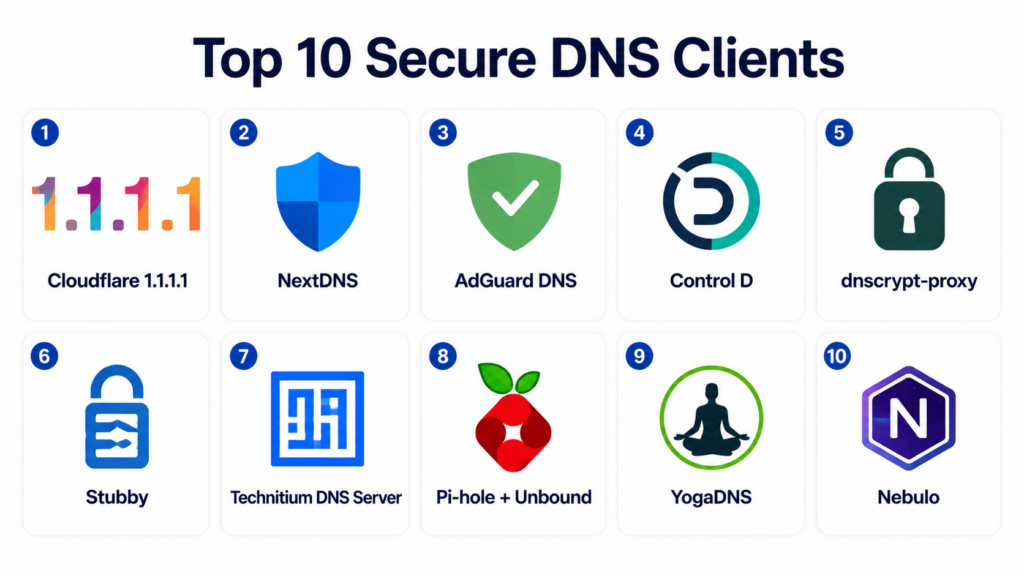
Introduction
Secure DNS clients are tools that encrypt and manage DNS (Domain Name System) traffic to protect users from tracking, spoofing, censorship, and malicious redirects. Normally, DNS requests are sent in plain text, which means your ISP or attackers can see which websites you are trying to access. Secure DNS clients fix this by using encrypted protocols like DNS over HTTPS (DoH), DNS over TLS (DoT), and sometimes DNS over QUIC (DoQ).In modern internet architecture, secure DNS has become a core privacy and security layer. It is widely used in personal devices, enterprise networks, parental control systems, and cybersecurity frameworks. These tools not only improve privacy but also help block malware, phishing domains, and unwanted content before a connection is established.
Real-world use cases:
- Prevent ISP tracking of browsing activity
- Block malicious or phishing websites at DNS level
- Enforce enterprise-level network security policies
- Improve browsing speed with optimized DNS resolution
- Provide parental control filtering for family devices
What buyers should evaluate:
- DNS encryption support (DoH, DoT, DoQ)
- Privacy and logging policies
- Malware and phishing protection
- Speed and latency performance
- Cross-platform compatibility
- Filtering and customization options
- Enterprise policy control features
- Ease of setup and usability
- Integration with VPNs and firewalls
- Reliability and uptime of DNS servers
Best for: Privacy-focused users, enterprises, IT administrators, families using parental controls, and developers securing network traffic.
Not ideal for: Users who do not care about privacy or rely only on default ISP DNS without security needs.
Key Trends in Secure DNS Clients
- Rapid adoption of DNS over HTTPS (DoH) and DNS over TLS (DoT)
- Growth of DNS-based malware and phishing protection
- Browser-level secure DNS integration by default
- Expansion of zero-trust networking models using DNS control
- Increasing use of AI-based threat detection in DNS filtering
- Rise of DoQ (DNS over QUIC) for lower latency encryption
- Enterprise DNS policy enforcement at global scale
- Privacy-first DNS providers with strict no-log policies
- Integration of DNS filtering with VPN and endpoint security tools
- Growth of local DNS filtering (Pi-hole style) deployments
How We Selected These Tools (Methodology)
- Support for modern DNS encryption protocols
- Strength of privacy and no-log policies
- Malware, phishing, and ad-blocking capability
- Performance and DNS resolution speed
- Cross-platform availability (Windows, macOS, Linux, mobile)
- Ease of configuration and usability
- Enterprise readiness and policy control features
- Open-source maturity or vendor trust reputation
- Integration with VPNs, routers, and security systems
- Community adoption and ecosystem strength
Top 10 Secure DNS Clients
#1 — Cloudflare 1.1.1.1 DNS Client
Short description:
Cloudflare’s 1.1.1.1 DNS client is a fast and privacy-focused resolver that provides encrypted DNS using DoH and DoT protocols. It is designed for both casual users and enterprises looking for high-speed and secure DNS resolution. Optional WARP mode adds additional encrypted tunneling for enhanced privacy and security.
Key Features
- DNS over HTTPS (DoH) support
- DNS over TLS (DoT) support
- Optional WARP encrypted tunnel
- Global low-latency DNS network
- Malware and phishing protection
- Mobile and desktop applications
Pros
- Extremely fast DNS resolution
- Simple one-click setup
- Strong global infrastructure reliability
Cons
- Limited advanced customization
- Less control compared to enterprise DNS tools
Platforms / Deployment
- Windows, macOS, Linux, Android, iOS
- Cloud client + local app
Security & Compliance
- Encrypted DNS traffic (DoH/DoT)
- No-log DNS policy (provider-level)
- TLS-based secure communication
Integrations & Ecosystem
- Browser DNS integration
- VPN WARP integration
- Router-level configuration support
- Enterprise network deployment options
Support & Community
- Extensive documentation
- Large global user base
- Strong vendor support ecosystem
#2 — NextDNS Client
Short description:
NextDNS is a highly customizable secure DNS platform offering advanced filtering, analytics, parental controls, and enterprise-grade DNS management through cloud-based configuration profiles.
Key Features
- DNS over HTTPS / TLS / QUIC support
- Real-time analytics dashboard
- Malware and phishing filtering
- Ad and tracker blocking
- Parental control policies
- Custom allow/block lists
- Device-level configuration profiles
Pros
- Extremely customizable filtering rules
- Strong visibility and analytics
- Excellent parental control features
Cons
- Advanced setup can be complex
- Some features require paid plan
Platforms / Deployment
- Windows, macOS, Linux, Android, iOS
- Cloud-managed DNS profiles
Security & Compliance
- Encrypted DNS queries
- Configurable logging controls
- Threat intelligence-based filtering
Integrations & Ecosystem
- Router integration support
- API for automation
- Browser and device profiles
- VPN compatibility
Support & Community
- Active documentation portal
- Strong user community support
#3 — AdGuard DNS Client
Short description:
AdGuard DNS Client is a privacy and security-focused DNS tool that blocks ads, trackers, and malicious domains while providing encrypted DNS resolution across devices.
Key Features
- DNS over HTTPS / TLS support
- Built-in ad blocking engine
- Malware and phishing protection
- Parental control filtering
- Custom DNS profiles
- Cross-device synchronization
Pros
- Strong ad and tracker blocking
- Easy setup and use
- Good privacy protection
Cons
- Limited enterprise analytics
- Advanced features require premium tools
Platforms / Deployment
- Windows, macOS, Android, iOS
- Cloud-based DNS filtering
Security & Compliance
- Encrypted DNS traffic
- Filter-based protection policies
- Secure resolver infrastructure
Integrations & Ecosystem
- AdGuard ecosystem tools
- Browser extensions
- Router-level configuration support
Support & Community
- Active user forums
- Vendor documentation available
#4 — Control D Client
Short description:
Control D is a flexible DNS routing and filtering platform that allows users to customize DNS behavior based on location, apps, and security policies.
Key Features
- DoH / DoT / DoQ support
- Geo-based DNS routing
- Multi-profile DNS configurations
- App-level DNS rules
- Advanced filtering controls
- Analytics dashboard
Pros
- Highly flexible DNS control
- Advanced routing capabilities
- Strong performance optimization
Cons
- Learning curve for beginners
- Premium pricing for advanced features
Platforms / Deployment
- Windows, macOS, Linux, Android, iOS
- Cloud-based control panel
Security & Compliance
- Encrypted DNS protocols
- Policy-based filtering rules
- Secure identity-based access
Integrations & Ecosystem
- VPN compatibility
- Router integration
- API-based automation support
Support & Community
- Official documentation portal
- Customer support channels
#5 — dnscrypt-proxy
Short description:
dnscrypt-proxy is an open-source secure DNS client that supports DNSCrypt and DNS-over-HTTPS with strong privacy controls and advanced filtering features.
Key Features
- DNSCrypt protocol support
- DNS over HTTPS support
- Query filtering and blocking
- DNS caching system
- Load balancing across resolvers
- Anonymized DNS routing
Pros
- Extremely secure and private
- Highly configurable
- Open-source transparency
Cons
- Complex CLI-based setup
- No graphical interface
Platforms / Deployment
- Windows, macOS, Linux
- CLI-based tool
Security & Compliance
- Encrypted DNS transport
- Anti-spoofing protection
- Resolver authentication
Integrations & Ecosystem
- Firewall integration
- Linux system services
- Network automation tools
Support & Community
- Strong open-source community
- Technical documentation available
#6 — Stubby (DNS-over-TLS Client)
Short description:
Stubby is a lightweight DNS-over-TLS client designed for Linux systems to provide secure, encrypted DNS resolution at the local system level.
Key Features
- DNS over TLS support
- Local stub resolver functionality
- Configurable upstream DNS servers
- Lightweight daemon design
- System DNS integration
Pros
- Lightweight and efficient
- Strong privacy protection
- Open-source and stable
Cons
- No GUI interface
- Limited protocol support
Platforms / Deployment
- Linux, Unix-based systems
Security & Compliance
- TLS-encrypted DNS queries
- Configurable logging options
Integrations & Ecosystem
- systemd integration
- Linux network stack
- Resolver chaining support
Support & Community
- Open-source documentation
- Community-driven updates
#7 — Technitium DNS Client
Short description:
Technitium DNS Client is a powerful DNS server and client solution offering encryption, filtering, and full DNS control for advanced users and enterprises.
Key Features
- DNS over HTTPS / TLS support
- Local DNS resolver
- Malware and ad filtering
- DNS caching system
- Custom rule sets
- DNSSEC validation
Pros
- Full DNS control stack
- Strong enterprise capabilities
- High flexibility
Cons
- Complex setup process
- More server-oriented than client-only tools
Platforms / Deployment
- Windows, Linux
- Server and client deployment
Security & Compliance
- DNSSEC validation support
- Encrypted DNS protocols
- Secure resolver architecture
Integrations & Ecosystem
- Enterprise network tools
- DNS infrastructure systems
- Security monitoring platforms
Support & Community
- Active GitHub community
- Technical documentation available
#8 — Pi-hole + Unbound
Short description:
Pi-hole combined with Unbound provides network-wide DNS filtering and recursive secure DNS resolution, commonly used in home and small business networks.
Key Features
- Network-wide DNS filtering
- Recursive DNS resolution
- Ad and tracker blocking
- Local DNS caching
- Web-based dashboard
- Custom blocklists
Pros
- Excellent home network control
- Strong ad blocking
- Full DNS ownership
Cons
- Requires manual setup
- Not a lightweight client
Platforms / Deployment
- Linux-based systems (Raspberry Pi, servers)
Security & Compliance
- Local encrypted DNS resolution
- Configurable filtering rules
Integrations & Ecosystem
- Router integration
- Smart home devices
- Network-wide deployment
Support & Community
- Very active open-source community
#9 — YogaDNS
Short description:
YogaDNS is a Windows-based secure DNS client that routes all system DNS queries through encrypted DNS resolvers with flexible routing rules.
Key Features
- DNS over HTTPS / TLS support
- Per-app DNS routing rules
- Resolver chaining
- DNS caching system
- System-wide DNS override
- Custom filtering rules
Pros
- Strong Windows integration
- Flexible DNS routing control
- Good usability
Cons
- Windows-only platform
- Advanced features require learning
Platforms / Deployment
- Windows desktop application
Security & Compliance
- Encrypted DNS protocols
- Local policy enforcement
Integrations & Ecosystem
- Windows networking stack
- Proxy and firewall tools
Support & Community
- Documentation-based support
#10 — Nebulo (Android Secure DNS Client)
Short description:
Nebulo is a mobile-focused secure DNS client for Android that provides encrypted DNS using DoH and DoT with a lightweight VPN-based tunneling approach.
Key Features
- DNS over HTTPS / TLS support
- Local VPN-based DNS routing
- Custom DNS providers
- No-root requirement
- Lightweight mobile design
Pros
- Excellent mobile privacy tool
- Easy setup
- No root required
Cons
- Android-only
- Limited enterprise features
Platforms / Deployment
- Android
Security & Compliance
- Encrypted DNS tunneling
- Local VPN protection layer
Integrations & Ecosystem
- Android networking stack
- Custom DNS resolver support
Support & Community
- Open-source community support
Comparison Table (Top 10)
| Tool Name | Best For | Platforms Supported | Deployment | Standout Feature | Public Rating |
|---|---|---|---|---|---|
| Cloudflare 1.1.1.1 | Speed & simplicity | All major OS | Cloud/client | Ultra-fast DNS network | N/A |
| NextDNS | Advanced filtering | All major OS | Cloud | Full analytics dashboard | N/A |
| AdGuard DNS | Ad blocking | All major OS | Cloud | Built-in filtering engine | N/A |
| Control D | DNS routing control | All major OS | Cloud | Geo-based DNS routing | N/A |
| dnscrypt-proxy | Privacy power users | Cross-platform | Local client | DNSCrypt + filtering | N/A |
| Stubby | Linux DNS security | Linux | Local daemon | DNS-over-TLS resolver | N/A |
| Technitium DNS | Enterprise DNS control | Win/Linux | Server/client | Full DNS stack control | N/A |
| Pi-hole + Unbound | Network-wide DNS | Linux | Local network | Whole-home filtering | N/A |
| YogaDNS | Windows DNS control | Windows | Desktop client | Per-app DNS routing | N/A |
| Nebulo | Mobile users | Android | Mobile app | Secure DNS tunneling | N/A |
Evaluation & Scoring of Secure DNS Clients
| Tool Name | Core (25%) | Ease (15%) | Integrations (15%) | Security (10%) | Performance (10%) | Support (10%) | Value (15%) | Weighted Total |
|---|---|---|---|---|---|---|---|---|
| Cloudflare 1.1.1.1 | 10 | 10 | 9 | 9 | 10 | 9 | 10 | 9.5 |
| NextDNS | 10 | 9 | 10 | 10 | 9 | 9 | 9 | 9.4 |
| AdGuard DNS | 9 | 9 | 9 | 9 | 9 | 8 | 9 | 9.0 |
| Control D | 9 | 8 | 9 | 9 | 9 | 8 | 9 | 8.9 |
| dnscrypt-proxy | 9 | 7 | 9 | 10 | 9 | 8 | 9 | 8.8 |
| Stubby | 8 | 7 | 8 | 10 | 8 | 7 | 10 | 8.4 |
| Technitium DNS | 9 | 7 | 9 | 10 | 8 | 8 | 9 | 8.7 |
| Pi-hole + Unbound | 10 | 7 | 9 | 10 | 8 | 8 | 10 | 8.8 |
| YogaDNS | 8 | 9 | 8 | 9 | 8 | 8 | 8 | 8.3 |
| Nebulo | 8 | 9 | 7 | 9 | 8 | 7 | 9 | 8.2 |
Which Secure DNS Client Is Right for You?
Everyday Users
Choose Cloudflare 1.1.1.1 or AdGuard DNS for fast, simple, secure browsing.
Privacy-Focused Users
Choose NextDNS, dnscrypt-proxy, or Stubby for maximum control and encryption.
Families & Parental Control
Choose NextDNS or AdGuard DNS for filtering and safety rules.
Advanced Network Users
Choose Control D, Technitium DNS, or Pi-hole + Unbound for full network control.
Mobile Users
Choose Nebulo for lightweight Android secure DNS protection.
Windows Users
Choose YogaDNS for system-wide DNS routing flexibility.
Frequently Asked Questions (FAQs)
1. What is a secure DNS client?
A secure DNS client encrypts DNS queries using protocols like DoH or DoT to protect browsing activity from interception and manipulation.
2. Is secure DNS better than normal DNS?
Yes, because it prevents ISP tracking, DNS spoofing, and improves privacy.
3. Does secure DNS slow down internet speed?
In most cases, no. Some providers even improve speed due to optimized routing.
4. Is secure DNS the same as VPN?
No. Secure DNS only encrypts DNS queries, while VPN encrypts all internet traffic.
5. Can secure DNS block ads?
Yes, many tools like AdGuard DNS and NextDNS support ad and tracker blocking.
6. Is secure DNS legal?
Yes, secure DNS usage is legal in most countries.
7. Can I use secure DNS on mobile?
Yes, most tools support Android and iOS directly or via system settings.
8. What is DNS over HTTPS?
It encrypts DNS queries using HTTPS protocol for privacy and security.
9. What is DNS over TLS?
It encrypts DNS traffic using TLS on a dedicated port for secure resolution.
10. Which secure DNS client is best overall?
Cloudflare 1.1.1.1 is the best balance of speed, simplicity, and security for most users.
Conclusion
Secure DNS clients are a critical but often overlooked layer of internet security. By encrypting DNS traffic, they prevent surveillance, protect against malicious redirects, and enhance overall privacy across devices and networks.Tools like Cloudflare 1.1.1.1, NextDNS, and AdGuard DNS offer simple and powerful protection for everyday users, while advanced solutions like dnscrypt-proxy, Pi-hole + Unbound, and Technitium DNS provide deep control for engineers and enterprises.Choosing the right secure DNS client depends on your needs — whether it’s simplicity, filtering, enterprise control, or full network ownership. In modern cybersecurity environments, secure DNS is no longer optional; it is a foundational layer of protection.

Provisioning comprehensive independent encrypted domain name resolution request filtering proxy application software optimizes corporate network communication architecture mechanics, ensuring rapid decentralized internet address translation safety verification auditing and frictionless business online privacy defense methodologies.