MOTOSHARE 🚗🏍️
Rent Bikes & Cars Directly from Owners
Motoshare connects vehicle owners with people who need bikes and cars on rent. Owners earn from idle vehicles, and renters get flexible ride options.
Visit Motoshare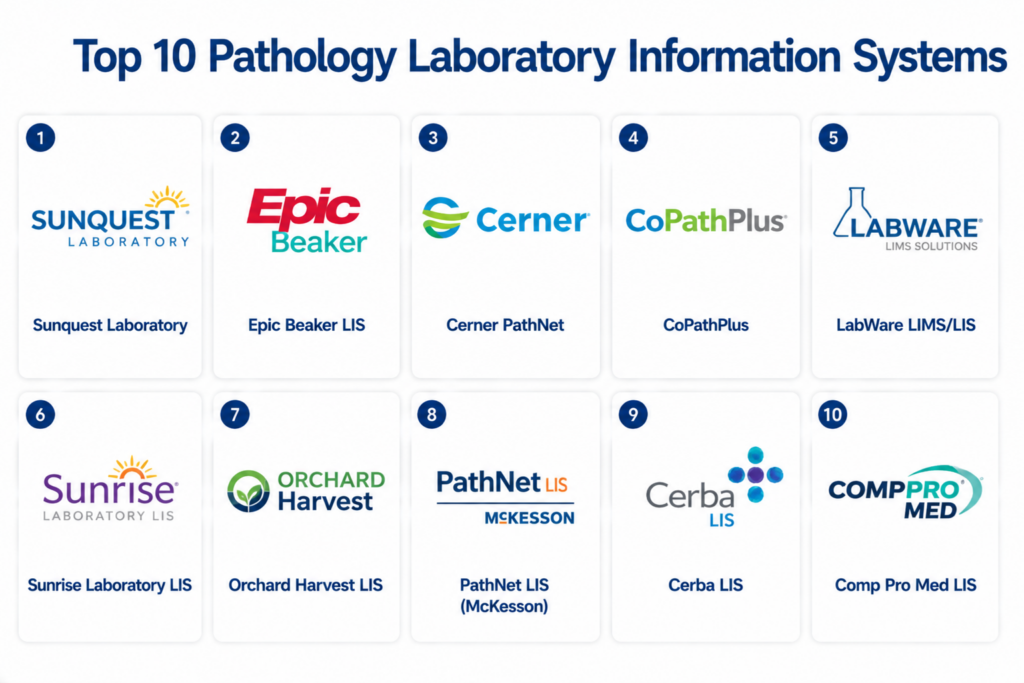
Introduction
Pathology Laboratory Information Systems (LIS) are specialized healthcare software platforms that manage the end‑to‑end operations of pathology and clinical laboratories. These systems help labs track specimens, manage test workflows, integrate diagnostic instruments, report results, and comply with regulatory standards. An LIS ensures data integrity, accuracy, traceability, and efficient specimen lifecycle management—from accessioning to billing and result delivery.
In modern healthcare, pathology labs are under pressure to improve turnaround times, support high‑throughput testing, enable interoperability with Electronic Health Records (EHR), and provide rich analytics for quality control and performance improvement. Advances in connectivity, AI‑assisted quality alerts, cloud‑centric deployments, and structured reporting are shaping the expectations for modern LIS platforms.
Real‑world use cases include:
- Tracking specimens and test requests across multiple laboratory areas (anatomic, clinical, molecular).
- Instrument integration and automated result capture directly into lab workflows.
- Generating structured pathology reports and delivering results to EHR and clinicians.
- Quality control tracking, proficiency testing support, and regulatory documentation.
- Billing integration, charge capture, and insurance claim workflows.
Evaluation Criteria for Buyers:
- Specimen and workflow management capabilities
- Interfacing with diagnostic instruments and analyzers
- Structured reporting and result delivery
- Integration with EHR/EMR systems
- Quality assurance and compliance features
- Analytics and dashboard insights
- Billing and charge capture
- Scalability for multi‑lab networks
- Security and audit controls
- Deployment flexibility and vendor support
Best for: Hospital laboratories, diagnostic reference labs, academic research labs, pathology groups, and any clinical lab managing moderate to high test volumes.
Not ideal for: Very small clinics with only basic point‑of‑care testing and minimal lab complexity that can be managed with lightweight software or standalone reporting tools.
Key Trends in Pathology Laboratory Information Systems
- Cloud‑first LIS platforms enabling remote access, scalability, and centralized management.
- AI‑assisted quality control and anomaly detection to flag inconsistent results or workflow delays.
- Structured and synoptic reporting for reproducible pathology outputs.
- Seamless EHR and health information exchange (HIE) integration using standards like HL7 and FHIR.
- Automated instrument interfacing with laboratory analyzers and digital pathology scanners.
- Laboratory analytics and performance dashboards for turnaround time, productivity, and compliance monitoring.
- Mobile and remote access for results review and approvals.
- Regulatory compliance automation for CAP, CLIA, ISO standards.
- Interoperability with genomic and molecular diagnostics data for integrative insights.
- Robust security and audit logging supporting HIPAA and data governance policies.
How We Selected These Tools (Methodology)
- Reviewed market adoption in hospital and reference lab environments.
- Assessed core capabilities including specimen tracking, result reporting, and instrument interfacing.
- Evaluated integration depth with EHR/EMR systems and interoperability standards.
- Considered automation features like LIS workflows, alerts, and QC checks.
- Assessed analytics and dashboard capabilities for quality oversight.
- Verified compliance and audit features for regulatory requirements.
- Factored scalability for multi‑lab and networked deployment.
- Reviewed vendor support, training resources, and documentation.
- Balanced offerings across enterprise, mid‑market, and smaller laboratory environments.
Top 10 Pathology Laboratory Information Systems
#1 — Sunquest Laboratory
Short description: Sunquest Laboratory is a comprehensive LIS platform designed for high‑volume hospital and reference labs, offering specimen tracking, result delivery, analytics, and deep EHR integration.
Key Features
- Central specimen and test order management
- Real‑time instrument interfacing
- Structured clinical and pathology reporting
- EHR/EMR integration via HL7/FHIR
- Dashboards for QC, performance, and turnaround times
- Billing and charge reconciliation
Pros
- Strong enterprise‑grade architecture
- Deep interoperability with hospital systems
- Excellent analytics and quality tools
Cons
- Higher cost tier
- Complex implementation timelines
- Training required for advanced workflows
Platforms / Deployment
- Web / Windows
- Cloud / On‑premise / Hybrid
Security & Compliance
- HIPAA compliant
- Encryption in transit and at rest
- Role‑based access and audit trails
Integrations & Ecosystem
Sunquest integrates widely across lab instruments and clinical systems:
- HL7/FHIR interfaces to EHR/EMR
- Diagnostic analyzers and pathology scanners
- Billing systems and financial workflows
- Quality tools and dashboards
Support & Community
- Enterprise support teams
- Training programs and documentation
#2 — Epic Beaker (Beaker LIS)
Short description: Epic Beaker is a pathology and clinical laboratory module within the Epic electronic health record suite. It offers specimen tracking, result management, and seamless integration with clinical workflows across the care continuum.
Key Features
- Pathology and clinical lab workflows
- Integrated order and result management
- Instrument interfaces and automated result capture
- Synoptic and structured reporting
- Embedded analytics and dashboards
- Full integration with Epic clinical modules
Pros
- Deep EHR ecosystem integration
- Shared clinical context for results
- Strong hospital and health system adoption
Cons
- Best suited for Epic EHR environments
- High cost and implementation effort
Platforms / Deployment
- Web / Mobile
- Cloud / On‑premise / Hybrid
Security & Compliance
- HIPAA compliance
- RBAC and audit logs
- Encryption
Integrations & Ecosystem
- Epic EHR modules
- Instrument and analyzer interfaces
- Billing and financial systems
Support & Community
- Epic dedicated support
- Vast user community and training resources
#3 — Cerner PathNet
Short description: Cerner PathNet is a comprehensive LIS integrated within the Cerner Millennium suite, offering robust specimen management, result reporting, and interoperability for pathology and clinical labs.
Key Features
- Order and specimen tracking
- Reporting and result distribution
- Analyzer and instrument interfacing
- EHR and care team workflows
- Quality and compliance tools
- Billing linkage
Pros
- Seamless Cerner EHR workflow
- Strong interoperability support
- Scalable across hospital labs
Cons
- Complex configuration for non‑Cerner systems
- UX considered less modern by some users
Platforms / Deployment
- Web / Windows
- Cloud / On‑premise / Hybrid
Security & Compliance
- HIPAA aligned
- Encryption and access controls
Integrations & Ecosystem
- Cerner Millennium EHR
- Lab instruments and analyzers
- Billing and analytics
Support & Community
- Enterprise support services
- Documentation
#4 — SCC Soft Computer CoPathPlus
Short description: CoPathPlus is a widely used pathology‑centric LIS focused on anatomic pathology workflows, reporting, and structured pathology documentation with strong quality control.
Key Features
- Anatomic pathology workflow engines
- Structured and synoptic reporting
- Specimen tracking and block/slide management
- Integration with digital pathology and imaging
- QA tools and workload analytics
- Interface to EHR and billing systems
Pros
- Designed specifically for pathology workflows
- Strong anatomic pathology reporting templates
- Quality and workload analytic tools
Cons
- Less optimized for clinical lab modules
- Requires workflow process refinement
Platforms / Deployment
- Windows / Web
- Cloud / On‑premise / Hybrid
Security & Compliance
- HIPAA compliant
- Encryption and audit trails
Integrations & Ecosystem
- Digital pathology partners
- EHR interfaces
- Billing systems
Support & Community
- Vendor support
- Pathology‑focused resources
#5 — LabWare LIMS/LIS
Short description: LabWare offers a combined LIMS and LIS platform with broad laboratory support, instrument interfacing, workflow automation, reporting, and compliance features suitable for clinical and reference labs.
Key Features
- Comprehensive lab workflow management
- Instrument integration
- Dynamic reporting and dashboards
- Quality control and compliance modules
- EHR interfacing via HL7/FHIR
- Billing and charge capture
Pros
- Flexible and configurable platform
- Strong for multi‑discipline labs
- Robust QA/QC and compliance tools
Cons
- Configuration requires specialist expertise
- Higher total cost for full feature stack
Platforms / Deployment
- Web / Windows
- Cloud / On‑premise / Hybrid
Security & Compliance
- HIPAA aligned
- Encryption and role‑based access
- Audit logging
Integrations & Ecosystem
- EHR/EMR systems
- Lab analyzers and devices
- Quality and analytics tools
Support & Community
- Vendor support
- Training and consultancy
#6 — Sunrise Laboratory RIS & LIS (Allscripts)
Short description: Allscripts Sunrise Laboratory LIS extends clinical workflows into laboratory operations with specimen tracking, reporting, and integration into Allscripts’ broader clinical suite.
Key Features
- Specimen lifecycle management
- Reporting and result delivery
- Integration with Allscripts EHR
- Billing workflows
- Notifications and QC tracking
Pros
- Tight EHR connection
- Good for integrated care settings
- Clinician‑centric workflows
Cons
- Less pathology‑specific depth versus others
- Variable analytics features
Platforms / Deployment
- Web / Windows
- Cloud / On‑premise / Hybrid
Security & Compliance
- HIPAA compliant
- Encryption and logging
Integrations & Ecosystem
- Allscripts EHR
- Lab instruments
- Billing systems
Support & Community
- Vendor support
- Documentation
#7 — Orchard Harvest LIS
Short description: Orchard Harvest LIS is a clinical and pathology laboratory information system aimed at mid‑sized labs, offering workflow automation, results management, reporting, and billing support.
Key Features
- Order and specimen tracking
- Result reporting
- Interface with analyzers
- EHR integration via standards
- Billing linkage
Pros
- Mid‑market pricing and usability
- Flexible workflows
- Good integration with clinical systems
Cons
- Analytics may be less powerful than enterprise peers
- Interface requires initial training
Platforms / Deployment
- Web / Windows
- Cloud / On‑premise / Hybrid
Security & Compliance
- HIPAA aligned
- Encryption and role‑based access
Integrations & Ecosystem
- EHR/EMR systems
- Diagnostic analyzers
- Billing platforms
Support & Community
- Vendor support
- Help resources
#8 — PathNet LIS (McKesson)
Short description: PathNet LIS by McKesson (legacy) remains a reliable laboratory information system for specimen tracking, result reporting, and interfacing across clinical labs and hospital settings.
Key Features
- Order and specimen management
- Result posting and reporting
- Interface to analyzers and devices
- Billing integration
- Compliance tracking
Pros
- Proven stability in clinical labs
- Good instrument interfacing
Cons
- Legacy interface and architecture
- Transition efforts to modern platforms
Platforms / Deployment
- Windows / Web
- Cloud / On‑premise
Security & Compliance
- HIPAA compliant
- Encryption and access controls
Integrations & Ecosystem
- EHR/EMR connections
- Lab instrument interfaces
- Billing partners
Support & Community
- Legacy vendor support
- Knowledge base resources
#9 — Cerba LIS
Short description: Cerba LIS is a pathology and clinical laboratory information system from the Cerba Healthcare group, offering specimen tracking, result workflows, structured reporting, and analytical oversight tailored for pathology labs.
Key Features
- Specimen and order tracking
- Structured result reporting
- Compliance and QA modules
- Billing interface
- Analytics dashboards
Pros
- Pathology‑centric workflows
- Strong reporting templates
- Good analytics views
Cons
- Less global market visibility
- Integration support may vary by region
Platforms / Deployment
- Web / Windows
- Cloud / On‑premise / Hybrid
Security & Compliance
- HIPAA aligned
- Encryption and audit logs
Integrations & Ecosystem
- EHR connections
- Device and analyzer systems
- Billing partners
Support & Community
- Vendor support
- Documentation
#10 — Comp Pro Med LIS
Short description: Comp Pro Med provides a clinic and lab information system that includes specimen tracking, result reporting, billing, and integration capabilities aimed at smaller and mid‑sized labs.
Key Features
- Specimen lifecycle workflows
- Result reporting and templates
- Charge capture and billing
- EHR/EMR interfaces
- Quality control logs
Pros
- Cost‑effective for smaller labs
- Lightweight and adaptable
- Good entry‑level features
Cons
- Less feature‑rich than enterprise LIS
- Analytics and dashboards are limited
Platforms / Deployment
- Windows / Web
- Cloud / On‑premise
Security & Compliance
- HIPAA aligned
- Encryption and role‑based access
Integrations & Ecosystem
- EHR connectors
- Device interfaces
- Billing services
Support & Community
- Vendor support
- Documentation
Comparison Table (Top 10)
| Tool Name | Best For | Platform(s) Supported | Deployment | Standout Feature | Public Rating |
|---|---|---|---|---|---|
| Sunquest Laboratory | Large hospital & reference labs | Web, Windows | Cloud / On‑premise / Hybrid | Enterprise analytics | N/A |
| Epic Beaker LIS | Enterprise health systems | Web, Mobile | Cloud / On‑premise / Hybrid | Seamless EHR integration | N/A |
| Cerner PathNet | Hospital labs | Web, Windows | Cloud / On‑premise / Hybrid | EHR interoperability | N/A |
| CoPathPlus | Pathology‑centric workflows | Windows, Web | Cloud / On‑premise / Hybrid | Synoptic reporting | N/A |
| LabWare LIMS/LIS | Multi‑discipline labs | Web, Windows | Cloud / On‑premise / Hybrid | Configurable workflows | N/A |
| Sunrise Laboratory LIS | Integrated EHR labs | Web, Windows | Cloud / On‑premise / Hybrid | Clinical linkage | N/A |
| Orchard Harvest LIS | Mid‑sized labs | Web, Windows | Cloud / On‑premise / Hybrid | Flexible workflows | N/A |
| PathNet LIS (McKesson) | Proven clinical labs | Windows, Web | Cloud / On‑premise | Stability | N/A |
| Cerba LIS | Pathology labs | Web, Windows | Cloud / On‑premise / Hybrid | Pathology focus | N/A |
| Comp Pro Med LIS | Smaller labs | Web, Windows | Cloud / On‑premise | Cost‑effective entry | N/A |
Evaluation & Scoring of Pathology Laboratory Information Systems
| Tool Name | Core (25%) | Ease (15%) | Integrations (15%) | Security (10%) | Performance (10%) | Support (10%) | Value (15%) | Weighted Total |
|---|---|---|---|---|---|---|---|---|
| Sunquest Laboratory | 9 | 7 | 9 | 9 | 9 | 8 | 7 | 8.5 |
| Epic Beaker LIS | 9 | 7 | 9 | 9 | 9 | 9 | 6 | 8.3 |
| Cerner PathNet | 8 | 7 | 9 | 9 | 8 | 8 | 7 | 8.0 |
| CoPathPlus | 8 | 7 | 8 | 9 | 8 | 7 | 7 | 7.9 |
| LabWare LIMS/LIS | 9 | 6 | 9 | 9 | 9 | 8 | 6 | 8.1 |
| Sunrise Laboratory LIS | 7 | 7 | 8 | 9 | 8 | 7 | 7 | 7.6 |
| Orchard Harvest LIS | 7 | 8 | 7 | 9 | 7 | 7 | 8 | 7.6 |
| PathNet LIS | 7 | 7 | 7 | 9 | 7 | 7 | 7 | 7.4 |
| Cerba LIS | 8 | 7 | 7 | 9 | 8 | 7 | 7 | 7.6 |
| Comp Pro Med LIS | 6 | 8 | 6 | 9 | 7 | 7 | 8 | 7.2 |
Interpretation: Weighted totals reflect comparative strengths in core pathology workflows, integrations with EHR and instruments, usability, security posture, performance, support depth, and cost/value alignment. Higher totals suggest broader applicability across complex lab environments.
Which Pathology Laboratory Information System (LIS) Is Right for You?
Solo / Freelancer Labs
Smaller clinics or independent labs should explore Comp Pro Med LIS or Orchard Harvest LIS for adaptable, cost‑effective platforms that support core specimen tracking and reporting without enterprise complexity.
SMB Diagnostic Labs
Mid‑sized laboratories benefit from systems like CoPathPlus or Cerba LIS that provide structured pathology workflows, robust reporting templates, and quality oversight.
Mid‑Market Hospital Labs
Hospital‑based laboratories and multi‑discipline labs should consider Cerner PathNet or LabWare LIMS/LIS for broader workflow automation, integrations, and enterprise support.
Enterprise & Reference Labs
Large hospital systems and high‑volume reference labs are best served by Sunquest Laboratory or Epic Beaker LIS, offering deep interoperability, analytics, and scalable operations across multiple facilities.
Budget vs Premium
Budget‑conscious buyers may favor Comp Pro Med LIS for essential features at lower costs. Premium systems like Sunquest deliver advanced analytics, dense instrument interfacing, and enterprise‑grade features with higher investment.
Feature Depth vs Ease of Use
Platforms like LabWare LIMS/LIS and Sunquest offer deep capabilities with steeper learning curves, while Orchard Harvest LIS strikes a balance between usability and workflow flexibility.
Integrations & Scalability
Organizations with extensive EHR and instrument ecosystems should prioritize systems like Epic Beaker LIS and Cerner PathNet for seamless interoperability and scalability across departments.
Security & Compliance Needs
All reviewed platforms adhere to HIPAA security norms and support encryption, access control, and audit logging, but large labs with strict compliance programs should validate audit reporting, user management, and regulatory documentation during selection.
Frequently Asked Questions (FAQs)
1. What is a Pathology Laboratory Information System (LIS)?
A Pathology LIS manages lab workflows, specimen tracking, result reporting, instrument interfacing, quality control, and integration with clinical systems to ensure efficient and accurate lab operations.
2. How does LIS integrate with EHR?
Modern systems use HL7 and FHIR interfaces to share lab orders, results, and patient data with the EHR, enabling clinicians to view lab findings within the patient record workflow.
3. What are structured pathology reports?
Structured reports use defined templates and synoptic elements that standardize content, improve clarity, and facilitate data reuse in clinical decision making and analytics.
4. Does LIS support regulatory compliance?
Yes. Leading LIS platforms include quality control tracking, audit logging, and documentation tools to assist with CAP, CLIA, ISO, and internal compliance programs.
5. Can LIS integrate with diagnostic instruments?
Most platforms support direct interfacing with analyzers, digital pathology scanners, and other lab devices to automate result capture and reduce manual entry errors.
6. How long does implementation take?
Small labs with cloud‑based LIS can implement in weeks. Enterprise platforms with custom workflows and extensive integrations may require months of configuration and validation.
7. What reporting and analytics are typical?
LIS analytics often cover turnaround times, quality control flags, instrument performance, volume metrics, and compliance dashboards to support continuous improvement.
8. Are mobile and remote review features available?
Many modern LIS platforms include web/mobile dashboards enabling remote review, result sign‑off, trend viewing, and alerts on secure mobile devices.
9. What is the cost range for LIS software?
Costs vary widely—cloud‑hosted solutions for smaller labs are more affordable, while enterprise‑grade systems with deep EHR integration can be a substantial investment depending on licensing and deployment.
10. How do I choose the right LIS?
Evaluate your lab’s complexity, instrument ecosystem, EHR environment, volume, reporting needs, compliance requirements, and analytics goals. Piloting candidates can clarify real‑world fit.
Conclusion
Pathology Laboratory Information Systems are critical to the efficiency, quality, and compliance of modern clinical and diagnostic laboratories. From specimen lifecycle management to structured reporting, instrument interfacing, and analytics, the right LIS enhances performance and delivers reliable results to clinicians and patients alike. Labs should prioritize interoperability with EHR and devices, workflow automation, quality tools, and compliance features when selecting a platform. Implementing pilots, involving cross‑functional teams, and validating integration with existing systems ensures the chosen LIS aligns with operational goals and supports future growth.
