MOTOSHARE 🚗🏍️
Rent Bikes & Cars Directly from Owners
Motoshare connects vehicle owners with people who need bikes and cars on rent. Owners earn from idle vehicles, and renters get flexible ride options.
Visit Motoshare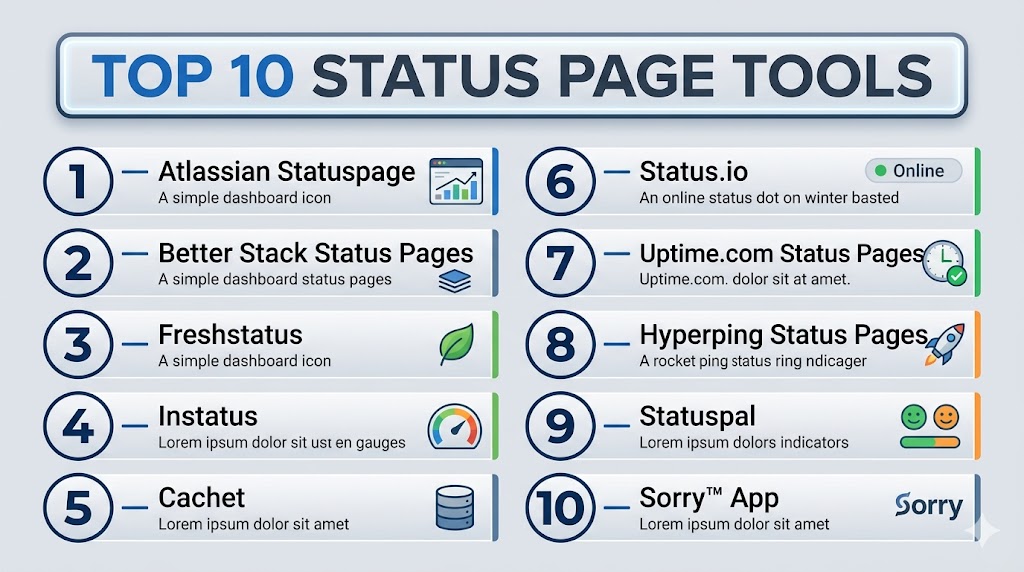
Introduction
When your service has an outage, users ask one question first:If you don’t answer fast, they assume the worst.That is why Status Page Tools are no longer optional. They are your public trust layer during downtime, incidents, maintenance windows, and performance disruptions. Instead of flooding support teams, frustrating customers, and damaging brand credibility, a strong status page gives users clear updates, transparency, and confidence.
Modern SaaS companies, cloud platforms, fintech apps, ecommerce brands, and enterprise software providers use status pages to communicate incidents in real time and control the narrative when problems happen.
Because outages are painful.
Silence is worse.
Where status page tools create real value:
- Communicating outages quickly and clearly
- Reducing inbound support tickets during incidents
- Publishing scheduled maintenance notices
- Building customer trust through transparency
- Providing historical uptime and incident records
- Segmenting updates for different products or regions
What buyers should evaluate before choosing:
- Custom branding and white-label support
- Incident publishing speed and workflows
- Subscriber notifications (email, SMS, webhook)
- Component/service-based architecture
- Automation from monitoring tools
- Historical uptime reporting
- Multi-language support
- Access control for private status pages
- Analytics and subscriber insights
- Pricing scalability
Best for: SaaS companies, cloud platforms, IT teams, DevOps organizations, hosting providers, fintech apps, ecommerce platforms, and enterprises with uptime-sensitive customers.
Not ideal for: Very small internal-only tools with no external users or no service availability expectations.
Key Trends in Status Page Tools
- Automated incident posting from monitoring systems
- Branded customer experience pages replacing generic pages
- Private status pages for enterprise customers
- Regional/component-level updates becoming standard
- Integrated incident workflows with PagerDuty and on-call tools
- Subscriber segmentation by product or geography
- Multi-channel notifications (email, SMS, Slack, webhook)
- Trust dashboards with uptime history and SLAs
- AI-assisted incident drafting reducing response time
- Embedded status widgets inside apps and help centers
How We Selected These Tools (Methodology)
- Prioritized widely adopted status page platforms
- Evaluated ease of publishing during incidents
- Assessed branding and customization depth
- Reviewed notification systems and subscriber management
- Analyzed monitoring and alert integrations
- Compared historical uptime reporting
- Considered enterprise privacy/security controls
- Included budget-friendly and premium tools
- Evaluated documentation and support quality
- Ensured fit across startup to enterprise use cases
Top 10 Status Page Tools
#1 — Atlassian Statuspage
Short description: The category leader trusted by many major SaaS companies for customer-facing incident communication.
Key Features
- Component-based service status tracking
- Incident templates and workflows
- Email/SMS/webhook notifications
- Strong branding customization
- Scheduled maintenance publishing
- Historical uptime records
Pros
- Highly trusted market leader
- Excellent subscriber notification system
Cons
- Premium pricing
- Advanced customization may take time
Platforms / Deployment
Web / Cloud
Security & Compliance
SSO, RBAC (others not publicly stated)
Integrations & Ecosystem
Strong ecosystem fit for engineering and support teams.
- Jira
- Opsgenie
- Slack
- APIs
Support & Community
Excellent documentation and broad adoption.
#2 — Better Stack Status Pages
Short description: A fast-growing modern platform combining monitoring, alerting, and elegant status pages.
Key Features
- Beautiful branded pages
- Monitoring-triggered automation
- Subscriber notifications
- Custom domains
- Incident history
- Multi-component tracking
Pros
- Great all-in-one value
- Fast modern UX
Cons
- Smaller enterprise footprint
- Fewer legacy integrations
Platforms / Deployment
Web / Cloud
Security & Compliance
Not publicly stated
Integrations & Ecosystem
- Better Stack monitoring
- APIs
- Webhooks
Support & Community
Growing ecosystem and modern support experience.
#3 — Freshstatus
Short description: A user-friendly status page tool ideal for growing businesses needing quick deployment.
Key Features
- Hosted public status page
- Incident communication
- Maintenance notices
- Email notifications
- Branding tools
Pros
- Easy setup
- Good value for SMBs
Cons
- Less advanced enterprise depth
- Smaller ecosystem
Platforms / Deployment
Web / Cloud
Security & Compliance
Not publicly stated
Integrations & Ecosystem
- Freshworks ecosystem
- APIs
Support & Community
Good SMB support presence.
#4 — Instatus
Short description: A clean, modern status page platform built for startups and fast-moving SaaS teams.
Key Features
- Fast setup
- Beautiful branded templates
- Subscriber notifications
- Components and incidents
- Custom domains
Pros
- Excellent UI/UX
- Startup-friendly pricing
Cons
- Less enterprise workflow depth
- Smaller ecosystem
Platforms / Deployment
Web / Cloud
Security & Compliance
Not publicly stated
Integrations & Ecosystem
- APIs
- Webhooks
Support & Community
Popular with startups.
#5 — Cachet
Short description: A well-known open-source status page platform for teams wanting self-hosted control.
Key Features
- Self-hosted deployment
- Components and incidents
- Scheduled maintenance
- Custom themes
- Historical logs
Pros
- Full ownership and control
- Open-source flexibility
Cons
- Requires maintenance
- Less polished than hosted SaaS tools
Platforms / Deployment
Web / Self-hosted
Security & Compliance
Varies / Depends on deployment
Integrations & Ecosystem
- APIs
- Custom integrations
Support & Community
Strong open-source community.
#6 — Status.io
Short description: A mature enterprise-grade platform for large organizations needing advanced communication workflows.
Key Features
- Multi-page architecture
- Audience segmentation
- Incident automation
- Subscriber alerts
- Reporting tools
Pros
- Strong enterprise features
- Good segmentation tools
Cons
- Premium pricing
- Older UX compared to newer tools
Platforms / Deployment
Web / Cloud
Security & Compliance
SSO, RBAC (others not publicly stated)
Integrations & Ecosystem
- APIs
- Monitoring tools
- Webhooks
Support & Community
Strong enterprise support.
#7 — Uptime.com Status Pages
Short description: A monitoring-first platform with integrated public status communication tools.
Key Features
- Monitoring-triggered updates
- Public status page
- Incident timelines
- Uptime metrics
- Alerts and notifications
Pros
- Strong monitoring linkage
- Good reporting visibility
Cons
- Best within own ecosystem
- Less design flexibility
Platforms / Deployment
Web / Cloud
Security & Compliance
Not publicly stated
Integrations & Ecosystem
- Monitoring systems
- APIs
Support & Community
Reliable support.
#8 — Hyperping Status Pages
Short description: A modern uptime monitoring platform with simple, polished status pages.
Key Features
- Public pages
- Incident publishing
- Monitoring automation
- Clean UI
- Subscriber notifications
Pros
- Easy onboarding
- Strong visual design
Cons
- Smaller feature depth
- Startup-scale ecosystem
Platforms / Deployment
Web / Cloud
Security & Compliance
Not publicly stated
Integrations & Ecosystem
- APIs
- Monitoring workflows
Support & Community
Growing adoption.
#9 — Statuspal
Short description: A modern status page platform focused on flexibility and incident transparency.
Key Features
- Custom branding
- Components and incidents
- Scheduled maintenance
- Notifications
- Private pages
Pros
- Strong flexibility
- Modern interface
Cons
- Smaller market presence
- Fewer native integrations
Platforms / Deployment
Web / Cloud
Security & Compliance
Not publicly stated
Integrations & Ecosystem
- APIs
- Webhooks
Support & Community
Growing platform.
#10 — Sorry™ App
Short description: A customer communication platform focused on elegant status pages and incident messaging.
Key Features
- Beautiful public pages
- Incident communication
- Scheduled maintenance
- Subscriber alerts
- Brand customization
Pros
- Strong design quality
- Great communication UX
Cons
- Smaller ecosystem
- Less enterprise depth
Platforms / Deployment
Web / Cloud
Security & Compliance
Not publicly stated
Integrations & Ecosystem
- APIs
- Webhooks
Support & Community
Smaller but focused user base.
Comparison Table (Top 10)
| Tool Name | Best For | Platform(s) Supported | Deployment | Standout Feature | Public Rating |
|---|---|---|---|---|---|
| Statuspage | Enterprise SaaS | Web | Cloud | Category leader | N/A |
| Better Stack | Modern teams | Web | Cloud | All-in-one platform | N/A |
| Freshstatus | SMBs | Web | Cloud | Easy setup | N/A |
| Instatus | Startups | Web | Cloud | Beautiful UX | N/A |
| Cachet | Self-hosted users | Web | Self-hosted | Open-source control | N/A |
| Status.io | Enterprises | Web | Cloud | Segmentation | N/A |
| Uptime.com | Monitoring users | Web | Cloud | Monitoring linkage | N/A |
| Hyperping | SMB/startups | Web | Cloud | Simplicity | N/A |
| Statuspal | Flexible teams | Web | Cloud | Private pages | N/A |
| Sorry App | Brand-focused teams | Web | Cloud | Communication UX | N/A |
Evaluation & Scoring of Status Page Tools
| Tool Name | Core | Ease | Integrations | Security | Performance | Support | Value | Weighted Total |
|---|---|---|---|---|---|---|---|---|
| Statuspage | 10 | 8 | 10 | 8 | 9 | 9 | 6 | 8.7 |
| Better Stack | 8 | 9 | 8 | 6 | 8 | 8 | 9 | 8.2 |
| Freshstatus | 7 | 9 | 7 | 6 | 7 | 8 | 9 | 7.8 |
| Instatus | 8 | 10 | 7 | 6 | 8 | 7 | 9 | 8.0 |
| Cachet | 7 | 6 | 7 | 6 | 7 | 7 | 10 | 7.2 |
| Status.io | 9 | 7 | 8 | 8 | 8 | 8 | 7 | 8.0 |
| Uptime.com | 8 | 8 | 8 | 6 | 8 | 8 | 8 | 7.9 |
| Hyperping | 7 | 9 | 7 | 6 | 7 | 7 | 8 | 7.6 |
| Statuspal | 8 | 8 | 7 | 6 | 8 | 7 | 8 | 7.7 |
| Sorry App | 7 | 9 | 6 | 6 | 7 | 7 | 8 | 7.4 |
How to interpret scores:
These are comparative scores, not absolute rankings. Higher totals indicate stronger all-around capability, while the best fit depends on your incident volume, branding needs, customer expectations, and technical stack.
Which Status Page Tool Is Right for You?
Solo / Freelancer
Use Instatus or Hyperping for low-cost, fast setup.
SMB
Choose Freshstatus or Better Stack for value and ease.
Mid-Market
Better Stack or Status.io provide balance and scale.
Enterprise
Atlassian Statuspage remains the strongest option for mature organizations.
Budget vs Premium
- Budget: Instatus, Freshstatus, Cachet
- Premium: Statuspage, Status.io
Feature Depth vs Ease of Use
- Advanced: Statuspage, Status.io
- Easy: Instatus, Better Stack
Integrations & Scalability
Statuspage leads overall, Better Stack rising quickly.
Security & Compliance Needs
Prioritize tools with SSO, RBAC, private pages, and admin controls.
Frequently Asked Questions (FAQs)
1. What is a status page tool?
It helps businesses publicly communicate outages, maintenance, and service health updates.
2. Why is a status page important?
Because silence during outages destroys trust faster than downtime itself.
3. Can it reduce support tickets?
Yes, clear updates reduce repetitive “Is it down?” requests.
4. What is a component-based page?
It lets you show separate status for services like API, dashboard, payments, etc.
5. Can status pages send alerts?
Yes, many support email, SMS, webhook, and chat notifications.
6. Are private status pages available?
Yes, some tools support restricted pages for enterprise customers.
7. Can monitoring tools auto-update status pages?
Yes, many modern platforms support automation integrations.
8. Is branding important?
Absolutely. A branded page reinforces trust and professionalism.
9. Are open-source options available?
Yes, tools like Cachet are popular self-hosted choices.
10. Biggest mistake when choosing?
Picking design alone and ignoring automation, notifications, or reliability.
Conclusion
Status page tools have evolved from simple outage notice boards into a critical trust-building layer for modern digital businesses, helping teams communicate clearly, reduce panic, and maintain credibility when incidents occur. As customer expectations rise and downtime becomes more visible, the ability to publish fast, accurate, and professional updates is no longer optional but essential for protecting brand reputation and reducing support pressure. The tools in this guide range from startup-friendly lightweight platforms to enterprise-grade solutions with advanced automation, segmentation, and security controls, each designed for different levels of scale and operational maturity. There is no universal best choice—only the one that matches your product complexity, communication standards, and customer expectations. The smartest next step is to shortlist two or three tools, test real incident workflows, and choose the platform that improves transparency, trust, and response efficiency.

This article was straight to the point and full of useful information.
Amazing blog! The information shared here is practical and valuable.
One practical point to add is status page resilience itself. During major outages, the page should be hosted outside the primary infrastructure, with clear ownership, manual override options, and tested communication workflows so updates do not fail when internal systems are already degraded.