MOTOSHARE 🚗🏍️
Rent Bikes & Cars Directly from Owners
Motoshare connects vehicle owners with people who need bikes and cars on rent. Owners earn from idle vehicles, and renters get flexible ride options.
Visit Motoshare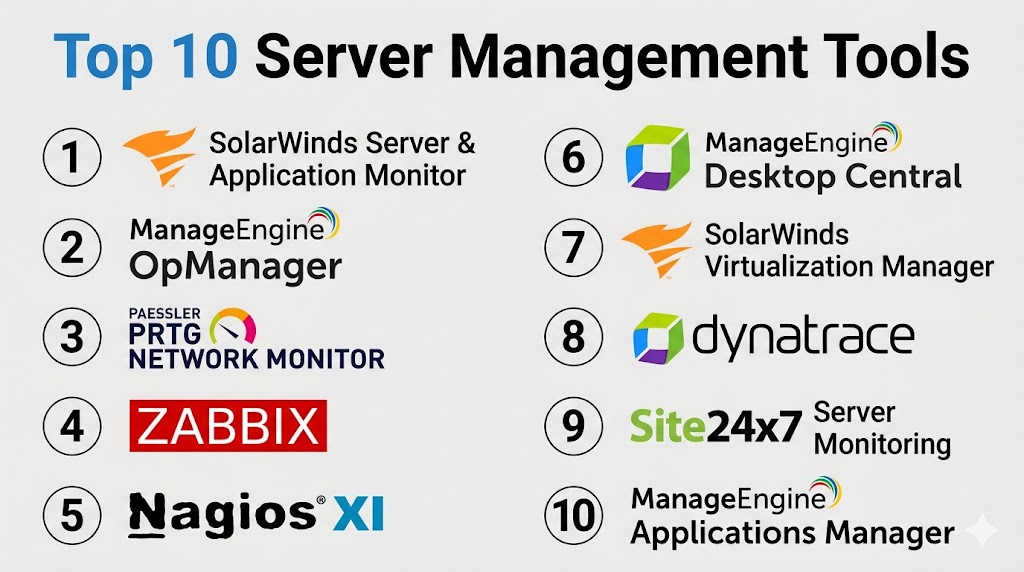
Introduction
Server Management Tools are software solutions designed to simplify the monitoring, administration, and maintenance of servers across on-premises, cloud, and hybrid environments. These tools help IT teams ensure optimal server performance, automate routine tasks, enhance security, and maintain high availability for critical applications.
Common real-world use cases include monitoring server performance and health, automating patch management, managing configurations across multiple servers, tracking resource utilization, and ensuring compliance with security policies. With the increasing complexity of IT infrastructure and the adoption of hybrid and multi-cloud environments, server management tools are essential for operational efficiency, risk mitigation, and cost optimization.
When evaluating server management tools, buyers should consider:
- Real-time monitoring and alerting
- Automation and configuration management
- Multi-platform support (Windows, Linux, macOS)
- Security and compliance features (RBAC, encryption, audit logs)
- Patch management capabilities
- Remote access and management
- Integration with ITSM and DevOps tools
- Resource optimization and reporting
- Scalability for large server fleets
- Vendor support and community resources
Best for: IT administrators, DevOps teams, system operators, SMBs, and enterprises managing large and complex server environments.
Not ideal for: Small teams with minimal servers or organizations fully reliant on managed cloud services with limited internal infrastructure.
Key Trends in Server Management Tools
- AI-driven performance monitoring and predictive analytics
- Automation for patch management, provisioning, and maintenance
- Enhanced security with centralized policy enforcement
- Multi-cloud and hybrid infrastructure support
- Integration with DevOps and ITSM platforms
- Container and virtualization awareness
- Edge computing management
- Role-based access control and audit compliance
- Subscription and usage-based pricing models
- Advanced observability dashboards with real-time metrics
How We Selected These Tools (Methodology)
- Market adoption and reputation across enterprises and SMBs
- Feature completeness including monitoring, automation, and security
- Reliability and performance in diverse server environments
- Security posture and compliance features
- Integration ecosystem with ITSM, DevOps, and monitoring tools
- Customer fit for solo admins, SMBs, mid-market, and enterprise
- Cross-platform support and multi-cloud readiness
- Documentation, onboarding, and vendor support quality
- Licensing flexibility and pricing options
- Alignment with modern IT operations and automation trends
Top 10 Server Management Tools
#1 — SolarWinds Server & Application Monitor
Short description: Comprehensive monitoring tool for servers and applications, providing real-time insights and automated alerts.
Key Features
- Real-time server and application monitoring
- Automated alerting and threshold management
- Performance analytics dashboards
- Multi-platform support
- Integration with network monitoring tools
- Customizable reporting
Pros
- Comprehensive monitoring capabilities
- Easy-to-configure alerts
Cons
- Can be resource-intensive
- Licensing cost may be high for SMBs
Platforms / Deployment
- Windows / Linux / Cloud
- Cloud / Self-hosted / Hybrid
Security & Compliance
- RBAC, audit logs
- Not publicly stated
Integrations & Ecosystem
- ITSM tools
- Network monitoring software
- APIs for automation
Support & Community
- Enterprise support tiers
- Active user community
#2 — ManageEngine OpManager
Short description: IT infrastructure monitoring platform for servers, network devices, and applications.
Key Features
- Server performance and availability monitoring
- Automated configuration management
- Real-time alerting
- Reporting and analytics
- Multi-platform support
Pros
- Comprehensive infrastructure visibility
- Easy-to-use dashboards
Cons
- Advanced features require higher tiers
- Learning curve for large deployments
Platforms / Deployment
- Windows / Linux / Cloud
- Cloud / Self-hosted / Hybrid
Security & Compliance
- RBAC, MFA
- Not publicly stated
Integrations & Ecosystem
- ITSM integrations
- CI/CD pipeline hooks
- APIs for automation
Support & Community
- Enterprise support
- Documentation and forums
#3 — Paessler PRTG Network Monitor
Short description: Unified monitoring solution for servers, networks, and applications, with customizable sensors and alerts.
Key Features
- Real-time monitoring of CPU, memory, disk, and network
- Alerting and notifications
- Reporting and dashboards
- Multi-platform monitoring
- IoT and cloud integration
Pros
- Flexible sensor-based monitoring
- Highly customizable alerts
Cons
- May require configuration tuning
- Cost can scale with number of sensors
Platforms / Deployment
- Windows / Linux / Cloud
- Cloud / Self-hosted
Security & Compliance
- RBAC, encryption
- Not publicly stated
Integrations & Ecosystem
- ITSM tools
- DevOps tools integration
- APIs
Support & Community
- Active documentation and community
- Paid support available
#4 — Zabbix
Short description: Open-source monitoring platform for servers, networks, and applications with customizable alerting and visualization.
Key Features
- Multi-platform server monitoring
- Network and application monitoring
- Customizable dashboards and alerts
- Open-source extensibility
- Reporting and analytics
Pros
- Free and open-source
- Highly flexible and customizable
Cons
- Requires configuration and maintenance
- Smaller enterprise support ecosystem
Platforms / Deployment
- Windows / Linux / Cloud
- Self-hosted / Hybrid
Security & Compliance
- RBAC, encryption
- Not publicly stated
Integrations & Ecosystem
- CI/CD pipelines
- ITSM integration
- APIs
Support & Community
- Community support
- Documentation available
#5 — Nagios XI
Short description: Enterprise monitoring platform for servers, applications, and networks with alerting and reporting capabilities.
Key Features
- Server and application monitoring
- Alerts and notifications
- Performance and availability dashboards
- Plugin-based extensibility
- Reporting and analytics
Pros
- Mature monitoring solution
- Extensive plugin ecosystem
Cons
- User interface can be dated
- Configuration complexity
Platforms / Deployment
- Windows / Linux / Cloud
- Cloud / Self-hosted / Hybrid
Security & Compliance
- RBAC, audit logging
- Not publicly stated
Integrations & Ecosystem
- ITSM tools
- DevOps integration
- APIs
Support & Community
- Enterprise support
- Active user community
#6 — ManageEngine Desktop Central
Short description: Server and desktop management platform for patching, configurations, and monitoring.
Key Features
- Patch management and updates
- Configuration and compliance monitoring
- Remote control and management
- Multi-platform support
- Reporting dashboards
Pros
- Comprehensive server and endpoint management
- Automated patching
Cons
- Primarily Windows-focused
- Some advanced features require higher tiers
Platforms / Deployment
- Windows / Linux / macOS
- Cloud / Self-hosted
Security & Compliance
- RBAC, encryption
- Not publicly stated
Integrations & Ecosystem
- ITSM tools
- CI/CD pipelines
- APIs
Support & Community
- Enterprise support
- Documentation
#7 — SolarWinds Virtualization Manager
Short description: Server and virtualization monitoring platform with performance analytics for VMs and physical servers.
Key Features
- VM performance monitoring
- Resource optimization
- Alerting and reporting
- Capacity planning
- Multi-platform support
Pros
- Optimizes server and VM resources
- Detailed analytics
Cons
- Expensive for small deployments
- Can be resource-intensive
Platforms / Deployment
- Windows / Linux / Cloud
- Cloud / Self-hosted
Security & Compliance
- RBAC, encryption
- Not publicly stated
Integrations & Ecosystem
- VMware, Hyper-V integrations
- ITSM tools
- APIs
Support & Community
- Enterprise support
- Community and documentation
#8 — Dynatrace
Short description: Monitoring and server management platform with AI-driven insights and performance analytics.
Key Features
- Real-time monitoring and alerting
- AI-driven performance analytics
- Multi-platform support
- Cloud and hybrid monitoring
- Automation and integration capabilities
Pros
- AI-powered insights
- Enterprise-grade monitoring
Cons
- Higher cost for small businesses
- Learning curve for AI features
Platforms / Deployment
- Linux / Windows / Cloud
- Cloud / Self-hosted
Security & Compliance
- RBAC, encryption
- SOC 2, ISO 27001
Integrations & Ecosystem
- ITSM and DevOps tools
- CI/CD integration
- APIs
Support & Community
- Enterprise support tiers
- Active documentation
#9 — Site24x7 Server Monitoring
Short description: Cloud-based server monitoring for performance, availability, and resource utilization.
Key Features
- Server and application monitoring
- Alerts and notifications
- Performance dashboards
- Cloud and hybrid monitoring
- Automated reporting
Pros
- Cloud-native and easy to deploy
- Multi-platform support
Cons
- Limited on-premises features
- Advanced analytics require higher tier
Platforms / Deployment
- Windows / Linux / macOS
- Cloud
Security & Compliance
- RBAC, encryption
- Not publicly stated
Integrations & Ecosystem
- ITSM tools
- CI/CD pipelines
- APIs
Support & Community
- Documentation and support
- Community forums
#10 — ManageEngine Applications Manager
Short description: Server and application monitoring solution with dashboards, alerts, and performance analytics.
Key Features
- Multi-platform server monitoring
- Application performance monitoring
- Alerting and notifications
- Analytics and reporting
- Automation support
Pros
- Comprehensive server and app monitoring
- Easy-to-use dashboards
Cons
- Enterprise features require higher tiers
- Somewhat steep learning curve
Platforms / Deployment
- Windows / Linux / Cloud
- Cloud / Self-hosted / Hybrid
Security & Compliance
- RBAC, encryption
- Not publicly stated
Integrations & Ecosystem
- ITSM and DevOps tools
- CI/CD pipelines
- APIs
Support & Community
- Enterprise support tiers
- Documentation and forums
Comparison Table (Top 10)
| Tool Name | Best For | Platform(s) Supported | Deployment | Standout Feature | Public Rating |
|---|---|---|---|---|---|
| SolarWinds Server & Application Monitor | Enterprises & SMBs | Windows / Linux / Cloud | Cloud / Self-hosted / Hybrid | Real-time monitoring | N/A |
| ManageEngine OpManager | SMBs & Enterprises | Windows / Linux / Cloud | Cloud / Self-hosted / Hybrid | Multi-platform monitoring | N/A |
| PRTG Network Monitor | SMBs & DevOps | Windows / Linux / Cloud | Cloud / Self-hosted | Sensor-based monitoring | N/A |
| Zabbix | SMBs & Enterprises | Linux / Windows / Cloud | Self-hosted / Hybrid | Open-source, customizable | N/A |
| Nagios XI | Enterprises | Windows / Linux / Cloud | Cloud / Self-hosted / Hybrid | Plugin-based extensibility | N/A |
| ManageEngine Desktop Central | Enterprises & SMBs | Windows / Linux / macOS | Cloud / Self-hosted / Hybrid | Patch management & config | N/A |
| SolarWinds Virtualization Manager | Enterprises | Windows / Linux / Cloud | Cloud / Self-hosted | VM performance optimization | N/A |
| Dynatrace | Enterprises | Windows / Linux / Cloud | Cloud / Self-hosted / Hybrid | AI-driven performance insights | N/A |
| Site24x7 Server Monitoring | SMBs & Enterprises | Windows / Linux / macOS | Cloud | Cloud-native monitoring | N/A |
| ManageEngine Applications Manager | Enterprises & SMBs | Windows / Linux / Cloud | Cloud / Self-hosted / Hybrid | Server + Application monitoring | N/A |
Evaluation & Scoring of Server Management Tools
| Tool Name | Core (25%) | Ease (15%) | Integrations (15%) | Security (10%) | Performance (10%) | Support (10%) | Value (15%) | Weighted Total |
|---|---|---|---|---|---|---|---|---|
| SolarWinds SAM | 9 | 8 | 8 | 8 | 9 | 8 | 7 | 8.25 |
| ManageEngine OpManager | 8 | 8 | 8 | 8 | 8 | 7 | 8 | 7.95 |
| PRTG Network Monitor | 8 | 8 | 7 | 8 | 8 | 7 | 7 | 7.65 |
| Zabbix | 8 | 7 | 7 | 8 | 8 | 7 | 8 | 7.75 |
| Nagios XI | 8 | 7 | 7 | 8 | 8 | 7 | 7 | 7.55 |
| ManageEngine Desktop Central | 8 | 8 | 8 | 8 | 8 | 7 | 7 | 7.75 |
| SolarWinds Virtualization Manager | 9 | 7 | 8 | 8 | 9 | 8 | 7 | 8.15 |
| Dynatrace | 9 | 7 | 8 | 9 | 9 | 8 | 7 | 8.35 |
| Site24x7 Server Monitoring | 8 | 8 | 7 | 8 | 8 | 7 | 7 | 7.65 |
| ManageEngine Applications Manager | 8 | 8 | 7 | 8 | 8 | 7 | 7 | 7.7 |
Which Server Management Tools Tool Is Right for You?
Solo / Freelancer
PRTG, Zabbix, or Site24x7 for lightweight monitoring and administration.
SMB
ManageEngine OpManager, Desktop Central, or SolarWinds SAM for comprehensive multi-server management.
Mid-Market
SolarWinds Virtualization Manager or Dynatrace for performance monitoring and AI-driven insights.
Enterprise
Dynatrace, SolarWinds SAM, Nagios XI, or ManageEngine Applications Manager for large-scale server monitoring with automation and compliance.
Budget vs Premium
Open-source solutions like Zabbix or PRTG reduce cost; enterprise tools provide advanced features and support.
Feature Depth vs Ease of Use
PRTG and Desktop Central are easier to deploy; Dynatrace and SolarWinds offer more extensive monitoring capabilities.
Integrations & Scalability
Enterprise tools like Dynatrace and SAM integrate with ITSM, DevOps, and cloud infrastructure at scale.
Security & Compliance Needs
Dynatrace, SAM, and Nagios XI offer RBAC, audit logs, and encryption to maintain compliance across environments.
Frequently Asked Questions (FAQs)
What are typical pricing models?
Subscription, usage-based, or open-source with optional support plans.
How long does onboarding take?
Lightweight monitoring tools may be ready in hours; enterprise platforms may require days to configure.
What common mistakes should I avoid?
Ignoring security configurations, not monitoring resource utilization, and failing to automate patches.
Can these tools monitor multi-cloud servers?
Yes, most enterprise server management tools support hybrid and multi-cloud monitoring.
Is automation supported?
Yes, patching, resource management, and reporting can be automated.
Can these platforms manage virtualization?
Yes, tools like SolarWinds Virtualization Manager provide VM and container visibility.
Are AI features available?
Dynatrace and other advanced tools offer AI-driven performance insights.
How do these tools integrate with DevOps?
They support ITSM, CI/CD pipelines, monitoring, logging, and API-based automation.
Are open-source tools production-ready?
Yes, Zabbix and PRTG are production-ready with community or enterprise support options.
What are alternatives to server management tools?
Cloud provider dashboards, monitoring agents, or simpler ITSM tools may suffice for small setups.
Conclusion
Server Management Tools enable IT teams to monitor, automate, and optimize server operations efficiently. Lightweight solutions like Zabbix, PRTG, or Site24x7 are ideal for small teams, while enterprise-grade platforms such as SolarWinds SAM, Dynatrace, and ManageEngine Applications Manager provide comprehensive monitoring, AI insights, and automation for large-scale infrastructure. Organizations should shortlist 2–3 platforms, run pilot deployments, and validate integration, performance, and security for the best fit.

A feature that often proves valuable over time is automation consistency. As server environments grow, the ability to apply configurations, updates, and compliance policies uniformly across hundreds of systems becomes far more important than individual management features.