MOTOSHARE 🚗🏍️
Rent Bikes & Cars Directly from Owners
Motoshare connects vehicle owners with people who need bikes and cars on rent. Owners earn from idle vehicles, and renters get flexible ride options.
Visit Motoshare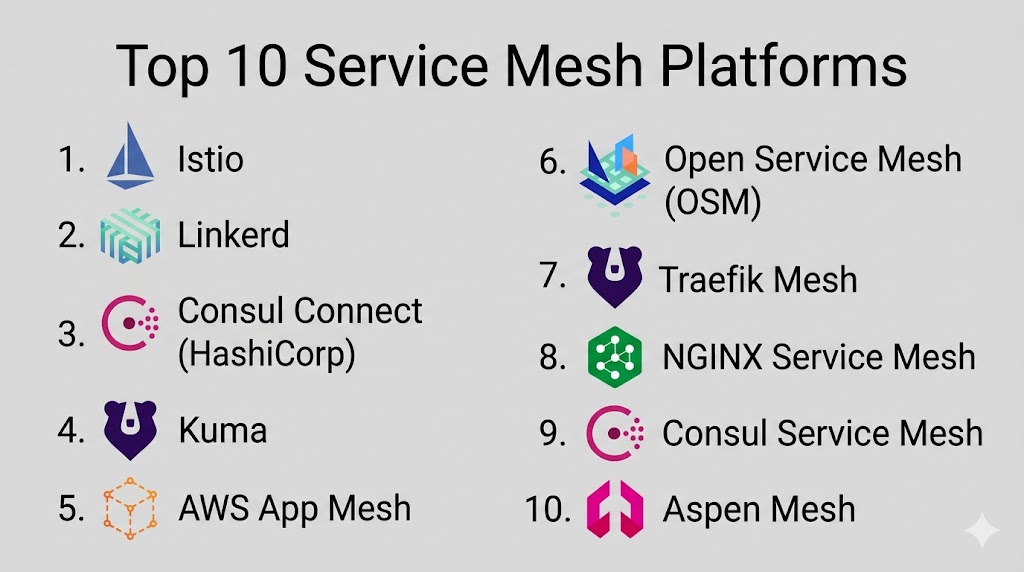
Introduction
Service Mesh Platforms are specialized infrastructure layers that manage communication between microservices in cloud-native applications. They provide critical capabilities like traffic management, service discovery, load balancing, security, and observability without requiring changes to application code. By abstracting networking complexity, service meshes allow DevOps teams to focus on building features while ensuring reliable service-to-service communication.
Real-world use cases include managing traffic between microservices, implementing security policies such as mTLS, observability and tracing of distributed applications, traffic routing for blue-green or canary deployments, and automated failure recovery. Service mesh platforms also help enforce policies, manage versioned deployments, and provide consistent telemetry across multi-cloud and hybrid environments.
When evaluating a service mesh platform, buyers should consider:
- Multi-cluster and multi-cloud support
- Traffic management capabilities
- Security features like encryption and access policies
- Observability, logging, and tracing
- Performance and latency optimization
- Automation and CI/CD integration
- Resource efficiency and scalability
- Ease of deployment and management
- Ecosystem and extensibility
- Support and community resources
Best for: DevOps teams, IT administrators, and enterprises deploying microservices in multi-cloud or hybrid environments.
Not ideal for: Organizations running monolithic applications or small deployments with minimal inter-service communication.
Key Trends in Service Mesh Platforms
- Integration with Kubernetes for native orchestration
- AI-driven traffic routing and anomaly detection
- Enhanced security with mTLS, RBAC, and policy enforcement
- Multi-cloud and hybrid environment management
- Observability with distributed tracing and telemetry
- Traffic shaping and canary deployment automation
- Serverless and edge computing compatibility
- API-driven automation and integration
- Subscription and usage-based pricing models
- Integration with DevOps and CI/CD workflows
How We Selected These Tools (Methodology)
- Market adoption and industry mindshare
- Completeness of traffic management, security, and observability features
- Reliability and performance in production environments
- Security and compliance posture
- Ecosystem integrations with Kubernetes, CI/CD, and monitoring tools
- Customer fit across SMB, mid-market, and enterprise segments
- Multi-platform and cloud provider support
- Documentation, onboarding, and support quality
- Cost and licensing flexibility
- Alignment with emerging DevOps and cloud-native best practices
Top 10 Service Mesh Platforms
#1 — Istio
Short description: Open-source service mesh for securing, controlling, and observing microservices.
Key Features
- Traffic routing and load balancing
- mTLS and policy enforcement
- Observability with telemetry, metrics, and logging
- Canary deployments and traffic shifting
- Integration with Kubernetes
- API-driven automation
Pros
- Feature-rich open-source solution
- Strong community support
Cons
- Complex to deploy
- Steep learning curve
Platforms / Deployment
- Linux / Cloud / Kubernetes
- Cloud / Self-hosted
Security & Compliance
- mTLS, RBAC, encryption
- Not publicly stated
Integrations & Ecosystem
- Kubernetes, Prometheus, Grafana
- CI/CD pipelines
- APIs for automation
Support & Community
- Open-source community
- Documentation and forums
#2 — Linkerd
Short description: Lightweight service mesh focusing on simplicity, reliability, and performance for Kubernetes environments.
Key Features
- Transparent proxies for traffic management
- Observability with metrics and dashboards
- Security with mTLS
- Automatic retries and load balancing
- Minimal performance overhead
Pros
- Lightweight and easy to deploy
- High performance and low latency
Cons
- Fewer advanced features than Istio
- Limited multi-cloud features
Platforms / Deployment
- Linux / Kubernetes
- Cloud / Self-hosted
Security & Compliance
- mTLS, RBAC
- Not publicly stated
Integrations & Ecosystem
- Prometheus, Grafana
- CI/CD pipelines
- APIs for management
Support & Community
- Active open-source community
- Documentation available
#3 — Consul Connect (HashiCorp)
Short description: Service mesh with integrated service discovery, network segmentation, and secure service-to-service communication.
Key Features
- Service discovery and registry
- mTLS for secure communication
- Traffic routing and segmentation
- Integration with HashiCorp ecosystem
- Observability and metrics
Pros
- Strong service discovery capabilities
- Integrates with existing HashiCorp tools
Cons
- Complexity for large-scale deployments
- Licensing may be costly for enterprise
Platforms / Deployment
- Linux / Cloud
- Cloud / Self-hosted / Hybrid
Security & Compliance
- mTLS, RBAC, encryption
- Not publicly stated
Integrations & Ecosystem
- Terraform, Vault
- Prometheus, Grafana
- APIs for automation
Support & Community
- Enterprise support tiers
- Active HashiCorp community
#4 — Kuma
Short description: Universal service mesh for Kubernetes and VMs, designed for simplicity and multi-platform support.
Key Features
- Multi-platform support (K8s, VMs)
- Traffic routing and load balancing
- mTLS and security policies
- Observability and metrics
- Multi-zone deployment support
Pros
- Simple and easy to deploy
- Multi-platform support
Cons
- Fewer integrations than Istio
- Smaller community
Platforms / Deployment
- Linux / Cloud / Kubernetes / VMs
- Cloud / Self-hosted
Security & Compliance
- mTLS, RBAC
- Not publicly stated
Integrations & Ecosystem
- Prometheus, Grafana
- CI/CD pipelines
- APIs for automation
Support & Community
- Community support
- Documentation
#5 — AWS App Mesh
Short description: Managed service mesh on AWS for controlling service-to-service communication across microservices.
Key Features
- Managed control plane
- Traffic routing, retries, and failover
- mTLS and security policies
- Integration with AWS services
- Observability via CloudWatch
Pros
- Fully managed and integrates with AWS
- Reduces operational overhead
Cons
- AWS-centric, less flexible for multi-cloud
- Subscription costs
Platforms / Deployment
- Linux / Cloud
- Cloud
Security & Compliance
- mTLS, IAM integration
- SOC 2, ISO 27001, HIPAA
Integrations & Ecosystem
- AWS services (EC2, ECS, Lambda)
- CI/CD pipelines
- APIs for automation
Support & Community
- AWS support tiers
- AWS developer forums
#6 — Open Service Mesh (OSM)
Short description: Lightweight, open-source service mesh built on Envoy for Kubernetes workloads.
Key Features
- Automatic service-to-service encryption
- Traffic shaping and routing
- Observability and telemetry
- Kubernetes-native integration
- Simple deployment and management
Pros
- Lightweight and Kubernetes-native
- Easy to adopt
Cons
- Smaller ecosystem than Istio or Linkerd
- Fewer enterprise features
Platforms / Deployment
- Linux / Kubernetes
- Cloud / Self-hosted
Security & Compliance
- mTLS, RBAC
- Not publicly stated
Integrations & Ecosystem
- Prometheus, Grafana
- CI/CD tools
- APIs
Support & Community
- Community support
- Documentation
#7 — Traefik Mesh
Short description: Simple service mesh for microservices with integrated ingress, routing, and observability.
Key Features
- Lightweight and simple
- Traffic routing and load balancing
- Observability dashboards
- Kubernetes integration
- Secure service-to-service communication
Pros
- Easy setup and management
- Minimal resource overhead
Cons
- Limited enterprise features
- Smaller community
Platforms / Deployment
- Linux / Kubernetes
- Cloud / Self-hosted
Security & Compliance
- mTLS
- Not publicly stated
Integrations & Ecosystem
- Prometheus, Grafana
- CI/CD pipelines
- APIs
Support & Community
- Community support
- Documentation
#8 — NGINX Service Mesh
Short description: Service mesh built on NGINX for traffic management, security, and observability in Kubernetes.
Key Features
- Traffic routing and load balancing
- Security policies and mTLS
- Observability dashboards
- Kubernetes-native integration
- CI/CD integration
Pros
- Enterprise-ready with NGINX support
- Integrates well with Kubernetes
Cons
- Smaller community than Istio
- Limited multi-cloud features
Platforms / Deployment
- Linux / Kubernetes
- Cloud / Self-hosted
Security & Compliance
- mTLS, RBAC
- Not publicly stated
Integrations & Ecosystem
- Prometheus, Grafana
- CI/CD pipelines
- APIs
Support & Community
- NGINX enterprise support
- Documentation
#9 — Consul Service Mesh
Short description: HashiCorp platform for secure service connectivity, policy enforcement, and service discovery.
Key Features
- Multi-platform service mesh
- Secure service-to-service communication
- Traffic management and routing
- Observability and monitoring
- Policy-driven security
Pros
- Strong integration with HashiCorp ecosystem
- Enterprise-grade security
Cons
- Setup complexity
- Licensing costs
Platforms / Deployment
- Linux / Cloud / Kubernetes / VMs
- Cloud / Self-hosted / Hybrid
Security & Compliance
- mTLS, RBAC, encryption
- Not publicly stated
Integrations & Ecosystem
- Terraform, Vault
- CI/CD pipelines
- Prometheus, Grafana
Support & Community
- Enterprise support tiers
- HashiCorp community
#10 — Aspen Mesh
Short description: Enterprise-grade service mesh platform built on Istio with enhanced observability, security, and support.
Key Features
- Multi-cluster support
- Traffic management and routing
- Security policies and mTLS
- Observability dashboards
- CI/CD integration
Pros
- Enterprise-ready Istio distribution
- Strong support and documentation
Cons
- Subscription pricing
- Complexity for small teams
Platforms / Deployment
- Linux / Kubernetes
- Cloud / Self-hosted / Hybrid
Security & Compliance
- mTLS, RBAC, encryption
- SOC 2, ISO 27001
Integrations & Ecosystem
- Prometheus, Grafana
- CI/CD pipelines
- APIs
Support & Community
- Enterprise support
- Documentation and training
Comparison Table (Top 10)
| Tool Name | Best For | Platform(s) Supported | Deployment | Standout Feature | Public Rating |
|---|---|---|---|---|---|
| Istio | Enterprises & Dev Teams | Linux / Kubernetes | Cloud / Self-hosted | Feature-rich orchestration | N/A |
| Linkerd | SMBs & Dev Teams | Linux / Kubernetes | Cloud / Self-hosted | Lightweight & low-latency | N/A |
| Consul Connect | Enterprises | Linux / Cloud / VMs | Cloud / Self-hosted / Hybrid | Service discovery + mesh | N/A |
| Kuma | SMBs & Enterprises | Linux / K8s / VMs | Cloud / Self-hosted | Multi-platform mesh | N/A |
| AWS App Mesh | AWS Users | Linux / Cloud | Cloud | Fully managed AWS mesh | N/A |
| Open Service Mesh (OSM) | SMBs & Dev Teams | Linux / Kubernetes | Cloud / Self-hosted | Lightweight & K8s-native | N/A |
| Traefik Mesh | SMBs & Dev Teams | Linux / Kubernetes | Cloud / Self-hosted | Simple, integrated ingress | N/A |
| NGINX Service Mesh | Enterprises | Linux / Kubernetes | Cloud / Self-hosted | NGINX-based traffic management | N/A |
| Consul Service Mesh | Enterprises | Linux / Cloud / K8s / VMs | Cloud / Self-hosted / Hybrid | Security + HashiCorp integration | N/A |
| Aspen Mesh | Enterprises | Linux / Kubernetes | Cloud / Self-hosted / Hybrid | Enterprise-grade Istio | N/A |
Evaluation & Scoring of Service Mesh Platforms
| Tool Name | Core (25%) | Ease (15%) | Integrations (15%) | Security (10%) | Performance (10%) | Support (10%) | Value (15%) | Weighted Total |
|---|---|---|---|---|---|---|---|---|
| Istio | 9 | 7 | 9 | 8 | 8 | 8 | 7 | 8.1 |
| Linkerd | 8 | 8 | 7 | 8 | 9 | 7 | 8 | 7.9 |
| Consul Connect | 8 | 7 | 8 | 9 | 8 | 8 | 7 | 7.95 |
| Kuma | 7 | 8 | 7 | 8 | 8 | 7 | 8 | 7.65 |
| AWS App Mesh | 8 | 7 | 8 | 9 | 8 | 7 | 7 | 7.85 |
| Open Service Mesh (OSM) | 7 | 8 | 7 | 8 | 8 | 7 | 8 | 7.65 |
| Traefik Mesh | 7 | 8 | 7 | 7 | 8 | 7 | 8 | 7.55 |
| NGINX Service Mesh | 8 | 7 | 7 | 8 | 8 | 7 | 7 | 7.65 |
| Consul Service Mesh | 8 | 7 | 8 | 9 | 8 | 8 | 7 | 7.95 |
| Aspen Mesh | 9 | 7 | 8 | 9 | 8 | 8 | 7 | 8.05 |
Interpretation: Scores compare core mesh functionality, usability, integrations, security, performance, support, and overall value. Higher totals indicate stronger suitability, but selection depends on infrastructure, team expertise, and workload complexity.
Which Service Mesh Platforms Tool Is Right for You?
Solo / Freelancer
Linkerd, Traefik Mesh, or Open Service Mesh for lightweight mesh management and experimentation.
SMB
Kuma, OSM, or AWS App Mesh for manageable multi-service orchestration in small-scale environments.
Mid-Market
Istio, Consul Connect, or NGINX Service Mesh for enterprise-grade microservices communication and policy enforcement.
Enterprise
Istio, Aspen Mesh, Consul Service Mesh, or AWS App Mesh for large-scale, multi-cloud or hybrid microservices deployments.
Budget vs Premium
Open-source tools like Linkerd, Kuma, and OSM reduce cost; enterprise platforms provide advanced observability, security, and support.
Feature Depth vs Ease of Use
Traefik Mesh, Linkerd, and OSM are easier to deploy; Istio, Aspen Mesh, and Consul provide deeper enterprise capabilities.
Integrations & Scalability
Istio, Consul, and Aspen Mesh integrate extensively with CI/CD, monitoring, logging, and DevOps tooling for large-scale microservices.
Security & Compliance Needs
AWS App Mesh, Istio, and Aspen Mesh provide mTLS, RBAC, encryption, and policy enforcement to meet regulatory requirements.
Frequently Asked Questions (FAQs)
What are the typical pricing models?
Open-source, subscription, or usage-based depending on support and deployment options.
How long does onboarding take?
Lightweight platforms may be ready in hours; enterprise-grade service meshes require days or weeks to configure.
What common mistakes should I avoid?
Neglecting security policies, misconfiguring traffic routing, and skipping monitoring.
Can these platforms manage multi-cloud deployments?
Yes, most enterprise service meshes like Istio, Aspen Mesh, and AWS App Mesh support multi-cloud clusters.
Are AI-driven features available?
Some platforms offer AI-based traffic routing, anomaly detection, and auto-scaling recommendations.
Is automation supported?
Yes, deployment, scaling, traffic management, and observability can be automated.
Can these tools manage high-performance workloads?
Yes, enterprise service meshes support latency-sensitive and high-throughput microservices.
How do these platforms integrate with DevOps tools?
They integrate with CI/CD pipelines, monitoring, logging, observability, and API-based automation.
Are open-source meshes production-ready?
Yes, Linkerd, Istio, Kuma, and OSM are production-ready with community or enterprise support options.
What are alternatives to service meshes?
Simpler API gateways, ingress controllers, or managed cloud-native services may suffice for small microservices deployments.
Conclusion
Service Mesh Platforms streamline inter-service communication, observability, and security for microservices architectures. Lightweight solutions like Linkerd, Kuma, or OSM suit developers and SMBs, while enterprise-grade platforms such as Istio, Aspen Mesh, and AWS App Mesh offer advanced features, scalability, and compliance. Organizations should shortlist 2–3 platforms, pilot deployments, and validate integration, performance, and security to select the best fit.

One thing teams often discover after adoption is that a service mesh can significantly improve visibility and traffic control, but it also introduces additional operational complexity. Having the right monitoring and troubleshooting strategy in place is just as important as selecting the mesh itself.