MOTOSHARE 🚗🏍️
Rent Bikes & Cars Directly from Owners
Motoshare connects vehicle owners with people who need bikes and cars on rent. Owners earn from idle vehicles, and renters get flexible ride options.
Visit Motoshare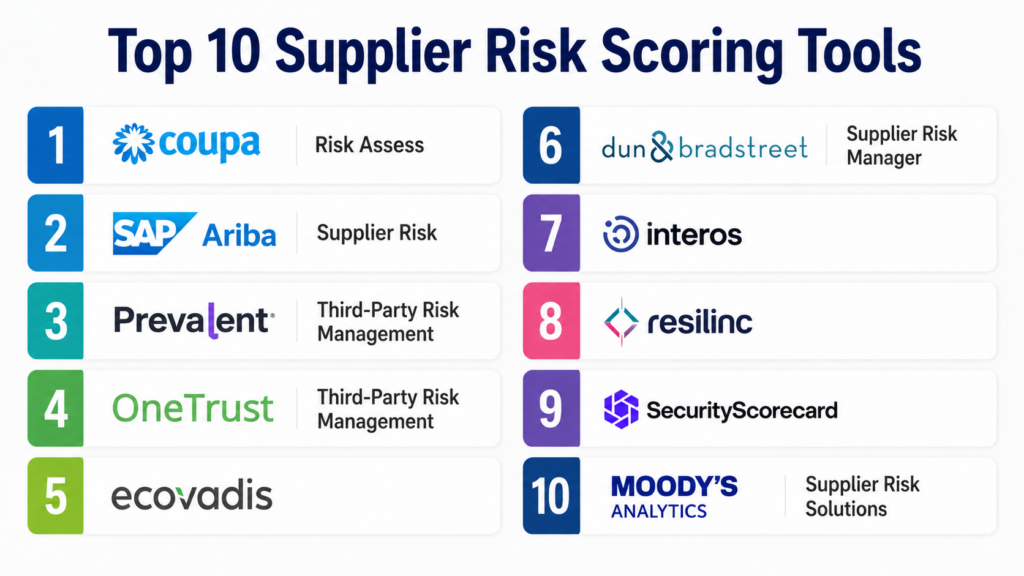
Introduction
Supplier Risk Scoring Tools help organizations evaluate, monitor, and rank suppliers based on financial stability, cybersecurity posture, ESG performance, sanctions exposure, operational reliability, compliance status, geographic risk, quality history, and business continuity risk. In simple terms, these tools help procurement, risk, compliance, supply chain, and finance teams understand which suppliers are safe, risky, critical, or in need of closer review.
Supplier risk scoring matters because companies now depend on complex global supplier networks. A supplier failure can delay production, disrupt customer delivery, increase costs, create compliance exposure, trigger cybersecurity incidents, damage brand trust, or weaken resilience. Traditional supplier reviews based on spreadsheets, manual questionnaires, and annual assessments are often too slow for fast-changing risks. Modern supplier risk scoring tools combine data feeds, questionnaires, third-party intelligence, AI-assisted analysis, risk models, alerts, dashboards, and workflow automation to give teams a clearer view of supplier exposure.
Real World Use Cases:
- Scoring suppliers before onboarding or contract renewal
- Monitoring supplier financial health and bankruptcy risk
- Assessing cybersecurity risk across vendors and technology suppliers
- Tracking sanctions, regulatory, geopolitical, and compliance exposure
- Evaluating ESG, sustainability, diversity, and responsible sourcing risk
- Prioritizing critical suppliers for deeper due diligence and mitigation plans
Evaluation Criteria for Buyers:
- Supplier risk scoring methodology and explainability
- Financial, cyber, ESG, compliance, sanctions, and operational risk coverage
- Supplier onboarding, questionnaires, and evidence collection
- Continuous monitoring, alerts, and risk change detection
- Third-party data integrations and external risk intelligence
- Workflow automation, approvals, remediation, and exception tracking
- Integration with procurement, ERP, CLM, GRC, TPRM, and supplier systems
- Dashboards, reporting, heat maps, and executive visibility
- Security controls, RBAC, audit logs, encryption, and data governance
- Ease of use, implementation support, scalability, and total cost
Best for: Supplier Risk Scoring Tools are best for procurement leaders, supply chain teams, vendor risk managers, third-party risk teams, compliance officers, ESG teams, cybersecurity teams, sourcing managers, legal teams, finance teams, and enterprises that depend on many suppliers across categories, regions, and risk domains.
Not ideal for: These tools may not be necessary for very small businesses with a limited supplier base, low-risk vendors, and simple purchasing needs. In those cases, spreadsheets, basic supplier questionnaires, procurement system notes, or manual checks may be enough temporarily. However, once supplier count, criticality, geographic exposure, compliance pressure, cybersecurity risk, or ESG expectations increase, dedicated supplier risk scoring tools become much more valuable.
Key Trends in Supplier Risk Scoring Tools
- Continuous monitoring is replacing annual reviews: Organizations want supplier risk signals updated regularly instead of relying only on once-a-year questionnaires.
- Cyber risk is now part of supplier risk scoring: Technology vendors, SaaS providers, cloud partners, and managed service providers are increasingly evaluated for security posture, breach exposure, and access risk.
- Financial health monitoring is becoming essential: Procurement and finance teams want early warnings for supplier distress, payment issues, insolvency risk, and business continuity concerns.
- ESG and responsible sourcing are influencing supplier scores: Sustainability, human rights, labor practices, emissions, diversity, ethics, and responsible sourcing data are becoming important in supplier evaluations.
- Sanctions and regulatory screening are more automated: Supplier scoring increasingly includes sanctions, watchlists, adverse media, politically exposed persons, export controls, and restricted-party checks.
- AI is improving risk classification and summaries: AI-assisted workflows can help summarize supplier profiles, classify risks, detect anomalies, and prioritize supplier reviews, but human oversight remains important.
- Supplier criticality is becoming a scoring layer: Companies are not only scoring supplier risk; they are also scoring supplier importance, substitutability, spend level, product dependency, and operational impact.
- Risk scoring is becoming multi-domain: Leading tools combine financial, cyber, geopolitical, ESG, operational, legal, compliance, performance, and location risk into one supplier view.
- Integration with procurement suites is a key requirement: Supplier scores must be available inside sourcing, onboarding, contract, purchase, and renewal workflows.
- Board and executive reporting is expanding: Supply chain resilience has become a leadership topic, so risk teams need clear dashboards for supplier concentration, high-risk vendors, and mitigation progress.
How We Selected These Tools
The Top 10 tools were selected using practical evaluation logic for supplier risk scoring buyers.
- Recognition in supplier risk, third-party risk, procurement risk, ESG intelligence, financial risk, cyber risk, and supply chain resilience
- Suitability for procurement, sourcing, compliance, cybersecurity, ESG, supply chain, and enterprise risk teams
- Feature depth across supplier onboarding, risk scoring, monitoring, alerts, questionnaires, evidence, and remediation
- Ability to score suppliers across financial, cyber, compliance, ESG, sanctions, operational, and geopolitical risk domains
- Integration potential with ERP, procurement, CLM, GRC, TPRM, supplier management, and business intelligence systems
- Reporting strength for supplier risk dashboards, heat maps, category views, business unit reports, and executive summaries
- Explainability of supplier scores, including risk drivers, evidence, trends, and recommended actions
- Scalability across supplier count, regions, categories, entities, business units, and risk domains
- Security posture signals, role permissions, auditability, and enterprise data protection expectations
- Vendor support, implementation maturity, customer resources, onboarding help, and long-term platform value
Top 10 Supplier Risk Scoring Tools
1- Coupa Risk Assess
Short description:
Coupa Risk Assess supports supplier and third-party risk management within the broader Coupa business spend management ecosystem. It helps organizations evaluate suppliers through risk assessments, questionnaires, scorecards, alerts, approvals, and remediation workflows. The platform is especially useful for procurement teams that want supplier risk scoring connected with sourcing, contracts, purchasing, and spend visibility. It is best for organizations already using Coupa or seeking supplier risk management inside a broader spend platform.
Key Features
- Supplier risk assessments and scoring workflows
- Questionnaire and evidence collection
- Risk segmentation and supplier criticality tracking
- Third-party monitoring and alert workflows
- Remediation, approvals, and exception management
- Integration with Coupa sourcing, procurement, and supplier workflows
- Dashboards for supplier risk and procurement visibility
Pros
- Strong fit for Coupa-centered procurement environments
- Connects supplier risk with spend and procurement workflows
- Useful for supplier onboarding, monitoring, and remediation
Cons
- Best value depends on Coupa ecosystem alignment
- Advanced external data coverage should be validated by use case
- Implementation requires supplier risk process design
Platforms / Deployment
Web / Cloud
Security & Compliance
Not publicly stated. Buyers should verify SSO, MFA, encryption, RBAC, audit logs, data retention, supplier data controls, and compliance documentation directly.
Integrations & Ecosystem
Coupa Risk Assess fits organizations that need supplier risk scoring connected with source-to-pay and business spend management workflows.
- Coupa procurement and sourcing workflows
- Supplier onboarding and supplier management
- Contract and purchasing workflows
- External risk data sources depending on configuration
- Remediation and approval workflows
- Spend and supplier analytics dashboards
Support & Community
Coupa provides implementation support, documentation, training, customer success resources, and partner services. Support quality depends on module scope, supplier count, integration complexity, and internal risk maturity.
2- SAP Ariba Supplier Risk
Short description:
SAP Ariba Supplier Risk helps organizations identify and manage supplier risk across financial, operational, compliance, environmental, social, governance, and supply chain domains. It is designed for enterprises that need supplier risk insights connected with sourcing, procurement, supplier management, and supplier network workflows. The platform is especially relevant for SAP-centered organizations with large global supplier networks. It is best for enterprises that want supplier risk scoring embedded in SAP procurement operations.
Key Features
- Supplier risk scoring and monitoring
- Supplier segmentation and risk prioritization
- Risk alerts and supplier risk dashboards
- ESG, compliance, financial, and operational risk signals depending on configuration
- Supplier onboarding and qualification workflow support
- Integration with SAP Ariba sourcing and procurement
- Supplier network visibility and supplier collaboration
Pros
- Strong fit for SAP Ariba and SAP ERP users
- Useful for global supplier risk and procurement workflows
- Connects risk insights with sourcing and supplier decisions
Cons
- Best value depends on SAP ecosystem alignment
- Configuration and supplier data quality are important
- Smaller teams may find it more complex than needed
Platforms / Deployment
Web / Cloud
Security & Compliance
SAP environments commonly support identity controls, role-based access, encryption, auditability, and enterprise security capabilities depending on configuration. Buyers should verify supplier risk-specific controls directly.
Integrations & Ecosystem
SAP Ariba Supplier Risk fits enterprises that need supplier risk connected with sourcing, procurement, supplier network, and ERP workflows.
- SAP Ariba sourcing and supplier management
- SAP ERP and SAP S/4HANA
- Supplier network workflows
- Risk intelligence feeds depending on setup
- Procurement compliance workflows
- Supplier reporting and dashboards
Support & Community
SAP provides enterprise support, implementation partners, documentation, training, and a large supplier management ecosystem. Support quality depends on SAP architecture, partner expertise, and procurement maturity.
3- Prevalent Third-Party Risk Management
Short description:
Prevalent Third-Party Risk Management helps organizations assess, score, monitor, and manage vendor and supplier risk across cybersecurity, compliance, operational, financial, and business risk domains. It supports vendor assessments, questionnaires, remediation, risk scoring, evidence collection, and continuous monitoring. The platform is especially useful for organizations that treat suppliers as part of a broader third-party risk management program. It is best for risk, procurement, compliance, and security teams managing many vendors and suppliers.
Key Features
- Supplier and vendor risk scoring
- Questionnaire-based assessments and evidence collection
- Cybersecurity, compliance, operational, and financial risk workflows
- Continuous monitoring and alerting
- Remediation and exception tracking
- Vendor inventory and lifecycle management
- Reporting dashboards for third-party risk teams
Pros
- Strong third-party risk management coverage
- Useful for cybersecurity and compliance-driven supplier risk
- Practical assessment and remediation workflows
Cons
- Procurement-native workflows should be validated
- Supplier collaboration depth may vary by use case
- Implementation requires clear risk taxonomy and scoring rules
Platforms / Deployment
Web / Cloud
Security & Compliance
Not publicly stated. Buyers should verify SSO, MFA, encryption, RBAC, audit logs, data retention, assessment evidence controls, and compliance documentation directly.
Integrations & Ecosystem
Prevalent fits organizations that need supplier risk scoring connected with vendor assessments, cybersecurity risk, compliance reviews, and remediation processes.
- GRC and TPRM workflows
- Procurement and supplier systems
- Cyber risk intelligence sources
- Compliance and audit processes
- Vendor questionnaires and evidence workflows
- Reporting and BI tools
Support & Community
Prevalent provides onboarding, customer support, documentation, assessment templates, and third-party risk guidance. Support quality depends on vendor count, assessment complexity, and integration needs.
4- OneTrust Third-Party Risk Management
Short description:
OneTrust Third-Party Risk Management helps organizations assess, score, monitor, and manage risks across suppliers, vendors, processors, partners, and third parties. It supports intake, questionnaires, risk scoring, remediation, privacy assessments, compliance reviews, and continuous monitoring. The platform is especially relevant for organizations where supplier risk overlaps with privacy, security, ESG, ethics, and regulatory compliance. It is best for enterprises seeking supplier risk scoring inside a broader trust, privacy, GRC, and compliance platform.
Key Features
- Third-party and supplier risk assessments
- Risk scoring, tiering, and supplier segmentation
- Questionnaire and evidence management
- Remediation, findings, and action tracking
- Privacy, compliance, ESG, and security assessment workflows
- Continuous monitoring depending on configuration
- Dashboards and risk reporting
Pros
- Broad platform for trust, privacy, compliance, and third-party risk
- Useful for cross-functional supplier risk governance
- Good fit for organizations with privacy and compliance-heavy supplier reviews
Cons
- Procurement-specific workflows should be validated
- Configuration may require careful governance design
- Best value depends on broader OneTrust platform usage
Platforms / Deployment
Web / Cloud
Security & Compliance
Not publicly stated. Buyers should verify SSO, MFA, encryption, RBAC, audit logs, privacy controls, data retention, and compliance documentation directly.
Integrations & Ecosystem
OneTrust fits organizations that need supplier risk scoring connected with privacy, compliance, security, ESG, and governance workflows.
- Privacy and compliance workflows
- GRC and third-party risk systems
- Supplier intake and assessment workflows
- Remediation and issue tracking
- External monitoring sources depending on configuration
- Reporting and executive dashboards
Support & Community
OneTrust provides onboarding, implementation support, documentation, training, and customer resources. Support quality depends on module scope, workflow complexity, and governance maturity.
5- EcoVadis
Short description:
EcoVadis is a sustainability and ESG ratings platform used by organizations to assess supplier performance across environmental, labor and human rights, ethics, and sustainable procurement themes. It helps procurement and supply chain teams score suppliers on responsible business practices and identify improvement areas. The platform is especially useful for supplier ESG risk scoring and responsible sourcing programs. It is best for companies prioritizing sustainability, supplier ESG performance, and responsible procurement.
Key Features
- Supplier sustainability and ESG ratings
- Assessment across environmental, labor, ethics, and procurement themes
- Supplier scorecards and improvement plans
- Global supplier assessment network
- Dashboards for procurement and sustainability teams
- Corrective action and performance tracking
- Reporting for ESG and responsible sourcing programs
Pros
- Strong ESG and sustainability supplier scoring focus
- Useful for responsible sourcing and supplier improvement
- Broad supplier assessment network and recognized methodology
Cons
- Not a complete financial or cyber supplier risk platform
- Best used alongside broader supplier risk tools for multi-domain risk
- Supplier participation and data quality matter
Platforms / Deployment
Web / Cloud
Security & Compliance
Not publicly stated. Buyers should verify SSO, MFA, encryption, RBAC, audit logs, data sharing controls, and compliance documentation directly.
Integrations & Ecosystem
EcoVadis fits organizations that need supplier ESG scores connected with procurement, sourcing, supplier management, and sustainability reporting.
- Supplier management systems
- Procurement and sourcing platforms
- ESG reporting workflows
- Supplier improvement programs
- Responsible sourcing dashboards
- Business intelligence systems
Support & Community
EcoVadis provides supplier onboarding support, assessment guidance, sustainability resources, documentation, and customer support. Support quality depends on supplier volume, region, and ESG program maturity.
6- Dun & Bradstreet Supplier Risk Manager
Short description:
Dun & Bradstreet Supplier Risk Manager helps organizations evaluate supplier financial health, business risk, corporate linkages, geographic exposure, and supplier viability. It uses business data and risk intelligence to help procurement and supply chain teams monitor supplier risk and identify potential disruptions. The platform is especially useful for supplier financial risk scoring and business continuity monitoring. It is best for organizations that need strong company data and financial risk visibility across supplier networks.
Key Features
- Supplier financial health and business risk scoring
- Company profile and corporate linkage data
- Supplier monitoring and risk alerts
- Geographic and industry exposure visibility
- Supplier segmentation and prioritization
- Portfolio-level supplier risk dashboards
- Data integration support depending on configuration
Pros
- Strong business data and financial risk intelligence
- Useful for monitoring supplier viability and disruption risk
- Good fit for procurement and supply chain risk teams
Cons
- ESG and cyber risk depth may require additional tools
- Data coverage varies by market and supplier type
- Procurement workflow depth should be validated
Platforms / Deployment
Web / Cloud / API depending on configuration
Security & Compliance
Not publicly stated. Buyers should verify SSO, MFA, encryption, RBAC, audit logs, data usage controls, and compliance documentation directly.
Integrations & Ecosystem
Dun & Bradstreet fits organizations that need supplier financial and business risk data connected with procurement and supply chain workflows.
- Supplier master data systems
- Procurement and sourcing platforms
- ERP and finance systems
- Supplier monitoring dashboards
- Business continuity workflows
- Data enrichment APIs
Support & Community
Dun & Bradstreet provides data support, onboarding resources, documentation, customer services, and business risk expertise. Support quality depends on data coverage, integration requirements, and supplier portfolio complexity.
7- Interos
Short description:
Interos is an operational resilience and supply chain risk intelligence platform that helps organizations map, monitor, and score supplier ecosystems. It focuses on multi-tier supplier visibility, operational risk, geopolitical exposure, cyber risk, financial risk, ESG factors, and supply chain disruption signals. The platform is especially useful for enterprises that need to understand hidden dependencies beyond direct suppliers. It is best for organizations managing complex, multi-tier, global supply chains.
Key Features
- Multi-tier supplier mapping and ecosystem visibility
- Supplier risk scoring across multiple risk domains
- Operational, cyber, financial, ESG, and geopolitical risk signals
- Continuous monitoring and disruption alerts
- Supplier dependency and concentration insights
- Supply chain resilience dashboards
- Executive reporting for supplier ecosystem exposure
Pros
- Strong multi-tier supply chain risk visibility
- Useful for operational resilience and disruption monitoring
- Good fit for global enterprises with complex supplier networks
Cons
- Implementation requires supplier data quality and mapping effort
- Procurement workflow depth should be validated
- May be more advanced than smaller organizations need
Platforms / Deployment
Web / Cloud
Security & Compliance
Not publicly stated. Buyers should verify SSO, MFA, encryption, RBAC, audit logs, data governance, and compliance controls directly.
Integrations & Ecosystem
Interos fits organizations that need supplier risk scoring connected with supply chain resilience, operational risk, and executive risk visibility.
- Supplier master data and ERP systems
- Procurement and sourcing platforms
- Supply chain planning workflows
- Risk intelligence feeds
- Business continuity workflows
- Executive dashboards and BI systems
Support & Community
Interos provides onboarding, customer support, risk intelligence guidance, and implementation resources. Support quality depends on supplier network complexity, data availability, and use case scope.
8- Resilinc
Short description:
Resilinc is a supply chain risk management platform focused on supplier mapping, risk monitoring, event alerts, business continuity, and supplier resilience. It helps organizations identify supplier dependencies, disruption exposure, and risk hotspots across multi-tier supply chains. The platform is especially relevant for manufacturing, life sciences, electronics, automotive, and other supply-chain-intensive industries. It is best for companies that need supplier risk scoring connected with disruption monitoring and continuity planning.
Key Features
- Supplier risk monitoring and event alerts
- Multi-tier supplier mapping and dependency visibility
- Business continuity and disruption response workflows
- Supplier assessments and risk scoring
- Geographic, operational, and event-based risk insights
- Dashboards for supply chain resilience teams
- Collaboration workflows for supplier risk mitigation
Pros
- Strong supply chain disruption and resilience focus
- Useful for critical supplier mapping and continuity planning
- Good fit for manufacturing and complex supply chains
Cons
- Procurement transaction workflows should be validated
- Financial and cyber risk depth may require complementary tools
- Requires supplier participation and data quality
Platforms / Deployment
Web / Cloud
Security & Compliance
Not publicly stated. Buyers should verify SSO, MFA, encryption, RBAC, audit logs, data sharing controls, and compliance documentation directly.
Integrations & Ecosystem
Resilinc fits organizations that need supplier risk scoring connected with supply chain resilience, continuity planning, and disruption response.
- Supplier and procurement systems
- Supply chain planning tools
- Business continuity workflows
- Event monitoring and alerts
- Supplier collaboration processes
- Executive risk reporting dashboards
Support & Community
Resilinc provides implementation support, supplier mapping guidance, customer resources, and supply chain risk expertise. Support quality depends on supplier network complexity and continuity program maturity.
9- SecurityScorecard
Short description:
SecurityScorecard is a cybersecurity ratings and external security posture platform used to assess cyber risk across vendors, suppliers, partners, and third parties. It helps organizations score suppliers based on external security signals such as network hygiene, exposed services, vulnerabilities, email security, leaked credentials, and other cyber posture indicators. The platform is especially useful when supplier risk scoring needs strong cyber risk coverage. It is best for procurement, security, and third-party risk teams evaluating technology and digital suppliers.
Key Features
- External cybersecurity ratings and risk scoring
- Vendor and supplier cyber posture monitoring
- Alerts for security posture changes
- Issue-level findings and remediation guidance
- Portfolio monitoring across many suppliers
- Reporting for security and third-party risk teams
- API and integration support depending on configuration
Pros
- Strong cyber supplier risk scoring focus
- Useful for continuous vendor security monitoring
- Provides clear external risk indicators for non-security teams
Cons
- External ratings may not capture all internal security controls
- Not a complete supplier financial or ESG risk platform
- Findings may require validation with suppliers
Platforms / Deployment
Web / Cloud / API depending on configuration
Security & Compliance
Not publicly stated. Buyers should verify SSO, MFA, encryption, RBAC, audit logs, data retention, and compliance documentation directly.
Integrations & Ecosystem
SecurityScorecard fits organizations that need cybersecurity supplier risk signals connected with procurement, third-party risk, and security workflows.
- Third-party risk platforms
- Procurement and vendor systems
- Security operations workflows
- Vendor remediation processes
- Portfolio risk dashboards
- API-based risk data exports
Support & Community
SecurityScorecard provides onboarding, customer support, documentation, training resources, and cyber risk expertise. Support quality depends on portfolio size, integrations, and monitoring needs.
10- Moody’s Analytics Supplier Risk Solutions
Short description:
Moody’s Analytics Supplier Risk Solutions support supplier financial risk, credit risk, entity data, economic intelligence, and business risk analysis. These solutions help procurement and risk teams evaluate supplier financial stability, default risk, macroeconomic exposure, and broader business risk indicators. They are especially useful when supplier scoring must include financial strength and economic risk signals. They are best for organizations that need supplier financial risk analytics and credit-oriented supplier monitoring.
Key Features
- Supplier financial risk and credit risk analytics
- Company data, entity intelligence, and business risk signals
- Economic and macro risk insights
- Risk scoring and monitoring workflows
- Portfolio-level supplier exposure visibility
- Reporting for procurement, finance, and risk teams
- Data integration support depending on configuration
Pros
- Strong financial risk and credit analytics depth
- Useful for supplier viability and financial exposure monitoring
- Good fit for procurement teams working closely with finance and risk
Cons
- Not a full procurement workflow system by itself
- Cyber and ESG depth may require complementary tools
- Best value depends on financial risk use case and data coverage needs
Platforms / Deployment
Web / Cloud / API depending on configuration
Security & Compliance
Not publicly stated. Buyers should verify SSO, MFA, encryption, RBAC, audit logs, data governance, and compliance controls directly.
Integrations & Ecosystem
Moody’s Analytics Supplier Risk Solutions fit organizations that need supplier financial and business risk data connected with procurement, finance, and risk management workflows.
- Procurement and supplier management systems
- ERP and finance platforms
- Risk reporting dashboards
- Data warehouses and BI tools
- Supplier monitoring workflows
- Credit and financial risk analytics
Support & Community
Moody’s Analytics provides financial risk support, documentation, training, implementation services, and data expertise. Support quality depends on product scope, supplier coverage, and integration complexity.
Comparison Table
| Tool Name | Best For | Platform Supported | Deployment | Standout Feature | Public Rating |
|---|---|---|---|---|---|
| Coupa Risk Assess | Coupa-centered supplier risk workflows | Web | Cloud | Supplier risk connected with spend management | N/A |
| SAP Ariba Supplier Risk | SAP-centered global procurement teams | Web | Cloud | Supplier risk embedded in SAP procurement workflows | N/A |
| Prevalent Third-Party Risk Management | Cyber and compliance-heavy supplier risk | Web | Cloud | Assessment and remediation workflows for vendors | N/A |
| OneTrust Third-Party Risk Management | Privacy, compliance, ESG, and supplier governance | Web | Cloud | Supplier risk inside broader trust and compliance platform | N/A |
| EcoVadis | Supplier ESG and sustainability scoring | Web | Cloud | Responsible sourcing and ESG supplier scorecards | N/A |
| Dun & Bradstreet Supplier Risk Manager | Supplier financial and business risk | Web, API depending on setup | Cloud | Financial health and business data intelligence | N/A |
| Interos | Multi-tier supplier ecosystem risk | Web | Cloud | Operational resilience and supplier dependency mapping | N/A |
| Resilinc | Supply chain disruption and resilience risk | Web | Cloud | Multi-tier supplier mapping and event monitoring | N/A |
| SecurityScorecard | Supplier cybersecurity risk scoring | Web, API depending on setup | Cloud | External cyber ratings for vendors and suppliers | N/A |
| Moody’s Analytics Supplier Risk Solutions | Supplier financial and credit risk analytics | Web, API depending on setup | Cloud | Financial risk and economic intelligence for suppliers | N/A |
Evaluation & Scoring of Supplier Risk Scoring Tools
| Tool Name | Core 25% | Ease 15% | Integrations 15% | Security 10% | Performance 10% | Support 10% | Value 15% | Weighted Total 0–10 |
|---|---|---|---|---|---|---|---|---|
| Coupa Risk Assess | 8.7 | 8.0 | 8.7 | 8.2 | 8.4 | 8.5 | 7.8 | 8.4 |
| SAP Ariba Supplier Risk | 8.8 | 7.6 | 9.0 | 8.5 | 8.5 | 8.6 | 7.6 | 8.4 |
| Prevalent Third-Party Risk Management | 8.6 | 8.2 | 8.4 | 8.2 | 8.5 | 8.4 | 8.1 | 8.4 |
| OneTrust Third-Party Risk Management | 8.5 | 8.0 | 8.5 | 8.3 | 8.4 | 8.4 | 7.9 | 8.3 |
| EcoVadis | 8.3 | 8.4 | 8.0 | 8.0 | 8.4 | 8.5 | 8.0 | 8.3 |
| Dun & Bradstreet Supplier Risk Manager | 8.5 | 8.1 | 8.4 | 8.0 | 8.6 | 8.4 | 8.1 | 8.4 |
| Interos | 8.8 | 7.8 | 8.4 | 8.2 | 8.7 | 8.4 | 7.8 | 8.4 |
| Resilinc | 8.6 | 7.9 | 8.2 | 8.0 | 8.6 | 8.4 | 8.0 | 8.3 |
| SecurityScorecard | 8.2 | 8.4 | 8.5 | 8.2 | 8.6 | 8.4 | 8.2 | 8.3 |
| Moody’s Analytics Supplier Risk Solutions | 8.4 | 8.0 | 8.5 | 8.2 | 8.6 | 8.5 | 7.9 | 8.3 |
These scores are comparative and should be used as a practical guide, not as a universal ranking. A tool with a slightly lower score may be the best fit if it matches your risk domain, supplier base, procurement system, industry, and budget. ESG-heavy programs may prioritize EcoVadis, cyber-heavy programs may prioritize SecurityScorecard, financial risk programs may prioritize Dun & Bradstreet or Moody’s, and multi-tier resilience programs may prioritize Interos or Resilinc.
Which Supplier Risk Scoring Tool Is Right for You?
Solo / Freelancer
Solo procurement consultants, supplier risk advisors, ESG consultants, and third-party risk specialists usually do not need a full enterprise supplier risk platform for internal use. They may support clients with supplier segmentation, questionnaire design, scoring models, risk dashboards, or vendor selection. EcoVadis, SecurityScorecard, Dun & Bradstreet, Prevalent, OneTrust, Interos, and Resilinc knowledge can be valuable depending on the client’s risk focus.
For clients focused on procurement transformation, Coupa Risk Assess and SAP Ariba Supplier Risk may be more relevant. For clients focused on supply chain disruption and resilience, Interos or Resilinc may be stronger options.
SMB
Small and mid-sized businesses should start with the most important supplier risk exposure. If suppliers are mostly local and low-risk, a lightweight questionnaire and basic financial screening may be enough. If the business depends on technology vendors, cybersecurity scoring becomes more important. If supplier continuity is critical, financial and operational risk monitoring should be prioritized.
SMBs should avoid implementing a complex enterprise risk platform before defining supplier tiers, criticality, ownership, and review frequency. The best tool should simplify supplier review, not create unnecessary administrative burden.
Mid-Market
Mid-market organizations usually need structured supplier onboarding, risk scoring, questionnaires, risk monitoring, supplier segmentation, and remediation workflows. Prevalent, OneTrust, EcoVadis, Dun & Bradstreet, SecurityScorecard, Coupa, SAP Ariba, Interos, and Resilinc can all fit depending on the operating model.
Mid-market buyers should evaluate whether they need procurement-native workflows, cybersecurity risk scoring, financial risk monitoring, ESG ratings, or supply chain resilience mapping. The strongest setup may combine procurement platform data with specialized risk intelligence.
Enterprise
Large enterprises need scalable supplier risk scoring across regions, business units, spend categories, supplier tiers, critical suppliers, and risk domains. SAP Ariba Supplier Risk, Coupa Risk Assess, OneTrust, Prevalent, EcoVadis, Dun & Bradstreet, Interos, Resilinc, SecurityScorecard, and Moody’s Analytics can all play important roles.
Enterprise buyers should focus on integration, data governance, supplier criticality, risk ownership, workflow automation, executive dashboards, and ongoing monitoring. Supplier risk scoring should be embedded into sourcing, onboarding, contract renewal, and supplier performance reviews.
Budget vs Premium
Budget-focused buyers should start with the risk domain that creates the highest exposure. For example, cyber risk scoring may be the top priority for SaaS suppliers, while financial health monitoring may matter more for critical manufacturing suppliers. ESG scoring may be essential for companies with sustainability commitments or regulatory reporting needs.
Premium platforms make sense when supplier failure, compliance exposure, cyber breach, ESG failure, or supply chain disruption could create major financial or operational impact. The cost should be compared with avoided disruption, better supplier selection, fewer compliance issues, and stronger resilience.
Feature Depth vs Ease of Use
Coupa and SAP Ariba are strong when supplier risk must connect with procurement and sourcing workflows. Prevalent and OneTrust are strong for third-party risk governance and assessment workflows. EcoVadis is strong for ESG and responsible sourcing. Dun & Bradstreet and Moody’s are strong for financial and business risk. Interos and Resilinc are strong for operational resilience and multi-tier supplier visibility. SecurityScorecard is strong for cybersecurity supplier risk.
Choose feature depth when supplier risk is complex and multi-domain. Choose ease of use when the main goal is faster supplier reviews, clearer scoring, and practical dashboards.
Integrations & Scalability
Supplier Risk Scoring Tools should integrate with ERP, procurement, sourcing, supplier management, contract lifecycle management, GRC, third-party risk, cybersecurity, ESG reporting, and business intelligence systems. Integration is important because supplier risk scores should influence onboarding, sourcing decisions, contract renewals, and ongoing monitoring.
Scalability depends on supplier count, risk domains, categories, regions, business units, third-party data sources, and review frequency. A strong platform should support growth without forcing teams back to spreadsheets and manual email follow-ups.
Security & Compliance Needs
Supplier risk tools store sensitive supplier information, questionnaires, financial data, contracts, cybersecurity findings, ESG records, compliance documents, and remediation plans. Buyers should evaluate SSO, MFA, encryption, RBAC, audit logs, data retention, supplier access controls, and administrator permissions.
Organizations should also define who can view high-risk supplier findings, cybersecurity issues, financial distress signals, ESG concerns, and remediation plans. If a vendor does not clearly confirm a security or compliance control, request documentation before implementation.
Frequently Asked Questions
1. What is a Supplier Risk Scoring Tool?
A Supplier Risk Scoring Tool is software that helps organizations evaluate and rank suppliers based on risk factors such as financial health, cybersecurity, compliance, ESG performance, sanctions exposure, operational reliability, and supply chain resilience. It gives procurement and risk teams a structured way to identify high-risk suppliers. These tools often combine questionnaires, third-party data, monitoring, alerts, and dashboards. The goal is to improve supplier selection, onboarding, monitoring, and mitigation. Supplier risk scoring helps organizations act before supplier problems become business disruptions.
2. How is supplier risk scoring different from supplier performance management?
Supplier risk scoring focuses on potential threats that may affect the organization, such as supplier bankruptcy, cyber incidents, sanctions exposure, ESG failures, or disruption risk. Supplier performance management focuses on how well suppliers deliver against expectations, such as quality, cost, delivery, service, responsiveness, and contract compliance. Both are related but not identical. A supplier can perform well today but still carry high future risk. Mature procurement teams track both risk and performance together.
3. How much do Supplier Risk Scoring Tools cost?
Pricing varies based on supplier count, users, risk domains, data sources, monitoring frequency, modules, integrations, and support level. ESG ratings, cyber ratings, financial risk data, and supply chain intelligence may each be priced differently. Enterprise platforms often require implementation services, integration work, supplier onboarding, and configuration. Buyers should evaluate total cost of ownership rather than only software subscription fees. The business case should include avoided disruption, improved compliance, stronger supplier decisions, and reduced manual review effort.
4. How long does implementation usually take?
Implementation time depends on supplier count, data quality, risk framework maturity, integrations, questionnaire complexity, and supplier participation. A focused supplier financial or cyber scoring rollout can be faster than a full multi-domain supplier risk program. Large enterprises may need time to clean supplier master data, define risk tiers, configure workflows, integrate procurement systems, and train users. A phased rollout is usually best. Start with critical suppliers, validate scoring logic, then expand to broader supplier groups.
5. What are common mistakes when choosing supplier risk software?
A common mistake is choosing a tool before defining supplier criticality and risk taxonomy. Another mistake is scoring every supplier the same way, regardless of spend, access, geography, or operational importance. Some organizations rely only on questionnaires and miss real-time external risk signals. Others buy a specialized tool for one risk domain but expect it to solve all supplier risks. The best selection process tests real supplier profiles, real risk cases, alerts, remediation workflows, and executive reports.
6. What data is used for supplier risk scoring?
Supplier risk scoring may use financial data, company records, cyber posture signals, sanctions lists, adverse media, ESG ratings, regulatory data, geographic exposure, supplier questionnaires, audit findings, contract data, delivery history, quality records, and business continuity information. Some tools use external data feeds, while others rely on supplier-provided evidence. The best approach depends on the risk domain. Financial health, cyber risk, ESG, and operational resilience often require different data sources.
7. Can supplier risk scoring tools prevent supply chain disruptions?
Supplier risk scoring tools cannot prevent every disruption, but they can provide earlier warnings and better visibility. They can identify financially distressed suppliers, geographic concentration, cyber weaknesses, operational dependencies, and event-based disruption signals. This helps organizations create backup plans, diversify suppliers, prioritize mitigation, and communicate with business units sooner. The value depends on data quality, monitoring frequency, and response workflows. A score is only useful if teams act on it.
8. What integrations are most important?
Important integrations include ERP, procurement, sourcing, supplier management, CLM, GRC, TPRM, cybersecurity, ESG reporting, business continuity, and business intelligence systems. Procurement integration helps risk scores influence supplier onboarding and sourcing decisions. CLM integration helps risk data inform contract terms and renewals. GRC integration supports remediation and issue management. BI integration helps executives see portfolio-level supplier exposure. Strong integrations reduce manual work and improve decision-making.
9. How should buyers evaluate score explainability?
Buyers should check whether the tool explains why a supplier received a score. Useful explanations include financial decline, sanctions exposure, cyber findings, ESG gaps, geographic risk, adverse media, quality issues, or business continuity weaknesses. Explainability helps procurement and risk teams trust the score and discuss findings with suppliers. A black-box score can be difficult to defend or act on. The best tools provide evidence, trend history, risk drivers, and recommended actions.
10. Can these tools support ESG supplier risk?
Yes, many supplier risk tools support ESG risk through sustainability ratings, supplier questionnaires, certifications, labor practice data, emissions information, ethics indicators, human rights checks, and responsible sourcing assessments. EcoVadis is especially known for supplier ESG scoring, while broader platforms may include ESG as one risk domain. ESG scoring is useful for sustainability reporting, responsible sourcing, regulatory expectations, and brand protection. Buyers should validate methodology, supplier coverage, and evidence quality before relying on ESG scores.
Conclusion
Supplier Risk Scoring Tools help organizations identify high-risk suppliers, protect operations, improve compliance, strengthen resilience, and make better sourcing and supplier management decisions. The best tool depends on the risk domains that matter most to your business. Coupa Risk Assess and SAP Ariba Supplier Risk are strong when supplier risk needs to connect directly with procurement workflows. Prevalent and OneTrust are strong for third-party risk governance, assessments, and remediation. EcoVadis is strong for ESG and responsible sourcing. Dun & Bradstreet and Moody’s Analytics are strong for financial and business risk intelligence. Interos and Resilinc are strong for multi-tier supply chain resilience and disruption monitoring. SecurityScorecard is strong for supplier cybersecurity risk scoring. There is no single universal winner because a manufacturer, retailer, financial institution, healthcare organization, software company, and public sector agency all face different supplier risks.

Integrating specialized vendor performance assessment infrastructure software optimizes enterprise procurement supply chain stability logistics, ensuring accelerated third-party vulnerability evaluation tracking and seamless corporate threat mitigation workflows.